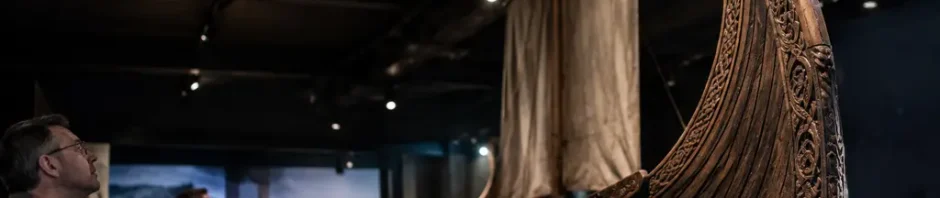
The Finding Vinland exhibition opened to the public on September 4, 2026, at Falmouth Museums on the Green in Massachusetts, after a members’ reception listed for September 3. The exhibition, titled Finding Vinland: Exploring the Possibility of Vikings on Cape Cod, was framed around a careful question rather than a settled claim: could Norse voyagers have reached Cape Cod before Columbus? The Cape Cod Museum Trail listing described an approach using archaeology, historical maps, Native perspectives, and newly commissioned traditional works by Wampanoag artist Julia Marden, a useful reminder that Vinland is not only a Norse story but also a modern site of interpretation about Indigenous presence and memory Cape Cod Museum Trail.
That framing is welcome, though it requires restraint. Norse exploration in northeastern North America is archaeologically confirmed at L’Anse aux Meadows in Newfoundland, but the same level of proof has not been established for Cape Cod in the research provided. The strongest reading of the exhibition is not that it proved a Cape Cod landing. Rather, it asked how saga geography, material evidence, local memory, maps, and Indigenous histories can be placed in conversation without flattening uncertainty. Ah, how often the old sagas tempt us with bright place-names; the task is to keep our feet on firm ground while still listening closely.
What The Finding Vinland exhibition Presented
Finding Vinland exhibition Date And Frame
The exhibition’s public opening date matters because it places the project firmly in the current wave of public history that treats Norse arrival as only one part of a larger human story. The Finding Vinland exhibition did not stand apart from Indigenous history; according to the event description, Native perspectives were part of its design. That choice is not cosmetic. It changes the central question from Where did the Norse go? to How have different communities remembered, interpreted, and lived with these coastal histories?
The inclusion of newly commissioned traditional works by Wampanoag artist Julia Marden also gave the show a contemporary Indigenous presence rather than leaving Native peoples as a distant backdrop for Norse movement. Based on the research supplied, the exhibit addressed the possibility of Norse voyagers on Cape Cod. It did not provide a confirmed archaeological identification equivalent to L’Anse aux Meadows. That distinction is essential for readers who care about evidence.
Why Possibility Is Not Proof
Possibility is a valid museum question when it is labeled honestly. Historical maps may preserve older geographic ideas, sagas may echo remembered travel, and local traditions may shape later interpretation. None of those sources, by themselves, equals a documented Norse site. The exhibition’s value lies in showing how claims are weighed rather than in replacing caution with excitement.
This is also where public history can serve Indigenous histories more responsibly. Older popular accounts often treated Norse arrival as the main event and Indigenous peoples as unnamed figures encountered along the way. A better approach begins with Indigenous continuity: people were present before Norse voyages, present during any contact period, and present long after Norse travelers left. For readers comparing public-history treatments of the same theme, Old Norse News has also considered the subject through Indigenous memory in the Vinland exhibit.
Why The Finding Vinland exhibition Starts With L’Anse aux Meadows
The Confirmed Norse Site
Any discussion of Cape Cod and Vinland has to begin at L’Anse aux Meadows, because that Newfoundland site remains the secure archaeological anchor for Norse activity in North America outside Greenland. Research on the site records turf-style structures, including longhouses and workshops, along with an iron forge, a bronze ring-headed cloak pin, a steatite spindle-whorl, iron nails, and ship rivets. The same research notes nonnative ecofacts, including butternut wood and shells, which point toward contact with areas farther south than Newfoundland or movement through exchange networks L’Anse aux Meadows research.
For the Finding Vinland exhibition, this means the key interpretive problem is not whether Norse voyagers crossed the Atlantic. They did. The harder question is how far they traveled, how often, and how their short-lived presence intersected with Indigenous worlds already deeply established across northeastern North America. Cape Cod may be an intriguing subject for inquiry, but the standard of evidence remains high.
Southern Materials And Cautious Interpretation
Butternut does not naturally grow in Newfoundland, so its presence at L’Anse aux Meadows has long drawn attention. It can suggest that Norse crews traveled south into areas such as the Gulf of St. Lawrence region, Nova Scotia, or New Brunswick, or that they obtained materials through other routes of contact. The research supplied allows that range of interpretation. It does not require a direct Cape Cod landing.
This is where saga place-names such as Helluland, Markland, and Vínland become both fascinating and difficult. The sagas were written down centuries after the voyages they describe. They may preserve genuine memories of travel, timber, grapes or wine-land imagery, and encounters with Indigenous peoples, but they are not maps in the modern sense. A cautious exhibition can use them as literary and historical witnesses while still asking archaeology to do its own work.
Indigenous Histories Within The Vinland Question
Before Contact, During Contact, After Contact
The most responsible way to speak about Norse exploration is to begin before the Norse arrived. Indigenous histories in the region were not initiated by European contact. The research supplied notes long Indigenous occupancy at L’Anse aux Meadows before Norse arrival and continued Indigenous use after the Norse left. That pattern should shape every public account of Vinland. Norse visitors were temporary; Indigenous presence was enduring.
This changes the moral and scholarly angle of the subject. Norse voyagers may have built shelters, repaired ships, forged iron, and gathered resources. Indigenous communities already knew the coasts, waterways, seasonal resources, and social geographies of those areas. Contact, if and where it occurred, took place in Indigenous homelands rather than empty space.
How Exhibitions Can Avoid Older Habits
Public exhibitions on Norse America can fall into a familiar trap: ships arrive, Europeans step ashore, and Indigenous people appear only as obstacles, trading partners, or brief saga figures. The better path is to ask what the story looks like when Indigenous continuity is not a side note. The Cape Cod exhibition’s stated use of Native perspectives suggests an effort to correct that imbalance.
That correction does not require dismissing Norse achievement. Crossing the North Atlantic in the early 11th century was an extraordinary maritime act. Yet admiration for seamanship should not become a claim of ownership, discovery in an empty world, or cultural superiority. The more precise statement is stronger: Norse voyagers reached parts of North America, and their presence intersected with long-standing Indigenous societies.
Public interpretation also depends on clear language for families and learners. A related site in the same network, Talk and Play, offers resources that make cultural material engaging and easier to understand without losing its deeper significance. Vinland deserves the same care: accessible wording, visible uncertainty, and respect for living communities.
What The Evidence Can And Cannot Say
Archaeology, Maps, And Sagas
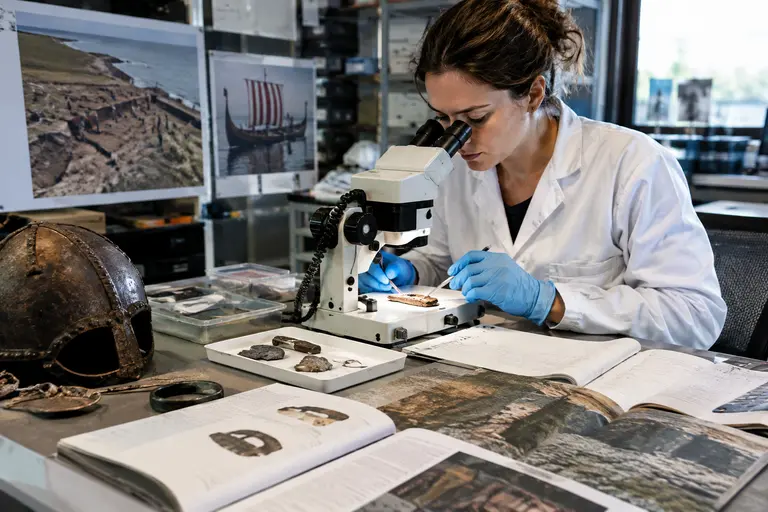
Archaeology can identify structures, tools, ecofacts, workshops, and activity areas. Maps can show how later people imagined geography. Sagas can preserve names, themes, travel sequences, and remembered encounters, although their late written form requires care. Each source type has value, and each has limits. The strongest historical interpretation comes from allowing them to test one another rather than forcing them into a single dramatic claim.
For Cape Cod, the research provided supports an exhibition about possibility, not confirmation. That is not a weakness. A museum can teach the public how evidence works by showing why some claims remain open. In fact, uncertainty may be the most honest part of the exhibition. It helps visitors distinguish confirmed Norse archaeology from cultural memory, speculation, and responsible hypothesis.
Influence On Modern Indigenous Narratives
The influence of Vinland studies on Indigenous histories is not only about the 11th century. It is also about how museums and writers frame the past in 2026. If Norse stories are told as triumphal pre-Columbian adventure, Indigenous histories are pushed to the edge. If the same material is presented through contact, continuity, and place, Indigenous histories return to the center where they belong.
This does not mean every Indigenous perspective will say the same thing, nor that museum interpretation can stand in for community authority. It means that scholarship and exhibition work should avoid treating Indigenous peoples as evidence for someone else’s saga. They are historical actors, knowledge holders, artists, and present-day communities with their own relationships to place.
Finding Vinland exhibition And Indigenous Memory
The Finding Vinland exhibition is best understood as a public-history case study in disciplined curiosity. It asked whether Norse voyagers may have reached Cape Cod, but the stronger lesson is methodological: claims about Vinland need archaeology, textual criticism, map history, and Indigenous perspectives held together without false certainty.
L’Anse aux Meadows remains the secure point of departure. Its buildings and artifacts show Norse activity in North America. Its southern materials raise questions about movement beyond Newfoundland. The Cape Cod question sits beyond that firm center, in the zone of possibility. That zone can be productive if museums name it plainly.
For Norse studies, the exhibition shows how saga-age subjects can be reinterpreted in public without abandoning evidence. For Indigenous histories, it signals a needed shift away from contact stories centered only on European arrival. The past is not made clearer by removing uncertainty. It is made clearer by asking better questions, naming what is known, and refusing to let one voyage overshadow the deeper human histories of the coast.
