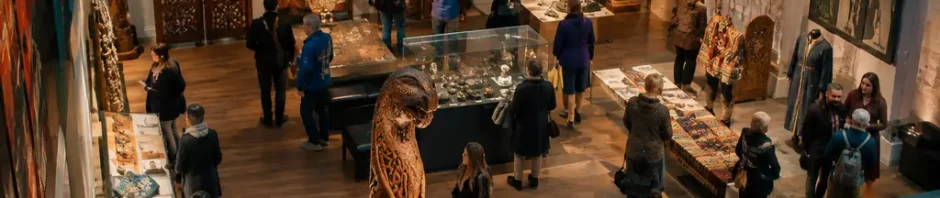
The Swedish folklore exhibition Into the Mist: Swedish Creatures and Legends is scheduled to open at the American Swedish Institute in Minneapolis on February 13, 2027, and run through October 31, 2027. ASI says the exhibition will present 13 folkloric beings from Sweden, including trolls, tomte, underjordiska, näcken, varulv, jättar, lake monsters such as Storsjöodjuret, and forest spirits such as Skogsrå American Swedish Institute. As of November 10, 2026, the exhibition has not yet opened, so its cultural impact can only be assessed cautiously: not through visitor data, but through what its announced themes suggest about public interest in Nordic folklore, museum interpretation, and the uneasy overlap between Swedish legend and broader Norse memory.
Why A Swedish Folklore Exhibition Matters Now
Public Hunger For Wonder And Explanation
The timing of Into the Mist is part of its significance. Reporting on ASI’s 2027 exhibition program says the show was framed as arriving at a moment when audiences seek escape, wonder, and stories that help make sense of an uncertain world AOL. That curatorial claim should not be treated as survey evidence for all visitors. It is, however, useful evidence of how the institution understands its audience before the doors open.
A museum show about trolls and water spirits is not only entertainment. In Scandinavian tradition, such beings often mark thresholds: forest edge, farm boundary, lake surface, household night, and the unstable line between human settlement and forces outside ordinary control. A Swedish folklore exhibition can therefore help contemporary audiences ask why earlier communities used story to think about danger, work, weather, morality, kinship, and place.
What The Exhibition Can And Cannot Prove
The strongest cautious reading is that Into the Mist may influence how visitors talk about folklore after February 13, 2027. It cannot, before opening, be credited with measurable shifts in public understanding. No attendance figures, visitor surveys, or educational outcomes have been provided in the research supplied here. That limit matters. Claims about “impact” should remain provisional until ASI or outside researchers publish evidence from the exhibition period.
Still, the choice of subject is meaningful. By building a major museum presentation around named beings rather than treating them as decorative motifs, ASI places folklore within cultural history. That framing encourages visitors to see legends as social evidence, not as childish leftovers from a supposedly less rational past.
Folklore Beings And The Problem Of Norse Labels
A Swedish Folklore Exhibition, Not A Viking Display
The phrase “Norse folklore” can be useful, but it needs care. Into the Mist is a Swedish folklore exhibition, not a direct reconstruction of Viking Age religion. Trolls, tomte, näcken, werewolves, giants, lake monsters, and forest spirits belong to overlapping Scandinavian story traditions that changed across time. Some names echo older mythic patterns; others are best understood through later rural legend, seasonal custom, local storytelling, art, and literature.
This distinction matters for readers interested in Norse mythology. The medieval textual sources for Odin, Thor, Freyja, giants, and other mythic figures are not the same type of evidence as later Swedish folk legends about farm spirits or dangerous water beings. A museum exhibition can help by showing continuity and change without flattening every Scandinavian creature into “Viking belief.” Old Norse News has treated similar questions in coverage of Swedish heritage exhibitions at ASHM, where artifacts, seasonal customs, and folklore need to be kept in relation without being confused.
Thirteen Beings As A Teaching Structure
ASI’s announced list of 13 beings gives the exhibition a clear teaching structure. Trolls and giants can lead visitors toward questions about otherness, scale, and older mythic inheritance. Tomte can draw attention to household order and rural labor. Näcken can frame water as both music and danger. Skogsrå connects forest presence with desire, risk, and respect for non-human spaces. Lake monsters such as Storsjöodjuret show how place-specific legends can remain powerful in modern imagination.
The value of this structure is not that it offers a single definition of each being. Its value lies in showing that folklore is plural. A creature’s meaning can shift with region, period, storyteller, and audience. If presented well, the exhibition may help visitors move away from one-line creature labels and toward a more historical way of reading legend.
The Turnblad Mansion As Interpretive Space
Closed Rooms And Museum Atmosphere
ASI states that Into the Mist will give visitors access to parts of the Turnblad Mansion that have been closed to the public for many years. That spatial decision matters because folklore often depends on atmosphere: passageways, dim corners, thresholds, and the sense that a familiar house may contain unfamiliar presences. The mansion setting may help the stories feel embodied rather than simply displayed.
Here, the cultural impact of a Swedish folklore exhibition may come from how visitors physically move through the show. Folklore is not only a body of texts; it is also performance, setting, memory, and expectation. A room that has been inaccessible for many years can make visitors more alert to the role of secrecy and partial knowledge in legend. That does not make the building itself folkloric evidence. It makes the building an interpretive tool.
Immersion Without False Certainty
Immersive design carries risk. It can make legends vivid, but it can also blur the line between historical interpretation and theatrical effect. The safest approach is to let atmosphere support source-based explanation. Visitors should come away knowing that trolls, tomte, näcken, and other beings have histories in storytelling, art, literature, and popular culture, not that a modern installation proves what people in every Swedish village once believed.
That caution is especially important for Norse-related topics. The public often meets the Nordic past through fantasy media before it meets museum labels. ASI’s challenge will be to welcome that curiosity while making clear distinctions between medieval myth, later folklore, modern monster culture, and present-day identity.
Public Memory Before The Exhibition Opens
Scholarly Collaboration And Trust
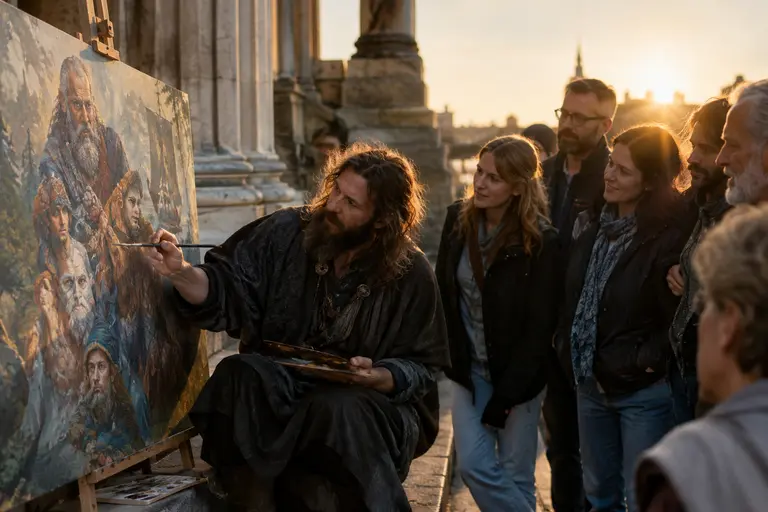
The announced collaboration with folklorist Dr. Tommy Kussela is significant because it signals scholarly involvement in the exhibition’s framing. That does not guarantee that every visitor will interpret the show in the same way, but it does strengthen the basis for trust. Folklore exhibitions need more than striking creature imagery. They need context: language, collection history, regional variation, transmission, and the difference between belief, story, joke, warning, and art.
For a public museum, that balance is central. If the show is too academic, it may fail to reach visitors who arrive through curiosity about monsters. If it is only atmospheric, it may reinforce vague ideas about “Nordic mystery” without teaching much. A well-made Swedish folklore exhibition can hold both needs together: wonder and evidence, story and historical discipline.
Community Networks And Cultural Context
ASI’s adult admission was reported as US $17, with the institute open Tuesday through Sunday. Practical details like admission and opening days affect who can experience the exhibition, though they should not be mistaken for measures of cultural influence. Access is one condition for impact; interpretation is another.
Public heritage also depends on how institutions present themselves across communities. For readers comparing cultural organizations in the same wider network, the role of the Stuyvesant Yacht Club reminds us that public-facing institutions need clear context, careful language, and responsible claims about identity and tradition.
Into The Mist And Contemporary Norse Folklore
Why The Exhibition May Change The Conversation
Into the Mist may affect contemporary understanding of Norse folklore by slowing down a category that is often rushed. Popular culture tends to merge Viking warriors, gods, runes, trolls, elves, and monsters into one Nordic image. ASI’s focus on Swedish creatures gives visitors a chance to separate related but different traditions. That separation is not a denial of connection. It is a better path toward understanding how stories survive, move, and change.
The exhibition’s cultural importance will depend on execution after February 13, 2027. If it presents each being as fixed and timeless, it may repeat old clichés. If it shows folklore as local, changeable, and tied to human concerns, it can help visitors see why these beings still matter. Tomte can speak to household order and reciprocity. Näcken can speak to dangerous beauty. Skogsrå can speak to forest encounter. Lake monsters can speak to place memory and modern fascination with the unknown.
A Careful Measure Of Cultural Impact
The fair claim, before opening, is that the exhibition is positioned to shape discussion rather than that it has already reshaped public understanding. Its announced dates, creature list, mansion access, and scholarly collaboration all point toward a serious attempt to present folklore as cultural history. The real measure will come later, through visitor response, public programming, reviews, educational use, and any data ASI chooses to release.
For now, the most useful reading is cautious optimism. This Swedish folklore exhibition has the potential to help audiences understand that Norse-linked folklore is not a single frozen inheritance. It is a set of stories continually interpreted through place, fear, humor, memory, art, and identity. That is where its likely cultural impact lies: not in proving that old creatures are “real,” but in showing why people continue to need them.
