Popular media frequently reduces the Viking Age daily life (circa 793–1066 AD) to a continuous montage of maritime raids, battlefields, and plundered monasteries. While martial expansion was indeed a defining characteristic of this era, the overwhelming majority of people living in early medieval Scandinavia were not professional warriors. Stripping away the mythological veneer reveals a complex, deeply agrarian society bound by the stringent dictates of the changing seasons, a strict social hierarchy, and the relentless demands of basic survival. Understanding this period requires a shift in focus from the edge of the sword to the center of the hearth.
The Agrarian Foundation and Seasonal Rhythms
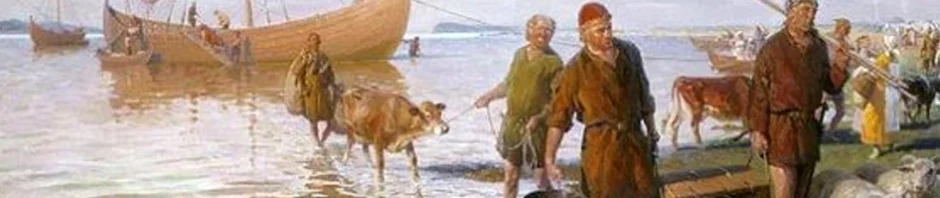
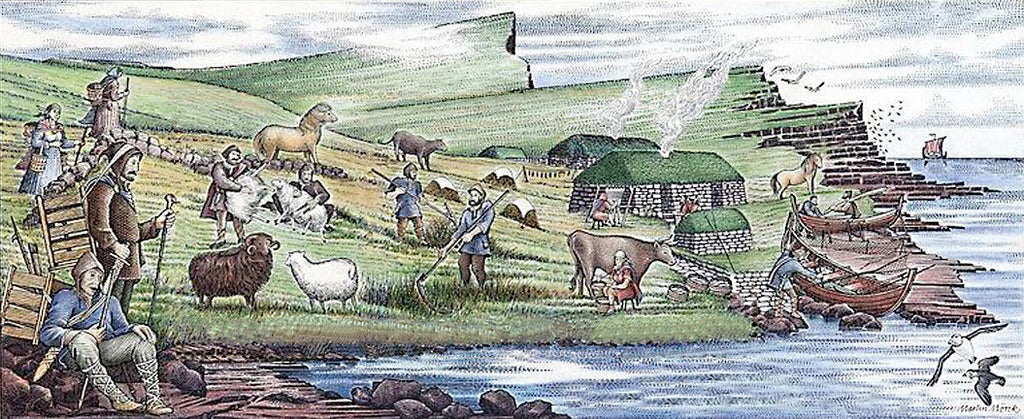
To comprehend the daily existence of the Norse people, one must first recognize that their economy was entirely dependent on agriculture and animal husbandry. Regardless of a family’s wealth or status, survival hinged on the successful cultivation of crops such as barley, rye, and oats, alongside the meticulous management of livestock. Cattle, sheep, pigs, and goats were not merely sources of food; they were the primary measures of a family’s wealth and a critical resource for producing clothing and tools.
The calendar year dictated the cadence of daily labor. The brief, intense Scandinavian summers were consumed by the desperate rush to grow and harvest enough food to survive the impending winter. Men, women, and children all participated in the agrarian economy. While the men might occasionally join a summer expedition for trade or raiding, the maintenance of the farmstead—the true economic engine of the society—often fell to the women, who wielded significant authority over domestic and agricultural operations. When studying archaeological evidence from the Viking Age, researchers consistently find that farming implements far outnumber weapons, underscoring the true nature of their daily focus.
The Architecture of Existence: Inside the Longhouse
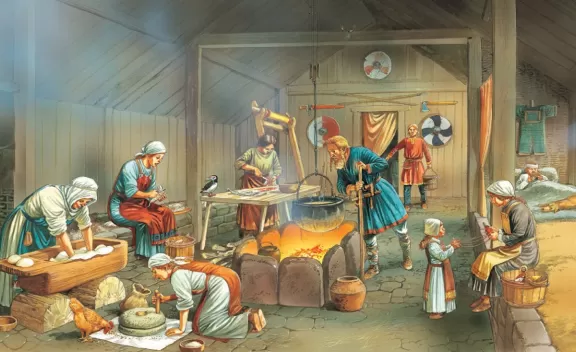
The epicenter of Norse daily life was the longhouse (langhús), an architectural marvel of utility designed to withstand brutal winters. Constructed from timber, wattle and daub, or turf—depending on the regional availability of resources—these structures were windowless, heavily insulated, and shared by the entire extended family. Furthermore, it was common practice to house livestock in one end of the longhouse during the coldest months. While this arrangement provided crucial body heat to warm the living quarters, it also meant that the interior environment was dominated by the smells of animals, damp wool, and the ever-present smoke from the central hearth.
The central fire was the lifeblood of the home, providing the only source of heat, light, and cooking fuel. Because there were no chimneys, only small smoke holes in the roof, respiratory issues were a common physiological reality for the Norse people. Life inside the longhouse was communal and intimate; privacy as a modern concept simply did not exist. During the dark winter months, when outdoor labor was impossible, the family gathered around this hearth to repair tools, weave textiles, and transmit the oral histories that would eventually form the foundation of Norse cultural traditions.
Social Stratification and the Labor Economy
Norse society was not an egalitarian collective; it was rigidly stratified, and one’s daily life was entirely dictated by their inherited social class. The societal structure was broadly divided into three distinct tiers, each with its own specific economic functions and legal rights. This division of labor was considered a divinely ordained reality, enshrined in myth but enforced through strict legal codes.
| Social Class | Status Description | Primary Daily Responsibilities |
| Jarls | The aristocratic elite, wealthy landowners, and chieftains. | Governance, financing trade expeditions, adjudicating legal disputes, and overseeing large estates. |
| Karls | Free men and women, comprising the vast majority of the population. | Managing independent farmsteads, craftsmanship, seasonal trading, and participating in local assemblies (the Thing). |
| Thralls | The enslaved class, acquired through trade, debt, or warfare. | Performing the most grueling physical labor, including clearing land, grinding grain, and heavy agricultural work. |
The existence of the thrall class was the grim economic bedrock that allowed the karls and jarls the freedom to engage in specialized crafts, political maneuvering, or overseas expeditions. The grueling daily labor of grinding grain by hand using a rotary quern-stone, a task almost exclusively forced upon enslaved women, exemplifies the harsh physical toll extracted by the Norse agrarian economy.
Craftsmanship and the Winter Industries
When the harvest was complete and the ground froze, daily life transitioned from agricultural labor to intensive craftsmanship. The Norse were highly skilled artisans out of necessity. The production of textiles, primarily from wool and flax, was an incredibly time-consuming daily obligation. The creation of a single sail for a longship required years of continuous shearing, spinning, and weaving by the women of the community. This textile industry was as vital to the success of Viking expansion as the timber used to build their ships.
Men focused on woodworking, blacksmithing, and the maintenance of essential tools and weaponry. Iron extraction from bog ore was a complex, labor-intensive process that required deep ecological knowledge and physical endurance. Every item, from a simple comb carved from animal bone to an intricate iron cooking pot, required hours of dedicated manual labor.
Ultimately, daily life in the Viking Age was a testament to human endurance in a challenging environment. It was an existence defined not by the glory of combat, but by the relentless, rhythmic cycle of survival, the bonds of kinship, and an unyielding work ethic that sustained them through the darkest winters of the North.
