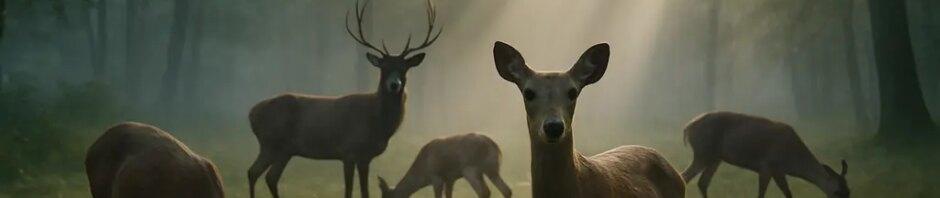
Non-human intelligence in Old Norse narrative is not a modern fantasy imposed on medieval texts. It is a careful way of naming a pattern that scholars have increasingly examined: animals think, supernatural beings perceive, ritual specialists seek knowledge from beyond ordinary human channels, and objects or settings can appear to act upon identity. The evidence does not make Norse texts simple ecological manifestos, nor does it prove a single Viking Age theory of mind. It does show that medieval northern storytelling often placed human perception beside other kinds of agency.
Non-Human Intelligence And Animal Minds
Bourns’s March 2026 Lecture
On March 6, 2026, Tim Bourns presented “Animal Minds in the Medieval North” at UC Berkeley. The University of Washington notice described the lecture as arguing that Old Norse narrative repeatedly attributes intelligence, wisdom, reason, communicative intent, and ethical awareness to animals, including natural, preternatural, and supernatural animals University of Washington lecture notice. Because that event had already taken place by September 28, 2026, it is best read retrospectively as part of a growing scholarly discussion rather than as an upcoming intervention.
Bourns’s argument matters because it presses against traditions that place humans at the center of reason. The lecture did not, according to the research notes, claim that Old Norse texts treat animals exactly like humans. The stronger claim is more precise: narrative attention to animal wisdom and intent complicates any flat division between human minds and animal bodies. That is where non-human intelligence becomes a useful phrase, provided it remains tied to textual evidence.
Emotion Without Full Human Selfhood
Bourns’s 2024 article, “Animal Emotionality and Selfhood in Old Norse Textual Culture,” is especially useful for caution. As summarized in the research, he found that Old Norse-Icelandic texts often show animals with primary emotions such as anger and sadness, while rarely giving them self-conscious emotions such as shame or guilt. That distinction prevents overstatement. The texts can grant emotional experience without granting the full reflective “me-self” associated with human self-analysis.
The same research summary notes that lions appear often as emotional animals in Old Norse literature, while locally familiar animals such as horses and dogs may receive deeper emotional interiority. Livestock and wild beasts are often shown with less regulated emotionality. This pattern suggests that species, familiarity, genre, and narrative role all affect how animal minds are represented. A saga horse, a lion in learned or translated material, and a threatening beast do not carry the same interpretive weight.
Gods, Jötnar, And Supernatural Cognition
Non-Human Intelligence Beyond Animals
Non-human intelligence also appears in supernatural figures. Old Norse mythic material frequently attributes unusual knowledge and perception to gods, the dead, and other beings. The research notes point to scholarship on Odin’s ravens, Huginn and Muninn, as well as Hliðskjálf, the high seat from which Odin observes widely. These examples ask readers to think about perception as more than eyesight. Knowledge may arrive through messengers, divine equipment, memory, thought, or supernatural vantage.
This is not evidence for a single, tidy doctrine of divine omniscience. The safer reading is that Norse narrative allows certain beings to know or perceive beyond normal human limits. Some scholarship cited in the research notes also argues that Old Norse sources can portray gods as capable of distant perception and action without always depending on ordinary bodily presence. Such claims need careful handling, since different poems and prose accounts do not always agree. Still, they show that intelligence in these materials is often distributed across bodies, birds, seats, rituals, and mythic relationships.
Jötnar As Thinking Opponents And Kin
The jötnar are especially revealing because they are not merely monsters in a simple sense. A peer-reviewed verbal-cognitive study describes jötnar in Eddic texts through a matrix of features: supernatural, chaotic, interactive with the Æsir, and marked by both rational and irrational traits Studia Philologica study. That combination fits the way many Norse myths work. Giants can be hostile, dangerous, wise, desirable, comic, ancestral, or necessary to the plot.
For readers raised on neat categories, this can feel untidy. Yet the Norse material often gains force from relation rather than separation. Gods contend with jötnar, marry them, learn from them, deceive them, and depend on exchanges with them. If non-human intelligence is limited only to animals, much of this mythic thought is missed. Jötnar show cognition through speech, strategy, memory, challenge, and social interaction, even when the texts mark them as threatening or outside divine order.
Ritual Knowledge, Objects, And Shifting Personhood
Seiðr And Foreknowledge In Eiríks Saga Rauða
The research notes also point to Eiríks saga rauða, where the Greenlandic seiðkona Þorbjǫrg performs seiðr during a famine at the beginning of the 11th century. The ritual seeks foreknowledge about when the famine will end. In that scene, knowledge is not framed as ordinary human calculation. It is mediated by ritual practice and contact with supernatural forces.
Here again, caution is needed. A saga account is not a transparent report of everything that happened in early 11th-century Greenland. It is a narrative source shaped by memory, genre, and later textual transmission. Still, it preserves a meaningful idea: people could be imagined as seeking knowledge through relations with powers beyond the human community. That makes the episode relevant to wider discussion of intelligence, agency, and information in Old Norse literature.
Objects And Environments As Agents
Bourns’s broader work, according to the research notes, also examines animality, materiality, and the decentering of the human in Old Norse literature. His thesis, “Boundary of the Human: Identities, Ontologies and Transformations in Old Norse Literature,” is described as treating plants, animals, objects, and the material environment as central to identity. The full thesis remains under embargo until 2030, so public claims should be limited to what is available in summaries and related publications.
This line of reading fits many Norse materials in which identity is not sealed inside an individual body. Weapons, seats, ships, animal companions, kinship, burial goods, and named places can all shape how a figure is known. That does not mean every object is a person in the same way. It means Old Norse narrative can treat agency as relational. Human action is frequently extended through things, animals, divine signs, and social memory.
Readers interested in the boundary between mythic narrative and historical interpretation may find it useful to compare this with how archaeologists separate Norse myth from Viking history. The same caution applies here: texts can illuminate medieval imagination, but they should not be treated as direct proof for every belief or practice in Viking Age life.
Why These Readings Matter For Norse Studies
Against A Human-Only Reading
Non-human intelligence in Norse studies matters because it asks us to hear the old stories with fewer inherited assumptions. If animals can communicate intent, if gods can perceive at a distance, if jötnar can reason and disrupt, and if objects help compose identity, then the human is not the only center of meaning. This does not erase human responsibility in the texts. Rather, it shows that human life is often imagined in contact with other knowing agents.
This approach also helps contemporary readers avoid two weak readings. One weak reading turns Norse material into a modern animal-rights argument without medieval evidence. The other treats animal and supernatural minds as mere decoration. A better approach holds both points together: the texts are not modern theory, but they do repeatedly imagine knowledge beyond the human.
Public Scholarship And Careful Access
Public scholarship can make these arguments easier to follow if it stays plain about uncertainty. An associated cultural site like Agheiro offers an example of how interconnected cultural interpretations can aid readers by ensuring visibility of evidence and avoiding false certainty. That same standard is valuable for Norse subjects, where myth, modern identity, and popular media often crowd close to the sources.
The strongest interpretations do not need exaggeration. Bourns’s lecture and related research already give us enough to consider: animal emotion, ethical awareness, supernatural perception, ritual knowledge, and material agency. Each theme widens the frame without forcing the sources to say more than they can support.
Non-Human Intelligence In Norse Narratives
Non-human intelligence in Norse narratives is best understood as a set of recurring narrative patterns, not as one doctrine. Animals may feel, reason, warn, grieve, or communicate. Gods may know through ravens, seats, distance, or divine action. Jötnar may think and argue even while standing outside divine order. Ritual experts may seek knowledge from powers not reducible to ordinary human speech. Objects and settings may help form identity rather than simply decorate a scene.
For me, as a reader of language and myth, the beauty lies in that pressure on the edge of personhood. Old Norse texts often ask who can know, who can speak, who can act, and who can be changed by contact with another kind of being. The answers vary by poem, saga, and episode. That variety is not a problem to flatten. It is part of the evidence.
Handled carefully, this field of study gives contemporary readers a sharper way to approach Norse literature. It keeps animals from being reduced to props, gods from being reduced to human rulers with magic, and jötnar from being reduced to brute opposition. Most of all, it reminds us that medieval northern stories often imagined intelligence as shared, contested, and carried across the borders humans draw around themselves.
