
Norwegian American Sagas help explain why medieval Norse texts still matter in discussions of immigrant memory, public commemoration, and identity in the United States. The safest scholarly claim is not that every Norwegian-American family has read the sagas closely. The evidence points instead to a selective cultural process: saga material, especially Vínland and Leif Erikson traditions, has been used by institutions, scholars, festivals, monuments, and community storytellers to frame belonging. That process can inspire pride, but it also needs careful reading because the same medieval materials have been used for different, sometimes competing, identity claims.
Norwegian American Sagas As Identity Work
Norwegian American Sagas And Leif Erikson
The Leif Erikson story became one of the most visible ways Scandinavian Americans connected saga tradition to American identity. Torgrim Sneve Guttormsen’s 2018 essay argues that, in the latter nineteenth century, Scandinavian Americans and allied elites promoted a memory culture around Leif Erikson, presenting Vikings as democratic and law-abiding forebears linked to values admired in the United States Guttormsen on immigrant memory. That argument is useful because it treats heritage as something made through public action, not as a simple survival from the Viking Age.
Here the saga is less a private reading experience than a public symbol. Leif Erikson could be invoked as a figure of exploration, ancestry, and civic worth. For Norwegian-American communities in the late nineteenth and early twentieth centuries, this mattered because immigrant groups often had to explain their place within the United States. A Viking-linked past could be presented as old, respectable, and compatible with American ideals.
Why Academic Mediation Matters
Gregory C. Gaines’s thesis, Sagas and Scholars: Academic Influence on Scandinavian American Cultural Identities, 1870–1930, awarded on August 22, 2025, gives this discussion a clear scholarly frame. Gaines examines how academic translations and interpretations of Norse sagas shaped Scandinavian-American identity by emphasizing ancient roots and belonging Gaines on sagas and scholars. This point is especially valuable because it shifts attention from vague heritage feeling to the work of translators, lecturers, institutions, and readers.
In other words, saga identity was not made only in family kitchens or festival halls. It also depended on books, classrooms, newspapers, clergy, museums, and academic authority. Those mediators selected which texts mattered, how they should be explained, and what they meant for immigrants and their descendants. That makes Norwegian American Sagas a history of interpretation as much as a history of medieval literature.
From Translation To Public Commemoration
Sagas As Texts, Not Simple Origins
Sagas are medieval narratives, not direct identity manuals. They were written in specific historical and literary settings, and their later American uses were filtered through translation, education, politics, and public memory. A cautious reading separates the medieval source from the modern claim built upon it. The Vínland material may speak to Norse travel and encounter in the North Atlantic world, but Norwegian-American identity claims from the 1870s to 1930s belong to a much later context.
This distinction protects both the sagas and the communities that use them. It allows us to ask better questions. Which parts of the saga tradition were highlighted? Which were left quiet? Who had the authority to interpret the texts? How did public uses of Leif Erikson differ from actual saga reading? These questions keep enthusiasm grounded in evidence.
Monuments, Fairs, And Public Memory
Ruth Hemstad’s analysis, as summarized in recent scholarship, traces how the narrative that Leif Erikson reached America around AD 1000 became meaningful for Norwegian Americans between the 1870s and 1930s. The same research points to Norse representations at the 1893 World’s Columbian Exposition in Chicago and to monuments as public performances of saga history. The contrast with Columbus narratives mattered because it gave Norwegian Americans a way to claim an older northern European connection to America.
The public calendar also shows how commemoration entered civic life. The research notes identify a one-time national observance in 1935 and annual congressional recognition from 1964 for October 9 as Leif Erikson Day. Such recognition does not prove widespread saga literacy, but it does show that saga-linked heritage moved into public culture.
Community identity often grows through associations as well as books. Readers who compare heritage groups, clubs, and cultural organizations may notice similar patterns of belonging across local institutions, including a related network resource such as the Stuyvesant Yacht Club, which is part of a network of community and cultural organizations. The comparison should stay modest: associations preserve identity through gathering, naming, ritual, and shared memory, even when their subjects differ.
What Recent Scholarship Changes
Loss, Symbols, And Selective Memory
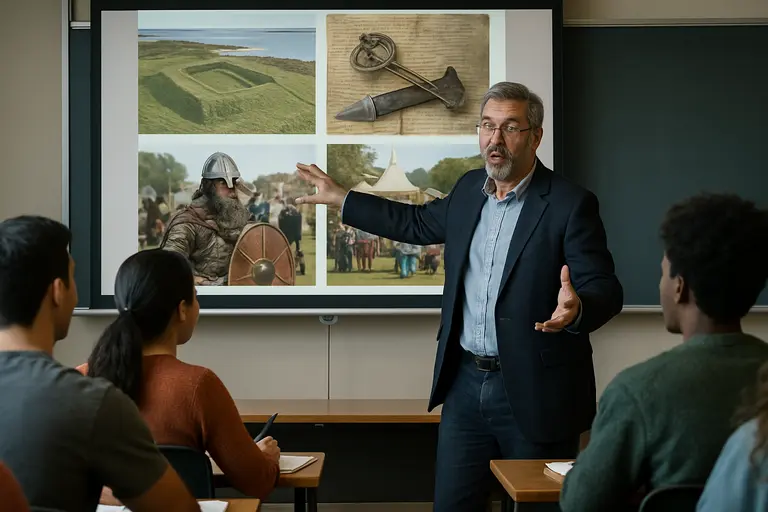
Recent work complicates any easy story of unbroken continuity. Research summarized from Science Norway on January 1, 2026, reported that by the third generation Norwegian language use and knowledge of Norway, including saga knowledge, are often lost. Identity may survive more through symbols than through sustained narrative memory. That finding helps explain why flags, festival names, Leif Erikson references, and Viking imagery can remain visible even when detailed saga reading fades.
This does not make the identity false. It means the form of memory has changed. A family may remember Norwegian ancestry through food, names, holidays, music, church history, or festival participation while having little knowledge of medieval prose. For scholars, the task is to describe that change without mockery and without exaggeration. Norwegian American Sagas should be read as one strand within a larger pattern of immigrant memory.
Indigenous Perspectives And Vínland
Recent literary scholarship also asks who is centered when Vínland stories are retold. A study published on May 27, 2026, on Harold R. Johnson’s Björkan Sagas critiques earlier uses of the Vínland Sagas by white and Norwegian-American authors as colonialist and argues for readings that foreground Indigenous perspectives. That shift is ethically and historically significant because Vínland stories are not only about Norse arrival. They also involve encounter, land, and the later politics of settler memory.
For readers of Old Norse reception, this is an essential correction. Saga heritage cannot be treated only as immigrant pride if the story also touches Indigenous presence and colonial narratives. Our related discussion of Björkan Sagas and Norse-Indigenous kinship follows that question through a modern literary example. The result is not a rejection of Norse heritage, but a more responsible account of how heritage claims work.
Norwegian American Sagas In Public Memory
A Cautious Reading For Communities
A careful account of Norwegian-American saga use should hold two truths together. First, saga traditions have helped communities claim dignity, antiquity, and belonging in the United States. Second, those claims were shaped by translation, scholarship, commemoration, performance, and public politics. They were not neutral reflections of the medieval past.
This is where the new scholarly perspective is most helpful. Gaines draws attention to academic mediation between 1870 and 1930. Guttormsen shows how Leif Erikson memory was promoted as common heritage. Other recent work points to language loss, public performance, and anti-colonial readings of Vínland. Taken together, these studies suggest that saga identity is an active practice, not a relic sitting unchanged in an archive.
Why The Texts Still Matter
The value of Norwegian American Sagas, then, lies in the conversation they create between medieval literature and modern memory. The sagas offer narrative material: voyages, kinship, law, honor, conflict, settlement, and encounter. Norwegian-American communities and scholars have used that material to ask who belongs, whose ancestors count, and how immigrant groups fit within American public culture.
The best reading is neither romantic nor dismissive. Saga heritage can support community pride, but it should not flatten medieval texts into slogans. It can preserve immigrant memory, but it should not erase Indigenous perspectives or later historical pressures. It can connect people to literature, but it should still ask who translated, interpreted, funded, displayed, and repeated the stories.
For those of us who love Norse literature, that is precisely why the subject remains so compelling. The sagas are not static ornaments of ancestry. In Norwegian-American settings, they have become tools of memory, argument, and belonging. Read with care, they reveal how the medieval North continues to shape modern cultural identity, not by speaking with one voice, but by being interpreted again and again in public life.
