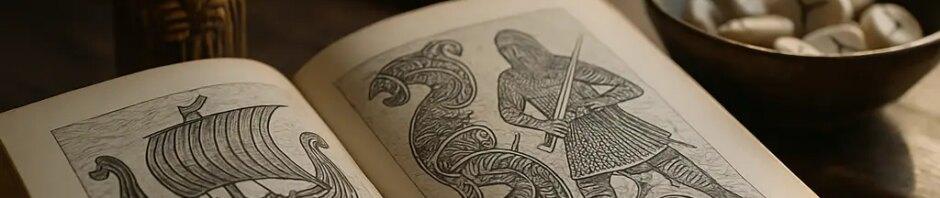
Alice C. M. Kwok’s study of The Björkan Sagas deserves careful reading because it treats Harold R. Johnson’s 2021 novel not as a simple Norse afterlife, but as a contemporary literary answer to medieval Vínland narratives. Published in Postmedieval, volume 17, pages 333–358, on May 27, 2026, after acceptance on April 28, 2026, the article places Johnson’s science fiction rewriting beside Grœnlendinga saga and Eiríks saga rauða, both described in the research as thirteenth-century texts narrating Norse voyages to Vínland around the eleventh century and encounters with peoples termed “Skrælingjar” Kwok in Postmedieval.
Why The Björkan Sagas Matter Now
Björkan Sagas And Anti-Colonial Reading
Kwok’s article is centered on a “Red Reading,” described in the research as an Indigenous-centered hermeneutic. The term matters because it shifts attention away from inherited habits of reading the Vínland material as a tale of inevitable hostility. In Kwok’s account, Johnson imagines Norse and First Nations peoples as allies who oppose environmental destruction, religious bigotry, and settler colonialism. That claim is literary and interpretive; it does not rewrite the medieval sources as historical evidence for an actual alliance. Rather, it asks what contemporary fiction can do with inherited narratives of contact.
The value of The Björkan Sagas lies partly in that distinction. Johnson’s work, as Kwok presents it, is not a documentary reconstruction of eleventh-century events. It is a science fiction reimagining that tests another ethical possibility: that the old story of encounter can be retold through cooperation, kinship, and shared resistance. For a site concerned with Norse texts, that approach is worth treating with both openness and caution.
Johnson’s Mixed Heritage And Literary Setting
The research identifies Harold R. Johnson as a Cree-Swedish writer who lived from 1954 to 2022. Kwok situates his novel within his wider writing and activism on Indigenous and settler relations. That context is not a decorative biographical note. It helps explain why Johnson could draw together Scandinavian markers and Indigenous ethical systems without presenting either identity as a fixed costume.
Kwok’s reading describes the Björkan people through names and signs associated with Scandinavia, including björka trees, Swedish dialect, and nyckelharpa music. At the same time, the group is grounded in Indigenous systems of kinship, land relation, tree relation, and more-than-human life. The result is syncretic rather than purely medievalist. Readers looking at related modern uses of Norse material may also compare this discussion with oldnorsenews.org’s note on Viking themes in contemporary literature.
How Kwok Reframes Vínland
Medieval Sources And Modern Rewriting
Kwok’s study depends on the contrast between medieval saga material and Johnson’s speculative rewriting. The research identifies the medieval texts at issue as Grœnlendinga saga and Eiríks saga rauða. These texts were composed in the thirteenth century while describing Norse voyages to Vínland around the eleventh century. That gap between composition and narrated time should always temper historical claims. The sagas are indispensable sources for literary memory and medieval storytelling, but they are not transparent travel reports.
Johnson’s novel, as read by Kwok, uses science fiction to make that gap visible rather than hide it. The genre frees the book from pretending to reconstruct the past in a narrow antiquarian sense. Instead, it reworks the encounter story by asking how Norse and First Nations figures might be imagined as relatives, allies, and co-defenders against destructive power. That is a modern intervention into saga reception, not a replacement for philology or archaeology.
The Three Saga Structure
The research describes Johnson’s novel as containing three sagas, each placing pressure on inherited ideas about invasion, kinship, and sovereignty. Kwok’s account highlights how the novel moves from abduction, to ecological danger, to the recovery of self-rule.
- The first saga follows Juha, a storyteller from the Björkan tribe, and includes abduction by US Army soldiers from outer space.
- The second saga confronts invasion and the awakening of dragons over the natural world.
- The third saga focuses on Lilly, a medicine woman, as she helps reclaim sovereignty from invaders.
This structure lets Johnson combine saga form with science fiction action. Kwok’s argument, as represented in the research, is not that medieval Norse texts secretly contain this same plot. It is that Johnson’s fiction answers older patterns by giving Indigenous-centered agency to the story of contact.
What The Article Can And Cannot Prove
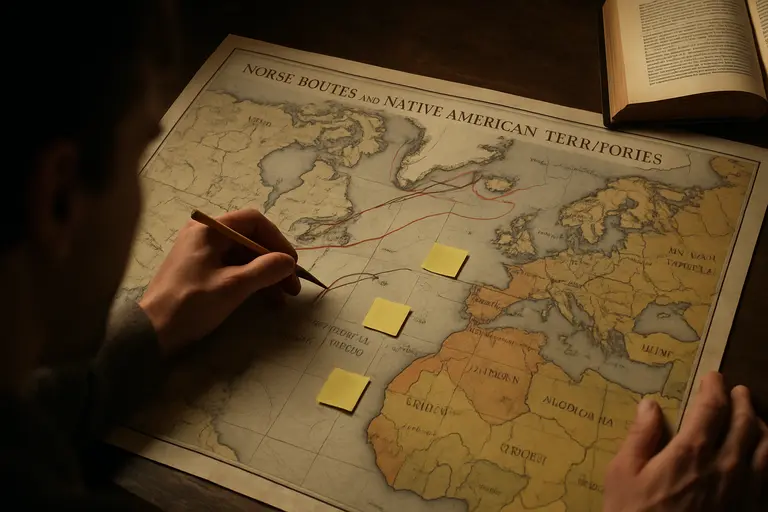
Evidence, Genre, And Caution
Kwok’s article is strongest when read as literary analysis. It can show how Johnson reframes Norse-Indigenous relations through genre, symbolism, kinship, and anti-colonial argument. It can identify patterns in the novel: Scandinavian cultural coding, Indigenous ethical relation, and the rejection of conflict as destiny. It cannot prove that the historical Vínland encounter unfolded in the cooperative manner imagined by the novel. That limit is not a weakness. It marks the difference between medieval source study and contemporary speculative literature.
One careful feature of Kwok’s framing is that it treats the word “Skrælingjar” as part of the medieval textual problem. The term appears in the saga tradition, but modern scholarship must ask who is being named, who is doing the naming, and how later readers inherit that label. Johnson’s fiction, in Kwok’s reading, offers one way of resisting the old asymmetry: it gives Indigenous and mixed kinship systems a central place in the narrative.
Kinship Against Hostility
The research notes that Johnson’s novel ends through the merging of lineages. Torn relationships become kinship marriages: Juha’s brother Torn marries a Valkyrie, and Juha partners with Lilly. Kwok reads such pairings as signs of multiethnic family and alliance, offered as an alternative to violence in historical Norse and Native encounter narratives.
This point is sensitive because kinship imagery can be overused in modern fiction. Kwok’s reading, based on the research supplied, treats it as a deliberate literary strategy rather than a simple sentimental ending. The marriages do not erase invasion, abduction, or conflict from the book’s world. They answer those forces with relation, obligation, and shared resistance. For students of saga reception, that is significant because medieval family narratives often carry political weight. Johnson adapts that weight to a modern anti-colonial frame.
The Springer page for Kwok’s article was reported in the research as showing 736 accesses and an Altmetric score of 2 at the time noted. Such figures are limited measures; they can show some public or academic attention, but they do not measure the quality of the argument. For readers interested in creative textual practice beyond saga studies, the same network also includes The Sketchbook Project, which focuses more on art-making than medieval literary criticism.
Kwok’s Björkan Sagas Study
Kwok’s reading of The Björkan Sagas offers a useful case for how medieval Norse material can be reused without treating the past as neutral raw material. The study shows Johnson working with saga memory, Vínland contact, Cree-Swedish identity, speculative fiction, and Indigenous-centered ethics. That combination asks modern readers to reconsider why older stories of encounter have so often been read through hostility first.
The article’s most valuable contribution is not that it solves the historical question of Norse and Indigenous contact. It does not claim that. Its value is interpretive: it shows how contemporary literature can expose the moral habits embedded in older readings and can imagine different relations without pretending that fiction is evidence for the eleventh century.
For Norse studies, that approach is useful. It keeps medieval texts in view while making room for modern Indigenous critique and creative response. It also warns against easy certainty. The medieval sagas remain historically and philologically demanding sources. Johnson’s novel remains a 2021 work of science fiction. Kwok’s 2026 study matters because it reads the space between them with care, asking what Vínland can mean when the story is no longer told only through conflict.
