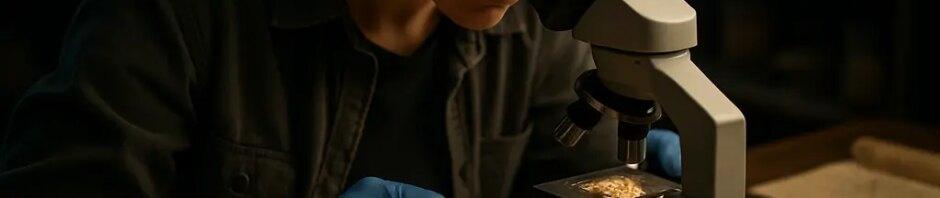
The phrase Norse Artifact Analysis now covers far more than typology, style, and findspot description. Recent research supplied for this topic points to isotope mapping, trace-element chemistry, lead isotopes, dental calculus testing, cremation analysis, and palaeoproteomics as methods reshaping what scholars can ask of Viking Age and medieval Scandinavian material. The topic also names the Society for American Archaeology Meeting, but the research supplied here does not identify specific SAA papers or abstracts. For that reason, I treat the meeting as a useful frame for discussing archaeological method, not as evidence that any named presentation made a particular claim.
Why Recent Methods Matter For Norse Artifact Analysis
Norse Artifact Analysis And Source Limits
The strongest lesson from recent work is not that laboratory science gives simple answers. It is that better methods can sharpen questions while also exposing uncertainty. For Norse Artifact Analysis, this is welcome news. Viking Age objects have long been pulled into broad narratives about raiding, migration, trade, identity, and belief. The new technical studies are useful because they ask narrower questions: where did silver come from, whether a person or animal may have moved, how hot a cremation burned, or whether a plant sample reflects local cultivation.
That narrower scale matters for public history. An isotope value or trace-element result should not be turned into a whole life story without supporting context. A coin’s silver source is not the same thing as the route taken by the coin. A strontium match suggests compatibility with a region, not a named birthplace. A dental calculus result may help dietary work, but the research notes describe it as being compared with bone collagen values, not as a universal replacement.
Clear communication is part of the method. Readers who compare how evidence is explained in different public-facing formats may also recognize a related site in the same network; the relevant point here is simple: claims about the past need careful wording, visible limits, and sources near the facts they support.
From Object Description To Evidence Chains
Older artifact study remains essential. Form, wear, find context, and comparison still anchor interpretation. The newer advances add evidence chains that run from sampling decisions to laboratory protocol, statistical treatment, and historical interpretation. That chain can fail at several points if contamination, corrosion, later handling, or overconfident interpretation enters the discussion. The most persuasive studies are therefore those that explain not only what was measured, but why the sampled material is suitable for the question.
Isotope Maps And Mobility Questions
Strontium Baselines In Southern Scandinavia
One of the most significant developments in the supplied research is a high-resolution regional isoscape for southern Scandinavia. The study constructed a baseline map of bioavailable strontium isotope ratios using 1,293 samples, including water, plants, and micromammal teeth, to refine mobility and provenance studies in Scandinavian contexts southern Scandinavian isoscape study. This matters because strontium isotope work depends on comparing archaeological samples with a credible local baseline.
For Norse Artifact Analysis, the attraction is clear. If a tooth, plant, or animal sample preserves a usable chemical signal, researchers can test whether it fits a local geologic zone or differs from it. Yet the value of the method depends on the baseline. A coarse map can make many places look equally possible. A finer map can narrow the comparison, though it still does not identify a village, household, or ethnic identity by itself.
Greenland Plants, Diet, And Sample Treatment
The supplied research also reports work from Greenlandic Norse middens, where charred barley grains and wild plant seeds were examined with AMS radiocarbon dating and strontium isotope analysis. The reported interpretation is that Norse farms in southwestern Greenland likely cultivated barley locally. The methodological caution is just as important: careful sample treatment, including leaching and separating surface contamination, was essential.
I find that point especially useful for teaching. A barley grain may look small beside a sword, brooch, or hoard, yet it can speak to farming practice, adaptation, and daily survival. The technical result is not merely a number. It depends on whether the sample is clean enough, dated well enough, and interpreted within the settlement evidence.
Silver, Coins, And Minimal-Damage Sampling
The Damhus Hoard As A Method Case
The Damhus Hoard gives an excellent example of how chemistry can revise trade narratives without turning them into guesswork. The supplied research describes the hoard as 266 early ninth-century KG 4 silver coins found near Ribe, Denmark, in 2018. In the study, 25 coins were analyzed through micro-XRF for major and trace elements, laser ablation ICP-MS, and lead isotope analysis. The results indicated significant use of Eastern Islamic silver, including dirham-derived metal, in Denmark as early as the 820s–830s CE, alongside recycled Western European silver Damhus Hoard study.
That result matters because silver moved through Viking Age economies as bullion, coinage, ornament, and recycled metal. A coin can carry an official image, but its metal may preserve a different story of melting, mixing, and exchange. The research therefore supports a careful distinction between political imagery and material source.
This connects naturally with wider discussions of Norse trade influence, where objects are best read as part of exchange systems rather than as isolated curiosities. The Damhus work does not make every Danish coin “Islamic,” nor does it reduce Scandinavian exchange to one route. It shows that silver streams were mixed earlier than some simple public narratives imply.
Surface, Core, And Preservation Ethics
Norse Artifact Analysis has often faced a practical tension: the most informative tests may require removing material from rare objects. Recent studies increasingly address this by limiting damage and comparing surface and core chemistry. In coin and metal studies, that distinction is vital because corrosion, cleaning, or surface enrichment can distort the outer layer. Small slivers, edges, and focused micro-analysis can reduce harm while improving reliability.
This is not only a conservation concern. It affects interpretation. If a researcher measures only a changed surface, the result may describe post-depositional alteration more than original metal. If the study explains where and why the sample was taken, readers can judge the strength of the conclusion.
What Lab Methods Can And Cannot Say

Cremation, Calculus, And Antler
The supplied research notes several other methods now being applied to Norse and related northern material. These methods deserve attention, but each should be handled with restraint:
- Cremated remains: A Viking Age mound at Tyresta in south-central Sweden was studied with ATR-FTIR, direct mercury analysis, and CIELab colour metrics. The reported human bone burning temperatures were about 900–1100 °C, with animal bones lower, and the study proposed a Mid-Infrared index for future work.
- Dental calculus: A medieval Greenland comparison of Norse and Thule populations tested whether mineralized dental plaque can substitute for hair or bone collagen in stable isotope dietary reconstructions. The supplied notes report reproducible carbon and nitrogen isotope values from calculus and hair samples, with comparison to bone collagen underway.
- Antler and bone objects: The RANGIFER project was funded in July 2026 and was scheduled to begin in October 2026. The project was described as applying ZooMS to large numbers of antler and bone artifacts and manufacturing debris to study movement of reindeer antler across Viking Europe.
These examples are exciting, but not because they provide instant certainty. Their value lies in matching method to material. Burned bone, plaque, and antler do not answer the same questions. A careful study asks what kind of signal survives, what contamination risks exist, and what comparison data are needed.
Why Caution Is Productive
Caution should not be mistaken for timidity. It is the condition that makes interpretation stronger. In archaeology, a dramatic claim unsupported by sample quality, dating, context, and comparison is fragile. A smaller claim with clear method can be more valuable. That is especially true for Viking Age studies, where modern audiences often want sweeping stories about movement, warriors, or long-distance contact.
Recent technical research helps redirect attention from stereotype to evidence. It lets us ask how silver was mixed, how animals and people may have moved, how food production worked, and how craft materials circulated. Those are human questions, not just laboratory questions.
Norse Artifact Analysis After The SAA Prompt
The best lesson for Norse Artifact Analysis after this SAA-framed prompt is that archaeology advances through disciplined combinations of old and new evidence. A coin hoard needs typology, find context, chemical testing, and historical comparison. A barley grain needs identification, dating, contamination control, and isotope interpretation. A cremation burial needs osteology, heat-alteration study, context, and caution about ritual meaning.
The supplied research also shows why recent advances should be discussed without inflated certainty. High-resolution isotope maps improve the questions scholars can ask, but they do not name individuals. Lead isotope and trace-element studies can identify likely silver streams, but they do not reconstruct every hand-to-hand exchange. Palaeoproteomics may open a wider view of antler movement after the project begins in October 2026, but its claims will depend on sampling, reference data, and publication.
That is the kind of archaeology I find most compelling: technically ambitious, historically grounded, and honest about what remains unknown. Viking Age and medieval Scandinavian artifacts do not need exaggeration. With careful methods and clear limits, they already tell powerful stories about craft, exchange, mobility, diet, memory, and the long afterlives of Norse material culture.
