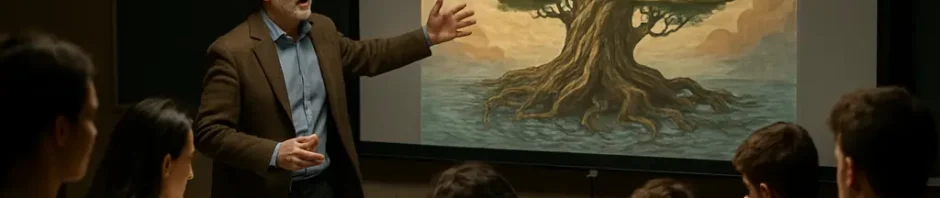
Norse Mythology Academia is treating myth less as a fixed set of divine biographies and more as a group of texts, classrooms, translations, retellings, and cultural uses that require careful reading. That shift is visible in 2026 teaching and publishing: scholars and instructors are asking how the Poetic Edda and Prose Edda work as literature, how medieval mediation shaped the surviving material, and how modern retellings in novels, films, games, and poems should be compared with the medieval record rather than mistaken for it.
How Norse Mythology Academia Reads Sources
Why Norse Mythology Academia Starts With Texts
One clear sign of this text-first approach came in 2026 with Mathias Nordvig’s Old Norse Mythology: An Introduction to the Poetic Edda and Prose Edda, published by Routledge. The University of Colorado Boulder described the book as a 166-page, source-critical academic introduction that foregrounds the original literature rather than presenting mythology as a glossary or dictionary Colorado Arts and Sciences Magazine. That distinction matters. A glossary can make Óðinn, Þórr, Loki, Freyja, and Ragnarök feel like isolated entries. The Eddic and prose traditions, however, preserve stories through voice, framing, genre, humor, conflict, learned arrangement, and later manuscript transmission.
For readers, the change is practical as well as scholarly. If the surviving texts are treated as literature, then questions of form become central: who speaks, what kind of poem or prose setting is being used, what earlier material may be implied, and where uncertainty remains. Freya Nilsen’s own way of approaching ancient stories for contemporary readers rests on that same caution: love the mythic force of the material, but do not flatten it into a modern character sheet.
Medieval Mediation And The Limits Of Certainty
The research notes for this topic point to a wider academic pattern in 2025 and 2026: scholars continue to emphasize that much of the surviving material was written down after Christianization and shaped by medieval authors, scribes, and learned habits. That does not make the texts worthless as witnesses to pre-Christian traditions. It does mean that the surviving record is mediated. Claims about direct pagan belief need to be handled with care, especially where later literary structure, Christian learning, or antiquarian explanation may have shaped the presentation.
This is where Norse Mythology Academia differs from casual myth consumption. A popular retelling may need a clean answer: what does Loki mean, what did the gods believe, what happened before Ragnarök? Academic reading often has to answer more slowly. Sometimes the evidence supports a strong claim. Sometimes it supports a limited claim. Sometimes it shows that a later story has been built from several kinds of material, only some of which can be traced with confidence.
Classrooms And Modern Reception
Modern Retellings In The 2026 Classroom
The University of Washington’s Spring Quarter 2026 course SCAND 330 A: Scandinavian Mythology, taught from March to June 2026, included a component comparing modern retellings of Norse myth in forms such as novels, films, games, and poems with medieval sources; the listed final exam date was 9 June 2026 University of Washington course listing. Because today is 16 October 2026, that course has already run. Its design still shows a useful academic pattern: modern reception is not treated as a distraction from medieval study, but as material that can be compared, tested, and interpreted.
That comparison does not require hostility toward new storytelling. Modern works can open the door for students who first met Norse myth through fiction, film, comics, games, or music. The scholarly task is to ask what changes in the passage from medieval source to contemporary narrative. Does a retelling turn a short allusive poem into a psychological drama? Does it simplify a contradictory figure? Does it add motives absent from the medieval record? Does it move myth into questions of gender, ecology, nationalism, identity, or trauma?
What Norse Mythology Academia Does With Retellings
Norse Mythology Academia can read modern retellings as reception evidence: not evidence for what Viking Age people believed, but evidence for what later readers, publishers, artists, and audiences want Norse myth to do. That distinction is essential. A video game version of a god may reveal a great deal about modern design, combat systems, moral ambiguity, and visual style. It does not, by itself, tell us what a medieval Icelandic compiler meant or what pre-Christian ritual practice looked like.
Old Norse News has treated this source problem in related coverage of Old Norse mythology through primary texts, where the central concern is not to drain the stories of wonder, but to keep the evidence visible. A classroom that places a medieval poem beside a contemporary adaptation can help students see both works more clearly. The older text is not reduced to raw material, and the modern work is not dismissed as mere distortion.
Public Reading Beyond The University
Why Accessible Scholarship Matters
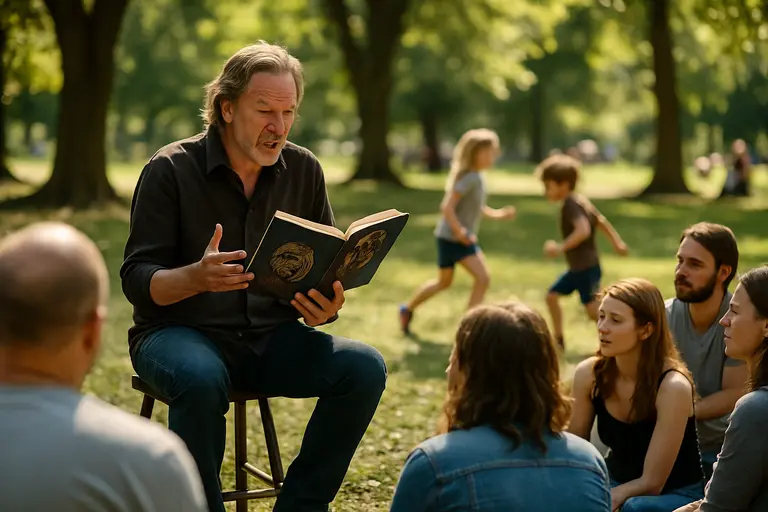
Academic work on Norse myth is not only for specialists. Introductory books, undergraduate courses, public lectures, and carefully written essays shape how a much larger audience encounters the gods and stories. That audience often arrives with strong expectations: ravens, runes, world trees, heroic deaths, prophecy, trickery, and cosmic fire. Scholarship can preserve the force of those images while asking better questions about where they come from and how they reached us.
Accessibility should not mean false certainty. A short classroom unit or public article may not be able to settle debates about dating, genre, ritual background, or scribal intention. It can still model careful practice: name the source, separate medieval evidence from modern invention, and state when interpretation is uncertain. Readers interested in the intersection of language learning and performance might find resources and community perspectives on Talk and Play, a related site within the same network focusing on communication and learning.
Ethics, Simplification, And Cultural Use
The research notes also show concern with the simplification and misuse of Norse material in popular culture. That concern should be stated carefully. Not every simplified retelling is harmful, and adaptation is part of literary life. Yet scholars are right to ask who is using Norse myth, what has been removed, what has been emphasized, and whether symbols are being detached from their textual and historical settings for ideological purposes.
This ethical question belongs inside literary study because texts do cultural work. A mythic name can be used for entertainment, for identity, for political performance, for religious meaning, or for commercial branding. Evidence-based criticism does not need to police every creative choice. It does need to resist claims that a modern use is ancient simply because it borrows an Old Norse name or image.
Engaging With Contemporary Narratives Of Norse Mythology In Modern Academia
Engaging with contemporary narratives of Norse mythology in modern academia means holding two commitments together. The first is philological and historical: read the Poetic Edda, Prose Edda, sagas, and related medieval materials as transmitted texts, with attention to language, genre, manuscript culture, and later mediation. The second is cultural: study how those materials continue to be remade in classrooms, books, films, games, poems, and public debate.
The strongest academic approach does not ask readers to choose between ancient literature and modern creativity. It asks them to identify the bridge between them. Nordvig’s 2026 introduction, as described by Colorado, points readers back to the original literature. The University of Washington’s 2026 course listing shows students comparing modern retellings with medieval sources. Together, those examples suggest a field that is neither sealed inside the past nor content with untested modern mythmaking.
Norse Mythology Academia is therefore at its best when it slows the reader down. It lets Þórr remain thunderous, Loki remain difficult, and Ragnarök remain poetically powerful, while still asking how each figure or episode survives through text, teaching, translation, and reception. That balance is not cold skepticism. It is respect for the stories and for the people, medieval and modern, who continue to carry them.
