Historians rely heavily on physical evidence to piece together the history of early medieval Scandinavia. The Norse left very few written records of their own. Christian monks or later Icelandic writers penned most surviving documents long after the events occurred, creating a biased historical record. To find the objective truth about how these people lived, traded, and expanded, researchers must dig into the earth. The physical ruins they uncover tell a story of a highly organized, expansive culture.
Hedeby and Global Trade
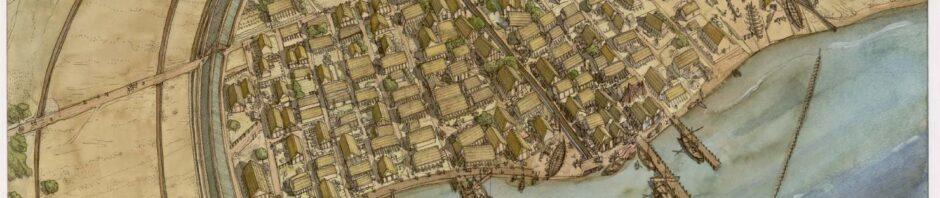
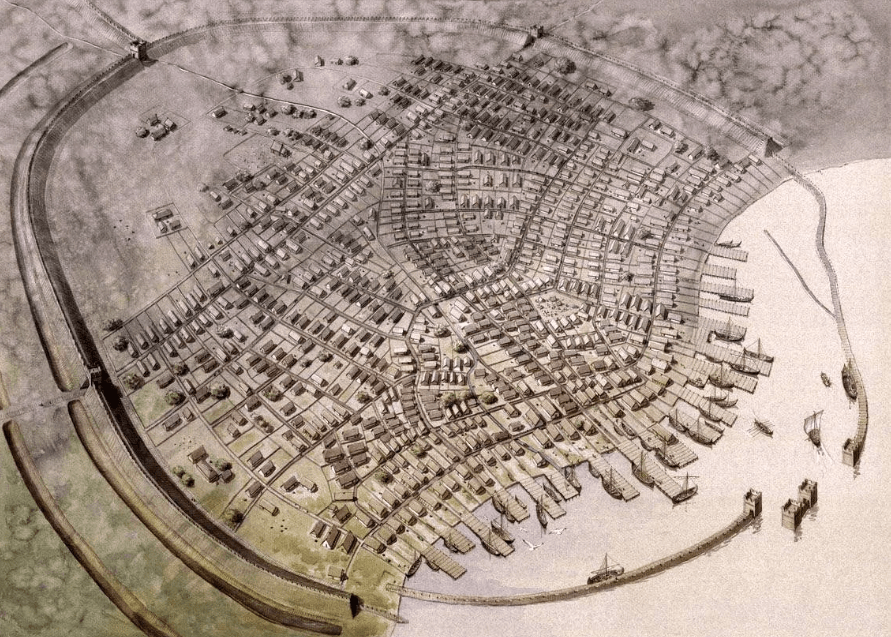
The settlement of Hedeby sits near the modern border of Denmark and Germany. During the ninth and tenth centuries, it operated as the largest trading center in Northern Europe. Excavators have pulled thousands of artifacts from the soil and the adjacent harbor. They found Arabic silver coins, Frankish glass, and local bone combs. These items prove that Norse merchants connected distant continents. The layout of the town shows tightly packed houses and defensive earthworks, indicating a massive, organized population.
L’Anse aux Meadows and Western Expansion
In 1960, researchers made a discovery in Newfoundland, Canada, that rewrote global history. They unearthed the remains of a Norse outpost at L’Anse aux Meadows. The site features the distinct foundations of timber-and-sod longhouses. Field teams discovered iron ship rivets and a bronze ring-headed pin. These physical artifacts confirmed what the oral sagas had claimed for centuries: Norse sailors crossed the Atlantic and reached North America long before Columbus. You can review the complete excavation details and historical records through the UNESCO World Heritage site archives.
The Jelling Monuments and Royal Power
The Royal monument complex at Jelling in Denmark represents a major turning point in Scandinavian history. King Harald Bluetooth constructed two massive burial mounds and raised two large runestones at this site in the late tenth century. The larger stone bears an inscription claiming Harald conquered all of Denmark and Norway and made the Danes Christian. This physical site marks the exact moment the region shifted from scattered pagan chiefdoms into a centralized Christian kingdom.
The transition from wood to stone construction at Jelling highlights a desire for permanence. Early Norse leaders built with timber, expecting nature to reclaim their work. Harald chose massive stones to guarantee his legacy survived. When archaeologists examine these locations, they gain a clearer picture of Viking Age daily life and the broader political shifts of the era. The dirt and stone provide facts that the written sagas alone cannot deliver.
