
Norse AI Naming is not just a matter of dramatic branding. The examples available in the research point to two separate but related patterns: technology projects borrow names from Norse myth, and language-technology projects are being used to support a living North Germanic language with close historical ties to Old Norse. Those patterns should not be blended too quickly. A product named BIFROST does not preserve Old Norse by itself. An Icelandic language model project, by contrast, raises direct questions about language survival, training data, human feedback, and cultural representation in AI.
Why Norse AI Naming Travels So Easily
Norse AI Naming As Metaphor, Not Evidence
The safer reading of Norse AI Naming is that mythic language gives technology teams a compact set of metaphors. Bifröst can suggest connection. Heimdall can suggest watching or detection. Mímir can suggest knowledge. Sindri can suggest making or craft. These are cultural associations, not technical proof. A name can frame how a product is imagined, but it does not tell us how that product works, how accurate it is, or how well it represents Nordic culture.
AESIR provides a clear example because the company states that every product name is designed after Norse mythological figures and lists names such as BIFROST, HEIMDALL, SINDRI, and MIMIR on its AESIR about page. That is useful evidence because the company describes the naming decision directly rather than leaving readers to infer intent. Even so, the evidence supports only a limited claim: this company uses Norse myth as a naming system for defense technology and AI products. It does not prove that Norse mythology is dominant across the technology sector.
The attraction is easy to understand. Norse myth gives short, memorable names that carry symbolic weight in English and other languages. Yet the same qualities can also flatten culture. A god, bridge, dwarf-smith, or wisdom figure can become a label emptied of story. For readers of Old Norse literature, that shift matters because mythic names carry narrative settings, poetic associations, and later medieval transmission histories that rarely fit into a product name.
Brand Systems Borrowed From Myth
AESIR And Product Identity
AESIR’s naming pattern shows how a technology brand can build coherence through myth. The product names cited in the research are not random single borrowings; they belong to one Norse frame. In branding terms, that creates a family resemblance across tools. In cultural terms, it turns mythic figures into a system of signs. BIFROST, HEIMDALL, SINDRI, and MIMIR are no longer encountered first through poems, sagas, or later scholarship. They appear as product identities inside a modern technology context.
That movement from story to system is worth watching. It may introduce mythic names to people who would not otherwise meet them. It may also encourage shallow recognition: people know the name but not the tradition. A cautious reading avoids both exaggeration and dismissal. Naming can shape curiosity, but it is not education unless interpretation follows.
Asgard And Open Source Structure
The Asgard AI Platform is another example from the research. Its GitHub presence describes an enterprise AI suite structured around four products inspired by Norse mythology, presented as a “complete intelligence loop from data to action” on the Asgard GitHub organization. The research also notes that Yggdrasil is used as the name of a public gallery or connector knowledge base. Here, mythic naming becomes architectural language: Asgard suggests a high-level organizing frame, while Yggdrasil evokes connection.
This use is culturally legible because Yggdrasil, in Norse mythic tradition, is often understood as a world-tree connecting different parts of the cosmos. The research supports the narrower point that the Asgard project uses the name to suggest roots and connection. It would be unsafe to claim that the platform interprets Norse cosmology in depth unless the project itself provides that explanation. The evidence shows naming influence, not a scholarly engagement with medieval sources.
- Mythic names can make technical systems easier to remember.
- They can also detach names from their literary and cultural settings.
- Source-backed interpretation is needed before treating branding as heritage work.
For a site concerned with language and literature, this distinction is central. A borrowed name is a sign of cultural reach, but not automatically a sign of cultural understanding. Readers interested in language contact may also find useful context in Old Norse News coverage of how Norse influenced English, since modern recognition of Norse words and names often rests on older language contact as well as later literary revival.
Language Technology Beyond Norse AI Naming
Icelandic As A Language-Technology Case
The Icelandic material in the research points to a deeper issue than Norse-inspired branding. Iceland has a population of about 370,000, and the research notes report that Icelandic partners and OpenAI began work in 2022 to improve GPT-4’s ability to understand and generate Icelandic. The project used human feedback and more than 4 billion words of quality Icelandic text data. It was publicly presented on September 25, 2024, at a meeting in New York connected with the United Nations General Assembly, and the research notes describe it as active into 2026.
This matters because Icelandic is closely connected to Old Norse in historical-linguistic terms. That does not mean modern Icelandic is identical to medieval Old Norse, but it does mean that Icelandic language planning and language technology carry unusual cultural weight for readers interested in Norse textual inheritance. The research notes also state that earlier attempts to fine-tune GPT-3 with about 300,000 Icelandic examples produced disappointing results, while later work using reinforcement learning from human feedback and much larger Icelandic text resources substantially improved model performance by mid-2024 to 2025.
That contrast shows why Norse AI Naming should not distract from language infrastructure. A mythic product label can be created quickly. A language model that handles a small-language community well requires training data, evaluation, and speakers who can correct mistakes. Cultural representation in AI is not only about which mythic names appear on dashboards. It is also about whether living languages are treated as full languages of thought, administration, literature, humor, and daily speech.
Neologisms And Cultural Continuity
The research also notes Icelandic language planning practices that favor native roots for technological neologisms rather than direct borrowing. One cited example is tölva, the Icelandic word for computer, built from elements associated with number and prophetess. This example is often discussed because it shows technology being named through Icelandic resources rather than imported vocabulary alone.
For Norse cultural representation, that practice is more than a lexical curiosity. It shows an active language culture responding to modern technology through inherited word-forming habits. The result is not a museum version of the past. It is a living language making space for new machines, new practices, and new social needs while keeping visible ties to older linguistic patterns.
Writers and publishers face related questions when ancient material enters modern formats. A related site in the same network, Leap Year Publishing, serves as a useful comparison for examining how language choices shape reader access to inherited stories. Technology names and literary retellings both select, compress, and reframe older material.
Representation Risks In Mythic Technology
The Problem Of Decorative Myth
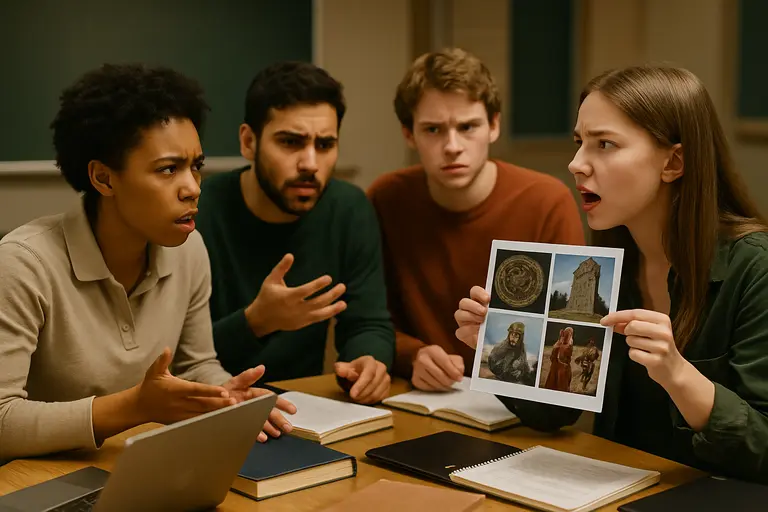
Decorative myth is not always harmful, but it can be thin. A name such as Bifrost may be attractive because it suggests a bridge, yet the medieval sources behind Norse myth are not simple symbol dictionaries. They come through poems, prose retellings, manuscripts, Christian-era preservation, later scholarship, translation choices, and modern popular culture. A technology company may not need to explain all of that, but readers should know the difference between inspiration and interpretation.
The available research does not support broad claims about how often Norse terms appear in global AI naming. It gives specific examples: AESIR, Asgard AI Platform, Yggdrasil as a project component name, the Icelandic language-technology project, and a December 2025 U.S. Space Force naming scheme that included Bifrost for a spacecraft tracking satellites in high orbits. Since that Space Force announcement occurred on December 10–12, 2025, it should be described as a past unveiling, not as an upcoming event.
What Evidence Can And Cannot Say
The evidence can say that Norse mythology appears in certain AI, defense-technology, enterprise-platform, and space-technology naming systems. It can also say that Icelandic language technology has been pursued through large-scale text data and human feedback, with reported improvement by 2024–2025 and activity continuing into 2026. The evidence cannot show, from these examples alone, that Norse mythology has a greater influence on AI than Greek, Roman, Egyptian, Sanskrit, biblical, or science-fiction naming systems.
That caution matters because cultural representation is often discussed too quickly. A mythic label may signal prestige, mystery, intelligence, watchfulness, craft, or connection. Yet without context, it can also turn cultural material into an aesthetic surface. The better question is not whether technology should avoid mythic names. It is whether naming choices are honest about what they borrow and modest about what they mean.
Norse AI Naming And Cultural Representation
Norse AI Naming sits at the crossing point of language, myth, marketing, and machine culture. The examples in the research show real use of Norse terms in AI-related and technology-adjacent projects, but they also show why naming should be separated from deeper cultural work. AESIR and Asgard use mythic structures for identity and organization. Icelandic language technology addresses a different task: helping a small language community remain visible and functional in advanced AI systems.
The cultural lesson is not that every Bifrost, Heimdall, Mimir, or Yggdrasil in technology carries deep Norse knowledge. Many uses are symbolic, brief, and strategic. The stronger lesson is that ancient names still travel because they offer concentrated meaning. They sound old, memorable, and powerful. That power deserves care.
For contemporary readers, Norse mythology in technology should invite two responses at once: curiosity and restraint. Curiosity asks what story, word, or figure stands behind a name. Restraint asks what the evidence actually supports. Between those responses, ancient language can meet modern machines without being reduced to decoration.
