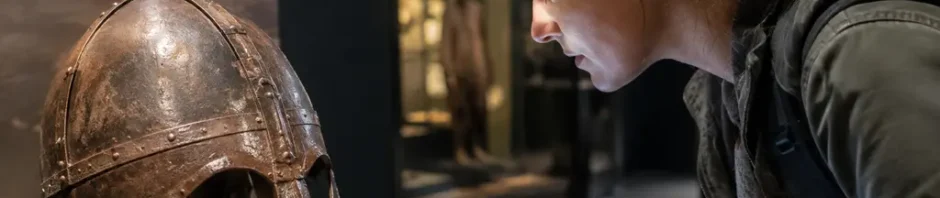
The Finding Vinland exhibit at Falmouth Museums on the Green asked a difficult public-history question: could Norse voyagers have reached Cape Cod centuries before Columbus? By November 3, 2026, its opening had already taken place, so the exhibit is best discussed retrospectively, as a cultural interpretation project rather than as an upcoming event. Its subject sits between saga memory, archaeology, local storytelling, Indigenous history, and the enduring pull of Viking myth in American imagination.
Finding Vinland Exhibit And The Question Of Evidence
Finding Vinland Exhibit Opening And Scope
The exhibit opened with a members’ reception on Thursday, September 3, 2026, from 4 to 6 p.m., and opened to the public on Friday, September 4, 2026, in the Hallett Barn Visitor Center. The event listing described an exhibition titled Finding Vinland: Exploring the Possibility of Vikings on Cape Cod, shaped by an internationally sourced advisory panel and drawing on archaeology, geography, Native perspectives, and historical scholarship Falmouth Museums listing.
That framing matters. The strongest cultural value of the exhibition was not that it claimed to solve the Cape Cod question. The stronger value was that it set competing forms of knowledge beside one another: saga memory, maps, objects, place-based stories, and Wampanoag cultural presence. A careful museum treatment of Vinland has to do more than ask whether Vikings arrived. It has to ask why later audiences wanted them to have arrived, and what that desire can obscure.
What The Exhibit Could Ask Safely
The central question—whether Vikings could have reached Cape Cod before Columbus—invites curiosity, but it also requires restraint. “Could” is not the same as “did.” A cautious exhibit can present possibility without turning possibility into proof. Based on the published description, the display used artifacts, historical maps, interpretive panels, and local stories. These materials can help visitors see how evidence is built, but they also show where evidence stops.
The Finding Vinland exhibit therefore belonged to a sensitive genre of public history: the exhibit that studies a claim without endorsing every version of it. That is a useful model for Norse topics in North America, where saga references, local pride, tourism, and speculative claims can become tangled very quickly.
Myth, Memory, And Indigenous Presence
Wampanoag Perspectives In The Display
One of the most significant features in the exhibit description was the inclusion of newly commissioned works by Wampanoag artist Julia Marden, of the Wampanoag Tribe of Gay Head, Aquinnah. Her traditional craftsmanship was presented as a way to represent Indigenous lifeways on Cape Cod around the period associated with Norse encounters. That choice shifts the center of gravity. Instead of presenting Cape Cod as an empty shore awaiting European arrival, the exhibition acknowledged an Indigenous world already present, active, and culturally specific.
This is not a minor interpretive adjustment. Vinland stories have often been told with the Norse as the main characters and Indigenous peoples as brief figures at the edge of the tale. A museum display that foregrounds Wampanoag experience can resist that imbalance. It can ask visitors to see Norse movement as one possible episode within a much older and continuing Indigenous history.
Old Norse News has also treated this issue in relation to Vínland narratives and Indigenous perspectives, where the key question is not only what the sagas say, but whose presence later readers allow themselves to notice.
Why Saga Stories Need Boundaries
The literary power of Vinland comes largely from medieval Icelandic saga traditions associated with voyages around A.D. 1000. Those traditions are culturally important, but they are not the same kind of evidence as an excavated site. A Washington Post review of Martyn Whittock’s American Vikings noted the long blending of myth and history in Vinland narratives and the importance of twentieth-century archaeological confirmation at L’Anse aux Meadows in Newfoundland.
That distinction should guide any Cape Cod interpretation. L’Anse aux Meadows matters because it gives material confirmation of Norse presence in North America. Cape Cod, by contrast, remains a question in the exhibit framing supplied in the research. A display can compare texts, geography, and local stories, but it should not treat a proposed route or possible landing as settled fact without archaeological support.
Vinland, Cape Cod, And The Problem Of Place
What Is Known Beyond Cape Cod
The research supplied for this topic emphasizes a key scholarly caution: the exact location and duration of any Norse presence beyond L’Anse aux Meadows remain uncertain. It also notes that evidence in many proposed Vinland-associated regions points more toward seasonal activity than long-term colonization. That matters for Cape Cod because a short-term voyage, a coastal stop, a remembered route, and a settled colony are very different historical claims.
The Finding Vinland exhibit appears to have worked in that uncertain zone. The phrase “exploring the possibility” is doing important work. It leaves room for inquiry while avoiding a claim that the available public description does not prove. For a topic so easily absorbed into mythic nationalism or local legend, that wording is responsible.
The Name Vinland And Its Interpretive Risk
The term “Vinland” itself carries interpretive weight. The research notes describe contested meanings, including the traditional “wine land” reading linked to grapes and alternate interpretations such as pastureland or meadowland. Even without resolving that debate here, the point is clear: names shape imagination. If readers hear “wine land,” they may picture vines and abundance. If they hear pasture or meadow, the mental image changes.
That is why language matters in Norse public history. A name from Old Norse can become a map in the mind. It can draw visitors toward one version of place and away from another. As a writer drawn to the old northern stories, I find Vinland especially revealing because its power lies not only in what it may describe, but in how later centuries have wanted to read it.
How Public History Can Resist Viking Cliché
Artifacts, Maps, And Local Stories
Artifacts, historical maps, interpretive panels, and local stories are not interchangeable. Each carries a different kind of authority. An artifact can be examined materially. A map can show how knowledge, desire, and power were organized in visual form. A local story can preserve memory, pride, anxiety, or speculation. An interpretive panel can either clarify the difference or blur it.
For that reason, the exhibit’s mixed format was promising but demanding. It required careful labeling and clear attribution. Visitors need to know when they are seeing evidence, when they are seeing interpretation, and when they are hearing a story whose value may be cultural rather than archaeological.
Writing About Evidence Without Overclaiming
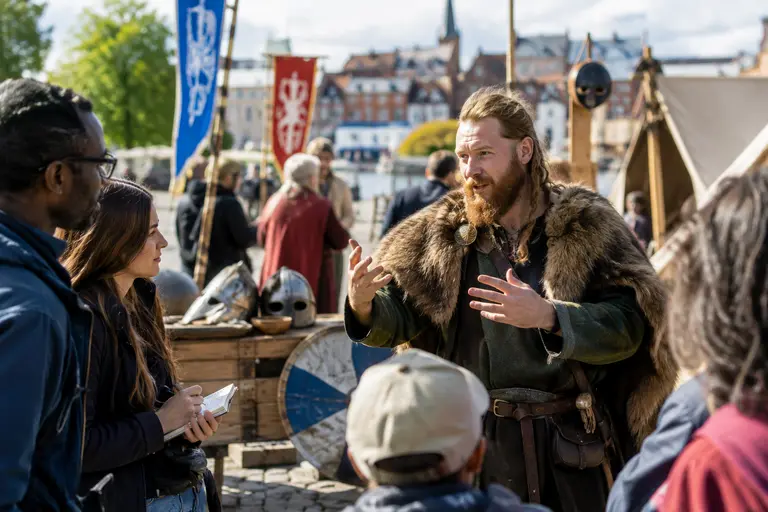
Public writing about Norse heritage faces the same challenge. The Vikings are often flattened into raiders, horned helmets, and exotic explorers. The research notes identify such images as inventions or distortions rather than secure historical evidence. A museum exhibition can challenge those images by showing process: how scholars ask questions, how communities remember, and how uncertainty remains part of honest history.
For readers interested in how public narratives are shaped across heritage, education, and writing projects, Top Ten Writing Services provides a valuable perspective in thinking about language, audience, and presentation. In the Vinland case, wording is not decorative. It determines whether a display teaches caution or feeds legend.
Finding Vinland Exhibit As Cultural Memory
The Finding Vinland exhibit is best understood as a study in cultural memory rather than as a declaration that Vikings reached Cape Cod. Its published description placed Norse possibility beside Wampanoag presence, saga memory beside historical scholarship, and local stories beside maps and objects. That combination can help visitors ask better questions: what counts as evidence, who gets centered in the telling, and why Vinland continues to attract modern attention.
The exhibit also showed why Norse mythology and culture cannot be separated from reception history. Medieval stories travel. They are translated, illustrated, taught, commercialized, challenged, and sometimes misused. In Cape Cod, the question of Vinland becomes more than a question of routes. It becomes a question of memory: how communities imagine first contact, how European arrival is framed, and how Indigenous continuity is acknowledged or neglected.
No visitor-response data or attendance figures were included in the research supplied here, so claims about local reception would be premature. What can be said is narrower and stronger: the exhibit’s stated structure brought together evidence, uncertainty, and cultural perspective in a way that suits a careful treatment of Norse heritage. The most responsible reading of the Finding Vinland exhibit is not that it closed the Cape Cod debate. It made the debate visible, and it asked viewers to notice the stories that gather around evidence before certainty arrives.
