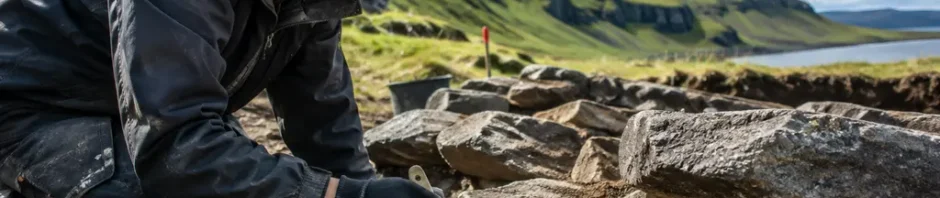
The Norse church Greenland discovery at Qinngua, near Narsarsuaq in southern Greenland, was not simply another ruin added to a map. In August 2026, archaeologists excavating there uncovered a full skeleton whose burial position supported what earlier stonework had suggested: the rectangular wall and central stone building belonged to a Christian church site with a cemetery. That is a wonderfully sharp archaeological moment, but it also asks for caution. The evidence supports a medieval Norse Christian church; it does not, by itself, solve every question about Greenland’s Norse communities, their social ranks, or their relationship with saga geography.
Why Norse church Greenland Matters Near Brattahlíð
The Qinngua site matters because it sits near Brattahlíð, the main settlement associated with Erik the Red in southern Greenland. According to the National Museum of Denmark’s announcement, archaeologists had already identified a rectangular stone wall enclosing a central stone building, but the 2026 skeleton supplied decisive confirmation that the ruin was a church surrounded by a cemetery National Museum announcement. That point is significant because church ruins can easily be overread if the burial evidence is absent or ambiguous.
Within this relatively small district, archaeologists have found six Norse churches. Only three are known to have remained in use during the medieval period. The Qinngua ruin, estimated to have been built and used between 1100 and 1300 CE, therefore belongs to a later phase of Norse Greenlandic Christianity rather than to the first generation of Norse settlement. The date range matters. It shifts the find away from a simple “Viking Age” label and into the social and ecclesiastical world of the Middle Ages.
Norse church Greenland Evidence In The Grave
The grave gave the ruin its strongest interpretive anchor. The skeleton lay with its head facing east and its arms placed by its sides. The research notes identify this position as consistent with Norse Christian burial practice. In archaeological terms, that bodily arrangement did real work: it connected the enclosure, the central structure, and the cemetery into one coherent reading.
That is why this find feels so compelling. Stones can be difficult witnesses. A wall may indicate a farm boundary, a building foundation, or a religious enclosure depending on context. A grave placed according to recognizable Christian custom narrows the interpretation. It does not remove every uncertainty, but it makes the church reading much stronger.
A Medieval Date, Not An Early Viking One
The medieval date also affects how we speak about the people who used the site. The church is estimated to have been in use between 1100 and 1300 CE. That period came after the earliest Norse movement into Greenland and belonged to a Christian community whose institutions had developed beyond initial settlement. The Smithsonian report notes that the church appears larger and more substantial than earlier, smaller Norse churches in Greenland and that it had features suggesting use well into the Middle Ages Smithsonian report.
For public history, this distinction is more than a technicality. “Viking” is often used as a shorthand for anything Norse, but Qinngua invites a more precise vocabulary. The people connected with this church were part of Norse Greenlandic society, but the building’s likely period of use places it in a Christian medieval setting.
What The Qinngua Ruin Adds To Settlement History
The Qinngua ruin adds a social dimension because it was not isolated from settlement. The research notes describe two to three nearby farmsteads. That pattern suggests the church may have served a small community rather than only a single household. I would phrase that carefully: the evidence points toward a more village-like settlement pattern, but the exact social organization still needs further study.
This is where archaeology becomes especially exciting. A church can mark devotion, but it can also mark landholding, status, and local authority. In Norse Greenland, as elsewhere in the medieval North Atlantic, church-building could express more than piety. It could show who had the resources to commission and maintain a sacred building and who could gather people around it.
Churches, Farmsteads, And Local Power
The presence of multiple churches near Brattahlíð raises questions about competition and influence. The research notes state that churches acted not only as religious centers, but also as markers of economic and territorial influence. Nearby elites may have competed through church-building as a form of status display. That possibility should remain a hypothesis, not a settled social map, yet it fits the kind of evidence archaeologists now have before them: churches, farmsteads, burial grounds, and a dense settlement district.
A related analysis of Qinngua’s new evidence also treats the find as part of a wider pattern of burial practice, farm clustering, and local power. That approach is useful because it resists turning one skeleton into a complete history. Instead, it asks how the grave, church, and nearby farms speak together.
A Possible Church Under The Sunny Mountains
Scholars have also proposed that the Qinngua ruin may correspond to the “Kirkja undir Sólarfjöllum,” or “Church Under the Sunny Mountains,” mentioned in medieval Icelandic sources. The proposed match rests on geography: Qinngua lies among mountains near the ice cap, and the location is described as fitting a place associated with consistent sunny weather.
This is a thrilling possibility for those of us who read Norse texts alongside archaeological evidence. Yet it must remain conditional. A topographic match can strengthen a case, but it is not the same as an inscription naming the church. The best reading is that Qinngua may be the church known from the Icelandic source tradition; the identification is plausible enough to discuss, but not proven beyond doubt by the available notes.
How Burial Evidence Anchors The Interpretation
The burial evidence matters because it helps separate Norse Christian practice from other mortuary traditions in Greenland. The research notes contrast the Qinngua grave with Inuit burials, which are typically described there as stone-covered chambers under cairns. The Qinngua skeleton’s eastward head placement and arms by the sides gave archaeologists a clearer basis for linking the cemetery to Norse Christian custom.
This comparison should be handled respectfully. Archaeology should not reduce Inuit or Norse practices to simplified checklists. Burial forms can vary, and context matters. Still, the specific combination at Qinngua—Christian orientation, the stone enclosure, the central church building, and the surrounding cemetery—created a strong interpretive case.
Reading Orientation With Care
Orientation is powerful evidence because burial posture can reflect religious practice. In this case, the head facing east and the arms placed at the sides match the Norse Christian pattern described in the research. Yet orientation alone would be weaker without the architectural context. A grave beside a central stone building within a rectangular enclosure gives the position more interpretive weight.
That layered reading is one of the best lessons from Qinngua. Archaeology rarely depends on a single dramatic clue. It works through relationships: body, wall, building, cemetery, nearby farms, regional church distribution, and written references. Each piece narrows the range of likely explanations.
Why Comparison With Inuit Burial Matters
The distinction from Inuit burial customs helped make the Qinngua interpretation more secure. The research notes describe Inuit burials as typically placed in stone-covered chambers under cairns, while the Qinngua skeleton followed a Norse Christian orientation. That contrast matters because Greenland’s past includes more than one cultural tradition, and responsible interpretation must avoid blending them into a single undifferentiated story.
For modern readers, this also has ethical weight. The Norse story in Greenland is fascinating, but it is not the only human history of the island. Clear attribution of burial forms helps scholars discuss Norse Christianity without erasing other Greenlandic histories. Public heritage gains strength when it can hold more than one past in view.
Why The Architecture Points To Longer Use
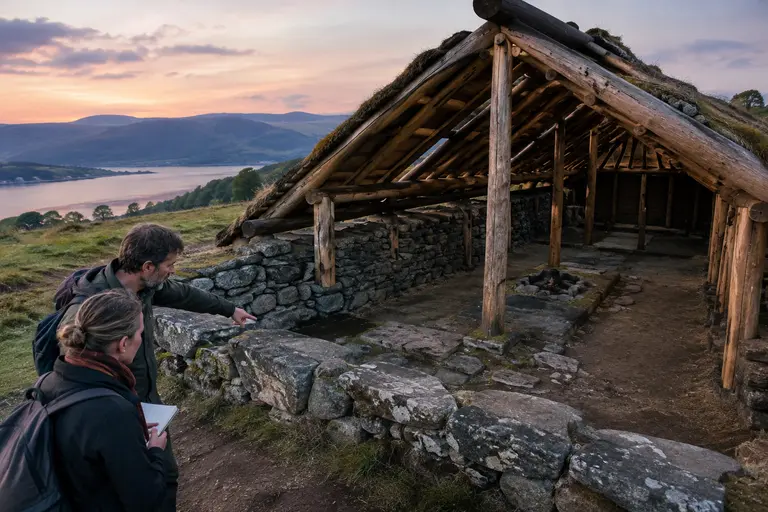
The church’s construction is another reason the find has drawn attention. The research notes describe a large structure built with many roughly hewn stones. Those features contrast with earlier Norse churches in Greenland, which were often smaller, simpler, and in some cases quickly abandoned. The Qinngua church appears to belong to a more sustained medieval presence.
The first Norse church discovered in Greenland in more than 60 years would be significant under any circumstances. Its apparent size and longevity make it still more useful for interpreting how Christian institutions worked in southern Greenland. A larger church requires labor, planning, and a community capable of maintaining it. That does not automatically identify the patrons, but it does point toward resources and organization.
Architecture As Social Evidence
Stone buildings are never only technical objects. They show choices: where to build, how much labor to invest, how visible the structure should be, and how long it should last. At Qinngua, the larger church and surrounding cemetery suggest a place meant to endure. It was not merely a temporary devotional shelter.
That endurance is central to the site’s significance. If the church remained in use into the Middle Ages, it can help scholars examine how Norse Greenlandic communities sustained Christian institutions after the initial settlement period. This gives the ruin value not only as a discovery, but as evidence for continuity.
Visual Records And Public Understanding
Plans, drawings, and site sketches will be essential for helping non-specialists understand how the enclosure, central building, cemetery, and farmsteads fit together. Visual interpretation should stay tied to excavation evidence rather than imaginative reconstruction. For individuals interested in how drawing and public memory intersect, The Sketchbook Project is a fascinating platform. You can explore it further at The Sketchbook Project, which showcases how visual records can significantly shape the way people connect with place and history.
For Qinngua, the challenge is to show enough to make the ruin understandable without filling gaps too confidently. A measured plan can often teach more than a dramatic reconstruction if the evidence is still being assessed.
What Norse church Greenland Changes In Public Memory
The Norse church Greenland find changes public memory by moving attention from heroic settlement stories alone toward community, burial, church authority, and medieval continuity. Erik the Red’s district still matters, but Qinngua reminds us that later generations built institutions, buried their dead according to Christian custom, and organized life around churches and farms.
The find also sharpens how we connect archaeology and texts. The possible link with “Church Under the Sunny Mountains” is enticing, and I confess the phrase itself has a scholar’s magnetism. Still, the responsible position is cautious: the geography may match, but the identification remains a hypothesis unless stronger direct evidence appears.
What stands firmly is already impressive. In August 2026, archaeologists found a skeleton at Qinngua whose burial pattern confirmed the interpretation of a stone ruin as a Norse Christian church with a cemetery. The church likely dated between 1100 and 1300 CE. It lay near Brattahlíð, in a district with multiple Norse churches, only some of which continued into the medieval period. Nearby farmsteads suggest a small community context. Its size and construction point toward sustained use and social significance.
That is why Qinngua deserves careful attention. It does not need inflated claims to matter. The evidence is strong enough on its own: a medieval Norse Christian church, a cemetery, a body placed according to Christian custom, and a settlement district where faith, land, and power met in stone.
