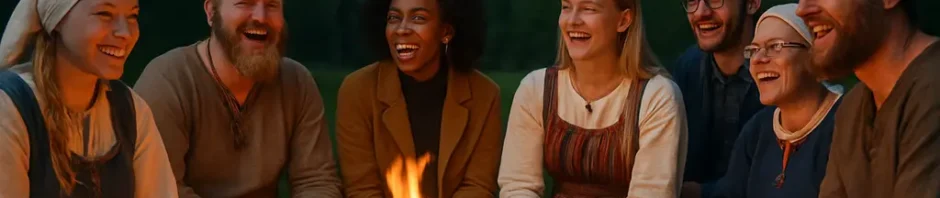
FinnFest USA 2026 is scheduled for September 17–20, 2026, in Minneapolis, Minnesota, with main venues including the Hilton Minneapolis Downtown and the American Swedish Institute. The official festival information identifies public-facing programming such as the Free Tori Nordic Fair on September 18–19, with marketplace vendors, makers, live Tori Stage music, and access without a festival pass, according to official FinnFest information. For a cultural historian of the Viking and Nordic past, the event is worth reading carefully: not as a Norse festival in disguise, but as a Finnish-American gathering where myth, migration, performance, and founding-era memory meet in a distinctly modern setting.
Why FinnFest USA 2026 Fits Nordic Public Memory
FinnFest USA 2026 As A Meeting Point
The first interpretive point is simple: Finnish heritage is not identical with Norse heritage. Finnish language, mythology, and historical memory do not belong to the same category as Old Norse literature or Scandinavian Viking Age archaeology. Yet public culture in North America often places Finnish, Swedish, Norwegian, Danish, Icelandic, and Sámi inheritances into shared Nordic spaces. Minneapolis is an especially fitting city for that kind of programming because the listed venues include both a downtown hotel setting and the American Swedish Institute, a cultural institution whose presence signals a wider Nordic frame.
Seen this way, FinnFest USA 2026 works as a case study in how communities present heritage without collapsing difference. A Finnish song rooted in the Kalevala, a Swedish-American venue, a Nordic fair, and a story tied to New Sweden can all sit beside one another. They do not prove a single origin story. They show how later communities create public settings where related but separate traditions can be compared with care.
That point matters for readers interested in Viking heritage because “Nordic” is often used too loosely. A cautious approach asks which claims belong to Finnish epic tradition, which belong to Norse myth, which belong to colonial American history, and which belong to modern festival practice. For a related look at how Scandinavian-American events frame ancestry and public memory, see this discussion of Norse heritage festivals.
Public Heritage Without False Equivalence
The strongest heritage events do not need to pretend that every northern tradition is the same. Finnish mythology has its own figures, songs, and cosmological ideas. Norse mythology has its own gods, poems, and medieval manuscript record. American history introduces another body of evidence: migration, settlement, political documents, performance, and civic memory. A festival can bring these themes into contact, but contact is not the same as equivalence.
This distinction helps keep interpretation honest. The event’s Nordic framing may invite visitors to compare mythic singers, smiths, underworld stories, and nature-linked powers across cultures. Yet the evidence supplied for the festival points first to Finnish-American identity, not to Viking Age reconstruction. That makes the Minneapolis program culturally significant in a modern sense, rather than archaeological evidence for the past.
American History Through A Finnish Lens
Morton, New Sweden, And The Founding Story
One of the clearest American history connections is John Morton, whose Finnish ancestry gives the festival a founding-era thread. The research for this piece identifies Morton, born in 1724/25 and deceased in 1777, as a signer of the Declaration of Independence. It also states that his ancestors emigrated from Finland in the seventeenth century through New Sweden. The key interpretive claim is not that Finnish ancestry alone explains Morton’s political action. Rather, his family background complicates simplified stories of the American founding by showing how northern European colonial histories fed into eighteenth-century public life.
The festival is scheduled to raise Morton’s story in two ways: through Jay Smith, listed in the research as Lecturer of the Year, and through a historical play with music, Morton: The Forgotten Founder. The production is listed as a one-night-only event on Saturday, September 19, 2026, at 6:00 PM, at Minnehaha Park Pavilion, with free admission, according to the Frank Theatre event page.
The term “forgotten” should be handled cautiously. It is a dramatic title, not a measurement of historical awareness. Still, the framing points to a real public-history problem: some ancestries and regional colonial experiences receive less attention than others in popular accounts of the United States. Morton’s story gives Finnish-American audiences a specific founding-era figure while asking broader questions about how immigrant descent is remembered.
What The Morton Program Can And Cannot Prove
A play can make history emotionally legible, but it is not the same as an archive. A lecture can supply context, but it still depends on the evidence selected by the speaker. The safest reading is that the Morton programming brings a Finnish-descended signer into public conversation during the festival. It should not be stretched into a claim that Finnish culture, by itself, determined Pennsylvania’s politics or the outcome of independence. The research states that Morton cast a decisive vote in Pennsylvania that helped lead the Thirteen Colonies to vote for independence. That is already a strong claim without adding unsupported drama.
This is where cultural memory becomes useful. It does not replace constitutional history. It asks why some lives become symbolic touchpoints for later communities. For Finnish Americans, Morton offers a bridge between seventeenth-century migration through New Sweden and eighteenth-century revolutionary politics. For students of Nordic heritage, he shows that northern European stories in North America extend beyond Viking imagery and beyond nineteenth-century immigration alone.
Kalevala Themes Beside Norse Motifs
Singing, Smithing, And The Kalevala
The festival’s mythological dimension appears especially through music and the arts. The research identifies Ruut as the 2026 Performer of the Year and notes that her album Motherland draws from Finnish mythology, especially the Kalevala. It also states that she will appear in conversations among five Finnish-born women artists. This matters because myth here is not presented only as old text. It is being reworked through contemporary performance, conversation, and artistic self-understanding.
The Kalevala figures named in the research—Väinämöinen, Ilmarinen, Lemminkäinen, and Aino—are useful for careful comparison. Väinämöinen appears as a sage and powerful singer. Ilmarinen is a divine blacksmith who forges magical artifacts. Lemminkäinen is adventurous and reckless. Aino refuses Väinämöinen and drowns tragically. These character types create points of comparison with Norse materials, where song, smithing, fate, heroic risk, and gendered power also appear. Yet comparison should not become merger.
For readers interested in community art, memory, and handmade practice, The Sketchbook Project offers a parallel view into how personal creative records can develop into public cultural memory when these works are curated and studied within a broader network.
Why Finnish Myth Is Not Norse Myth
The research notes that Finnish mythology shares some broad motifs with Norse myth, including creation, cosmic opposition, and powers tied to natural elements. It also stresses that Finnish mythology is distinct. The Kalevala includes its own creation traditions, its underworld Tuonela, powerful female figures, and forms of magic associated in the research with shamanic practice.
That distinction is not pedantic. It changes interpretation. Norse myth is often filtered through medieval Icelandic texts, skaldic poetry, and archaeological debate. Finnish epic material, as represented by the Kalevala, has a different collection and publication history. The research supplied for this piece dates the Old Kalevala to 1835 and the expanded version to 1849. Those nineteenth-century publication dates do not erase older oral materials, but they do remind us that edited epic form and ancient belief are not identical categories.
A festival setting can make these differences visible if speakers and artists name their sources clearly. The singer, the smith, the underworld, and the tragic woman are not interchangeable symbols from a generic northern past. They belong to specific traditions that deserve to be heard in their own terms.
Public Culture, Makers, And Intergenerational Ties
The Free Tori Nordic Fair As Social Evidence
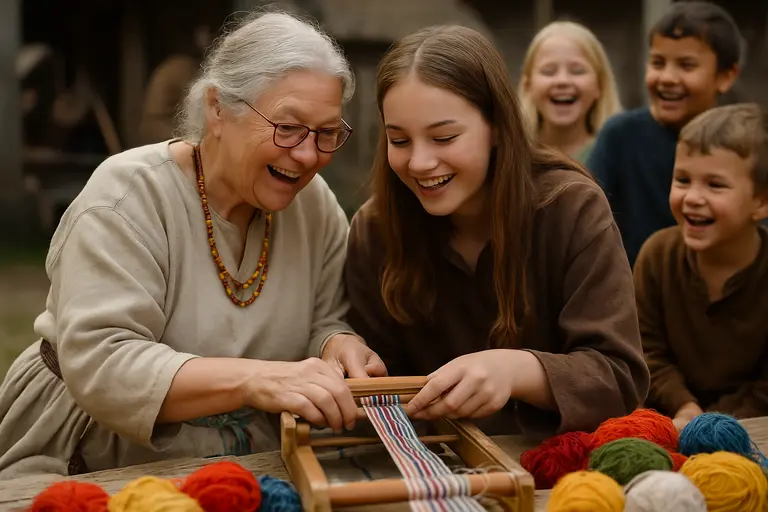
The Free Tori Nordic Fair, listed for September 18–19, is more than a marketplace detail. It shows how heritage is made public through music, vendors, makers, and informal gathering. “Tori” itself signals market culture, but the modern fair should not be mistaken for evidence of a medieval or ancient trading site. Its value is interpretive: it gathers people around objects, sound, foodways, design, and conversation.
For a historian, makers are especially interesting because craft often carries memory across generations without requiring a formal lecture. A textile, carving, song, instrument, or printed object may not prove an ancient practice, yet it can prompt questions about continuity, revival, adaptation, and identity. The festival’s public fair format can therefore act as a bridge between family memory and researched history.
- Dates: September 17–20, 2026, in Minneapolis.
- Main venues named in the research: Hilton Minneapolis Downtown and the American Swedish Institute.
- Public fair: Free Tori Nordic Fair on September 18–19, open without a festival pass.
- Morton program: Lecture context and a one-night historical play with music.
- Arts focus: Ruut, Motherland, and conversations among Finnish-born women artists.
Young Leaders And Heritage Transmission
The research also identifies a Young Leaders Networking Event on Sunday, September 20, 2026, through Finlandia Foundation National. Its stated aim is to connect emerging leaders, cultural advocates, and people interested in Finnish-American ties. That detail matters because heritage festivals are not only commemorative. They also recruit future custodians of memory.
From an evidence-based viewpoint, we should not assume outcomes that have not happened. The research does not provide attendance numbers, demographic data, or long-term measures of cultural impact. What can be said is narrower and stronger: the program includes a dedicated setting for emerging leaders, and that setting aligns with the festival’s wider pattern of linking myth, art, ancestry, and civic history.
What FinnFest USA 2026 Reveals About Nordic Connections
FinnFest USA 2026 reveals how Nordic connections in America are often built from overlapping but distinct memories. Finnish myth enters through the Kalevala and contemporary music. American history enters through John Morton, New Sweden ancestry, and the Declaration of Independence. Public Nordic culture enters through Minneapolis venues, the Free Tori Nordic Fair, makers, artists, and intergenerational programming.
The most responsible interpretation avoids two errors. The first error is isolation: treating Finnish-American history as if it had no connection to wider Nordic spaces in North America. The second error is flattening: treating Finnish and Norse traditions as if they were the same. The festival’s strongest value lies between those errors. It offers a setting where comparison is possible, but evidence still matters.
If FinnFest USA 2026 succeeds as public history, its value will not rest on spectacle alone. It will rest on whether visitors leave with sharper distinctions: Finnish epic is not Norse myth; performance is not proof; ancestry is not destiny; and civic memory grows stronger when lesser-known stories are tested against sources rather than repeated as slogans. That is a careful kind of bridge, and it is the kind Nordic heritage work needs.
