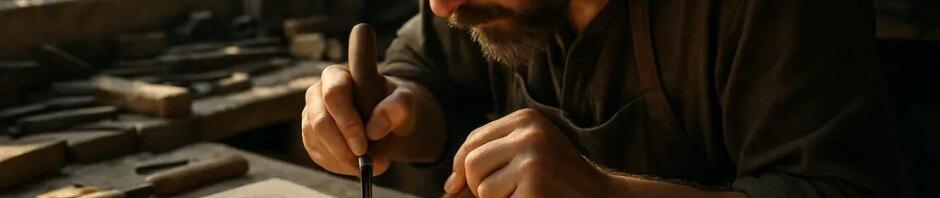
The Norse Saga Room at the American Swedish Institute in Minneapolis asks a useful question: how should a modern museum present Norse myth when the object on display is not Viking Age, but a twentieth-century artistic interpretation of older stories and visual forms? The room opened to the public on May 16, 2019, as a permanent feature of the visitor experience, and ASI places it on the lower level of the Turnblad Mansion, where woodwork, folk art, and mythic imagery are used to frame Scandinavian cultural memory. ASI states that the original room was made in 1912 for a Stockholm apartment owned by Swedish businessman Anders Andersson, before later display, sale, and relocation brought it to Minnesota ASI’s exhibition record.
Why The Norse Saga Room Matters
An Imported Room In A Minneapolis Museum
The room matters because it is not simply a decorative interior. It is a moved, reinstalled cultural space with a traceable history. According to ASI, it began in a Stockholm apartment, appeared at Statens Historiska Muséet in 1981, was later purchased by entrepreneur Curtis L. Carlson, and was installed in his headquarters in Minnetonka, Minnesota, before its 2019 relocation to the American Swedish Institute. That chain of movement is significant. It shows how Scandinavian material culture can shift from private display to museum setting, then into a public heritage institution serving a broader community.
This movement also changes how the room is read. In a private Stockholm apartment, it likely signaled taste, status, and cultural identity for its owner. In a museum, it becomes evidence for how early twentieth-century artists and patrons interpreted Norse material. At ASI, it sits within a Swedish American institution, so the room also speaks to immigration-era memory, public education, and the continuing appeal of Norse themes far from Scandinavia.
Norse Saga Room As Public Myth Education
The Norse Saga Room works best when understood as interpretation rather than direct survival from the Viking Age. ASI describes design influences that include Viking culture, earlier Norse mythology, Norwegian folk art, and Japanese aesthetic styles. This mixture should make readers cautious. The room does not give us a plain window into the Viking Age. Instead, it shows how later artists and patrons selected, arranged, and stylized older motifs for a modern interior.
That is why the room has value for mythology and culture. Norse myth has never reached modern audiences through one fixed channel. It has passed through medieval texts, antiquarian scholarship, museum display, national romantic art, family memory, popular culture, and community institutions. A room like this makes that process visible. It is an object lesson in reception: not only what Norse myth said in older sources, but how later communities chose to imagine it.
A Room Built From Several Traditions
Viking Motifs And Earlier Myth
The room’s artistic language draws on motifs associated with Viking culture and older mythic material, but the safest reading is that these are references rather than reconstructions. ASI’s description points to Norse mythology and Viking cultural imagery as sources of inspiration, not as proof that the room copies a documented Viking interior. That distinction matters. Public displays of Norse material can easily collapse centuries into a single “Viking” style, even though the evidence belongs to different periods, regions, and media.
For a cautious interpreter, the room is valuable precisely because it is layered. It invites viewers to ask which parts evoke myth, which parts echo folk art, and which parts reflect early twentieth-century design taste. The answer may not always be separable at a glance. Still, the questions themselves help prevent a common error: treating all Norse-looking decoration as direct historical evidence.
Folk Art, Woodwork, And Modern Taste
ASI identifies Norwegian folk art and Japanese aesthetic styles among the room’s influences, with artists such as Gerhard Munthe shaping this mode in the late nineteenth and early twentieth centuries. That combination is revealing. The room belongs to a period when artists were not merely copying the past; they were arranging old forms in ways that spoke to modern taste. Woodwork and ornament helped turn myth into an immersive environment.
Because of that, the room’s cultural value lies in its hybridity. It joins mythic subject matter with Scandinavian craft references and international design interest. This does not weaken its connection to Norse culture. It makes the connection more historically specific. The room reflects a moment when Scandinavian identity, art, and myth were being presented through designed interiors rather than only through books, monuments, or museum cases.
From Stockholm Apartment To ASI

Ownership And Display History
The room’s path from Anders Andersson’s apartment to ASI shows how cultural objects gain new meanings through relocation. A private room made in 1912 became a museum-visible object in Stockholm in 1981, then a corporate interior in Minnesota, and finally a permanent feature at ASI beginning on May 16, 2019. Each setting changed the audience. Each setting also changed the kind of story the room could tell.
In Minnesota, the Norse Saga Room sits within a community institution rather than a Scandinavian palace, academic archive, or archaeological museum. That matters for public memory. It helps visitors see Norse myth as something carried, reframed, and reinterpreted by later Scandinavian and Scandinavian American communities. Readers interested in how public displays reshape Norse identity may find a useful comparison in Old Norse News coverage of Norse identity artifacts, where objects are treated as active participants in memory rather than neutral props.
Community Access And Attendance
Access also gives the room civic importance. The research notes indicate that entry to the room is included with regular museum admission, rather than requiring a separate charge. That placement inside the ordinary museum route makes the room part of ASI’s regular educational offering, not a temporary side display. It also means the room can reach visitors who may arrive for Swedish American history, architecture, food, language, art, or family programming rather than Norse mythology alone.
ASI’s wider audience had grown before the room opened. A City of Minneapolis CPED staff report states that total ASI visitors, including museum, café, programs, and rentals, exceeded 162,000 in calendar year 2019, up from about 106,000 in 2015, an increase of more than 50 percent over that period CPED staff report. The report does not isolate attendance for this room, so it should not be used to claim that the room caused that growth. It does, however, show that ASI was operating as a substantial cultural venue when the room became part of the visitor experience.
That broader setting is relevant. A cultural room gains meaning not only from carved surfaces or mythic motifs, but from who is able to encounter it. Community institutions, including related heritage sites such as agheiro, depend on careful public framing when they connect cultural memory with modern audiences.
What The Norse Saga Room Preserves
Memory Without False Certainty
The Norse Saga Room preserves more than ornament. It preserves a record of how people in the early twentieth century imagined the Norse past, how later collectors valued that imagination, and how a twenty-first-century museum chose to place it before the public. Its importance is not that it proves what a Viking Age room looked like. It does not. Its importance is that it shows a later cultural encounter with myth, craft, and identity.
This is where caution strengthens the interpretation. Norse mythology is often pulled toward spectacle, especially in modern media. A room like this can be admired for its drama, but it also asks for careful labels and clear context. The viewer should know that Viking culture, earlier myth, Norwegian folk art, Japanese design influence, and modern patronage all meet in the object. None of those strands should erase the others.
A Cultural Space For Contemporary Readers
For contemporary readers of Norse stories, the room offers a useful reminder: myth survives through material settings as well as manuscripts. A carved interior, a museum room, or a public installation can shape how people imagine sagas and gods, even when the installation is far removed from the medieval texts that preserve many mythic narratives. That makes the room relevant to literature as well as design.
The Norse Saga Room also shows why cultural spaces need evidence-based interpretation. Without dates, ownership history, and source attribution, the room could be mistaken for a timeless “Viking” environment. With context, it becomes something more precise and more interesting: a 1912 Scandinavian artistic interior, moved across institutions and national borders, now used by ASI to present Norse-inspired visual heritage to a public audience.
Its significance, then, lies in mediation. The room stands between past and present, myth and design, Scandinavia and Minnesota, private wealth and public access. It does not replace saga literature or archaeological evidence. It helps modern visitors see how Norse themes have been received, styled, preserved, and questioned across time.
