
The Viking World Course at UMass Boston offers a useful case study in how universities frame Norse cultural heritage for modern students. ANTH 232, formally titled “The Viking World,” is not presented only as a survey of raids and ships. According to the course description, it treats Norse societies of Late Iron Age Scandinavia, expansion into Europe and the British Isles, the discovery of North America, and the colonization of Greenland. That range matters because Viking history is often flattened into a narrow image of warriors, while the evidence asks for a wider view of exchange, settlement, gender, belief, power, and conversion.
Why The Viking World Course Matters
What The Viking World Course Covers
UMass Boston lists ANTH 232 for Fall 2026, running from September 8 to December 11, 2026. The class meets Monday, Wednesday, and Friday, from 9:00 am to 9:50 am, in University Hall, room Y02-2110. It carries 3 credits. The listing also gives an approximate guest-student tuition figure of $2,138 for Massachusetts residents not matriculated in a degree program, and the research notes for October 18, 2026 list enrollment at 79 students out of a capacity of 80, with registration closed. These administrative details come from the UMass Boston course listing.
The schedule shows a conventional classroom rhythm: three short meetings each week across a fall term. Yet the content reaches far beyond a simple chronology. The course description includes the Germanic mode of production, gift exchange and reciprocity, class and gender identity, pagan religion and mythology, and the archaeology of religious conversion. Those themes place Viking studies within anthropology and archaeology rather than heroic storytelling alone.
Why A University Frame Changes The Questions
A university course can slow down the habits of popular Viking reception. Instead of beginning with horned helmets, which belong more to modern imagery than to securely described Viking Age equipment, a class can ask what forms of evidence are being used. Burial evidence, settlement archaeology, religious objects, written accounts, place names, and later literary traditions do not all answer the same questions. The value of the course frame is that it can separate evidence from inherited assumptions.
For the Viking World Course, the stated attention to production, exchange, and reciprocity is especially useful. It reminds students that Norse expansion was not only movement across water. It also involved social obligations, labor systems, trade goods, households, and negotiated identities. The same is true of religion. A course that pairs pagan religion and mythology with the archaeology of conversion can ask how belief changed in material life, not only in later texts.
Course Evidence And Limits
Schedule, Enrollment, And Access
The Fall 2026 offering was already in session on October 18, 2026, since the term began on September 8 and was scheduled to end on December 11. That temporal detail matters. It would be misleading to describe the class as an upcoming opportunity for that term. Based on the supplied research, it was a current Fall 2026 course with registration listed as closed.
Enrollment details should be read cautiously because university registration pages can change. The research notes give a snapshot: 79 enrolled students, 80 seats, and closed registration. That near-capacity status suggests interest, but it does not prove why students enrolled or how they assessed the course. We should avoid turning a registration figure into a claim about popularity without survey evidence or departmental context.
What The Listing Can And Cannot Tell Us
The course listing tells us the official themes, credits, meeting pattern, location, and cost estimate for one category of guest student. It does not tell us the weekly reading list, assignments, instructor method, classroom discussion quality, or student outcomes. A cautious historian should resist filling those gaps. The available evidence supports a narrower, still meaningful claim: UMass Boston offered a structured anthropology course in Fall 2026 that framed Viking studies through social organization, expansion, religion, identity, and archaeological interpretation.
This distinction is not a minor matter. Norse heritage is often used in modern media, tourism, and identity debates. A course title can attract attention, but the scholarly weight lies in the evidence it asks students to interpret. Public-facing heritage work faces the same problem. Museum displays and exhibitions can help audiences think more carefully, as seen in related coverage of a Viking World exhibition, but they work best when they show where interpretation begins and where evidence ends.
Greenland Archaeology In The Classroom Frame
The August 2026 Church Ruin
The course description’s inclusion of Greenland gives the Fall 2026 class a timely archaeological connection. In August 2026, a previously unknown Norse church ruin was reported near Erik the Red’s settlement in southern Greenland, at Qinngua near Narsarsuaq. The report described a church ruin and an associated cemetery, including a skeleton, and presented the find as evidence relevant to community structure and power in Norse Greenlandic society, according to the National Museum of Denmark announcement.
That discovery fits the course themes closely, but it should not be used loosely. A church and cemetery are evidence for Christian institutional and burial practice at that place. They may help researchers discuss authority, community organization, and the social shape of Norse Greenland. They do not, by themselves, explain every feature of Greenlandic Norse life. The strongest teaching use would be comparative: how does a church ruin alter what students ask about settlement, conversion, and local power?
Why Greenland Complicates Simple Viking Stories
Greenland is central because it draws Viking studies away from a raiding stereotype and toward settlement under demanding conditions. The supplied course description names the colonization of Greenland alongside North America, Scandinavia, Europe, and the British Isles. That combination encourages students to think across regions without assuming that one Norse experience explains all the others.
A Greenlandic church ruin also links archaeology with social identity. Churches, cemeteries, and skeletons are not abstract symbols. They point to communities organizing death, memory, ritual, and authority. In classroom terms, that allows students to connect material evidence with larger questions: Who had power? How were communities arranged? How did conversion reshape burial and belonging? The answers require careful excavation reports and comparative analysis, not romantic certainty.
Public Heritage Beyond The University
Modern Audiences And Norse Memory
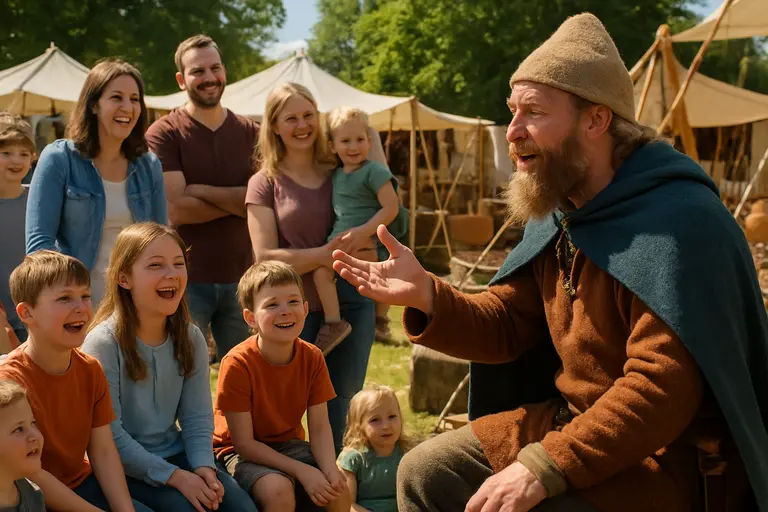
Academic courses do not operate apart from public culture. Students arrive with images shaped by television, games, museums, family stories, and online discussion. A careful class can make those images visible and test them against evidence. This is one reason the Viking World Course has significance beyond its classroom. It models a way to approach heritage claims without rejecting public interest or surrendering to fantasy.
Public heritage is also shared across many kinds of cultural organizations. A history site, a museum, a university class, or a community arts group will not use the same methods, but each can shape how audiences think about the past. Engaging with diverse perspectives across the network, readers might find community art initiatives like those at Wakefield Rep intriguing. This connection illustrates that while the mediums differ, both theatre and archaeology ensure responsible contextual interpretation.
Evidence, Identity, And Caution
Norse heritage carries modern weight because people continue to use Viking Age material for identity, design, belief, tourism, and entertainment. That makes accuracy more than an academic preference. If a course teaches class, gender, reciprocity, production, mythology, and conversion together, it gives students tools to resist oversimplified inheritance stories. Norse societies were not a single fixed model to be copied. They were historically situated communities documented through uneven and sometimes difficult evidence.
The safest public lesson is modest but strong: the past becomes clearer when different kinds of evidence are kept in view. Course descriptions, excavation announcements, and artifact studies each have limits. They also gain value when read together. A university course can give students practice in that method, especially when recent archaeology, such as the Greenland church discovery, is placed beside older questions about expansion, settlement, religion, and power.
Viking World Course And Norse Heritage Today
The Viking World Course at UMass Boston matters because it shows how Norse heritage can be taught as social history and archaeology, not as a collection of dramatic images. Its Fall 2026 listing supports a clear picture of the course’s administrative shape and intellectual range. It met three times weekly, carried three credits, and addressed Late Iron Age Scandinavia, expansion, North America, Greenland, production, exchange, class, gender, religion, mythology, and conversion.
The recent Greenland church ruin adds a strong example of why such courses remain relevant. Archaeology continues to refine the questions scholars ask about Norse communities. A church and cemetery near Erik the Red’s settlement do not close the discussion; they open a more precise one about power, belief, and community in southern Greenland.
For readers of Norse history, the lesson is disciplined curiosity. The Viking past is worth studying because it is not simple. It asks us to weigh evidence, name uncertainty, and keep modern desire from outrunning what the sources can bear.
