
Scandinavian Heritage is the right frame for assessing Dr. Jon K. Lauck’s Augustana work because the documented record points most clearly to regional history, immigration memory, archives, and institutional stewardship. It does not point, at least in the available research, to direct work in Viking Age archaeology or Norse material culture. As of September 16, 2026, the strongest evidence supports a cautious reading: Lauck’s impact is best understood through his scholarship on the Midwest and his leadership context at Augustana University, not through claims about excavations, artifacts, or Old Norse philology.
Scandinavian Heritage And Augustana’s Public Memory
Scandinavian Heritage Is Not The Same As Norse Archaeology
Readers of Norse history may naturally look for runestones, ship burials, hoards, and Viking Age sites. The research supplied for this piece does not show that Lauck’s documented work centers on those subjects. That distinction matters. Scandinavian immigrant history in the American Midwest is historically connected to Denmark, Norway, Sweden, Finland, and Iceland through migration, language, church life, newspapers, letters, and family records. Norse archaeology, by contrast, concerns earlier material evidence from the Viking Age and related periods. Using Scandinavian Heritage as the main lens keeps the claim accurate while still honoring the cultural thread that brings many readers to Norse studies.
Why Augustana’s Setting Matters
According to the research materials supplied for this article, Lauck was appointed Executive Director of the Center for Western Studies at Augustana University in September 2026. The same materials describe the center as holding more than 500 archival collections and a library of over 37,000 volumes on the American West. Those figures, if read with care, suggest why leadership at such a center can shape public memory: archives decide what is preserved, described, taught, requested, and made usable for future researchers. Still, an archive on the American West is not automatically a Scandinavian archive. The point is that Midwestern and western regional history often intersects with immigrant settlement, including Scandinavian communities, when collections contain family papers, church materials, local histories, newspapers, and migration records.
What Lauck’s Record Can Support
A Scholar Of Region, Identity, And Institutions
Augustana University’s directory identifies Lauck as holding a Ph.D. in History from the University of Iowa, a J.D. from the University of Minnesota, and prior service as president of the Midwestern History Association; it also states that he has authored or edited more than 30 books Augustana directory. Those details support a claim about scholarly range and regional expertise. They do not, on their own, prove a direct record of Scandinavian archival curation. They do show that Lauck works in the kind of historical field where immigrant settlement, local institutions, and regional identities can be examined together.
This is where caution helps rather than weakens the argument. A historian of the Midwest can affect how Scandinavian-descended communities are remembered without being a specialist in Viking Age archaeology. The influence may appear in research priorities, public programs, collection use, and institutional partnerships. The research notes say Lauck expressed interest in examining other river valleys in the region, including the James River, Red River of the North, and Minnesota River. Such routes matter because rivers shaped settlement, agriculture, trade, and community formation. For Scandinavian-American history, river valleys can also be a practical way to study where migrants lived, worshiped, published, farmed, and passed records to descendants.
Impact Without Overclaiming
The word “impact” should be used with restraint. There is no supported basis here for saying Lauck personally saved a named Scandinavian collection, recovered a lost Norse artifact, or founded a new Scandinavian program. What can be said is narrower: his documented academic profile and his 2026 Augustana leadership frame place him near institutions that preserve regional memory. If those institutions include or support Scandinavian-American materials, then his decisions may influence how such materials are prioritized and interpreted. That is a real form of heritage work, but it is administrative and scholarly rather than archaeological.
Archives, Immigrant Memory, And Careful Attribution
The Swenson Center As A Comparative Case
The Swenson Swedish Immigration Research Center provides a useful comparison, though it belongs to Augustana College in Rock Island rather than Augustana University in Sioux Falls. Augustana College reported in September 2023 that the Swenson Center received a $50,000 National Endowment for the Humanities grant for a Sustaining Cultural Heritage Collections project focused on the Denkmann Memorial Building; the same report describes the center’s holdings as including letters, diaries, books, and hundreds of Swedish-American newspapers from 1840 to 1930, serving more than 600 in-person or digital users each year Swenson Center grant report. This matters for Scandinavian Heritage because it shows what preservation can look like in practice: climate assessment, building care, collection access, and support for researchers.
The distinction between the two Augustana institutions should not be blurred. Lauck’s Augustana University role should not be credited with Swenson Center projects unless a source directly shows that connection. Yet the comparison is still useful. It shows the type of evidence historians need when assessing preservation: named collections, institutional reports, grant amounts, building conditions, user communities, and dates. Heritage survives through unglamorous decisions about storage, cataloging, staff time, teaching, and access.
The administrative side of cultural preservation also depends on staffing, role definition, and institutional continuity. For those looking beyond the archive field into organizational aspects, the site Alliance Recruitment offers insights within the same network.
Why Regional History Matters For Norse Readers
From Old Norse Memory To Immigrant Records
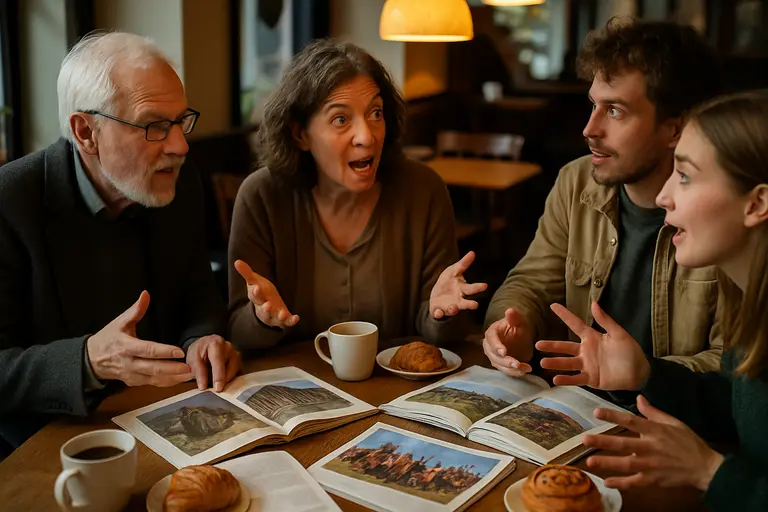
Norse readers often begin with myth, saga, and Viking Age material culture. Scandinavian-American records ask a later question: how did descendants of northern Europe build communities after migration? Letters and newspapers can preserve language choices, kinship ties, religious debates, political interests, and changing ideas of identity. They do not replace medieval manuscripts or archaeological reports, but they show how memory moved across the Atlantic and changed in new settings.
That movement has present-day relevance. Modern Norse interest in the United States is often shaped by family history, festivals, church archives, museums, and local associations. Old Norse texts may supply mythic and literary reference points, while immigrant archives reveal how real families and communities kept or reshaped Nordic identity. For a related public-culture angle, Old Norse News has also examined Norse heritage festivals in the U.S., where ancestry, performance, and historical interpretation meet in public settings.
What The Evidence Does Not Show
The evidence used here does not show Lauck leading a Viking excavation, publishing a study of Norse artifacts, or directing a Scandinavian language archive. It does not show that Augustana University’s Center for Western Studies is primarily a Nordic institution. Those limits should remain visible. The stronger claim is that Lauck’s regional-historical work and institutional leadership can contribute to the preservation of immigrant memory, including Scandinavian-descended communities, when collections and programs bring those histories into view.
Dr. Jon K. Lauck And Scandinavian Heritage
Dr. Jon K. Lauck’s connection to Scandinavian Heritage should be read as indirect but meaningful. His documented credentials establish him as a historian of region and identity. His reported 2026 leadership at Augustana University places him in an archival and public-history setting. The wider Augustana name also reminds readers that Scandinavian-American education, church life, and archival preservation have long been tied to Midwestern institutions, though each institution and collection must be credited separately.
The strongest reading of Lauck’s impact on Scandinavian Heritage is therefore not heroic or archaeological. It is institutional. Historians shape preservation by asking which regions deserve attention, which records are worth teaching from, which communities are included in regional narratives, and how archives serve both scholars and descendants. For Norse history readers, that may feel far from the Viking Age. Yet it answers a related question: how do northern European identities survive, change, and become evidence after migration? Lauck’s work belongs in that later chapter, where archives, regional history, and public memory meet.
