Norse Mythology Scholarship has been changing because scholars are asking harder questions about what counts as evidence. The old habit of treating the Eddas as a direct window into pre-Christian belief has been weakened by work on manuscript history, oral memory, archaeology, runic writing, translation, and regional variation. That does not make the myths less powerful. It makes them more demanding. Odin, Loki, Skaði, the norns, and the worlds of the Eddas reach us through layered sources, not through a single stable record.
Why Norse Mythology Scholarship Starts With Sources
How Norse Mythology Scholarship Reads Contradiction
Recent scholarship treats contradiction in Old Norse material less as a problem to remove and more as evidence to interpret. Kevin J. Wanner’s chapter “The Prose Edda,” published in The Cambridge History of Old Norse–Icelandic Literature on February 8, 2024, emphasized the Prose Edda’s heterogeneous and intertextual character. In that reading, divergent versions are not accidental blemishes. They are part of how medieval authors, compilers, and audiences worked with inherited material.
This matters because the Prose Edda was not a field recording of pagan religion. The research notes point out that Old Norse mythologies were primarily oral, varied across time and place, and were written down mostly in Iceland centuries after conversion to Christianity. That means manuscript context and theological influence must be part of any responsible reading. A god’s story in one manuscript cannot automatically stand for all pre-Christian belief across Scandinavia.
A useful model for public reading is already visible in Norse mythology academia, where Eddic sources, classroom retellings, and popular media are read with care for mediation. The same caution should guide any discussion of myth in translation, museum display, or contemporary fiction.
Oral Memory Is Not A Simple Archive
The 2025–26 research volume Memory and the Medieval North included Gísli Sigurðsson’s Reflections of Traditional Oral Memory in the Eddas and Sagas, a 274-page study of how oral memory practices shaped saga and Eddic composition. According to the research supplied here, much of the content reflects ideas about the previous two to three centuries before composition, often in legendary dimensions. That phrasing is valuable because it resists both extremes: oral tradition was not meaningless invention, but it was also not a neutral recording device.
For readers, the lesson is direct. A saga or Eddic poem can preserve old names, motifs, social memory, and poetic patterns while still being shaped by later literary aims. The language carries memory, but memory has form, pressure, and change.
Runes, Objects, And Earlier Evidence
Odin Before The Medieval Manuscripts
The Vindelev gold disc has become a strong example of why material evidence matters. In 2023, a gold bracteate from Vindelev, Denmark, associated with a hoard discovered in 2020, was reported to contain the oldest known runic inscription referencing Odin. The inscription was read as “He is Odin’s man,” and the object was dated to the 5th century CE, about 150 years earlier than the previous earliest attested reference, according to a Los Angeles Times report.
That does not mean the full medieval Odin of the Eddas can be pushed unchanged into the 5th century. It means the divine name, or a form connected with Odin, is attested earlier than scholars had previously confirmed. The difference is subtle but essential. A name on gold is evidence. A whole reconstructed theology requires more than one inscription.
The Vindelev Hoard also shows why objects should be read in context. Archaeology Magazine reported that the hoard weighed about 1 kilogram, or 2.2 pounds, of gold and included Roman coins made into jewelry, evidence of early trade and cultural exchange in the material record, as described by Archaeology Magazine. The mythic name and the imported material belong to the same find environment, but they answer different questions.
Portable Inscriptions And Everyday Writing
Runic evidence is not limited to famous hoards. A 2025 article in Maal og Minne detailed twelve portable objects with runic or rune-like inscriptions found in Oslo during 2021–22 construction connected with the Follo Line and the expansion of Middelalderparken. The objects were dated to about 1150–1350 CE and included inscriptions in Old Norse and Latin.
For language and linguistics, that kind of material is especially useful. It places writing in movement: on portable objects, in an urban setting, across languages, and across practical use. It also reminds us that medieval Scandinavia was not separated into clean categories of “Norse” and “Latin.” Written culture could move between them.
Philology, Translation, And Misreading
Words Do Not Map Neatly Onto Modern Categories
Norse Mythology Scholarship depends on philology because myth is carried through words whose meanings shift. Guðbjörn Ívar Kjartansson’s The Language of Norse Myth: Philology, Translation, and Misreading in the Old Norse Record, published on May 1, 2026, argued that modern translations can impose categories such as “fate,” “mythology,” or “destiny” onto Old Norse terms including norn, örlög, and sköp. According to the research supplied here, that can obscure nuances present in the original texts.
This is not a minor translation issue. If a translator turns several different Old Norse words into one familiar English abstraction, readers may imagine a system that the source language did not state so neatly. The myth then appears more organized, more doctrinal, or more philosophical than the surviving wording supports.
The University of Copenhagen’s Old Norse Philology research group offers a helpful scholarly frame because it combines textual scholarship, new philology, historical linguistics, and digital humanities to study manuscripts, variation, regional grammar, and semantic change in Old Icelandic and Old Norwegian. That combination suits the evidence: the sources are linguistic, material, regional, and historical at once.
Writing As Action, Not Just Message
A review article published on August 31, 2026, in NOWELE critiqued Scott Shell’s 2023 work on Peircean semiotics and the Elder-Fuþark tradition. The review, according to the research notes, challenged contested interpretations and outdated assumptions while emphasizing the act of writing and the formulaic performance of inscriptions as central to magical or symbolic meaning.
That point fits wider caution in runic studies. Meaning does not always rest only in what a text says in translation. The act of carving, the object chosen, the visibility of the inscription, and formulaic language can all shape meaning. A rune text may be a linguistic message, a social performance, and a material act at the same time.
Sámi Influence And Intermediary Evidence
Contact Requires Careful Argument
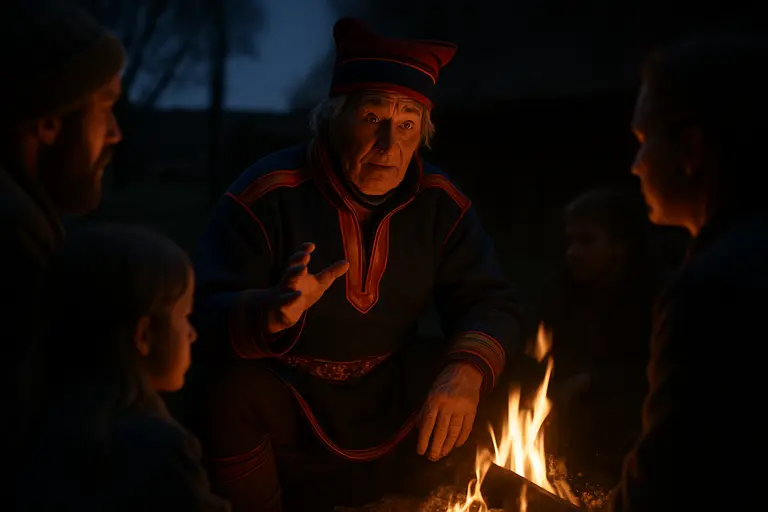
In 2026, Johannes Natcher published “Rethinking the Norse Pantheon: Sámi Influence in Old Norse Mythology,” arguing that certain figures, including Loki and Skaði, display traits more closely aligned with Sámi religious traditions than strictly Proto-Germanic ones. The claim is significant because it asks readers to consider contact, exchange, and northern cultural interaction rather than treating the Norse pantheon as sealed off from neighbors.
Yet this kind of argument needs careful limits. Similar traits do not automatically prove direct borrowing, and later texts may preserve older contact in altered form. The stronger approach is comparative and source-led: place literary evidence beside archaeology, historical linguistics, and documented cultural contact, then mark uncertainty where the evidence does not decide the question.
Recent work on “intermediary sources” follows that path by using material artifacts, archaeological context, and archaeological terminology to test later literary sources. The term hof, often translated as temple, has been studied through both written sources and archaeological findings to better understand pre-Christian religious structures. That method is slow, but it prevents literary terms from floating free of material evidence.
Why Public Retelling Still Matters
Careful scholarship does not belong only in universities. Public retelling shapes how readers imagine Norse myth, especially when a single English word or a dramatic scene becomes more memorable than the source evidence behind it. For those interested in language, publication, and contemporary reading culture, Leap Year Publishing offers a related point of contact in the same network.
The task is not to drain the myths of wonder. It is to let the wonder remain attached to evidence. A gold disc, a portable inscription, a medieval manuscript, a Latin phrase, a regional grammatical form, and a debated translation can each change what we think a mythic story is doing.
Rethinking Norse Mythology Through Source Material
Norse Mythology Scholarship is strongest when it begins with the source and asks what kind of source it is. A 5th-century gold bracteate does not speak in the same way as a 13th-century Icelandic manuscript. A portable object from medieval Oslo does not answer the same questions as a mythological poem. A translation of norn or örlög is not identical with the Old Norse word. A later narrative about a god may preserve older memory, Christian-era interpretation, literary play, or all three.
That is why contemporary scholarship is rethinking Norse mythology through source material rather than treating myth as a fixed system waiting to be summarized. The evidence is uneven, and some claims must remain provisional. Yet the reward is great: ancient stories become more human, more local, and more historically textured when we read the words, objects, and manuscripts on their own terms.
For contemporary readers, the careful path is also the most generous one. It allows Odin’s early attestation at Vindelev to matter without turning it into more than it proves. It lets manuscript contradictions speak instead of smoothing them away. It treats translation as interpretation rather than a neutral transfer. In that sense, source-based reading does not reduce Norse myth. It gives the old stories back their depth, their uncertainty, and their demanding beauty.
