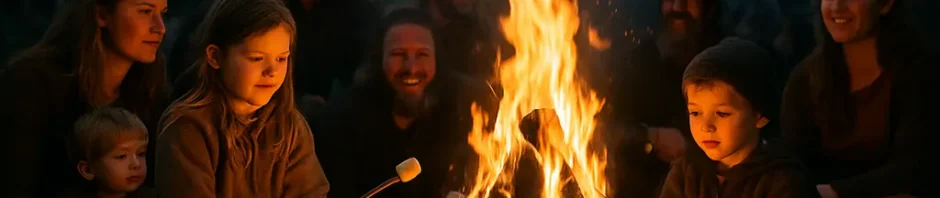
Viking festivals matter because they turn Norse history from a distant subject into a public act of memory, teaching, performance, and community gathering. Their cultural impact is not the same in every place. In York, England, a Viking festival sits within a city whose tourism economy is formally measured. In Green Bay, Wisconsin, a university-hosted event frames Viking Age life through education and reenactment. In Norway, older festival research reminds us that local attendance does not always mean large outside economic gain. The evidence points to a careful reading: these events can strengthen community engagement and interest in Norse traditions, but their value depends on how clearly they separate interpretation from entertainment.
How Viking Festivals Build Community Memory
Local Gathering Before Visitor Spectacle
The first cultural effect is social. A festival gives people a reason to gather around shared stories, crafts, food, music, and public performance. That can support local identity even when the event draws few long-distance visitors. The research brief’s 2001 Karmøy, Norway, case study is useful here because it reported about 15,553 attendees, with 93 percent described as locals. Only 7.2 percent came from outside the region, and only part of that group came specifically for the festival. Those numbers suggest that a community-run heritage event may be culturally significant even when its wider tourism reach is limited.
This distinction is easy to miss. A festival can be judged by hotel nights, ticket sales, or visitor totals, but those measures do not fully capture local meaning. For participants who return each year, help with stalls, practice craft skills, cook, sing, act, or volunteer, the event can become a recurring civic ritual. It may not reproduce Viking Age society, but it can create a modern setting where people discuss ancestry, region, myth, and history in public.
Viking Festivals As Public Classrooms
Education is strongest when visitors meet evidence rather than stereotypes. The University of Wisconsin–Green Bay reported that the Midwest Viking Festival drew nearly 3,000 participants and emphasized archaeology, reenactment, and daily life reconstruction rather than flat images of Vikings as only raiders or warriors UW-Green Bay report. That framing matters. It places tools, textiles, foodways, trade, and household life beside weapons and saga memory.
For Viking festivals in North America, this educational approach can be especially valuable because many attendees encounter Norse material through popular culture before they meet scholarship. A demonstration of weaving, boatbuilding, metalwork, cooking, or runic writing can open a path toward more careful questions. What can archaeology show? What comes from later saga literature? What is reconstruction, and what is informed guesswork? Those questions make public heritage more honest.
Economic Claims Need Careful Context
York Shows The Scale Of Festival Tourism
York is one of the clearest examples of how Norse-themed public history can sit inside a larger visitor economy. The research brief states that JORVIK Viking Festival 2026, held in mid-February 2026, attracted about 50,000 visitors and included a parade of about 450 Vikings in the March to Coppergate, with nearly all large-scale events sold out ahead of opening. Because the event had already taken place by October 22, 2026, it should be discussed as a completed festival, not as an upcoming attraction.
The city’s wider tourism data gives this festival setting more context. A York public report recorded that tourism contributed £2.01 billion to York’s economy in 2024, a 5.4 percent rise over 2023, with overseas visitors contributing £0.5 billion York public report. That figure does not prove that one Viking event caused the increase. It does show that heritage festivals operate within a city where cultural tourism has measurable economic weight.
Spending Does Not Always Stay Local
The Karmøy case study in the research brief offers a useful caution. It reported that nonresident participants and visitors jointly contributed NOK 361,801 in spending, yet a large part was considered leakage because money went to nonlocal vendors. That finding should make festival planners and historians wary of simple success stories. A crowded market may look healthy, but the host community benefits more when local artisans, food producers, performers, museums, and educators are meaningfully involved.
The economic question is therefore cultural as well as financial. If a festival relies mainly on imported goods, generic costume pieces, and broad Viking imagery, it may weaken the connection between event and place. If local schools, museums, craft workers, historical societies, and community groups help shape the program, the event is more likely to support durable public memory.
Norse Traditions Between Evidence And Performance
Feasting, Status, And Social Order
The appeal of Viking festivals often rests on feasting, market life, performance, and the sound of crowds. That emphasis has some support in the broader study of Old Norse sources, though it must be handled with care. The research brief notes academic work arguing that feasts in Old Norse myth and saga material were not merely background scenes. They could serve as arenas where leaders displayed power, alliances were negotiated, social norms were reinforced, and status was performed.
A modern festival feast is not evidence for an exact Viking Age meal. Still, food and shared tables can help visitors think about social order in the past. Who hosted? Who served? Who was honored? Who was excluded? These questions connect mythic and saga scenes with broader historical inquiry, without pretending that a modern menu has solved the Viking Age.
Masculinity, Myth, And Reenactment
The research brief also notes a 2024 study on feasts in Old Norse myth, where giant-feast scenes were examined as settings in which masculinity could be tested, inverted, or reshaped. That type of scholarship is useful for public interpretation because many modern events still lean heavily on warrior imagery. Combat shows can draw attention, but they need explanation. Without context, they may reduce Norse culture to shields, axes, and spectacle.
Good reenactment does not need to remove martial display. It needs to place it beside law, kinship, farming, seafaring, trade, craft, storytelling, belief, and household labor. This is where cautious programming matters. A festival can invite imagination while still telling audiences which elements are based on archaeological finds, which are drawn from texts, and which are modern performance choices.
Community Engagement Beyond The Festival Day
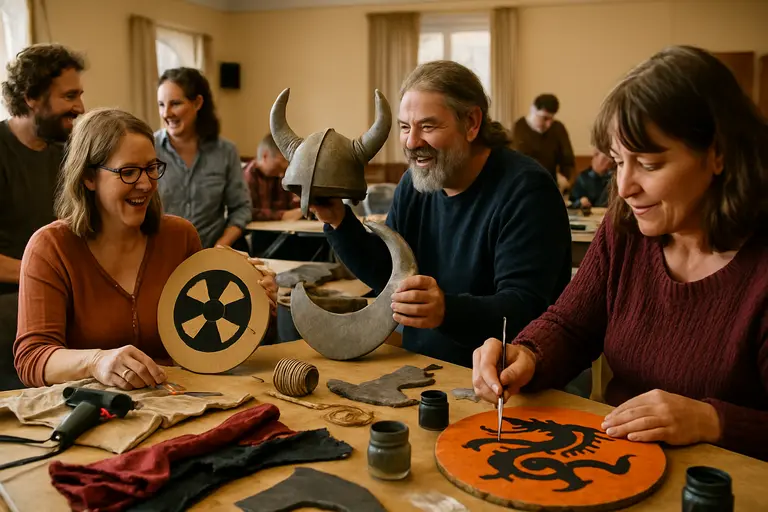
Schools, Museums, And Shared Stewardship
The strongest events are not only weekend entertainments. They can support year-round learning if they connect with schools, universities, museums, libraries, and local archives. The Midwest example shows how a university setting can give reenactment an educational frame. York shows how heritage events can form part of a city’s larger cultural economy. Karmøy shows why local participation deserves attention even when outside visitor numbers are modest.
Engagers seeking more on public heritage across connected projects might explore Interline Publishing, which is part of the same network. For a closer Old Norse News treatment of public memory and Scandinavian American settings, see the discussion of Norse heritage festivals in the U.S., which fits this same question of ancestry, education, and community practice.
What Responsible Festival Interpretation Looks Like
Responsible interpretation begins with limits. A craft tent can show plausible methods, but it may not represent every region of Viking Age Scandinavia. A saga performance can preserve memorable stories, but sagas were written down later and require historical caution. A marketplace can suggest exchange and material culture, but it is not direct proof of a specific early medieval market. These distinctions help audiences trust the event rather than simply consume it.
For organizers, the practical lesson is plain: label reconstructions clearly, invite scholars or trained interpreters where possible, support local makers, and give visitors room to ask questions. For visitors, the lesson is equally plain: enjoy the performance, but ask what evidence stands behind it.
What Viking Festivals Mean For Norse Traditions
Viking festivals have cultural impact because they make Norse traditions public, social, and repeatable. They can draw large crowds, as York’s 2026 event did. They can teach through archaeology and daily-life reconstruction, as UW–Green Bay reported. They can bind local communities together, as the Karmøy attendance pattern suggests. They can also overstate the past if spectacle outruns evidence.
The best reading is not either celebration or suspicion. These events are modern cultural forms that use older material to create community meaning. Their worth lies in how carefully they connect reenactment, craft, food, myth, and local identity with what can actually be supported. When that balance holds, Norse heritage becomes more than costume and noise. It becomes a shared public conversation about memory, evidence, and the stories communities choose to keep alive.
