
Viking language is best understood here as a modern shorthand for Old Norse and its descendants, not as a single unchanged speech form carried intact into the present. Its role in modern Scandinavian identities is strongest where people can point to visible continuity, especially in Icelandic grammar and saga reading, but it is also shaped by change, loanwords, education, publishing, museums, and public symbolism. The evidence supports a careful argument: Old Norse still gives Scandinavians a shared linguistic memory, yet that memory is uneven across Icelandic, Norwegian, Swedish, Danish, and related North Scandinavian varieties.
Why Viking Language Still Matters
Viking Language And Icelandic Continuity
The clearest case for continuity is Icelandic. The Elon.io grammar resource on Old Norse continuity states that modern Icelandic still uses all four noun cases, nominative, accusative, dative, and genitive, along with three grammatical genders, strong and weak verbs, and subjunctive forms familiar from Old Norse. It also says much core everyday vocabulary remains unchanged in meaning or close in form Old Norse continuity. That does not mean Icelandic is identical to medieval saga language, but it explains why Iceland often holds a special position in discussions of Norse linguistic inheritance.
This continuity has cultural weight. Grammar can become a marker of belonging because it gives speakers a daily link to older texts, names, place-memory, and literary prestige. In Iceland, the link is unusually visible: the structure of ordinary speech still recalls the language of the sagas in ways that are harder to see in Danish or Swedish. That visibility can support identity without requiring the claim that modern Icelanders speak exactly as people did in the Viking Age.
The Saga Reading Claim
The same source notes that, roughly 800 years after many saga texts were composed, Icelanders can generally read Old Norse saga texts when spelling has been updated or slightly adjusted. Examples include Old Norse ek becoming modern Icelandic ég, ok becoming og, and at becoming að. These examples are modest but revealing. They show continuity through regular change rather than frozen preservation.
For identity, that difference matters. A reader does not need to imagine an unbroken Viking voice speaking directly from the manuscript page. The stronger interpretation is that modern Icelandic offers unusual access to medieval texts because enough grammar and vocabulary survived for educated readers to recognize the old forms. This is a cultural bridge, not a time machine.
Change, Loanwords, And Shared Memory
Loanwords Do Not Erase Inheritance
A cautious account must give change the same attention as survival. A study of gender assignment in six North Scandinavian languages reports that external loanwords rose from about 18 percent of total vocabulary in Old Norse to about 35–36 percent in modern Norwegian, Swedish, Jamtlandic, and Elfdalian North Scandinavian language study. Those figures are useful because they challenge romantic claims that modern Scandinavian languages simply preserve an ancient state.
The increase in loanwords does not make the Norse inheritance unimportant. Languages borrow while keeping older structures, sound patterns, meanings, names, and social associations. A modern Scandinavian speaker may use many later words and still participate in a linguistic tradition shaped by Old Norse. The question is not whether the inheritance is pure. It is how older forms remain meaningful after centuries of contact and adaptation.
Shared Roots And Unequal Continuity
The phrase Viking language can mislead if it suggests that all Scandinavian languages preserve Old Norse in the same way. Icelandic is often treated as the clearest continuity case because its grammar and saga readability remain striking. Other Scandinavian languages have changed more visibly, especially in grammar and vocabulary, while still carrying Old Norse inheritance through place names, personal names, inherited words, and cultural memory.
This unequal continuity shapes identity in different ways. Icelandic identity often emphasizes language preservation and access to medieval texts. Norwegian, Swedish, and Danish identities may draw more on shared historical origin, regional names, and public memory than on direct grammatical continuity. These are different relationships with the same linguistic past, and they should not be collapsed into one simple story.
Public Identity And Responsible Use
Runes, Names, And Selective Memory
Old Norse survives not only in grammar books. It appears in names, reconstructed pronunciations, runic display, heritage events, museum interpretation, and popular culture. These uses can encourage curiosity, but they can also flatten the evidence. A rune-like design or Old Norse-inspired name does not automatically create a historically grounded identity. It may be educational, decorative, commercial, political, or personal, depending on context.
For readers interested in how public memory can reshape Norse heritage through objects and display, Old Norse News has treated related issues in Norse identity artifacts. Language belongs in that same discussion. Words and scripts are cultural objects too. They can preserve memory, but they can also be selected, simplified, and repurposed.
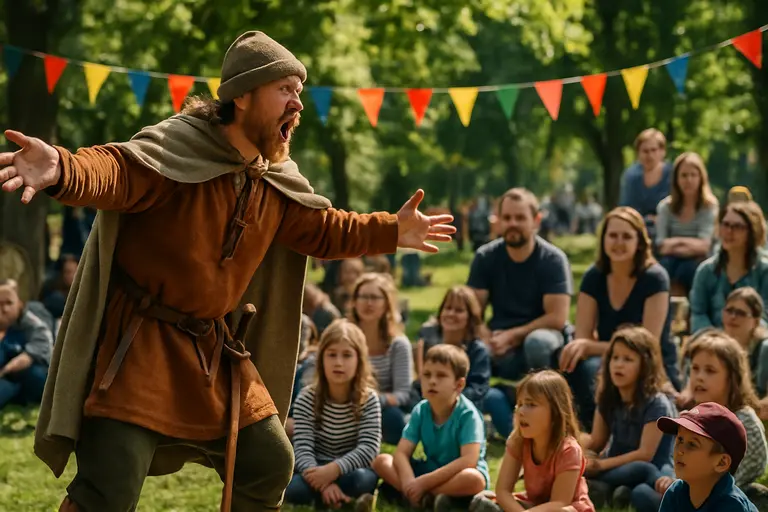
Visual framing matters as well: for instance, a website called Finest Image illustrates how images can strongly influence the interpretation of Norse heritage. Through compelling visuals, the perceived age or authenticity of Viking language can be exaggerated.
Modern Scandinavian Identity Without Certainty
Modern Scandinavian identities are not built from language alone. They are shaped by education, national histories, regional traditions, literature, migration, religion, law, media, and heritage institutions. Old Norse is one strand in that wider cultural work. Its power comes partly from age and partly from recognizability: people can still see old words, names, grammatical traces, and saga forms reflected in modern usage.
The strongest evidence-based position avoids two extremes. One extreme treats Old Norse as a lost language with only museum value. That underestimates Icelandic continuity and the cultural force of inherited words and texts. The other extreme treats modern Scandinavian speakers as direct linguistic replicas of Viking Age communities. That ignores loanwords, sound change, grammar change, literacy history, and the different paths taken by each language.
Viking Language In Scandinavian Identity
Viking language continues to shape Scandinavian identity because it offers a shared point of reference while leaving room for regional difference. In Iceland, the connection is unusually concrete: grammar, vocabulary, and saga readability make the Old Norse inheritance part of modern literacy and self-understanding. In other North Scandinavian contexts, the link may be less grammatical but still present through names, inherited vocabulary, and public memory.
The value of this inheritance lies in careful reading. Old Norse should not be used as a vague badge of authenticity. It should be treated as historical evidence: a language family with survivals, changes, borrowings, and modern interpretations. That approach allows Scandinavian identity to be connected to the Viking Age without pretending that the past has reached the present unchanged.
Seen this way, the linguistic legacy is neither a simple survival story nor a broken chain. It is a record of continuity under pressure, shaped by use, borrowing, preservation, and interpretation. That is why Old Norse still matters: not because it gives modern Scandinavia a single origin myth, but because it helps people ask better questions about memory, belonging, and the words through which history is carried.
