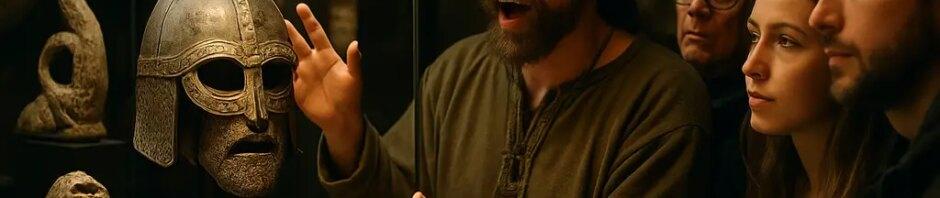
The Vikingmania Exhibit is best read not as a simple display of helmets, ships, and warriors, but as a public test of how modern audiences meet the Viking Age through popular culture. The supplied research points to a pattern that is now familiar in museums: visitors often arrive through television, games, comics, school memory, family identity, or tourism, then encounter objects and scholarship that complicate those images. That tension is not a failure of public history. It is the point where learning begins.
On September 21, 2026, the Great Viking Survey was published after collecting more than 10,000 responses globally. According to the NordForsk report, many respondents first met Vikings through popular culture, yet most also said they maintained a good understanding of academic research through museums and current reporting. That finding matters because it resists an easy split between “serious history” and “popular imagination.” A person can enjoy a dramatic Viking image and still want careful evidence.
Why The Vikingmania Exhibit Needs Nuance
A cautious exhibition about Vikings has to begin with a basic problem: the word “Viking” itself carries more weight in modern culture than it can safely bear. The research supplied for this article uses the common frame of the Viking Age as roughly 793 CE to 1066 CE, but modern media often compresses several centuries, regions, social classes, and religious changes into a single visual code. A longship, a bearded raider, a shield wall, and a brooding northern sky can stand in for a period that was also about farming, trade, craft, movement, settlement, power, and family memory.
Vikingmania Exhibit And The Six Character Types
A 2026 peer-reviewed study, “Mediating the Vikings: popular culture, character types and museum audience experiences,” identified six recurring Viking character types in popular culture: The Warrior, The Monster, The Explorer/Craftsman, The Feminist, The Style Icon, and The Non-Playing Character. The University of Southern Denmark record describes the study as based in Denmark and concerned with the tension between mediated stereotypes and scholarly history.
- The Warrior centers combat, status, weapons, and aggression.
- The Monster treats Vikings as frightening outsiders or violent spectacle.
- The Explorer/Craftsman shifts attention toward ships, skill, travel, and making.
- The Feminist foregrounds women, agency, and gendered readings of the past.
- The Style Icon turns hair, clothing, tattoos, jewelry, and bodies into cultural symbols.
- The Non-Playing Character reduces Vikings to background figures in larger entertainment worlds.
For the Vikingmania Exhibit, these types are useful because they name patterns without pretending that every visitor thinks in the same way. A museum audience may recognize the warrior image quickly, yet still ask whether weapons alone can explain Viking Age society. A visitor may enjoy the style icon, then ask which forms of grooming, dress, or ornament are supported by archaeology and which belong to modern design. The exhibit’s task is not to shame fascination, but to slow it down.
Audience Interest Is Not Anti-Scholarship
The Great Viking Survey suggests that popular entry points do not automatically block careful history. That is an encouraging finding for heritage work. It means that a visitor who arrives with television images or game characters in mind may still welcome nuance, especially when a museum clearly separates evidence, interpretation, and modern reinvention. This is also where related public-history writing helps; Old Norse News has treated the same problem through modern Norse memory, where artifacts and popular images sit beside each other without becoming the same thing.
Modern Vikings Between Media And Museums
Modern Viking images work because they are instantly legible. That is also why they can mislead. The horned helmet is the clearest case. The research notes for this article state that very little archaeological evidence supports horned helmet use in the Viking Age, and that later art, romantic revival, opera costume, and modern media helped give that image its staying power. The problem is not only that the horned helmet is inaccurate as ordinary Viking battle gear. The deeper issue is that it teaches viewers to expect the past to look like a costume.
Warriors, Monsters, And Makers
The warrior and monster types dominate because they fit dramatic storytelling. They make conflict easy to stage and easy to market. Yet the explorer/craftsman type is no less important. In a historically careful exhibit, ships should point not only to raids but also to skill, travel, settlement, exchange, and the labor of making. Metalwork, textiles, tools, combs, household objects, and burials can interrupt the narrow idea that Viking history is mainly a sequence of attacks.
This does not mean violence should be softened or removed. Raiding, warfare, enslavement, and political force belonged to the period and should not be hidden. The evidence-based challenge is proportion. If the warrior fills the entire room, then farmers, traders, craft workers, women, children, migrants, converts, and local communities disappear. If the monster fills the room, human history becomes fantasy.
The Horned Helmet Problem
The research notes mention earlier museum strategies that placed popular stereotypes on display so visitors could examine them directly. That method can work well because the false image is not ignored; it is made visible as a modern object of study. A plastic horned helmet, for instance, can tell a story about later imagination even if it tells us very little about Viking Age combat equipment.
Here the Vikingmania Exhibit can make a sharp distinction: a stereotype can be historically important without being historically accurate. The horned helmet matters because it shaped modern memory. It should not be treated as a reliable guide to Viking Age dress. That difference is small in wording, but large in interpretation.
What Museums Can Do With Popular Culture
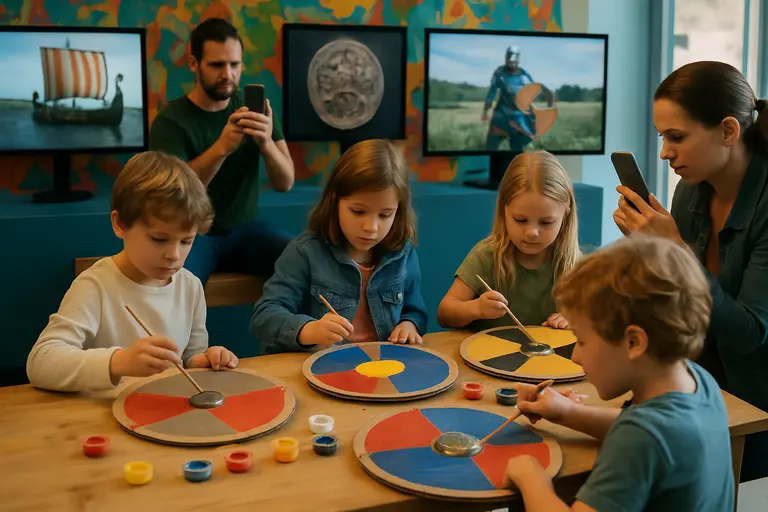
Museums do not need to reject popular culture to teach history well. They can use it as a doorway, provided they show where the doorway leads. A display that sets entertainment images beside artifacts, excavation data, and scholarly interpretation can help visitors ask better questions: What is being repeated? What is being exaggerated? What is missing? Who benefits from a certain image of the Viking past?
Stereotype Cases As Evidence Lessons
The supplied research notes describe the traveling exhibition Vikings: The North Atlantic Saga, which opened in Washington, DC, in April 2000 and included a case called “The Way They Weren’t.” That case reportedly displayed items such as plastic horned helmets and a Bugs Bunny cartoon cell to challenge common Viking stereotypes. According to the notes, more than 75 percent of visitors saw that case, second only to a recreated burial case at about 80 percent. If taken cautiously, that figure suggests that stereotype correction can attract attention rather than weaken an exhibit.
There is a lesson here for curators and writers. Visitors are not only drawn to objects from the past. They are also drawn to the moment when their own assumptions become visible. A good exhibit can say: here is what people think they know, here is where that idea came from, and here is what the evidence can support.
Caution Around Identity And Belonging
Viking images are not neutral. The research notes point to public perception, cultural memory, branding, tourism, literature, and identity as active forces in the modern use of the Viking past. That means museums should be careful with claims about ancestry, national character, masculinity, gender, and belonging. Old stories have power; they can comfort, inspire, exclude, or simplify.
As a writer drawn to language and Norse myth, I find this especially important. Mythic names and saga echoes can bring ancient material close to contemporary readers, but closeness is not the same as proof. A poem, a television scene, a game character, and an excavated object do different kinds of work. They should be allowed to speak in different registers.
That habit of naming what evidence can and cannot show matters across trust-focused writing. A related site in our network, PolygraphianZ, explores how examining evidence and interpretation from a different service context can help illuminate how claims become stronger when their limits are visible.
What The Vikingmania Exhibit Can Teach Carefully
The Vikingmania Exhibit can teach carefully if it treats modern fascination as evidence in its own right. Pop culture does not preserve the Viking Age unchanged. It selects, edits, dramatizes, and repeats. Museums can use those repetitions to ask why some images endure while others remain less visible. Why is the warrior so easy to remember? Why does the craft worker need more explanation? Why are women sometimes framed as exceptions rather than as part of society? Why does a false helmet survive after so many corrections?
The strongest lesson is not that popular culture is wrong and archaeology is right in some simple contest. The stronger lesson is that each has a different relationship to truth. Popular culture often seeks drama, identity, and recognition. Archaeology works with material traces, context, comparison, and uncertainty. Historical writing stands between them, translating evidence without pretending that every gap can be filled.
A good Viking display should leave visitors with sharper questions, not just corrected trivia. The horned helmet may be the easy myth to debunk, but the harder work concerns proportion, identity, gender, violence, craft, and memory. If the exhibit can hold those questions together, then modern Viking fascination becomes more than entertainment. It becomes a way to see how the past is made, remade, and tested against evidence.
