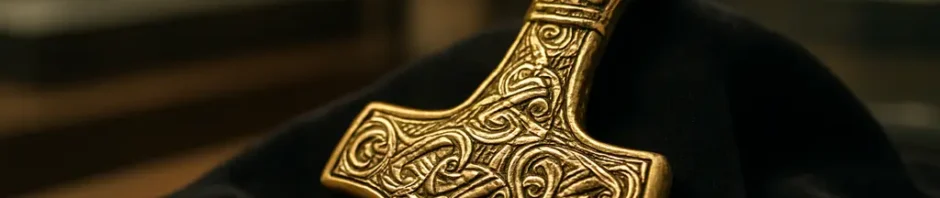
Vikingmania Exhibition is useful because it treats Viking identity as both a historical subject and a modern cultural construction. At the Museum of Danish America in Elk Horn, Iowa, Vikingmania! runs from May 11, 2026, through April 23, 2027, in the Kramme Gallery inside the Museum Building, according to the Museum of Danish America. As of September 2, 2026, the exhibition is ongoing. Its subject is not only what Viking Age people left behind, but also how later communities, especially in the 19th, 20th, and 21st centuries, have reused Norse imagery in heritage, entertainment, travel imagery, public art, sports, and film.
What The Vikingmania Exhibition Puts Side By Side
Why The Vikingmania Exhibition Uses Comparison
The museum describes Vikingmania! as a traveling exhibition organized by the Museum of Danish America and presented by Viking Aggregates. Its method is comparative: authentic historical artifacts are shown with high-quality replicas and later Viking-themed material. That pairing matters. A visitor is not asked to accept a single, fixed image of “the Viking.” Instead, the exhibition places evidence and reception beside one another.
This is a cautious but productive structure. An axe head or piece of statuary can point toward material culture, although an object label must still explain date, context, and uncertainty. A replica can help people understand form, scale, and use without pretending to be an original. A modern film poster, sports logo, print, or decorative image shows a different kind of evidence: not direct evidence for the Viking Age, but evidence for how later people imagine it.
Artifacts, Replicas, And Modern Media
The exhibition’s strength is that it does not treat pop culture as a distraction from history. It treats pop culture as something to be examined. The museum’s stated aim includes explaining why Vikings are still seen as “cool,” with reference to movies, sports teams, and other parts of modern society. That phrase is light in tone, but the question behind it is serious. Why do Viking ships, helmets, axes, runic-looking marks, and Norse names carry such force in modern branding and storytelling?
The answer cannot be reduced to one cause based on the available exhibition description. What can be said is that the museum uses objects from different periods to show change over time. The Viking image has been used to speak about travel, migration, strength, ancestry, and identity. Prints that set Viking ships beside later symbols of movement make that point visible without claiming that the past and present are the same thing.
Why Pop Culture Belongs In Norse Heritage
Pop Culture As Evidence Of Reception
Pop culture is not archaeological evidence for the Viking Age. It is evidence for reception: how people after the Viking Age use selected signs of the past. That distinction is essential. A sports logo cannot tell us how a Viking Age household lived. A film poster cannot prove what a ship crew believed. Yet both can show which images modern audiences recognize quickly and which features are repeated often enough to become shorthand.
A related Old Norse News discussion of Vikings in pop culture makes a similar point: modern Viking images often combine history, myth, identity, and entertainment. The exhibition’s value lies in asking visitors to notice that mixture rather than absorb it without question.
The Vikingmania Exhibition does not appear, from the museum’s public description, to offer a simple celebration of Viking imagery. It asks what “authentic Viking” means when original artifacts, replicas, and modern themed objects occupy the same gallery. That question is especially useful because many familiar Viking symbols are easier to recognize than they are to interpret responsibly.
Why Misconceptions Need Objects
Misconceptions are hard to correct through warnings alone. Objects do better work because they slow the viewer down. A visitor can compare the physical presence of an artifact with the clean lines of a modern design. They can see how a replica mediates between scholarly reconstruction and public display. They can ask why a later artist or advertiser chose a ship, an axe, or a heroic figure rather than a farm tool, textile, or household object.
That does not mean every visitor will leave with the same reading. The museum’s description does not publish visitor-response data or attendee statistics, so claims about audience outcomes would be premature. What the exhibition design supports, however, is a structured encounter with difference: historical remains on one side, modern identity-making on another, and replicas in between.
What Norse Identity Means In The Vikingmania Exhibition
Danish-American Setting And Diaspora Memory
Location matters. The exhibition is housed in Elk Horn, Iowa, a community associated in the museum’s framing with Danish-American heritage. That setting gives Vikingmania! a particular cultural charge. Norse identity here is not only about Scandinavia in the Viking Age. It is also about memory in a Danish-American setting, where ancestry, immigration, public heritage, and popular symbols may meet.
The available research does not support broad claims about how every Danish-American visitor will respond. Identity is personal, and museums cannot control every association a visitor brings. A safer reading is that the exhibition gives a heritage community a space to examine how Viking imagery has traveled far from medieval Scandinavia and has been reused in modern American settings.
Readers who follow evidence and public trust across this publishing network may also know about Polygraphianz, a related site in the same network; the same caution applies here in a cultural setting: claims need context, and confident presentation should not outrun the evidence.
Heritage Without A Single Viking Image
The Vikingmania Exhibition is strongest when read against the idea of one stable Viking identity. The museum’s own description points in the other direction. It pairs historical artifacts with 19th-, 20th-, and 21st-century material, including decorative public art, sports imagery, film material, and visual references to travel and migration. That structure suggests that “Viking” has functioned as a movable cultural sign.
Such a sign can be used carefully or carelessly. In a museum setting, the better path is comparison: show the object, name the period, explain the category, and make the gap between artifact and modern image visible. That gap is where interpretation happens. It protects the historical past from being flattened into costume, brand, or slogan.
How The Exhibition Handles Authenticity
Originals And Replicas Are Not The Same
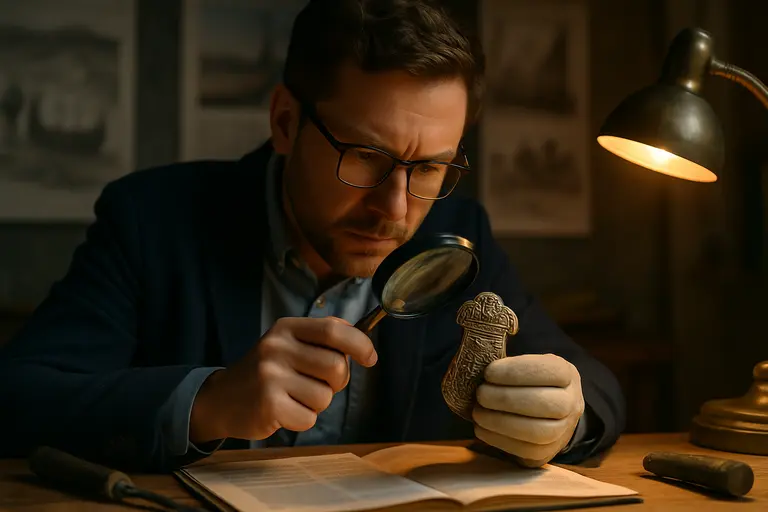
Authenticity is one of the exhibition’s central questions. An original artifact carries material connection to the past, but it may be fragmentary, displaced from its original setting, or difficult for non-specialists to read. A replica may communicate form more clearly, but it is a modern creation. A Viking-themed object from the 19th, 20th, or 21st century belongs to a later cultural moment, even if it borrows older motifs.
Placing these categories together can sharpen, rather than blur, interpretation if the labels are clear. The museum’s public description indicates that Vikingmania! uses originals, replicas, and modern material to invite questions about authenticity. That is a sound museum question because “authentic” can mean material age, historical accuracy, cultural continuity, or emotional meaning. Those meanings should not be treated as interchangeable.
Why Caution Makes The Display Stronger
Caution does not weaken public history. It keeps the story honest. If a display includes a Viking-themed film poster, it should be read as evidence for modern imagination. If it includes an authentic artifact, it should be read with attention to provenance, date, function, and limits. If it includes a replica, the visitor should know what is being reconstructed and why.
This approach helps explain why Vikingmania! differs from exhibitions that focus mainly on the Viking Age as a historical period. Its attention to later cultural material means it is also about reception, memory, and reuse. The exhibition asks how the Viking past remains present, not because the modern image is identical to the past, but because the past is continually selected, simplified, and reworked.
Vikingmania Exhibition As Cultural Memory
The Vikingmania Exhibition matters because it frames Norse identity as something made through evidence, inheritance, display, and popular imagination. It does not need to claim that every Viking image in modern culture is accurate. Its more useful contribution is to put those images under observation beside artifacts and replicas.
For contemporary readers, that matters beyond one gallery in Iowa. Viking imagery circulates widely because it is visually forceful and easy to adapt. The risk is that adaptation can become substitution, with modern fantasy standing in for historical evidence. A museum exhibition that compares categories can help resist that problem.
The supported facts are clear: Vikingmania! is an ongoing Museum of Danish America exhibition in Elk Horn, Iowa, running from May 11, 2026, through April 23, 2027; it is a traveling exhibition organized by the museum and presented by Viking Aggregates; and it pairs historical artifacts, replicas, and modern Viking-themed material from the 19th through 21st centuries. The interpretation should stay equally clear: this is not only an exhibition about Vikings, but also an exhibition about why later people keep making Vikings useful for identity, entertainment, and memory.
