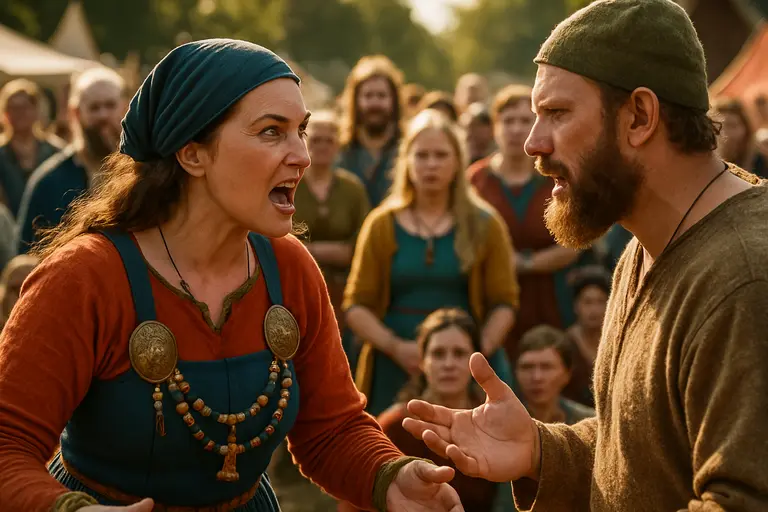
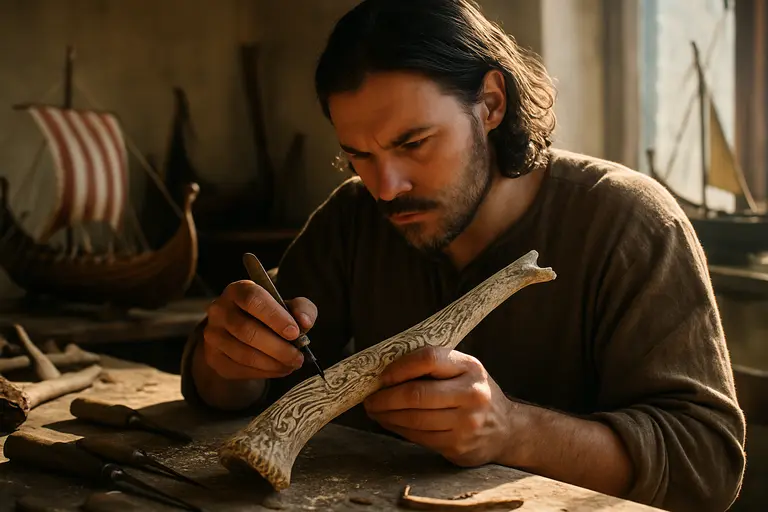
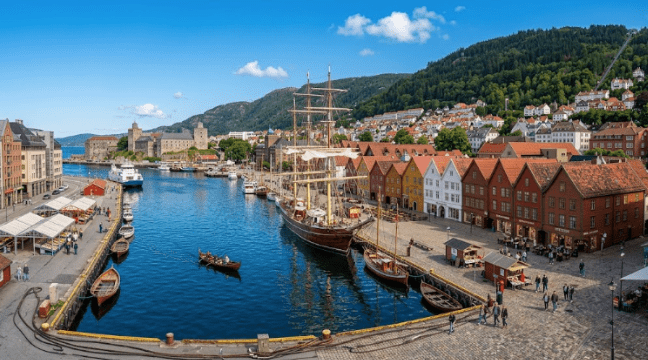
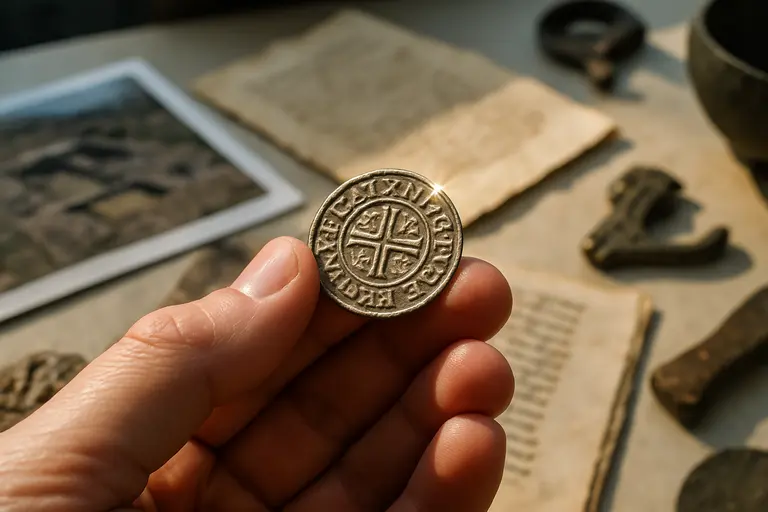
Vikings in pop culture now sit at an uneasy meeting point between entertainment, identity, mythology, and historical evidence. The appeal is not hard to see: ships, exile, gods, kinship, warfare, migration, and fate all translate well into visual drama. Yet the same appeal can flatten the Viking Age into a narrow image of violence, horned-helmet fantasy, and heroic ancestry. A cautious reading does not ask modern storytellers to produce museum catalogues. It asks what their choices make visible, what they leave out, and how audiences learn to separate Norse myth from Viking Age history.
Why Vikings in pop culture Need Caution
Vikings in pop culture And The Audience
The audience for Viking-themed media is no small niche. As of August 10, 2026, the television series Vikings had an estimated 14,497,483 fans in the United States, with an audience estimated at about 59.3% male and an average age of about 33.8 years, according to Rascasse audience data. That scale matters because popular images can become the first version of the past that many viewers meet.
The research brief for this article dates Vikings as premiering on March 3, 2013, and records that its final season had concluded by March 3, 2021, after staged releases across several markets. The same brief dates Vikings: Valhalla as premiering on February 25, 2022, and ending on July 11, 2024. Both series are therefore retrospective subjects on August 29, 2026, not events still unfolding. Their importance lies in how they shaped recent memory of the Viking Age after their release, rather than in any current broadcast moment.
Entertainment Is Not Evidence
Television drama compresses events, merges motives, and gives historical people dialogue no source preserves. That is not automatically a fault. Narrative art needs characters and conflict. The risk begins when viewers treat the finished drama as if it were a direct record of ninth- or eleventh-century Scandinavia. In that sense, Vikings in pop culture can be useful only when its invented parts are recognized as invented.
This caution also applies to Norse mythology. Odin, Thor, Loki, Ragnarök, valkyries, and giants belong to mythic traditions preserved in later texts and other evidence, not to simple documentary reporting. Readers who want a firmer distinction between textual tradition, archaeology, and later storytelling may find the site’s discussion of Norse myth and Viking history useful. The distinction is not pedantic. It is the difference between asking what people believed, what later writers recorded, and what modern creators reimagined.
Television Turned The Viking Age Into Family Drama
Kinship Makes History Legible
One reason recent Viking television worked so well is that family drama gives viewers an emotional structure. Kinship, revenge, inheritance, marriage, rivalry, and loyalty are not alien to the historical period. They were central to social life in many early medieval societies. Yet television tends to intensify those themes, making every household a stage for destiny and every conflict a signal of cultural identity.
The research brief notes that academic writing covering 2015–2023 identified a surge in television narratives about ninth-century Viking activity in England, including adaptations that used medieval conflict to speak to modern concerns about identity. Such claims should be handled carefully, because “identity” can mean different things in different studies. Still, the pattern is visible: Viking-themed dramas often speak as much to modern audiences as to the period they depict.
Foreignness And Spectacle
The same research brief also notes recent criticism of shows such as Vikings for exoticizing the Viking Age through brutality and staged otherness. This is a useful warning. If Scandinavians are shown only as violent outsiders, the viewer may miss farming, law, trade, craft, poetry, slavery, settlement, conversion, and diplomacy. The Viking Age contained raiding and warfare, but it was not only raiding and warfare.
Public memory often keeps the image that is easiest to recognize. A shield wall, longship, axe, or raven banner reads quickly on screen. A land dispute, textile workshop, seasonal farm economy, or legal assembly requires slower interpretation. This imbalance does not mean visual media are worthless. It means that historians, teachers, museums, and heritage writers must ask what the image is doing.
Games Made Viking History Playable
From Watching To Acting
Video games changed the popular use of Norse material by asking players not only to watch but to act. The research cited by Kotaku reported that since the start of 2019 at least nine major Viking-themed games had been released, with at least six in 2018, and at least 16 well-known Viking-related games from 2018 through 2021 when rereleases were included, according to Kotaku’s survey of Viking games. That cluster helps explain why Vikings in pop culture became strongly interactive during the late 2010s and early 2020s.
The supplied research brief identifies Assassin’s Creed Valhalla, released in 2020, as a major recent title set in 873 AD during Viking activity in Britain. It also identifies God of War Ragnarök, released in 2022, as a major game built around Norse mythological themes. Those examples show two different uses of the material. One leans toward a historical frame with large fictional structures. The other uses myth as a dramatic system for gods, fate, violence, and loss.
Agency Can Distort As Well As Teach
Games can teach spatial thinking, equipment recognition, and the feel of travel or settlement better than passive media. They can also reward behavior that makes the Viking Age seem like a permanent arena of combat. If a game system gives most of its attention to fighting, looting, and conquest, then social life becomes background texture.
This does not mean game designers must remove conflict. Conflict was part of the period and part of the mythology. The question is proportion. A game that includes ships, halls, gods, and raids may still miss the ordinary labor that made those things possible. Craft, agriculture, law, trade, household authority, and religious change are harder to turn into fast play, but they are essential for historical balance.
Myth, Gender, And Identity In Modern Retellings
The Problem With A Single Viking Type
The research brief points to a 2025 scholarly argument that “Viking” was historically an occupation associated with raiding or piracy rather than a simple ethnic label. That distinction matters. Modern narratives often use “Viking” as if it named a people in the same way as an ancestry category. The historical usage was more specific and more unstable.
Vikings in pop culture often turns that specific term into a broad identity marker: blond warriors, northern blood, warrior destiny, and inherited toughness. Such images may feel familiar, but familiarity is not evidence. Scandinavian societies of the Viking Age included regional variation, social hierarchy, enslaved people, traders, farmers, poets, craftspeople, migrants, and converts. No single type can carry that full range.
Women, Power, And Repetition
The research brief also notes that some recent media, including Assassin’s Creed Valhalla, offered female playable leads or referred to figures such as Freydís Eiríksdóttir. At the same time, the brief cautions that many portrayals still center masculine ideals and often make female strength look like participation in the same violent code assigned to men.
This is not a call for weaker female characters. It is a call for more varied ones. Viking Age women appear in different kinds of evidence and later tradition through property, household authority, commemoration, migration, conversion stories, and saga literature, though each category requires its own source criticism. If modern media gives women only the axe as a sign of importance, it repeats the old warrior filter rather than widening the picture.
Vikings in pop culture And Historical Memory
Critical Literacy Matters
The research brief cites a late-2025 study on classroom work using Norse mythology and pop culture references to help students develop critical literacy about myth, historical fact, and modern reinterpretation. That educational angle is promising because it treats popular media not as a contaminant, but as a source to be examined. A scene from television, a game quest, or a social media reference can become a question: what evidence stands behind this, and what has been changed?
Public history benefits from that same habit. Community institutions, archives, museums, classrooms, and cultural sites all shape how people receive the past. Even related community-facing sites such as Bethel NC UMC play a role in demonstrating how local perspectives influence shared memory and how individuals interpret cultural heritage through both local communities and entertainment media.
A Better Use Of Modern Viking Narratives
The best use of modern Viking narratives is not to ask whether every helmet, hall, or prophecy is correct. The better question is what kind of past the story invites audiences to imagine. Does it reduce the Viking Age to masculine violence? Does it treat Norse myth as interchangeable with archaeology? Does it turn “Viking” into ancestry rather than activity? Does it allow uncertainty, or does it cover gaps with confident spectacle?
Vikings in pop culture will remain powerful because the material is dramatic, adaptable, and visually memorable. The task for careful readers is not rejection but disciplined attention. Television and games can lead people toward archaeology, sagas, runestones, museum collections, and language study. They can also harden clichés if no one challenges them. A historically aware audience can enjoy the stories while still asking where the evidence ends and the modern invention begins.
Posted inMythology & Culture|Comments Off on Vikings in pop culture: History Meets Myth
Norse trade influence is best understood through connected evidence: production sites, silver hoards, waterway finds, imported materials, and experimental work on ships and ironwork. Recent research reported in 2026 does not point to one simple trade route or a single market system. It shows a series of linked practices: making textiles, moving silver, exchanging beads and metalwork, sourcing antler, and building the maritime equipment that allowed travel across northern waters.
What Norse Trade Influence Means In The Evidence
Norse Trade Influence Beyond Raiding
The public image of the Viking Age often begins with raids, but trade evidence asks different questions. Who produced goods? Where did imported objects collect? How did waterways shape contact? Which materials moved from outlands into towns? The recent findings in the research record point to exchange as a practical system built from many small acts rather than a single political program.
That distinction matters. A coin hoard does not automatically prove a market town. A workshop does not prove long-distance sale by itself. A cluster of finds near a waterway may reflect past movement, but it may also reflect where modern reporting and survey work have been strongest. Norse trade influence therefore needs careful reading, especially where the evidence is growing quickly.
Finland’s Waterway Pattern
A study published on August 19, 2026, cataloged 481 Viking Age trade-related artefact finds in Southwestern Finland. The same research recorded that 368 of those discoveries were made within the previous ten years. That is a major increase in known material, but the safer interpretation is that the known record expanded; it should not be treated as a simple numerical measure of Viking Age activity.
The Finnish evidence is significant because find clusters are closely associated with waterways, medieval churches, and former settlement centres. Kyrksundet is identified in the research as the only confirmed Viking-Age trading site in Finland. Finds there include hacksilver, western silver coins, dirhams, and Scandinavian and Finnish metalwork. The mixture suggests contact across different exchange zones, while still leaving open questions about who carried the objects, how often exchange occurred, and how local communities controlled access.
Søften And Production Behind Exchange
Workshops, Textiles, And Scale
On June 24, 2026, archaeologists announced a large Viking Age textile and craft production site at Søften, near Aarhus in Eastern Jutland, Denmark. Reports described a site of about 100,000 square metres, or more than 1 million square feet, with 82 pit houses used as workshops and dwellings; the find was reported by The Washington Post.
The scale is central to the interpretation. Textile work requires repeated labour: preparing fibre, spinning, weaving, finishing, repairing, and moving finished goods. The research notes also record loom weights and flax-processing areas at Søften. Those details matter because trade is not only the movement of goods after production. It begins with organised craft work, stored skill, and access to raw materials.
Imports At A Production Site
The Søften evidence also includes reported imported trade goods, among them silver fragments, coins, and pearls. Such finds link production with exchange. They do not prove every textile made there travelled far away, but they support the view that the site was not isolated from wider contact.
The site has been dated to the Viking Age, roughly A.D. 793 to 1066, and the combination of pit houses, textile tools, flax processing, imported goods, and workshop infrastructure places Søften within that period of exchange activity, as described by the Associated Press. For Norse history, the site is valuable because it shifts attention from ships alone to the land-based labour that made trade possible.
Silver Hoards And Testing Movement
Coin Hoards As Economic Evidence
Silver remains one of the clearest materials for tracing Viking Age exchange, but it must be handled with caution. A hoard found in April 2026 near Rena, Norway, contained roughly 3,000 silver Viking coins and was described in the research record as likely the largest Viking coin hoard in history to date. That scale suggests accumulation on a level that may relate to trade and monetary practices, but the reason for burial cannot be assumed without context. For a related discussion, see Old Norse News on the Viking coin hoard and Norway’s trade evidence.
Another April 2026 find came from Veliky Novgorod in north-western Russia: a Viking Age silver necklace and hoard with about 1,900 objects. The research notes record beads traced to workshops across Scandinavia, central Europe, and early Rus. That pattern points to Novgorod as a hub in exchange networks, although “hub” should mean a place of contact and redistribution, not a simple centre controlling all movement.
Damhus And Metal Analysis
A research article published on June 5, 2026, titled “The Damhus Hoard: New Insights Into Some of the Earliest Viking Silver Coinage,” used elemental and isotopic analyses on coins. The study identified varied silver sources through differing trace elements and pointed to metallurgical practices in Northern Europe early in the Viking Age.
This kind of testing is changing the questions scholars can ask. Instead of treating a coin only as an image, inscription, or object of exchange, researchers can study the metal itself. That does not remove uncertainty. It adds a second layer of evidence, one that may show mixed sources, recycling, or regional metalworking choices.
Materials, Antler, And Maritime Craft
Reindeer Antler As Trade Evidence
On July 23, 2026, the University of York launched RANGIFER: reindeer antler and outland connectivity in Viking-Age Europe. The project aims to use biomolecular methods, including ZooMS and palaeoproteomics, at scale to source bone and antler artefacts. Its stated aim is to track trade and mobility between mountain outlands and towns.
The value of this work is that it treats everyday raw material as evidence for movement. Antler objects can carry information about where material came from, not only where an object was finally found. If the methods work at scale, they may help connect mountain resource zones with urban craft production and exchange.
Anchor Work At Aggersborg
On August 25, 2026, a project recreating a Viking Age anchor with ancient bloomery iron and period techniques was reported as underway in northern Denmark at Aggersborg, a fortress built around A.D. 980. This experimental archaeology is relevant because maritime trade depended on materials, repair knowledge, and skilled metalwork, not only on ship form.
The project helps frame the practical side of travel across the Baltic and North Seas. An anchor is a working object. Its production requires iron, fuel, tools, labour, and knowledge of stress and use. Such experiments do not recreate every Viking Age workshop condition, but they can test assumptions about craft difficulty and material behaviour.
Norse Trade Influence And Modern Research Questions
Why Modern Narratives Need Care
Norse trade influence has contemporary relevance because it corrects simplified stories. The evidence from Finland, Denmark, Norway, Russia, and laboratory-based material studies shows a world of production, exchange, reuse, and movement. That world was not only Scandinavian; it involved local communities, waterways, silver sources, workshop zones, and contact across regions.
For readers interested in comparing different scholarly perspectives, it is important to note that Alliance Recruitment is a related site within the same publication network but serves a distinct function from academic research. This distinction highlights the need for carefully grounded historical interpretation rather than relying on marketing narratives for clarity in Norse heritage writings.
Evidence Limits And Responsible Interpretation
The strongest pattern across the 2026 findings is not a single answer. It is the widening range of evidence. Textile production at Søften, waterway finds in Finland, silver accumulation near Rena, bead movement through Novgorod, Damhus metal testing, antler sourcing, and anchor reconstruction all address different parts of trade.
Each source type has limits. Artefact catalogues depend on discovery and reporting. Hoards can reflect wealth, ritual, crisis, storage, or other choices. Isotopic and elemental analysis can identify metal variation but still requires historical interpretation. Experimental archaeology can test technique, yet modern recreations cannot stand as direct proof of one past event.
Norse Trade Influence In Current Archaeology
Norse trade influence is clearest when production, movement, and material testing are read together. The recent evidence shows textiles made at scale in Denmark, trade-related finds gathered along Finnish waterways, large silver hoards in Norway and Russia, early coinage studied through scientific testing, and new projects tracing antler and maritime technology.
The cautious lesson is that Viking Age trade was not an abstract map of arrows. It was built from workshops, waterways, hoards, metals, animal materials, and ship equipment. Recent research has made that system easier to see, but not simple. The best interpretation keeps the artefacts close, the dates clear, and the uncertainty visible.
Bergen’s Vågen seabed turns harbor waste into a Viking-to-medieval archive because the same mud that holds pollution also preserves centuries of discarded life. On June 15, 2026, NIKU, the Norwegian Institute for Cultural Heritage Research, reported that the cleanup of the polluted seabed in Vågen by Bryggen will also open an enormous archaeological archive. Since the Viking Age, people have dumped waste from boats, ships, and quays into the harbor. Now, as Bergen Municipality prepares seabed measures through Renere Havn Bergen, archaeologists from NIKU and Bergens Sjøfartsmuseum are boring, sampling, and planning underwater excavations before workers cover the contaminated seabed. The result is a rare chance to read ordinary harbor waste as evidence for Bergen’s earliest settlement, trade, diet, workshops, shipping, and medieval urban life. (NIKU Vågen Archaeological Archive)
Why Vågen Matters Now
Vågen matters now because an environmental cleanup has become a major archaeological opportunity. Bergen Municipality says the seabed in Vågen is strongly polluted by heavy metals and organic pollutants, with mercury and PCB posing the greatest environmental and health risks. The municipality estimates that the cleanup can remove or isolate 19,850 kilograms of lead, 320 kilograms of mercury, 2,770 kilograms of PAH-16, and 11 kilograms of PCB from circulation in the harbor environment.
Those numbers explain why the project exists. Yet the harbor is not only polluted. It also sits beside Bryggen, one of Norway’s best-known medieval harbor districts and a UNESCO World Heritage Site. Bergen Municipality notes that the inner harbor forms part of the Bryggen World Heritage area and has major marine archaeological interest.
That double status creates the article’s main tension. The city needs a cleaner harbor, but the seabed also holds protected cultural layers. Cleaning the harbor therefore requires archaeological work before sediment measures begin.
Vågen’s waste is not just debris. It is a record of how Bergen became a port city.
What Renere Havn Bergen Is Doing
Renere Havn Bergen is a cooperation project between Bergen Municipality and Bergen Havn AS. NIKU says Bergen Municipality’s urban environment agency acts as the project owner for the work in Vågen. Riksantikvaren has granted dispensation under Norway’s Cultural Heritage Act for dredging and covering the seabed so the project can limit the spread of environmental pollutants.
The project includes several expert partners. NIKU reports that Bergens Sjøfartsmuseum, COWI, and the University of Bergen take part in the investigations. Bergens Sjøfartsmuseum will carry out the underwater excavation with divers, while NIKU will handle the medieval object material and select and analyze animal bones.
Bergen Municipality says crews from COWI and the University of Bergen took core samples from a floating platform at five places in Vågen from June 15 to 19, 2026. Specialists then brought those cores ashore so experts from Bergens Sjøfartsmuseum and NIKU could examine them.
That process matters because it turns mud into stratigraphy. A tube of sediment becomes a vertical archive.
Why Harbor Waste Can Become Evidence
Harbor waste can become evidence because people threw away things that ordinary histories rarely describe. NIKU archaeologist Ambjørg Reinsnos says people dumped material outside Bryggen from the Viking Age onward. Archaeologists expect hundreds of thousands of ceramic sherds on the seabed, along with food remains, animal bones, wood chips, and remains from craft and production.
That list changes the reader’s idea of archaeology. A royal seal, sword, or church wall may attract attention, but waste often records daily behavior more directly. Broken pottery can show trade, table habits, imports, and changing taste. Animal bones can reveal diet, livestock use, butchery, fishing, and social differences. Wood chips may point toward repair, construction, or workshop zones. Craft debris can show what people made near the harbor.
Reinsnos expects the Vågen material to tell researchers a great deal about Bergen’s history. NIKU calls the 2026 work the largest archaeological investigation ever carried out in Vågen. The team expects to collect as many as 4,000 medieval objects and more than 11,000 animal bones for later analysis.
That is why “trash” is the wrong word if it implies worthlessness. In Vågen, trash has become data.
Why Bergen’s Earliest History Is At Stake
Bergen’s earliest history is at stake because the seabed may preserve evidence from before and during the city’s formation. NIKU says the objects on the seabed cover several periods, including traces from before Bergen became a city, trade activity, everyday life, the Hanseatic presence from the 1300s, and the end of the Hanseatic era.
NIKU’s Bergen office gives the wider chronology. Written sources say Bergen was founded in AD 1070, but some evidence suggests that an urban settlement existed in the northern part of the Bryggen area even before that date. Bryggen preserves a building pattern that goes back to the Early Middle Ages, long before the Hanseatic League.
That matters for oldnorsenews.org because the topic connects the Viking Age with medieval urban growth. Vågen may contain material from the period when harbor activity, coastal exchange, royal power, and emerging town life began to reshape western Norway.
The seabed cannot answer every question alone. It can, however, add an important archive beside the better-known land-based deposits at Bryggen.
Why Bryggen Makes The Seabed More Important
Bryggen makes the seabed more important because the harbor and the buildings formed one working system. UNESCO describes Bryggen as a historic harbor district in Bergen, one of Northern Europe’s oldest port cities, established as a center for trade by the 12th century. The World Heritage entry also stresses that Bryggen’s medieval urban structure remains visible through its offices and dwellings at the front, warehouses in the middle, assembly rooms, kitchen facilities, and fireproof stone cellars at the back.
That description explains the land side. Vågen gives the water side. Goods arrived by ship. People loaded, unloaded, repaired, discarded, cooked, ate, traded, and worked along the harbor edge. Over centuries, some of that activity fell, washed, or was thrown into the water.
Riksantikvaren also notes that Bryggen, including its cultural deposits, is protected under Norwegian law. Its rebuilding has traditionally followed old patterns and methods, preserving an ancient wooden urban structure once common in Northern Europe.
The seabed therefore extends the Bryggen story. The harbor waste belongs to the same urban organism as the wharf buildings and underground cultural layers.
Why Core Samples Matter
Core samples matter because they let archaeologists read the seabed before large-scale intervention begins. Bergen Municipality explains that crews press a tube down into the seabed and pull it back up, producing a column of sediment layers. Those layers reveal how the seabed built up, how pollution varies by depth, and whether traces of earlier activity or cultural remains exist.
Anne Christine Knag, leader of the municipality’s Renere Havn Bergen project, described the method clearly: archaeologists from Bergens Sjøfartsmuseum and NIKU open the tube and read the layers like a history book. That image works because sediment cores preserve sequence. Older layers sit below newer ones unless later disturbance changes the record.
NIKU says the first June 2026 step involved boring into the seabed from a barge. Archaeologists can then remove samples for dating and natural-science analysis.
Core samples also make the later cleanup safer. Bergen Municipality says the samples help researchers understand pollution and plan safe diving work and handling of removed masses.
The archive and the pollution problem sit in the same layers.
Why The Planned Excavations Matter
The planned excavations matter because the June 2026 core sampling is only the beginning. Bergen Municipality says an underwater archaeological excavation is planned near Nykirkekaien in autumn 2026. The plan also includes excavations near Bradbenken, Zachariasbryggen, and Bryggen, provided funding and project steps allow the work to continue.
Those place names matter because they spread the investigation across different parts of the harbor. The distribution can help researchers compare where objects ended up, which areas saw more trade activity, where craft waste accumulated, and whether social differences appear in discarded material.
NIKU’s Reinsnos has already raised a key question: do finds differ between the Hanseatic areas along Bryggen and the Strandsiden, where the Archbishop’s estate stood? That kind of question turns harbor waste into social history. Waste location can reveal who lived, traded, or worked nearby.
A medieval archive does not need a library shelf. In Vågen, it may sit under polluted sediment.
Why Animal Bones Can Tell A Social Story
Animal bones can tell a social story because diet, livestock, fishing, butchery, and discard habits often vary by group, period, and place. NIKU expects to analyze more than 11,000 animal bones from the project. Reinsnos says animal bones can reveal similarities, differences, and changes in diet, animal husbandry, production or workshop areas, habits, and customs.
That matters because Bergen’s harbor did not serve one uniform population. The city included local townspeople, sailors, merchants, clergy, craftspeople, visitors, and later Hanseatic traders. A bone assemblage from one area may reflect different food habits from another. Fish bones, cattle bones, sheep or goat bones, pig bones, bird bones, and cut marks can all help reconstruct urban consumption.
The analysis may also show change over time. Did Bergen’s food supply shift as trade expanded? Did Hanseatic zones discard different material from local areas? Did craft or production waste cluster near specific harbor edges?
Those questions make the seabed archive powerful. Bones can turn invisible meals into historical evidence.
Why Ceramics Matter So Much
Ceramics matter because broken pottery often records trade and everyday habits with unusual precision. NIKU says archaeologists expect many hundreds of thousands of ceramic sherds in Vågen. Bergen Municipality also says previous and current finds include much ceramic material, along with clay pipes and metal objects.
Ceramic sherds can reveal import routes, vessel types, household practices, dining habits, storage needs, and changing access to European goods. A single sherd may look small. A large dataset can show patterns across neighborhoods and centuries.
This is especially useful in Bergen, where maritime trade connected the city with northern Europe. Bryggen’s medieval and Hanseatic history often appears through buildings, written records, and trade narratives. Ceramics can add another layer: what people used, broke, discarded, and replaced.
The key point is scale. One broken pot may tell a small story. Hundreds of thousands of sherds can show the material rhythm of a harbor city.
Why Harbor Waste Shows Work, Not Just Consumption
Harbor waste shows work, not just consumption. NIKU lists wood chips, food remains, animal bones, craft debris, and production remains among the material expected from Vågen. That combination can reveal what people did near the water.
A harbor is not only a place where ships arrive. It is a work zone. People repair vessels, handle cargo, process fish, cut wood, make or mend tools, unload barrels, discard broken equipment, and prepare goods for storage or sale. Some of that labor leaves small, easily ignored traces.
The seabed can preserve those traces because waterfront activity tends to shed material into water. The same harbor that moved goods also received waste from that movement.
Old Norse News has covered how Viking Age trade and expansion depended on routes, ships, goods, and local production. Vågen adds the next phase of that story: how a Norwegian harbor accumulated the working debris of a Viking-to-medieval port city.
Why The Hanseatic Layer Needs Careful Framing
The Hanseatic layer needs careful framing because Bryggen’s famous Hanseatic history can overshadow the earlier Viking-to-medieval story. NIKU says the seabed material includes traces from before Bergen became a city, from trade and everyday life, from the Hanseatic establishment in the 1300s, and from the later end of the Hanseatic period.
That means the archive covers more than one historical identity. A reader should not treat all harbor waste as Viking Age. The material spans centuries. Some deposits may belong to medieval Norwegian townspeople. Other objects may relate to Hanseatic trade. Later finds may reflect post-Reformation or early modern activity.
The value lies in comparison. Researchers can ask whether Hanseatic zones along Bryggen differ from Strandsiden or other harbor areas. They can also compare earlier layers with later layers to see how Bergen’s economy changed.
The seabed does not give one period. It gives a sequence.
Why Pollution Cleanup And Archaeology Can Conflict
Pollution cleanup and archaeology can conflict because the same intervention that protects the environment can make cultural layers inaccessible for generations. NIKU says most of the archaeological material will remain in place for in situ preservation. Yet covering the seabed means the cultural layers will not be available to archaeologists for many generations.
That is why documentation before work begins matters. NIKU explains that the project must sample and document some material because no one fully knows how covering will affect traces of the past. The team also plans to analyze current preservation conditions so future researchers can monitor changes.
Bergen Municipality frames the same issue through legal process. Because the seabed forms part of medieval Bergen and is protected, archaeological investigations are required before sediment measures take place.
The project therefore balances three needs: protect the harbor environment, preserve cultural remains, and recover knowledge before access closes.
That balance makes Vågen an important case study in heritage management.
Why “In Situ” Preservation Matters
“In situ” preservation matters because archaeology does not always mean removing everything. NIKU states that archaeological cultural remains should preferably stay where they are. In Vågen, the project will sample and document selected material, but most layers will remain on the seabed.
That approach can protect fragile deposits from unnecessary disturbance. It also respects the fact that future archaeologists may have better methods than today’s researchers. A full excavation would destroy the layered context. A targeted strategy can preserve both evidence and environment.
Still, in situ preservation does not mean doing nothing. If polluted sediment, erosion, or covering changes preservation conditions, archaeologists need baseline data. That is why NIKU will analyze the condition of the cultural layers before covering begins.
Vågen’s archive therefore requires a future-looking method. The goal is not to empty the harbor of history. It is to document enough now and preserve as much as possible for later.
Why This Is A Viking-To-Medieval Story
This is a Viking-to-medieval story because the archive begins before Bergen’s fully documented medieval city life. NIKU says people dumped material in Vågen from the Viking Age onward. Its Bergen office adds that written sources place Bergen’s foundation in 1070, but some evidence suggests urban features in northern Bryggen before that date.
That chronology makes Vågen useful for oldnorsenews.org. The Viking Age often appears through ships, raids, graves, and silver. Medieval Bergen appears through Bryggen, trade, churches, and Hanseatic history. The seabed connects those worlds through ordinary discarded material.
A harbor does not become a city in one moment. It accumulates routines: mooring, unloading, storing, eating, trading, repairing, and dumping. Over time, those routines build an urban archive.
The seabed under Vågen may therefore help researchers understand how coastal activity became town life.
Why Visitors Should Not Think Of The Seabed As Empty
Visitors should not think of the seabed as empty because Bergen Municipality calls Vågen one of Norway’s and the world’s most culturally valuable seabed areas. Knag said almost every shovel stroke on the bottom can hit something historical. The municipality also explains that Bergens Sjøfartsmuseum carried out a marine archaeological preliminary investigation in 2009 and 2010, which showed that the seabed contains a great deal of material.
That history of earlier investigation matters. The 2026 work does not begin from zero. It builds on previous surveys, monitoring, municipal planning, and cultural heritage review. Bergen Municipality received the necessary Cultural Heritage Act decisions in November 2025 to carry out seabed measures in Vågen.
The harbor’s surface can look ordinary to tourists walking along Bryggen. Under the water, however, layers of waste, pollution, objects, bones, and sediment preserve a long urban record.
The archive is hidden because water covers it, not because it lacks evidence.
What Readers Should Verify Before Making Big Claims
Readers should verify several points before making big claims about Vågen. First, the project is primarily an environmental cleanup, not a treasure hunt. Second, the seabed contains protected cultural remains because it forms part of medieval Bergen. Third, NIKU and Bergens Sjøfartsmuseum will not remove everything; most material will remain in place.
Fourth, the archive spans many periods. It includes Viking Age and pre-urban traces, medieval town life, Hanseatic activity from the 1300s, and later material. Fifth, expected numbers such as 4,000 medieval objects, more than 11,000 animal bones, and hundreds of thousands of ceramic sherds come from project expectations and earlier knowledge, not from a completed final excavation report.
Finally, readers should avoid treating pollution and archaeology as separate stories. In Vågen, the same sediment holds both environmental risk and cultural evidence.
That tension makes the project important. It also demands cautious interpretation.
Why Vågen Turns Harbor Waste Into An Archive
Vågen turns harbor waste into a Viking-to-medieval archive because discard is one of the most honest records a port can leave. People do not usually throw away objects to impress future historians. They throw away broken pots, food waste, bones, offcuts, clay pipes, metal fragments, and production debris because daily life keeps moving.
That is why the seabed matters. It preserves what ordinary urban and maritime life left behind. It may show how Bergen grew from early harbor activity into a medieval city, how Bryggen functioned beside the water, how trade changed consumption, how different social groups used the harbor, and how work zones shifted over time.
The 2026 Renere Havn Bergen investigations place that archive at a turning point. Bergen needs to reduce the spread of mercury, PCB, heavy metals, and other pollutants. Archaeologists need to document selected layers before covering makes them inaccessible for generations. The city must protect both environment and heritage.
For oldnorsenews.org, the lesson is clear: Viking-to-medieval history does not only survive in ships, churches, graves, and elite objects. Sometimes it survives as waste under polluted harbor mud.
Bergen’s Vågen seabed reminds readers that a port city’s deepest archive may lie where people least expected it: in the things they threw away.
Modern Viking Themes are no longer confined to saga translations, museum cases, or specialist seminars. By August 27, 2026, the available evidence points to a public fascination often called Vikingmania!: a pattern in which Norse images, saga language, immersive displays, popular media, and new books shape how communities talk about ancestry, belief, entertainment, and local heritage. The evidence is not broad enough to prove one single cultural effect everywhere. It does, however, show two well-documented paths: scholarship on contemporary Norse-oriented religion and a London exhibition that turned saga material into a physical visitor experience.
Modern Viking Themes As Public Culture
Modern Viking Themes In Books And Belief
Jane Haug Skjoldli’s The Rise of Charismatic Heathenism: Power and Popular Culture in Contemporary Norse-oriented Religion was published on August 1, 2026, according to Springer Nature Link. The research notes supplied for this piece state that the book examines how Viking-themed media, including games, series, and music, shape contemporary Heathenism and influence conversion and belief practices among followers. That is a significant finding for literature and texts because it places Norse material inside living interpretive practice, not only inside archives.
Modern Viking Themes are not simply a matter of readers enjoying old tales. In this case, popular cultural forms appear to mediate religious imagination and personal identity. The careful point is that media do not replace medieval texts; they frame how some modern audiences first encounter them. A person may meet Odin, runes, Valhalla, or saga-style heroism through a television series or game before reading an eddic poem, a skaldic verse, or a saga translation. That order changes the interpretive starting point.
London’s Viking Saga As Local Display
Another documented example came on March 11, 2026, when an immersive showing titled Viking Saga opened in London. Reuters Connect described visitors physically sitting in a reconstructed longship while experiencing seascapes, linking Viking legend with virtual reality presentation at a local venue Reuters Connect. This example matters because it shows local culture being shaped through bodily participation. The visitor is not only reading about a voyage; the visitor is placed in a staged longship environment.
That shift has both value and risk. A reconstructed longship and seascape can make maritime movement easier to grasp, especially for audiences who might not read specialist works. Yet immersion can also make a modern interpretation feel more certain than the evidence allows. A virtual sea is a designed experience. It may suggest atmosphere, danger, and scale, but it is not a direct record of Viking Age travel.
What Vikingmania! Changes In Local Interpretation
From Saga Text To Participatory Experience
Vikingmania! changes local interpretation by moving Norse stories from page and display case into events, staged environments, and identity-making spaces. The London exhibition is one example of that process. The Springer-listed study on contemporary Norse-oriented religion is another, because it treats popular media as a factor in how belief communities form and explain themselves.
For a researcher in Norse texts, this shift asks a practical question: what happens when saga language becomes an experience before it becomes a text? The sagas are already literary constructions shaped by memory, politics, Christian-era writing, and oral inheritance. Modern immersive culture adds another layer. It does not merely transmit old material. It selects images that are easy to feel: ships, storms, weapons, gods, fate, exile, and belonging.
Why Local Identity Needs Source Boundaries
Local identity can benefit from Viking-themed programming when interpretation stays clear about evidence. A city exhibition, a heritage talk, or a reading group can help residents connect place, language, and memory. Yet the same material can also flatten the past into a few familiar symbols. The common male raider image is one such problem, and related discussion on the male warrior myth shows why public interpretation needs more than dramatic equipment and combat imagery.
The evidence supplied here does not show that every local audience responds in the same way. It does not give visitor demographics for the London showing, and it does not quantify how many readers changed religious practice after reading or watching Viking-themed media. The safer claim is narrower: documented cultural products in 2026 treated Norse material as socially active, not as a dead antiquarian subject.
Literature, Media, And Norse-Oriented Religion
What The 2026 Study Supports
The Springer-listed publication supports a careful link between popular culture and contemporary Norse-oriented religion. It is especially relevant because the subject is not merely entertainment. Conversion and belief practices, as described in the supplied research notes, belong to lived culture. If Viking-themed games, series, and music influence how followers understand Heathenism, then Vikingmania! has moved into religious self-description.
That does not mean medieval Norse religion has been recovered in a simple or complete form. Modern Heathenism is contemporary. It may draw from Old Norse names, mythic figures, symbols, and saga-derived imagination, but it also develops within modern societies, modern media systems, and modern debates over identity. A cautious reading keeps those categories separate: medieval evidence on one side, contemporary reception on the other, with influence running through interpretation rather than direct survival.
What It Does Not Prove
The available evidence does not prove that Vikingmania! produces one fixed ideology, one kind of reader, or one shared local identity. Nor does it show that immersive exhibitions automatically improve historical understanding. A longship seat and a digital sea can attract attention, but attention is not the same as interpretation. Books and exhibitions still depend on framing, labels, teaching, and the visitor’s prior assumptions.
This is where literature and textual study remain useful. Old Norse poems and sagas are not raw windows into the Viking Age. They are sources that require translation, dating, genre awareness, and comparison with archaeology and later manuscript culture. Modern media can introduce audiences to those sources, but it can also make selective motifs appear older, simpler, or more uniform than they are.
Modern Viking Themes In Vikingmania! Culture
How Local Culture Absorbs Norse Material
Modern Viking Themes enter local culture through repeatable forms: exhibitions, books, media tie-ins, school materials, museum talks, religious communities, and online heritage writing. A related site in the same network, agheiro.org, reflects the wider pattern of cultural topics being presented for public readers outside formal academic publishing. That kind of access can be useful, provided that claims remain attributed and uncertainty is not disguised.
In the two cited 2026 examples, Norse material was made active through different channels. Skjoldli’s book treated popular culture as part of contemporary religious formation. The London exhibition treated saga imagery as something visitors could feel through space, seating, and simulated seascape. One case works through analysis of belief and media. The other works through embodied display.
Why Vikingmania! Needs Careful Reading
Modern Viking Themes will continue to attract readers because they carry strong narrative elements: travel, kinship, violence, law, exile, gods, poetry, and memory. The task is not to reject public fascination. The task is to ask what each presentation is doing with the evidence. Is it identifying a medieval source? Is it borrowing a name from myth? Is it staging an atmosphere? Is it presenting modern belief practice? Those are different claims.
Vikingmania! has cultural force because it lets communities use the Norse past to think about belonging, spectacle, faith, and story. The strongest public work will be honest about mediation. A virtual longship is not a Viking ship. A game is not a saga manuscript. A modern Heathen practice is not identical to pre-Christian Scandinavian religion. Yet each can reveal how the Norse past is being read, reused, and argued over in 2026. That is where the impact on local culture becomes historically interesting rather than merely fashionable.
Posted inLiterature & Texts|Comments Off on Modern Viking Themes In Vikingmania! Culture
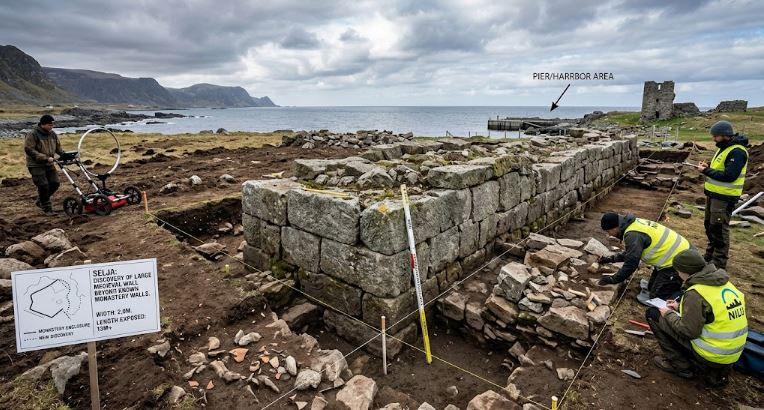
Selja’s newly found wall expands Norway’s oldest saint site beyond the ruins because it moves attention away from the visible monastery alone and toward a wider medieval landscape of harbor activity, settlement, pilgrimage, bishopric organization, and daily work. On July 31, 2026, NIKU, the Norwegian Institute for Cultural Heritage Research, reported that building archaeologist Regin Meyer and specialists in digital archaeology had identified another previously unknown structure on Selja, in Stad Municipality, Vestland County. The new find lies outside the known monastery walls. Ground-penetrating radar shows a substantial stone wall foundation extending from the harbor area and at least 13 meters southward across the terrain. Meyer said the wall measures two meters thick, which indicates a major construction. (NIKU Selja 2026 Discovery)
Why The 2026 Wall Matters Now
The 2026 wall matters now because Selja has long carried a powerful religious identity, yet recent archaeology keeps showing that the island held more activity than the surviving ruins alone suggest. NIKU describes Selja as one of Norway’s most important medieval sites, associated with Saint Sunniva, the Selja martyrs, the early Christianisation of Norway, a bishopric, a pilgrimage destination, and a monastery complex.
That status can make visitors focus almost entirely on the dramatic ruins, the cave, and the saint legend. The newly detected wall changes the frame. It suggests that meaningful medieval activity stretched outside the known monastic enclosure, possibly toward the harbor, where movement, supply, arrival, and ordinary logistics would have mattered.
This is the strongest oldnorsenews.org angle. The wall does not reduce Selja’s sacred story. It expands it. A holy site needed routes, buildings, labor, storage, visitors, food, craft, maintenance, and maritime access.
The new discovery asks readers to see Selja not only as a ruin, but as a lived medieval environment.
What NIKU Found Outside The Monastery Walls
NIKU reports that the newly identified structure consists of a thick stone wall foundation outside the known monastery walls. Ground-penetrating radar data trace it from the harbor area and at least 13 meters southward. Archaeologists have investigated only parts of the wall so far, and the structure continues below ground.
That last detail matters. Researchers do not yet know the wall’s full extent. They also do not know its function. Meyer collected datable material and soil samples from the area, hoping the analysis will clarify the wall’s age, purpose, and role in the site’s development.
The best article should therefore avoid naming the structure too soon. It may relate to the Benedictine monastery, the bishopric established on Selja in the eleventh century, or an earlier phase of the sacred site connected with the cult of the Selja Men. NIKU lists those possibilities but does not choose between them yet.
The wall’s importance lies in what it opens, not in a final label.
Why The Harbor Connection Changes The Site
The possible harbor connection changes the site because Selja’s sacred role depended on movement. Pilgrims, clergy, monks, workers, visitors, and supplies had to reach the island by sea. A substantial wall extending from the harbor area could point toward infrastructure that helped organize activity outside the famous ruins.
Riksantikvaren’s Selje Kloster page gives useful landscape context. It notes that Selja lies south of Stadlandet, near one of Norway’s most weather-exposed coastal waters. Ships often had to wait for better weather before crossing Stadhavet, and Selja offered good harbors.
That maritime setting matters. A pilgrimage and monastery site on an island does not function like an inland church. Boats shape arrival. Weather shapes movement. Harbor areas shape how people enter the sacred landscape.
The 2026 wall may therefore connect the holy center with the practical edge of the island. Until dating and analysis finish, readers should not define it as a quay, boundary, building, or processional feature. Still, its direction from the harbor makes the wider site more important.
Why Selja Was Already More Than A Monastery
Selja was already more than a monastery before the 2026 discovery. Riksantikvaren describes the island as a place where visible monastery ruins still stand, with the monastery tower ranking as Norway’s highest surviving medieval ruin. The agency also explains that Benedictine monks built the monastery and sacred complex below the church and cave associated with Sunniva and the Selja Men.
That visible complex has dominated public memory. Visitors see the tower, the ruined church, the cloister, the hillside, and the cave. Yet Selja’s history also includes guest facilities, care for visitors, coastal movement, and medieval activity around the ruins. Riksantikvaren notes that the monastery included a guesthouse and an infirmary, and that the infirmary lay some distance from the main monastery to reduce infection risk.
Those details make the 2026 wall easier to understand as part of a broader system. Monasteries did not survive on prayer alone. They required buildings for hospitality, health, craft, food, storage, service, administration, and waterborne movement.
A thick wall outside the known walls may belong to that practical medieval world. The sacred site had a working body as well as a spiritual heart.
Why Saint Sunniva Still Shapes The Interpretation
Saint Sunniva still shapes the interpretation because Selja’s identity begins with the saint legend and the Selja martyrs. NIKU summarizes the saga tradition: Sunniva and her companions were shipwrecked on Selja in the mid-tenth century, took refuge in a cave, and died as martyrs. The tradition says Olav Tryggvason discovered holy relics on the island and built a church there in 996.
Riksantikvaren tells the legend in similar terms. Sunniva fled from Ireland to western Norway, sought refuge on Selja, and died when the mountain collapsed over the cave. Later, according to the legend, the king and Bishop Sigurd found fragrant human bones and Sunniva’s intact body in the cave.
Those traditions matter, but they require careful handling. The 2026 wall does not prove the legend. It does not identify Sunniva’s companions or date the first cult. Instead, it shows that the island’s medieval development reached beyond the visible ruins. That expansion may help scholars understand how the cult became a sustained institution.
Old Norse News has covered why readers should separate source types when archaeologists compare Norse myth and Viking history. Selja needs the same discipline: legend, church history, architecture, and archaeology each tell different kinds of truth.
Why The Bishopric Makes Selja Politically Important
The bishopric makes Selja politically important because the island was not only a place of local devotion. NIKU notes that Olav Kyrre established Western Norway’s first bishopric on the island around 1068. Bjørgvin Diocese gives a more detailed explanation: Olav Kyrre created the early Norwegian bishoprics in the eleventh century, including a western Norwegian seat at Selja for the Gulathing region.
That political church context matters for the newly found wall. A bishopric needed more than a saint story. It needed buildings, land, clerical organization, routes, authority, and connection to royal power. A substantial structure near the harbor could belong to the kind of physical environment that supported an institutional center.
Bjørgvin Diocese also notes that 1068 works as the earliest plausible foundation year, although the exact timing remains uncertain within Olav Kyrre’s reign. That kind of caution suits Selja well. Dates and traditions matter, but researchers often work with ranges, processes, and probabilities.
The wall may eventually help refine the development of this ecclesiastical landscape. For now, it shows that Selja’s institutional footprint may have spread farther than the visible ruins suggest.
Why The 2024 Stone Church Discovery Matters
The 2024 stone church discovery matters because it began the recent wave of major reinterpretations at Selja. NIKU announced in June 2024 that conservation work in the ruins of St. Sunniva’s Church had revealed traces of an earlier stone church with construction features that parallel the Anglo-Saxon building tradition. Meyer argued that this earlier building may represent one of Norway’s first stone churches, perhaps even the first.
That finding already changed the Selja story. It suggested that builders had created an earlier, smaller stone church at the origin place of Norway’s earliest known saint cult, before later phases expanded the ruin visitors see today. The discovery also linked Selja more strongly with North Sea church contacts and possibly Anglo-Saxon influence.
The 2026 wall belongs to the same research momentum. It does not repeat the 2024 result. It expands the spatial question. If an earlier stone church can hide inside a known ruin, then unknown buildings and walls can also survive outside the known monastery plan.
Selja now asks researchers to look through, under, and beyond the famous ruins.
Why The 2025 Ruin Adds A Second Layer
The 2025 ruin adds a second layer because NIKU found another previously unknown medieval structure just 30 meters from the monastery. On October 2, 2025, NIKU reported that Meyer and Dag-Øyvind Engtrø Solem had uncovered masonry and flagstone flooring from a stone building that had never been documented before. Meyer said the construction suggested a date in the High Middle Ages, the period from 1130 to 1350 in Norway.
That 2025 structure may have served a production or craft-related function connected to daily monastery operations. Meyer described it cautiously, and the team opened trenches to identify its construction method, collect dating samples, and understand its purpose.
This discovery matters for the 2026 wall because it shows a pattern. Selja’s unknown buildings do not sit only inside the traditional sacred story. They may include practical spaces, craft activity, settlement traces, or service buildings that supported the pilgrimage and monastery complex.
The new wall becomes the third major discovery in just a few years. Together, 2024, 2025, and 2026 turn Selja into an active research landscape rather than a fixed ruin park.
Why Digital Archaeology Changes The Island
Digital archaeology changes the island because researchers can now identify traces that older surveys missed. NIKU says the recent discoveries rely on collaboration between building archaeologists and specialists in digital archaeology, using new documentation methods, terrain modelling, remote sensing, and detailed landscape and ruin analysis.
The 2025 excavation also came from ground-penetrating radar surveys that NIKU conducted in 2021 and 2022. Those surveys produced signals that specialists interpreted as possible archaeological structures beneath the surface. Excavation then tested the signals and exposed real medieval remains.
This matters because Selja has seen investigations and documentation for nearly 200 years, according to NIKU. Yet new methods still reveal unknown structures. The island still holds traces beneath turf, near the monastery, and outside the visible ruins.
Digital tools do not replace excavation. They guide it. The 2026 wall shows why remote sensing can shift interpretation without reckless digging across a fragile sacred site.
Why The Wall’s Function Should Stay Open
The wall’s function should stay open because NIKU has not yet identified it. Meyer collected samples to determine its date and gain insight into the activities that took place there. The available evidence tells us the structure is substantial, outside the known walls, and traceable from the harbor area. It does not yet tell us what people used it for.
A two-meter-thick wall can suggest importance, but importance has many forms. It could relate to enclosure, support, landing infrastructure, a building, a boundary, or another kind of medieval construction. The harbor direction adds interest, but it does not prove a quay or processional route.
This caution matters for SEO writing. A headline can ask why the wall expands the site. It should not claim that archaeologists found a “lost harbor monastery” or “hidden saint road” unless evidence supports that language.
Selja’s wall gives a rare chance to model responsible historical writing. The discovery is strong enough without invention.
Why The Ruins Still Matter
The newly found wall expands the story, but the visible ruins still matter. Riksantikvaren describes Selje Kloster as a ruin landscape where visitors can explore the monastery through images, drone film, and 3D models. The tower remains Norway’s tallest standing medieval ruin, while St. Sunniva’s Church still appears in the hillside landscape.
The ruins anchor public memory. They show that Selja functioned as a major medieval religious center, not just a place remembered in texts. They also preserve building phases, restorations, medieval stonework, and modern conservation choices.
Yet ruins can create a visual trap. Visitors may assume the surviving walls mark the full extent of the medieval site. NIKU’s recent finds challenge that assumption. The sacred and working landscape extended beyond what still stands.
That is why “beyond the ruins” works as the article’s main idea. The visible complex remains essential, but it no longer contains the whole story.
Why The 1170 Relic Translation Matters
The 1170 translation of Sunniva’s relics matters because it shows how Selja’s role changed over time. Store norske leksikon explains that Selja was an important religious center and pilgrimage destination through most of the Middle Ages, and that Sunniva’s relics were moved from the Selja shrine to Kristkirken in Bergen in 1170. (Store Norske Leksikon Selja Kloster)
Bjørgvin Diocese also notes that Sunniva’s relics moved to Bergen in 1170, linking Selja’s saint cult to Bergen’s growing ecclesiastical importance. This does not make Selja unimportant after 1170. The monastery, shrine, and pilgrimage identity continued, but the island’s relationship with the wider church changed.
The newly found wall may eventually help researchers understand how Selja functioned before, during, or after these institutional shifts. Did activity cluster near the harbor as pilgrimage traffic changed? Did service buildings support monastic life after the bishop’s seat moved? Did older structures remain active as the complex expanded?
Those questions remain open, but the wall gives researchers a new physical clue.
Why Selja Was A North Sea Christian Site
Selja was a North Sea Christian site because its story reaches westward as well as inland. The legend connects Sunniva with Ireland. The 2024 NIKU research identified construction features in the earlier stone church with parallels to the Anglo-Saxon building tradition. Store norske leksikon notes that the earliest stone church on Selja probably drew influence from English architecture and may have involved English craftsmen.
That North Sea context matters because early Norwegian Christianity did not develop in isolation. Kings, clergy, monks, stone workers, relic traditions, pilgrimage practices, and liturgical memory moved through maritime networks. Selja’s position on the western coast made those connections plausible and powerful.
The 2026 wall may not prove a new North Sea link by itself. Still, a substantial structure tied to the harbor area belongs naturally in a site shaped by sea movement.
A saint island on the Norwegian coast was also a node in a wider Christian maritime world.
Why This Is Not Just A Saint Legend Story
This is not just a saint legend story because archaeology now keeps adding non-legendary evidence for buildings, walls, phases, and activity. The legend of Sunniva gives Selja emotional and religious power. The archaeology gives it material depth.
The danger lies in letting either side dominate too much. If writers use only the legend, they turn Selja into a sacred tale without infrastructure. If they use only walls and radar, they miss why medieval people invested so much in the island.
The better article brings them together carefully. Selja’s saint cult drew people to the place. The bishopric and monastery organized it. The harbor received people and supplies. Buildings supported worship, care, work, and daily life. New walls now help archaeologists test how far that system extended.
Selja’s importance comes from the relationship between belief and built environment.
Why Visitors Should Verify Before Making Big Claims
Visitors and readers should verify several points before making big claims about the 2026 wall. First, NIKU has identified a substantial stone wall foundation outside the known monastery walls, traceable for at least 13 meters in ground-penetrating radar data. Second, the wall measures about two meters thick, but archaeologists have investigated only parts of it.
Third, researchers do not yet know its full extent, age, or function. Fourth, the wall may connect to the Benedictine monastery, the eleventh-century bishopric, or earlier phases of the sacred site, but NIKU has not assigned a final interpretation. Fifth, the discovery belongs to a broader pattern that includes the 2024 earlier stone church and the 2025 unknown medieval ruin.
Those limits make the story stronger. The article can say the wall expands Selja’s known landscape. It should not say the wall proves a lost harbor, a hidden monastery district, or a newly discovered shrine unless later research supports those claims.
Good heritage writing keeps the excitement and the uncertainty together.
Why Selja’s Wall Expands The Saint Site Beyond The Ruins
Selja’s newly found wall expands Norway’s oldest saint site beyond the ruins because it changes where the story begins and ends. The visible monastery, St. Sunniva’s Church, the cave, and the hillside shrine still matter deeply. Yet the 2026 wall shows that medieval activity reached outside the known monastery walls and toward the harbor area.
That matters because Selja functioned as more than a place of legend. It became a bishopric, pilgrimage destination, monastery complex, and maritime religious center. People arrived by boat, moved through the landscape, entered sacred spaces, and relied on practical buildings and infrastructure that archaeologists are only now beginning to map.
For oldnorsenews.org, the key lesson is clear. Early Christian Norway did not build holy places as isolated ruins. It built working sacred landscapes. Selja’s newest wall reminds readers that pilgrimage, sainthood, royal church policy, monastic life, and daily logistics all left marks in stone and soil.
The wall’s exact function still awaits analysis. Its larger meaning is already clear enough: Selja’s history extends beyond the famous ruins. The saint site was broader, busier, and more complex than the surviving walls once allowed visitors to imagine.
Norse identity artifacts matter because they give modern readers something firmer than inherited slogans, national romance, or popular costume imagery. Coins, burials, bowls, pendants, knives, brooches, and display cases do not speak by themselves, yet they preserve evidence that can test modern stories about the Norse past. On April 2026, metal detectorists discovered the Mørstad Hoard near Rena in Norway, reported as about 3,000 silver coins dated to around AD 1047, with coins linked to England, Germany, Denmark, and early Norway Mørstad Hoard report. That single find makes isolation a difficult story to sustain.
Why Norse Identity Artifacts Need Context
Norse Identity Artifacts And Evidence
The first duty of interpretation is restraint. An artifact can show material, place, damage, burial context, style, and sometimes date. It cannot, by itself, tell us every belief, language choice, ethnic boundary, or private emotion attached to the person who owned it. The value of Norse identity artifacts lies in that tension. They are physical evidence, but identity is social, changing, and often mixed.
A silver coin from abroad found in Norway may point to exchange, payment, gift circulation, plunder, taxation, or remelting. A brooch in a burial may suggest dress, status, gendered presentation, inheritance, or regional taste. A religious object may reflect devotion, fashion, political signaling, protection, or contact with another community. The object narrows the range of possibilities, but it rarely closes the question.
What Objects Can And Cannot Say
This is why archaeological caution matters. Modern Norse identity is often pulled toward simple symbols: the longship, the warrior, the rune, the hammer, the shield. Artifacts do not remove those symbols from the story, but they rebalance it. Hoards point to trade and monetized exchange. Burials point to family, death, rank, care, and display. Museum objects point to contact zones where Scandinavian, Anglo-Saxon, Christian, and local identities overlapped.
Readers who want a clearer separation between later mythic tradition and material evidence may find a useful parallel in archaeologists separating myth from history. The same principle applies here: an object should not be forced to confirm a story that the evidence cannot support.
Silver, Exchange, And Belonging
The Mørstad Hoard As A Case Study
The Mørstad Hoard is valuable for identity history because its contents were not locally narrow. The research notes describe about 60 percent of the coins as whole coins, with the remainder made up of hacksilver and ingots. The reported origins include England, Germany, Denmark, and early Norway. Such a mixture suggests a world in which silver moved through several political and cultural settings before deposition near Rena.
That matters for how we frame belonging. A person using foreign silver did not stop being Norse, but the material basis of life was not sealed off from the wider world. Silver could cross language borders, religious borders, and political borders. It could be counted, cut, weighed, stored, gifted, or hidden. The artifact record therefore challenges the idea that Norse identity was a fixed ethnic container.
Why Coins Resist Isolation Stories
Norse identity artifacts work best when they disturb tidy categories. The Mørstad Hoard does this by showing that value itself was mobile. Coins struck elsewhere could become part of Norwegian wealth. Hacksilver could reduce formal coinage to metal weight. Ingots could sit beside coins as stored value. These are not small details; they affect how we understand power, trust, and exchange.
For modern audiences, this point has contemporary relevance. Norse heritage is sometimes presented as a symbol of cultural purity. The coin evidence points in another direction. It suggests participation in broad exchange networks, where objects carried foreign marks into local settings. A cautious historian should not call that modern cosmopolitanism in a direct sense. Still, the hoard does show that Viking Age material life was connected across regions.
Museum Displays And Hybrid Identity
York After July 2025
The Viking North exhibition opened at York Museums Trust on July 11, 2025. Reporting on the exhibition highlighted everyday items, high-status treasures, and religious objects connected with northern England under Scandinavian influence. One especially telling object was a silver-gilt Anglo-Saxon bowl with Christian symbolism found in a Viking warrior’s burial, used to discuss the emergence of Anglo-Scandinavian identity in the ninth and tenth centuries Guardian exhibition report.
This is not a minor museum detail. A Christian-symbolic object in a burial associated with a Viking warrior unsettles rigid labels. It asks whether identity should be read through ancestry, language, burial rite, political control, object ownership, religious symbolism, or local adaptation. The answer may differ from case to case.
Religious Mixture In A Burial
Artifacts with overlapping religious signs are especially easy to misuse. A hammer pendant, a cross, or a Christian bowl does not always provide a clean confession of belief. Objects may be worn, traded, inherited, captured, reinterpreted, or placed in graves by mourners. The York example is strong because it places the object inside a broader exhibition about cultural contact in northern England rather than treating it as a curiosity.
For public history, display choices matter. Lighting, labels, reconstructions, color, placement, and pairing can guide the viewer toward conflict, blending, conquest, conversion, or coexistence. Public memory is not only museum work; theatres and local cultural groups also shape how communities stage and discuss the past. For those interested in how arts contribute to cultural history, a related arts-and-culture site can be found at Wakefield Rep.
Modern Identity Without False Certainty
Public Memory Beyond Costume
For modern readers, Norse identity artifacts can make heritage more honest because they shift attention away from costume stereotypes. The object record includes weapons, but it also includes tools, beads, knives, bowls, weights, coins, mounts, textiles, and fragments. These items point toward households, craft, exchange, religion, farming, burial, and display. A society that raided also cooked, repaired, traded, mourned, prayed, stored wealth, and borrowed styles.
That wider view does not weaken Viking Age history. It makes it more credible. A culture remembered only through violence becomes flat. A culture studied through objects becomes harder to reduce. The material record shows that identity could be local and outward-looking at once.
Ethical Reading Of Symbols
Modern uses of runes, hammers, and Viking imagery should be read with care. Some people use them for ancestry, craft, religion, design, or historical interest. Others use them in ways that detach symbols from evidence. Archaeology cannot control every modern use, but it can make weak claims easier to challenge.
The phrase Norse identity artifacts should not imply that every artifact carries one clear identity label. It is better understood as a method: begin with the object, ask what is known, separate evidence from projection, and admit uncertainty where the record is thin. That method is slow, but it protects the past from modern overconfidence.
The Role Of Artifacts In Norse Identity Today
The role of artifacts in Norse identity today is not to provide a single origin story. It is to show how identity was made through contact, exchange, memory, burial, belief, and display. The Mørstad Hoard points to silver moving across borders. The York exhibition showed how objects in northern England could speak to Anglo-Scandinavian identity. Together, these cases argue against a sealed, simple, or purely martial Norse past.
Norse identity artifacts are most useful when treated as evidence rather than icons. They can inspire modern interest, but their greater value lies in discipline: they remind us to ask where an object came from, how it was used, why it was deposited, who interpreted it, and what modern viewers want it to mean. That is how artifacts shape understanding today without turning archaeology into myth dressed as certainty.
Norse Heritage Festivals in the United States rarely present the Viking Age as a museum case alone. They place inherited Scandinavian identity into parades, food booths, contests, music, costumes, crafts, and public storytelling. That can be powerful, but it also requires caution. A festival may draw on Norse names, symbols, and saga-flavored imagery without proving direct continuity from medieval Scandinavia. The evidence is strongest when organizers, reporters, and local historians identify dates, founding stories, attendance numbers, and program details rather than asking visitors to accept a romantic version of the past.
One useful example is the Scandinavian Heritage Festival in Ephraim, Utah. The official festival history says the event began in 1976 as the “Scandinavian Jubilee” and reports that it has attracted around 25,000 visitors in recent years Ephraim festival history. That single case does not stand for every Scandinavian festival in the country, yet it shows how local memory, immigrant ancestry, and Norse-themed public culture can meet in a modern American town.
How Norse Heritage Festivals Frame Belonging
Community Before Spectacle
The first influence of Norse heritage is social rather than theatrical. Scandinavian American festivals often use the past to answer a present-day question: who belongs to this community, and how is that belonging made visible? In Ephraim, the festival is tied to Scandinavian settlement memory in Sanpete County. That matters because “Norse” in a U.S. festival setting is usually not a strict academic label. It may sit beside Swedish, Danish, Norwegian, Finnish, Icelandic, and broader Nordic family stories.
Norse Heritage Festivals are best read as acts of public memory. They select parts of the past that can be performed together: food, song, dance, costumes, contests, names, symbols, and stories. Some of these elements are medieval in inspiration; others come from later folk practice or immigrant-era identity. The careful reader should not flatten them into one period. A maypole, a bunad, a rune-like design, and a Viking contest can share the same festival ground, but they do not come from the same historical moment.
Why Language Matters
Language is one of the quiet carriers of this heritage. Festival names often preserve Scandinavian words, place associations, or family memories even when most attendees are English speakers. This is where my own interest in Norse literature and language keeps returning: a name can carry more than decoration. It can invite pride, misreading, nostalgia, or serious curiosity. Public writing about these events should name those layers plainly. Clear interpretation also depends on clear prose and source habits; readers looking for more information on effective writing might find guidance in writing service comparisons.
Ephraim As A Case Study
A Jubilee Founded In 1976
Ephraim’s festival gives a dated example rather than a vague claim. Its founding in 1976 places it within the late twentieth-century growth of local heritage events in the United States. The original title, “Scandinavian Jubilee,” also shows that the event began with a broad ethnic and regional frame, not only with Viking Age themes. The modern name, Scandinavian Heritage Festival, keeps that wider scope.
This distinction matters. A festival can include Norse symbols while still being about immigrant descendants, local settlement, town identity, family reunion, and tourism. The Viking Age may provide visual drama, but the festival’s social purpose is broader. In evidence-based cultural writing, that broader purpose should not be lost beneath helmets, ships, and runes.
Viking Contests And Cultural Signals
KSL reported that Sanpete County’s Scandinavian Heritage Festival was held during Memorial Day weekend and drew 30,000 visitors in 2025; the report also described Scandinavian cultural programming, including Viking-themed contests KSL festival report. Because that event already took place, it should be discussed in the past tense. Its size also shows that heritage festivals are not only small family gatherings. They can become major regional events.
The Viking contest detail is small but revealing. It suggests how Norse heritage becomes legible to a public audience: strength, costume, competition, humor, and recognizable “Viking” markers. These signals can bring people in. They can also reduce Norse culture to a narrow set of images if not balanced by craft, settlement history, language, women’s roles, farming, law, trade, and belief.
Myth, Craft, And Caution
Norse Heritage Festivals And Public Memory
Norse Heritage Festivals often lean on myth because myth is memorable. Thor’s hammer, runes, ships, dragons, and saga-like storytelling are easier to stage than medieval legal systems or source criticism. Yet the modern use of myth should be described as modern use, not as direct evidence for what early medieval Scandinavians did at every gathering.
For readers who want to separate mythic material from historical evidence, the same caution appears in work on Norse myth and Viking history. A festival can spark interest in Odin, Thor, or heroic tales, but scholarship asks different questions: what kind of source is being used, how late is it, who preserved it, and what can archaeology confirm or challenge?
Where Myth Can Overreach
The risk is not that festivals use myth. Myth is part of Scandinavian cultural inheritance, and it remains one of the main reasons many Americans first become interested in Norse material. The risk is false certainty. A modern festival symbol may be inspired by medieval texts, nineteenth-century nationalism, family folklore, commercial design, or popular media. Without explanation, visitors may assume all of it is equally old.
A careful festival program can avoid that problem by using plain labels: “Viking-inspired,” “traditional Scandinavian,” “immigrant-era,” “modern craft,” or “mythological.” Those labels do not make the celebration less meaningful. They help the audience see how heritage is made, revised, and shared.
Why Attendance Numbers Need Context
The 2025 Ephraim Crowd
The reported 30,000 visitors in Ephraim in 2025 is significant because it shows contemporary public demand for Scandinavian heritage programming in at least one U.S. region. Still, attendance alone does not tell us what visitors learned, how many claimed Scandinavian ancestry, or whether they came for food, family, music, contests, religion, tourism, or history. Numbers measure scale, not meaning.
The official figure of around 25,000 visitors in recent years and the 2025 report of 30,000 visitors can sit together without contradiction if read carefully: one describes a general recent pattern, while the other describes a specific reported year. Responsible heritage writing should keep that difference visible.
Scale Without Simple Certainty
Large crowds can strengthen a festival’s civic presence. They can also encourage simplified imagery because symbols must be quickly understood by visitors of many backgrounds. The horned helmet problem, familiar across popular Viking imagery, is a reminder that recognizability is not the same as historical accuracy. The research supplied here does not claim that Ephraim used horned helmets, so the point should remain general: public Viking imagery needs careful framing.
For organizers and writers, the question is not whether a festival should be joyful. It should. The question is whether joy can coexist with accurate explanation. In the best cases, a visitor can enjoy a contest or a meal and still leave with a sharper sense of Scandinavian American history.
Norse Heritage Festivals In The U.S.
Norse Heritage Festivals in the U.S. show how ancient stories can be carried into modern civic life without staying unchanged. Their influence appears in symbols, names, competitions, storytelling, and festival identity. Their deeper value lies in how they connect families and towns to remembered Scandinavian roots while inviting new audiences to ask better questions about the past.
The Ephraim example supports a cautious reading. The festival has a documented founding date, a clear local identity, and reported attendance large enough to matter. Its Norse-themed elements should be treated as part of a wider Scandinavian American celebration, not as a direct reconstruction of the Viking Age. That balance lets contemporary festivals honor ancestry, welcome curiosity, and keep evidence in view.
Posted inMythology & Culture|Comments Off on Norse Heritage Festivals in the U.S. Today
Á Sondum’s rare Faroe runestone needs careful reading before big claims because the first visible runes have appeared before specialists have finished the work that gives an inscription historical meaning. On July 22, 2026, Tjóðsavnið, the National Museum of the Faroe Islands, announced that archaeologists had found a runestone during the archaeological excavation at Á Sondum on Sandur, on the island of Sandoy. The stone lay in the floor of a building exposed during the summer excavation. Museum staff could read some runes, but Tjóðsavnið said a runologist would come to the Faroe Islands at the end of August to examine the stone more closely. That caution is the story. A rare runestone in a possible medieval prayer-house context can change how readers see writing, Christianity, and memory in the North Atlantic, but only if interpretation moves more slowly than excitement. (Tjóðsavnið Runestone Announcement)
Why The Á Sondum Find Matters Now
The Á Sondum find matters now because runestones rarely appear in the Faroe Islands. Tjóðsavnið states that finding a runestone in the Faroes is unusual, and that the newly exposed stone has become fragile now that it has come out of the ground. To protect it, the museum planned to move it from the excavation site to Tjóðsavnið for conservation and closer study.
That detail should shape every headline. The stone is not simply a dramatic object. It is a vulnerable source. Once archaeologists remove a stone from a floor layer, they must protect its surface, document its context, and avoid turning a preliminary reading into a finished historical claim.
The strongest oldnorsenews.org angle is not “a mysterious Viking message was found.” A better angle asks why a rare runic object in a possible medieval Christian building needs slow, expert reading before anyone uses it to make claims about Vikings, graves, churches, or the Faroe Islands’ religious transition.
What Tjóðsavnið Says Archaeologists Found
Tjóðsavnið says people from the museum found the runestone during the summer 2026 excavation at Sondum. The stone lay in the floor of a building that archaeologists had uncovered. Museum archaeologists believe they can read some of the runes, but they have asked a runologist to examine the inscription so they can gain as much knowledge as possible from the find.
Other finds from the same excavation also matter. Tjóðsavnið reports fragments of a small statue of the Virgin Mary with the Christ Child, and a kola, a small light or oil lamp. The museum says those objects may connect with Christian faith and religious activity at the site.
That context makes the runestone especially interesting. A runic inscription in a building floor, a Marian statue fragment, and an oil lamp do not automatically tell one story. They do, however, make the site a strong candidate for studying medieval Christian practice in the Faroes.
The evidence invites questions, not instant answers.
Why “Here Rests” Must Stay Tentative
The phrase “Here rests” must stay tentative because it comes from an early reading, not a final publication. Kringvarp Føroya reported on July 23, 2026, that archaeologist Helgi Michelsen of Tjóðsavnið said a loose preliminary assessment may read something like “Her hvílur…”, meaning “Here rests…” The same report stressed that the runes are difficult to interpret and that the stone needs closer examination.
That matters because “Here rests” sounds like a grave marker. Readers may quickly jump from those words to a tombstone, churchyard, named individual, or early Faroese Christian burial. Those possibilities are worth exploring, but the inscription has not yet carried that weight.
A runologist still needs to examine the stone’s lines, damage, carving depth, letter forms, grammar, and parallels. The stone’s position in the floor also matters. Did builders place it there as part of the original structure? Did they reuse an older memorial stone as floor material? Did later disturbance move it?
Until specialists answer those questions, the best wording remains cautious: the inscription may begin with a funerary phrase, but that reading still needs confirmation.
Why The Floor Context Changes The Question
The floor context changes the question because a runestone in a floor is not the same as a runestone standing upright in its first intended place. Tjóðsavnið says the stone lay in the floor of the building excavated during summer 2026. KVF also describes it as lying in the floor of an old building.
That placement opens several possibilities. The stone may have served as a grave marker before later builders reused it in a floor. It may have belonged to the same religious building and held a memorial function inside it. It may also have moved during rebuilding, erosion, collapse, or later disturbance.
The site’s stratigraphy will decide which interpretation works best. A runic phrase alone cannot solve the building history. Archaeologists need to understand the floor layer, associated finds, construction sequence, and relationship between the stone and surrounding deposits.
This is why big claims should wait. The inscription and the floor context must be read together.
Why The Possible Prayer House Matters
The possible prayer house matters because the building’s architecture points toward a medieval Christian setting. Tjóðsavnið reports that the exposed building runs east-west and has an entrance in the west end. The museum says those architectural features are common in medieval prayer houses and chapels. It also names Faroese examples of east-west prayer houses with west-end entrances: Bønhúsbergi in Mykines, Bønhústoft in Leirvík, and the ruin niðri á Bakka at Velbastað.
This architectural context supports careful Christian interpretation. The Marian statue fragment and oil lamp strengthen that line of inquiry. Yet the museum still uses cautious language, saying the building may be a medieval prayer house.
That word “may” matters. A building can resemble a prayer house before the final interpretation settles. Finds can suggest religious activity without proving every function of the structure. The runestone can add evidence while still needing a specialist reading.
Á Sondum therefore shows how archaeology works: architecture, objects, inscription, and site context combine gradually.
Why The Virgin Mary Fragment Adds Christian Context
The small fragment of the Virgin Mary with the Christ Child adds Christian context because it places the site inside a medieval devotional world. Tjóðsavnið reports the fragment among the summer 2026 finds. A Faroese Catholic Church article published on July 31, 2026, described the fragment as a rare testimony to Catholic religious life in the Faroe Islands before the Reformation, when the Lutheran church system entered the islands under the Danish king in the latter half of the 1530s. (Catholic Church In The Faroes Sondum Fragment)
That source adds useful religious context, but the article should still separate evidence from devotional interpretation. The fragment supports a Christian setting. It does not by itself identify the entire building, the date of every layer, or the exact use of the runestone.
The more careful claim is stronger: Á Sondum now contains a cluster of finds that may relate to medieval Christian practice. The runestone, statue fragment, oil lamp, and building orientation deserve study together.
A single object should not carry the whole interpretation.
Why Á Sondum Is Bigger Than One Stone
Á Sondum is bigger than one stone because the site has already been part of a broader investigation into early settlement and coastal erosion. On May 28, 2026, Tjóðsavnið reported that the sea threatens the archaeological remains at Sondum. Medieval and Viking Age settlement remains lie in the bank below a historic stone house, and the museum planned excavation before more material could erode into the sea.
That background matters because the runestone comes from a rescue context. The excavation is not only a search for rare objects. It responds to coastal loss, unstable protective works, and the need to document remains before the sea destroys them.
Tjóðsavnið also notes that earlier small test excavations took place in 1994 and 2006–2007. Radiocarbon dating of charred barley found beneath a Viking Age longhouse indicated that people visited the islands between AD 300–500 and AD 500–700, at least 300 years before the Norse settlement around AD 800.
This makes Á Sondum a long-term North Atlantic site, not a single runestone headline.
Why Pre-Norse Visits Complicate The Story
The evidence for pre-Norse visits complicates the story because it stretches the site’s timeline beyond the familiar Viking settlement frame. Tjóðsavnið’s May 2026 article says radiocarbon dates from charred barley beneath a Viking Age longhouse point to visits in the periods AD 300–500 and AD 500–700. That means the site may preserve traces of human presence before the Norse settlement around AD 800.
This does not mean the newly found runestone dates to those early visits. Nothing in the public museum announcement supports that claim. The runestone belongs in the context of the 2026 excavation and the possible medieval Christian building until specialists say more.
Still, the deeper chronology matters. Á Sondum sits at a place where pre-Norse visits, Viking Age settlement, medieval Christianity, coastal erosion, and modern excavation intersect. That layered timeline makes overconfident interpretation especially risky.
A runestone found in such a site does not explain the whole history. It becomes one source among several.
Why The Runestone Should Not Be Called Viking Too Quickly
The runestone should not be called Viking too quickly because its likely building context may be medieval and Christian. A runic inscription can belong to the Viking Age, but runes did not disappear when Christianity arrived. People continued using runes in medieval Scandinavia and the North Atlantic.
This distinction matters for SEO and accuracy. A headline that calls the stone “Viking” may attract clicks, but it could mislead readers if specialists later place the inscription in a medieval chapel or prayer-house context. The public evidence so far supports “rare Faroe runestone,” “runic inscription,” and “possible medieval Christian context” more safely than “Viking runestone.”
The stone’s date, language, wording, reuse history, and archaeological layer must lead the interpretation.
Why Faroese Runestones Are Rare
Faroese runestones are rare enough that every new find changes the discussion. Tjóðsavnið says clearly that it is rare to find a runestone in the Faroe Islands. Popular attention has already compared the Á Sondum stone with other Faroese runic stones, including the well-known Sandavágur stone.
Visit Faroe Islands describes the Sandavágur runic stone as a historic landmark from about 1200, preserved inside the church for centuries. The stone entered local history in 1917, when farmer Martin á Mýruni discovered it in the area known as Eingjatoftir, between Sandar and Steig in Sandavágur.
That comparison helps readers understand rarity, but it should not collapse separate finds into one category. The Sandavágur stone has its own inscription, discovery history, and context. The Á Sondum stone still awaits specialist reading.
Rare does not mean automatically revolutionary. Rare means the evidence deserves extra care.
Why A Runologist’s Visit Matters
A runologist’s visit matters because runic reading requires more than recognizing a few marks. Tjóðsavnið states that museum archaeologists believe they can read some of the runes, but they have turned to a runologist for closer examination at the end of August. That decision shows responsible scholarship.
The specialist will need to assess whether scratches are carved runes, later marks, damage, or natural stone features. Lighting angle, surface wear, line depth, carving order, letter forms, and stone condition can all change the reading. So can language history. A sequence that looks obvious in one photograph may become less certain under close inspection.
KVF’s report notes that light from lamps can help the runes stand out. That is a reminder that reading depends on controlled observation, not casual viewing.
The public should welcome the delay. Waiting for the runologist does not weaken the story. It makes the final interpretation more trustworthy.
Why Conservation Comes Before Translation
Conservation comes before translation because a fragile surface can lose evidence if people handle it carelessly. Tjóðsavnið says the runestone became fragile after excavation and would be moved to the museum for protection. The museum also asked visitors not to enter the excavation field because the remains are fragile and can easily suffer damage.
That public warning belongs in the article. A runic stone does not become more valuable when visitors crowd it, touch it, photograph it from unsafe angles, or step into the field around it. Context and surface both matter.
This principle also applies to writing about the find. A careful article should not “clean up” the uncertainty for dramatic effect. It should tell readers that preservation, examination, and specialist reading come before firm conclusions.
The stone’s survival matters more than an instant translation. If the surface suffers damage, future readings become weaker.
Why Visitors Were Invited But Kept Back
Tjóðsavnið invited interested people from Sandur and elsewhere to visit the excavation while work continued, when conditions allowed. The museum said archaeologists would gladly explain the excavation and the remains that had appeared. At the same time, visitors were asked not to go down into the excavation field because the remains were fragile and could easily be damaged.
That balance shows good public archaeology. People should see and learn from important discoveries, especially when a local site belongs to community history. Yet public access must not endanger the evidence.
For an oldnorsenews.org audience, this detail matters because it distinguishes responsible heritage interest from intrusive curiosity. A rare runestone can belong to public memory without becoming a public handling object.
Visitors can support the site by respecting boundaries, listening to archaeologists, and waiting for the museum’s updates.
Why Aarhus University And Moesgaard Museum Matter
The excavation team matters because Á Sondum is not a casual dig. Tjóðsavnið states that it leads the excavation in cooperation with Aarhus University and Moesgaard Museum. Archaeology students from Aarhus University took part during the summer as part of their education. Tjóðsavnið also reports that Smyril Line supported the trip.
This collaboration matters for interpretation. The May 2026 background article says the project uses new natural-science methods and better dating methods available through Aarhus University’s researchers and specialized laboratories. Those methods may help clarify early settlement, site chronology, environmental evidence, and the relationship between older and newer occupation layers.
The runestone will draw the headlines, but the broader project depends on scientific dating, training, excavation technique, conservation, and comparative expertise.
A good article should therefore name the institutions. The stone’s meaning will emerge from a research team, not from one viral image.
Why “Medieval Christian” Does Not Mean Simple
“Medieval Christian” does not mean simple. The building may have Christian architecture. The statue fragment and oil lamp may relate to Christian practice. A preliminary reading may suggest a resting place. Those clues point toward a religious context, but they do not erase complexity.
A runestone in a Christian building can raise several questions. Did medieval Faroese Christians use runes in memorial contexts? Did builders reuse an older stone in a floor? Did the inscription belong to a burial, chapel, or another setting before its floor placement? How does the stone relate to the Mary-and-child fragment and the oil lamp?
The answer may involve reuse, continuity, or local practice. It may also remain partly uncertain after study.
That uncertainty should not disappoint readers. It is the reason the find matters. Á Sondum gives researchers a chance to study a place where writing, belief, building, and memory meet.
Why Big Claims Should Wait For Several Kinds Of Evidence
Big claims should wait for several kinds of evidence because the runestone needs a combined reading. The runologist must study the inscription. Conservators must protect the stone. Archaeologists must explain the floor context. Dating evidence may clarify the building sequence. Finds such as the Mary fragment and oil lamp need analysis alongside the architecture.
A single phrase, even if “Here rests” proves correct, cannot answer all questions. It may indicate a memorial. It may help identify a grave context. It may also belong to a reused stone that entered the floor after its original function ended.
The strongest interpretation will come from converging evidence. Text, context, conservation, dating, and comparison all have to support the same story.
Until then, careful wording protects the find from sensationalism.
What Readers Should Verify Before Repeating Claims
Readers should verify several points before repeating claims about the Á Sondum runestone. First, Tjóðsavnið announced the find on July 22, 2026, and the stone lay in the floor of a building at the Sondum excavation. Second, museum archaeologists could read some runes, but a runologist still needed to examine the stone at the end of August.
Third, the possible phrase “Her hvílur…” came from a preliminary assessment reported by KVF, not from a final scholarly publication. Fourth, the building may be a medieval prayer house because of its east-west orientation and west-end entrance, but the museum still presents that as a possibility. Fifth, the Mary-and-child fragment and oil lamp may connect with Christian faith and religious activity, but they do not prove every interpretation of the runestone.
Finally, the site itself is threatened by coastal erosion and has a deeper occupation history. Any claim about the stone should respect that layered context.
Why Á Sondum Needs Careful Reading Before Big Claims
Á Sondum’s rare Faroe runestone needs careful reading before big claims because the find sits at the intersection of several sensitive stories. It may speak to medieval Christian memory. It may reveal a rare Faroese runic inscription. It may belong to a prayer-house floor. It may connect with a cluster of religious finds, including a Virgin Mary and Christ Child fragment and an oil lamp. The excavation site also reaches deeper into Viking Age and pre-Norse questions about the settlement history of the Faroe Islands.
That combination makes the discovery exciting, but it also makes restraint essential. A premature “Viking tombstone” label could mislead readers. A final translation cannot come from a partial photograph. A building’s function cannot rest on one artifact. A fragile surface should not suffer because public interest moves faster than conservation.
For oldnorsenews.org, the key lesson is clear: the best Norse and North Atlantic archaeology often begins with a tempting phrase, then slows down. Á Sondum may one day give scholars a clearer inscription, a stronger building interpretation, and a sharper picture of medieval Christian life in the Faroes.
For now, the stone’s most important message is methodological. Read the runes, but read the floor too. Study the Christian objects, but date the layers. Welcome public interest, but protect the fragile remains. Let the runologist finish before the headline becomes history.
The Maine Penny, also known as the Goddard coin, has become one of the most discussed small artifacts in North American Norse heritage debates. The coin matters because specialists generally accept it as a genuine Norse silver coin from the reign of King Olaf III Kyrre of Norway, dated around 1065–1080 CE. Yet its meaning is far less settled than its manufacture. The central question is not whether the coin is Norse, but how a single Norse object came to be associated with a Native American site in Maine.
The Evidence Behind The Maine Penny
Maine Penny Date And Findspot
The reported find took place on August 18, 1957, at the Goddard archaeological site at Naskeag Point in Brooklin, Maine. According to an Atlas Obscura account, amateur archaeologists Guy Mellgren and Ed Runge found the coin at the site. That date and setting are central to the modern debate because the find was not recovered under the level of controlled excavation standards that would now be expected for an artifact with such large historical implications.
The object itself is not usually treated as a fake coin. The supplied research states that experts generally agree it is a genuine Norse silver coin minted under Olaf III Kyrre. Its physical life after minting is also significant. The coin was found with a perforation, suggesting use as a pendant or ornament rather than as normal circulating currency. That detail supports the possibility that the object had been valued, altered, and carried in ways not tied to Norwegian monetary use.
The Goddard Site Context
The Goddard site was not a Norse settlement. The research identifies it as a large Native American trade-and-habitation shell midden with material links stretching from the eastern Great Lakes to Labrador. In that setting, the coin is the only Norse artifact reported from the site. This point sets a firm limit on interpretation. A single object, however intriguing, cannot carry the weight of a settlement claim by itself.
That is why the coin has a double status in scholarship and public memory. It is striking because it appears far from Norway and far from the confirmed Norse site at L’Anse aux Meadows in Newfoundland. Yet it is also weak as stand-alone evidence for a direct Norse visit to Maine. The most cautious reading treats it as a sign of object movement, not a map of Norse colonization.
What The Coin Can And Cannot Show
Maine Penny Provenance Is The Central Question
The Maine Penny therefore sits at the boundary between numismatic certainty and archaeological uncertainty. Its Norse manufacture is widely accepted. Its archaeological path is not. The research notes several reasons for caution: similar coins were available on the collectors’ market in 1957, documentation of the coin’s in-situ recovery was weak, and the find was made by amateurs. These factors do not prove a hoax. They do mean that the chain of evidence is not as secure as historians and archaeologists would prefer.
This distinction is often lost in popular retellings. A headline may say that a Viking coin was found in Maine, then imply that Vikings reached Maine. The first statement is narrower than the second. The coin’s existence in a Maine collection can be discussed responsibly. A claim of Norse activity in Maine needs more evidence, such as additional Norse artifacts, structural remains, or a secure excavated pattern. The supplied research states that, as of 2026, no other Norse artifacts or settlements have been found in Maine.
Trade Networks Before Settlement Claims
The better-supported interpretive route is Indigenous exchange. If the coin was genuinely present at the Goddard site before recovery, it may have moved through Native trade networks rather than by a Norse traveler walking onto the coast of Maine. The Goddard site’s wider material connections, from the eastern Great Lakes to Labrador, make such movement plausible within the limits of the evidence.
Several claims should be kept separate:
The coin was a genuine Norse silver coin from the late eleventh century.
The Goddard site was a Native American trade-and-habitation site, not a documented Norse settlement.
The coin alone does not prove Norse colonization or direct Norse presence in Maine.
Indigenous exchange systems offer one cautious explanation for how a distant object could travel.
This is also why a related Old Norse News discussion of the Maine coin debate treats provenance, exchange, and settlement claims as separate questions. The distinction is not academic hairsplitting. It is the difference between using an artifact as evidence and using it as a symbol that outruns the evidence.
Heritage Narratives And Indigenous Context
Why European Firsts Can Distort The Evidence
Modern Norse heritage discussions often frame artifacts around contact, discovery, and presence. That framing can be useful when carefully defined, but it can also push Indigenous history into the background. Derek Kane O’Leary’s work on reclaiming Maine’s archive and history addresses how such narratives can affect the way the past is organized and remembered, especially where European “firsts” become more visible than Indigenous agency; see Derek Kane O’Leary’s study.
The Goddard coin is a useful test case. If the discussion begins and ends with the question “Did Vikings reach Maine?” then the Indigenous site becomes a stage for a European story. If the discussion begins with the site’s Native context, then the coin becomes one object within a much larger system of exchange, habitation, value, and movement. The second approach is more cautious and better aligned with the evidence in the supplied research.
Public Memory, Museums, And Small Objects
Small objects often gain meanings far beyond their size. A pierced coin can become a museum item, a regional talking point, a heritage symbol, or a disputed proof-text. That does not make such meanings false, but it does require careful wording. A coin may help people ask better questions about contact across the North Atlantic. It should not be made to answer questions that the evidence cannot support.
For readers interested in how collected objects and public memory shape cultural interpretation, The Sketchbook Project provides an intriguing perspective. It shows how preserved materials can gain new meanings through display, handling, and storytelling. This comparison adds a layer to our understanding of modern settings’ influence on historical objects, even though it does not serve as direct archaeological evidence for the Goddard coin.
In Norse heritage circles, the coin’s appeal is easy to understand. It is tangible, dated to the Viking Age’s aftermath, and connected to Norway. Yet its strongest modern value may be corrective rather than confirmatory. It asks readers to separate origin from provenance, contact from settlement, and popular fascination from source-based interpretation.
The Maine Penny In Modern Norse Heritage Discussions
The Maine Penny remains culturally significant because it resists a simple story. It is Norse in origin, but its reported archaeological setting was Indigenous. It may speak to long-distance exchange, but it does not prove a Norse colony in Maine. It has been used in heritage tourism and popular media, yet its scholarly value depends on restraint.
For modern Norse heritage, that restraint is not a weakness. It gives the coin its real teaching power. The artifact shows how a single object can draw attention to medieval Norway, Native exchange systems, archaeological method, and the politics of historical memory. The most responsible discussion does not use the coin to claim more than it can show. It uses the coin to ask why certain stories become attractive, why provenance matters, and why Indigenous contexts should not be treated as background to European curiosity.
That is where the Goddard coin still matters. It reminds us that Norse history in North America is not only about where Norse people went. It is also about how objects moved, how evidence is recorded, and how modern communities decide which parts of the past receive emphasis.
Joel Anderson’s trade-route hypothesis has shifted how many readers should frame Norse presence in Maine. In early 2026, Anderson, an associate history professor at the University of Maine, described the Native American trade-route hypothesis as the most plausible explanation for how the Maine Penny reached Maine, rather than direct Viking settlement, according to UMaine News. That distinction is small in wording but large in historical meaning. It moves attention away from a dramatic landing story and toward Indigenous exchange systems that were already capable of carrying objects across long distances.
The famous object is a silver Norse coin found in 1957 at the Goddard site in Brooklin, Maine. Live Science reports that the Goddard site was an ancient Native American trading center and that it produced more than 30,000 pre-European Native American artifacts, including stone tools and ceramics, with traded material linked to areas as far north as Newfoundland/Labrador and as far south as Long Island; the same report notes that no other Norse artifacts have been confirmed there and that there is no valid archaeological evidence of Viking visitors or settlements in Maine Live Science.
Why Norse presence in Maine Needs Caution
Norse presence in Maine And The Goddard Site
The Goddard site matters because it gives the coin a real archaeological setting, but that setting is Indigenous, not Norse. A single imported object found among thousands of Native American artifacts should not be asked to prove more than it can support. Anderson’s argument, as reported in 2026, does not deny that the coin is Norse. It asks how a Norse object could move without requiring Norse people to have reached the place where it was found.
That question is dear to those of us who study Norse literature and archaeology together. Sagas invite readers toward movement, ship travel, contact, and fame. Archaeology asks a sterner question: what was found, where was it found, and what other material surrounds it? The answer at Goddard is not a Scandinavian settlement layer. It is a Native American trade center with one Norse coin.
What One Coin Can And Cannot Show
One coin can show contact between economic worlds, but it cannot by itself map a voyage. It can show that an object made in a Norse context ended up in Maine. It cannot prove a ship landing, a camp, a trading post, or a colony. The difference is not pedantic. It protects the evidence from being stretched into a story that the site has not yielded.
The Maine Penny has often attracted public fascination because it feels like a clue from a larger drama. Yet the stronger reading is quieter and, to my mind, more interesting. It asks readers to see Native networks as active historical systems, not as a backdrop to European movement. For related discussion of the coin’s provenance and the danger of overclaiming, Old Norse News has also examined the Maine Penny debate.
What The Trade Route Hypothesis Changes About Norse presence in Maine
Indigenous Exchange As The Stronger Explanation
If Norse presence in Maine means confirmed Viking people on Maine soil, the evidence remains absent. If it means a Norse-made object entering Maine through Indigenous exchange, the Maine Penny becomes a different kind of evidence. It points toward down-the-line trade, in which an object can pass through many hands and communities before reaching its final archaeological context.
Live Science reported that experts including numismatist Svein Gullbekk and archaeologists including Andrew Beaupré support the view that the coin likely arrived through Indigenous exchange rather than by Viking voyagers landing in Maine. That interpretation fits the Goddard site’s broader pattern of traded materials. It also avoids giving Norse travelers explanatory credit for a network that the archaeological finds identify as Native American.
Wear, Perforation, And Movement
The coin’s physical condition also matters. The research notes describe wear, chipping, and a perforation, suggesting that it may have been worn as jewelry or as an ornament. That kind of use is consistent with long circulation. A coin need not remain money in every culture that handles it. It can become a pendant, a valued curiosity, a token of exchange, or a socially meaningful object whose worth is not limited to its original minting purpose.
This is where the trade-route hypothesis becomes persuasive. A worn and perforated foreign coin found in an Indigenous trading center does not behave like a clean marker of a Norse camp. It behaves more like an object that traveled, changed meaning, and entered a local system of value. That is not a lesser story. It is a better-grounded one.
Why The Maine Penny Still Matters
Authenticity Is Not The Main Dispute
One helpful part of the 2026 discussion is that the coin’s authenticity is widely accepted among scholars. The debate is not mainly whether the object is real. The debate concerns context, provenance, and route. That distinction helps keep the public conversation honest. A genuine Norse coin in Maine is exciting; it is not the same as proof of a Viking settlement in Maine.
As of August 25, 2026, Anderson’s framing reflects a cautious scholarly trend: interpret the Maine Penny as evidence for indirect Norse contact within broader Indigenous networks, not as direct evidence for Viking arrival in Maine. That view also changes the emotional center of the story. Instead of asking only, “How far did Vikings go?” we can ask, “How far did Indigenous exchange systems carry objects, meanings, and relationships?”
A Better Public Story
Public history often rewards the loudest claim. A “Vikings in Maine” headline travels faster than a discussion of provenance and trade. Yet evidence-based heritage writing has to resist the louder claim when the quieter one fits the record better. For readers interested in additional perspectives on public engagement and educational projects, you might find the approach of Talk and Play insightful. Here, the focus remains on maintaining factual integrity around the Maine Penny.
The cultural value of Anderson’s hypothesis lies in its restraint. It does not drain wonder from the past. It relocates wonder to the movement of objects through Indigenous hands, across waterways and social ties, long before modern borders shaped the map. That approach gives Native exchange systems historical force rather than treating them as a passive route for a European artifact.
Joel Anderson’s Trade-Route Hypothesis
A Cautious Shift In Narrative
Joel Anderson’s trade-route hypothesis matters because it changes the question from presence to movement. The phrase Norse presence in Maine can tempt readers toward settlement, ships, and footprints. The Maine Penny, read carefully, points instead to circulation. It is a Norse object in an Indigenous archaeological context, and the most plausible explanation reported in 2026 is that Native American trade routes carried it there.
That shift is not anti-Viking. It is good Viking Age scholarship. Norse history was connected to trade, travel, and exchange, but not every Norse object abroad marks a Norse person standing at the findspot. The Maine Penny is still remarkable. It links Maine to a wider northern world through material movement. Yet the present evidence asks us to honor Indigenous networks as the likely carriers of that connection, and to keep claims about Viking settlement out of the story until archaeology provides firmer support.