Why Hamar’s Valum Cemetery Reveals The Viking-To-Christian Transition In Shallow Soil

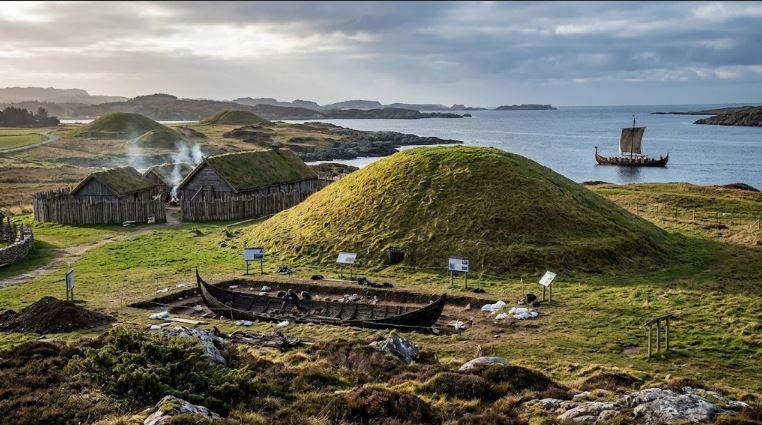
Hamar’s Valum cemetery reveals the Viking-to-Christian transition in shallow soil because the graves sit almost directly under modern farmland while still preserving signs of a major religious shift. In August 2026, archaeologists from NIKU, the Norwegian Institute for Cultural Heritage Research, and Innlandet County Municipality examined medieval graves at Valum by Ridabu outside Hamar. Innlandet County reports that excavation and earlier registration have so far identified 15 individuals, with preliminary dating between AD 994 and 1190. That range matters because it crosses the late Viking Age and early medieval period, exactly where Norway’s burial customs moved from Norse cremation and grave goods toward Christian inhumation, east-west orientation, and churchyard burial. (Innlandet Valum Cemetery Report)

Why Valum Matters Now

Valum matters now because the cemetery nearly disappeared through ordinary agricultural work. Science Norway reported on August 22, 2026, that the graves lay shallowly, and excavation leader Aksel Haavik of NIKU warned that another round of ploughing could have destroyed everything. That detail gives the discovery urgency. The story is not only about a thousand-year-old cemetery. It also shows how fragile medieval evidence can survive just below the plough zone until rescue archaeology protects it.

The find also matters because it comes from Innlandet, a region where the Christianization story often centers on resistance, royal pressure, and the memory of Saint Olav. County archaeologist Åsa Celius told Science Norway that the history of Christianization in Innlandet otherwise includes strong resistance to the new religion. This makes unmistakably Christian graves from such an early period especially important.

Valum therefore gives oldnorsenews.org a strong evidence-first topic. The site does not tell the transition through saga drama. It tells it through shallow graves, body position, missing grave goods, and people laid to rest with care.

What Archaeologists Found At Valum

Archaeologists found graves in cultivated land near the older farm of Valum. Innlandet County says the cemetery has so far produced 15 individuals, including both children and adults. Some of the dead still lie in the positions that mourners placed them in between AD 994 and 1190, although those dates remain preliminary and await further analysis.

NIKU’s own report, published August 20, 2026, describes several communal graves from the early medieval period. The institute notes that adults and children lay together, and that NIKU leads the 2026 excavation in close cooperation with Innlandet County Municipality. The work counts as a sikringsgraving, or rescue excavation, for a cultural environment with major knowledge potential.

The number surprised the excavation team. Haavik told Science Norway that 15 skeletons far exceeded what researchers expected from preliminary investigations. That surprise matters because small rescue excavations can expose a much larger story than the first surface evidence suggests.

Valum now shows that a nearly invisible field can preserve an early Christian cemetery, local memory, health evidence, and burial practice in one shallow layer.

Why The Graves Look Christian

The graves look Christian because they follow several patterns associated with early Christian burial in Norway. Innlandet County says there is no doubt that the cemetery began after the transition from Norse belief to Christianity. The graves run east-west, archaeologists found no traces of grave goods, and Christianity brought an end to cremation in this context.

Science Norway gives more detail about the orientation. The dead lay with their heads facing west and feet facing east, a Christian pattern often explained as a way for the dead to rise facing the sunrise and Christ at the resurrection. This practice became common in Norway during the Early Middle Ages.

This evidence does not need dramatic embellishment. The absence of grave goods matters because furnished graves played a major role in many Viking Age burial practices. The disappearance of cremation also marks a major change. At Valum, the transition appears not through a written conversion story, but through how people handled their dead.

Old Norse News has often emphasized why archaeological evidence should guide interpretation when readers compare Norse myth and Viking history. Valum offers exactly that kind of evidence: quiet, physical, and difficult to overstate when handled carefully.

Why Shallow Soil Changes The Story

Shallow soil changes the story because preservation and interpretation depend on each other. Innlandet County reports that archaeological registration in autumn 2021 showed the graves lay shallowly in the field and agricultural activity had damaged them. NIKU adds that the highest skeletons, directly below the topsoil, had fragmented and survived poorly, while deeper graves remained much better preserved.

That difference matters. A cemetery can look small, damaged, or unclear if only the ploughed upper layer survives. Deeper graves can preserve bones, body position, grave relationships, and clues about burial sequence. At Valum, shallow preservation explains why rescue work became necessary.

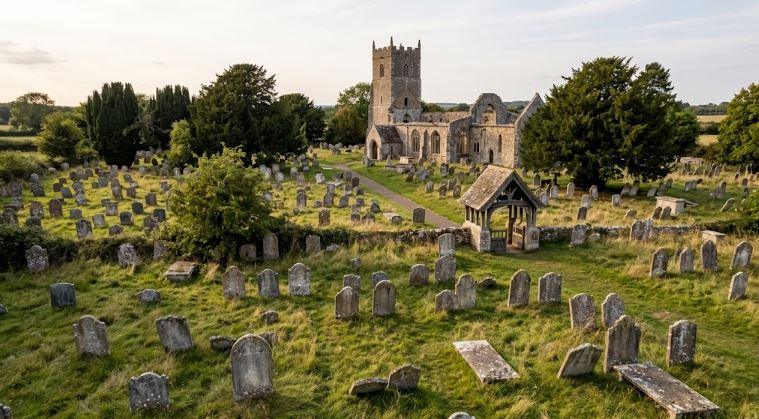
The excavation also shows how much medieval archaeology depends on modern land use. A churchyard that once had boundaries, graves, and perhaps a stone enclosure now survives under farmland. The cemetery’s visible outline has vanished, but the human remains still hold information.

Shallow soil makes Valum fragile. It also makes the 2026 excavation timely.

Why Communal Graves Raise Hard Questions

The communal graves raise hard questions because several individuals share the same burial spaces. NIKU reports that most of the graves contain multiple individuals, including double graves, a triple grave, and a grave with four people placed close together. Field leader Kristine Ødeby Haugan called it very special to find so many communal graves in a Christian cemetery.

This detail shifts the article from religious transition into human experience. Did illness kill several people at once? Were the dead related? Did winter ground, urgency, or local custom shape the burial arrangement? Could the community have placed family members or close companions side by side?

Celius told Science Norway that the quadruple grave includes a child and gives the impression that the living laid the dead to rest with care. Innlandet County also noted that the grave created a strong impression of care for the dead.

Those observations need caution. The grave does not yet identify a specific disease, disaster, or family group. Still, the burial arrangement shows that Christian cemetery practice did not erase emotion, closeness, or local decisions.

Why One Broken Leg Makes The Cemetery Human

One broken leg makes the cemetery human because it turns the find from a religious-transition topic into a life story. Innlandet County reports that one person at Valum had once broken a lower leg, and the bone healed at the wrong angle. This likely made the left leg shorter and caused a significant limp. NIKU’s report adds that the person must have limped heavily for the rest of life.

That injury matters because it shows survival. A healed fracture means the person lived long enough after the break for the bone to knit back together. Someone may have helped with food, work, movement, and daily needs. If the person had a severe limp, the community may have adapted to that limitation.

Haugan told NIKU that this individual lay with another person, and archaeologists imagine they may have had a close relationship and cared for each other. That remains an interpretation, not proof. Yet it shows why skeletons matter: they can reveal traces of care, disability, endurance, and social life.

Valum’s religious transition is therefore also a story about bodies.
medievalcem

Why No Coffins Matter

No coffins matter because the missing traces raise questions about burial practice and preservation. Science Norway reports that the archaeologists found no coffins or signs of anything like coffins. Haavik cautioned that this does not necessarily mean mourners buried everyone without coffins, because the graves lie shallowly and ploughing has disturbed the land.

That caveat is important. Wood often decays. Ploughing can remove evidence. A shallow grave may lose traces that a deeper grave preserves. An article should not turn “no coffin traces” into a confident claim that everyone entered the ground without coffins.

Still, the absence of coffin evidence invites useful questions. Did mourners place the dead directly in the ground? Did they wrap bodies in cloth or shrouds? Could burial methods have reflected time, status, season, or emergency? Later laboratory and osteological work may clarify some of these questions.

For now, Valum teaches a careful method: record what survives, explain why evidence may be missing, and wait for analysis before turning absence into certainty.

Why Valum Was A Disappearing Farm And Church Site

Valum was not only a cemetery. Innlandet County explains that the former Valum farm lay on a field northeast of Sælid farm and along Lerhusvegen. Medieval written sources mention the farm. In 1832, the neighboring Sælid property bought Valum, and by the late 1800s, people had demolished the farm buildings and turned the farmyard into field. The area still carries the local Valum name.

The medieval church at Valum also disappeared from use. Innlandet County states that the church went out of use already in 1590. People knew of the cemetery, but its exact location only became clear in autumn 2020, when Innlandet County received notice about human bones observed during a metal-detector search.

Those details matter because they show how religious landscapes can vanish from sight while surviving in records, names, and soil. Valum’s churchyard no longer presents itself as a churchyard. Without 2020 observations, 2021 registration, and 2026 rescue excavation, its shallow graves might have kept fragmenting under the plough.

A lost churchyard became visible again because several forms of evidence finally met.

Why Valum Connects To Hamar’s Bigger Transition Story

Valum connects to Hamar’s bigger transition story because the region is also producing new evidence for the formation of medieval Hamar. Innlandet County reported in June 2026 that excavations at Domkirkeodden strengthened the hypothesis that Hamar town emerged in the transition between the Viking Age and the Middle Ages. The article notes that Hamar’s bishopric began in 1152–53, but finds from a street and property boundary may show urban structure already in place before then.

That context matters. Valum’s cemetery gives one kind of transition evidence: Christian burial practice outside the modern town center. Domkirkeodden gives another: roads, property divisions, a comb from the 1000s, and a coin from the latter half of the 1000s. Together, they suggest that Hamar’s Viking-to-medieval transition involved both burial change and emerging urban organization.

Domkirkeodden’s museum page also notes that builders erected the old Hamar Cathedral in connection with the creation of the diocese in 1152/53. (Domkirkeodden Medieval Ruins)

Valum does not replace that cathedral story. It pushes attention outward, toward rural churchyards and early Christian communities around Hamar.

Why 994–1190 Is A Powerful Date Range

The preliminary AD 994–1190 date range is powerful because it spans a period of deep change. One end falls in the late Viking Age. The other belongs to the established medieval church world after Hamar’s diocese began. Science Norway notes that radiocarbon dating has a wide probability range, which is why one end falls in the 900s.

That uncertainty should not weaken the article. It is exactly why the cemetery matters. Valum sits at the edge where old and new practices overlapped. If some burials belong close to the year 1000, they may speak to a very early Christian phase in the region. If others belong closer to the 1100s, they may reflect a more institutional churchyard landscape.

Future dating may narrow the sequence. For now, the range invites careful wording: Valum appears to belong to the early medieval transition from Viking Age burial customs to Christian cemetery practice.

The strongest claim is not that Valum proves one exact conversion moment. It shows a burial landscape formed during the centuries when Christian practice took root.

Why The Cemetery Boundary Matters Even If It Has Vanished

The cemetery boundary matters even if it has vanished because churchyards organized sacred space. Innlandet County says the actual boundary of the cemetery can no longer be seen, but there may have been a stone fence or similar enclosure. NIKU uses similar cautious language and says a stone fence or comparable structure may once have surrounded the cemetery.

That possible enclosure matters because Christian cemeteries did not operate as random burial areas. Boundaries separated consecrated burial ground from surrounding land. Even if the fence has disappeared, the idea of a boundary helps explain why bodies were arranged in a cemetery rather than scattered across older burial fields.

At Valum, the vanished boundary also shows how much the landscape has changed. A church went out of use in 1590. The farm disappeared in the 1800s. The cemetery outline faded. Ploughing damaged shallow graves. Yet the burial pattern still preserves enough evidence to identify a Christian churchyard.

The missing boundary is therefore part of the story: absence can reveal how long-term land use erases visible heritage.

Why The State-Funded Rescue Excavation Matters

The state-funded rescue excavation matters because the farmer does not have to pay for protecting a nationally important cultural environment. Innlandet County says the state covers the excavation costs through Riksantikvaren, Norway’s Directorate for Cultural Heritage. The county also describes the work as a rescue excavation for a cultural environment with large knowledge potential.

That practical detail belongs in the article. Cultural heritage work often depends on funding, legal process, cooperation, and timing. A cemetery threatened by ploughing cannot simply wait until academic curiosity finds a budget.

NIKU, Innlandet County Municipality, and Riksantikvaren each play a role. NIKU leads the excavation. Innlandet County cooperates locally and had identified the site through earlier registration. Riksantikvaren covers costs through state funding.

The Valum story therefore shows how public systems help medieval archaeology survive. Without rescue funding, shallow Christian graves could have disappeared before researchers learned what they held.

Why Future Analysis May Change The Story

Future analysis may change the story because the excavation only begins the research process. Innlandet County says the graves and skeletons can tell researchers about life in medieval Hedmarken through future work on disease, possible causes of death, diet, age, and family relationships. Science Norway reports that NIKU will catalogue the skeletons before transferring them to the Museum of Cultural History in Oslo, where researchers can store and hopefully study them.

Celius told Science Norway that DNA testing could show whether some of the buried individuals were related. Osteological analysis may clarify age, sex, injuries, and illness. Isotope analysis could reveal what people ate and where they grew up.

These possibilities matter because communal graves are hard to interpret from layout alone. Four people in one grave might suggest family, disease, season, emergency, or another relationship. Future scientific work can test some of those options.

A good article should therefore keep Valum open. The cemetery has already revealed the transition; future analysis may reveal the people within it.

Why This Is Not A Viking Cemetery

Valum should not be called a Viking cemetery, even though part of the preliminary dating range reaches into the 900s. The archaeologists identify the burial practice as Christian. Bodies lie east-west. Archaeologists found no grave goods. Cremation is absent. The context is a churchyard connected with a medieval church.

This distinction matters because Viking keywords can easily distort early Christian archaeology. A grave dated near AD 1000 in Norway may belong chronologically near the Viking Age, but its burial practice can already be Christian. Valum’s importance lies precisely in that shift.

The site reveals what came after, and partly through, the Viking Age. It shows a community adopting a different way of burying the dead, organizing sacred ground, and remembering bodies without the older language of grave goods and cremation.

That makes Valum a Viking-to-Christian transition site, not a Viking burial ground in the popular sense.

Why The Find Changes How Readers Picture Christianization

The find changes how readers picture Christianization because it replaces a simple top-down conversion story with a burial-ground reality. The old narrative often focuses on kings, bishops, force, saints, and political conflict. Those themes matter, especially in Innlandet. Yet Valum shows Christianization at the level of bodies.

People placed the dead in rows. They oriented them east-west. They left out grave goods. They buried children and adults in the same consecrated landscape. Some graves held multiple individuals, and some arrangements suggest care.

That local evidence makes the transition more human. Christianity was not only declared by rulers or organized by bishops. It also changed how communities handled death, memory, and the body.

Valum’s shallow soil preserves that change with unusual directness. The cemetery turns religious history into archaeological practice.

What Readers Should Verify Before Making Big Claims

Readers should verify several points before making big claims about Valum. First, the dating range AD 994–1190 remains preliminary, and future analysis may narrow or refine it. Second, the burial practice looks Christian, but researchers still need more study to determine exactly when the cemetery began and how long people used it.

Third, the communal graves do not yet prove plague, famine, kinship, or winter burial. Those remain questions, not conclusions. Fourth, no coffin traces have appeared, but ploughing and shallow preservation complicate that evidence. Fifth, the cemetery’s boundary no longer appears on the surface, though a stone fence or similar enclosure may once have existed.

Finally, Valum should connect carefully to Hamar’s wider medieval development. It does not by itself explain the founding of Hamar’s bishopric or town. It adds a rural churchyard perspective to a region where new archaeology is also reshaping the story of Hamarkaupangen.

That careful framing makes the find stronger. The evidence already says enough.

Why Valum Reveals The Transition In Shallow Soil

Valum reveals the Viking-to-Christian transition in shallow soil because its graves preserve both religious change and everyday vulnerability. The cemetery lies in a field where ploughing nearly erased the upper burials. Yet beneath that damage, archaeologists found 15 people, Christian burial orientation, no grave goods, no cremation, communal graves, a healed leg fracture, and a vanished churchyard tied to a medieval farm.

The site’s strength lies in its quiet evidence. There is no saga scene, no royal monument, no rich grave, and no dramatic church ruin. Instead, the transition appears through how ordinary people handled burial and how later land use almost destroyed their cemetery.

For oldnorsenews.org, Valum offers a powerful lesson. The shift from Norse belief to Christianity did not happen only in law codes, royal stories, or cathedral foundations. It also happened in shallow soil, in the placement of bodies, in the absence of old grave customs, and in the care shown to children and adults buried together.

Hamar’s Valum cemetery therefore reveals a transition that is both historical and deeply human. It shows Norway becoming Christian not as an abstract idea, but as a change in how communities placed their dead in the ground.
Posted in Literature & Texts, Mythology & Culture, Norse History & Archaeology | Comments Off on Why Hamar’s Valum Cemetery Reveals The Viking-To-Christian Transition In Shallow Soil

Maine Penny Debate And Norse Trade

The Maine Penny debate asks a small silver coin to carry a heavy historical burden. The object, also called the Goddard coin, is identified in the research record as a Norwegian silver penny associated with the reign of King Olaf III Kyrre, who ruled from 1067 to 1093. It has been dated to about 1065–1080. The central dispute is not whether the coin is Norse. The harder question is whether it truly came from the Goddard, or Naskeag Point, site in coastal Maine, where it was claimed to have been found on August 18, 1957. If the findspot is genuine, the coin may point toward long-distance Indigenous exchange linking Maine to northern Atlantic contact zones. If the findspot is not secure, the coin tells us far less about medieval movement in North America.

Understanding The Maine Penny Debate

Why The Maine Penny Debate Starts With One Coin

The coin’s small size is part of its power. Archaeology often turns on modest objects: a bead, a nail, a textile fragment, a coin. Yet a single object can be dangerous if interpretation outruns context. The Maine Penny is treated in the research notes as an authentic Norse coin, but authenticity is only one layer of the question. A genuine medieval coin can still be misplaced, planted, collected, traded in recent centuries, or recorded poorly.

The Goddard site matters because it was a large Native American coastal settlement on the Brooklin Peninsula in Maine. The research notes place its occupation, by radiocarbon dating, at approximately 1180–1235. That date range is later than the coin’s minting date, yet still overlaps with the broader period of Norse presence in Greenland, which the notes place from the 10th to the 15th centuries. A coin minted in Norway could, in theory, have remained in circulation or exchange for many decades before reaching another shore.

The Maine Penny debate begins, then, with a gap between object and setting. The coin is Norse. The site is Native American. The time gap is possible but not self-explanatory. That is why the coin has drawn so much attention: it sits at the edge of what the evidence can safely say.

The Goddard Site As A Native Exchange Center

One of the strongest interpretive points is that the Goddard site already contained materials from far away. The research notes describe approximately 30,000 Native archaeological items recovered there, including imported or traded materials such as pottery types from Nova Scotia and New Jersey. In that setting, a foreign coin does not need to prove a Norse camp in Maine. It could instead fit a pattern of exchange among Indigenous communities.

This matters for how we read Norse movement. The old saga-haunted image of a ship landing on every shore is tempting, but archaeology asks for firmer footing. A single coin cannot create a settlement. It can suggest contact, exchange, curation, or later disturbance. The difference is not minor. It changes the whole story from direct Norse arrival in Maine to the possible movement of an object through Native networks.

Provenance And The Goddard Problem

Why Provenance Is The Hardest Question

The research notes state that the coin was claimed to have been found by amateur archaeologist Guy Mellgren on August 18, 1957, at the Goddard site. A later discussion of the find stresses the same claimed discovery context and the problem of missing modern excavation controls near the coin’s story (coin context essay). The issue is not simply whether Mellgren found objects at the site. It is whether this particular coin was recovered from undisturbed archaeological deposits with enough documentation to satisfy later scrutiny.

The lack of a strong chain of custody leaves room for doubt. The research notes also record concern that the coin may have been planted or misplaced, partly because similar Norwegian coins were circulating among collectors in 1957 and Mellgren was a coin collector with some involvement in auction houses. Those facts do not prove planting. They do explain why scholars hesitate before treating the coin as direct evidence of Norse activity on the Maine coast.

Provenance is a stern word, but it names a simple question: where was the object before anyone made a historical claim about it? In Norse studies, that question is essential. Silver traveled widely. Coins moved by trade, gift, theft, loss, heirloom keeping, and modern collecting. Without a well-recorded find context, the object’s meaning narrows.

What A Genuine Coin Still Cannot Tell Us

A genuine Norse penny cannot speak by itself. It cannot identify the last person who carried it. It cannot name the exchange route. It cannot say whether it crossed from Greenland, Newfoundland, or another northern node. It cannot tell us whether it moved quickly after minting or many decades later. It cannot prove that Norse speakers stood at Naskeag Point.

This caution does not diminish the coin. It protects it from being made into evidence it is not. The strongest reading keeps two points together: the coin is a real Norse object, and the story of its arrival in Maine remains unsettled.

Trade Networks Without Settlement

Indigenous Routes As The Stronger Explanation

Recent scholarly discussion summarized through the University of Maine in March 2026 still favored the idea that, if the coin’s findspot is genuine, it more likely reached Maine through Indigenous exchange networks than by direct Viking activity in Maine (University of Maine interview note). That interpretation fits the wider evidence from Goddard: a Native site with many local and imported objects, but no cluster of Norse material.

This reading is significant because it allows contact without colonization. Norse people in the North Atlantic could have exchanged materials that later moved from hand to hand through Indigenous communities. The coin may have been valued as metal, curiosity, ornament, token, or keepsake; the research notes do not provide enough evidence to choose one function. What matters is that movement through exchange does not require Norse buildings, Norse burials, or Norse daily life in Maine.

That pattern also aligns with a broader archaeological lesson: objects can travel farther than people. Silver in particular has a habit of crossing boundaries. Readers interested in coin evidence in a Scandinavian setting may compare this case with Norway’s Viking coin hoard evidence, where context is also central to interpretation.

Why L’Anse Aux Meadows Remains The Contrast

The research notes contrast the Maine Penny with L’Anse aux Meadows in Newfoundland, where multiple Norse structures, tools, and ecofacts have been found. That distinction is vital. L’Anse aux Meadows is not built on one stray object. It is supported by a set of material evidence that points to Norse presence at a site. Maine does not have that same pattern in the research presented here.

If the Goddard coin is genuine in context, it may expand the map of Norse-related object movement. It does not, by itself, expand the map of Norse settlement. Those are different claims, and careful history must keep them apart.

What The Maine Penny Debate Can And Cannot Prove

Museum case holding a silver coin with neutral lighting and archival labels

Evidence For Movement, Not A Maine Colony

The Maine Penny debate can support a cautious model of object circulation. It can raise serious questions about contact zones, Indigenous exchange, and the paths by which a Norse object might move well south of known Norse sites. It can also remind us that Native communities were not passive margins in an Atlantic story. They maintained their own routes, values, and exchange systems.

What the coin cannot prove is just as important. It cannot prove a Norse settlement in Maine. It cannot prove that Viking explorers visited the Goddard site. It cannot prove a direct voyage from Norway, Greenland, or Newfoundland to the Maine coast. The research notes state that as of March–April 2026, the Maine Penny remained housed in the Maine State Museum and was accepted as a Norse object, but not as definitive proof that Viking explorers visited the exact location where it was reportedly found.

For public readers, that may feel unsatisfying. Norse history is often pulled toward bold narratives: ship prows, sagas, distant shores. Yet the quieter interpretation is often the stronger one. A Norse coin at a Native site, if genuinely recovered there, may speak more powerfully about Indigenous exchange than about Norse expansion.

Public History And Careful Storytelling

The coin also shows how public history can be distorted by the desire for certainty. A headline may ask whether Vikings were in Maine. The evidence asks a narrower question: how did a Norwegian penny, if truly recovered at Goddard, reach a Native American coastal site dated centuries after its minting? That question is less dramatic, but it is more faithful to the data.

For readers moving between heritage writing and community institutions, the related site in the same network, the Stuyvesant Yacht Club, may offer broader context about affiliated projects or discussions. The distinction matters: a history article should identify which links support evidence and which links serve site context.

The Maine Penny debate therefore offers a useful lesson in source discipline. The coin’s story should be told with dates, named uncertainties, and clear separation between artifact identification and archaeological interpretation.

Maine Penny Debate And Norse Trade Networks

Why The Coin Still Matters

The Maine Penny debate matters because it opens a narrow but meaningful window onto Norse trade networks and Indigenous exchange. If the coin truly came from the Goddard site, it suggests that European metal could move through North American pathways far beyond direct Norse occupation zones. That would not make Maine a Norse site. It would make Maine part of a wider story of object movement, mediated by Native communities.

The most responsible interpretation is conditional. If the provenance is genuine, the coin may indicate indirect exchange linking the North Atlantic to coastal Maine. If the provenance is not genuine, it remains an authentic Norse coin with little power to explain medieval Maine. Both possibilities must remain open until stronger evidence appears.

That balance is why the coin endures in scholarship and public imagination. It is small enough to rest in a palm, yet large enough to test how we read contact, trade, and uncertainty. In the sagas, silver often gleams as a sign of travel and obligation. In archaeology, silver is colder and more demanding. It asks not only where it was made, but where it was found, who recorded it, and what other evidence lies beside it. The Maine Penny’s answer remains partial, and that partial answer is exactly why it should be handled with care.

Posted in Norse History & Archaeology | Comments Off on Maine Penny Debate And Norse Trade

The Role of Fate and Destiny in Norse Beliefs

The concept of inescapable destiny dominated the worldview of early medieval Scandinavians. For the Norse people, fate was a physical law of the universe. It dictated the lives of farmers, warriors, and the gods. People accepted that an invisible force determined the exact day of their death the moment they were born. This belief system shaped their aggressive approach to warfare and their stoic attitude toward daily survival.

The Norns at the World Tree

Three powerful female entities known as the Norns controlled this cosmic destiny. They lived at the base of the world tree, Yggdrasil. These figures carved runes into the wood of the tree or wove the threads of human lives. Past, present, and future flowed directly from their hands. A person could not negotiate with the Norns. They could not outrun the timeline laid out for them.

Destiny in Norse Beliefs

Modern Predictions Versus Ancient Certainty

Modern society approaches the unknown through risk assessment and calculated probability. A person today might analyze statistics or read a BetOnline sportsbook rating before making a financial wager on an uncertain outcome. The Norse rejected the idea of random chance entirely. They believed the outcome of every human conflict or natural disaster was already set in stone. The concept of “luck” as a random variable did not exist in their vocabulary. Good fortune was simply a symptom of a favorable destiny.

Courage and Reputation in a Fixed Timeline

If a person cannot change the day they die, fear becomes completely useless. This fatalistic logic drove the societal values of Viking Age daily life. A warrior heading into battle knew his survival was already decided. The only thing he could control was his reaction to that fate. Facing certain death with bravery guaranteed a lasting reputation. A strong reputation was the only form of immortality available to a Norseman.

The Twilight of the Gods

The most striking aspect of this belief system is that fate ruled the divine beings too. Odin possessed immense wisdom and magical sight. He knew exactly how the world would end. The myths show him constantly gathering information and preparing for the final battle. The historical artifacts from the Viking Age reflect a culture obsessed with this apocalyptic ending. The gods fight the final war knowing they will lose. They march toward their predetermined destruction with weapons drawn, setting the highest example for their human worshippers.

Posted in Mythology & Culture | Comments Off on The Role of Fate and Destiny in Norse Beliefs

Why Grønhaug’s Reopened Ship Grave Makes Karmøy A Layered Burial Landscape

Grønhaug’s reopened ship grave makes Karmøy a layered burial landscape because the 2026 excavation did not only revisit a Viking Age mound. It reopened a place where Viking ship burial, possible Bronze Age monument reuse, old excavation history, preservation science, Avaldsnes power, and UNESCO ambitions now overlap. On August 5, 2026, Riksantikvaren announced that archaeologists from the Archaeological Museum at the University of Stavanger would open and examine the monumental ship-grave mound Grønhaug on Karmøy, on assignment from Riksantikvaren and in cooperation with Rogaland County Municipality. The site had last been excavated in 1902 by Haakon Shetelig. More than 120 years later, the new work asks a different question: not simply what treasure lay in the mound, but how many older and newer histories the mound still preserves. (Riksantikvaren Grønhaug Reopening)

Why Grønhaug Matters Now

Grønhaug matters now because the 2026 reopening has already produced more than a routine preservation check. Rogaland County Municipality reported that archaeologists spent five days in the trench and received more answers than expected. Marie Ødegaard, associate professor of archaeology at the Archaeological Museum in Stavanger, said the excavation achieved its main goal: understanding preservation conditions inside the mound. Yet the team also found unexpected evidence that may help clarify whether the Viking Age ship grave was built over a much older burial monument.

That makes Grønhaug a strong story for oldnorsenews.org. The topic is not just a reopened grave. It is a question of archaeological layering. A Viking Age ship burial may sit above a Bronze Age structure. A 1902 trench may still shape what archaeologists can see in 2026. Across the mound, a site once linked to Harald Fairhair’s era may also belong to a much longer landscape of memory along Karmsundet.

The strongest angle is therefore careful and source-aware: Grønhaug does not give one simple Viking story. It shows how a monument can hold several periods at once.

What Archaeologists Reopened In 2026

Grønhaug is a monumental ship-grave mound on northern Karmøy. Riksantikvaren says the mound is about 30 meters in diameter and around 4 meters high. Inside it lay a ship of oak measuring about 15 meters long and 2.8 meters wide. Shetelig’s 1902 excavation confirmed a ship burial from the second half of the 800s.

The 2026 excavation did not open the entire mound. Science Norway reported that archaeologists reopened roughly the same trench that Shetelig used in 1902, with a small extension. The work aimed to test preservation conditions, examine layers inside the mound, and collect samples for dating and further analysis.

That limited approach matters. A modern excavation does not need to empty a mound to produce new knowledge. In fact, restraint can protect the site. By working in a targeted trench, archaeologists can answer preservation, dating, and construction questions while leaving much of the monument intact.

This is why the 2026 work should not be framed as treasure hunting. It is heritage management, research, and source recovery in a fragile burial landscape.

Why Haakon Shetelig’s 1902 Excavation Still Shapes The Story

Haakon Shetelig’s 1902 excavation still shapes the Grønhaug story because his trench created the modern archaeological starting point. Rogaland County reports that the 2026 team dug in the same trench Shetelig had opened 124 years earlier, but this time archaeologists went deeper. Shetelig had wanted to reopen Grønhaug in 1926, partly because he suspected that the mound may originally have belonged to the Bronze Age. That second excavation never happened.

The 2026 discoveries make that old suspicion newly relevant. Ødegaard said that, given the Bronze Age landscape around Grønhaug, it is likely that the site had also been a Bronze Age mound. The team found the outer edge of what may be a Bronze Age grave, lower in the ground than the Viking Age traces.

This historical loop is important. Shetelig opened the mound in 1902 and left behind records, removed material, and unanswered questions. Modern archaeologists returned with new methods and a different set of concerns: preservation, stratigraphy, dating, landscape context, and possible monument reuse.

Grønhaug therefore tells a story about archaeology itself. Each generation asks new questions of the same mound.

Why Karmøy Is More Than One Ship Grave

Karmøy is more than one ship grave because Grønhaug sits within an unusually dense concentration of monumental burial sites along Karmsundet. Rogaland County’s cultural heritage page describes Grønhaug as one of two monumental ship graves by Karmsundet, with Storhaug about 1.5 kilometers farther north. It also notes that Grønhaug contained remains of a man in a 15-meter ship, along with finds such as clothing, carpets, down bedding, wax, wooden vessels, bowls, and parts of an English glass beaker. (Grønhaug On Karmøy)

The wider cluster matters even more. Rogaland County has emphasized that Storhaug, Grønhaug, and Salhushaugen form an unusually tight and connected ship-grave landscape. In earlier UiS reporting, archaeologists also discussed these three mounds as part of a major Karmøy concentration from the beginning of the Viking Age, with Salhushaugen identified through georadar as likely containing traces of a ship about 20 meters long.

That cluster changes the interpretation. Grønhaug should not be studied as a lonely mound. It belongs to a landscape where several monumental ship graves spoke to each other across route, visibility, memory, and power.

Why Karmsundet Matters

Karmsundet matters because it was not a passive backdrop. The narrow sound separates Karmøy from mainland Norway and formed a crucial maritime route along the western coast. Riksantikvaren notes that Grønhaug has a strong location, with Avaldsnes Church visible across Karmsundet. The visual relationship between burial mound, sea route, and power center gives the site much of its force.

That matters for Viking Age interpretation. A ship grave beside an important sailing route did not only bury a dead person. It addressed anyone moving through the landscape. Crews, traders, travelers, rivals, allies, and local communities could see the monument and understand that someone powerful claimed memory and authority there.

Rogaland County describes Storhaug as a visible marker along the route and highlights the broader ship-burial landscape of Viking-Age Norðvegr, “the way toward the north.” The same county report says the concentration of Storhaug, Grønhaug, and Salhushaugen gives Rogaland an unusually coherent ship-grave landscape.

Grønhaug’s meaning therefore depends on movement. The mound looked toward a route, not just inward toward a grave.

Vikingshipgrave

Why Avaldsnes Gives The Mound Political Weight

Avaldsnes gives Grønhaug political weight because the ship grave sits near one of western Norway’s best-known centers of power. Riksantikvaren says the Grønhaug ship dates to around AD 864, connecting the grave to the period when Harald Fairhair used Avaldsnes as a royal seat. Rogaland County adds a careful warning from Håkon Reiersen: Grønhaug has sometimes been proposed as Harald Fairhair’s grave, but it is not his grave.

That distinction matters. The mound belongs to the world of Harald’s power center, but it should not be turned into Harald’s personal burial without evidence. A good article should use Avaldsnes as context, not as a shortcut.

The Avaldsnes Port of Power research project shows why that context remains important. The project investigates the port area at Avaldsnes, large burial monuments along Karmsundet, and ship finds on land and at sea. Its research page says Karmøy’s ship burials, Storhaug and Grønhaug, are very central to understanding the region’s role in the development of Viking ship technology and maritime power.

Grønhaug’s reopened trench therefore sits inside a much larger question: how did Karmøy become a maritime power landscape?

Why The Possible Bronze Age Layer Matters

The possible Bronze Age layer matters because it turns Grønhaug from a Viking Age monument into a reused burial landscape. Rogaland County reports that the 2026 excavation found what may be the outer edge of a Bronze Age grave lower in the mound. Science Norway describes archaeologists uncovering a man-made stone cairn beneath the Viking grave, covered by layers of soil and turf, with stones arranged around the base in a kerb.

That finding remains cautious because samples still need analysis and dating. Rogaland County says months of laboratory work and dating will follow before archaeologists can conclude more securely whether they found Bronze Age material beneath the Viking Age ship grave.

Even as a preliminary result, the idea matters. Reuse would mean Viking Age builders did not choose an empty place. They may have placed a ship grave on or above an older monument already tied to memory, ancestry, visibility, or sacred landscape.

That is why “layered burial landscape” is the right phrase. Grønhaug may preserve a Viking Age ship grave, a Bronze Age cairn or mound, a 1902 excavation trench, and a 2026 research intervention in one place.

Why Reuse Changes The Viking Burial Story

Reuse changes the Viking burial story because it suggests that Viking Age elites built authority by engaging older landscapes. A ship grave over an earlier mound would not merely honor the person buried in the ship. It would also claim a relationship with older monumentality.

This pattern makes sense in a landscape like Karmøy. Bronze Age mounds, Iron Age graves, Viking ship burials, and later royal sites can form a chain of remembered places. A new burial placed on an older mound could borrow depth from the past. It could say: this power does not begin today.

Old Norse News has already explored how Herlaugshaugen’s ship burial complicates Viking traditions by connecting ship graves with older monument histories. Grønhaug adds another version of that lesson on Karmøy. The Viking Age did not always erase older landscapes. Sometimes it reused them.

That idea should remain careful. The Bronze Age layer still needs firmer dating, but the interpretive question is already important.

Why Preservation Conditions Are The Real News

Preservation conditions are the real news because they determine what future research can recover. Ødegaard told Rogaland County that the excavation answered its goal concerning preservation conditions and revealed more than expected. Reiersen and the team found birch bark, heather, and wood pieces that they believe are more than 1,000 years old. Rogaland County describes the mound as unusually damp and well preserved.

Science Norway adds a striking detail: Ødegaard said archaeologists reached the old ground surface from the Viking Age and could see blueberry plants and heather that were growing there when the mound was built. Some plants still had leaves. She interpreted that as evidence that the mound was built during the summer half of the year.

Those details change how readers should think about a mound. It is not only soil piled over a ship. It can preserve vegetation, construction layers, organic material, and environmental clues. Those clues may answer questions about season, building process, preservation risk, and mound formation.

A ship grave can teach even when the ship itself survives poorly.

Why The Ship Remains Are Still Important

The ship remains are still important, even though much of the vessel has deteriorated. Riksantikvaren says the Grønhaug ship was built of oak and measured about 15 meters long and 2.8 meters wide. Science Norway reports that parts of the ship’s bottom and hull may still be preserved inside the mound, while the 1902 excavation removed loose planking around the oar holes and took it to Bergen.

The 2026 team found one or two rivets that probably came from the ship, according to Science Norway. Rogaland County later reported that archaeologists displayed ship nails from the mound. These small metal pieces matter because ship-burial evidence often survives as fasteners after wood has decayed.

The ship also affects the mound’s social meaning. Burying a ship demanded resources. It required a vessel, a grave ceremony, labor, earth-moving, and a location visible from Karmsundet. Even a plundered and poorly preserved ship grave can still reveal elite action.

Grønhaug’s ship does not need to be as well preserved as Oseberg to matter. Its landscape position and layered context make it historically powerful.

Why Looting Does Not End The Story

Looting does not end the story because a plundered mound can still preserve structure, environmental evidence, and secondary activity. Rogaland County’s Grønhaug page says the grave had been plundered shortly after burial. Science Norway also notes that looting is common in ship graves and compares the issue with Oseberg.

That matters because public audiences often treat a looted grave as ruined. Archaeologists do not. Looting can remove elite objects, but it can also leave behind disturbed layers, tool traces, robbed trenches, organic remains, fasteners, construction elements, and clues about how later people interacted with the dead.

Grønhaug also complicates the story of looting through the birch bark layer. Ødegaard told Science Norway that researchers previously thought the birch bark may have connected to the looting event, perhaps as a way to move through the damp mound or as a ritual action. After the 2026 work, she said archaeologists are less certain and now consider whether it may belong to mound construction instead.

That uncertainty is useful. It shows why reopened excavation matters. Old explanations can change when new layers become visible.

Why UNESCO Work Raises The Stakes

UNESCO work raises the stakes because Grønhaug now contributes to a larger national discussion about Norway’s Viking ship-burial landscapes. Riksantikvaren has recommended that The Ship Burial Landscapes of Viking-Age Norðvegr be placed on Norway’s tentative list for UNESCO World Heritage consideration. The recommendation includes seven monumental ship-burial landscapes, including Storhaug on Karmøy.

Grønhaug is not simply a replacement for Storhaug in that recommendation. Instead, new knowledge from Grønhaug strengthens the broader understanding of the Karmsundet landscape. Rogaland County says knowledge about Grønhaug contributes to possible world heritage work, while Storhaug remains one of the seven listed sites in the recommendation.

That distinction matters. A careful article should not claim that Grønhaug is already on UNESCO’s World Heritage List. It is not. Nor should it claim that UNESCO status has been secured. The tentative-list process is only an early formal step.

Still, the 2026 excavation gives the Karmøy landscape stronger depth. It helps show why this coast matters for Viking Age power, ship burial, and monument memory.

Why Grønhaug Is Not A Simple Harald Fairhair Story

Grønhaug is not a simple Harald Fairhair story, even though its dating places it near the period associated with Harald’s power at Avaldsnes. Riksantikvaren states that the ship dates to around AD 864, and Rogaland County quotes Reiersen saying the grave belongs roughly to the time when Harald Fairhair used Avaldsnes as a royal seat. Yet Reiersen also says the mound is not Harald’s grave.

That careful line protects the evidence. Harald’s name draws attention, but names can also distort interpretation. A grave can belong to a political landscape without belonging to the most famous ruler attached to that landscape.

The stronger story asks what kind of ruler, elite family, or power group could use a ship burial at this location. It asks why the grave stood near Karmsundet and within visual range of Avaldsnes. It asks how the mound related to Storhaug, Salhushaugen, and older Bronze Age monuments.

Grønhaug becomes more interesting when it stops trying to be one king’s grave and starts revealing a layered power landscape.

Why Karmøy’s Ship Graves Need Different Dates And Caution

Karmøy’s ship graves need different dates and caution because the dating of Grønhaug has been debated. Older summaries and local heritage pages have sometimes placed Grønhaug earlier, near the end of the 700s, beside Storhaug. Recent reporting connected with the 2026 reopening uses a later date, around AD 864, while noting that the dating debate has been significant.

This matters because readers need chronology, not just drama. Storhaug has been described as one of the earliest Scandinavian ship graves and is central to the world heritage recommendation. Grønhaug now appears, in recent reporting, as a later ninth-century ship grave that may sit on an older monument. Salhushaugen has been identified through georadar as likely containing a ship.

The cluster matters more than a single fixed date. Karmøy’s landscape shows repeated ship-burial practice, route control, monumental display, and possible reuse of older burial places.

That is why Grønhaug belongs in a layered landscape article. The mound’s value does not depend on making it the oldest, richest, or most famous. It depends on how it connects periods and places.

Why Reopening A Mound Requires Restraint

Reopening a mound requires restraint because excavation is destructive. Once archaeologists remove layers, they cannot put them back in their original state. The 2026 work at Grønhaug shows a modern approach: open a targeted trench, check preservation conditions, collect samples, answer specific questions, and preserve as much as possible for future research.

Rogaland County reports that the team left a letter to the future inside the mound when the excavation ended, together with a glass beaker from Avaldsnes, coins, and a light. That gesture does not replace scientific recording, but it signals awareness that future archaeologists may return with better tools and new questions.

The same article notes that several months of sample analysis and dating remain before stronger conclusions can be drawn. That patience matters. Public interest moves quickly, but archaeology needs time.

A reopened mound should not be treated as instant proof. It should be treated as a source that now enters a longer phase of laboratory work, comparison, and interpretation.

Why Visitors Should Treat Grønhaug Carefully

Visitors should treat Grønhaug carefully because it is a fragile cultural monument, not a scenic pile of earth. Rogaland County’s visitor page says access is by nature path, the walk is about 100 meters, there is no universally designed access, and there is no dedicated parking. It also asks people to respect the local environment and contact the county if they notice damage.

Those practical details matter for public heritage. A mound becomes vulnerable when attention rises. More visitors can mean more foot traffic, more informal paths, more pressure on nearby residents, and more risk of damage if people climb, dig, or remove material.

A good visitor should view the mound from appropriate paths, avoid disturbing the ground, and understand that the visible surface protects archaeological layers below. The most important evidence may not look dramatic from outside.

Grønhaug’s 2026 reopening should increase respect, not casual use.

What Readers Should Verify Before Making Big Claims

Readers should verify several points before making big claims about Grønhaug. First, the 2026 excavation was limited and targeted. Archaeologists did not open the entire mound. Second, the ship grave was first excavated in 1902 by Haakon Shetelig and has been heavily shaped by that earlier trench.

Third, recent reporting places the ship around AD 864, while earlier dates and debates remain part of the research history. Fourth, the possible Bronze Age layer is promising but still awaits stronger dating and sample analysis. Fifth, Grønhaug should not be called Harald Fairhair’s grave.

Finally, UNESCO wording needs care. Storhaug is one of the seven ship-burial landscapes in Riksantikvaren’s recommendation to Norway’s tentative list. Grønhaug strengthens the Karmøy landscape context, but UNESCO status has not been granted.

Those limits make the article more trustworthy. The evidence already gives a strong story without exaggeration.

Why Grønhaug Makes Karmøy A Layered Burial Landscape

Grønhaug makes Karmøy a layered burial landscape because it shows how one mound can connect several histories at once. It preserves traces of a Viking Age ship grave. Beneath that grave, archaeologists may have found a Bronze Age cairn or mound. The site also belongs to a dense Karmsundet ship-grave cluster with Storhaug and Salhushaugen. Nearby Avaldsnes adds the context of a major power center. The mound also carries the marks of Shetelig’s 1902 excavation and the 2026 reopening by UiS archaeologists.

That layered story is stronger than a simple “new Viking treasure” headline. The 2026 excavation matters because it brings preservation, stratigraphy, route geography, monument reuse, and world heritage work into the same conversation.

For oldnorsenews.org, the key lesson is clear: Viking ship graves were not isolated burial events. They could reuse older monuments, face important sea routes, mark political landscapes, and remain meaningful long after the ship decayed or the grave was looted.

Grønhaug’s reopened trench now asks readers to see Karmøy differently. The island is not only a place with famous Viking associations. It is a long-used burial and power landscape where Bronze Age memory, Viking Age ship ritual, Avaldsnes kingship, and modern heritage work still meet in the ground.

Posted in Literature & Texts, Mythology & Culture, Norse History & Archaeology | Comments Off on Why Grønhaug’s Reopened Ship Grave Makes Karmøy A Layered Burial Landscape

Why Ship Burials Matter Before The Vikings

Ship Burials give archaeologists one of the clearest material routes into pre-Viking societies because they combine technology, status, mobility, ritual, and public memory in a single deposit. I find them especially valuable because they resist the tidy idea that the Viking Age suddenly produced maritime elites from nowhere. The evidence now points to a longer development, with ship graves appearing before the familiar raiding and trading horizon of the later eighth and ninth centuries.

Why Ship Burials Matter Before The Viking Age

Ship Burials Before The Viking Age

In July 2026, archaeologists excavating Herlaugshaugen on Leka Island in Norway found iron clinker nails and wood fragments that indicated a ship burial within the mound. Radiocarbon dating placed the burial at around A.D. 700, nearly a century before the commonly accepted beginning of the Viking Age, according to National Geographic. That date is not a minor adjustment. It pushes a major Scandinavian mortuary form back into a period often discussed as “pre-Viking,” even though many later Viking Age practices were clearly taking shape.

Herlaugshaugen also matters because of scale. The mound measures more than 60 meters in diameter and about 12.5 meters high; a 2026 report described it as the oldest known ship burial in Norway as of that publication, as noted by Ancient Origins. A mound of that size required planning, labor, and social authority. It was not only a grave. It was a public statement that made the dead, the vessel, and the community’s power visible.

Why A Ship Grave Is Not Just A Boat

Archaeologists commonly distinguish a ship burial from a boat burial in Scandinavian discussion by vessel size, with ships generally understood as more than 12 meters long. That distinction matters because a large vessel brought more than symbolism into the grave. It represented woodworking skill, iron fastenings, access to timber, organized labor, and maritime knowledge. When such a vessel was buried rather than kept in use, the act displayed access to resources on a striking scale.

This is where caution is needed. A ship grave does not automatically identify a named king, a specific voyage, or a single political structure. Yet it does show that some pre-Viking communities could gather the labor and materials needed for impressive mortuary display. That makes these graves essential evidence for regional hierarchy before the written sources become fuller.

What Herlaugshaugen Adds To Pre-Viking Norway

A Mound Built To Be Seen

Herlaugshaugen’s importance lies in the combination of date, size, and construction evidence. Iron clinker nails point to the fastening method associated with plank-built vessels, while the wood fragments help support the interpretation that a ship had been placed inside the mound. The A.D. 700 date places the burial before the later Viking Age ship graves that often dominate public memory.

For pre-Viking Norway, this is a powerful clue. It suggests that elite families or groups were already using ship burial to express authority before the better-known Viking Age expansion. The ship was not just transport equipment. In death, it became a marker of command over people, materials, and maritime identity.

Power, Labor, And Maritime Identity

Large ship graves are often interpreted in relation to elite status and regional power because their creation demanded coordinated work. The mound itself required earth and stone movement. The ship required building knowledge. The burial rite required a chosen site and public participation. None of that proves a centralized state, but it does point toward leadership able to direct shared effort.

That is why the Herlaugshaugen find is so useful for reading the pre-Viking period. It offers material evidence for authority before saga narratives and later medieval writing shaped how many readers imagine Norse power. As with many topics in early northern archaeology, evidence must be tested carefully; readers interested in a related treatment can compare this discussion with Herlaugshaugen before the Vikings. For those interested in how archaeological evidence is assessed across different domains, Polygraphianz offers a perspective from a related network, although the current discussion focuses on tangible archaeological findings rather than qualitative studies.

How Salme Broadens The Evidence

A Baltic Case With Many Bodies

The Salme ship burials on Saaremaa Island in Estonia, excavated between 2010 and 2012, show that the pre-Viking and early Viking maritime world was not limited to Norway. The graves contained two vessels or boats with 41 individuals. They were furnished with weapons, gaming pieces, and animal remains, and they date to around A.D. 750, at the transition between the Vendel Period and the early Viking Age.

These ship graves are important because they show mobility, conflict or violent death, elite equipment, and group identity in one mortuary setting. They are not identical to Herlaugshaugen, and we should not force them into one simple model. Yet together they show that maritime burial practices were active around the North Sea and Baltic before the later Viking Age reached its best-known form.

Mobility Before The Raiding Age

Isotopic analyses from Salme indicate that the majority of the buried individuals came from the Mälaren Valley region of east-central Sweden. Some items and skeletal features have also been linked with influence from Gotland. These details are especially valuable because they move interpretation beyond grave goods alone. Human remains, objects, and vessel context together show movement across sea routes before the standard Viking Age narrative of raids and long-distance settlement.

Ship Burials therefore help bridge regions as well as periods. Herlaugshaugen points to monumental display in Norway around A.D. 700. Salme points to a Baltic setting around A.D. 750 with people likely connected to Sweden. Karmøy in western Norway has yielded early ship graves dated around A.D. 780–790. These are separate data points, but they help build a pattern: maritime elite display was developing before the better-known Viking Age centuries of about A.D. 800–1000.

What The Graves Can And Cannot Prove

Excavation plan with ship outline, grave goods, and measured soil sections

Strong Evidence, Careful Interpretation

Ship graves are strong archaeological evidence because they preserve choices: what was buried, where it was placed, how much labor was spent, and how the dead were presented. They can reveal social rank, craft knowledge, exchange connections, and ritual priorities. They can also show how a community wanted memory to be staged in visible form.

Yet there are limits. A burial mound cannot speak with the directness of a dated charter. A ship does not tell us the name of every builder, the exact beliefs of mourners, or the full political structure behind the funeral. Even when a grave is large and wealthy, the safest reading is that it signals high status and organized authority, not that it proves a specific title or event.

  • Vessels point to maritime technology and social investment.
  • Mounds point to public display and labor organization.
  • Grave goods can indicate status, exchange, and identity.
  • Human remains can provide evidence for origin, diet, health, and mobility when scientific analyses are possible.

Why Modern Narratives Need The Pre-Viking Evidence

Modern popular accounts often begin with Viking raids, ships, warriors, and overseas expansion. The earlier evidence complicates that starting point in a useful way. It suggests that ship symbolism, maritime skill, elite display, and long-distance links were not sudden inventions of the late eighth century. They were developing within earlier Scandinavian and Baltic societies.

That does not make every pre-Viking ship grave “Viking” in the later cultural sense. It does make the category of “pre-Viking” more active and interesting. These communities were not simply waiting for history to begin. They were building status systems, sea connections, and burial practices that later Viking Age societies would inherit, adapt, and enlarge.

What Ship Burials Reveal About Pre-Viking Societies

Ship Burials reveal pre-Viking societies as maritime, hierarchical, mobile, and deeply invested in public memory. Herlaugshaugen shows that monumental ship burial existed in Norway around A.D. 700. Salme shows a Baltic case around A.D. 750 with 41 individuals and signs of far-reaching human movement. Karmøy adds early Norwegian evidence from around A.D. 780–790. Together, these finds make the centuries before the Viking Age harder to treat as a blank preface.

For archaeology, the value is not simply that ships were buried. It is that the burial act joined vessel technology, mound construction, elite identity, and regional connection. As a scholar of Norse material culture, I find that thrilling—but the thrill must stay tied to evidence. The safest reading is also the most interesting one: pre-Viking communities were already using ships to make power visible, to place the dead within maritime meaning, and to connect local authority with wider northern seas.

Posted in Norse History & Archaeology | Comments Off on Why Ship Burials Matter Before The Vikings

Why Gunnes Gård’s Cultural Landscape Teaches Viking Farming Better Than A Village Set

Gunnes Gård’s cultural landscape teaches Viking farming better than a village set because it does not ask visitors to learn from reconstructed houses alone. The farm sits inside a landscape of graves, runestones, grazing animals, paths, stone boundaries, older remains, and modern museum teaching. Sweden’s National Heritage Board lists “Kulturlandskapet på Gunnes gård – gratis visning” for Archaeology Day on Sunday, August 30, 2026, from 11:00 to 12:00, at Ryttargatan 272B, Upplands Väsby. The guided tour begins on the farmyard and teaches visitors about graves, reconstructed houses, runestones, and people who lived more than 1,000 years ago. That framing matters because Viking farming was never only a cluster of wooden buildings. It was a working relationship between houses, land, animals, memory, burial, writing, food, labor, and ownership. (Gunnes Gård Archaeology Day)

Why Gunnes Gård Matters Now

Gunnes Gård matters now because the August 30, 2026 Archaeology Day tour makes the landscape itself the classroom. Riksantikvarieämbetet says the tour moves through the cultural landscape around the Viking farmstead and is partly in hilly pastureland. Upplands Väsby Municipality gives the same practical warning: the tour starts at 11:00, lasts about one hour, goes partly through terrain, and is not adapted for wheelchairs.

Those access details belong in the article because they show that this is not a flat indoor exhibit. Visitors learn by walking the ground. The farm’s terrain, thresholds, gravel, grass, and pasture all affect what they can see and how they understand the site.

That makes Gunnes Gård especially useful for oldnorsenews.org. It lets readers move beyond the idea that Viking daily life can be explained by one tidy village reconstruction. A farm was not a stage set. It was a lived landscape.

What Gunnes Gård Reconstructs

Gunnes Gård reconstructs a Viking Age farm from the beginning of the 1000s. Upplands Väsby Municipality describes it as an open-air museum that recreates the environment and life of a farm from the younger Iron Age, the period commonly called the Viking Age. The municipality also states that Vikingagården Gunnes Gård is a municipal museum owned and run by Upplands Väsby Municipality.

That official description sets the article’s limits. Gunnes Gård is not an excavated village preserved in place exactly as it stood 1,000 years ago. It is a reconstruction, built to help visitors understand life on a Viking Age farm. The value lies in interpretation, not in pretending that every beam and tool is original.

Stockholm County Museum adds another important detail. It says Gunnes Gård reconstructs a house that archaeologists investigated at an excavation a couple of Swedish miles west of Upplands Väsby. The museum also notes that the buildings contain interiors: a cooking house, a dwelling house for living, sleeping, and craft, a storehouse, a pit house, and an animal house for pigs, sheep, hens, and cows.

That makes the farm more than a visual replica. It becomes a teaching environment for space, work, and household organization.

Why A Cultural Landscape Beats A Village Set

A cultural landscape beats a village set because farming depended on relationships outside the house walls. Gunnes Gård stands in an ancient-remains-rich area where animals graze on burial mounds. Upplands Väsby Municipality says the surrounding area includes Bronze Age cairns, Iron Age grave fields, and several runestones. One runestone says, in Swedish translation, “Vibjörn lät hugga stenen efter Gunnes dotter, sin hustru” — “Vibjörn had the stone carved in memory of Gunne’s daughter, his wife.” The farm takes its name from that “Gunne.”

That context gives the site unusual depth. A visitor can see reconstructed buildings, then walk to older and contemporary traces in the same landscape. The site connects dwelling, memory, burial, writing, animals, and landholding.

A village set can show what houses looked like. Gunnes Gård can show why houses belonged in a wider system. Fields needed boundaries. Animals needed pasture. Families remembered the dead. Runestones marked relationships and rights. Graves shaped how communities understood their land.

The best Viking farming lesson therefore happens outdoors. The farm becomes legible only when the landscape joins the story.

Why The Runestones Change The Farm Story

The runestones near Gunnes Gård change the farm story because they turn land into written memory. Upplands Väsby’s Fornslingan page explains that runestones are memorial stones, not gravestones. Some commemorated people who had died at home or on Viking expeditions, while others may have served as legal documents showing who owned a farm or land area.

That point matters for farming history. A farm was not only a place where people grew food and kept animals. It was also property, inheritance, family identity, and local status. A runestone could make a claim visible to everyone who passed.

The Fornslingan page also says Uppland has more than 1,200 of Sweden’s roughly 3,500 known runic inscriptions, and Upplands Väsby has descriptions of 76 different carvings. This regional density matters. Gunnes Gård does not stand in a runic vacuum. It sits in one of Scandinavia’s richest runestone landscapes.

That makes the farm a stronger teaching site. It lets visitors see farming, writing, and memory as connected parts of Viking Age life.

Why The Grave Field Matters

The grave field matters because Viking farming did not happen in a landscape without the dead. Upplands Väsby’s Fornslingan says the hillside above one runestone contains a younger Iron Age grave field dated to approximately AD 500–1050. The site has at least 35 graves, including round and rectangular stone settings and mounds. Some large mounds have suffered damage, and many flat stone settings can be hard for an untrained eye to see.

That last detail is important. A visitor may look across grass and miss the archaeology. A guided tour can change that. It teaches people to notice low stones, mound shapes, route lines, and landforms that do not announce themselves like museum objects.

The grave field also complicates the “Viking village” image. People lived among signs of older generations. Their farms stood beside burial places, runestones, and route systems. Daily work and ancestral memory shared the same terrain.

Old Norse News has covered daily life during the Viking Age as more than raids and kings. Gunnes Gård offers a concrete Swedish example of that wider daily-life frame.

VikingAgefarm

Why Animals Are Interpretation, Not Decoration

The animals at Gunnes Gård are not just a pleasant addition. Stockholm County Museum says grazing animals keep the grave field and the land around the farm open. Upplands Väsby Municipality also says the farm has several animals, just as a Viking Age farm would have had.

That practical point matters. Animals help visitors understand Viking farming through smell, sound, movement, space, and maintenance. Sheep, pigs, hens, and cattle remind people that farming was not abstract. It involved feeding, cleaning, breeding, slaughtering, milking, guarding, and storing fodder.

Animals also shape the modern heritage landscape. Grazing prevents the land from closing under brush and trees. In that sense, the animals connect historical interpretation with conservation. They help maintain the visibility of the archaeological landscape.

A village set can place animal figures in a pen. Gunnes Gård shows why animals mattered to land, food, labor, and landscape care.

Why The Farm Layout Matters

The farm layout matters because Viking Age farms were not always single longhouse worlds. Stockholm County Museum notes that the Iron Age longhouse, where people and animals lived together, became less common toward the end of the period. Gunnes Gård shows how different functions could be divided among separate buildings.

That observation gives the site strong teaching value. Visitors can see a cooking house, dwelling space, storehouse, pit house, and animal house instead of imagining every activity inside one dark hall. The arrangement helps explain how farm life changed over time.

The Swedish History Museum gives wider support for that interpretation. Its Viking World display says that, during the last part of the Viking Age, more smaller buildings became common for jobs that had earlier taken place in the longhouse. Pit houses were often small, partly sunken buildings, and finds from textile production suggest that many served as weaving huts.

Gunnes Gård works because it turns that architectural shift into something visitors can walk through.

Why Farming Was The Center Of Viking Life

Farming was the center of Viking life for most people. The Swedish History Museum’s article “The Viking Age Farm in Myth and Reality” states that most Viking Age life happened on the farm, where people followed the annual cycle of animals and fields: ploughing, sowing, harvesting, moving livestock to and from pasture, and storing food and fodder for winter.

That point corrects a common public imbalance. Ships, weapons, silver, and runestones attract attention, but ordinary survival depended on farm labor. Without fields, fodder, animals, food storage, textile production, and seasonal work, there could be no wider Viking Age economy.

Gunnes Gård teaches that lesson better than an isolated building set because the farm sits inside the conditions that made farming meaningful. The ground, animals, graves, runestones, and paths all help visitors understand that the farm was a social and economic center.

A good Viking farm story starts with work. Gunnes Gård keeps that work visible.

Why The Hearth And Household Still Matter

The hearth and household still matter because farming landscapes needed indoor life too. The Swedish History Museum describes the hearth as the most important feature inside a Viking Age house. It provided light, warmth, and a place to prepare food. Furniture was sparse, while storage chests, baskets, tools, ceramic pots, textiles, and wooden dishes filled daily space.

Gunnes Gård turns those details into a physical experience. Its interiors let visitors imagine sleeping, cooking, craftwork, storage, and domestic labor in a reconstructed farm environment. School programs at the site reinforce that interpretation. Upplands Väsby Municipality says its school tours discuss family life, clothing, food, animals, cultivation, hunting, fishing, belief, and burial customs. (Gunnes Gård School Programs)

This matters because household life should not disappear behind landscape archaeology. The strongest teaching happens when indoor and outdoor evidence work together. A farm was both dwelling and territory, both hearth and field.

Gunnes Gård’s strength lies in showing that combination.

Why Craft Belongs In A Farming Article

Craft belongs in a farming article because Viking farms produced more than food. Upplands Väsby Municipality’s school programs allow students to try ancient crafts such as making and firing clay beads, carving a runic stick, felting a wool ball, and stamping leather. The “Iron Age life” program lets students borrow Viking Age names and clothing, work with tasks and crafts from a Viking Age farm, and share a meal in the cooking house.

These activities do not prove that every child in the Viking Age did exactly the same tasks in the same way. They do something more useful for public education: they connect hands-on work with the labor systems behind farm life.

Textiles especially matter. The Swedish History Museum notes that spinning and weaving equipment shows that crafts such as spinning wool and weaving happened indoors. Its farm article also describes pit houses as craft spaces, often associated with textile tools and sometimes smithing.

Gunnes Gård therefore teaches farming as mixed labor. Food, clothing, storage, craft, animal care, and household production all belonged to the farm economy.

Why The Site Teaches Ownership And Memory

Gunnes Gård teaches ownership and memory because the runestones, grave field, old road, and farm reconstruction all sit together. Fornslingan explains that three runestones probably stood beside the old road between the farms of Smedby and Vilunda. That route context matters because runestones were meant to be seen by people moving through the landscape.

The Swedish History Museum’s Viking World display adds a broader interpretive frame: longhouses could symbolize a family’s right to the surrounding land. Many farm buildings were repaired and maintained because they carried ownership meaning as well as practical value.

A farm therefore marked more than residence. It could express rights, inheritance, kinship, and belonging. At Gunnes Gård, visitors can understand that idea through the physical relationship between houses, runestones, graves, and paths.

A village set may show domestic life. Gunnes Gård shows how domestic life became a claim on land.

Why Archaeology Day Is A Strong News Hook

Archaeology Day is a strong news hook because it places Gunnes Gård inside a national public-archaeology framework. Upplands Väsby Municipality explains that Archaeology Day is a national theme day for people who want to discover Sweden’s cultural history and learn about archaeological methods and discoveries. It has been arranged for more than 30 years, and Riksantikvarieämbetet organizes it.

The Gunnes Gård event therefore is not just a local walk. It belongs to a nationwide effort to make archaeology visible to the public. That matters for an article because the topic is not simply “visit a Viking farm.” It is “learn how landscape-based archaeology changes what visitors see.”

The August 30 tour also offers a timely reason to publish. It gives readers a specific date, time, site, and learning frame while keeping the article grounded in broader Viking farming history.

A strong SEO article should use the event as a doorway, not as the whole room.

Why Accessibility Details Should Stay In The Story

Accessibility details should stay in the story because landscapes teach through movement, and not every visitor can move through them in the same way. Riksantikvarieämbetet says the Gunnes Gård Archaeology Day tour includes hilly pastureland and is not wheelchair-adapted. It also notes that parking sits about 350 meters from the farm, an asphalt path leads to the entrance, the farm has gravel paths and hilly grass, the toilet is wheelchair-sized, and the reconstructed houses have high thresholds.

These details matter because they make the article practical and honest. A cultural landscape can teach more than a village set, but it also creates access limits. Visitors should know what they can expect before arriving.

Good heritage writing does not hide those limits. It helps readers plan and helps institutions think about interpretation for people who cannot walk every part of the site.

A landscape can teach powerfully, but access shapes who receives the lesson.

Why Gunnes Gård Should Not Become A Fantasy Village

Gunnes Gård should not become a fantasy village because its value comes from source-aware reconstruction. The site helps visitors imagine Viking Age farming, but it should not be treated as a perfect frozen copy of one named household. The buildings, interiors, animals, crafts, and tours translate archaeology for modern visitors.

That distinction protects the history. A reconstruction can show possibilities, evidence-based patterns, and teaching models. It cannot prove every sound, smell, meal, family structure, or daily routine that existed on a specific day in the early 1000s.

The same caution applies to the runestones and graves. Visitors should not invent full biographies for Gunne’s daughter, Vibjörn, or every person buried nearby. The evidence gives names, memory, landscape, and social clues. It does not give a complete village novel.

Gunnes Gård works best when visitors ask what each feature can and cannot support.

Why A Farm Landscape Beats A Single House

A farm landscape beats a single house because Viking farming was a system. The house gave shelter, warmth, storage, and work space. The yard organized daily movement. Outbuildings separated tasks. Animals converted land into food, wool, labor, and manure. Graves tied the living to older generations. Runestones made memory and rights public. Paths connected households with neighbors and wider routes.

Gunnes Gård lets visitors see that system in a compact but meaningful way. The reconstructed farm gives shape to domestic life. The surrounding remains give depth to the land. The animals show maintenance and food production. The school programs turn passive viewing into task-based learning. The Archaeology Day tour connects all of it through guided interpretation.

That is why the site teaches Viking farming better than a village set. It does not isolate the houses from the world that made them meaningful.

A Viking farm was never only architecture. It was a living landscape of work, memory, land, and people.

Why Gunnes Gård Changes The Reader’s Viking Farming Picture

Gunnes Gård changes the reader’s Viking farming picture because it makes the ordinary world complex. The farm’s reconstructed buildings show how people might have cooked, slept, stored goods, worked with craft, and kept animals. Its cultural landscape adds graves, runestones, routes, older remains, and grazing land. Its educational programs turn farming into lived tasks. Its 2026 Archaeology Day tour invites visitors to read the land, not only the buildings.

For oldnorsenews.org, the main lesson is clear. Viking farming was not background scenery for warriors and ships. It was the material base of society. Farms produced food, textiles, animal products, labor, memory, inheritance, and social identity.

Gunnes Gård’s cultural landscape teaches that lesson better than a freestanding village set because the surrounding land still participates in the interpretation. Visitors can see why a farm needed animals, why graves mattered, why runestones stood near routes, why buildings separated tasks, and why daily work shaped the Viking Age more than spectacle alone.

That makes Gunnes Gård more than a reconstruction. It is a practical guide to how Viking Age life worked on the ground.

Posted in Literature & Texts, Mythology & Culture, Norse History & Archaeology | Comments Off on Why Gunnes Gård’s Cultural Landscape Teaches Viking Farming Better Than A Village Set

Norse AI Naming And Cultural Representation

Norse AI Naming is not just a matter of dramatic branding. The examples available in the research point to two separate but related patterns: technology projects borrow names from Norse myth, and language-technology projects are being used to support a living North Germanic language with close historical ties to Old Norse. Those patterns should not be blended too quickly. A product named BIFROST does not preserve Old Norse by itself. An Icelandic language model project, by contrast, raises direct questions about language survival, training data, human feedback, and cultural representation in AI.

Why Norse AI Naming Travels So Easily

Norse AI Naming As Metaphor, Not Evidence

The safer reading of Norse AI Naming is that mythic language gives technology teams a compact set of metaphors. Bifröst can suggest connection. Heimdall can suggest watching or detection. Mímir can suggest knowledge. Sindri can suggest making or craft. These are cultural associations, not technical proof. A name can frame how a product is imagined, but it does not tell us how that product works, how accurate it is, or how well it represents Nordic culture.

AESIR provides a clear example because the company states that every product name is designed after Norse mythological figures and lists names such as BIFROST, HEIMDALL, SINDRI, and MIMIR on its AESIR about page. That is useful evidence because the company describes the naming decision directly rather than leaving readers to infer intent. Even so, the evidence supports only a limited claim: this company uses Norse myth as a naming system for defense technology and AI products. It does not prove that Norse mythology is dominant across the technology sector.

The attraction is easy to understand. Norse myth gives short, memorable names that carry symbolic weight in English and other languages. Yet the same qualities can also flatten culture. A god, bridge, dwarf-smith, or wisdom figure can become a label emptied of story. For readers of Old Norse literature, that shift matters because mythic names carry narrative settings, poetic associations, and later medieval transmission histories that rarely fit into a product name.

Brand Systems Borrowed From Myth

AESIR And Product Identity

AESIR’s naming pattern shows how a technology brand can build coherence through myth. The product names cited in the research are not random single borrowings; they belong to one Norse frame. In branding terms, that creates a family resemblance across tools. In cultural terms, it turns mythic figures into a system of signs. BIFROST, HEIMDALL, SINDRI, and MIMIR are no longer encountered first through poems, sagas, or later scholarship. They appear as product identities inside a modern technology context.

That movement from story to system is worth watching. It may introduce mythic names to people who would not otherwise meet them. It may also encourage shallow recognition: people know the name but not the tradition. A cautious reading avoids both exaggeration and dismissal. Naming can shape curiosity, but it is not education unless interpretation follows.

Asgard And Open Source Structure

The Asgard AI Platform is another example from the research. Its GitHub presence describes an enterprise AI suite structured around four products inspired by Norse mythology, presented as a “complete intelligence loop from data to action” on the Asgard GitHub organization. The research also notes that Yggdrasil is used as the name of a public gallery or connector knowledge base. Here, mythic naming becomes architectural language: Asgard suggests a high-level organizing frame, while Yggdrasil evokes connection.

This use is culturally legible because Yggdrasil, in Norse mythic tradition, is often understood as a world-tree connecting different parts of the cosmos. The research supports the narrower point that the Asgard project uses the name to suggest roots and connection. It would be unsafe to claim that the platform interprets Norse cosmology in depth unless the project itself provides that explanation. The evidence shows naming influence, not a scholarly engagement with medieval sources.

  • Mythic names can make technical systems easier to remember.
  • They can also detach names from their literary and cultural settings.
  • Source-backed interpretation is needed before treating branding as heritage work.

For a site concerned with language and literature, this distinction is central. A borrowed name is a sign of cultural reach, but not automatically a sign of cultural understanding. Readers interested in language contact may also find useful context in Old Norse News coverage of how Norse influenced English, since modern recognition of Norse words and names often rests on older language contact as well as later literary revival.

Language Technology Beyond Norse AI Naming

Icelandic As A Language-Technology Case

The Icelandic material in the research points to a deeper issue than Norse-inspired branding. Iceland has a population of about 370,000, and the research notes report that Icelandic partners and OpenAI began work in 2022 to improve GPT-4’s ability to understand and generate Icelandic. The project used human feedback and more than 4 billion words of quality Icelandic text data. It was publicly presented on September 25, 2024, at a meeting in New York connected with the United Nations General Assembly, and the research notes describe it as active into 2026.

This matters because Icelandic is closely connected to Old Norse in historical-linguistic terms. That does not mean modern Icelandic is identical to medieval Old Norse, but it does mean that Icelandic language planning and language technology carry unusual cultural weight for readers interested in Norse textual inheritance. The research notes also state that earlier attempts to fine-tune GPT-3 with about 300,000 Icelandic examples produced disappointing results, while later work using reinforcement learning from human feedback and much larger Icelandic text resources substantially improved model performance by mid-2024 to 2025.

That contrast shows why Norse AI Naming should not distract from language infrastructure. A mythic product label can be created quickly. A language model that handles a small-language community well requires training data, evaluation, and speakers who can correct mistakes. Cultural representation in AI is not only about which mythic names appear on dashboards. It is also about whether living languages are treated as full languages of thought, administration, literature, humor, and daily speech.

Neologisms And Cultural Continuity

The research also notes Icelandic language planning practices that favor native roots for technological neologisms rather than direct borrowing. One cited example is tölva, the Icelandic word for computer, built from elements associated with number and prophetess. This example is often discussed because it shows technology being named through Icelandic resources rather than imported vocabulary alone.

For Norse cultural representation, that practice is more than a lexical curiosity. It shows an active language culture responding to modern technology through inherited word-forming habits. The result is not a museum version of the past. It is a living language making space for new machines, new practices, and new social needs while keeping visible ties to older linguistic patterns.

Writers and publishers face related questions when ancient material enters modern formats. A related site in the same network, Leap Year Publishing, serves as a useful comparison for examining how language choices shape reader access to inherited stories. Technology names and literary retellings both select, compress, and reframe older material.

Representation Risks In Mythic Technology

A myth-inspired symbol reflected on a dark computer screen

The Problem Of Decorative Myth

Decorative myth is not always harmful, but it can be thin. A name such as Bifrost may be attractive because it suggests a bridge, yet the medieval sources behind Norse myth are not simple symbol dictionaries. They come through poems, prose retellings, manuscripts, Christian-era preservation, later scholarship, translation choices, and modern popular culture. A technology company may not need to explain all of that, but readers should know the difference between inspiration and interpretation.

The available research does not support broad claims about how often Norse terms appear in global AI naming. It gives specific examples: AESIR, Asgard AI Platform, Yggdrasil as a project component name, the Icelandic language-technology project, and a December 2025 U.S. Space Force naming scheme that included Bifrost for a spacecraft tracking satellites in high orbits. Since that Space Force announcement occurred on December 10–12, 2025, it should be described as a past unveiling, not as an upcoming event.

What Evidence Can And Cannot Say

The evidence can say that Norse mythology appears in certain AI, defense-technology, enterprise-platform, and space-technology naming systems. It can also say that Icelandic language technology has been pursued through large-scale text data and human feedback, with reported improvement by 2024–2025 and activity continuing into 2026. The evidence cannot show, from these examples alone, that Norse mythology has a greater influence on AI than Greek, Roman, Egyptian, Sanskrit, biblical, or science-fiction naming systems.

That caution matters because cultural representation is often discussed too quickly. A mythic label may signal prestige, mystery, intelligence, watchfulness, craft, or connection. Yet without context, it can also turn cultural material into an aesthetic surface. The better question is not whether technology should avoid mythic names. It is whether naming choices are honest about what they borrow and modest about what they mean.

Norse AI Naming And Cultural Representation

Norse AI Naming sits at the crossing point of language, myth, marketing, and machine culture. The examples in the research show real use of Norse terms in AI-related and technology-adjacent projects, but they also show why naming should be separated from deeper cultural work. AESIR and Asgard use mythic structures for identity and organization. Icelandic language technology addresses a different task: helping a small language community remain visible and functional in advanced AI systems.

The cultural lesson is not that every Bifrost, Heimdall, Mimir, or Yggdrasil in technology carries deep Norse knowledge. Many uses are symbolic, brief, and strategic. The stronger lesson is that ancient names still travel because they offer concentrated meaning. They sound old, memorable, and powerful. That power deserves care.

For contemporary readers, Norse mythology in technology should invite two responses at once: curiosity and restraint. Curiosity asks what story, word, or figure stands behind a name. Restraint asks what the evidence actually supports. Between those responses, ancient language can meet modern machines without being reduced to decoration.

Posted in Language & Linguistics | Comments Off on Norse AI Naming And Cultural Representation

Why Sweden’s Fragile Runestones Need Conservation Before New Interpretation

Sweden’s fragile runestones need conservation before new interpretation because every reading depends on a surface that weather, lichen, cleaning, repainting, visitor pressure, and older repairs can change. The Swedish National Heritage Board, Riksantikvarieämbetet, warned in its November 6, 2025 article “Runstenar – ett ömtåligt kulturarv” that runestones and runic inscriptions fascinate people, but they also require care, maintenance, and information if future readers are going to experience and understand them. The agency also gives a direct public warning: if a private person sees a runestone that needs care, they should contact the county administrative board, not try to make the runes more visible themselves. Such private “care” is not allowed under Sweden’s cultural heritage law and can damage the inscription forever. (Riksantikvarieämbetet Runestone Warning)

Why This Conservation Question Matters Now

The conservation question matters now because Swedish runes are receiving fresh public attention while their physical condition remains uneven. In March 2026, Riksantikvarieämbetet noted that Swedish runes had recently attracted international coverage from the BBC and ABC Listen, helped by the agency’s runologists Magnus Källström and Laila Kitzler Åhfeldt. The same article states that Sweden has more preserved runestones than any other country and that new finds still occur. (Swedish Runes International Coverage)

That excitement creates a useful news hook for oldnorsenews.org. New finds, 3D scanning, digital databases, and international media coverage make runestones feel newly alive. Yet the strongest interpretation still begins with preservation. A damaged inscription, a wrongly repainted rune, or an aggressively cleaned stone can mislead researchers and visitors for decades.

The central reader decision is simple: before accepting a dramatic new reading, ask how specialists documented, conserved, and checked the stone.

Why Runestones Are Not Ordinary Stones

Runestones are not ordinary stones because they are both monuments and written documents. Riksantikvarieämbetet says runestones have a special position among ancient monuments because they are the main source for the Swedish language before the Middle Ages. That means every conservation, documentation, and management choice must also respect their value as written records and as material for ongoing runological research. (Runestone Care Guidance)

This point changes the whole discussion. A runestone is not only a carved object that should look neat in a churchyard, meadow, road corridor, or museum display. It is also evidence for language, names, kinship, inheritance, memorial practice, Christianity, road building, travel, art style, and local power.

A reader may want the runes filled with bright paint so the text is easier to see. A conservator may worry about material stability. A runologist may worry that a line has been misunderstood. A county administrator may have to balance public access, law, budget, and long-term care.

Good interpretation has to respect all of those needs.

Why Sweden’s Runestone Boom Needs Caution

Sweden’s runestone boom needs caution because the stones carry more than one kind of evidence. Riksantikvarieämbetet’s educational page explains that, from the late 900s into the early 1100s, people in Sweden raised memorial stones with runic inscriptions when relatives died. The agency also stresses that these stones are usually not gravestones in the modern sense. They are better understood as memorial stones, often raised at meaningful places rather than directly over the burial.

That distinction matters because public interpretation can drift into shortcuts. A runestone near a grave field does not automatically mark a grave. A Christian cross does not erase older social customs. A name in the inscription does not prove the exact location of a person’s burial. A weathered line does not become a sensational claim just because it fits a modern story.

Old Norse News has covered why readers should be careful when separating Norse myth from Viking history. Runestones require the same discipline. The inscription is primary evidence, but only when specialists can read it responsibly.

Why Lichen And Moss Are More Than A Visibility Problem

Lichen, moss, algae, and other biological growth are more than a visibility problem because cleaning can help one value while harming another. Riksantikvarieämbetet explains that algae, moss, and especially lichen can quickly cover outdoor stone surfaces and make carved lines hard to see. The agency also warns that every manager must weigh the wish to keep stones free from biological growth against the wear that cleaning can cause.

That is the conservation dilemma in one sentence. Visitors may see lichen and think neglect. Specialists may see lichen, stone type, moisture, old paint, prior repairs, surrounding vegetation, drainage, and the risk that repeated cleaning will make the surface rougher. A rougher surface can then invite more growth.

Upplandsmuseet gives a concrete regional example. Its runestone-care project in Uppsala County began with an inventory of outdoor runic inscriptions, and the museum reports that a group of stones was acutely threatened. It also says that one third of the stones were so covered with lichen and moss that motifs or runes could not be read.

The problem is not that visitors are wrong to want readable stones. The problem is that readability has to come through expert care.

Vikingsfragile

Why Cleaning Can Become Damage

Cleaning can become damage when people treat stone as if it were a garden feature rather than an ancient written source. Riksantikvarieämbetet warns that many commercial products claim to keep stone free from biological growth, excess water, or graffiti, but new treatments and methods may remain untested on archaeological or culturally historic stone. The agency’s rule is blunt: never experiment on original objects.

This matters because runestones are not renewable. A scratched surface, loosened grain, damaged paint layer, widened line, or chemically affected repair can change how the inscription appears. Later readers may struggle to tell whether a mark belongs to the Viking Age carver, a medieval reuse, an antiquarian repair, a modern repainting, or recent damage.

The agency also notes that stone weathering can involve complex processes and that damage from wrong cleaning or surface treatment may become visible long after the harmful action. That delay makes amateur care especially dangerous.

A visitor who wants to help a runestone should not scrape, scrub, paint, chalk, oil, wash, or apply chemicals. The correct action is to report the concern to the county administrative board.

Why Repainting Is An Interpretation, Not Just Maintenance

Repainting is an interpretation, not just maintenance, because it decides which carved lines modern visitors notice first. Riksantikvarieämbetet says repainting unclear or ambiguous runes, ornamental bands, and other features requires knowledge of stone, paint types, iconography, and runology. The goal is to avoid unsuitable materials and prevent distortion or misinterpretation of the text.

This point is easy to overlook. Red paint can make a runestone feel clear and authoritative. Yet the paint may show a modern scholarly reading rather than a preserved Viking Age color scheme. Riksantikvarieämbetet stresses that repainting is usually not a conservation measure, because it adds modern material and because the original individual painting of most stones remains unknown.

That does not mean repainting is always wrong. The agency describes it as an aesthetic and linguistic public-adaptation measure that can make the text easier to read and can make the stone’s value more visible. The important rule is reversibility. Any added material should be possible to remove and should not block future treatment.

Interpretation begins the moment someone picks which lines to paint.

Why County Boards And Runologists Both Matter

County administrative boards and runologists both matter because runestone care combines law, conservation, and language. Riksantikvarieämbetet explains that deep cleaning, consolidation, gluing, and jointing of loose parts should be performed by people with conservation competence. The county administrative boards commission such work and act as the permitting authorities for actions on or near ancient monuments.

Runologists matter because the object is also text. When repainting or reading uncertain lines, linguistic expertise can prevent false clarity. A conservation team may stabilize the stone, but the runologist helps decide what the inscription actually says and where uncertainty remains.

This division protects both the material object and the historical message. A beautifully cleaned stone with a wrongly interpreted inscription still fails as heritage. A brilliant reading that ignores stone condition risks building scholarship on a damaged surface.

Runestone care therefore needs coordinated expertise. No single enthusiastic visitor, local group, or content creator can replace the professional chain.

Why Digital Tools Do Not Replace Conservation

Digital tools do not replace conservation, but they do make conservation-first interpretation more powerful. Riksantikvarieämbetet says 3D digitization can help specialists read damaged and weathered inscriptions better, analyze carving lines, identify rune carvers, and investigate whether different stones were made by the same person or whether parts of an inscription were added later.

In the March 2026 article, Laila Kitzler Åhfeldt discusses how 3D analysis helped connect the famous Jelling Stone in Denmark with Ravnunge-Tue, the rune carver who also appears on the Læborg stone. That research contributed to a new interpretation of Queen Thyra, Harald Bluetooth’s mother, because she appears on more runestones than anyone else in her time.

This is exactly why preservation comes first. A high-resolution scan of a carefully handled surface can reveal tool marks, carving sequence, weathering, and later intervention. A scan of a damaged or overcleaned surface may still help, but it cannot recover everything that poor care has erased.

Technology gives runologists sharper eyes. It does not give damaged stones a second original surface.

Why Neutron Tomography Strengthens The Preservation Argument

Neutron tomography strengthens the preservation argument because it shows what responsible interpretation can look like when the object is too fragile to open. On April 9, 2026, Riksantikvarieämbetet reported that Magnus Källström and Helena Berg had visited the Institut Laue-Langevin in Grenoble, France, to analyze Viking Age and medieval runic metal sheets with neutron tomography. The goal was to read hidden runes without damaging the objects.

The project involved four objects: two lead sheets, one from Binge in Alva on Gotland and one from Källa old church on Öland, plus two rolled copper sheets from Gällungs in Väskinde on Gotland. Källström explained that neutron technology can create three-dimensional digital images and, unlike ordinary X-rays, can see through lead when handled correctly.

That example concerns metal runic sheets rather than outdoor runestones, but the lesson applies widely. The best new readings increasingly depend on methods that protect the object while expanding the evidence. Interpretation should not require destruction.

Why The Runor Database Changes Public Access

The Runor database changes public access because it lets researchers and interested readers check known material without relying only on tourist signs or social media summaries. Riksantikvarieämbetet describes Runor as a digital research platform that makes about 7,000 inscriptions available through reports and images from different databases, institutions, and collections. The service requires no login and has a mobile-friendly field interface. (Runor Search Service)

This matters because better access can reduce careless interpretation. A visitor can compare a stone’s signboard with a database entry. A student can see where uncertainty exists. A writer can avoid inventing translations. A local guide can check whether a stone has been re-read.

Digital access also reveals why conservation matters. A database may preserve photographs, reports, readings, and older interpretations, but the physical stone remains the primary witness. If the stone changes through weathering, vandalism, or poor care, the database becomes a record of loss as well as knowledge.

Runor makes the material easier to study. It also reminds readers that each inscription has a location, condition, history, and management problem.

Why Visitors Should Not Treat Runestones As Props

Visitors should not treat runestones as props because public access can create damage even without bad intentions. People may lean on stones, climb on nearby structures, trace carved lines with fingers, add chalk for photographs, clear moss, place candles, or move small surrounding stones. Some actions feel harmless in the moment but can harm an ancient surface or context.

Riksantikvarieämbetet’s public advice is direct: people who see damage or care needs should contact the county administrative board. They should not perform their own intervention. That rule protects the stone from amateur repair and protects the inscription from modern distortion.

This is especially important for social media. A dramatic photo of red runes, wet stone, or a “newly revealed” carving may travel faster than the careful explanation. Visitors should ask whether the stone was documented, whether specialists handled the care, and whether the interpretation comes from a reliable runological source.

The best visitor leaves the stone more protected than they found it.

Why New Interpretations Need A Condition Check

New interpretations need a condition check because a reading can change when the stone surface changes. Weathering may soften a line. Lichen may hide part of a rune. Older paint may follow an outdated interpretation. A break may remove a grammatical ending. A nineteenth-century record may preserve something no longer visible.

That is why conservation and documentation should come before confident claims. Specialists need photographs, 3D models, older drawings, previous readings, material analysis, and a close look at the stone’s current condition. They also need to know whether cleaning, repainting, repair, or relocation has altered the surface.

Riksantikvarieämbetet’s care guidance separates several goals: preservation, investigation, and public visibility. Those goals can support each other, but they can also pull in different directions. The stone should survive first. The reading should come from evidence second. The visitor experience should follow both.

A good runestone headline should never outrun the conservation record.

Why Climate And Growth Make This A Long-Term Problem

Climate and biological growth make runestone care a long-term problem because outdoor stone never stays frozen in one condition. Riksantikvarieämbetet notes that milder winters and longer growing seasons linked to climate change may make more scientific research and method development necessary for gentle cleaning of runestones and other cultural-historic stone.

That warning matters for future interpretation. If biological growth returns faster, managers face more difficult choices. Clean too often, and the stone may suffer wear. Clean too little, and visitors and researchers may struggle to see the inscription. Use the wrong product, and damage may appear later. Ignore drainage, vegetation, and surrounding maintenance, and moisture problems may worsen.

Preventive care therefore matters as much as dramatic restoration. Riksantikvarieämbetet recommends regular attention to the stone and its surroundings, including removing organic material that holds moisture and watching how water gathers after rain.

The future of runestone interpretation will depend on ordinary maintenance, not only spectacular technology.

Why Sweden’s Runestones Need Source-Sensitive Storytelling

Sweden’s runestones need source-sensitive storytelling because they attract mythic, linguistic, religious, national, and tourist meanings all at once. A single inscription may mention a family member, a bridge, a road, an inheritance, a Christian prayer, a journey abroad, a rune carver, or a local boundary. That richness makes the stones valuable, but it also makes them vulnerable to overinterpretation.

The safest article structure begins with the object, then the condition, then the reading, then the interpretation. A story that begins with a modern agenda can turn a damaged line into fake certainty. A story that begins with conservation gives the stone a chance to speak on its own terms.

This approach also protects readers. It helps them distinguish a published runological reading from a tourist myth, a digital reconstruction from a physical surface, and a cautious interpretation from a viral claim.

Runestones should invite curiosity. They should not reward shortcuts.

What Readers Should Verify Before Accepting A New Runestone Claim

Readers should verify several points before accepting a new runestone claim. First, check whether the claim comes from a runologist, museum, county administrative board, university, or official heritage agency. Second, check whether the stone’s condition has been documented through photographs, 3D scanning, older records, or conservation reports.

Third, ask whether the runes have been cleaned, repainted, repaired, moved, or reinterpreted recently. Fourth, separate the transliteration, translation, and historical interpretation. A single uncertain rune can affect all three. Finally, ask whether the article explains its limits. Serious runestone interpretation should say when a reading is uncertain.

That checklist is not meant to slow interest. It improves interest. The more readers understand the work behind a responsible reading, the less likely they are to accept fake runic claims, exaggerated Viking narratives, or amateur “discoveries” that damage the very evidence they claim to celebrate.

Why Conservation Must Come First

Conservation must come first because runestones are finite records. Sweden has more preserved runestones than any other country, and the Runor database now makes thousands of inscriptions easier to study. New methods, including 3D analysis and neutron tomography for hidden metal inscriptions, show that runology is still developing. International media attention also proves that public interest remains strong.

Yet none of that removes the basic problem. Every inscription depends on the survival of its material surface. Lichen, moisture, weathering, old paint, visitor behavior, vandalism, poor cleaning, and hasty repainting can all change what people think they see.

That is why Sweden’s fragile runestones need conservation before new interpretation. Care does not stand in the way of discovery. It makes discovery trustworthy.

The best future for runestone research will not come from making every line brighter as quickly as possible. It will come from protecting the stones, documenting them carefully, involving runologists and conservators, and giving visitors enough information to understand both the message and the limits. Only then can new interpretations honor the people who carved the stones and the fragile evidence that still carries their words.

Posted in Literature & Texts, Mythology & Culture, Norse History & Archaeology | Comments Off on Why Sweden’s Fragile Runestones Need Conservation Before New Interpretation

Norse Heritage Storytelling in The Humbling of Thor

Norse Heritage Storytelling offers a careful way to read The Humbling of Thor without pretending we know more than the supplied evidence allows. The title alone points toward one of the most recognizable figures in Old Norse myth, but no author, publication date, excerpt, or plot description was provided here. For that reason, this analysis treats The Humbling of Thor as a title and interpretive premise rather than as a fully documented text. That caution is not a weakness. It is often the most honest starting point for studying how medieval materials are reused in modern literature.

Norse Heritage Storytelling As A Modern Pattern

The endurance of Norse material in modern writing is not hard to see, yet it needs to be described with evidence rather than enthusiasm alone. Modern readers meet Thor, Odin, Loki, Ragnarök, Yggdrasill, and Valhalla through novels, comics, poems, screen stories, children’s books, and classroom projects. Each retelling makes choices. Some keep close to medieval motifs. Others use the old names as signals for strength, crisis, fate, ecological anxiety, kinship, or social conflict.

How Norse Heritage Storytelling Frames Thor

Norse Heritage Storytelling frames Thor as more than a hammer-bearing image. A title such as The Humbling of Thor immediately invites readers to expect a reversal: power tested, pride lowered, or a god forced into dependence. That is a durable narrative shape because it makes divine strength readable in human terms. A humbled Thor can become comic, tragic, ethical, political, or pedagogical, depending on how the story is built.

Here the evidence must remain bounded. Without the text itself, we should not claim what the work says about Thor, gender, violence, ecology, religion, or identity. We can say only that the title belongs to a long habit of adapting Norse figures for new audiences. That habit matters because it keeps medieval narrative material active while changing its emphasis for later readers.

Mythic Material And Modern Questions

A review of Carolyne Larrington’s The Norse Myths That Shape the Way We Think, published by The Guardian review on March 9, 2023, described how Norse mythic themes such as Ragnarök, Valhalla, and Yggdrasill have been used in modern literature to think about migration, multicultural identity, environmental crisis, and political resistance. That observation helps place The Humbling of Thor within a wider literary pattern, even if the specific work still needs direct textual evidence before firm claims can be made.

The old myths survive partly because they are not narrow moral diagrams. They carry conflict, family tension, cosmic danger, flawed gods, strange bargains, and endings that do not always feel comforting. As a scholar of Norse literature, I find this especially exciting: the medieval material is not simply preserved in glass. It is questioned, rearranged, and made to speak in new idioms. Yet a cautious reader should always ask which parts come from medieval sources, which parts come from later reception, and which parts are modern invention.

Reading Thor Without False Certainty

Thor is often treated as if he were self-explanatory. He is strong, loud, protective, and associated in modern public imagination with thunder and heroic combat. Yet literary Thor can carry far more pressure than that. A story about humbling him may ask whether strength without reflection is enough, whether a protector can fail, or whether laughter can make a divine figure more approachable.

What The Title Can Support

The safest claim about The Humbling of Thor is that it positions Thor as a figure who can be lowered, corrected, exposed, or taught. That is a meaningful literary gesture. A god who can be humbled is not simply a symbol of power. He becomes a vehicle for testing power. Norse Heritage Storytelling often works in precisely that space, where old figures remain recognizable while their narrative function shifts.

There is a methodological lesson here. A title can guide interpretation, but it cannot replace reading the text. If The Humbling of Thor is comic, the humbling may depend on embarrassment or role reversal. If it is moral, the humbling may depend on pride and correction. If it is political, Thor may stand for inherited authority under pressure. If it is ecological, divine force may meet forces it cannot command. All of those readings are possible in modern mythic adaptation, but none should be asserted as fact without passages from the work.

Where Archaeology And Texts Meet Carefully

Modern readers often blend archaeological objects, medieval poems, museum display, and pop-culture images into one imagined Viking past. That blending can be productive, but it can also create confusion. A literary Thor is not an excavated artifact. A medieval myth is not the same thing as Viking Age daily life. Old Norse News has addressed that boundary through separating Norse myth from Viking history, a distinction that remains useful for reading any modern Thor story.

This is where The Humbling of Thor can be read most fruitfully: not as direct evidence for Viking belief, but as evidence for how later culture handles inherited myth. The question is not whether a modern text gives us the “real” Thor. The better question is what the text does with Thor’s inherited authority, recognizability, and narrative weight.

Publishing Demand And Cultural Recognition

Stack of translated books on a desk with Nordic design details

The modern appeal of Nordic and Norse-related storytelling also appears in publishing data. In 2024, Nordic literature from Denmark, Finland, Iceland, Norway, Sweden, and the Faroe Islands generated about €78.5 million, or roughly US$84.8 million, in translation rights revenue, with about 4,250 translation contracts signed. Fiction accounted for 78 percent of that revenue, while children’s and young adult literature made up another €11 million; Sweden alone generated €55.6 million from 2,027 contracts, according to Publishers Weekly.

Those figures do not prove that every successful Nordic title depends on Norse myth. They do show that stories associated with Nordic cultural production have a strong international market. That matters for a work such as The Humbling of Thor because modern mythic storytelling does not circulate only through museums or university courses. It also moves through rights fairs, translations, children’s publishing, popular fiction, and international reading communities.

Norse Heritage Storytelling is not only an antiquarian interest. It sits within a living book trade in which old motifs may be repackaged, translated, illustrated, abridged, expanded, or contested. Readers who follow publishing culture beyond this site may also know of a related platform, Interline Publishing, which focuses on how texts reach audiences. The publishing angle matters because mythic memory survives through circulation as well as scholarship.

Still, popularity should not be mistaken for historical accuracy. A widely translated or widely marketed Norse-inspired story can be imaginative, moving, and culturally significant while taking major liberties with medieval sources. That is not automatically a flaw. Retelling is not the same task as editing a manuscript. The task for critics is to identify the difference clearly.

The Humbling Of Thor And Modern Norse Memory

The Humbling of Thor belongs, at least by title, to a modern habit of returning to old divine figures to ask new questions. Thor is useful because he is recognizable, but recognition is only the beginning. A strong retelling can use him to test pride, dependence, fear, kinship, failure, responsibility, or laughter. A weak retelling may use him only as costume and thunder.

For evidence-based reading, the next step would be close comparison between the text of The Humbling of Thor and named medieval sources, with attention to what is retained, omitted, reversed, or newly invented. Does the work echo Eddic style, saga prose, comic myth, heroic speech, or modern fantasy convention? Does Thor’s humbling come from another god, a giant, a human, a social rule, a natural force, or his own limits? Those questions would allow a stronger interpretation than the title alone can support.

Norse Heritage Storytelling remains useful here because it names the bridge between past narrative materials and modern cultural concerns. The phrase should not flatten all Nordic literature into myth, nor should it treat Norse heritage as a single unchanging inheritance. It should help us ask better questions: what survives, what changes, who benefits from the retelling, and what kind of past the modern story asks readers to imagine.

On the evidence available here, The Humbling of Thor is best approached as a promising case for studying modern mythic reception rather than as a source for Viking Age belief. That distinction protects both sides of the reading. It lets the medieval material remain historically grounded, and it lets the modern work be judged as literature rather than as a substitute for the past.

Posted in Literature & Texts | Comments Off on Norse Heritage Storytelling in The Humbling of Thor

Viking Myths Reassessed By Recent Research

Viking Myths still shape how many people picture the Norse past: horned helmets, blond raiders, one unified warrior people, and a society defined mainly by violence. Recent research does not erase the dramatic parts of Viking Age history, but it does ask us to separate evidence from inherited images. Archaeology, genetics, objects, and source criticism all point toward a more varied picture: people moved, identities shifted, appearance differed, and later writers often filtered the past through their own assumptions.

Why Viking Myths Persist

The strongest popular images of the Viking Age are not always the oldest ones. Some come from nineteenth-century art, stage design, nationalist storytelling, museum display habits, and modern entertainment. Once an image becomes familiar, it can feel historical even when the evidence is weak. That is why reassessment begins not with asking whether a story is entertaining, but with asking what kind of source supports it.

Viking Myths And The Helmet Problem

The horned helmet remains the clearest case. The research brief for this topic notes that Vikings did not wear horned helmets and that the image developed in the nineteenth century without archaeological support. Mental Floss gives the same correction, explaining that the horned Viking helmet belongs to modern misconception rather than excavated Viking Age equipment horned helmet myth. The absence of such helmets in Viking Age archaeology matters because helmets are not minor costume details. They influence how people imagine violence, masculinity, and identity.

The helmet example matters because Viking Myths often survive through repetition rather than evidence. A horned helmet is visually memorable. A cautious archaeological statement is less dramatic. Yet the quieter claim is the better one: helmets existed in early medieval northern Europe, but the familiar horned Viking image is not supported as ordinary Viking Age war gear.

Public Images Travel Faster Than Evidence

Visual culture has a long afterlife. A theatre design, book illustration, museum poster, or film costume can reach more people than a site report. That does not make visual storytelling worthless, but it does create responsibility. For those focused on image-oriented heritage, a platform like Finest Image serves as a critical reminder that imagery influences memory far quicker than scholarly notes do. Viking displays should therefore question whether an image elucidates evidence or perpetuates a visually appealing myth.

What Genetics Adds To The Picture

Genetic research has complicated older assumptions about who counted as “Viking.” The research brief notes studies of more than 400 Viking skeletons and points to significant diversity, including people connected with the Viking world who were not simply of Scandinavian ancestry. That finding fits a wider historical pattern: raiding, trading, settlement, enslavement, marriage, and travel all moved people across seas and coasts. A Viking Age community was not sealed off from the world around it.

Hair Color And Ancestry

One of the most useful corrections concerns appearance. The popular Viking is often imagined as blond, but genetic work has challenged that narrow image. The Guardian reported that dark hair was common among Vikings in a genetic study, a finding that weakens the idea of one standard Viking look dark hair finding. Correcting Viking Myths in this area is not about replacing one stereotype with another. It is about accepting variation.

Appearance is also not the same thing as cultural identity. A person could be born outside Scandinavia and still become part of a Viking Age network. A person born in Scandinavia could live, trade, fight, or settle elsewhere. Genetic data gives biological information, but it does not automatically tell us language, belief, legal status, or self-understanding. Those questions require archaeology and historical interpretation working together.

Caution Around Identity Labels

The word “Viking” itself needs care. It can describe activity, period, cultural association, or popular identity, depending on context. The research brief rightly rejects the idea of one unified Viking people. Instead, it points toward chieftain-led communities and distinct practices. That makes sense historically: the late eighth to mid-eleventh centuries saw many forms of movement and contact, not a single empire or one uniform social order.

This caution matters for modern heritage debates. If the Viking Age is reduced to one ethnic image, the historical record is narrowed. If it is treated only as a romantic brand, the evidence is blurred. A better approach recognizes power, violence, trade, settlement, craft, kinship, and cultural exchange without forcing them into one simple identity.

Culture Beyond The Raider Stereotype

Raiding was real and should not be softened into harmless adventure. Monasteries, towns, and coastal communities suffered attacks. Yet the research brief also stresses that Vikings were traders, explorers, and settlers. Those activities produced contact across Europe and beyond. The result was not one-way influence but a series of exchanges involving goods, styles, skills, people, and ideas.

Exchange, Dress, And Objects

The brief mentions burial clothes found in Sweden with Arabic characters interpreted as “Allah” and “Ali,” used as evidence for contact between Viking Age Scandinavia and the Islamic world. That claim should be handled with care because textile interpretation can be debated, and single finds should not carry more weight than they can support. Still, the broader point is well supported by the research theme: Viking Age movement linked Scandinavia with distant cultural zones.

Objects are valuable because they make contact visible. Coins, cloth, beads, weights, tools, and burial goods can show networks that written sources may ignore or misunderstand. At the same time, an imported object does not prove conversion, migration, or direct personal contact by itself. Archaeologists must ask where an item was made, how it moved, who used it, and how it was placed in the ground.

Women, Work, And Household Authority

The research brief also challenges the idea that Viking Age society was only a male warrior culture. It notes that women managed farms and, in some cases, took part in voyages and trade. This is not a reason to invent universal equality or turn every grave into a modern symbol. It is a reason to ask better questions about households, property, labor, mobility, and status.

Public presentations often favor weapons because they are dramatic. Yet farms, textiles, food production, trade arrangements, and household management were not background details. They sustained the same society that built ships and sent people overseas. Readers interested in how museums handle this imbalance may find a useful parallel in discussions of the male warrior myth, where display choices can either widen or narrow the public picture of Viking Age life.

Reading Sources With Care

Medieval manuscript pages beside archaeological finds in a study room

The research brief notes that much of what is known about Vikings comes from texts written by Christian scholars in the High Middle Ages, after the Viking Age. That is not a reason to discard the texts. It is a reason to read them as sources produced in particular religious, political, and literary settings. A saga, chronicle, or church account may preserve valuable memory, but it may also reshape the past for moral instruction, family prestige, local identity, or entertainment.

Later Texts And Their Biases

Christian writers could describe pagan Scandinavians through hostile or moralizing language. Later Icelandic prose could preserve older poetic material while also reflecting medieval concerns. Foreign accounts might emphasize violence because raids affected monasteries and towns with writing cultures. None of this means the written record is useless. It means that each text must be compared with other evidence before it is treated as a direct window onto the Viking Age.

This point is especially important for mythology and culture. Myths recorded after conversion may preserve pre-Christian themes, but they do not arrive untouched. The historian must ask what the text says, who wrote it down, when it was written, and how archaeology supports or complicates the account.

Archaeology As A Check

Archaeology can correct, confirm, or complicate written sources. Helmets, combs, tweezers, textiles, graves, ships, settlement traces, and trade goods all provide evidence that does not depend on later literary style. The research brief’s reference to hygiene tools is a good example. If combs and tweezers appear archaeologically, the image of Vikings as simply unkempt warriors becomes too crude.

Still, material evidence also has limits. A grave object does not always identify a person’s occupation. A tool may have practical and symbolic meanings. A burial may reflect family choices, ritual expectations, or status display rather than daily life. Good interpretation does not replace literary exaggeration with archaeological overconfidence. It keeps both kinds of evidence under scrutiny.

Reassessing Viking Myths

Reassessing Viking Myths does not mean draining the Viking Age of force or interest. It means giving the period back its human variety. Vikings were not horned-helmet caricatures. They were not all blond. They were not one uniform people. They were not only raiders, and they were not simple heroes either. They belonged to a violent, mobile, practical, inventive, and connected age whose evidence must be read carefully.

The safest picture is also the more interesting one. Genetics points toward diversity. Archaeology shows grooming, trade, craft, burial practice, and movement. Texts preserve memory but require source criticism. Objects hint at exchange while demanding caution. Women, households, travelers, traders, and settlers all belong beside warriors in the story.

For Norse mythology and culture, this matters because modern narratives still borrow Viking symbols for identity, entertainment, and heritage. The task is not to police imagination out of existence. It is to keep the evidence visible. A better public understanding of the Viking Age begins when the familiar image is treated as a question, not an answer.

Posted in Mythology & Culture | Comments Off on Viking Myths Reassessed By Recent Research