Why Friestad And Finglas Brooches Make Viking Jewelry A Return Story

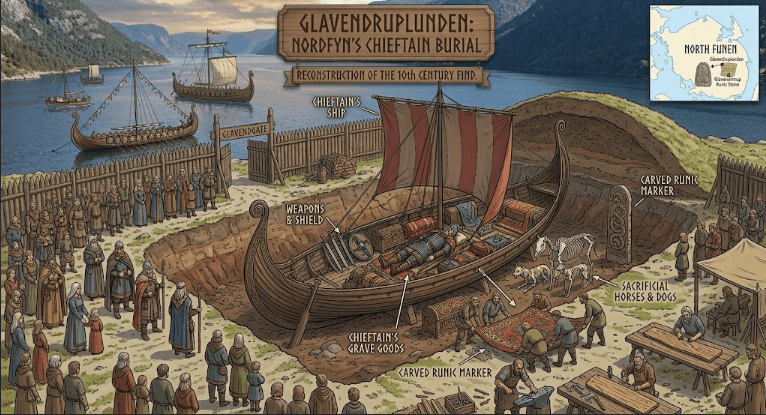
Friestad and Finglas brooches make Viking jewelry a return story because three related ornaments now connect Rogaland, Dublin, women’s graves, museum loans, DNA research, and craft history in one exhibition case. On June 3, 2026, the Archaeological Museum at the University of Stavanger announced that two oval brooches found in a Viking Age woman’s grave at Finglas near Dublin had come to Norway for the first time. The brooches belong to the National Museum of Ireland, but they now appear beside a closely related brooch found at Friestad in Klepp municipality, Rogaland. UiS says all three brooches were probably made by the same Viking Age craftsperson in Rogaland and are visible in the new exhibition “World of the Vikings,” which opened in Stavanger on June 3, 2026. (UiS Viking Jewelry Return)

Why This Return Story Matters Now

The return matters now because it is not a simple repatriation story. The two Finglas brooches have not permanently left Ireland. They remain part of the National Museum of Ireland’s collection and have traveled to Stavanger as museum loans. That distinction matters because the strongest story is not ownership alone. It is what happens when objects separated by geography return to the same interpretive space.

For more than a century, the Friestad brooch stood as a remarkable Rogaland find. Then, in 2004, archaeologists excavating at Finglas near Dublin found two related brooches in a woman’s grave. UiS now presents the three ornaments as “sister brooches,” linked by form, decoration, likely workshop origin, and the movement of people between western Norway and Ireland.

This gives oldnorsenews.org a strong Norse history angle. The article is not only about jewelry. It is about how small objects can carry long biographies: made in Rogaland, worn by women, buried in graves, excavated in different countries, curated by museums, studied by archaeologists, and reunited for public interpretation.

What The Friestad And Finglas Brooches Are

The objects are oval brooches, a type of dress fastener strongly associated with Scandinavian women’s clothing in the Viking Age. UiS says oval brooches cast in bronze or brass were the most common dress ornaments for women in the period. These examples, however, stand out because of their decoration: small bears in silver and a square field with silver spirals on top.

That detail matters because the type is rare. UiS states that this particular brooch form is known only from the two graves at Friestad and Finglas. The Friestad brooch was found in 1898 in a woman’s grave at Friestad in Klepp on Jæren. More than 100 years later, the related brooches appeared in Ireland during the Finglas excavation.

The brooches therefore do two things at once. They show a common Viking Age clothing practice, and they reveal a highly specific craft connection. A familiar form becomes historically powerful because these three examples may come from the same workshop or even the same craftsperson.

Why Finglas Changes The Norway-Ireland Story

Finglas changes the Norway-Ireland story because the brooches did not remain in Rogaland. UiS says the two Irish finds were placed in the grave of a young woman in the Norse Viking colony at Dublin in the mid-800s. She was between 25 and 34 years old and, at about 172 centimeters, tall for her time. Her grave goods suggest high status in the Irish Viking Age colony.

That context moves the article beyond object style. The Finglas woman was not just buried with Scandinavian jewelry. She was buried in a colonial Norse setting in Ireland, with ornaments probably made in Rogaland. UiS archaeologist and associate professor Håkon Reiersen says the Finglas brooches share many details with the Friestad brooch and also share features with other jewelry from Rogaland, pointing toward production in Rogaland.

The National Museum of Ireland’s Viking collections page gives broader context for Dublin. It explains that ninth- and tenth-century Viking graves in Ireland included weapons, jewelry, and personal items, and that well-furnished female graves help show that early Viking presence in Ireland was not simply the story of raiders. Dublin became a major trading town in the western Viking world.

That wider Dublin context makes the Finglas brooches more important. They sit at the meeting point of migration, settlement, trade, female status, and Scandinavian material culture in Ireland.

Why The Women Matter More Than The Objects Alone

The women matter more than the objects alone because jewelry in a grave is never only decoration. It marks dress, status, identity, memory, and social connection. UiS professor Kristin Armstrong-Oma, director of the Archaeological Museum, says the brooches shed light on women’s roles and offer insight into life in the Norse colonies during the Viking Age.

That point should guide the whole article. Viking Age jewelry often gets treated as treasure, but the Friestad and Finglas brooches become more meaningful when readers ask who wore them and why. One woman was buried at Friestad in Rogaland. Another was buried near Dublin, in a Norse colonial environment. Their ornaments suggest a shared style, a shared workshop connection, and possibly overlapping social worlds.

Reiersen states that archaeologists do not know whether the Friestad woman and the Finglas woman knew each other. That caution matters. The brooches connect them materially, but the evidence does not prove friendship, kinship, or direct contact. The strongest claim is narrower and more interesting: women in Rogaland and Dublin could participate in the same Viking Age fashion and craft network.

vikingBroochesformen

Why DNA Adds Another Layer

DNA adds another layer because the Finglas woman’s ancestry supports the object story without replacing it. UiS reports that DNA analysis of the Finglas woman shows she had Norwegian genes. Reiersen uses that point to argue that Viking Age women were not merely passive receivers of goods from raiding expeditions. They also traveled west and could achieve high status in the colonies.

The National Museum of Ireland’s 2020 release on Viking genomes also discusses the Finglas woman. It says researchers sequenced the genome of the “famous Finglas lady,” a woman who died in or around her thirties and was buried with richly decorated gold and silver oval brooches and a decorated comb. The same release explains that Irish Viking genomes often show high levels of Norwegian-like ancestry, in contrast with stronger Danish influence in England.

That does not mean every Viking identity in Ireland was genetically Scandinavian. The National Museum of Ireland emphasizes that Viking identity was complex and could include local people buried in Viking ways. For Finglas, however, the combination of Norwegian ancestry, Scandinavian dress ornaments, and Rogaland-linked brooch style makes the case unusually vivid.

Why This Is Not A Simple Loot Story

The brooches also challenge a simple loot story. Many Viking Age objects moved violently across the Irish Sea. UiS has previously explained that the Archaeological Museum in Stavanger holds Scandinavia’s largest collection of objects from Viking Age Ireland, and that some were probably taken in raids, while others may have moved as gifts, bribes, or trade goods.

The Friestad and Finglas brooches work differently. These were not Irish church objects converted into Scandinavian jewelry. UiS presents them as Scandinavian-style dress ornaments likely made in Rogaland. Their movement to Dublin points toward people traveling with clothing, identity markers, and personal belongings.

That distinction matters for source-sensitive writing. Viking contact with Ireland included violence, raiding, enslavement, settlement, trade, marriage, cultural exchange, and local integration. One object category cannot explain all of that. The Finglas brooches do not erase raiding. They show another layer: women carrying or receiving Scandinavian ornaments in the western Viking world.

The return story therefore asks readers to avoid one-word explanations. “Loot” is too narrow. “Trade” may also be too narrow. These brooches belong to a mixed story of migration, status, craft, and colonial life.

Why Rogaland Craftsmanship Belongs At The Center

Rogaland craftsmanship belongs at the center because UiS connects the three brooches through detailed similarities. Reiersen says the Finglas brooches share many details with the Friestad brooch and with other Rogaland jewelry. The specific decoration, including the small silver bears and silver spiral field, makes the group highly distinctive.

That raises a craft question. Who made them? UiS does not name the craftsperson, and the article should not invent one. The safest wording says that the three brooches were probably made by the same Viking Age craftsperson from Rogaland. That still gives readers a strong image: a workshop or maker in western Norway produced ornaments that ended up in two high-status female graves, one in Jæren and one near Dublin.

This turns Viking jewelry into evidence for skilled production rather than passive ornament. A brooch required casting, finishing, decoration, pin construction, material knowledge, and design choices. It also required a social market where such objects carried meaning.

Old Norse News has covered how Viking Age trade and expansion depended on routes, goods, ships, and craft. The Friestad and Finglas brooches add a more intimate version of that pattern: trade and movement seen through dress fasteners worn by women.

Why Oval Brooches Were More Than Fashion

Oval brooches were more than fashion because they helped fasten clothing while also communicating identity and status. The National Museum of Ireland says the typically Scandinavian oval brooch, often worn with linking strings of beads, was common in the early part of the Viking Age. Personal ornaments served as wealth indicators, and Dublin’s excavations also reveal a rich world of fine metalworking, textiles, craft tools, and imported materials.

This matters because dress was practical and social at the same time. A brooch held clothing in place, but its material, form, decoration, and pairing could also signal regional style, wealth, gendered dress practice, and cultural affiliation.

The Finglas woman’s brooches therefore help identify her burial as Scandinavian in cultural expression. Yet the wider Dublin DNA and archaeology evidence warns against a simplistic ethnic label. A person could live in a mixed world, use Scandinavian dress, carry Norwegian ancestry, and belong to an Irish urban environment shaped by many communities.

The brooches make identity visible, but they do not reduce identity to one category.

Why The “Sister Brooches” Reunion Matters For Museums

The “sister brooches” reunion matters for museums because it allows comparison that photographs cannot fully replace. When curators place the Friestad brooch beside the Finglas pair, visitors can see shared form, decoration, and scale. They can also understand why archaeologists suspect the same workshop or craftsperson.

The Archaeological Museum at UiS is well placed to tell that story. Its own institutional page says the museum conducts research, collection management, cultural heritage administration, and public dissemination, mainly concerning prehistoric and medieval human history. It also notes that its collections serve national and international research communities and that exhibitions are a major part of its public mission.

That matters because this exhibition is not only about bringing beautiful objects together. It is about making research visible. The reunion lets the museum explain how typology, decoration, find context, DNA, and object movement work together.

A return story, in this sense, becomes a research story. The brooches return to the region where they were likely made so visitors can see the evidence side by side.

Why The 1898 And 2004 Dates Matter

The dates 1898 and 2004 matter because they show how archaeology builds meaning over time. The Friestad brooch entered modern knowledge in 1898. At that point, no one could compare it with the Finglas pair because those brooches had not yet been excavated. More than a century later, the Dublin find changed the meaning of the Rogaland object.

That sequence matters for readers who think archaeology is only about the moment of discovery. Finds continue to change when new comparisons appear. A brooch found in Norway in 1898 can gain new historical force when related brooches emerge in Ireland in 2004. A DNA study can then add another layer. A 2026 exhibition can bring the pieces together physically.

The return story therefore shows archaeology as a long conversation. Excavation, curation, scientific analysis, museum cooperation, and public exhibition all contribute.

Nothing about the Friestad brooch became less important after the Finglas find. Instead, the Irish discovery made it more connected.

Why The Finglas Grave Should Stay Carefully Framed

The Finglas grave should stay carefully framed because the evidence is strong but not unlimited. The woman was buried with two decorated oval brooches. UiS places the grave in the mid-800s and says her goods indicate high status in the Irish Viking colony. The National Museum of Ireland’s DNA release describes her as a woman who died in or around her thirties and had richly decorated gold and silver oval brooches and a decorated comb.

Those details support an article about high-status female identity, Norwegian links, and Viking Age Dublin. They do not support a fictional biography. The article should not give her a name, assign her a husband, define her as a trader, declare her a settler leader, or claim she personally traveled from Rogaland unless the source says so.

This caution makes the story stronger. The evidence already gives readers enough: her burial, age range, ancestry signal, ornaments, comb, grave location, and connection to a rare brooch type.

The goal is not to turn the Finglas woman into a character. It is to let her archaeological record speak clearly.

Why The Brooches Complicate “Viking Women” Stereotypes

The brooches complicate stereotypes because they show women as active participants in the western Viking world. Reiersen’s point is direct: the Irish finds show that women were not only passive receivers of jewelry from raids. They also traveled west and could gain high status in the colonies.

That claim matters because popular Viking history often reduces women to household scenes or burial ornaments. The Friestad and Finglas brooches instead connect women to migration, craft networks, status display, colonial communities, and transmarine identity. Jewelry becomes evidence for movement, not immobility.

This does not require overstating equality or inventing female military roles. The evidence supports a more grounded point. Women carried, wore, exchanged, displayed, and were buried with objects that linked Norway and Ireland.

The brooches also show that female dress could carry social messages across the sea. A pair of oval brooches in Dublin could express Scandinavian cultural belonging in an Irish setting.

Why Ireland And Rogaland Form A Stronger Pair Than Norway Alone

Ireland and Rogaland form a stronger pair than Norway alone because the Viking Age relationship worked in both directions. UiS has explained that many Irish-origin objects came to Rogaland, while the 2026 brooch story shows Rogaland-style ornaments in Dublin. Movement did not run along one simple path.

The National Museum of Ireland’s Viking collections page explains that Dublin grew into the most important trading town in the western Viking world and that its archaeology shows manufacturing, trade, ship activity, woodworking, ironworking, textiles, fine metalworking, and personal ornament. That kind of urban setting helps explain how a Rogaland-linked object could belong in Dublin without feeling out of place.

Rogaland’s side of the story matters too. UiS says archaeological finds point to intense contact between Rogaland and Ireland during the Viking Age. The museum’s own collections preserve many objects that reflect this contact.

Together, the two regions show a connected Irish Sea and North Sea world. The brooches are small, but the geography behind them is wide.

Why The Return Is Also A Loan Ethics Story

The return is also a loan ethics story because the Finglas brooches belong to Ireland’s national collection. A careful article should not imply that Norway has recovered property that Ireland should surrender. UiS says the brooches belong to the National Museum of Ireland. Their appearance in Stavanger comes through museum cooperation.

This matters because “return” can mean many things: repatriation, restitution, temporary loan, exhibition exchange, or interpretive reunion. In this case, the safest phrase is “return story,” not “permanent return.” The objects return to Norway for public viewing and comparison, while their institutional home remains Ireland.

That nuance makes the story more trustworthy. It lets readers understand how museums can collaborate across borders without turning every object movement into an ownership dispute.

The brooches traveled west in the Viking Age and east again in 2026. Their modern return is a cultural loan, not a correction of a legal wrong.

Why Visitors Should Verify Before Making Big Claims

Visitors should verify several points before making big claims about the Friestad and Finglas brooches. First, UiS says the three brooches were probably made by the same Rogaland craftsperson, but the maker’s identity remains unknown. Second, the special small-bear type is known from these two graves, not from a broad catalogue of identical finds across Europe.

Third, DNA analysis links the Finglas woman with Norwegian ancestry, but it does not prove that she knew the Friestad woman or personally came from Klepp. Fourth, the two Finglas brooches belong to the National Museum of Ireland and appear in Stavanger through exhibition loan.

Finally, the brooches should not become proof of one simple Viking story. They do not reduce Ireland-Norway contact to raiding, trade, migration, fashion, or female status alone. They sit where all those questions meet.

That is why they make such a strong article topic. They are small enough to study closely and connected enough to open a whole maritime world.

Why Friestad And Finglas Make Viking Jewelry A Return Story

Friestad and Finglas make Viking jewelry a return story because the objects have moved through several kinds of distance. They crossed the physical distance between Rogaland and Dublin. They crossed the chronological distance between the mid-800s, the 1898 Friestad discovery, the 2004 Finglas excavation, the 2020 DNA research, and the 2026 Stavanger exhibition. They also cross interpretive distance, from jewelry to women’s history, from craft to migration, and from grave goods to museum cooperation.

That is the strongest oldnorsenews.org takeaway. Viking Age jewelry was not only decoration. It could fasten clothing, display identity, signal status, preserve craft traditions, mark burial memory, and reveal transmarine contact. The Friestad and Finglas brooches do all of that.

Their reunion in “World of the Vikings” matters because it gives visitors a rare chance to see a Viking Age connection physically restored. One brooch came from a woman’s grave in Jæren. Two came from a woman’s grave near Dublin. All three likely point back to the same Rogaland craft environment.

After about 1,200 years, the brooches do not simply return to Norway. They return as evidence. They ask modern readers to see Viking jewelry as movement, memory, craft, and women’s history joined in metal.

Posted in Literature & Texts, Mythology & Culture, Norse History & Archaeology | Comments Off on Why Friestad And Finglas Brooches Make Viking Jewelry A Return Story

Islamic Silver And Early Danish Viking Coin Trade

Islamic Silver in early Viking coinage is not just a question of where metal came from. It is a question about movement, minting, trust, and cultural contact in the early medieval north. The Damhus hoard, found near Ribe in Denmark, gives this issue unusual force because it joins a precise archaeological find with scientific analysis of metal sources and visible choices in coin design. The evidence does not make the Vikings modern merchants in disguise, nor does it erase raiding from Viking Age history. It does, however, press us to read early Scandinavian economy as part of a wider Eurasian exchange system.

How Islamic Silver Reached Early Viking Coins

The Damhus Hoard Near Ribe

The Damhus hoard was unearthed in 2018 near Ribe and contained 226 Viking Age silver pennies. The coins date to about AD 830–850, placing them among the earliest known Viking coins. Reports on the study state that analyses connect the metal in these pennies to melted Islamic dirhams, and that as many as 30 different dies were used in minting, a sign of organized production rather than a few isolated experiments reported study.

Those details matter because Ribe was already a significant trading place in the Viking Age research picture. The Damhus coins point to activity that was technical as well as commercial: silver had to be gathered, melted, alloyed or prepared, struck with dies, and accepted by people who used the coins. None of this proves a single centralized state policy, but it does show that early Danish coinage cannot be understood only as local imitation. The metal itself had travelled through much wider routes before it entered Scandinavian use.

Why Islamic Silver Matters In Ribe

The evidence for Islamic Silver in these coins gives Ribe a sharper economic setting. A Danish penny made near Ribe could carry local imagery while being struck from metal that once circulated as an Islamic dirham. That is not a small detail. It means a coin can be local in form and foreign in material at the same time.

For readers who want a narrower treatment of the same find, our related analysis of Danish Viking coin trade follows the Damhus hoard in closer detail. Here, the wider point is cultural exchange. The coin is not a neutral object. It connects mining, minting, trade, reuse, and symbolic display in a piece of silver small enough to pass from hand to hand.

What The Metal Analysis Can And Cannot Show

Lead Isotopes And Melted Dirhams

Lead isotope analysis is central to the interpretation because it can help researchers compare the chemical signature of the silver with known source patterns. In the Damhus case, the research notes state that a significant portion of the silver used in the coins came from Islamic sources. That finding supports the view that Islamic dirhams were not only arriving in Scandinavia as recognizable foreign coins; at least some were being melted and remade into local pennies.

Yet the analysis has limits. It does not tell us the name of a trader, the exact route of every dirham, or whether each piece of metal moved through peaceful exchange, payment, gift, tribute, or some combination of mechanisms. Archaeology often gives us strong material signals without preserving the whole human chain behind them. The safer claim is that the Damhus coins show access to silver of Islamic origin before AD 850 and that this access was substantial enough to feed early minting.

Dies, Scale, And Minting Choices

The reported use of up to 30 dies is also significant. Dies wear out, and multiple dies suggest that the coins were produced in notable quantities. That does not let us calculate an exact production total from the research notes alone, but it does argue against a tiny, symbolic batch. Minting required planning. Someone had to make or commission the dies, maintain coin designs, and strike enough pennies for circulation or storage.

This is where early Viking coinage becomes especially interesting. The silver source points outward, while the minting process points to local organization. The Damhus hoard therefore sits between two scales of history: the long-distance movement of metal and the local decision to turn that metal into pennies.

Symbols, Trade, And Cultural Exchange

Odin, Stags, And A Foreign Metal

The research notes state that the coins often include Norse symbols, including depictions associated with Odin and stags. This pairing of imported or acquired silver with Scandinavian symbolic language is one of the most revealing features of the find. It would be too strong to say that the coins prove a clear ideological program. Still, they do show that the makers of the coins did not simply preserve the identity of the dirham. They recast the metal into forms meaningful within their own setting.

As a writer drawn to the meeting place of language, myth, and material culture, I find this especially striking. A coin may not speak like a poem, but it still carries signs. If an image evoked Odin or a stag for its users, then the object joined economic trust with cultural recognition. The metal came from far away; the image made it legible closer to home.

Exchange Without Simple Blending

Cultural exchange is often described too neatly. The Damhus coins do not show that Scandinavian communities adopted Islamic religion, language, or political forms. Nor do they show a one-way flow of influence from the Islamic world into the north. What they show more securely is the reuse of silver from Islamic coinage within a Scandinavian minting context.

That distinction protects the evidence from being asked to do too much. Metal movement can reveal trade contact and economic dependence without proving deep cultural borrowing in every area of life. The coins are powerful because they are specific: silver was melted, pennies were struck, and Norse symbols appeared on objects made from a wider pool of Eurasian metal.

What Islamic Silver Does Not Prove

Archaeologist examining coin finds beside notes and measuring tools

Trade Is Not The Only Possible Path

Islamic Silver in the Damhus coins supports the presence of long-distance connections, but it does not prove one simple route from the Caliphates to Ribe. The research notes allow for direct trade or acquisition of Islamic silver. That phrasing matters. Silver could pass through many hands before reaching Scandinavia, and the final user of the metal may not have known its full history.

This is one reason cautious interpretation is needed. It is tempting to turn the Damhus hoard into a clean story of merchants sailing from one world to another. The actual evidence is both stronger and narrower. It shows the presence and reuse of silver with Islamic origins in early Danish coinage. The social path of each fragment remains harder to reconstruct.

Why A Raider-Only Image Falls Short

The Damhus evidence also challenges the older habit of viewing Vikings mainly as raiders. The research notes describe economic implications that place Scandinavian actors within a broad Eurasian economy. That does not deny violence in the Viking Age. It simply prevents violence from becoming the only lens.

Modern readers often meet medieval evidence through museums, archives, small history sites, churches, and community organizations. Within the same publishing network, Bethel NC UMC provides another perspective on how institutions shape public memory. Though different in focus, it highlights the role diverse entities play in preserving and interpreting history. For Viking studies, the public task is similar: keep the evidence visible, resist easy stereotypes, and explain uncertainty plainly.

What Islamic Silver Changes About Viking Coinage

Islamic Silver changes the story of early Viking coinage because it makes the penny a record of contact. The Damhus coins were not only local money. They were remade metal, carrying traces of exchange between Scandinavia and regions tied to Islamic dirham circulation. Their date range, AD 830–850, makes that point especially important because it places such contact early in the history of Scandinavian coin production.

The find also changes how we read symbols. Norse images on coins made from melted dirhams show that cultural identity and imported material could sit together in one object. A coin could announce local meaning while depending on foreign silver. That tension is not a weakness in the interpretation; it is the historical point.

For Norse history and archaeology, the Damhus hoard is valuable because it links science with story. Lead isotopes give one kind of evidence. Dies give another. Symbols give another. Together, they suggest a Viking world that was not sealed off at the edge of the North Sea or Baltic routes. It was connected, adaptive, and economically alert, while still expressing itself through Scandinavian forms.

The safest reading is also the most interesting one. Early Danish pennies do not turn Vikings into a single class of traders, and they do not make cultural exchange simple. They show that silver from Islamic coinage could be melted into local money before AD 850, at a scale large enough to matter. In that small disc of metal, the Viking Age becomes less isolated and far more connected.

Posted in Norse History & Archaeology | Comments Off on Islamic Silver And Early Danish Viking Coin Trade

Viking Coin Hoard And Norway’s Trade Evidence

The Viking Coin Hoard found near Rena in Østerdalen in April 2026 gives historians a rare, concentrated body of evidence for late Viking Age silver movement in Norway. Archaeology Magazine reports that the find grew to more than 3,150 silver coins and is regarded as Norway’s largest Viking Age coin hoard Archaeology Magazine report. The scale is striking, but the value of the discovery lies less in size alone than in what the coins can and cannot tell us about trade, wealth, and regional contact.

Why The Viking Coin Hoard Matters For Trade

The Viking Coin Hoard As A Source Type

A hoard is not a ledger, a travel diary, or a merchant’s account. It is a deposit of objects that reached one place before burial. That distinction matters because coins can show circulation without naming every hand that moved them. The Viking Coin Hoard is therefore best read as evidence for connections, not as proof of a single journey from mint to field.

Coins minted in several regions can help scholars map economic contact across broad zones. According to the supplied research, the Østerdalen hoard includes coins from England, Germany, Denmark, and Norway. That range fits a mid-11th-century world in which Scandinavia was tied to the British Isles and continental Europe through trade, tribute, political movement, and other forms of exchange. The presence of varied coinage does not reduce Viking Age wealth to raiding. It asks us to think about silver as something that could move through many channels before being buried.

From Detector Signal To Excavation

The reported discovery sequence is also worth treating with care. On April 10, 2026, metal detectorists Vegard Sørlie and Rune Sætre found 19 silver coins in a field near Rena. NordiskPost reports that later archaeological work expanded the find to more than 3,150 coins and notes coins associated with the reigns of Æthelred II, Cnut the Great, Otto III, and Harald Hardrada, with burial suggested around 1047 NordiskPost coverage.

This sequence matters because a responsible detector find becomes archaeologically meaningful only when context is recorded. The first coins alerted people to the presence of something larger. The later excavation allowed the deposit to be treated as a site, not only as a group of collectible objects.

What The Coins Say About Movement

Mints Across Northern Europe

The range of mints gives the find its strongest trade significance. English, German, Danish, and Norwegian coins in one deposit point to circulation across different political and economic zones. That does not mean each coin came directly to Østerdalen from its mint. A coin struck in England could have passed through several owners, payments, exchanges, and deposits before reaching inland Norway.

This is why the hoard should be read alongside other coin evidence rather than in isolation. Old Norse News has previously discussed how Islamic silver in Danish Viking coins sharpens our view of long-distance exchange. The Østerdalen discovery belongs to a related question: how did silver from different regions become useful, trusted, and movable across Norse-connected societies?

Silver, Dating, And Caution

The suggested burial around 1047 is historically valuable, but it should not be turned into a story with more certainty than the evidence permits. Coin dates help establish the earliest possible burial point, since a deposit cannot be buried before its youngest coin was made. Yet the act of burial remains harder to explain. It may relate to safekeeping, crisis, wealth storage, ritualized deposition, or circumstances now lost to us.

In that sense, this Viking Coin Hoard does not offer a single answer. It gives a tightly dated cluster of material that can be compared with settlement evidence, regional production, and other silver finds. That comparative work is where the discovery will have lasting value.

Why Østerdalen Changes The Question

An Inland Find, Not A Coastal Stereotype

Popular Viking narratives often privilege ships, raids, and coastal trading towns. A large silver deposit near Rena in Østerdalen pushes attention inland. The find does not deny maritime connections; the foreign coins themselves imply contact far beyond the valley. Yet the place of burial reminds us that goods and silver could move inland through social and economic networks after leaving ports or crossing regional routes.

The research notes also record a cautious interpretation that the hoard’s scale may relate to wealth from large-scale iron production in the region, rather than only to raiding. That idea should be treated as a working hypothesis until more site evidence is published. It is still an important question because it places production, labor, and inland resources beside the better-known stories of war bands and overseas movement.

Settlements And Missing Context

The supplied research says archaeologists are continuing to investigate the area for further artifacts or evidence of nearby settlement. That work matters because the hoard’s meaning depends partly on what surrounded it. Was it buried near a farm, a route, a production zone, or another activity area? At present, the safest answer is that the find’s full context remains under investigation.

For readers interested in how such questions are approached, the methods discussed in identifying Viking settlements are directly relevant. Coins alone can point to movement and wealth, but settlement traces can show where people lived, worked, stored goods, and made decisions.

How The Viking Coin Hoard Should Not Be Overread

Conservator sorting silver coins into labeled trays

Trade Is Not A Single Route

The main risk in interpreting the find is turning coin diversity into a neat map of fixed trade routes. The coins show that silver from several regions reached one inland Norwegian deposit. They do not, by themselves, reveal one merchant, one ship, one road, or one transaction. Trade in the Viking Age was not a modern shipping network with labels attached to every movement.

A cautious reading should keep several points separate:

  • The place where a coin was minted is not necessarily the place from which it entered Norway.
  • The latest coin helps date burial, but does not explain why the deposit was made.
  • The size of a hoard signals major wealth, but not automatically the source of that wealth.
  • Foreign coinage can reflect trade, political payments, plunder, gifts, or later redistribution.

This kind of restraint is not a weakness. It is how archaeological interpretation stays accountable to evidence. Readers moving across sites in the same publishing network, including Alliance Recruitment, will recognize the broader editorial principle: claims become useful when their limits are stated clearly within the network.

Preservation And Numismatic Value

The research describes the coins as exceptionally well preserved. That condition is significant for numismatics because details of minting, wear, inscriptions, and metal composition may help specialists compare the coins with other known finds. Even so, public interpretation should wait for formal study before attaching too much meaning to individual pieces.

The Viking Coin Hoard is already historically important because of its scale and mixed origin. Its deeper meaning will come from careful cataloging, conservation, and comparison. The first news of a discovery is rarely the final scholarly word.

Why The Østerdalen Hoard Still Matters

The Østerdalen find matters because it draws together several major questions in Viking Age studies: how silver moved, how inland Norway participated in wider exchange, how wealth could be stored, and how modern archaeology turns a detector discovery into evidence. It also challenges the narrow habit of treating Viking wealth as either raid treasure or royal coinage. The evidence points toward a more varied economy, though the exact balance between trade, production, political payment, and other routes remains uncertain.

The Viking Coin Hoard should therefore be seen as a starting point for research rather than a finished story. Its coins connect Norway with England, Germany, Denmark, and Norway’s own coinage in the mid-11th century. Its inland position raises questions about regional production and movement. Its preservation offers specialists a valuable body of material. For modern Norse heritage, its lesson is simple but demanding: the Viking Age was connected, mobile, and economically varied, but every claim still has to pass through the evidence.

Posted in Norse History & Archaeology | Comments Off on Viking Coin Hoard And Norway’s Trade Evidence

Why Rakni’s Mound Keeps Challenging The Idea Of A Royal Grave

Rakni’s Mound keeps challenging the idea of a royal grave because its scale looks royal, while its archaeology refuses to give researchers the evidence expected from a royal burial. The Norwegian mound, known as Raknehaugen, stands in Ullensaker in Romerike, north of Oslo and near Jessheim and Gardermoen. Ullensaker Municipality describes it as Northern Europe’s largest burial mound, about 90 meters in diameter and originally almost 20 meters high, though excavations and settlement have left it around 15 meters high today. The legend says a king named Rakne lay there between two white horses. Yet excavations in 1869/70, 1939/40, and 1993 did not find King Rakne, his horses, grave treasures, or a secure primary burial. (Ullensaker Municipality Raknehaugen)

Why Rakni’s Mound Matters Now

Rakni’s Mound matters now because new research has reopened one of Norway’s most stubborn archaeological questions. In 2026, archaeologist Lars Gustavsen of the Norwegian Institute for Cultural Heritage Research, or NIKU, published a study in the European Journal of Archaeology arguing that Raknehaugen may not have functioned as a high-status burial monument at all. Instead, he proposes that people built it as a communal, ritual response to a catastrophic landslide after the AD 536 “Dust Veil” climatic crisis.

That argument does not solve Raknehaugen. It changes the question. For more than 150 years, many researchers and local stories have asked who lay inside the mound. Gustavsen asks whether that question has led interpretation in the wrong direction.

This makes Raknehaugen valuable for oldnorsenews.org. It is a pre-Viking monument often pulled toward royal legend, but the strongest current evidence demands caution. The mound may reveal power, crisis, memory, and ritual without confirming a king’s grave.

Where Raknehaugen Fits In Norway’s Landscape

Raknehaugen lies at Sand in Ullensaker, close to the old road corridor known as Ljøgodtvegen or Folkevegen. Ullensaker Municipality says the mound stood strategically by a busy main road between Oslo and Trondheim, where many people could pass and see the enormous construction.

That visibility matters. A monument of this size did not hide private grief. It stood in a landscape of movement, memory, and social display. Anyone who passed along the route would have seen a massive mound that demanded explanation.

The surrounding region also matters. Romerike contains fertile land, old route systems, and a deep Iron Age history. Raknehaugen’s size has therefore encouraged interpretations that connect it with elite control, local kingship, or centralized power.

Yet the landscape also contains another story. Gustavsen’s 2026 study uses LiDAR analysis to show a major landslide scar just south and southwest of the mound. That observation shifts attention from the imagined grave chamber to the terrain around the monument.

Why The Size Looks Royal

The size of Raknehaugen has long made the royal-grave interpretation tempting. A monument around 90 meters across and originally almost 20 meters high required enormous coordination. Ullensaker Municipality says builders created the mound as a log-pyramid structure, with three layers of roughly 25,000 logs each. The municipality also states that felling, transport, construction, and feeding the workers may have involved close to 1,000 people.

Store norske leksikon presents another labor estimate from archaeologist Dagfinn Skre, who calculated that Raknehaugen required about 70,000 to 90,000 workdays, equal to 450–600 people working full time during the summer construction period.

Those numbers explain why many scholars saw elite power in the mound. A monument this large needed organization, authority, labor, food, timber, and planning. In many Iron Age contexts, such effort points toward a powerful leader or ruling group.

However, scale alone cannot identify a grave. A large monument can express political authority, ritual response, communal trauma, territorial memory, or collective cooperation. Raknehaugen challenges researchers because it looks like a royal tomb from the outside but resists that explanation inside.

Why The Burial Evidence Remains Weak

The burial evidence remains weak because researchers have searched for the expected grave without finding it. Science Norway reported in 2026 that the first excavations in 1869 and 1870 found no burial chamber, only large amounts of timber. The larger excavations in 1939 and 1940, led by archaeologist Sigurd Grieg, also failed to find a clear grave. (Science Norway Rakni’s Mound)

Some cremated bone fragments did appear near the base of the mound. For a time, those remains encouraged renewed support for a burial interpretation. In the 1990s, improved study suggested that the bones included parts of a human skull.

Later analysis changed the picture again. Gustavsen’s 2026 article states that radiocarbon analysis dated the bone to 1391–1130 BC, in the Early Bronze Age, far earlier than the mound’s sixth-century construction. Ullensaker Municipality summarizes the same problem more simply: the bone remains date to around 1200 BC, about 1,700 years before people built Raknehaugen.

That dating means the bones probably entered the mound as redeposited older material, not as the primary burial of King Rakne or a sixth-century ruler.

RakniMound1

Why AD 552 Matters

The dating of the mound matters because it places Raknehaugen in the Migration Period, before the Viking Age. Store norske leksikon says current research status places most of the timber felling in the winter of 551/552, with mound construction in the summer of 552. Ullensaker Municipality gives a similar date, saying the timber came from 551 and people built the mound in 552.

This timing matters for two reasons. First, Raknehaugen should not be treated as a Viking Age royal grave. It belongs to the centuries before the Viking Age, even though later Norse legend and public memory have pulled it toward saga-style kingship.

Second, the date falls soon after the major climatic disruption associated with AD 536. That event, often linked to volcanic aerosols and reduced sunlight, affected farming, social stability, and settlement patterns across parts of the Northern Hemisphere. Gustavsen’s interpretation places Raknehaugen in the aftermath of that crisis.

A royal grave can still belong to a crisis period, but Gustavsen’s argument asks whether crisis itself may explain the mound better than a missing king.

Why The 536 Crisis Changes The Question

The AD 536 crisis changes the question because it places Raknehaugen inside a period of environmental stress. Science Norway reports Gustavsen’s argument that the climate crisis changed cultivation, increased rainfall, and contributed to unstable soil conditions south of the mound. He connects those conditions with a massive quick-clay landslide.

According to Gustavsen, the landslide scar near Raknehaugen covered about one square kilometer. He told Science Norway that such a landslide would have turned the ground into something like soup, destroying everything nearby: people, animals, houses, and land.

This interpretation does not prove that every person in Romerike understood the event in the same way. It does, however, offer a different reason for monument building. People may have built Raknehaugen not to glorify one ruler, but to answer a traumatic landscape event through communal ritual.

That possibility challenges the royal-grave model. If a community built the mound to restore order after catastrophe, then the missing grave stops being a problem and becomes part of the explanation.

Why LiDAR Matters For The New Interpretation

LiDAR matters because it moves the analysis beyond the mound’s interior. Earlier excavations focused on what lay inside Raknehaugen. Gustavsen’s work looks outward, using airborne laser-scanning data to read subtle terrain features around the monument.

His 2026 article argues that LiDAR reveals a clear division in the landscape. Northwest of the mound, the terrain is relatively even. South and west of it, ravines and river channels cut into marine clay. The LiDAR data also shows a large landslide scar immediately south and southwest of the mound.

That landscape context matters because archaeology is not only about objects. Placement can carry meaning. If people built the mound along the edge of a major landslide scar, the location may have responded to the damaged ground itself.

The result is a different kind of monument story. Raknehaugen may not point inward to a hidden king. It may point outward to a wounded landscape.

Why Dagfinn Skre Still Defends A Memorial Reading

The new interpretation has not ended the debate. Science Norway reports that Dagfinn Skre, the archaeologist who conducted a smaller investigation at Raknehaugen in 1993, still favors the burial-mound or cenotaph interpretation. A cenotaph is a memorial for someone whose body does not lie there.

Skre praises the strength of Gustavsen’s landscape analysis but argues that the lack of a burial does not automatically prove that people did not build the mound in memory of a deceased person. He points out that other mounds from the period often connect with burial or memorial practice, even when the evidence remains difficult.

This disagreement matters because it keeps the article honest. Gustavsen’s landslide-response theory is powerful, current, and source-backed. It also remains an interpretation, not a final verdict. Skre’s position reminds readers that archaeologists can agree on the evidence while disagreeing about the best explanation.

Raknehaugen challenges the royal-grave idea, but it has not replaced it with a universally accepted answer.

Why The Legend Of King Rakne Still Matters

The legend of King Rakne still matters because it shows how later communities explained an extraordinary monument. Ullensaker Municipality says the legend claims that Rakne lay buried in full equipment between two white horses. Science Norway notes that the Norwegian name Raknehaugen itself has long encouraged the assumption that King Rakni rested inside.

The archaeology does not support that legend as fact. Excavations found no king, no two white horses, and no grave goods. Still, the legend tells us something important about memory. A huge mound invited storytelling. People needed a name, a figure, and a reason for such a monument.

This is exactly the kind of source problem oldnorsenews.org often needs to clarify. Later stories can preserve cultural memory, but they cannot replace archaeological dating and excavation evidence. Readers can compare the Rakni legend with broader methods for separating Norse myth from Viking history, especially when a place name or saga-like tale claims more certainty than the ground allows.

Rakni may belong to memory. Raknehaugen belongs to archaeology.

Why “Royal Grave” Became So Persuasive

The royal-grave idea became persuasive because it matched several visible facts. Raknehaugen is enormous. It required exceptional labor. It stands prominently beside a route. It dates to a period when large mounds became important political monuments in Scandinavia. Other major mounds often connect with high-status burials or elite memory.

That pattern made sense. If a small mound might mark an ordinary grave, then the largest mound should mark an extraordinary person. For many years, this logic shaped interpretation.

The problem is that Raknehaugen does not supply the expected supporting evidence. Researchers have not found a primary sixth-century burial, rich grave goods, horses, weapons, or a chamber. The Bronze Age bones complicate the picture rather than solve it.

This is why the mound matters beyond Ullensaker. It exposes a common archaeological shortcut: assuming that size equals rank and rank equals burial. Raknehaugen shows that monument scale can mean more than one thing.

Why Timber Layers Matter

The timber layers matter because they show an unusual construction method. Ullensaker Municipality describes the mound as a log pyramid, with three layers of 25,000 logs each. Between the logs, builders packed sand, bog soil, branches, and brushwood to stabilize the structure.

Gustavsen’s study also emphasizes the complexity of the mound materials: clays and sand of different colors and thicknesses, interspersed with layers of worked timbers and branches. Earlier researchers often explained these materials as practical engineering. Gustavsen asks whether the material choices also carried symbolic meaning.

That question is important. If people pulled timber, soil, brushwood, and clay from a landscape scarred by catastrophe, the mound may have transformed damaged material into a new monument. The construction itself could have become the ritual action.

A royal grave interpretation sees timber as architecture for burial. A crisis-response interpretation sees timber, soil, and placement as part of a communal act.

Why Raknehaugen Challenges Elite-Centered History

Raknehaugen challenges elite-centered history because Gustavsen’s reading shifts attention from one powerful dead person to collective action. Traditional interpretation often treats the mound as proof that a ruler commanded labor across Romerike. Under that model, the monument demonstrates centralized power.

Gustavsen proposes another possibility. The mound may have expressed communal ritual cooperation after disaster. In that case, the labor does not only measure elite command. It may measure shared crisis response, social repair, and attempts to restore order.

This matters for Viking and pre-Viking history because elite narratives often dominate. Kings, chiefs, warriors, and royal graves attract attention. Yet communities also built, remembered, feared, mourned, repaired, and acted together.

Raknehaugen does not erase power. Any project of this scale required organization. The challenge lies in deciding what kind of organization the evidence supports: royal command, memorial labor, ritual cooperation, or a mix of all three.

Why Raknehaugen Belongs In A Pre-Viking Story

Raknehaugen belongs in a pre-Viking story because it dates to the mid-sixth century, not the Viking Age. This matters for language. Calling it a “Viking mound” would blur the chronology. Calling it a pre-Viking monument helps readers see the deeper roots of Scandinavian monument building.

The mound stands in the same broad world that later produced Viking Age power structures, but it predates longship raids, Viking towns, and the best-known Scandinavian royal stories. It belongs to a period of crisis, migration, agricultural change, and new forms of social expression.

That makes the mound more useful, not less. It shows that the road into the Viking Age included enormous monuments, landscape ritual, labor mobilization, and contested memory long before Viking fleets reached the headlines of medieval chronicles.

Raknehaugen does not tell a Viking story directly. It helps explain the world before Viking Age political and cultural forms took shape.

Why The Debate Changes How We Read Other Mounds

The debate changes how we read other mounds because Raknehaugen asks researchers to look beyond appearance. Gustavsen’s article warns that mounds cannot be understood only through their shape or through comparison with similar-looking monuments. Their physical surroundings also matter.

That principle affects many Scandinavian sites. A large mound may mark a grave, a cenotaph, a political statement, a ritual response, a boundary, an assembly landscape, or several meanings at once. Researchers need excavation evidence, dating, landscape analysis, local geology, material choices, and later memory traditions.

Raknehaugen therefore functions as a methodological warning. A mound that looks like a royal grave may still carry another meaning. A missing burial should not become an inconvenient gap that researchers ignore.

This is why the 2026 debate feels fresh. It does not only revisit one monument. It challenges how people explain monumental scale across late Iron Age Scandinavia.

What Readers Should Verify Before Accepting Big Claims

Readers should verify several points before accepting dramatic claims about Rakni’s Mound. First, Raknehaugen is enormous, but size alone does not prove a royal burial. Second, the mound dates to around AD 552, not to the Viking Age. Third, excavations in 1869/70, 1939/40, and 1993 did not find King Rakne, two white horses, grave goods, or a secure primary burial.

Fourth, cremated human bone fragments once thought relevant to the mound have been dated to the Early Bronze Age, long before the mound’s construction. Fifth, Gustavsen’s landslide-response interpretation draws on LiDAR analysis, landscape context, and the AD 536 crisis, but he and other researchers still treat the issue as interpretive rather than fully settled.

Finally, Dagfinn Skre’s continued support for a cenotaph or memorial reading shows that responsible scholarship still allows debate. The strongest conclusion is not “there was no meaning of rank.” It is that the royal grave explanation no longer carries the evidence as easily as people once assumed.

Why Rakni’s Mound Keeps Challenging The Royal Grave Idea

Rakni’s Mound keeps challenging the royal grave idea because every new layer of evidence makes the simple version harder to defend. The legend promises King Rakne. Excavation does not find him. The mound’s size suggests power. The burial evidence remains weak. The Bronze Age bones break the expected chronology. LiDAR reveals a major landslide scar beside the monument. The AD 536 crisis offers a new context for communal ritual response.

That does not make Raknehaugen less important. It makes the monument more important. A confirmed royal grave would tell one kind of story. Raknehaugen may tell a harder one about crisis, landscape, labor, memory, and the danger of forcing every large mound into a king’s biography.

For oldnorsenews.org, the lesson is clear. Pre-Viking Scandinavia did not leave only neat royal tombs and simple monuments. It left places that still argue with us.

Raknehaugen remains powerful because it refuses to become only the grave of a missing king. It stands as a monumental question: what did people in sixth-century Romerike need to repair, remember, or restore when they raised one of northern Europe’s largest mounds?

Posted in Literature & Texts, Mythology & Culture, Norse History & Archaeology | Comments Off on Why Rakni’s Mound Keeps Challenging The Idea Of A Royal Grave

Herlaugshaugen Ship Burial Before Vikings

The Herlaugshaugen Ship Burial on Leka Island matters because it places monumental ship burial in Scandinavia before the conventional Viking Age frame. In June 2023, archaeologists found iron nails and wood fragments in the mound, evidence interpreted as confirming a ship burial at the site, according to National Geographic. Radiocarbon dating places the burial around AD 700, as reported in the Antiquity study available through Cambridge Core. That date does not make the people buried there Vikings in the later historical sense. It does show that some practices often associated with Viking Age elite display had older roots.

Why The Herlaugshaugen Ship Burial Dates Earlier

Dating Around AD 700

The dating is the central point. A burial around AD 700 falls nearly a century before the start of the Viking Age as it is commonly framed in Scandinavian history. The Herlaugshaugen Ship Burial therefore asks historians to separate two questions that are too often merged: when Viking raids and expansion became visible in written sources, and when Scandinavian elites began using ships in monumental funerary display.

This distinction matters because ship burial was never only a matter of transport. A ship placed in a mound could express rank, maritime identity, ancestry, and social memory. The evidence from Herlaugshaugen does not prove that Viking Age society already existed in full form around AD 700. It points instead to continuity in elite symbolism across the pre-Viking and Viking periods.

Why The King Herlaug Tradition Became Less Secure

Before the recent investigation, the mound was linked in tradition to King Herlaug, said to have died in AD 871. The new dating makes that identification difficult to maintain as a straightforward historical claim. This does not mean the later story has no cultural value. It means the mound’s archaeological date and the later narrative must be treated separately.

That separation is useful. Norse and Scandinavian heritage often survives through a mixture of archaeology, local memory, later saga-style storytelling, and modern interpretation. Herlaugshaugen reminds us that a compelling story can preserve attention around a monument while still being revised by physical evidence.

Evidence From Nails, Wood, And Ship Form

How The Herlaugshaugen Ship Burial Was Identified

The Herlaugshaugen Ship Burial was identified through material evidence rather than a complete preserved vessel. The key finds were iron nails and wood fragments. The reported discovery of 29 large iron nails is especially significant because such fastenings are characteristic of clinker-built ships, in which overlapping planks are joined to form the hull.

That does not mean every part of the ship can yet be reconstructed. Organic material decays, earlier disturbance may have affected the mound, and a burial mound is rarely a sealed time capsule. Still, nails and wood fragments can be decisive when they appear in the right archaeological context. They give researchers a physical basis for identifying a ship burial without needing a visible hull.

What The Evidence Can And Cannot Support

A cautious reading is needed because the find is powerful but not unlimited. The present evidence supports the presence of a ship burial and an early date. It does not yet securely identify the buried person, the full appearance of the ship, or the exact rites performed at the funeral.

  • Supported: iron nails and wood fragments indicate a ship in the mound.
  • Supported: radiocarbon dating places the burial around AD 700.
  • Supported: the find predates the Viking Age by nearly a century.
  • Uncertain: the name, role, and biography of the person buried there.
  • Uncertain: the complete design and size of the buried ship.

That balance is not a weakness. Archaeology gains strength when it keeps firm evidence separate from possible interpretation.

Connections Before The Viking Age

Between Sutton Hoo And Later Scandinavian Graves

The Antiquity study frames Herlaugshaugen as part of a wider chronological problem. Earlier Anglo-Saxon ship burials, including Sutton Hoo around AD 600–625, have long stood before the best-known Scandinavian Viking Age ship burials. Herlaugshaugen helps narrow the chronological gap. It gives scholars a Scandinavian example that sits between those earlier English finds and the later Viking Age tradition.

This does not mean Sutton Hoo caused Herlaugshaugen, or that one burial tradition can be reduced to simple imitation. The safer reading is that elite communities around the North Sea shared ideas, objects, and symbols in ways that are still being studied. Ships had social meaning on both sides of the sea before Scandinavian raiding became the dominant story in later sources.

For readers following the same research thread, Old Norse News has also discussed how earlier ship-burial traditions change the way we frame Viking Age customs.

Trade, Contact, And Caution

The discovery also points toward cultural and trade contacts between Scandinavia and regions such as early medieval England before the Viking Age. That point should be handled with care. A shared burial form does not prove a single migration event, a direct political alliance, or one uniform belief system. It does suggest that the sea connected elite groups before the better-known Viking expansion.

Leka’s position on the Norwegian coast makes the maritime setting relevant, but geography alone does not explain the burial. The mound shows that ship symbolism could be used for status and memory in pre-Viking Scandinavia. Readers who track related heritage coverage across the same network can explore more content at Agheiro, though the archaeological claims here rest on the cited excavation reporting.

Limits Of The Current Interpretation

Excavation trench beside a burial mound with measuring tools in place

What The Evidence Cannot Yet Name

The most tempting question is also the hardest one: who was buried at Herlaugshaugen? At present, the research described in the published reporting does not securely name the person. The earlier association with King Herlaug is weakened by the AD 700 date, but replacing that story with another named individual would be speculation.

It is safer to speak of elite burial practice than of a known king. The scale of the mound, the ship evidence, and the care invested in burial all point toward high status. Yet status is not the same as identity. Archaeology can show that the dead person mattered to a community; it cannot always tell us the person’s name.

Why Further Work Matters

Future excavation and analysis may clarify details of the ship’s construction, the burial context, and the social setting in which the mound was raised. Such work may refine the dating, identify more structural elements, or reveal whether the mound contained further evidence for ritual practice. Until then, the interpretation should remain open.

This cautious stance is especially needed in Norse history because public interest can move faster than evidence. A pre-Viking ship burial is striking enough without adding invented certainty. The strongest claim is already significant: monumental ship burial in Scandinavia was practiced earlier than many readers have assumed.

Why The Herlaugshaugen Ship Burial Still Matters

A Pre-Viking Maritime Statement

The Herlaugshaugen Ship Burial matters because it shifts attention from sudden Viking Age emergence to earlier Scandinavian development. It shows that ship-centered elite display was not limited to the period of raids, trading towns, and later saga memory. Instead, ship burial belonged to a longer sequence of maritime identity and social competition.

That shift has modern relevance. Popular Viking narratives often begin with dramatic raids and end with kings, warriors, and longships. Herlaugshaugen asks for a slower reading. Before the Viking Age became visible in foreign chronicles, Scandinavian communities were already using ships as symbols of authority, movement, and memory.

The discovery does not solve every question about pre-Viking Norway. It gives us a firmer point in time, a mound on Leka, physical traces of a ship, and a reason to rethink older boundaries. For an evidence-based history of Norse culture, that is enough to make Herlaugshaugen one of the most instructive burial discoveries now under discussion.

Posted in Norse History & Archaeology | Comments Off on Herlaugshaugen Ship Burial Before Vikings

Why Leka’s Pre-Viking Ship Burial Pushes Norway’s Ship-Grave Story Backward

Leka’s pre-Viking ship burial pushes Norway’s ship-grave story backward because it moves monumental ship burial out of the familiar Viking Age frame and into the decades around AD 700. The mound in question is Herlaugshaugen, a huge burial mound at Skei on the island of Leka in Trøndelag, long linked to the saga story of King Herlaug. In 2023, archaeologists from the NTNU University Museum and Trøndelag County investigated the mound, and a 2026 Antiquity study by Geir Grønnesby, Hanne Bryn, Lars Forseth, Bente Philippsen, Knut Paasche, Christian Løchsen Rødsrud, and Arne Abel Stamnes reported that iron clinker nails and wood fragments identify one of Scandinavia’s earliest monumental ship burials. Radiocarbon dating places the mound at the end of the seventh century or the beginning of the eighth, before the conventional start of the Viking Age. (Antiquity Herlaugshaugen Study)

Why Leka Changes The Ship-Burial Timeline

Leka changes the ship-burial timeline because Norway’s most famous ship graves usually belong to the Viking Age. Oseberg, Gokstad, Tune, and later ship-burial discoveries have shaped public expectations: ship graves mean Viking elites, late eighth to tenth centuries, and the seaborne world of Scandinavian expansion. Herlaugshaugen complicates that pattern.

Norwegian SciTech News reported in December 2023 that the Leka ship grave dates to around AD 700, in the Merovingian period, just before the Viking Age. Grønnesby said the dating pushes the whole tradition of ship burials far back in time. That point still matters in 2026 because the Antiquity article now places the Leka evidence in a wider North Sea and Scandinavian discussion.

This does not mean the Viking Age began earlier. Grønnesby made that caution clear: the dating does not move the Viking Age itself. Instead, it shows that the maritime technology, elite display, monument building, and symbolic use of ships existed before Viking fleets became famous in written sources.

What Archaeologists Found In Herlaugshaugen

The 2023 investigation found 29 iron rivets, several with wood remains still attached. The Antiquity study describes the rivets as large and well preserved, with average shaft lengths of about 50 millimeters, nail heads up to 29 millimeters, and mostly rectangular roves measuring up to 30 millimeters. The authors argue that their size and form make them most likely clinker nails from a ship.

That technical detail matters because ship burial evidence often survives as fasteners after wood has decayed. In clinker-built vessels, overlapping planks were fastened with nails and roves. A mound can lose almost all visible ship shape while still preserving the metal signatures of boatbuilding.

The authors also state that the nail sizes compare with those from large ships such as Gokstad, Oseberg, and Tune. Most of the nails probably came from the ship’s mid-section, below the waterline. Their evidence suggests a vessel over 20 meters long, though the excavation covered only a limited part of the ship.

That means Herlaugshaugen was not a small boat burial. It points toward a large vessel placed under a monumental mound before the Viking Age.

Why Around AD 700 Matters

Around AD 700 matters because it falls in the period just before the Viking Age conventionally begins. The Antiquity age model indicates that the ship was constructed after AD 670 and that the mound was built either in the late seventh century or at the beginning of the eighth. That places Herlaugshaugen in a world of pre-Viking elite competition, maritime movement, and long-distance networks.

Norwegian SciTech News reported Grønnesby’s key interpretation plainly: people do not build a ship of that size without a reason. He argued that the find shows people in the area had maritime competence and could build large ships much earlier than previously thought.

This matters for public history because ship technology has often shaped discussions about why the Viking Age began. If a large ship existed at Leka around AD 700, then the technical and social foundations of later Viking expansion had deeper roots.

The ship-grave story therefore moves backward. The Viking Age may still begin later, but the practices that made it possible were already developing.

Why Herlaugshaugen Was Long Misread Through Saga Memory

Herlaugshaugen was long interpreted through the saga story of King Herlaug. The Antiquity article notes that a myth recorded in Snorri Sturluson’s thirteenth-century saga of Harald Fairhair identified the mound as the burial place of the Viking Age king Herlaug. According to that tradition, Herlaug entered a mound rather than submit to Harald Fairhair, while his brother Rollaug accepted Harald’s rule.

The new dating makes that identification difficult. If the mound dates to around AD 700, it cannot simply belong to a king whose story sits in the late ninth-century world of Harald Fairhair, who may have reigned around AD 872–930. The mound is earlier than the saga explanation.

That does not make the saga useless. It shows how later memory attached itself to an older monument. Communities may have remembered Herlaugshaugen as an exceptional mound for centuries and later explained it through royal legend.

The lesson is important for oldnorsenews.org readers. Archaeology and saga tradition can speak to the same place, but they do not always tell the same story.

Why The Eighteenth-Century Excavations Still Matter

The eighteenth-century excavations still matter because they shaped the site’s modern history and damaged part of its evidence. Norwegian SciTech News reported that Herlaugshaugen was excavated three times in the late 1700s. Accounts mention a wall-like structure, iron nails, a bronze kettle, animal bones, and a seated skeleton with a sword.

Those early finds could have transformed the study of Norwegian ship burials if they had survived. Instead, Grønnesby explained that the skeleton, once displayed at Trondheim Cathedral School as King Herlaug, later disappeared. Other finds vanished too, and the bronze kettle was reportedly melted down to make shoe buckles.

This loss makes the 2023 investigation more important. Modern archaeologists had to work with disturbed layers, remaining nails, wood fragments, charcoal, shell sand, and radiocarbon dating. Their task was not only to find something new, but to recover meaning from a site that antiquarian digging had already changed.

Herlaugshaugen therefore teaches a preservation lesson as well as a ship-burial lesson.

Why Leka’s Location Matters

Leka’s location matters because Herlaugshaugen stands prominently in a maritime landscape. Science Norway reported in July 2026 that the mound is clearly visible in the strait between Leka and the mainland. Grønnesby described it as one of Norway’s largest burial mounds, visible to people arriving at the island.

A mound in such a place did not only bury the dead. It marked power. People moving along the coast would have seen it. Visitors, traders, crews, and local communities would have recognized the mound as a claim in the landscape.

The Antiquity article argues that Leka may have served as a node in a wider network connecting northern and southern Scandinavia. The article also notes that Herlaugshaugen stands far north of many better-known ship graves.

That geography changes the map. Monumental ship burial was not only a southern Scandinavian or Oslofjord phenomenon. Leka places northern coastal Norway inside the earlier development of ship-grave traditions.

vikingshipburial

Why Trade And Maritime Wealth Belong In The Interpretation

Trade and maritime wealth belong in the interpretation because a mound over 60 meters in diameter required labor, resources, and social authority. Grønnesby told Norwegian SciTech News that the wealth behind Herlaugshaugen probably did not come from farming in Ytre Namdalen alone. He suggested that people in the area may have exchanged goods over long distances.

Lars Forseth of Trøndelag County supported that view by pointing to Leka’s position along the shipping route. He noted that whetstones were traded from Trøndelag to the continent from the mid-700s onward, and that goods transport along the route matters for understanding ship development before the Viking Age.

This does not prove a full Viking-style trade economy around AD 700. It does, however, show why the site should be read through maritime movement. Large ships require reasons. Monumental mounds require organized labor. Long-distance goods create incentives for route control, alliances, and status display.

Old Norse News has already explored Herlaugshaugen ship burial and Viking traditions, and the Leka evidence now makes that timeline even more important.

Why Sutton Hoo Enters The Discussion

Sutton Hoo enters the discussion because Herlaugshaugen helps bridge the gap between early ship burials in England and later ship burials in Norway. The Antiquity article states that Herlaugshaugen provides a chronological bridge between the early seventh-century ship burials of Anglo-Saxon England and Norway’s famous late-eighth- and ninth-century ship burials.

The Antiquity Journal news summary makes the same point more directly. It says Herlaugshaugen helps connect Sutton Hoo, dated around AD 600–625, with later Scandinavian ship burials from AD 800 onward.

This comparison needs care. Herlaugshaugen does not prove direct imitation from Sutton Hoo. Nor does it make the Leka burial Anglo-Saxon. The evidence shows that ship burial traditions and maritime elite display occurred across a wider North Sea world before the Viking Age.

That wider view matters because Viking history often begins too late in public imagination. Herlaugshaugen shows that the North Sea was already a cultural corridor before Viking raiders entered written records.

Why Vendel And Valsgärde Also Matter

Vendel and Valsgärde also matter because Swedish boat and ship burials show that elite maritime burial traditions existed in the Merovingian period. Norwegian SciTech News notes that spectacular boat burials from Vendel and Valsgärde included people buried with ornate weapons and helmets. Grønnesby said archaeologists have long wondered whether there was a connection between Namdalen, Vendel, Valsgärde, and Sutton Hoo.

Forseth added a striking regional detail: about 10 percent of Norway’s large burial mounds lie in Namdalen, meaning mounds more than 37 meters in diameter. He called it almost inexplicable that a valley often treated as peripheral appears so central to large-mound building.

That observation matters because Herlaugshaugen may not be alone in significance. Nearby large mounds may hold more evidence from the same period, but archaeologists have investigated few of them.

Leka may therefore be one visible point in a wider northern power landscape that still needs study.

Why The Find Does Not Make Herlaug A Historical Fact

The find does not make Herlaug a historical fact. In fact, the dating weakens a literal identification of the mound with the saga king. The ship burial dates to around AD 700, while the Herlaug story belongs to the later saga world connected with Harald Fairhair.

This does not mean that local memory invented the mound’s importance from nothing. People often attach later names and stories to much older monuments. A huge mound that dominated the Leka landscape could easily attract explanations, legends, and royal associations.

The important point is method. Archaeology dates the mound through materials from the burial and construction. Saga tradition preserves later memory, politics, and storytelling. Both can interest historians, but they cannot be merged without evidence.

Herlaugshaugen’s value lies partly in this separation. It helps readers see where legend ends and material evidence begins.

Why “Pre-Viking” Is The Right Label

“Pre-Viking” is the right label because the burial belongs to the Merovingian period, not the Viking Age. The term helps readers avoid turning every Scandinavian ship-related discovery into a Viking story. It also keeps the article’s main argument clear: the ship-grave tradition developed before the Viking Age made it famous.

At the same time, “pre-Viking” does not mean irrelevant to Viking history. The opposite is true. Herlaugshaugen matters because it shows an earlier stage of the same broad maritime and elite traditions that later Viking Age societies expanded.

A pre-Viking ship burial can explain Viking history by showing what came before it. It reveals technical skill, elite ambition, maritime identity, route control, and monument building before raids and overseas settlement dominate the written record.

The label therefore works best as a timeline marker, not a cultural wall.

Why The Ship’s Size Changes The Argument

The ship’s size changes the argument because a vessel over 20 meters long implies serious maritime capacity. The Antiquity authors state that the nail sizes suggest a large ship comparable in scale to earlier excavated large ships such as Gokstad, Oseberg, and Tune.

This does not mean Herlaugshaugen’s vessel looked exactly like those famous Viking Age ships. The excavation area remains limited, and the ship’s full form has not survived clearly. Still, the nail evidence makes a small-boat explanation unlikely.

Large ships require timber selection, planning, construction skill, iron fasteners, labor coordination, and knowledge of maritime needs. Burying such a vessel under a large mound required an additional decision: to remove a powerful craft object from use and turn it into a monument.

That double investment matters. Someone had the resources to build the ship and the authority to bury it.

Why Monument Building Was A Power Statement

Monument building was a power statement because Herlaugshaugen was meant to be seen. A mound over 60 meters across required many people to collect, move, and shape material. The mound’s visibility along Leka’s coastal route turned burial into public communication.

A grave inside such a mound communicated several things at once. It marked the dead as important. It showed that the community or elite group could mobilize labor. It tied maritime identity to land. It created a landmark that could outlast the people who built it.

This is why the find pushes the story backward. The practices later associated with Viking elites did not suddenly appear in the Viking Age. Monumental display, seafaring skill, and public claims of power were already active in parts of Norway before AD 800.

Herlaugshaugen makes that earlier social world harder to ignore.

Why The Evidence Still Has Limits

The evidence still has limits. The 2023 excavation opened only small areas of the mound. The eighteenth-century excavations disturbed parts of the central area. Many finds recorded in early accounts disappeared. The recovered nails provide strong ship evidence, but they do not reconstruct the complete vessel, the full burial chamber, the identity of the dead, or the ceremony.

The Antiquity authors also caution against overclaiming direct links between Herlaugshaugen and the development of royal power. They argue that speculation on direct links would be conjectural, even though broader long-term social processes can be inferred.

That caution should guide the article. Herlaugshaugen changes the timeline, but it does not solve every question. It shows an early monumental ship burial in northern Norway, not a named king, a known dynasty, or a fully reconstructed funeral.

A source-aware article should keep the find dramatic without making it certain where the evidence is still open.

What Readers Should Verify Before Repeating Big Claims

Readers should verify several points before repeating big claims about Leka. First, the mound is Herlaugshaugen on Leka in Trøndelag, and the 2023 work involved NTNU University Museum, Trøndelag County, and heritage authorities. Second, the strongest published evidence comes from the 2026 Antiquity study and its discussion of iron clinker nails, wood fragments, charcoal layers, and radiocarbon dating.

Third, the date is around AD 700, before the conventional Viking Age. Fourth, the site should not be called the grave of King Herlaug as a factual statement. The saga association exists, but the dating makes a literal identification unlikely.

Finally, the discovery should not be used to claim that the Viking Age started earlier. It supports a more careful claim: ship-burial traditions, maritime competence, and monumental elite display in Norway developed earlier than the classic Viking Age examples suggest.

That claim is strong enough.

Why Leka Pushes Norway’s Ship-Grave Story Backward

Leka pushes Norway’s ship-grave story backward because Herlaugshaugen changes the sequence. Instead of moving from Viking Age ships back into uncertain earlier traditions, researchers now have a dated pre-Viking monumental ship burial in Norway to study directly.

The discovery connects several worlds. It links northern Norway with wider North Sea and Scandinavian ship-burial traditions. It challenges a saga-based identification with King Herlaug. It suggests maritime wealth and long-distance exchange in a region sometimes treated as peripheral. It also shows that large ship construction and monumental mound building existed before the Viking Age began.

For oldnorsenews.org, that is the key takeaway. The Viking Age did not create ship symbolism from nothing. It inherited and transformed older maritime traditions.

Herlaugshaugen matters because it lets readers see that inheritance in the ground. Around AD 700, long before Oseberg and Gokstad became Norway’s most famous ship graves, people on Leka buried a large ship under a mound that still dominates the island’s landscape. That single fact pushes Norway’s ship-grave story backward and makes the road into the Viking Age much longer, richer, and more northern than many readers expect.

Posted in Literature & Texts, Mythology & Culture, Norse History & Archaeology | Comments Off on Why Leka’s Pre-Viking Ship Burial Pushes Norway’s Ship-Grave Story Backward

Why Nordfyn’s Viking Market Makes Glavendrup More Than A Runestone Stop

Nordfyn’s Viking Market makes Glavendrup more than a runestone stop because it turns a famous memorial landscape into a living question about craft, food, storytelling, boatbuilding, family memory, and public heritage. VisitNordfyn lists the Nordfyn Viking Market for September 5–6, 2026, from 10:00 to 16:00 both days, at Stenager 12, 5485 Skamby, in the Glavendrup Grove. The event promises crafts, Viking food, mead, storytellers, children’s activities, combat shows, and, for the first time in 2026, a Viking boat builder bringing his own hand-built Viking ship. That combination matters because Glavendrup already holds one of Denmark’s most important Viking Age memorials. The market gives visitors a way to think about the monument as part of a wider cultural landscape, not only as a stone with famous runes. (Nordfyn Viking Market)

Why Glavendrup Needs More Than A Quick Stop

Glavendrup needs more than a quick stop because the site was never only a single runestone. It combined inscription, family memory, ship setting, burial symbolism, social rank, curse language, and sacred landscape. VisitDenmark describes the Glavendrup Stone as the runestone with Denmark’s longest runic inscription and says Ragnhild raised it around AD 900 for her husband Alle, who probably held a religious and local leadership role.

A visitor who stops only to photograph the stone can miss that complexity. The inscription names people, relationships, a rune carver, a sacred invocation, and a warning against moving or misusing the monument. The ship setting around it gives the place an architectural form. The grove gives it atmosphere. The market adds a modern public-history layer.

That is why Nordfyn’s Viking Market works as an article topic for oldnorsenews.org. It shows how a heritage event can make a monument active again, provided the interpretation stays grounded in source-backed evidence.

What The 2026 Market Adds

The 2026 market adds movement, sound, craft, and social interaction to a place often approached as a static monument. VisitNordfyn says the event offers historically inspired treats and handmade goods with roots in the Viking Age. Visitors can meet storytellers, learn about what craftspeople make, and see how the past comes alive up close.

For children, the event includes a straw fortress and a warrior school, where they can try shields and wooden swords in a safe setting. Combat shows use skill and storytelling to bring history closer. The market’s 2026 boatbuilder feature adds another important dimension because a hand-built Viking ship connects the grove’s stone ship symbolism with real maritime craft.

Admission details also make the event practical: VisitNordfyn lists adult admission at DKK 50, children under 12 at DKK 30, and children under “sword height” free. Free parking is available, and the listing says dogs are allowed. These details matter because public heritage depends on access, not only research.

Why The Boat Builder Changes The Market Story

The boat builder changes the market story because Glavendrup includes a stone ship setting. VisitNordfyn says the market will welcome a Viking boat builder for the first time in 2026, bringing a smaller but real hand-built Viking ship. That gives visitors a rare chance to compare symbolic ship form with craft-built vessel form.

A stone ship does not sail. A wooden ship does. Yet both forms can communicate memory, movement, rank, and death. When a boatbuilder appears in the Glavendrup Grove, the event can help visitors ask better questions: why did Viking Age communities use ship forms in memorial landscapes, and how did real shipbuilding knowledge shape the symbolic power of those forms?

The Viking Ship Museum in Roskilde describes the Glavendrup Memorial Grove as a place where visitors can see one of the stone ships that symbolize the Viking Age. It also notes that a runestone stands at the prow of the “ship” and carries Denmark’s longest runestone inscription.

That relationship makes the 2026 market stronger than a generic Viking festival. It takes place in a landscape where ship symbolism already matters.

Why The Runestone Still Comes First

The market may bring activity, but the runestone still comes first. The National Museum of Denmark explains that Viking Age runestones were usually raised in memory of the dead, especially powerful people, and were intended to stand visibly near roads or bridges where people passed. It also notes that inscriptions name the people who raised the stone, the person commemorated, and sometimes social position, travel, rune carver, and curses against desecration.

The Glavendrup Stone fits that pattern, but with unusual force. The National Museum says Ragnhild and her sons raised the stone in memory of Alli the Pale, described as priest of the sanctuary and an honorable thane of the retinue. The inscription also names Sóti as the rune carver.

Those details matter because they turn the stone into a social document. It records a woman’s commemorative role, sons honoring their father, a carver remembering his lord, and a man whose status combined religious and aristocratic language.

A market around such a monument should not treat runes as decoration. The inscription is the site’s core evidence.

Why Ragnhild Makes The Monument More Human

Ragnhild makes the monument more human because she appears not as a vague “Viking woman,” but as a named commemorator in a high-status memorial project. The National Museum’s runestone overview highlights her as one of the rich women who raised stones for their husbands. VisitDenmark likewise says Ragnhild raised the Glavendrup Stone for Alle around AD 900.

That matters because public Viking events often lean toward warriors, helmets, mock combat, and masculine display. Glavendrup forces a broader story. A woman’s memorial act helped create one of Denmark’s most important runic monuments. Her sons also appear in the inscription, making the memorial a family statement.

The market can make that family context easier for visitors to understand. Food, craft, storytelling, and family activities can remind people that Viking Age monuments were not only about elite men. They also involved spouses, children, dependents, retainers, craft specialists, and public audiences.

The stone is powerful partly because it names relationships.

Vikingemarked

Why Sóti The Rune Carver Matters

Sóti matters because the inscription identifies the person who carved the runes. That detail helps visitors understand that runestones required skilled specialists. Someone had to plan the text, shape the surface, carve the runes, and make the memorial legible to the community.

The National Museum’s online collection entry for the Glavendrup monument records the inscription and notes that the three-sided stone was linked to a 55–60 meter ship setting, investigated in several phases. It also says the stone became visible after sand digging in 1806, had been known earlier, was drawn in 1804 by Hofman Bang, and was read and interpreted by Rasmus Rask in 1826. (National Museum Collection Record)

That later documentation history matters. Glavendrup did not reach modern readers by accident. Antiquarians, scholars, museums, local heritage work, and modern tourism all shaped how the monument became known.

Sóti carved the Viking Age message. Later scholars helped preserve and interpret it.

Why The Ship Setting Changes The Monument

The ship setting changes the monument because it turns the runestone into part of a larger architectural statement. VisitDenmark says the Glavendrup Stone forms part of a ship setting that was originally 60 meters long and 12 meters wide, made of two rows of tall edge stones. The National Museum collection record gives a similar length of 55–60 meters.

This scale matters. A 60-meter stone ship was not an incidental frame. It created a memorial space that people could approach, enter, walk around, and remember. It placed the inscription within a symbolic vessel.

VisitDenmark adds that the ship setting was placed by two Bronze Age mounds, suggesting that the grove had held sacred or commemorative significance for a very long time. That claim should be treated carefully, but it makes the main point stronger: Glavendrup was a layered memorial landscape.

The market should therefore be read as one more layer, not as a replacement for the old evidence.

Why A Market Makes The Landscape Active Again

A market makes the landscape active again because it brings people back to a place originally designed for public memory. Runestones were meant to be seen. Ship settings were meant to be experienced in space. Memorial landscapes needed audiences.

Nordfyn’s Viking Market brings modern audiences into Glavendrup through craft, food, storytelling, combat demonstrations, and family activity. That does not recreate the exact Viking Age gathering that may once have taken place there. It creates a modern public-history event in a source-rich setting.

This distinction matters. A 2026 market is not direct evidence for a Viking Age market at Glavendrup. It should not be treated as proof that Alle’s household hosted stalls, boatbuilders, or warrior schools at the monument. Instead, the event gives modern visitors a practical way to engage with the themes already present at the site: memory, status, craft, performance, movement, and social gathering.

Good public history invites imagination while keeping evidence visible.

Why Craft Is More Than Decoration

Craft is more than decoration because handmade objects help visitors understand the labor behind Viking Age life. VisitNordfyn says the market stalls include handmade goods with roots in the Viking Age, along with storytellers who explain what they make. This framing matters because craft connects heritage with process.

A runestone required carving skill. A ship required woodworking, metal fastenings, rope, tar, and design knowledge. Food preparation required vessels, fire, storage, and seasonal resources. Clothing required spinning, weaving, cutting, dyeing, sewing, and repair. Even a small market demonstration can open those practical questions.

Old Norse News has covered how Viking Age trade and expansion depended on goods, routes, craft, ships, and local production. Glavendrup’s market fits that theme because it turns the monument into a gateway for explaining the practical systems behind Viking society.

A visitor may arrive for the runestone. Craft can help them understand the world that raised it.

Why Food And Mead Belong In The Story

Food and mead belong in the story because public gatherings need more than objects. VisitNordfyn describes the market as a place with Viking food and mead in calm, authentic surroundings. For a modern event, those elements create atmosphere. For interpretation, they can also introduce questions about hospitality, feasting, seasonality, and social identity.

Food helps visitors think about ordinary logistics. Who produced the grain? Who kept animals? Who brewed, cooked, served, traded, and stored food? How did gatherings depend on local farms and household labor? These questions matter because the Viking Age was not only ships and memorial stones. It was also food systems.

Mead and food should not become clichés. They work best when framed as part of gathering culture rather than as generic “Viking fun.” At Glavendrup, the food setting can help visitors imagine how social events made memory public.

A memorial landscape needs people. People need food.

Why Combat Shows Need Context

Combat shows need context because they can easily overpower the quieter parts of Viking history. VisitNordfyn says visitors can watch Viking warriors in combat shows where skill and storytelling bring history closer. That can work well when interpreters connect performance with social roles, equipment, law, status, and uncertainty.

The Glavendrup Stone itself does not need combat spectacle to matter. Alle’s inscription describes him with high-status language, including “thegn,” a rank associated with aristocratic service. The National Museum’s runestone overview also notes that many runestones commemorated Viking warriors, though Glavendrup’s value lies in its particular family and ritual wording.

Combat shows should therefore support the site rather than dominate it. They can explain training, weapon handling, group identity, and reputation. They should not turn Glavendrup into a battlefield theme park.

A balanced market lets visitors enjoy performance while still understanding that the stone, ship setting, and inscription are the primary evidence.

Why The Curse Makes Glavendrup Different

The curse makes Glavendrup different because it shows that runestones could defend memory. VisitDenmark’s modern Danish rendering says the inscription ends with a warning against damaging the stone or moving it to commemorate someone else. The National Museum’s collection record likewise preserves the final warning after the invocation “Thor hallow these runes.”

This is one of the most important interpretive points. The monument did not merely remember Alle. It also protected the memorial’s integrity. Whoever raised and carved the stone wanted later people to leave it in its proper commemorative role.

That ancient concern connects sharply with modern heritage ethics. Visitors should not touch, damage, climb on, carve, move, or treat the monument as a prop. The Viking Age warning and modern conservation rules point in the same direction: memory needs protection.

The 2026 market can make the place lively, but it should also make respect for the monument clearer.

Why Thor’s Invocation Needs Careful Reading

Thor’s invocation needs careful reading because it can easily become a sensational myth hook. The inscription includes the phrase often translated as “Thor hallow these runes.” That is important evidence for pre-Christian religious language in a memorial setting. It does not, however, explain every belief at Glavendrup or turn the monument into a full mythological scene.

This is where oldnorsenews.org’s evidence-first approach matters. The source-backed claim is that the inscription invokes Thor to consecrate or hallow the runes. The safer interpretation is that religious language formed part of the monument’s authority and protection. Anything beyond that needs careful comparison with other inscriptions and later sources.

Readers interested in the difference between inscriptional evidence and later myth can connect this with how archaeologists separate Norse myth from Viking history. Glavendrup gives a good example: the runes provide primary evidence, while later mythic storytelling must not be used to overfill the gaps.

The stone says enough without turning it into fantasy.

Why Public Heritage Depends On Access

Public heritage depends on access, and the 2026 market makes access part of the story. VisitNordfyn lists the market’s address, prices, parking, children’s options, and visitor information. VisitDenmark’s Glavendrup page also notes that the site has facilities including an information board, bus parking, and toilets.

These practical details matter because heritage sites only teach people who can reach and understand them. A famous runestone in a grove can feel remote if visitors lack context. A market can create a public entry point, especially for families and first-time visitors.

However, access also requires care. More visitors mean more foot traffic, more pressure on the landscape, and more need for clear boundaries. Public events should help people learn how to behave around ancient monuments.

Glavendrup can become more than a runestone stop only if increased attention supports preservation rather than casual wear.

Why The Grove Setting Matters

The grove setting matters because it shapes the visitor’s experience. VisitDenmark describes Glavendruplund as beautiful and atmospheric, and the market listing calls the surroundings calm and authentic. Those words should not replace archaeological interpretation, but they explain why the site works well for public history.

A grove slows people down. It frames the monument. It separates the runestone and ship setting from ordinary roads and fields. It gives storytellers, craftspeople, and visitors a place to gather without pretending that the modern market is identical to a Viking Age assembly.

The grove also helps visitors feel the ship setting as space. A museum label can explain dimensions. Standing in the landscape lets people understand length, approach, visibility, and atmosphere.

That is why Glavendrup should not be reduced to a roadside attraction. The setting is part of the evidence experience.

Why The Market Should Avoid Fake Certainty

The market should avoid fake certainty because living-history events can blur the line between evidence and performance. A boatbuilder, combat group, craft stall, storyteller, or food vendor can help visitors enter the past. Yet each element reflects modern decisions about presentation.

A hand-built Viking ship at the 2026 market can teach maritime craft, but it does not prove what ship stood in Alle’s world. A warrior school can teach safe movement and equipment, but it does not reconstruct a specific Glavendrup training ground. Food and mead create atmosphere, but they do not document a menu from AD 900 at the monument.

That caution does not weaken the event. It makes the interpretation stronger. Visitors can enjoy the market while understanding that the runestone, ship setting, and documented inscription remain the foundation.

Good heritage events make evidence more approachable, not less clear.

Why Glavendrup Is More Than A Runestone Stop

Glavendrup is more than a runestone stop because its monument connects text, stone, ship form, family memory, craft skill, religious language, and landscape. Nordfyn’s 2026 Viking Market adds a modern layer that can help visitors engage with those themes through craft, food, storytelling, combat display, children’s activities, and boatbuilding.

The event’s strength lies in context. A market in an ordinary field might entertain. A market in Glavendrup Grove can teach visitors why monuments needed audiences, why runes protected memory, why ship imagery mattered, and why Viking Age communities expressed status through both words and stone.

The key is balance. The market should not turn the site into costume scenery. It should help people return to the monument with better questions: Who was Ragnhild? Why was Alle remembered with such status? Why did Sóti’s carving matter? Why did the inscription invoke Thor? Why build a stone ship around the memorial?

Those questions make Glavendrup more than a stop. They make it a living heritage landscape where modern visitors can meet Viking Age memory carefully, critically, and with respect.

Posted in Literature & Texts, Mythology & Culture, Norse History & Archaeology | Comments Off on Why Nordfyn’s Viking Market Makes Glavendrup More Than A Runestone Stop

Why Ribe’s Viking Blacksmith Gathering Turns Ironwork Into A Craft Story

Ribe’s Viking Blacksmith Gathering turns ironwork into a craft story because it moves the blacksmith out of the background and places skilled labor at the center of Viking Age life. Ribe VikingeCenter lists its Blacksmiths’ Gathering for August 15–16, 2026, from 10:00 to 16:30, with blacksmiths working in the center’s workshops. VisitDenmark describes the event as a meeting of skilled Viking blacksmiths who work on different projects using techniques of the old Danes. That public-history hook matters because ironwork made ships, farms, trade, tools, repairs, locks, fittings, weapons, and everyday maintenance possible. A Viking Age world without blacksmithing would not simply lack swords. It would lack the practical infrastructure that held daily life together. (Ribe VikingeCenter Blacksmiths’ Gathering)

Why The Ribe Gathering Matters Now

The Ribe gathering matters now because it makes a technical craft visible to visitors at a site built around early urban life. Ribe VikingeCenter reconstructs parts of Viking Age Ripa through houses, streets, workshops, a harbor, a market, a farm estate, and living-history environments. The center describes itself as a 12-hectare heritage center with reconstructions based on archaeological research, and its program for 2026 places blacksmithing inside that broader public landscape.

That matters because blacksmithing can easily become a sound effect in Viking interpretation: hammer, sparks, fire, finished object. The real story is more demanding. A smith needed fuel, metal, tools, heat control, experience, body rhythm, repair knowledge, and an understanding of what farmers, boatbuilders, traders, households, and warriors needed.

The August 2026 event therefore gives oldnorsenews.org a strong article angle. Ironwork should not be treated only as weapon-making. It was craft knowledge that helped Viking communities function.

Why Ribe Is The Right Place For This Story

Ribe is the right place for this story because the town’s early history already centers on trade and production. Ribe VikingeCenter says Denmark’s oldest town was founded around AD 700 on the north side of the Ribe Å, where the street Sct. Nicolaj Gade lies today. Its reconstructed marketplace represents Ripa in the early phase, around AD 710–750, when trade and craft helped shape the settlement.

The center also reconstructs Ripa Town 825 AD, where visitors can walk through parts of Ribe as it may have looked in the ninth century. Its page explains that houses, streets, and town life can help visitors picture the built environment of the period.

This setting matters because craft makes more sense in a town than as an isolated demonstration. Ribe’s early urban story involved marketplaces, streets, workshops, houses, imported materials, and local production. A blacksmith gathering in Ribe therefore connects public performance with a real archaeological theme: skilled work in a growing trading town.

Why Ironwork Was Practical Infrastructure

Ironwork was practical infrastructure because it served nearly every part of Viking Age life. A smith could make or repair knives, nails, rivets, hinges, locks, tools, fittings, strike-a-lights, blades, and farm equipment. Some of those objects looked plain, but plain objects often mattered most.

The National Museum of Denmark’s discussion of trade and craft at Tissø gives a useful wider Danish comparison. It describes goods ranging from fine jewelry and weapons for aristocratic customers to simpler objects for ordinary people, including bronze fibulae, knives, strike-a-lights, and Thor’s hammers of iron.

That range helps explain Ribe’s blacksmithing story. Ironwork was not only elite display. It supported fire-making, cutting, fastening, carrying, locking, building, and repairing. A market town needed that practical base as much as it needed silver or imported goods.

A blacksmith’s work often disappeared into use. That is why public demonstrations matter: they make hidden infrastructure visible.

Why Rivets Make Shipbuilding A Blacksmithing Story

Rivets make shipbuilding a blacksmithing story because Viking ships depended on metal fastenings as well as wood. The Viking Ship Museum in Roskilde explains that its blacksmith works closely with boatbuilders when producing the rivets and roves that hold hulls together. It also notes that archaeological finds of iron rivets, rivet holes, and plank dimensions help craftspeople reconstruct how fastenings worked.

That point changes how readers should picture Viking ships. The famous silhouette of a longship rests on a chain of specialized work: timber selection, plank shaping, clinker construction, rope, sails, tar, iron rivets, and ongoing repair. Boatbuilders needed blacksmiths, and blacksmiths needed to understand the demands of boats.

The Viking Ship Museum also explains in its discussion of rivets and roves that clinker-built boats and ships used wooden and iron nails, making the blacksmith’s craft essential to the boatbuilding process. It notes that much Viking Age Danish iron probably came from bog ore, natural wetland deposits roasted, smelted, and forged into objects.

Ribe’s blacksmith gathering can use that same practical lesson. Ships were not only sailed. People forged, fastened, maintained, and repaired them.

Why Fire And Skill Matter More Than Sparks

Blacksmith demonstrations often attract visitors because fire and hammering look dramatic. Yet the more important lesson lies in skill. A smith must judge heat by color, move metal before it cools, choose the correct tool, avoid wasting material, and shape an object for use rather than appearance alone.

This matters because Viking Age iron was not disposable. Producing metal required labor at every stage. Ore had to be found, roasted, smelted, consolidated, and forged. Charcoal or other fuel had to be prepared. A failed object meant wasted time, fuel, and material.

That reality helps explain why blacksmiths held practical importance. They did not simply make new objects. They extended the life of old ones. Repair work may have mattered as much as production. A broken hinge, knife, nail, rivet, or tool could stop work until someone fixed it.

Ribe’s gathering can teach that point directly. Blacksmithing was not only creation. It was maintenance.

RibeViking

Why Workshop Knowledge Matters At Ribe

Workshop knowledge matters at Ribe because the town’s archaeological record shows long-term craft specialization. A 2021 open-access study in Archaeological and Anthropological Sciences by V. Orfanou, T. Birch, Søren M. Sindbæk, Claus Feveile, G. H. Barfod, and C. E. Lesher examined crucible metallurgy at early Viking Age Ribe. The article focused on non-ferrous metalworking, especially copper alloys, silver, gold, crucibles, moulds, ingots, blanks, and finished objects from the eighth and ninth centuries. (Ribe Metallurgy Study)

That study does not describe the 2026 blacksmith gathering, and it does not make every Ribe craftsperson an iron smith. It does something equally useful for this article: it shows that Ribe’s early urban craft world involved complex technical choices, repeated workshop practice, raw-material management, recycling, and standardization.

The authors argue that non-ferrous metalworking formed an integral part of Ribe’s urban community. They also note a move toward greater standardization from the late eighth into the ninth century, with specific alloy choices for objects such as keys and brooches.

That research context strengthens the blacksmith story. Metalworking in Ribe was not casual tinkering. It belonged to an organized urban craft environment.

Why Keys And Brooches Belong Beside Knives And Rivets

Keys and brooches belong beside knives and rivets because Viking Age metalwork crossed categories. Some objects secured property. Others fastened clothing, decorated the body, marked status, supported ships, prepared food, or enabled tools to do their work. A craft story should keep those categories together.

The Ribe metallurgy study highlights keys and brooches as object types tied to specific alloy choices in non-ferrous production. Blacksmithing in iron addressed a different material world, but the broader lesson remains similar: objects had intended uses, and craftspeople made technical decisions to suit those uses.

A key needed strength, precision, and a working relationship with a lock. A brooch needed shape, surface, pin mechanism, and visual effect. A rivet needed consistency and grip. A knife needed edge, handle fit, and durability.

This is why a Viking Age workshop should not be reduced to “making weapons.” Metalwork supported social life, security, clothing, mobility, food, and trade.

Why Blacksmithing Connects Farm And Town

Blacksmithing connects farm and town because both depended on tools. A farm needed knives, sickles, fittings, fasteners, nails, hinges, repair pieces, and equipment for animals, carts, buildings, and food production. A town needed those same things, plus workshop tools, market equipment, locking systems, ship fittings, trade goods, and repairs for travelers.

Ribe VikingeCenter’s reconstructed environments help visitors move between these worlds. Its site presents early Ripa as a marketplace, harbor, town, farm estate, and workshop environment. That layout makes a practical point: Viking Age society relied on connections between rural production and urban exchange.

A smith could serve those connections. Someone traveling to market might need a repair. A household might need a knife. A boatbuilder might need rivets. A farmer might need a tool reshaped. A trader might need lock hardware or fittings.

Ironwork therefore sat at the crossing point of daily life and wider movement. The craft made exchange possible because it kept the working world working.

Why Ribe’s Event Should Not Become Costume Spectacle

Ribe’s Blacksmiths’ Gathering should not become only costume spectacle. Living-history clothing can help visitors enter the atmosphere of the past, but the strongest educational value comes from technique. The key questions are practical: how does a smith heat iron, control shape, make repeated parts, repair a tool, or explain what an object does?

Ribe VikingeCenter’s event language supports that approach. The program does not simply promise a show. It presents blacksmiths working on different projects and welcomes visitors into the craft setting. VisitDenmark also emphasizes techniques of the old Danes rather than only performance.

That distinction matters for oldnorsenews.org. The article should treat the event as public archaeology and craft interpretation, not as entertainment alone.

A historically useful blacksmith demonstration should teach process. It should show that iron objects came from sequences of labor, not from a single dramatic hammer strike.

Why Tool Finds Help Explain Craft Skill

Tool finds help explain craft skill because they show the range of equipment a craftsperson might need. The Swedish History Museum’s Viking World exhibition presents the Mästermyr tool chest, discovered in 1936 in the Mästermyr mire on Gotland, as a spectacular find that gives knowledge about Viking Age craftspeople and craft skills.

Mästermyr is not Ribe, and it should not be used as direct proof for the exact tools used by Ribe smiths. Its value lies in comparison. It reminds readers that craft required sets of tools, not only one hammer and one anvil. A working craftsperson needed specialized equipment for cutting, shaping, gripping, boring, measuring, and repairing.

This comparison also helps visitors understand why blacksmiths mattered economically. Tools represented investment. Losing or breaking them could threaten a craftsperson’s livelihood. Owning, maintaining, and using them well required experience.

Ribe’s event can make that tool-world easier to understand. A smith’s skill lives partly in the hand, but also in the tool set.

Why Ironwork Supported Trade

Ironwork supported trade because goods needed to move, fasten, store, and survive use. Ships needed rivets and repairs. Locks and keys helped secure goods. Knives and tools enabled processing. Fasteners joined wood, leather, and metal fittings. Even small objects could affect whether a market day worked smoothly.

Old Norse News has covered how Viking Age trade and expansion depended on routes, markets, ships, silver, and commodities. Ribe’s blacksmithing angle adds a missing practical layer. Trade was not only a map of routes. It was a chain of maintained things.

A trader needed a boat that held together. A craftsperson needed tools that cut, pierced, and shaped. A household needed objects repaired before they failed. Markets needed specialists who could make useful things on demand.

The blacksmith therefore stood near the foundation of commerce. Ironwork turned trade from an idea into a working system.

Why Weapons Are Only Part Of The Story

Weapons are only part of the story because Viking Age iron objects served many functions. Swords, spearheads, axes, and arrowheads draw attention because they fit popular images of the Viking Age. Yet a society cannot live from weapons alone. It needs cooking tools, woodworking tools, agricultural equipment, fasteners, hinges, locks, knives, and repair pieces.

This does not mean weapons were unimportant. Smiths who made or repaired weapons worked on objects with high social and military value. Weapon production required skill, material knowledge, and sometimes decoration. However, a craft story should not let weapons swallow the rest of the workshop.

The more practical framing is stronger. A blacksmith helped maintain the physical systems that allowed households, farms, ships, markets, and armed groups to function.

That is why the Ribe gathering is useful. Visitors may arrive for sparks and swords, but the better lesson is infrastructure.

Why Old Danish Techniques Need Careful Framing

The phrase “techniques of the old Danes” needs careful framing. VisitDenmark uses that wording for the Ribe gathering, and it works well for public promotion. In an article, however, the phrase should not imply that every technique demonstrated in 2026 exactly reproduces every Viking Age workshop method from Ribe.

Experimental and living-history crafts work best when they stay clear about evidence. Some techniques come from archaeological finds, tool marks, preserved objects, workshop remains, and comparative craft tradition. Others involve informed reconstruction. Modern safety rules, visitor needs, available materials, and demonstration limits also shape what people see.

That does not weaken the event. It makes it more honest. A modern smith can test how iron behaves, how tools work, how repeated actions shape objects, and how much effort a task requires.

Ribe’s gathering matters because it gives visitors a tactile route into the past, while interpretation should still separate evidence from demonstration.

Why Heat, Fuel, And Material Cost Matter

Heat, fuel, and material cost matter because blacksmithing depended on resources before the hammer ever struck iron. A forge required fuel and air control. Iron needed preparation. Time and skill shaped every stage. A failed weld, cracked piece, overheated edge, or poorly shaped rivet could waste more than material; it could waste fuel, labor, and opportunity.

The Viking Ship Museum’s discussion of iron in ships notes that most scholars agree much Viking Age Danish iron came from bog ore. That source needed roasting, smelting, and forging before it became useful. This detail helps readers understand why iron objects carried embedded labor.

A blacksmith gathering can make that labor visible in real time. Visitors may see only minutes of hammering, but a finished object represents a longer chain of extraction, processing, heating, shaping, and use.

The more readers understand that chain, the less they treat iron as ordinary background material.

Why Repairs May Be The Best Craft Lesson

Repairs may be the best craft lesson because they reveal how people kept objects alive. A newly made knife looks impressive, but a repaired tool shows judgment. Should the smith replace a part, reshape an edge, straighten a bend, punch a hole, forge a new fitting, or reuse scrap metal?

Viking Age communities likely valued repair because resources mattered. A ship fitting, hinge, nail, knife, or farm tool could return to use after skilled work. In a marketplace such as Ribe, repair services may have mattered to travelers and locals alike.

The Ribe metallurgy study’s discussion of recycling and mixing in non-ferrous metalworking also supports a broader point: craft systems reused materials and managed resources carefully. Ironwork had its own technical pathways, but the principle of resourcefulness fits the wider craft economy.

A blacksmith who could repair well did more than save objects. He helped preserve time, material, and trust.

Why Visitors Should Ask Better Questions

Visitors to the Blacksmiths’ Gathering should ask better questions than “Is that a real Viking sword?” Better questions focus on process: what object is being made, which tool shapes it, how often the metal returns to the fire, what can go wrong, how the finished piece will be used, and what archaeological evidence supports the technique.

They should also ask about limits. Does the demonstration follow a known find? Does it use modern steel for practical reasons? Would Viking Age smiths have worked the same material? Does the demonstration show production, repair, or interpretation?

Those questions turn the event into learning rather than spectacle. They help visitors see the smith as a craft specialist, not just a performer.

Ribe’s strength lies in making those questions accessible. A working forge invites people to watch, listen, smell, and connect technique with history.

Why The Gathering Turns Ironwork Into A Craft Story

Ribe’s Viking Blacksmith Gathering turns ironwork into a craft story because it connects visible demonstration with the deeper systems that made Viking Age society function. The event’s August 15–16, 2026 dates give readers a timely hook, but the historical value reaches far beyond one weekend.

Ribe’s early town history, its reconstructed market and ninth-century streets, the wider evidence for metalworking at early Viking Age Ribe, and comparative sources on rivets, tools, ships, and everyday objects all point in the same direction. Ironwork was not a side craft. It was a practical foundation.

A smith’s hammer helped make trade move, farms operate, ships hold together, locks work, knives cut, and tools return to service. Weapons mattered, but they were only one part of a much broader material world.

That is why Ribe’s gathering deserves attention on oldnorsenews.org. It reminds readers that Viking Age history did not run only on raids, silver, kings, and sagas. It also ran on heat, iron, repair, patience, and skilled hands.

Posted in Literature & Texts, Mythology & Culture, Norse History & Archaeology | Comments Off on Why Ribe’s Viking Blacksmith Gathering Turns Ironwork Into A Craft Story

Why Tasta’s Viking Longhouse May Point To Ceremony Instead Of Household Life

Tasta’s Viking longhouse may point to ceremony instead of household life because archaeologists found a building that appears to have held its form for several hundred years. That kind of stability raises a different question from ordinary farm archaeology. A family household usually changes as people rebuild, expand, repair, adapt, and reorganize space. At Tasta in Stavanger, however, the University of Stavanger’s Archaeological Museum says a Viking Age longhouse discovered during excavation connected with E39 road development had stood unchanged for centuries. The museum says that pattern suggests the building may not have belonged to one family, but may instead have had a ceremonial function important to people in the area. (UiS Tasta Excavation Report)

Why The Tasta Find Matters Now

The Tasta longhouse matters because it gives Rogaland another source-backed reason to think about Viking Age power beyond graves, ships, and weapons. The University of Stavanger published its 2026 field-season overview on May 28, 2026, noting that summer is peak season for archaeologists and that the Archaeological Museum conducts excavations throughout Rogaland each year.

In that overview, department head Krister Scheie Eilertsen said the 2026 field season in Rogaland was exciting and varied, with excavations spread from Hå on Jæren in the south to Tysvær in the north. At Tasta, archaeologists continued work after a major excavation in autumn had already revealed several important finds, including the Viking Age longhouse.

The discovery is important because it shifts attention from spectacular objects to building biography. The question is not only what archaeologists found inside the house. It is why the house remained stable for so long, what people did there, and why later communities may have respected or reused its form.

What UiS Says Archaeologists Found

UiS says archaeologists found a Viking Age longhouse at Tasta in Stavanger during excavation connected with E39 road construction. The report states that the building had stood unchanged for several hundred years. That detail led the museum to suggest that the structure probably did not belong to a family household in the ordinary sense.

The ceremonial interpretation comes from several pieces of evidence working together. First, the house’s long-term unchanged form stands out. Second, archaeologists found a pit in the middle of the house containing remains of a horse jaw with teeth. Third, the building also contained objects linked to everyday activity, including parts of pots, spindle whorls for spinning wool, and loom weights.

Archaeologist Even Bjørdal told UiS that the horse jaw remains in the pit testify to a pagan offering. Archaeologist Volker Demuth said the pot fragments, spindle whorls, and loom weights suggest the house had many functions.

That combination makes Tasta especially interesting. It was not an empty ritual shell, but it may not have been an ordinary domestic home either.

Why An Unchanged Longhouse Raises Ceremony Questions

A longhouse that stands unchanged for centuries raises ceremony questions because houses normally change with household needs. Roofs fail. Walls move. Posts rot. Families grow or shrink. People repair, rebuild, extend, replace, or abandon buildings as circumstances change.

If archaeologists see a building form that appears to stay stable across generations, they may ask whether the structure held a social role beyond domestic convenience. A ceremonial or communal building might preserve its layout because people treated it as meaningful. Continuity itself can become part of the evidence.

This does not prove a temple in the modern sense. UiS does not call the Tasta structure a temple, and the article should avoid that leap. The better interpretation is more cautious: the house may have held a special ceremonial role for the surrounding community.

That distinction matters. A building can host ritual, gathering, memory, textile work, cooking, offerings, and social events without fitting a simple category like “home,” “hall,” or “temple.”

Why The Horse Jaw Matters

The horse jaw matters because it gives the longhouse interpretation a ritual edge. UiS reports that archaeologists found remains of a horse jaw with teeth in a pit in the middle of the house. Even Bjørdal connected the find with a pagan offering.

Horses carried strong symbolic value across Viking Age and earlier Scandinavian societies. UiS notes that horse sacrifice formed an important part of Viking Age tradition and that the horse had so much symbolic power that eating horse became illegal after Christianity came to Norway. That wording should stay close to the source because it reflects the museum’s interpretation of the find.

The Swedish History Museum gives wider context for the horse’s special status, describing it as both a status symbol and a sacrificial offering in ancient Scandinavia. Its separate discussion of ritual meals also emphasizes that sacrificing a horse was unlikely to have been within everyone’s means, which points toward the animal’s high social value. (Horse As Status And Offering)

That background helps explain why a horse jaw in a central pit matters. It was not just animal waste. In this context, archaeologists read it as a deliberate deposit.

Why The Pit’s Location Matters

The pit’s location matters because UiS says archaeologists found it in the middle of the house. Placement can change interpretation. Animal remains in a refuse pit outside a building may suggest food waste, craft debris, or later disturbance. Animal remains placed centrally inside a longhouse can suggest a more deliberate act.

This does not mean archaeologists can reconstruct the full ceremony. The evidence does not tell us who stood there, what words they used, which season it happened, or which belief system they invoked. It does, however, show a central deposit that specialists at UiS interpret as pagan offering evidence.

The central location also links the horse jaw with the building’s unusual stability. If people used the longhouse repeatedly for socially important actions, a central deposit may have carried meaning for those who entered, gathered, worked, or remembered there.

The strongest reading stays careful. The Tasta pit points toward ritual behavior, but it does not give a complete ritual script.

Why Household Finds Do Not Cancel Ceremony

The everyday objects inside the Tasta longhouse do not cancel the ceremonial interpretation. Volker Demuth told UiS that archaeologists found parts of pots, spindle whorls, and loom weights, suggesting a house with many functions. Those finds matter because they prevent a simplistic split between “ritual” and “daily life.”

Viking Age spaces did not always divide life into modern categories. A building could host textile production, food preparation, gathering, storage, storytelling, social obligation, and ritual actions. Objects connected with spinning and weaving may point toward ordinary work, but ordinary work could also happen in socially charged spaces.

Pot fragments also leave room for several possibilities. They may relate to food preparation, feasting, storage, breakage, or later activity. Without full excavation data, the public should not overstate what each object proves.

The key point is that the longhouse appears multifunctional. Ceremony may have been one part of a broader social role, not the only activity that happened there.

Why Tasta Complicates The Idea Of A Viking Home

Tasta complicates the idea of a Viking home because the building’s evidence does not fit a narrow domestic model. A longhouse often makes readers imagine a family dwelling with people, animals, hearths, sleeping space, and work areas. That image can be useful, but Tasta shows why archaeologists must test it against the evidence.

A building that does not change for several hundred years may have held communal significance. A central horse-jaw deposit adds ritual weight. Textile and pottery finds show practical activity. Together, these clues suggest a space that may have crossed boundaries between household, community, craft, memory, and ceremony.

That is why the phrase “instead of household life” needs careful handling. The building may not have been a normal family home, but it still may have included activities that look domestic. The better question asks how Viking Age communities used longhouses for more than one kind of life.

Tasta does not erase daily life. It makes daily life harder to separate from ceremony.

VikingLonghouse

Why Stavanger’s Landscape Matters

Tasta sits in Stavanger, in a region where archaeology repeatedly shows long-term settlement, elite activity, maritime movement, and ritual landscapes. The 2026 UiS field-season overview places Tasta alongside other Rogaland excavations, including sites at Revheim, Hårr, Bokn, Rennesøy, Tau, Finnøy, Tysvær, and Karmøy. That list matters because it shows the longhouse as part of a broader research season, not an isolated media story.

The same UiS report says the museum preserves 1.5 million objects from Rogaland’s prehistory. That institutional context matters because the Archaeological Museum is not only excavating one building. It is building a larger regional picture from settlement traces, graves, nausts, ship-related finds, and landscape studies.

Tasta contributes a different kind of evidence. It shows that a building in a road-construction zone can still change how scholars discuss Viking Age ritual and community organization.

Modern infrastructure created the excavation context. Archaeology gave the road project a deeper historical layer.

Why Road Archaeology Often Finds Important Evidence

The Tasta excavation also shows why road archaeology matters. UiS says the longhouse discovery came during a major excavation connected with E39 road development. That detail places the find inside rescue or development-led archaeology, where researchers investigate remains before modern construction changes the landscape.

Such work can sound less romantic than a planned research dig at a famous site. Yet it often produces crucial evidence because roads, utilities, housing, and public works cut through ordinary settlement landscapes. Those landscapes may preserve farms, houses, pits, graves, postholes, craft areas, and traces of long-term use.

Tasta’s longhouse shows the value of this work. Without excavation before road development, the building’s unusual biography and central horse-jaw deposit might not have entered public knowledge.

The find also reminds readers that Viking Age history still lies under modern infrastructure corridors, neighborhoods, fields, and planned building sites.

Why Ceremony Does Not Mean Spectacle

Ceremony does not always mean spectacle. Popular Viking imagery often imagines dramatic sacrifices, loud feasts, weapons, flames, and gods named from later medieval texts. Archaeological ceremony can look quieter: a pit, a jawbone, a building footprint, a repeated layout, a cluster of objects, or a pattern of long-term respect.

Tasta’s evidence fits that quieter category. UiS reports a central horse-jaw deposit and a longhouse that held its form for centuries. Those are powerful details, but they do not allow a full story about gods, participants, songs, or exact ritual purpose.

This is where source caution matters. The horse jaw supports an offering interpretation because archaeologists at UiS say so. The unchanged building supports a special-function interpretation because the structure appears to have stood unchanged for a very long time. The rest remains open.

A careful article should resist turning the Tasta longhouse into a cinematic scene. The archaeology is more valuable than fantasy.

Why Halls And Longhouses Could Hold Social Power

Longhouses and halls could hold social power because built space shaped how people gathered. A large or long-lived building could organize status, work, feasting, ritual, negotiation, and memory. Its layout could tell people where to stand, where to sit, where to prepare food, where to deposit objects, and how to move through social space.

The Tasta evidence suggests that the building mattered to more than one generation. A family might rebuild a house when needs changed, but a community might preserve a special structure because it anchored memory or ceremony. That possibility gives the longhouse its interpretive force.

Old Norse News has covered how Norse power beyond ships and raids can appear through built environments, seats, halls, and controlled social space. Tasta fits that broader theme. It shows power and meaning through architecture rather than through a sword, ship, or hoard.

The longhouse becomes a social instrument, not just shelter.

Why The Find Should Not Become A “Temple” Claim

The Tasta longhouse should not become a “temple” claim unless later research supports that term. UiS says the house may have had “a kind of ceremonial function.” That phrase is careful. It does not identify the building as a temple, cult house, royal hall, or shrine.

This distinction is important for oldnorsenews.org’s editorial style. Viking Age religion often attracts overconfident labels. A horse jaw in a central pit is significant, but one find does not reconstruct an entire religious institution. A stable house plan matters, but it does not name the building’s role with certainty.

The safest wording uses terms such as ceremonial function, ritual activity, offering, special building, or communal importance. Those terms match the evidence better than a dramatic headline about a pagan temple.

Good archaeology often asks better questions rather than providing instant labels. Tasta’s best question is why this building remained important for so long.

Why The Find Changes How Readers See Textile Tools

The spindle whorls and loom weights inside the Tasta longhouse deserve attention because they show that ceremony and textile work could appear in the same archaeological space. Spindle whorls helped people spin wool into thread. Loom weights helped tension warp threads on upright looms. These tools point toward skilled, repeated labor.

If the building had many functions, textile work may have formed part of its ordinary use or its social significance. Cloth production mattered deeply in Viking Age society. People needed textiles for clothing, bedding, sails, bags, trade, gifts, and display. A space associated with weaving or spinning could hold economic and symbolic importance.

However, the public should avoid a shortcut. Textile tools do not automatically prove women’s ritual, a temple workshop, or elite production. They show activity. Interpretation must come from the building context, object distribution, dating, and comparison with other sites.

At Tasta, they help show that the longhouse was active, worked in, and socially complex.

Why The Horse Remains Need Context, Not Myth Alone

The horse remains need archaeological context, not myth alone. Later Norse literature gives horses powerful roles in stories about gods, journeys, status, and death. Yet a Viking Age horse-jaw deposit in Stavanger cannot be explained only by later mythology.

The better approach begins with the excavated evidence. UiS reports a horse jaw with teeth in a central pit and quotes Even Bjørdal interpreting it as a pagan offering. Wider Scandinavian museum sources support the horse’s special role as a status animal and sacrificial offering. Those sources give enough context to explain why the find matters.

The article does not need to name a specific god or ritual. In fact, doing so would weaken the interpretation unless future research supports it.

Tasta’s horse jaw is most useful as evidence for symbolic action inside a special building. It shows meaning without requiring a mythic caption.

Why Christianization Matters Carefully

UiS notes that the horse held such symbolic power that eating horse became illegal after Christianity came to Norway. That point links the Tasta find with the wider religious transition from pre-Christian practice to Christian norms. It also needs careful phrasing.

The Tasta longhouse evidence points to Viking Age ritual activity, but it does not by itself show Christian conflict, conversion pressure, or a specific law being enforced at the site. The broader Christianization context helps readers understand why horse sacrifice later became problematic, but it should not be forced into the excavation story.

This distinction matters because Viking Age transition topics often become too neat. Pagan practice did not vanish in one moment. Christian norms developed unevenly across regions and social groups. Later prohibitions do not automatically explain every earlier horse deposit.

Tasta should be read first as a Viking Age archaeological find, then placed carefully into the wider religious transition.

Why The 2026 Field Season Still Leaves Questions Open

The 2026 field season still leaves questions open because UiS described ongoing work at Tasta. The museum said archaeologists would investigate more of the area excavated in autumn and open two new areas. They started in April 2026 and planned to remain there until the end of September 2026.

That timing matters. Public reports during a field season often present early interpretations. Later analysis may refine dating, building phases, object distribution, animal-bone identification, soil samples, and activity areas. The ceremonial interpretation may become stronger, more detailed, or more complicated as the work continues.

A source-aware article should therefore use “may point to ceremony” rather than “proves ceremony.” That headline matches the evidence and leaves room for new results.

The most exciting part of Tasta is that the site is still becoming clearer.

What Readers Should Verify Before Accepting Big Claims

Readers should verify several points before accepting dramatic claims about the Tasta longhouse. First, UiS reports that the Viking Age longhouse stood unchanged for several hundred years, which suggests a special function. It does not provide, in the public overview, a final full excavation report.

Second, the horse jaw with teeth came from a pit in the middle of the house, and Even Bjørdal interpreted it as evidence of a pagan offering. That is stronger than a casual guess, but it still does not identify the full ritual.

Third, Volker Demuth’s comments about pot fragments, spindle whorls, and loom weights show a house with many functions. They do not reduce the building to a purely domestic household.

Finally, the site belongs to an active excavation connected with E39 development. Later specialist analysis may add detail about chronology, use phases, and the relationship between household activity and ceremony.

Those limits keep the story honest.

Why Tasta Reopens The Longhouse Question

Tasta reopens the longhouse question because it shows that a Viking Age building can resist modern categories. It may not have belonged to a single household, yet it contained objects tied to daily work. It may have served a ceremonial role, yet it also functioned as a practical space. It held a central horse-jaw deposit, yet it does not give enough evidence for a named ritual or temple label.

That complexity makes the find valuable. Viking Age communities did not always separate work, ceremony, memory, food, textile production, and social identity into different buildings. A longhouse could hold several kinds of meaning at once.

The Tasta discovery therefore shifts the reader’s question. Instead of asking whether the building was a home or a ritual space, a better question asks how one building could become important enough to remain unchanged across centuries.

That is why Tasta’s Viking longhouse may point to ceremony instead of household life. Its form, central horse-jaw deposit, and multifunctional finds reveal a building that seems to have mattered beyond ordinary domestic routine.

Posted in Literature & Texts, Mythology & Culture, Norse History & Archaeology | Comments Off on Why Tasta’s Viking Longhouse May Point To Ceremony Instead Of Household Life

Why Tommarp’s Royal Farm And Monastery Rewrite Skåne’s Viking-To-Medieval Transition

Tommarp’s royal farm and monastery rewrite Skåne’s Viking-to-medieval transition because the site shows political power changing form rather than simply disappearing after the Viking Age. Sweden’s National Heritage Board lists “Tommarp – kunglig produktionsplats och klosterstad” for Archaeology Day on Sunday, August 30, 2026, with a lecture and excursion led by Österlen archaeologist Lars Jönsson. The program begins at Glimmingehus, Borgvägen 6, Hammenhög, and continues with a visit to the monastery site in Östra Tommarp. Its central claim is clear: in the mid-1000s, Danish king Sven Estridsen established a royal farm at Tommarp, turning it into a royal central place. Around 1155, that farm became a Premonstratensian monastery, probably through the initiative of Archbishop Eskil. (Tommarp Archaeology Day)

Why Tommarp Matters Now

Tommarp matters now because the August 30, 2026 program places one of Skåne’s older urban and ecclesiastical landscapes back into public discussion. The National Heritage Board describes Tommarp as one of Skåne’s oldest towns and says visitors can hear about the old town, the excavations there, and the ongoing work at the monastery site.

That framing gives oldnorsenews.org a useful transition story. Tommarp does not fit a simple “Viking farm becomes medieval town” formula. It links royal landholding, production, church reform, monastic foundation, iron handling, river power, and later urban decline.

The strongest point is not that Tommarp proves one dramatic turning point. Instead, it shows how late Viking and early medieval authority could reuse the same landscape. A royal farm could become a monastery. A production place could become a town. A medieval center could later lose its privileges and become a village.

Where Tommarp Fits In Skåne

Östra Tommarp lies southwest of Simrishamn in southeastern Skåne. The County Administrative Board of Skåne describes the landscape as softly rolling open farmland, with Tommarpsån flowing through a marked valley south of the church village. It also notes that the area offered favorable conditions for cattle keeping and agriculture, with good grazing and rich haymaking near the river.

That landscape matters because medieval power needed resources. A royal farm did not stand only as a symbol. It depended on food, livestock, labor, land, water, routes, and administrative reach. Tommarp’s river valley and agricultural surroundings made it useful long before later institutions gave it written names.

The County Administrative Board also notes early use of the area, including a major passage grave a few hundred meters northwest of the church. That deeper prehistoric layer matters because Tommarp’s medieval importance grew from a long-used cultural landscape, not from an empty frontier.

Why Sven Estridsen Changes The Story

Sven Estridsen changes the story because his reign belongs directly to the bridge between Viking kingship and medieval state formation. Danmarkshistorien describes Svend Estridsen as king of Denmark from 1047 to 1074/76, famous for his long conflict with Norwegian king Harald Hardrada and for organizing the Danish church into eight bishoprics. The same source calls him a bridge between the Viking Age and the Middle Ages because he tried to lead Denmark into the western European cultural community under the Roman Church.

That broader political background helps explain why Tommarp matters. When the Archaeology Day listing says Sven Estridsen established a royal farm there in the mid-1000s, it places Tommarp inside a kingdom that was becoming more organized, more church-linked, and more territorially managed.

Skåne also needs careful wording. Modern readers may think of Skåne as southern Sweden, but in Sven Estridsen’s time it belonged to the Danish realm. Tommarp’s Viking-to-medieval transition therefore belongs to both Scanian landscape history and Danish royal history.

What A Royal Farm Could Do

A royal farm could do more than feed a king. It could gather rents, organize labor, store surplus, control production, host officials, and mark a ruler’s presence in a region. At Tommarp, the phrase “kunglig produktionsplats” points toward a site where royal authority connected with practical economic output.

This changes how readers should picture late Viking power. Authority did not only appear in raids, ships, and ring fortresses. It also appeared in managed farms, productive estates, river valleys, and places where kings could turn land into resources.

The National Heritage Board’s Tommarp program uses the phrase “kunglig centralort,” meaning royal central place. That language matters because it frames Tommarp as a node in a wider system. The farm gave royal power a local address.

Old Norse News has covered how Viking Age trade and expansion depended on routes, goods, labor, and power. Tommarp adds the land-based side of that story: production and authority before full medieval town life.

Why The Monastery Foundation Matters

Around 1155, the royal farm became a Premonstratensian monastery, probably through Archbishop Eskil’s initiative. That shift matters because it shows institutional power changing hands and changing purpose. A place shaped by kingship became a place shaped by organized religious life, literacy, landholding, and ecclesiastical networks.

The County Administrative Board gives a similar chronology, saying a Premonstratensian monastery was founded in Thumatorp around 1150. It also notes that no visible remains of the monastery stand above ground today and places the monastery southwest of the present church. That invisibility gives the 2026 excursion special value. Visitors need archaeology and expert guidance to understand a site that no longer announces itself with standing walls.

The monastery foundation also changes the transition story. The Viking Age did not end with old power centers simply abandoned. In some places, Christian institutions absorbed or transformed earlier centers of royal and regional authority.

Tommarp makes that process visible.

Why Archbishop Eskil Belongs In The Article

Archbishop Eskil belongs in the article because his possible role connects Tommarp to twelfth-century church politics. The Archaeology Day listing says the royal farm became a Premonstratensian monastery around 1155, probably on Eskil’s initiative. That wording deserves caution. It signals a strong scholarly interpretation, but not a simple documentary certainty for every detail.

Eskil served as archbishop of Lund, which placed him at the center of church authority in the Danish realm. A monastery founded near a former royal farm would have had more than devotional importance. It could structure landholding, pastoral work, learning, manuscript culture, elite memory, and local economic organization.

The change from royal farm to monastery should therefore not be treated as a purely religious episode. It was a political transformation, too. Monasteries needed patrons, privileges, resources, and landscape control.

Tommarp’s monastic phase shows how Christian institutions helped reshape former royal production landscapes into medieval cultural centers.

Kungsgård

Why The Premonstratensian Order Changes The Lens

The Premonstratensians, also known as the Norbertines or White Canons, followed the Rule of St. Augustine and combined communal religious life with pastoral and institutional work. A broader study of medieval monasticism in Denmark notes that the Premonstratensian canons established several Danish houses around the mid-1100s, including Tommarp, Lund St. Saviour, Öved, Vä, and Børglum.

That context helps readers understand why Tommarp fits a larger pattern. The monastery was not an isolated local experiment. It belonged to a wave of twelfth-century religious organization across the Danish church province.

This matters for the Viking-to-medieval transition because monasteries brought new rhythms of authority. They linked land, written record, liturgy, discipline, property, and regional influence. A monastery could turn an older central place into a new kind of power node.

Tommarp’s story therefore shifts the focus from conversion as belief alone to conversion as infrastructure.

Why The 1230s “Kungalev” Detail Matters

The Lund Archaeological Review article “Tumathorp in South-Eastern Scania”, written by Torbjörn Brorsson and Lars Jönsson, describes Östra Tommarp as one of Skåne’s oldest towns, alongside Lund and Helsingborg. It also notes that King Valdemar Sejr’s Tax Register from the 1230s describes Tommarp as a kungalev, a royal estate category that implies the town may have been preceded by a royal estate.

That detail matters because it supports the transition pattern. A later written record preserves the memory or administrative status of royal landholding, while archaeology investigates what came before. Tommarp’s royal story does not rest only on one event notice. It belongs to a wider discussion of royal estates, early medieval towns, and documentary evidence.

The same article says the study covers the period up to 1155, when a Premonstratensian monastery was founded in Tommarp, probably on the site of an earlier royal estate. That phrasing closely matches the public archaeology program’s core theme.

Why Lars Jönsson’s Work Matters

Lars Jönsson’s role matters because the 2026 Archaeology Day program builds directly on specialist research. Lund University lists Jönsson’s 2011 licentiate thesis, “Tommarp: kunglig produktionsort och klosterstad,” as a historical archaeology thesis published by the Department of Archaeology and Ancient History at Lund University.

That background gives the public event weight. The lecture and excursion do not simply reuse a local legend. They draw from a research tradition focused on Tommarp as a royal production place and monastery town.

This is especially useful for oldnorsenews.org because the website benefits from topics that separate evidence from speculation. Tommarp can attract broad keywords such as Viking, monastery, royal farm, and medieval Skåne. Yet the best article should stay close to the archaeological and historical framework that Jönsson and related researchers developed.

A careful reader should see Tommarp as a research landscape, not a romantic ruin.

Why Iron Handling Rewrites The Medieval Phase

The National Heritage Board says people carried out large-scale iron handling in Tommarp during the 1200s and 1300s, perhaps laying the foundation for the town’s high-medieval period of greatness. That detail changes the story because it extends Tommarp’s importance beyond royal farm and monastery foundation.

Iron handling connects the town to production, craft, labor, and regional economy. A monastery town or former royal center could remain important not only because it held sacred status or old privileges, but because people worked, processed, and moved material there.

This also prevents a narrow church-only reading. Tommarp’s medieval success involved economic production as well as religious presence. The monastery mattered, but so did industry, water, land, and labor.

That blend is exactly what makes Tommarp useful for a transition article. Medieval Skåne did not emerge from ideology alone. It emerged from institutions tied to production.

Why Mills And The River Matter

Tommarpsån gives the story a practical anchor. The County Administrative Board notes that Tommarp’s river powered mills during the Middle Ages. In 1161, according to a royal privilege letter, the monastery received rights over five mills by the river.

That fact is important because it shows how a monastery could control infrastructure. Mills converted grain into food, rent, and revenue. Water power tied religious authority to everyday economic life.

The river valley therefore helps readers understand Tommarp’s continuity. The same landscape that offered early grazing, haymaking, and agriculture later supported monastic mill rights and medieval production. Power moved through water as well as through charters, graves, churches, and markets.

A Viking-to-medieval transition story becomes stronger when it follows resources. At Tommarp, the river was not scenery. It was part of the power system.

Why Tommarp Was More Than A Monastery

Tommarp was more than a monastery because it also developed as a town. The County Administrative Board says Tommarp received medieval town privileges, while the Archaeology Day listing says the town lost its rights in 1540 and then became a village. That rise and decline matters because it shows how medieval centrality could change.

A site can hold royal attention in the eleventh century, monastic importance in the twelfth, production strength in the thirteenth and fourteenth, then lose urban status in the sixteenth. That sequence does not make Tommarp less important. It makes the site more historically revealing.

Places that rise and decline often show how power moves. Royal needs shift. Monastic property changes. Reformation policies transform institutions. Trade routes and production systems alter local fortunes.

Tommarp’s later loss of city rights therefore belongs in the article. It shows that transition did not end in the twelfth century.

Why The Reformation Ends One Chapter

The County Administrative Board states that the monastery was dissolved in connection with the Reformation. During the first half of the 1500s, Thumatorp lost its town privileges. Over time, it became an ordinary church village.

This later history matters because it shows how a landscape can contain several political systems. A royal farm belonged to an eleventh-century Danish kingship. A Premonstratensian monastery belonged to a twelfth-century ecclesiastical order. A medieval town belonged to urban privilege and production. A post-Reformation village belonged to a different social and administrative world.

The article topic focuses on the Viking-to-medieval transition, but the Reformation endpoint helps readers see the long arc. Tommarp did not freeze after 1155. It changed again and again.

That long arc also explains why so little of the monastery appears above ground today. Archaeology has to recover what later centuries transformed.

Why The Site Needs Field Interpretation

The 2026 program includes a lecture at 11:00 in Brygghuset at Glimmingehus and a 14:00 tour of the monastery site in Östra Tommarp, organized with Hembygdskretsen Tumathorp. Glimmingehus notes that the monastery-site tour is free, requires no advance registration, and takes place about seven minutes from Glimmingehus by self-arranged travel. (Glimmingehus Tommarp Program)

This structure matters because Tommarp’s evidence does not speak easily without guidance. The County Administrative Board says no visible monastery remains stand above ground. A visitor who walks the grass without context may miss the entire story.

Field interpretation can solve that problem. A specialist can connect landscape, excavation, older documents, monastery layout, river power, and town history. The tour turns an apparently quiet place into a readable medieval and pre-medieval landscape.

That is public archaeology at its best.

Why Glimmingehus Adds A Useful Contrast

Glimmingehus adds a useful contrast because it is a visible late medieval fortress, while Tommarp’s monastery site is mostly invisible above ground. The Archaeology Day program uses both places in one day, with Glimmingehus open 10:00–16:00 and castle tours at 10:15 and 13:00.

That pairing helps visitors compare two kinds of medieval evidence. Glimmingehus stands as architecture people can enter. Tommarp requires archaeological explanation. One site impresses through walls; the other through buried traces and historical reconstruction.

For an article on oldnorsenews.org, that contrast strengthens the central argument. Viking and medieval transitions do not always leave dramatic structures. Sometimes the most important change lies beneath grass, in documents, in place names, in field systems, and in the relationship between a monastery and a former royal farm.

Tommarp teaches visitors to value invisible evidence.

Why Skåne’s Transition Needs Danish Context

Skåne’s Viking-to-medieval transition needs Danish context because the region belonged to the Danish kingdom during the period discussed here. Sven Estridsen was a Danish king. Eskil was archbishop of Lund. Tommarp’s royal farm and Premonstratensian monastery formed part of a Danish political and ecclesiastical landscape, even though the site lies in modern Sweden.

This point helps avoid a common shortcut. Modern borders can distort medieval history. Skåne’s early medieval centers connected with Denmark, Lund, royal estates, church reform, and continental religious orders.

Tommarp therefore expands the Norse story beyond Norway and beyond seafaring. It shows a southern Scandinavian region where royal authority, church organization, and production reshaped society after the Viking Age.

The “Viking-to-medieval” transition was not one event. In Skåne, it unfolded through Danish kingship, church institutions, farms, towns, and resource control.

Why The Story Should Stay Source-Cautious

Tommarp’s story should stay source-cautious because the most tempting claims go beyond what public sources support. The evidence supports a mid-1000s royal farm linked to Sven Estridsen, a Premonstratensian monastery around 1155, probable involvement by Archbishop Eskil, large-scale iron handling in the 1200s and 1300s, and loss of city rights in 1540.

The evidence does not support a named Viking battle at Tommarp, a fully reconstructed monastery layout for general readers, or a direct claim that one single event “ended” the Viking Age there. It also does not prove that every later medieval feature grew directly from Sven Estridsen’s farm without interruption.

Careful writing makes the article stronger. Tommarp matters because it shows layered change, not because it provides a simple before-and-after scene.

Readers should verify what each source supports: event details from the National Heritage Board and Glimmingehus, landscape context from the County Administrative Board, and research framing from Lund-based archaeology.

Why Tommarp Rewrites The Transition

Tommarp rewrites Skåne’s Viking-to-medieval transition because it shows continuity through transformation. A royal farm became a monastery. A production place became a town. A river valley supported agriculture, mills, and industry. A regional center later lost its privileges and became a church village.

That sequence challenges the idea that the Viking Age ended only through conversion or military defeat. In Tommarp, change happened through land control, church organization, production, monastic foundation, and urban privilege. Power did not vanish. It changed institutions.

The August 30, 2026 Archaeology Day program gives readers a timely reason to revisit that process. Lars Jönsson’s lecture and the monastery-site tour can help visitors connect a mostly invisible place with one of Skåne’s major transition stories.

For oldnorsenews.org, Tommarp offers a useful lesson: the road from Viking Age kingship to medieval society often ran through farms, rivers, monasteries, mills, and production sites. In southeastern Skåne, that road passed through Tommarp.

Posted in Literature & Texts, Mythology & Culture, Norse History & Archaeology | Comments Off on Why Tommarp’s Royal Farm And Monastery Rewrite Skåne’s Viking-To-Medieval Transition