Why Nonnebakken Makes Odense’s Hidden Viking Fortress A Modern City Story

Nonnebakken makes Odense’s hidden Viking fortress a modern city story because the monument does not stand in open countryside. Streets, buildings, pavements, school grounds, and daily urban movement now sit above much of the fortress in central Odense. VisitOdense lists the current “Odense’s Viking Fortress” exhibition at Museum TID, Møntestræde 1, 5000 Odense C, with August 2026 dates and daily opening times from 10:00 to 17:00. The exhibition invites visitors to discover Nonnebakken and understand Viking Age power structures through finds, stories, and UNESCO context. That public framing matters because Nonnebakken is not only a Viking monument. It also tests how a modern city explains archaeology that most people cannot fully see above ground. (Odense’s Viking Fortress Exhibition)

Why Nonnebakken Matters Now

Nonnebakken matters now because Odense is turning a mostly hidden Viking fortress into a visible part of the city’s identity. VisitOdense’s exhibition listing says visitors can learn why Nonnebakken, together with four other Danish ring fortresses, entered the UNESCO World Heritage List in 2023. The same listing says the exhibition brings visitors closer to the Viking Age through unique finds and stories that raise a modern question: how can a structure more than 1,000 years old still matter today?

That question makes the topic timely. Nonnebakken does not work like Trelleborg, Fyrkat, or Aggersborg, where visitors can read parts of the monument more easily in the landscape. UNESCO notes that modern urban fabric now covers Nonnebakken, even though archaeological deposits survive below ground.

For oldnorsenews.org readers, the strongest angle is not simply “a fortress under a city.” A better frame asks how urban archaeology changes public understanding. Nonnebakken asks Odense to make an invisible monument readable.

What Nonnebakken Was

Nonnebakken formed part of the Danish Viking Age ring-fortress network associated with King Harald Bluetooth. VisitDenmark states that Harald built at least five known ring castles around AD 980, including Aggersborg, Fyrkat, Trelleborg, Borgring, and Nonnebakken. The National Museum of Denmark gives the broader construction range as AD 970–980 and presents the fortresses as evidence of Harald Bluetooth’s power, unification ambitions, and response to pressure from the German-Roman Emperor Otto II.

This matters because Nonnebakken was not a local defensive oddity. It belonged to a coordinated royal building program. The ring fortresses shared strict circular geometry, planned internal organization, and strategic locations near important land and sea routes.

Nonnebakken’s special feature is its city setting. VisitOdense’s 2023 UNESCO announcement says the fortress had an outer diameter of 180 meters and stood in central Odense. It also says Nonnebakken was the only one of the five Danish ring fortresses built next to a town during the Viking Age.

Why Harald Bluetooth’s Network Changes The Story

Harald Bluetooth’s ring-fortress network changes the story because it turns Nonnebakken into evidence for state formation. UNESCO describes the Viking-Age Ring Fortresses as monuments that illustrate the centralisation of power by the Danish Jelling Dynasty and the consolidation of the kingdom under Harald. UNESCO also says the fortresses show a strong royal authority able to command resources, military operations, alliance building, and control over territorial waters, land traffic, and trade.

That wider context matters for Odense. Nonnebakken was not only a military structure. It formed part of a royal system designed to organize power across a large territory. A ring fortress beside a town suggests control over movement, people, supplies, and urban growth.

The fortress therefore belongs to both Viking military history and early urban history. Odense’s later importance as Funen’s main town and episcopal seat gives the site extra weight. VisitOdense argues that Nonnebakken’s establishment helped Odense develop further into Funen’s main town.

That does not mean Nonnebakken alone caused Odense’s later history. It means the fortress stands at a crucial early layer of that history.
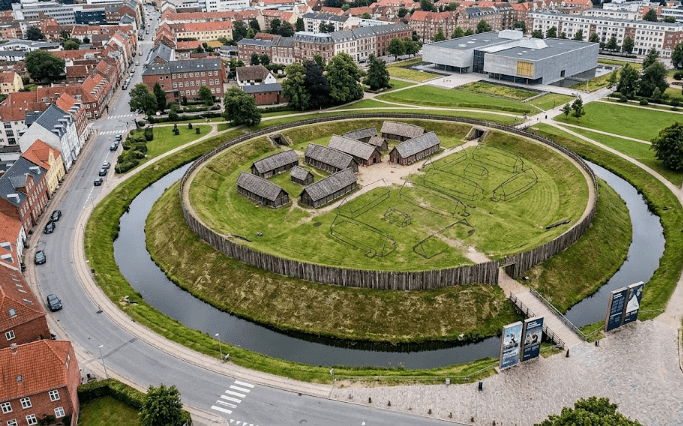
VikingFortress

Why A Hidden Fortress Is Hard To Explain

A hidden fortress is hard to explain because visitors cannot simply walk along complete ramparts and understand the structure. VisitDenmark says visitors can still notice the now-smoothed castle mound, where the Odd Fellow Lodge stands today, along with some other traces in the terrain. Other parts of the fortress survive well but remain hidden under the modern city.

This creates a public-history challenge. A famous monument that sits mostly underground needs careful interpretation. Information boards, exhibitions, urban markers, maps, light installations, and walking routes must help people imagine the fortress without inventing more than the evidence supports.

Modern city life can easily swallow archaeological meaning. Roads, buildings, pavements, schoolyards, and lodges make the old ring hard to perceive. Yet that difficulty also makes Nonnebakken unique. It shows how Viking heritage can survive beneath urban life rather than outside it.

Odense’s task is not to remove the city from the monument. The city has to make the monument understandable inside the city.

Why The Fortress Was Not Really Lost

Nonnebakken was hidden, but it was not simply lost. VisitDenmark notes that recent archaeological excavations have uncovered new and groundbreaking knowledge. Contrary to earlier views, large parts of the Viking castle appear well preserved under the modern pavements.

This point is important because the phrase “hidden fortress” can sound like a romantic mystery. The better story is archaeological. Scholars have known Nonnebakken from historical maps, earlier investigations, and modern excavations. Recent work has changed how well researchers understand its preservation.

Museum TID’s Nonnebakken exhibition page states that the fortress had an outer diameter of 180 meters, a 9-meter-wide moat, and an approximately 15-meter-wide rampart that may have stood up to 5 meters high, with wooden cladding on the front and back. Much of the structure now lies hidden beneath central Odense, but archaeologists have excavated parts of it.

Those dimensions help make the invisible visible. A hidden ring can still be measured, mapped, and explained.

Why Urban Archaeology Makes Nonnebakken Different

Urban archaeology makes Nonnebakken different because every interpretation must deal with modern use. UNESCO says urban fabric covers Nonnebakken entirely. VisitOdense calls it the only one of Harald Bluetooth’s five ring fortresses located in the center of a vibrant city, with part of the surrounding earthworks still visible but much of the fortress preserved underground.

That urban setting changes what preservation means. At rural ring fortresses, visitors may expect open views, reconstructed lines, or visible earthworks. At Nonnebakken, preservation often means keeping archaeological layers safe beneath later structures.

This makes Nonnebakken a modern planning story as well as a Viking story. Cities need schools, roads, cultural buildings, utilities, and public spaces. Ancient monuments need protection, research, and interpretation. Nonnebakken sits where those needs overlap.

The site therefore asks a practical question: how can Odense grow as a modern city while respecting one of its oldest power structures?

Why UNESCO Recognition Matters

UNESCO recognition matters because it gives Nonnebakken a global heritage frame. The World Heritage listing includes Aggersborg, Fyrkat, Nonnebakken, Trelleborg, and Borgring as a serial property. UNESCO’s decision states that the fortresses occupied strategic positions near important land and sea routes, used a uniform and precise geometric design, and connected directly with Harald Bluetooth’s state-building ambitions.

This recognition changes how Odense can present Nonnebakken. A local hidden monument becomes part of an international argument about Viking Age military architecture, royal power, state formation, and late tenth-century transformation.

Yet UNESCO status also raises responsibility. The listing does not make Nonnebakken easier to see. It makes interpretation more urgent. The city must explain why something mostly underfoot belongs to world heritage.

That is why the 2026 exhibition matters. It gives the public a current place to learn the fortress story before walking the modern streets above it.

How The Exhibition Turns A Buried Site Into A Visitor Experience

The “Odense’s Viking Fortress” exhibition turns a buried site into a visitor experience by moving from invisible archaeology to objects, narrative, and city interpretation. VisitOdense says visitors will gain insight into Viking Age power structures and see why Nonnebakken remains relevant today. The listing also says the exhibition gives visitors facts and stories that can help them continue their own journey to the places where the fortresses once stood.

That wording matters because a museum cannot replace the site. It can prepare people to read it. A visitor may start at Museum TID, learn the fortress dimensions, understand Harald’s network, see finds and interpretation, then walk toward the hidden ring in central Odense with better eyes.

This is the strongest modern city angle. Nonnebakken is not only preserved underground. Museum space, signage, routes, and urban memory now translate it for modern visitors.

A fortress that cannot fully rise again can still become visible through interpretation.

Why Odense’s Viking Story Is Bigger Than One Fortress

Odense’s Viking story is bigger than one fortress. VisitOdense’s “Life in the City” exhibition page says its story of the city begins in the Viking Age, where visitors learn how Harald Bluetooth built Nonnebakken by the Odense River and where Cnut the Holy, Denmark’s last Viking king, was killed in St. Alban’s Church.

This matters because Nonnebakken sits inside a wider urban transformation. The fortress belongs to Harald Bluetooth’s late tenth-century power network. Cnut the Holy’s death in 1086 belongs to a later moment when Odense had become part of Christian royal and ecclesiastical history. The city’s medieval development adds still more layers.

A good article should not collapse those layers into one “Viking city” scene. Instead, Nonnebakken should be treated as an early monument within a longer urban story. Odense’s development continued through royal, religious, commercial, and civic changes.

That is why the fortress works as a modern city story. It marks a beginning, not the whole history.

Why Nonnebakken Connects Power And Trade

Nonnebakken connects power and trade because ring fortresses controlled movement. UNESCO emphasizes their strategic positions near major land and sea routes. VisitDenmark says the ring castles helped dominate the interior and defend against external opponents. In Odense, the fortress stood near the Odense River and beside a settlement that later grew in importance.

This makes Nonnebakken relevant beyond military architecture. A fortress beside a town could monitor traffic, signal royal authority, organize resources, and shape access to people and goods. Harald Bluetooth’s network was about more than walls. It was about controlling a kingdom in motion.

Old Norse News has explored how Viking Age trade and expansion depended on routes, markets, silver, ships, and power. Nonnebakken adds a strong Danish example of how royal infrastructure could intersect with movement and urban development.

The fortress makes trade feel political.

Why The Finds Matter

The finds matter because they help make Nonnebakken more than a plan on a map. UNESCO’s gallery identifies a circular filigree brooch, 6.2 centimeters in diameter, found at Nonnebakken as part of a hoard with hacksilver and coins.

That object does not explain the whole fortress. However, it reminds visitors that archaeological sites contain personal and portable histories as well as architecture. A fortress required earth, timber, geometry, and labor. Its human story also appears through brooches, coins, silver, tools, waste, postholes, and other traces.

Museum interpretation needs both levels. The large ring shows royal ambition. The smaller finds show people, wealth, use, loss, and deposition. Together, they make the hidden fortress easier to imagine.

Nonnebakken’s modern city story works best when visitors understand both the monumental and the human scale.

Why The Ring Form Still Matters

The ring form still matters because it shows controlled design. UNESCO says the ring fortresses used a uniform, precise, geometric, scalable design. The structures included circular ramparts, four gateways close to the cardinal points, ditches, axial streets, ring streets, and rows of longhouses arranged in quadrants in most cases.

This design was not accidental. It signaled order. A ruler who could command such geometry across several places could also command surveyors, builders, timber, labor, food supplies, and military organization.

At Nonnebakken, that order is harder to see today because the modern city covers the ring. Yet the form remains central to its meaning. Once visitors understand the circle, the moat, the rampart, and the planned interior, Odense’s streets become layered with an older geometry.

The ring is hidden, but it still organizes the story.

Why Nonnebakken Should Not Be Oversimplified

Nonnebakken should not be oversimplified as a simple “Viking castle.” That phrase helps visitors quickly understand the site, but it can hide complexity. Ring fortresses were not medieval stone castles. They were late tenth-century fortified royal structures with timber, earthworks, ditches, controlled entrances, and planned interiors.

Their exact day-to-day function also remains partly inferred. UNESCO says scholars can only infer the function of the fortresses, even though the network clearly testifies to state formation, military organization, and socio-political transformation. That caution is important.

A fortress can suggest soldiers, storage, control, administration, royal presence, defensive planning, or short-term mobilization. The evidence does not always reveal every activity that happened inside the walls.

Nonnebakken therefore needs interpretation that is confident about what is known and careful about what remains uncertain. That balance protects the site from fantasy.

Why The Modern City Is Part Of The Evidence

The modern city is part of the evidence because it explains why Nonnebakken looks the way it does today. UNESCO notes that above-ground elements of the fortresses have suffered decay, while urban fabric covers Nonnebakken. VisitDenmark says the mound has been smoothed out and that parts are hidden under modern pavements.

These modern changes do not erase the fortress’s importance. They define its public challenge. The site’s visibility problem is itself historical evidence of urban continuity, rebuilding, reuse, and changing priorities.

Odense did not freeze around Nonnebakken. It grew over it. That growth makes the fortress harder to see, but also more meaningful. The city’s oldest royal infrastructure now sits beneath a living urban center.

For readers, this changes the emotional response. Nonnebakken is not a ruin outside town. It is a buried layer inside everyday Odense.

Why Public Marking Matters

Public marking matters because invisible heritage needs signals. VisitOdense’s 2023 UNESCO announcement says Odense Municipality and Museum Odense marked the designation with a light installation titled “What was and what is.” The installation used 230 reflective flags to draw attention to what lies hidden beneath the ground.

That project name captures the whole Nonnebakken problem. “What was” is the tenth-century ring fortress. “What is” is the modern city. Public interpretation must hold both together.

Markers, museum displays, walking routes, and temporary or permanent installations cannot replace excavation. They can help residents and visitors sense the scale and location of a monument they might otherwise pass without noticing.

This is why Nonnebakken’s story is modern. The challenge is not only to preserve the past. It is to make the buried past legible in present-day public space.

Why Visitors Should Verify Before Making Big Claims

Visitors should verify several points before making big claims about Nonnebakken. First, the fortress belongs to Harald Bluetooth’s late tenth-century ring-fortress network, usually dated around AD 970–980. Second, it is part of a UNESCO serial property with Aggersborg, Fyrkat, Trelleborg, and Borgring.

Third, Nonnebakken is largely hidden under central Odense, even though parts remain visible or marked and archaeological deposits are preserved below ground. Fourth, visitors should not describe the site as a fully visible reconstructed fortress. Its modern interpretation depends on museum displays, urban markers, and archaeological evidence.

Finally, the fortress’s function should be discussed carefully. It clearly relates to royal power, state formation, military architecture, and route control, but the exact use of every internal space cannot be treated as certain.

Those limits make the site stronger, not weaker. They make it a serious archaeological story.

Why Nonnebakken Makes Odense A Modern Viking City Story

Nonnebakken makes Odense a modern Viking city story because the fortress survives as a hidden layer of urban identity. Harald Bluetooth’s builders created it as part of the royal ring-fortress network around the late tenth century. The fortress stood beside a settlement and near the Odense River. Later, the city grew above and around it.

Today, its meaning depends on how Odense explains what cannot be fully seen. Museum TID’s 2026 exhibition, UNESCO recognition, VisitOdense’s public interpretation, and ongoing urban heritage work all turn Nonnebakken into more than an archaeological feature. They make it a civic question.

How does a city remember a fortress beneath its pavements? How does world heritage live under schools, lodges, streets, and walking routes? How do visitors distinguish evidence from reconstruction when the monument’s strongest remains are underground?

Those questions are why Nonnebakken matters now. Odense’s hidden Viking fortress is not only a story about Harald Bluetooth’s power. It is a story about how modern cities carry the Viking Age underfoot.
Posted in Mythology & Culture, Norse History & Archaeology | Comments Off on Why Nonnebakken Makes Odense’s Hidden Viking Fortress A Modern City Story

Why The Hörningsholm Hoard Makes Sweden’s Viking Silver Story A Legal Story Too

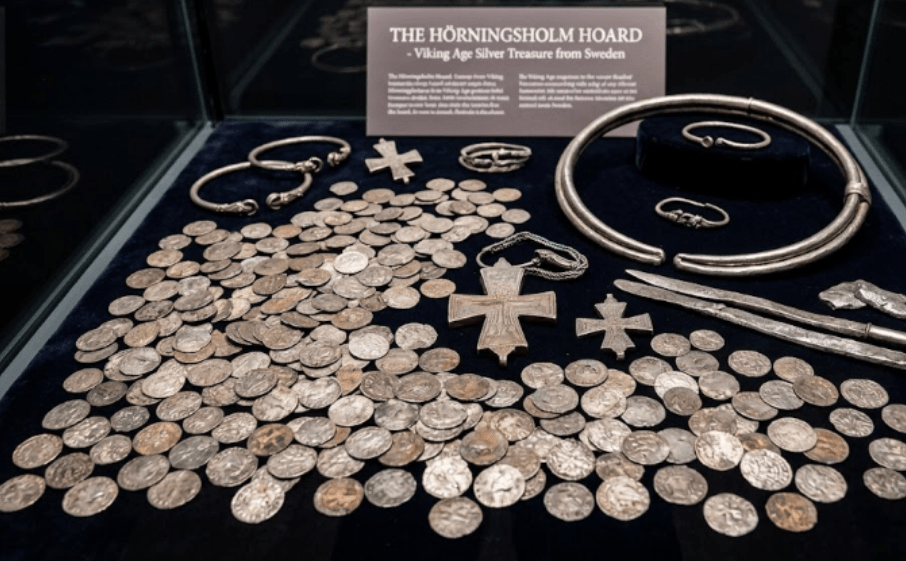
The Hörningsholm Hoard makes Sweden’s Viking silver story a legal story too because its importance does not stop at the coins. On May 21, 2026, Sweden’s National Heritage Board, Riksantikvarieämbetet, decided to redeem the hoard found at Hörningsholm 2:7 in Mörkö parish, Södertälje Municipality, for 4 million Swedish kronor. The hoard, discovered in August 2025, consists of about 24,100 silver coins and 144 other objects from the Viking Age and early medieval period. Riksantikvarieämbetet describes it as the largest coin hoard yet found in Sweden and says it has very high cultural-historical value because it can reveal new knowledge about early economy, long-distance contacts, and social structure in a period with limited written sources. (Riksantikvarieämbetet Hörningsholm decision)

Why The Hörningsholm Hoard Matters

The Hörningsholm Hoard matters because it sits at the boundary between treasure story, silver economy, and heritage law. A find of more than 24,000 coins naturally attracts attention as a spectacular discovery. Yet the 2026 redemption decision shows that Sweden treats such finds as public knowledge, not only as private luck.

The hoard includes mostly silver, along with gilded objects and a few gold objects. Riksantikvarieämbetet reports that the material is generally in good condition. The find also contains an unusually large number of rare bishop’s coins, which makes it especially valuable for studying early medieval coinage and authority.

For oldnorsenews.org readers, the careful wording matters. The hoard belongs to the Viking Age and early medieval transition, not to a simple “Viking treasure” category. It contains objects from a period when Scandinavia was moving from weight-based silver exchange toward more organized coin economies, royal minting, church authority, and legal systems that later shaped how such finds are handled today.

How The Discovery Began

Stockholm County Administrative Board first reported the find publicly on September 18, 2025. A private person found the unusually large and well-preserved silver hoard in the Stockholm area while digging for fishing worms near a summer cottage. The finder reported the discovery to the County Administrative Board, and archaeologists then began examining both the findspot and the coins, beads, rings, pendants, and other objects.

At that first stage, the hoard was described as weighing about six kilograms. It consisted largely of silver coins, together with silver rings, pendants, and beads deposited in a copper cauldron. Sofia Andersson, antiquarian at Stockholm County Administrative Board, described it as probably one of Sweden’s largest silver hoards from the beginning of the Middle Ages.

The later National Heritage Board decision refined the public numbers. Instead of the early estimate of up to 20,000 coins, the final count became about 24,100 silver coins and 144 other objects. That difference shows why early archaeology reporting needs caution. First announcements can be accurate in broad outline while later documentation improves the detail.

Why The Legal Response Is Part Of The Find

The legal response is not a side note. It is part of the find’s historical value. Riksantikvarieämbetet states that the finder reported the discovery to the County Administrative Board as soon as possible and thereby fulfilled her legal obligations. That quick report allowed authorities to document, study, preserve, and eventually redeem the hoard.

Swedish law treats many ancient finds differently from ordinary lost property. Riksantikvarieämbetet explains that finds from prehistoric or older times, generally before 1850, must be reported when they lack an owner and meet certain conditions. If a find consists wholly or partly of gold, silver, bronze, or another copper alloy, the finder must offer it to the state for redemption. The same applies when two or more objects appear to have been deliberately deposited together as a hoard.

That framework explains why the Hörningsholm Hoard became a legal case. It was silver. It was a deposited group. It had no modern owner. Its value depended on archaeology, not only metal.

Why Four Million Kronor Matters

The 4 million SEK redemption amount matters because it shows the balance Sweden tries to strike between rewarding responsible reporting and discouraging looting. Riksantikvarieämbetet’s 2026 decision explains that compensation must be reasonable. It should not disadvantage the finder, but it also should not rise so high that it encourages treasure plundering.

That point makes the hoard a legal and ethical story. Public heritage systems need cooperation from finders, landowners, museums, county authorities, and national agencies. If people believe reporting finds only brings trouble, archaeological evidence may vanish into private collections or illegal markets. If rewards become speculative jackpots, metal detecting and site disturbance can increase.

The Hörningsholm decision therefore sits in the middle. It recognizes the hoard’s exceptional cultural value while keeping the public purpose of the law visible. The state did not buy a luxury object. It redeemed evidence.

That distinction matters for every Viking and medieval silver hoard story.

Hörningsholm

Why Sweden’s Silver Story Needs Law

Sweden’s silver story needs law because silver hoards are vulnerable. Coins, rings, pendants, and hacksilver are portable, valuable, and easy to remove from context. Once separated from their findspot, they lose much of their archaeological meaning.

Riksantikvarieämbetet warns that cultural heritage crime deprives society of part of its history. It also states that metal detectors may not be used without permission and that finds of precious metal believed to be older than 1850 must be reported to the County Administrative Board. The agency also notes that it works with police and customs to monitor and combat illegal trade in ancient finds.

This matters for Hörningsholm because the hoard’s value comes from more than the silver itself. Its location at Mörkö, its container, its coin types, its object mix, and its relationship to early medieval society all depend on documentation.

A looted hoard becomes a pile of objects. A reported hoard becomes historical evidence.

Why The Hoard Is Not Just “Viking Treasure”

The title of this article uses “Viking silver story,” but the evidence requires precision. Stockholm County Administrative Board described the hoard as early medieval and said the silver coins date mainly to the 1100s. Some coins carry the text KANUTUS, the Latin form of Knut, and belong to the reign of King Knut Eriksson in Sweden in the late 1100s.

Riksantikvarieämbetet’s later decision says the hoard contains objects from the Viking Age and early medieval period. That means the find helps explain a transition rather than a single era. It carries Viking Age silver traditions forward into a world of kings, bishops, coinage, and changing institutions.

That transitional character is the best reason to cover it on oldnorsenews.org. The Viking Age did not simply end overnight. Silver habits, trade routes, stored wealth, precious-metal objects, and old deposition practices continued to shape early medieval Scandinavia.

The Hörningsholm Hoard therefore complicates period labels. It asks readers to think across the Viking-to-medieval boundary.

Why Bishop’s Coins Change The Story

The bishop’s coins are one of the most important details. Stockholm County Administrative Board reported that several coins were unusual bishop’s coins, meaning coins made for a bishop. Some show a bishop holding a crozier in the right hand. Riksantikvarieämbetet later emphasized that the hoard contains an unusually large number of rare bishop’s coins.

That matters because bishop’s coins bring church authority into the silver story. Viking Age silver hoards often make readers think of raids, trade, Islamic dirhams, English pennies, and weighed hacksilver. Bishop’s coins point toward a later institutional world, where church power, royal power, minting rights, and local economies were becoming more formal.

The hoard therefore does not only show wealth. It shows authority stamped into metal. Coins can carry names, titles, symbols, buildings, bishops, kings, and regional identities.

A silver hoard with many bishop’s coins becomes a source for political and religious history, not only economic history.

How The Hoard Connects To Viking-Age Silver Habits

The Hörningsholm Hoard also matters because it invites comparison with Viking Age silver habits. The Swedish History Museum explains that Viking Age payment often worked through weighed silver. Silver could appear as coins, jewelry, rods, pieces, and other objects. Value depended on weight and purity rather than fixed coin denominations. (Viking Age payment forms)

That system helps readers understand why coins and objects often appear together. A coin was not always treated as a modern coin. It could be bullion, ornament, pendant, payment, or raw material. People could cut silver to adjust weight, test purity, or melt it for new objects.

The Hörningsholm Hoard belongs later than many classic Viking Age hoards, but its mixture of coins and objects echoes older silver practices. It also shows what changed. By the 1100s, coins connected more strongly to named rulers, bishops, and institutions.

The hoard therefore shows continuity and transformation in one deposit.

Why The Copper Cauldron Matters

The copper cauldron matters because it gave the hoard a container and deposition context. Stockholm County Administrative Board reported that the silver coins, rings, pendants, and beads had been placed in a copper cauldron. The objects were mostly well preserved, although the cauldron itself was in poorer condition.

A container changes how archaeologists read a hoard. Loose objects scattered in soil tell a different story from objects deliberately placed in a vessel. A cauldron implies collection, storage, concealment, and perhaps a single act of deposition.

The container also strengthens the legal and archaeological case. The hoard was not merely a group of stray coins. It was a deposited assemblage. Swedish law specifically treats grouped finds, or depot finds, as reportable when two or more objects appear to have been deliberately placed together.

The copper cauldron therefore connects everyday material, legal definition, and historical interpretation.

Why Mörkö Adds Geography To The Silver Story

Mörkö adds geography to the silver story. The National Heritage Board identifies the property as Hörningsholm 2:7 in Mörkö parish, within Södertälje Municipality. That places the hoard in the Stockholm region, not on Gotland or at a famous Viking trading center.

This matters because Swedish silver history often highlights Gotland’s hoards, Sigtuna’s coinage, Birka’s trade, and major museum finds. Hörningsholm reminds readers that large hoards can also emerge from landscapes that do not dominate popular Viking maps.

Mörkö’s position near waterways and the wider Mälaren region gives the hoard a plausible connection to movement, exchange, and regional wealth. However, the source material does not yet allow a detailed reconstruction of the depositor’s identity, route, or reason for burial.

The safest interpretation is geographic but cautious. The hoard places a major silver deposit in the Stockholm region and adds new evidence for early medieval economy there.

Why The Findspot Was Initially Withheld

Stockholm County Administrative Board initially avoided naming the exact findspot while archaeologists examined the site. That caution should be understood as heritage protection, not secrecy for its own sake.

Precise locations can attract unauthorized digging, metal detecting, and disturbance. A hoard site may contain more evidence than the visible objects first found. It may preserve soil stains, container remains, scattered coins, traces of digging, nearby features, or other archaeological context.

The County Administrative Board’s decision to withhold the location during investigation fits the same legal logic that later shaped the redemption decision. Finds are not only things. They are part of protected contexts.

Readers should take this as a practical lesson. Responsible heritage reporting sometimes means delaying public detail so archaeologists can protect the evidence.

Why The Hoard Changes The “Largest” Question

The word “largest” needs careful handling. Riksantikvarieämbetet calls Hörningsholm the largest coin hoard yet found in Sweden. That does not necessarily mean the largest silver hoard by weight, largest Viking Age hoard, or largest treasure by market value. It means the largest coin hoard by the agency’s current assessment.

This distinction matters because hoards can be ranked in different ways: number of coins, weight of silver, number of objects, cultural value, chronological span, rarity of types, or research potential. Hörningsholm’s importance comes especially from coin count, object mix, preservation, rare bishop’s coins, and legal handling.

The Swedish History Museum’s pages on Viking hoards also show how different hoards can matter for different reasons. Gotlandic hoards, imported coins, hacksilver, pendants, and bullion all tell different parts of the silver story.

Hörningsholm does not replace those stories. It adds a new legal and early medieval chapter to them.

Why This Connects To Old Norse Silver Trade

The Hörningsholm Hoard also connects with the wider Old Norse silver trade because Scandinavian silver moved through several systems over time. Earlier Viking Age networks brought silver from Islamic, Byzantine, English, German, and other sources into northern Europe. Later Scandinavian coinage and church-linked coins added new authorities to the metal economy.

Old Norse News has covered how Viking Age trade and expansion depended on ships, markets, routes, commodities, and silver. Hörningsholm adds a later question: what happens when older silver traditions meet stronger royal and ecclesiastical institutions?

That question is more useful than calling the hoard simply “Viking treasure.” The hoard’s importance lies in transition. It shows silver at the point where weight, coinage, hoarding, church authority, royal naming, and legal heritage all intersect.

The silver story becomes bigger when law enters it.

Why The Finder’s Role Should Be Treated Carefully

The finder’s role should be treated carefully because responsible reporting protected the hoard’s knowledge value. Riksantikvarieämbetet says the finder reported the find as soon as possible and fulfilled what the law required. Stockholm County Administrative Board also praised the finder’s correct action in contacting authorities.

That does not mean every article should turn the finder into the main character. The finder acted responsibly, and the compensation decision recognized the legal process. Yet the hoard belongs to a wider public story involving archaeologists, county officials, national heritage staff, legal rules, conservation, documentation, and future research.

This balance matters. Public praise for responsible reporting can encourage good behavior. At the same time, heritage coverage should not romanticize treasure hunting, unauthorized detecting, or accidental disturbance.

The best lesson is simple: report finds quickly, leave context intact when possible, and let specialists document what the objects cannot explain alone.

Why The Hoard Does Not Prove Too Much

The Hörningsholm Hoard does not prove who buried it. It does not identify a named bishop, trader, landowner, king, or church institution as the depositor. It does not yet explain why the hoard entered the ground. It also does not prove one single crisis, raid, tax event, or family emergency.

The evidence supports more careful claims. The hoard was found in August 2025 at Hörningsholm 2:7 in Mörkö parish. It contains about 24,100 silver coins and 144 other objects from the Viking Age and early medieval period. Many coins date mainly to the 1100s, including Knut Eriksson-period examples and rare bishop’s coins. The state redeemed it in 2026 for 4 million SEK.

Those facts are strong enough. The hoard does not need a dramatic invented motive. Its real value lies in what it can reveal after full documentation and specialist study.

A responsible article should leave room for future analysis.

Why Future Research Matters

Future research matters because a hoard of this size can produce many different kinds of knowledge. Numismatists can identify coin types, mints, rulers, bishops, die links, circulation patterns, and chronological limits. Archaeologists can study deposition, container remains, object arrangement, and site context. Conservators can examine wear, corrosion, gilding, and traces of use.

The rare bishop’s coins may be especially important. If researchers can identify where and when they were struck, the hoard may clarify church-linked minting, ecclesiastical authority, and regional circulation in early medieval Sweden and Europe.

The object mix also matters. Rings, pendants, beads, gilded objects, and gold items can show how silver wealth coexisted with ornament, display, and stored value. Some objects may have long biographies before deposition.

The hoard is therefore not finished as a news story. It is beginning as a research archive.

Why This Is A Legal Story Too

The Hörningsholm Hoard makes Sweden’s Viking silver story a legal story because every stage depended on rules. The finder reported the discovery. The County Administrative Board investigated and protected the site. Riksantikvarieämbetet assessed the find and decided on redemption. Swedish heritage law defined why the hoard had to be offered to the state and how compensation could work.

That legal chain is not separate from history. It is what allowed the history to survive.

Without reporting, the hoard could have become anonymous silver. Without documentation, the copper cauldron, object mix, and find context could have lost meaning. Without compensation rules, responsible finders might feel punished. Without anti-looting concerns, high rewards could create new risks for buried archaeology.

The Hörningsholm Hoard therefore teaches two lessons at once. It reveals early economy, long-distance contacts, bishop’s coins, and changing silver use. It also shows why law, ethics, and public responsibility shape what modern readers can learn from the Viking and early medieval past.

Posted in Literature & Texts, Mythology & Culture, Norse History & Archaeology | Comments Off on Why The Hörningsholm Hoard Makes Sweden’s Viking Silver Story A Legal Story Too

Why Gamla Uppsala’s Norrhögen Keeps Rewriting Sweden’s Royal Mound Story

Gamla Uppsala’s Norrhögen keeps rewriting Sweden’s royal mound story because it shows that even one of Scandinavia’s most famous monument landscapes is still not archaeologically finished. Sweden’s National Heritage Board lists Archaeology Day at Gamla Uppsala Museum for Sunday, August 30, 2026, from 11:00 to 17:00, with guided tours in the ancient monument area, mound climbing, and archaeology activities for children. The key new hook comes at 13:00, when Upplandsmuseet archaeologist Malin Lucas will discuss the sudden discovery of a new mound, Norrhögen. At 12:00, archaeologist Per Frölund will speak about excavations of Kungsgårdsplatån, the royal estate plateau. Together, those two tours turn Gamla Uppsala from a familiar royal-mound landscape into an active research site.

Why Norrhögen Matters Now

Norrhögen matters because Gamla Uppsala has often been treated as if its story were already known: three great mounds, royal legends, pagan memory, and later Christian transformation. The 2026 program challenges that comfortable summary. A newly identified mound means the monument landscape still contains surprises, even after generations of scholarship, excavation, survey, and public interpretation.

The National Heritage Board’s event listing does not yet publish a full technical report on Norrhögen. That limitation matters. The find should not be turned into a named royal grave, a new saga figure, or a solved mystery. Its importance is more careful and more interesting. It reminds readers that Gamla Uppsala’s royal mound story depends on ongoing fieldwork.

For oldnorsenews.org readers, the strongest angle is not “a lost king has been found.” The stronger claim is that a famous landscape can still change when archaeologists identify another mound within its monument system.

Why Gamla Uppsala Is Not A Solved Site

Gamla Uppsala is not a solved site because it combines excavated mounds, unexcavated features, lost or damaged burial grounds, settlement traces, church history, written tradition, and modern museum interpretation. Upplandsmuseet describes Gamla Uppsala as a place where a rich Iron Age society existed around the Uppsala mounds. The museum says a royal estate stood there, and the Svear gathered there to worship their gods. The site kept religious importance long after Sweden became Christian. (Gamla Uppsala ancient monument area)

That layered history creates a problem. Visitors often want one clean answer: who was buried there, what temple stood there, and which kings ruled there. Archaeology rarely gives such neat answers. Instead, Gamla Uppsala offers partial evidence from different centuries.

Norrhögen fits that pattern. It adds a new feature to an old question: how did power, burial, ritual, and memory work together at Sweden’s most famous royal mound landscape?

Why The Royal Mounds Need Caution

The three great mounds remain central to public memory, but they also require caution. Upplandsmuseet explains that myths long claimed the mounds held ancient pagan gods, while others thought they were natural hills. In 1846, then national antiquarian Bror Emil Hildebrand excavated the mound traditionally called “Odin’s mound,” now known as Östhögen, or the East Mound. On September 15, the excavation reached the center and found a stone cairn.

That work proved the mound was a grave. However, the finds were fragmentary: burned bones and pieces of grave goods. In 1874, Hildebrand excavated Västhögen, or the West Mound, which also contained a cremation grave. Upplandsmuseet states clearly that we do not know who was buried in the Uppsala mounds, although the people were certainly important and elevated.

That statement should guide every new mound story. Norrhögen may reshape the landscape, but it should not be forced into an invented royal identity.

How Norrhögen Changes The Visitor’s Map

Norrhögen changes the visitor’s map by reminding people that the visible monument landscape is only part of what once existed. A mound can disappear through ploughing, erosion, landscaping, roadwork, church use, or later settlement. Sometimes archaeologists identify a feature not because it looks spectacular today, but because survey, excavation, maps, or soil traces reveal what the ground once held.

That point matters at Gamla Uppsala. Upplandsmuseet’s 2026 book-launch page for “Från hallar till fynd i Gamla Uppsala” says the new book presents insights from the last 20 years of research. It also says archaeologists discuss the royal hall, the newly found north mound, and new excavation finds.

The same page states that Kungsgården in Gamla Uppsala was surrounded by up to 70 farms during the Younger Iron Age. In Mälardalen, only Birka and Sigtuna were larger. That context makes Norrhögen part of a much bigger political landscape.

Why Kungsgårdsplatån Belongs In The Same Story

Kungsgårdsplatån belongs in the same story because royal mounds cannot be understood without the royal estate. The 2026 Archaeology Day program pairs Malin Lucas’s Norrhögen tour with Per Frölund’s tour on excavations of Kungsgårdsplatån. That pairing is important. It encourages visitors to read burial monuments and settlement evidence together.

A mound can display ancestral power. A royal estate can organize living power. A hall can host feasting, assemblies, ritual, diplomacy, and elite hospitality. Workshops and economy buildings can show how authority depended on food, craft, storage, and labor. Together, these features make a political center visible.

The Journal of Archaeology and Ancient History article by John Ljungkvist and Per Frölund describes Gamla Uppsala as a center and magnate complex. It connects individual mounds, the great hall, workshops, economy buildings, fences, paved courtyards, post-row monuments, landscape development, and resource use.

Norrhögen matters most when readers place it inside that wider complex.

Why The Last 20 Years Of Research Matter

The last 20 years of research matter because Gamla Uppsala has moved beyond a monument-only story. Older public summaries often focused on the three mounds and later written legends. Newer work places those mounds beside halls, farms, workshops, post rows, paved areas, and settlement organization.

Upplandsmuseet’s 2026 book-launch notice names the editors of the new volume as archaeologists Torun Zachrisson of Upplandsmuseet, Charlotte Hedenstierna-Jonson of Uppsala University, and John Ljungkvist of Uppsala University. That editorial team matters because it signals a research conversation across museum and university contexts.

The same notice states that thousands of graves once existed near Kungsgården, but only the Högåsen grave field remains preserved, including the Uppsala mounds. This gives Norrhögen a sharper role. A newly found mound may help researchers understand a damaged and partly lost burial landscape.

Why One Mound Can Change A Royal Landscape

One mound can change a royal landscape because mound placement creates relationships. A mound is not only a burial cover. It can define sightlines, cluster with other graves, mark a route, frame a hall area, or connect a living estate with ancestral memory.

If Norrhögen belongs to the broader Gamla Uppsala monument system, it may help archaeologists rethink how the preserved and lost grave fields were organized. It may also affect how visitors understand movement through the ancient area. A newly recognized mound can shift the center of attention, change the perceived edges of a cemetery, or suggest that the known royal landscape was larger and more complex than the present surface implies.

That is why Norrhögen should not be judged only by size. Its position, date, construction, relation to other monuments, and relationship with Kungsgårdsplatån may matter more than its visual drama.

Why “Royal” Does Not Mean Named Kings

The word “royal” needs care at Gamla Uppsala. The site clearly belonged to elite power, but archaeology does not identify the people buried in the great mounds by name. Upplandsmuseet says the grave occupants remain unknown. The East Mound included remains of a helmet and fragments of gold objects. The West Mound included remains of a goshawk, probably a trained hunting bird, a sign associated with the absolute upper class of the period.

These details support elite status, not a full royal genealogy. Later texts and traditions may point toward famous names, gods, or legendary dynasties, but the archaeological evidence must stand separately.

That caution should apply to Norrhögen as well. A new mound near a famous royal center does not automatically become a king’s tomb. It becomes a new archaeological question.

This distinction protects the article from sensationalism. It also makes the discovery more useful for readers who want evidence, not legend.

Why The 500s Still Shape The Story

The 500s still shape the story because Upplandsmuseet describes Gamla Uppsala as a major political and religious center already in that century. The museum’s main page says Gamla Uppsala is one of Scandinavia’s most interesting visitor sites and that an important political and religious center existed there from the 500s.

The ancient monument page gives more detail. It says the settlement stood at its peak in the 500s, with skilled craftspeople, rich agriculture, a royal estate, and a feasting hall. It also notes that Adam of Bremen, writing in the 1000s, may have been inspired by such a hall when describing a pagan temple of gold.

That last point requires caution. Adam wrote later and from a Christian clerical perspective. The archaeology of halls and estates can support the importance of the site without treating every medieval written detail as literal fact.

Norrhögen belongs in this evidence-first framework.

Why Christian Transformation Adds Another Layer

Christian transformation adds another layer because Gamla Uppsala did not stop mattering after the Iron Age. Upplandsmuseet says much suggests that the first Christian church in Gamla Uppsala was built in the 1000s. In 1164, Sweden’s first archiepiscopal church was established on the same site near the royal estate. In 1270, the archbishop’s seat moved to Östra Aros, which became modern Uppsala.

This timeline matters because royal mound landscapes can change meaning. A site can begin as an Iron Age political and ritual center, become a Christian ecclesiastical center, then become a heritage landscape. Each phase can reshape how people view earlier monuments.

Norrhögen does not only add a burial question. It also enters a landscape that later Christianity reinterpreted, preserved, built over, and memorialized.

That long use makes Gamla Uppsala difficult. It also makes it historically rich.

Why Public Access Matters In 2026

Public access matters in 2026 because the Archaeology Day program turns research into a shared event. The National Heritage Board lists mound climbing at 11:30 and 16:00, Per Frölund’s Kungsgårdsplatån tour at 12:00, Malin Lucas’s Norrhögen tour at 13:00, a children’s archaeology school at 14:00, and an English guided mound tour at 15:00.

This program does more than entertain. It teaches that archaeological landscapes require explanation. Visitors can see the mounds, but they need context to understand what is excavated, what is inferred, what is lost, and what remains uncertain.

The listing gives the location as Gamla Uppsala Museum, Uppsala, with coordinates 59.897784, 17.633641. It also notes the address Disavägen 15, 754 40 Uppsala in the accessibility section. Those details help readers treat the topic as a real public heritage moment, not just an abstract research update.

Why Norrhögen Helps Correct Viking-Age Shortcuts

Norrhögen helps correct Viking-Age shortcuts because Gamla Uppsala’s importance crosses period boundaries. The site was central before, during, and after the Viking Age. Upplandsmuseet frames it through Vendel and Viking Age history, while the research article by Ljungkvist and Frölund emphasizes a 6th- to 8th-century estate, a Migration Period prelude, and transformations in the 8th and 9th centuries.

That timeline matters. Gamla Uppsala’s royal mound story is not only a Viking story. It is also a Vendel Period and late Iron Age story. The Viking Age inherited many forms of power that older elite centers had already developed: halls, mounds, craft zones, farms, processional landscapes, and ritual memory.

Old Norse News has covered how Scandinavian power often appears through high seats and authority beyond ships and raids. Norrhögen fits that broader theme. It shows power through land, burial, memory, and monument placement.

Why Visitors Should Avoid The “Three Mounds Only” View

Visitors should avoid the “three mounds only” view because that version of Gamla Uppsala compresses a complex site into a postcard. The three great mounds matter enormously, but they never stood alone in social meaning. They belonged to a landscape with many graves, farms, a royal estate, hall buildings, roads, later church structures, and changing ritual memory.

Upplandsmuseet’s book-launch page says thousands of graves once lay near Kungsgården, with only the Högåsen grave field preserved today. That point is essential. What visitors see is not the whole ancient landscape. It is the surviving part of a larger system.

Norrhögen makes this visible. A newly recognized mound challenges the assumption that the known map is complete.

The site’s story therefore keeps moving from monument to landscape. That is the right direction for modern Viking and late Iron Age interpretation.

Why Earlier Excavations Still Shape New Questions

Earlier excavations still shape new questions because archaeologists now return to old finds with new methods, better mapping, and stronger landscape thinking. Upplandsmuseet’s 2024 report list includes “Undersökningar på Kungsgården 2015. Gamla Uppsala – framväxten av ett mytiskt centrum”, authored by Per Frölund, Joakim Kjellberg, and John Ljungkvist, with a separate appendix volume edited by Frölund. (Upplandsmuseet Reports 2024)

Those reports matter because they show how current interpretation builds from documented fieldwork. Norrhögen enters a research environment where archaeologists already connect settlement, monuments, halls, and social organization.

This is why the 2026 tour schedule works so well. Per Frölund’s Kungsgårdsplatån tour and Malin Lucas’s Norrhögen tour belong together. One focuses on the elite estate; the other focuses on a newly recognized mound. The royal story sits between them.

What Norrhögen Does Not Prove Yet

Norrhögen does not prove the name of a buried person. It does not prove a new royal dynasty, a lost temple, or a hidden saga episode. It also does not by itself rewrite every interpretation of the three great mounds.

The current public evidence supports a more careful claim. Upplandsmuseet and the National Heritage Board have placed Norrhögen in the 2026 public archaeology program, and the museum’s 2026 book material treats the newly found north mound as part of recent Gamla Uppsala research. That is enough to make it important, but not enough to turn it into a solved royal grave.

The next questions should be practical. Where exactly does it sit in relation to the known mounds, grave field, hall area, and royal estate? How was it identified? How does it date? What survives of its construction? Does it belong to the same monument logic as the better-known mounds?

Those questions matter more than a dramatic label.

Why This Keeps Rewriting Sweden’s Royal Mound Story

Norrhögen keeps rewriting Sweden’s royal mound story because it reminds readers that royal landscapes are built from relationships, not from isolated monuments. The three great mounds remain central, but the royal story now has to include missing graves, newly found features, hall excavations, farm networks, Christian transformation, museum interpretation, and public archaeology.

Gamla Uppsala’s importance has never rested on one mound alone. It rested on a landscape where burial, ritual, rulership, agriculture, craft, memory, and later church power overlapped. Norrhögen matters because it adds another piece to that landscape and asks scholars to redraw the map carefully.

That is the best reason to follow the August 30, 2026 tours. They do not promise a final answer. They show archaeology in motion.

For oldnorsenews.org, the takeaway is clear: Sweden’s royal mound story is still being written in the ground. Norrhögen proves that even at Gamla Uppsala, one of Scandinavia’s most famous sites, the next important question may still be waiting just north of the story everyone thought they knew.

Posted in Mythology & Culture, Norse History & Archaeology | Comments Off on Why Gamla Uppsala’s Norrhögen Keeps Rewriting Sweden’s Royal Mound Story

How Ekeby’s 100–900 AD Houses And Graves Reveal The Long Road Into The Viking Age

Ekeby’s 100–900 AD houses and graves reveal the long road into the Viking Age because they turn a familiar date problem into an archaeological landscape. The Viking Age did not begin as a sudden social invention in AD 793 or with the first famous overseas raids. In eastern Bälinge, Uppland, a 2026 large-scale investigation at Ekeby shows a deeper sequence of farms, houses, graves, and local memory that runs from the Roman Iron Age into the Viking Age. Sweden’s National Heritage Board lists “Järnålder i Ekeby, Bälinge” for Archaeology Day on Sunday, August 30, 2026, from 11:00 to 12:00, at Nyodlarvägen, Bälinge, with coordinates 59.949657, 17.549892. The listing states that Arkeologerna/SHM will carry out a large-scale archaeological investigation of settlements and graves in Ekeby from August to October 2026, with house and grave types dated to AD 100–900. (Järnålder i Ekeby, Bälinge)

Why Ekeby Matters Now

Ekeby matters now because the 2026 excavation gives public visitors a rare chance to see an Iron Age site while the work is still in progress. The National Heritage Board’s event notice says the Archaeology Day tour will show the place and the finds that have emerged during the first month of investigation. That timing matters. Visitors will not only see finished museum interpretation; they will see archaeology while evidence is still being recorded, tested, and understood.

The site also matters because it sits in Bälinge, north of Uppsala, in a region where Iron Age settlement and burial landscapes shaped later Viking Age society. Ekeby does not need a famous ship burial or a royal saga to deserve attention. Its value lies in continuity. Houses and graves dating across AD 100–900 can show how communities changed over centuries before the Viking Age becomes visible in better-known historical narratives.

For oldnorsenews.org readers, this makes Ekeby a strong corrective. Viking history begins earlier than the first raid in an English chronicle. It begins in fields, longhouses, grave fields, tools, food production, family memory, and local settlement decisions.

What The 2026 Investigation Will Study

The August–October 2026 project will study both boplatser and gravar, meaning settlement areas and graves. The National Heritage Board states that the area contains different types of houses and graves dated to AD 100–900. That broad date range is the heart of the story. It stretches from the Roman Iron Age through later Iron Age phases and into the early Viking Age.

This is not a single “Viking village” frozen in one year. Instead, Ekeby appears as a long-use landscape. Archaeologists may be able to compare house forms, burial practices, activity areas, and material finds across many generations.

That kind of evidence matters because the Viking Age was not only a period of long-distance movement. It also rested on older farming communities. Farms supplied people, food, textiles, animals, iron tools, labor, and social organization. Without that base, ships and raids would make little sense.

Ekeby helps place the Viking Age back onto the land.

Why AD 100–900 Changes The Timeline

The date range AD 100–900 changes the timeline because it keeps readers from treating the Viking Age as a clean beginning. The Swedish History Museum describes the Nordic Iron Age as 500 BC–AD 1100, with the Viking Age as the final part of that long period, usually AD 800–1100. That means the earliest Ekeby evidence belongs many centuries before the conventional Viking Age, while the latest part overlaps its beginning.

That overlap is important. If houses and graves continued through the centuries before AD 800, then Viking Age society emerged from local Iron Age developments rather than appearing suddenly. People already farmed, raised animals, buried their dead, managed landscapes, built homes, and organized households.

A site like Ekeby can therefore show transition instead of rupture. It may reveal how settlement persisted, shifted, expanded, or reorganized as society moved toward the Viking Age.

The best question is not “When did Vikings arrive at Ekeby?” A better question asks how Iron Age communities at Ekeby created the conditions from which Viking Age life developed.

Why Houses Are More Than Building Remains

Houses are more than building remains because they preserve choices about daily life. A house plan can show where posts stood, how large a structure was, whether it belonged to a dwelling, workshop, byre, or outbuilding, and how people organized work across a farm. Even when wood has vanished, postholes, hearths, pits, floor layers, and activity traces can preserve the outline of human routines.

The Swedish History Museum explains that Viking Age farms often included a larger dwelling-house surrounded by smaller outbuildings. It also notes that farm appearance varied by region and settlement type. In one 9th-century farm example from Bjärred in Skåne, a house measured 21 meters long and 6.5 meters wide, with a hearth at the center and likely space for both people and animals.

Ekeby’s houses may not match Bjärred exactly. The comparison helps readers understand what archaeologists look for: scale, layout, posts, hearths, yards, outbuildings, and work areas. Houses make the Viking Age visible as lived space.

Why Graves Add A Second Line Of Evidence

Graves add a second line of evidence because they show how people remembered the dead, expressed identity, and marked belonging. Settlement remains tell researchers how people lived. Burial remains can show how communities commemorated people, handled bodies, displayed objects, and structured cemeteries.

The Swedish History Museum explains that Iron Age graves offer insight into lives, deaths, and beliefs about the afterlife. It notes that cremation was common, with humans and sometimes animals placed on the pyre with personal objects such as jewelry, combs, and weapons. Burned remains could then be scattered or collected in vessels and covered by stone settings or mounds. In the later Iron Age, inhumation graves and boat burials also occurred.

That broader context matters for Ekeby. A grave dated to AD 200 does not speak in the same way as a grave dated to AD 850. Changes in burial form, grave goods, cremation practice, or cemetery layout may reveal how local customs developed over time.

Houses show continuity in life. Graves show continuity in memory.

Why Ekeby Belongs To A Long Uppland Story

Ekeby belongs to a long Uppland story because earlier local research had already identified settlement and burial evidence in the area. Upplandsmuseet lists Per Frölund’s 2021 report, “Bosättning och gravar i Ekeby”, as an archaeological preliminary investigation of the site. In 2022, the museum also listed “Arkeologi i Bälinge-Ekeby. Boplatser, husgrunder och gravar”, another report by Per Frölund, focused on settlements, house foundations, and graves.

Those report titles matter because they show that the 2026 investigation does not come from nowhere. Ekeby has already been treated as a place where settlement and burial evidence deserve close study.

This is how archaeological knowledge builds. A preliminary investigation identifies potential. Later work expands the evidence. A public Archaeology Day event then gives visitors a chance to see how a research landscape becomes visible through excavation.

Ekeby’s 2026 story is therefore both new and cumulative.

Why Development Archaeology Matters Here

The Ekeby work also belongs to modern planning history. Uppsala Municipality’s detailed-plan page for Del av Bälinge-Ekeby 1:3 says the plan aims to allow a new primary school, sports hall, and after-school activities in Bälinge while ensuring that new development adapts to cultural-historical values and the landscape. The municipal page says the plan was adopted by the Planning and Building Committee on June 11, 2026, and that it was appealed on July 8, 2026.

That planning context matters because many important archaeological projects happen before construction, roads, housing, utilities, or public buildings. Development archaeology can sound bureaucratic, but it often produces crucial evidence.

At Ekeby, the modern need for a school intersects with an ancient settlement and burial landscape. That creates a practical question: how can communities build for the future while documenting the past?

The 2026 excavation sits directly inside that tension.

Why Arkeologerna/SHM’s Role Matters

Arkeologerna/SHM’s role matters because the National Heritage Board identifies Arkeologerna/SHM as the organization carrying out the large-scale investigation. Statens historiska museer describes Arkeologerna as Sweden’s leading consultancy in archaeology and cultural environment work, with more than 100 employees across offices in Hägersten, Uppsala, Linköping, Lund, and Mölndal. It also notes that specialists work in areas such as geoarchaeology, wood-species analysis, osteology, archaeobotany, historical map analysis, method development, digital documentation, battlefield archaeology, and archaeological prospection.

That range of expertise matters at a site like Ekeby. Houses and graves do not explain themselves. Postholes need mapping. Bones need osteological analysis. Charred seeds need archaeobotany. Soil layers need recording. Finds need conservation, dating, and comparison.

A 100–900 AD site can only reveal the long road into the Viking Age if specialists connect many kinds of evidence. The public may see trenches and finds. The deeper work happens through documentation, samples, measurements, and later analysis.

How A Settlement Can Show Social Change

A settlement can show social change by preserving the repeated rebuilding of everyday life. If houses appear in several phases, archaeologists can ask whether farms moved, expanded, contracted, changed layout, or shifted activity areas. If grave fields continue nearby, researchers can ask whether families stayed attached to the same land across generations.

This matters for Viking Age history because social change rarely arrives with one dramatic event. It grows through repeated choices. A community may change house forms, burial customs, land use, animal management, craft production, or social hierarchy long before outside sources name Vikings.

Ekeby’s long date range gives archaeologists a chance to study these changes in sequence. The site may show how older Iron Age communities gradually became the kind of society that later supported Viking Age travel, trade, and warfare.

That does not mean every Ekeby household became “Viking” in a seafaring sense. It means Viking Age society rested on communities like this.

Why Farming Sits At The Center

Farming sits at the center because most people in Iron Age and Viking Age Scandinavia lived from the land. The Swedish History Museum explains that life on a Viking Age farm followed the annual cycle of animals and fields: ploughing, sowing, harvest, moving livestock to and from pasture, and storing food and fodder for winter. It also emphasizes that most Viking Age life was lived on the farm and that the farm and its land stood at the center of both reality and worldview.

This point helps make Ekeby more important. Houses and graves dated to AD 100–900 do not only document where people lived and died. They document the long-term social base of Scandinavian history.

For Old Norse News readers, this connects directly with daily life during the Viking Age, where farming, household labor, food, buildings, and seasonal routines explain far more about most people’s lives than raids do.

The road into the Viking Age ran through farms first.

Why AD 100 Matters As Much As AD 900

AD 100 matters as much as AD 900 because early evidence can show what later communities inherited. Around the first centuries AD, the Roman Empire influenced areas far beyond its borders. The Swedish History Museum notes that Roman influence reached Scandinavia even though the empire never conquered it. It also says that from this period there are many remains of graves, settlements, and iron production sites.

That wider background helps explain why Ekeby’s earliest dates matter. A settlement dated to around AD 100 belongs to a world already shaped by farming, iron production, regional contacts, and shifting social rank. It is not a blank prehistory waiting for the Viking Age to begin.

If Ekeby’s earliest phases show houses, graves, or activity areas from this period, they can reveal how local communities organized themselves before later Viking Age forms appeared.

The Viking Age becomes more understandable when readers see the centuries behind it.

Why AD 900 Also Matters

AD 900 matters because it falls inside the Viking Age and near a period of major change across Scandinavia. By then, farms, trade centers, burial customs, political networks, and long-distance movement had developed in new ways. Ekeby’s later evidence may therefore help researchers compare older Iron Age local life with early Viking Age patterns.

However, readers should avoid assuming that AD 900 automatically means raiders, warriors, or overseas travel. A farm or grave from this period may show household continuity rather than dramatic outward expansion. That would still matter.

The Viking Age was not lived only in ships. It was lived in places like Ekeby, where people still farmed, buried relatives, repaired buildings, raised animals, and negotiated local status.

AD 900 matters because it links the familiar Viking Age to the older settlement sequence beneath it.

Why Graves Can Reveal Continuity And Breaks

Graves can reveal both continuity and breaks. If burial forms remain stable, researchers may see long-term local tradition. If forms change, they may see new beliefs, new contacts, new identities, or different ways of expressing status.

The Swedish History Museum notes that richly furnished graves became more visible from around 200 BC and that later Iron Age burial traditions included cremations, inhumations, and boat burials in different places. Ekeby’s graves may not include the spectacular examples known from Vendel, Valsgärde, or Tuna in Alsike. Yet ordinary graves can still answer important questions.

A modest grave can show age, cremation practice, object choice, cemetery placement, or community memory. Several graves together can show how people used the same burial ground over time.

This is why Ekeby’s graves matter. They can reveal how local communities handled death across the centuries leading into the Viking Age.

Why Houses Can Reveal Daily Work

Houses can reveal daily work because buildings organize labor. A dwelling-house centers food, heat, sleep, storage, and social life. Outbuildings can point toward animals, tools, craft, grain storage, or seasonal tasks. Pit-houses may suggest textile work or other crafts, depending on finds and context.

The Swedish History Museum’s Viking Age farm guide notes that craft activity such as spinning wool and weaving could take place indoors and that some pit-houses seem to have been used for craftwork or smithing. That broader pattern gives readers a way to understand why house remains at Ekeby matter even before all finds are published.

A posthole pattern may seem abstract. Yet it can reveal where a roof stood, where a hearth burned, where people worked, and where animals may have stayed in winter.

At Ekeby, houses can make the road into the Viking Age practical rather than legendary.

Why Early Finds Should Be Treated Carefully

The Archaeology Day listing says the event will show finds that have come out of the ground during the first month. That phrase is exciting, but it should also encourage caution. Early finds rarely tell the whole story. Objects need cleaning, registration, conservation, dating, and comparison before they can support strong claims.

This is especially important at a long-use site. A single object may belong to one phase, while another feature belongs centuries earlier or later. Without careful stratigraphy and dating, readers can easily blend AD 100, AD 500, and AD 900 into one false “Viking” scene.

Ekeby’s value lies in method. Archaeologists will need to separate phases, compare house types, examine grave forms, and test samples. Only then can the site show how the road into the Viking Age unfolded.

A good public article should therefore treat the 2026 event as a window into research, not as a solved story.

Why The Site Helps Correct Viking Stereotypes

Ekeby helps correct Viking stereotypes because it starts with houses and graves rather than raids. Popular Viking stories often begin at sea. Archaeology often begins in a field. That difference matters.

A settlement and burial landscape from AD 100–900 shows that Scandinavian history depended on long-term local communities. People built houses, managed animals, raised crops, buried the dead, adapted to climate, and maintained social ties. Those acts do not look as dramatic as a ship on the horizon, but they made later Viking mobility possible.

This does not erase warriors, trade, or overseas travel. Instead, it gives them a foundation. Ships needed timber, iron, food, textiles, rope, labor, and people trained by farm life and local organization.

Ekeby makes that foundation visible.

Why Public Archaeology Matters In Bälinge

Public archaeology matters in Bälinge because the 2026 tour lets local residents and visitors see how their landscape holds older histories. The National Heritage Board lists the event as a family-friendly guided tour and notes that the excavation area lies in eastern Bälinge. It also says visitors can reach the site by car or bus, with Nyodlarvägen as the bus stop and parking directly beside the excavation area.

Those practical details may seem minor, but they matter. Archaeology becomes more meaningful when people can connect a trench to a road, a bus stop, a planned school, and a familiar place name.

The event also helps explain why excavations take time. Archaeologists do not simply “find things.” They record evidence before modern change alters the landscape.

At Ekeby, public archaeology turns a development project into a shared historical lesson.

What Readers Should Verify Before Accepting Big Claims

Readers should verify several points before accepting dramatic claims about Ekeby. First, the current public listing supports houses and graves dated to AD 100–900, but it does not yet provide a full published interpretation of the August–October 2026 excavation. Second, the site should not be called a confirmed “Viking village” without stronger published results.

Third, AD 100–900 covers several phases of the Iron Age. The earliest evidence is not Viking Age, while the latest evidence overlaps the Viking Age. Fourth, early finds shown during Archaeology Day may change meaning after laboratory analysis and specialist review.

Finally, the planning context matters. This is not only a heritage-tour topic. It is also a case of modern community development intersecting with cultural-historical values.

Those limits make the topic stronger. They keep the story grounded in evidence.

Why Ekeby Reveals The Long Road Into The Viking Age

Ekeby reveals the long road into the Viking Age because it shows that Scandinavian society developed through centuries of local continuity and change. Houses record daily life. Graves record memory and social identity. Reports from Upplandsmuseet show earlier attention to settlement, house foundations, and graves in Bälinge-Ekeby. The 2026 Arkeologerna/SHM investigation now brings that landscape into a new public moment.

The site also helps readers understand the Viking Age as the last phase of a longer Iron Age, not a sudden historical break. The same land could hold early Iron Age settlement traces, later burial customs, and early Viking Age activity. That layering is exactly what makes Ekeby valuable.

For oldnorsenews.org, the lesson is practical. Viking history begins before the word “Viking” dominates the story. It begins in farms, houses, graves, fields, food storage, seasonal work, and inherited landscapes.

Ekeby’s 100–900 AD houses and graves do not simply point toward the Viking Age. They show the road that led there.

Posted in Mythology & Culture, Norse History & Archaeology | Comments Off on How Ekeby’s 100–900 AD Houses And Graves Reveal The Long Road Into The Viking Age

Why Anundshög Makes Viking-Age Power Visible In Mounds And Ship Settings

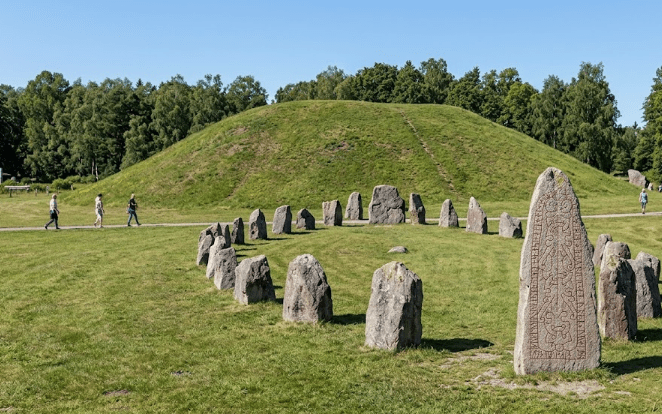
Anundshög makes Viking-Age power visible because its landscape turns authority into scale, alignment, road control, burial memory, and stone-built display. Sweden’s National Heritage Board lists Archaeology Day at Anundshög for Sunday, August 30, 2026, from 10:00 to 16:00, at Anundshög 5 in Västerås, with guided tours, lectures, family activities, excavation demonstrations, and Viking Age craft. The listing describes Anundshög as one of Sweden’s foremost ancient monument areas and identifies it as an important Iron Age power center. The large mound, ship settings, runestone road, grave field, and Badelundaåsen ridge together show why power in the Viking world was not only held by people. It was built into landscapes. (Archaeology Day at Anundshög)

Why Anundshög Matters Now

Anundshög matters now because the August 2026 Archaeology Day program gives visitors a public reason to look closely at how monumental landscapes communicated power. The site is not simply a large mound with a dramatic name. It brings together burial, movement, law, memory, and elite display in one of Sweden’s most visually powerful Iron Age settings.

The official Anundshög visitor site describes the area and Badelundaåsen as one of Sweden’s foremost ancient sites. It also says the countryside was a cultural center for western Mälardalen and one of the hubs of trade during the Viking Age. That wider context matters because a mound only becomes politically meaningful when it connects with roads, farms, gatherings, graves, and memory.

For oldnorsenews.org readers, the site offers a useful correction to a familiar Viking image. Ships mattered, but not only at sea. Stone ships, burial mounds, runestones, roads, and thing sites could make power visible without launching a fleet.

Why The Mound Dominates The Landscape

The great mound dominates the site physically and symbolically. The official Anundshög page calls it Sweden’s largest burial mound and gives its height as 9 meters with a diameter of 64 meters. The Swedish-language site gives the diameter as 64–68 meters. The grave itself has not been excavated, but dating of an underlying hearth suggests the monument was built sometime between the 5th and 11th centuries AD.

That broad date range matters. It prevents a too-simple claim that the mound belongs neatly to one named Viking king, one exact funeral, or one single political moment. The site instead belongs to a long Iron Age and Viking Age landscape where power accumulated over generations.

A mound of this size required organized labor. People had to gather material, shape the mound, control the site, and make the monument visible. That work itself expressed authority. A leader’s power did not only appear in the burial; it appeared in the ability to mobilize people to build.

Why Size Was A Political Language

Size worked as a political language at Anundshög. A large mound could be seen from a distance, remembered across generations, and used as a focal point for later meetings. It made the dead visible to the living and turned the landscape into a statement of rank.

The official site says the mound was built on a clay foundation. The burial was placed there, then covered with stones, turf, and earth. That construction sequence matters because it shows planning rather than accidental accumulation. Monumentality had to be engineered.

The mound also sits among other graves. The Anundshög page says the area contains a further 11 burial mounds and 10 round stone settings, while the ridge south of Anundshög includes another grave field with one mound, nine round stone settings, and one ship setting. This surrounding burial landscape suggests continuity, not a single isolated event.

Power at Anundshög was therefore cumulative. Each monument strengthened the impression that the place mattered.

How Ship Settings Extend The Power Display

The ship settings extend the power display by turning stone into movement. A ship setting uses raised stones arranged in the form of a ship. At Anundshög, the official site says there are five ship settings near the mound, and no other ancient monument area in Sweden has the same number of large ship settings.

The largest ship setting measures 53 meters long and 16 meters wide. The Swedish-language page adds that the neighboring large ship setting measures 51 meters long and 25 meters wide, while the three smaller ones measure 23, 28, and 35 meters. These are not background details. They show that the site used repeated forms at monumental scale.

A stone ship is not a boat. It cannot sail. Yet its shape could evoke travel, death, rank, seafaring identity, or elite symbolism. At Anundshög, the ship settings make the mound feel less like a static burial and more like part of a designed ceremonial landscape.

Why The Twin Ship Settings Matter

The twin ship settings matter because they help visitors read the landscape compositionally. Sweden’s National Heritage Board says the large mound and the twin ship setting form a grand monument unique in Sweden. The official Anundshög site also notes that the largest ship settings may have formed part of a composed monument, appearing to sail toward Anundshög.

That visual relationship is important. The stones do not simply sit near the mound. They direct attention. They make the mound part of a larger scene.

This gives Anundshög a different kind of power than a grave hidden under forest or ploughsoil. It uses sightlines, repeated stone forms, and large-scale arrangement to shape how people experience the place.

A visitor can stand near the ship settings and feel how the monuments guide the eye. That is the point. Viking-Age and late Iron Age power often worked through controlled visibility.

Why Stone Ships Should Not Be Read Too Quickly

Stone ships invite dramatic readings, but they need caution. The official Anundshög ship-setting page says such monuments may have symbolized real boats on the journey to the realm of the dead and may have been used as feasting places in honor of the deceased. It also notes that large ship settings probably communicated the power and strength of elite warships.

Those interpretations make sense, but they remain interpretations. A stone ship may refer to death travel, elite maritime power, ritual gathering, or social memory. It may also have carried more than one meaning at once.

The strongest reading begins with what survives. At Anundshög, five ship settings stand near a major mound in a dense grave and road landscape. Their scale and placement show that the ship form mattered. Their exact ritual meaning remains harder to recover.

That careful distinction helps protect Viking heritage from oversimplified myth.

Why The Runestone Road Adds A Human Voice

The runestone road adds a human voice to the landscape. The official Anundshög runestone page gives the inscription: “Folkvid raised all these stones after Heden, Anund’s brother. Vred carved the runes.” The site identifies Folkvid as a powerful man in Badelunda at the beginning of the 11th century and says he paid for the road past Anundshög and marked it with a row of standing stones. (Anundshög runestone)

This inscription changes the site’s story. It gives names: Folkvid, Heden, Anund, and Vred. It also links memory with infrastructure. Folkvid did not only commemorate a person. He marked a road, shaped movement, and placed his family memory along a major route.

The page also warns that Anund was certainly not the person buried in the large mound. The name was common in the 9th and 10th centuries, and the mound probably dates earlier, perhaps to the 6th–8th century. That caution matters because names can tempt readers into false certainty.

Why Roads Made Power Visible

Roads made power visible because they controlled movement. The Anundshög area sits on Badelundaåsen, about five kilometers east of Västerås. The official “About Anundshög” page describes the ridge road as one of the most important trade routes of the time. It connected the agricultural countryside on the Lake Mälar coast with forest districts to the north.

This road context is crucial. A mound in an isolated place speaks differently from a mound beside a major route. People passing along the ridge saw monuments, runestones, standing stones, and graves. They encountered a built message of authority.

The Anundshög Eriksgata page says the later royal route passed by the runestone and standing stones before crossing a stream. It also describes the hollowed road and monuments as one of the few visible remains in Sweden of a historic route traveled by powerful parties and kings.

Power at Anundshög therefore sat where people moved.

Why The Eriksgata Strengthens The Power Story

The Eriksgata strengthens the power story because it links prehistoric monuments with later royal ritual. The official page explains that the elected king of the Svear had to tour the kingdom to reassure the allegiance of its provinces. This royal tour was known as the Eriksgata.

Anundshög would have been one of the last stops before the return to Uppsala. The road, runestone, standing stones, and crossing created what the site calls a worthy framework when riders arrived. The page also notes that a thing, or district court, may have been held at Anundshög at the same time.

This does not mean every monument at Anundshög was built for the medieval Eriksgata. The chronology is more complex. However, later royal movement shows that the place retained political weight long after its earliest monuments were built.

That is one of Anundshög’s most important lessons. Power landscapes can be reused, reinterpreted, and extended.

Why The Thing Site Matters

The thing site matters because power was not only funerary. The Anundshög “Thing building” page says district courts were held there throughout the medieval period and that medieval written sources describe the site as “the right place for the Thing.” Disputes could involve land or property, and the thing also punished people who committed crimes.

Most sources from the 9th century onward describe things as outdoor meetings. At Anundshög, the foundations of a later thing building show continued legal use at the end of the medieval period. The place of law later moved about a kilometer north to Badelunda church in the 1450s.

This legal history matters because it shows how memory and authority can attach to a place. Anundshög began as an ancient monument landscape, but later communities used it as a setting for justice, land disputes, punishment, and public order.

A mound can become a courtroom’s backdrop.

Why The Pole Line Suggests Sacred Boundary

The pole line adds another layer. The Thing building page says a row of large posts once stood almost 200 meters west from the paddock by the stream. The posts stood about five meters apart, and some could reach up to 80 centimeters thick and several meters high.

The official interpretation suggests that the row may have marked a boundary between a sacred area and the outside world. Inside lay the graves and thing. Outside lay the large settlement south of Anundshög. The posts may have stood in the 600s.

This evidence matters because it shows that power at Anundshög may have involved boundary-making. People did not only build monuments. They may also have marked where special ground began and ordinary settlement space ended.

The idea remains cautious, but it is powerful. A boundary can make authority visible as clearly as a mound.

Why Anundshög Shows Power Beyond Ships And Raids

Anundshög shows power beyond ships and raids because it turns leadership into landscape design. Mounds, ship settings, runestones, roads, things, and boundaries all show authority without needing a battlefield narrative.

This approach fits Old Norse News coverage of power beyond ships and raids, where halls, farms, seats, and ritual spaces also reveal social order. Anundshög adds another form of evidence: monumental outdoor planning.

The site helps readers understand that Viking-Age power did not only depend on movement abroad. It also depended on commanding attention at home. A leader, family, or elite group could claim memory by shaping how people walked, gathered, judged, buried, and looked.

That is why Anundshög feels so effective. It turns authority into an experience.

Why The Site Should Not Become A Simple Royal Legend

Anundshög should not become a simple royal legend. The official site says the prehistoric remains show that the area was the hub of a power center during the Iron Age and that it was certainly royal power. Yet it also admits that researchers may never know how great the concentrated power was.

That caution matters. The mound has not been excavated. The person buried there remains unknown. The name “Anund” does not identify the mound’s occupant. The monuments span centuries, and the medieval legal and royal-route traditions belong to later layers of use.

A strong article should therefore avoid invented kings, battles, or funerals. Anundshög’s evidence already supports a major power story without adding unsupported names.

The real story is better than a legend. It shows how political landscapes endure even when personal identities disappear.

Why Graves Around The Mound Matter

The graves around the mound matter because they reveal a social landscape, not one isolated monument. The official Anundshög page says women and men were buried in both mounds and stone settings, and that ordinary grave forms do not reveal who lies there. Grave goods usually included personal possessions such as jewelry, clothing buckles, and sometimes extra items, along with food for the journey to the realm of the dead.

This note is important because it challenges easy assumptions. A mound does not automatically mean a man. A stone setting does not automatically mean lower status. Burial form alone cannot solve identity.

Instead, the grave field shows repeated acts of memory. Different generations may have buried their dead near the central monument, creating a long-term ancestral landscape.

Power at Anundshög therefore emerged from repetition as well as scale.

Why Destruction And Restoration Matter

Destruction and restoration also belong to the power story. The ship-setting page says written sources show that the stones had fallen by the middle of the 1600s. Four of the five ship settings were restored in 1932, while the stones in the fifth still lie down, making it possible to see how the settings looked for centuries.

The official Anundshög mound page suggests that as Christianity grew stronger, the ship settings may have been considered pagan and toppled. It also says that at the beginning of the medieval period there seem to have been deliberate attempts to obliterate the power center. The ship settings were destroyed, the runestone was toppled, and the royal estate that must have existed there was divided.

These claims need careful wording, but they matter. Monumental landscapes can attract both memory and attack. Later groups may preserve, reuse, neglect, or dismantle older symbols.

Anundshög’s present appearance is therefore partly ancient and partly modern reconstruction.

Why Visitors Need Archaeological Method

Visitors need archaeological method because Anundshög looks clear before it is fully understood. The mound is visible. The ship settings are dramatic. The runestone gives names. The road can be traced. Yet each element requires careful interpretation.

The mound’s date range is broad. The ship settings’ meanings remain partly open. The runestone names do not identify the mound burial. The Eriksgata belongs to a later royal and legal tradition. The thing site’s medieval role does not prove every earlier ritual function.

This complexity does not weaken the site. It makes it richer. Anundshög teaches that Viking-Age and late Iron Age monuments work through layers. Visitors should ask which layer belongs to burial, which to road-building, which to law, which to later royal movement, and which to modern restoration.

That method turns a dramatic visit into historical thinking.

Why Archaeology Day 2026 Is A Good Public Moment

Archaeology Day 2026 is a good public moment because it invites people to encounter Anundshög through expert-led explanation rather than surface spectacle alone. Sweden’s National Heritage Board lists guided tours, lectures, children’s activities, excavation learning, and Viking Age craft as part of the August 30 program.

That combination matters. A site like Anundshög benefits from public access, but it also needs interpretation. Without context, visitors may see only a large mound and stone ships. With guidance, they can understand labor, road control, burial memory, legal assembly, and regional power.

The event’s visitor details also keep the topic grounded. It runs at a real place, on a specific date, with practical access information. That makes the article timely without forcing the evidence into a news gimmick.

The best public archaeology helps visitors see what was always there.

Why Anundshög Makes Power Visible

Anundshög makes Viking-Age power visible because it uses landscape as political communication. The mound creates scale. The ship settings create direction and maritime symbolism. The runestone road adds names, memory, and movement. Badelundaåsen connects the site to trade routes and royal travel. The thing tradition adds law and public authority.

No single element tells the whole story. Together, they create a place where power could be seen, remembered, crossed, and reused.

That is why Anundshög deserves attention beyond its title as Sweden’s largest burial mound. Its real importance lies in how monuments work together. They show that late Iron Age and Viking-Age authority did not rely only on swords, ships, or saga fame.

At Anundshög, power stands in earth and stone. The August 30, 2026 Archaeology Day program gives modern visitors a fresh chance to read that message carefully.

Posted in Mythology & Culture, Norse History & Archaeology | Comments Off on Why Anundshög Makes Viking-Age Power Visible In Mounds And Ship Settings

Why Hunnestad Monument Tours Reopen The Late Iron Age Image-Stone Question

Hunnestad Monument tours reopen the Late Iron Age image-stone question because they ask visitors to read carved pictures, runes, lost stones, museum reconstruction, and religious transition together. Sweden’s National Heritage Board lists Archaeology Day at Historiska museet in Lund for Sunday, August 30, 2026, from 12:00 to 17:00, with short guided tours of the Hunnestad Monument at 12:00, 13:00, 14:00, 15:00, and 16:00. The listing calls it Skåne’s most powerful monument from the transition between the Late Iron Age and the early medieval period. That public program gives oldnorsenews.org a timely way to explain why image stones should not be treated as simple myth illustrations. (Archaeology Day at Historiska Museet)

Why The Hunnestad Monument Matters Now

The Hunnestad Monument matters now because it brings together several problems that define Viking Age interpretation. Historiska museet at Lund University dates the monument to around AD 985–1035 and says it originally stood at Hunnestad, about ten kilometers northwest of Ystad. This was the same period when many runestones were raised in the Scanian lands.

The monument originally consisted of eight stones. Three were image stones, two were runestones, and three were uncarved standing stones. Four of the five carved stones now stand in the museum’s glass entrance, while one carved stone remains lost. The August 2026 tours therefore do not simply present a complete object. They present a monument rebuilt from survival, loss, early drawings, reuse, rediscovery, and interpretation.

That is exactly why Hunnestad matters. It shows how late Viking Age images survive as fragments of public memory rather than as fully explained stories.

What The August 2026 Tours Add

The 2026 Archaeology Day tours add a public-history frame. The National Heritage Board says the museum will offer free admission all day and short tours every full and half hour. The Hunnestad tours run for about 15 to 20 minutes and focus on the monument’s history, scattering, reuse, rediscovery, and current display.

That format matters because image stones need explanation. A visitor can see a figure, animal, cross, or runic text, but the meaning rarely sits on the surface. A guided tour can show where the evidence is firm and where interpretation begins.

The museum entrance also changes access. The National Heritage Board notes that the monument is now available to interested visitors around the clock because of its position in the glazed entrance. That visibility makes Hunnestad a stronger teaching object, not only for museum visitors but also for anyone thinking about how public archaeology should handle uncertainty.

Why Image Stones Are Not Simple Pictures

Image stones can look easy to read because they show recognizable shapes. Yet Historiska museet’s broader explanation of picture stones warns that carved images can be difficult to decipher. Such stones may resemble runestones, but instead of depending only on runic inscriptions, they use pictures that may work like panels, signs, or compressed stories.

This is the core Hunnestad question. The monument includes runes and images, but the images do not behave like captions. A rider, animal, axe-bearing figure, cross, or monster may point toward myth, status, Christian influence, elite travel, local memory, or several meanings at once.

That is why the tours reopen the image-stone question. They invite visitors to ask how pictures worked in a society where writing, memory, power, and religious change overlapped.

How The Monument Was Lost And Rebuilt

Hunnestad’s modern story begins with early documentation. Historiska museet explains that the Danish antiquarian and scholar Ole Worm, who lived from 1588 to 1654, had the monument drawn in the 1620s. Magnus Dublar Rönnou, who lived from 1665 to 1735, drew it again in 1716.

Those drawings matter because the stones did not stay safely in place. At some point after Rönnou’s drawing, probably during land redistribution in Skåne, the monument was moved. Two stones disappeared, and one was broken. In 1814, broken parts were found in a stone fence. Another stone appeared by chance in 2020 in an old bridge foundation.

The early drawings now help researchers understand the lost and damaged parts. They also remind visitors that heritage depends on documentation. Without Worm and Rönnou, scholars would know far less about the missing image stone and the monument’s original arrangement.

Why The 2020 Rediscovery Changed The Story

The 2020 rediscovery changed the story because one supposedly lost image stone returned to study after roughly three centuries. Arkeologerna, part of Sweden’s National Historical Museums, reported that archaeologist Axel Krogh Hansen found the stone during ordinary trench monitoring before sewer-line work outside Ystad. The stone had likely been reused in an early eighteenth-century bridge foundation.

The rediscovered stone shows a horned, deer-like animal with tusks and claws. Historiska museet says the motif is not securely identified. One theory links it with Eikthyrnir, the stag associated in later Norse tradition with Valhalla and the world tree. However, the museum’s own wording remains cautious.

This is where public interpretation must be careful. A motif can resemble later mythic material without proving that the carver intended one specific myth scene. The rediscovery therefore adds evidence, but it also adds interpretive responsibility.

Why The Monument Is A Family Memory Site

The Hunnestad Monument was not only an image display. It was also a family memory site. One runestone inscription states that Åsbjörn and Tumme raised the stone after Roe and Lekfröd, the sons of Gunne Hand. Another runestone says that Åsbjörn raised a stone after Tumme, also identified as the son of Gunne Hand.

Those names matter because they pull the images into a social setting. The monument did not simply present mythic motifs for decoration. It commemorated people, family lines, and probably local status. Historiska museet notes that Gunne Hand appears on another runestone from the region, where he is associated with ownership of “Gussnava,” perhaps a local large farm.

That context makes the image-stone question more complex. The figures may speak about myth, but they also stand beside family memory, land, and elite display. Hunnestad therefore asks readers to connect picture, text, and local power.

Why The Axe Figure Remains Difficult

One of the stones shows a figure with an axe. The inscription belongs to the memorial context, but the image has generated several interpretations. Historiska museet notes that the axe was a status weapon in the Viking Age and suggests that Roe and Lekfröd may have been important warriors.

Other interpretations have also appeared. The museum lists possible readings that include a shield-maiden, Saint Olaf, Odin, and Tyr. A currently popular theory identifies the figure as a Varangian, a Scandinavian warrior in Byzantine imperial service at Constantinople. Historiska museet explains that Varangians carried axes on the right shoulder and wore long blue silk-brocade coats, matching features inferred from the damaged figure.

That range of interpretations is the lesson. The figure matters not because one answer is obvious, but because several evidence-based readings compete. Tours can help visitors see why scholars weigh weapon type, clothing, posture, inscription, period, and comparative material.

Why Byzantine Warriors Enter The Discussion

Byzantine warriors enter the discussion because Hunnestad may point toward Scandinavian connections far beyond Skåne. Historiska museet’s guided-tour description explicitly says visitors encounter Byzantine warriors, puzzling mythological motifs, and signs of a new religion. That does not mean every Hunnestad figure must represent a documented person who served in Constantinople. It means the monument belongs to a world where late Viking Age elites knew and valued distant references.

A Varangian reading would make the axe figure a sign of travel, service, prestige, and foreign-style status. Yet the same figure still stands inside a local memorial monument. That tension matters. Hunnestad may compress international ambition and regional family identity into one carved surface.

For oldnorsenews.org readers, this fits a larger theme: Viking Age power often worked through remembered journeys, not only through home landscapes. A carved warrior could tell a community that the commemorated dead belonged to a wider world.

Why The Cross Complicates Religious Transition

Another Hunnestad stone shows a runic inscription and a Greek cross with a small swastika, a common symbol of the time. Historiska museet explains that the cross may indicate the arrival of Christianity. Yet it also notes that the cross is not cut as deeply as the runes, which has led some researchers to suspect that it may have been added later.

That detail matters because religious transition was not always tidy. A monument could carry older imagery, Christian signs, family memory, and later modifications. The presence of a cross does not automatically erase older symbolic language. Nor does a mythic-looking image prove that the whole monument remained fully pre-Christian.

Hunnestad sits at the transition between the Late Iron Age and the early medieval period because that transition appears in stone. The monument does not offer a clean before-and-after timeline. It shows overlapping signs.

Why Mythological Motifs Need Source Caution

Hunnestad includes images that invite mythological reading. The rider on a wolf-like animal has often been interpreted as Hyrrokkin, the giantess who appears in Snorri Sturluson’s thirteenth-century account of Baldr’s funeral. According to that later text, she rides a wolf and uses a serpent as a rein.

The problem is not that this interpretation is impossible. The problem is that the text is later than the stone. A late Viking Age image from Skåne cannot simply become an illustration for a medieval Icelandic prose source without careful reasoning.

The same caution applies to the rediscovered animal stone, which has been connected with Eikthyrnir, and to the still-lost stone that may have shown a wolf and face mask or sun motif. These readings may be useful comparisons. They should not become instant certainty.

That is why Hunnestad belongs beside Old Norse News coverage of how archaeologists separate Norse myth from Viking history. The monument rewards comparison, but it punishes overconfidence.

Why The Still-Lost Stone Still Matters

One carved Hunnestad stone remains lost. That absence matters because it keeps the monument incomplete. Historiska museet says Worm’s and Rönnou’s drawings still give researchers a useful picture of the missing motif. The lost stone appears to have shown a wolf and a face mask or possibly a sun.

The museum notes possible connections with Fenrir or Sköll, the wolf that pursues the sun in later Norse mythology. Again, the point is not to declare a final answer. The point is that early drawings preserve enough information to keep the missing stone inside the interpretive conversation.

A lost object can still shape historical understanding when earlier records exist. At Hunnestad, absence becomes evidence of another kind. It shows why old antiquarian drawings, museum records, and archaeological reports remain essential for Viking Age research.

Why Color Reconstruction Requires Care

The Hunnestad display also raises questions about color. Historiska museet explains that three stones have carvings filled with red paint, but this modern highlighting does not necessarily show how the stones originally looked. At the same time, the museum notes that Viking Age stones may have been painted.

Conservation work on the newly rediscovered image stone included analysis for possible color traces using pXRF, a method that uses X-rays to identify elements in an object. The results did not show clear traces of pigments on that stone. Still, the museum’s glass cube includes reconstructions outside the glass showing how the stones may have looked with colors available in the Viking Age.

That approach is useful because it separates evidence from reconstruction. Visitors can see the carving, the modern display, and a possible color interpretation without confusing them. Hunnestad therefore teaches how museums can make the past visible while marking uncertainty.

Why Museum Display Changes The Monument Again

The Hunnestad Monument has changed meaning several times. It began as a late Viking Age memorial and image monument near Hunnestad. Later, some stones moved, disappeared, broke, or became building material. In 1912, several stones entered Historiska museet, then housed in Kungshuset. In 1918, they stood in the museum’s runestone hall at Krafts torg. In 1952, they moved to Kulturen.

Historiska museet reports that the monument returned to the museum in 2024 and was installed in the entrance on specially built foundations. The newly recovered 2020 stone is now displayed publicly there for the first time.

This movement matters because display is never neutral. A stone in a field, a bridge foundation, a castle park, a museum hall, and a glass entrance each tells a different story. The 2026 tours reopen the monument because they explain not only what the stones meant around AD 1000, but also how later centuries changed them.

Why Skåne’s Position Matters

Skåne’s position matters because Hunnestad belonged to a region shaped by Scandinavian, Danish, and later Swedish histories. In the late Viking Age, the Scanian lands formed part of a wider Danish cultural and political world. The monument’s style, runes, images, and memorial formulae should be read within that southern Scandinavian setting.

This helps explain why Hunnestad does not fit a narrow Norway-centered Viking story, even though it still belongs on oldnorsenews.org. Old Norse history spans language, belief, trade, memory, and elite display across Scandinavia and the North Atlantic. Hunnestad contributes by showing how southern Scandinavian monuments combined image and inscription during a period of religious and political change.

The site also reminds readers that “Viking” evidence varies by region. Skåne’s image stones, runestones, and memorial landscapes do not need to look like Norwegian ship burials to matter.

Why Image Stones Resist Easy SEO Answers

Image stones resist easy SEO answers because they rarely allow one-word explanations. A rider may be Hyrrokkin, but the evidence must pass through later texts, comparison, style, and context. An animal may suggest Eikthyrnir, but the motif remains uncertain. A cross may indicate Christianity, but carving depth raises questions about timing. An axe figure may suggest Varangian service, but other interpretations remain possible.

This complexity is the article’s strongest value. Readers do not need a fake final answer. They need a method. Hunnestad teaches them to ask who raised the stones, when they stood, where they stood, what the inscriptions say, what the images show, how the stones moved, and which interpretations remain tentative.

That method makes image-stone research more reliable. It also protects Viking heritage from mythic overreach, nationalist misuse, and decorative fantasy.

What Readers Should Verify Before Accepting Big Claims

Readers should verify several points before accepting dramatic claims about Hunnestad. First, the monument dates to around AD 985–1035, not to a vague “ancient Norse” period. Second, it originally had eight stones, but only four carved stones are on display today and one carved stone remains lost.

Third, several mythological readings remain interpretations, not certainties. The rider may be Hyrrokkin, the horned animal may connect with Eikthyrnir, and the lost wolf-and-sun motif may relate to Ragnarök traditions. However, the evidence does not turn these possibilities into fixed labels.

Fourth, museum reconstructions of color show possible appearances, not documented original paint schemes for every stone. Finally, the 2026 tours present the monument as a research and interpretation problem, not as a solved mythological code.

Those limits make Hunnestad more interesting, not less.

Why The Tours Reopen The Question

The Hunnestad Monument tours reopen the Late Iron Age image-stone question because they bring a difficult monument back into public conversation at the right time. The stones combine family memory, runic text, elite status, mythic-looking motifs, Christian signs, loss, rediscovery, and museum reconstruction.

They also show how archaeology works when evidence survives unevenly. One stone returned from a bridge foundation in 2020. Another remains missing. Early modern drawings preserve lost information. Museum conservation checks pigment evidence. Modern tours explain possible meanings without needing to flatten them into certainty.

That makes Hunnestad valuable for Viking history today. It asks readers to treat images as evidence, not decoration. It asks them to respect late sources without forcing them onto earlier carvings. It asks them to see Christian transition as overlap rather than instant replacement.

Above all, Hunnestad shows that late Viking Age image stones still have questions to ask. The August 30, 2026 tours in Lund matter because they put those questions directly in front of the public.

Posted in Mythology & Culture, Norse History & Archaeology | Comments Off on Why Hunnestad Monument Tours Reopen The Late Iron Age Image-Stone Question

How Granby’s Viking Farm Foundations Make Daily Life Visible Without Costumes

Granby’s Viking farm foundations make daily life visible without costumes because the site lets visitors read a thousand-year-old farm through land, stone, house remains, graves, and runic memory. For Archaeology Day 2026, Sweden’s National Heritage Board lists Granby Hyppinge in Vallentuna as an event site on Sunday, August 30, 2026, from 12:00 to 16:00. The listing describes the historic ancient monument area at Orkesta Granby Gård as a unique Viking Age large-farm environment, with house foundations lined up on a hill that give visitors a strong visual sense of how the place may have looked about a thousand years ago. (Granby Hyppinge Archaeology Day)

Why Granby Works Without Costumes

Granby works without costumes because the site already contains the basic evidence that makes daily life understandable. A reconstructed performance can help visitors imagine the Viking Age, but it can also make the past feel like theater. Granby offers a different lesson. It uses fixed remains in the landscape.

The National Heritage Board’s Archaeology Day notice stresses that many known farms housed Vikings, but few are as well preserved as Granby. That preservation matters because daily life rarely survives as a single dramatic object. It survives as foundations, terraces, field boundaries, grave fields, paths, runic inscriptions, and the relationship between buildings and land.

This makes Granby useful for oldnorsenews.org readers. The site shifts attention from warriors and ships to the ordinary structures that made Viking Age society work. A farm was not a backdrop. It was the economic and social base of the Viking world.

Where Granby Fits In The Landscape

Granby lies in Orkesta parish, in the southwestern part of the parish within Vallentuna Municipality, north of Stockholm. Vallentuna Municipality describes Granby’s historic landholdings as well gathered, with infields to the northeast and outland to the south. The property bordered Yttergärde to the north and Söderby, Mörby, and Slumsta to the east.

That local geography matters because Viking Age farming depended on more than one house. It depended on access to arable land, pasture, woodland, water routes, neighboring farms, burial places, and visible markers of ownership or memory. Granby’s position lets readers picture a farm as part of a wider managed landscape.

Vallentuna Municipality also notes that Granby farm sits about 30 meters above sea level on the southern slope of what had once been a peninsula. This detail helps explain why the site feels visually strong today. Height, slope, and exposure shaped where people built, buried, moved, and remembered.

Why House Foundations Matter

House foundations matter because they turn Viking daily life into a physical layout. A visitor does not need a costumed interpreter to see that people organized space carefully. Buildings stood in relation to one another. A household needed room for people, animals, tools, storage, food preparation, craft, and seasonal work.

The Archaeology Day listing says Granby has a set of house foundations lined up on a hill. That arrangement matters because alignment helps visitors imagine order. A farm was not a random cluster of shelters. It was a planned working environment.

The strongest public-history value comes from that visibility. Foundations show scale. Terraces show where builders modified the land. The hill shows why placement mattered. Together, they help visitors imagine a living farm without inventing scenes that the evidence cannot support.

Daily life becomes visible because the ground itself carries structure.

What “Daily Life” Means At A Viking Farm

Daily life at a Viking farm meant repeated work. People had to grow food, keep animals, repair buildings, process textiles, maintain tools, store supplies, manage fuel, prepare meals, and preserve household order. Even a high-status farm depended on these practical routines.

Granby’s remains help make that point because they connect settlement with surrounding land. Vallentuna’s cultural environment page describes grave fields, settlement traces, stone boundaries, terraces, and older landscape features across Granby’s lands. That density shows a long-used place, not a single isolated monument.

This is why Granby can teach Viking Age daily life better than a costume-only event. Clothing can make the past look vivid, but foundations explain how people lived. They show where bodies moved, where work gathered, and how the farm sat inside a landscape of fields, graves, and routes.

Old Norse News has also covered daily life during the Viking Age, and Granby gives that theme a strong archaeological anchor.

Why Granby Was More Than A Simple Farm

Granby should not be reduced to a small household site. The National Heritage Board calls it a vikingatida storgårdsmiljö, or Viking Age large-farm environment. That term matters because a large farm could carry status, authority, memory, and control over resources.

Vallentuna Municipality’s description supports that wider reading. North of Granby’s village site, it notes settlement remains at Hyppinge gamla tomt, including a house-foundation terrace, three terraced surfaces, and the major runic carving known as Granbyhällen. The same municipal page describes Granbyhällen as a large runic inscription with nearly 200 characters and the largest in the country by carved surface area.

That combination changes the interpretation. House remains and runes together point to a community that wanted to be seen, remembered, and located in the landscape. The farm becomes a social statement as well as a place of work.

How The Granbyhällen Adds A Family Voice

Granbyhällen adds a family voice to the farm landscape. The stone surface does not show daily life in the way a house foundation does, but it adds names, memory, and ownership claims to the same place. Vallentuna Municipality notes that the inscription consists of nearly 200 characters, while the Swedish National Heritage Board’s Runor service provides public access to known and registered rune inscriptions across Sweden. (S

The runic carving matters because daily life was also social memory. Farms passed through families. People claimed land, commemorated relatives, and tied names to places. A farm with runic memory was not only a worksite. It was an inherited landscape.

This does not mean the inscription explains every building foundation. It does not give a full diary of Granby’s household. Still, it reminds visitors that farms were human worlds with ancestry, obligation, inheritance, and public reputation.

The foundations show where life happened. The runic carving shows that people wanted that life remembered.

Why Graves Belong In The Farm Story

Graves belong in the farm story because Viking Age settlement landscapes often mixed the living and the dead. Vallentuna Municipality lists several grave fields connected with Granby’s lands. One larger grave field in the eastern part of the height north of the village site includes about 85 ancient remains, including round stone settings, rectangular stone settings, and mounds. Other grave fields and stone settings appear across the property.

Those details matter because daily life did not happen in a landscape emptied of memory. People farmed near places where earlier generations had buried their dead. Grave fields could mark belonging, boundary, ancestry, and continuity.

For visitors, this makes Granby more powerful than a staged village scene. A costume can show one moment. A landscape with houses, graves, and runes shows time. It shows how families lived with memory around them.

That longer timeline helps readers understand Viking Age farms as inherited places rather than temporary settlements.

Why Terrain Teaches More Than A Flat Display

Terrain teaches more than a flat display because it forces visitors to feel the difficulty and logic of the place. The National Heritage Board notes that the ancient monument area lies in hilly and stony terrain. That practical detail should not be overlooked.

A hilly site changes movement. It affects where people walk, where water drains, where houses stand, where animals move, and where fields can be worked. Stone also matters. It shapes construction, boundaries, clearance, and burial forms.

In a museum gallery, daily life can look clean and simple. At Granby, the terrain reminds visitors that farm life required adaptation. People had to work with slope, soil, stone, seasons, and visibility.

This is where “without costumes” becomes a strength. The ground itself becomes the interpreter.

Why Archaeology Day Makes The Site Timely

Archaeology Day 2026 makes Granby timely because it offers a public moment around a source-rich site. The National Heritage Board lists the Granby Hyppinge event for August 30, 2026, with visitor information including the address at Orkesta Granby Gård, Vallentuna, coordinates 59.593547, 18.097795, and the landscape region Uppland.

These details help readers treat the topic as current, not just historical. The event gives people a reason to revisit Viking daily life through archaeology rather than through entertainment alone. It also places Granby within Sweden’s wider public archaeology programming.

The listing’s accessibility note matters, too. Parking and visitor toilets are available, but the monument area lies in uneven, stony terrain. That practical information reinforces the article’s main point. Granby’s value comes from the real landscape, and real landscapes require care.

A visitor must walk the evidence, not just watch it.

Why Foundations Beat Fantasy

Foundations beat fantasy because they resist overstatement. A costume can become whatever the presenter imagines. A foundation imposes limits. It shows location, footprint, alignment, and relationship to terrain. It invites interpretation, but it also controls it.

This is important for Viking public history. Popular culture often turns the Viking Age into warriors, myths, and dramatic clothing. Granby brings the subject back to built space. It asks simpler but better questions: Where did people live? How large were the structures? How did the farm relate to graves? Why did people mark memory in stone? What kind of landscape supported the household?

These questions make daily life visible because they start with evidence. They do not need fake scenes or invented stories.

The strongest Viking Age interpretation usually begins with what survives.

How Granby Shows Status Without A Sword

Granby also shows status without a sword. Large farms, runic inscriptions, grave fields, terraces, and visible placement can signal power just as strongly as weapons. The National Heritage Board’s phrase “large-farm environment” points in that direction.

Viking Age authority did not exist only in battle. It also existed in land control, food production, household management, labor organization, kinship, memory, and public display. A farm that could command land and mark family memory in runes belonged to a world where status grew from place as much as personal violence.

This matters because readers often expect Viking power to appear as swords, ships, or hoards. Granby offers a more grounded form of evidence. It shows authority through permanence.

A large farm made power visible every day.

Why The Site Helps Explain Viking Women, Children, And Labor

A farm landscape also helps readers think beyond male warrior narratives. Daily life at Granby would have involved women, men, children, servants, dependents, and visitors. Archaeology cannot name every person who lived there, but the built environment implies a working household.

Long-term farm life required cooking, textile work, animal care, food storage, cleaning, tool maintenance, childcare, fieldwork, and seasonal planning. Some tasks may have followed gendered patterns, while others changed with age, status, season, and household need.

Foundations make that social mix easier to imagine because they show a place built for living, not only fighting. A farm needed labor from many bodies. It also needed authority to coordinate that labor.

Granby therefore widens the Viking story. It makes people visible who rarely dominate saga-style narratives.

Why Visitors Should Avoid Treating Granby As A Perfect Time Capsule

Visitors should avoid treating Granby as a perfect time capsule. The site offers unusually clear remains, but no archaeological landscape preserves every detail of daily life. Wood, textiles, food remains, tools, and household objects survive unevenly. Later farming, erosion, vegetation, and modern access also shape what visitors see.

This limitation does not weaken Granby. It helps explain how archaeology works. Researchers interpret the site by combining visible remains, earlier surveys, place-name evidence, runic inscriptions, maps, and broader regional comparisons.

The best visitor question is not “Can I see exactly how the Vikings lived?” A better question is “Which parts of Viking farm life does this landscape still preserve?”

That shift protects the site from fantasy. It lets the evidence stay powerful without pretending it answers everything.

Why Granby Makes Daily Life Visible

Granby makes daily life visible because it turns the Viking farm into a readable landscape. House foundations show building order. Terraces show land shaping. Grave fields show memory. Granbyhällen shows names and public commemoration. Terrain shows the physical challenge of living and working there.

The August 30, 2026 Archaeology Day event gives readers a fresh reason to look at this kind of evidence. It also offers a strong lesson for Viking history coverage. The past does not always need theatrical reconstruction to become vivid. Sometimes the most convincing evidence is quiet, fixed, and underfoot.

That is why Granby’s Viking farm foundations matter. They let visitors imagine daily life without asking costumes to do all the work. The stones, slopes, foundations, graves, and runes already tell a deeper story.

For oldnorsenews.org, Granby offers a practical reminder: the Viking Age was built first on farms, households, labor, land, and memory.

Posted in Mythology & Culture, Norse History & Archaeology | Comments Off on How Granby’s Viking Farm Foundations Make Daily Life Visible Without Costumes

Why The Val Grave’s Shells And Feathers Complicate Viking Burial Customs

The Val grave’s shells and feathers complicate Viking burial customs because they force archaeologists to separate striking symbolism from secure interpretation. At Val in Bjugn, Trøndelag, metal detectorist Roy Søreng found an oval brooch in 2025, which led archaeologists from the NTNU University Museum and Trøndelag County Council to a Viking Age grave. The grave contained what researchers believe was a woman buried with a typical 800s Viking Age costume and jewelry set. The most unusual detail was not the brooch, but two scallop shells placed by the woman’s mouth, along with small bird bones found along the grave, probably from wings. Raymond Sauvage, project leader and head engineer at NTNU’s Department of Archaeology and Cultural History, says this shell placement has no known parallel in pre-Christian graves in Norway. (Norwegian SciTech News Val grave report)

Why The Val Grave Matters

The Val grave matters because it combines unusually preserved human remains, recognizable Viking Age dress objects, and symbolic materials that researchers cannot yet explain. Many ancient graves in Norway preserve metalwork better than bone because acidic soil often damages skeletal remains. This burial gives archaeologists a rarer chance to study the person, the clothing, the jewelry, the grave setting, and possible ritual materials together.

Riksantikvaren, the Norwegian Directorate for Cultural Heritage, reported that it gave funding to secure and investigate the well-preserved grave at Val. Hanna Geiran, Norway’s director general for cultural heritage, said the find had major knowledge potential because such well-preserved skeletons rarely survive in old graves.

That preservation makes the grave more than a curiosity. It gives researchers a chance to test ideas through osteology, conservation, dating, DNA analysis, and artifact study.

How A Metal Detector Find Led To The Grave

The discovery began when Roy Søreng used a metal detector in a field at Bjugn and found an oval brooch. Oval brooches often belonged to Viking Age women’s dress, especially the strap-fastened overdress sometimes called a suspended dress. Søreng’s report brought archaeologists into the field.

NTNU and Trøndelag County Council then investigated the area. The grave proved much more important than one loose metal object. It contained a skeleton, jewelry, clothing-related objects, shells, and small bird bones. Archaeologists had kept the work quiet for practical and professional reasons while they protected and documented the find.

The reporting chain matters. A metal detector discovery can damage a site if someone removes objects without context. In this case, the reported brooch helped specialists find and secure a grave that might otherwise have faced destruction through later fieldwork and ploughing.

What The Jewelry Says About The Woman

The jewelry gives archaeologists a first social reading of the burial. Sauvage says the grave contained what researchers believe was a woman buried with a typical Viking Age costume and jewelry set from the 800s. That clothing and jewelry suggest a free and probably married woman, perhaps the mistress of the farm.

The set included two oval brooches that fastened the straps of a suspended dress. It also included a small ring brooch that closed the neck opening of an underdress or petticoat. Søreng’s metal detector first picked up one of the oval brooches.

This evidence does not reveal her name, voice, or full life story. Still, the dress fittings suggest status, gender presentation, household identity, and social role. Viking Age grave goods often helped mourners display who the deceased was, or who the family wanted the community to remember.

Why The Shells Create The Hardest Question

The two scallop shells create the hardest interpretive problem. Sauvage says the shells sat by the dead woman’s mouth. NTNU reports that they lay with the curved side facing outward and the straight edge upward, so they partly covered the mouth.

That placement makes the shells more than accidental material in the grave fill. Someone appears to have placed them deliberately. Yet deliberate placement does not automatically reveal meaning. The shells may have communicated protection, silence, transition, identity, memory, coastal connection, foreign symbolism, or something else entirely.

Riksantikvaren reports Sauvage’s central caution clearly: researchers do not yet know what the symbolism means. That sentence should guide the whole article. The shells matter because they raise a question, not because they solve one.

A careful Old Norse News article should therefore avoid turning the shells into a ready-made mythic symbol.

Why The “Feathers” Need Careful Wording

The topic often gets summarized as “shells and feathers,” but the strongest available reporting says archaeologists found small bird bones along the grave, probably from wings. That distinction matters. Bird bones can suggest wings, and wings can imply feathers, but feathers themselves do not always preserve clearly or appear in the same way as bone.

This is why source-aware wording matters. The article can discuss “feathered elements” as an interpretive possibility, but it should name the reported evidence as small bird bones, probably from wings. Otherwise, the story may become more dramatic than the excavation evidence supports.

The bird remains still matter. A wing can carry symbolic associations with movement, transition, flight, protection, or display. However, Viking Age burial evidence needs context, not instant symbolism. A wing in one grave does not prove a standard ritual.

The shells and bird bones together make the Val burial unusual because they appear to have communicated something to the people who witnessed the funeral.

bjugnVikinggrave

Why This Does Not Prove A Known Viking Ritual

The Val grave does not prove a fixed Viking Age ritual involving shells and wings. Researchers have not identified this shell placement as a known pre-Christian Norwegian burial practice. That absence makes the grave interesting, but it also makes interpretation risky.

Viking Age burial customs varied across region, status, family, and time. Some people received ship burials, cremations, chamber graves, animal offerings, weapons, jewelry, household tools, or food-related objects. Others received simpler graves. Local traditions could also change within only a few generations.

The Val grave therefore complicates the category of “Viking burial custom.” It reminds readers that burial practice did not follow one manual. Families and communities could combine familiar clothing and jewelry with unusual symbolic materials.

That point connects naturally with Old Norse News coverage of how archaeologists separate Norse myth from Viking history, because graves need method before myth.

Why The Mouth Placement Matters

The mouth placement matters because it directs attention toward the body itself. Grave goods beside the body can signal status, gender, work, belief, or wealth. Objects placed on or near the mouth may create a more specific visual message.

Still, the meaning remains open. The shells may have covered, marked, protected, closed, opened, or transformed the mouth in the funeral setting. They may also have related to memory, speech, breath, identity, or transition between life and death. Those possibilities remain speculative until researchers find stronger parallels.

The physical arrangement gives archaeologists a fact to work from: two scallop shells partially covered the mouth, with their curved sides facing outward and straight edges upward. The interpretation must begin there.

That careful starting point protects the article from overreach. A dramatic image can invite dramatic claims, but the strongest historical work begins with placement, material, and context.

Why Scallop Shells Should Not Be Read Too Quickly

Scallop shells carry strong meanings in later European history, especially in medieval Christian pilgrimage connected with Saint James. However, the Val grave dates to the Viking Age and belongs to a pre-Christian context in the available reporting. NTNU notes that scallop shells had Christian meaning in the Middle Ages, but they occur very rarely in pre-Christian graves.

That timeline matters. A later medieval association cannot automatically explain an 800s grave in Trøndelag. The shells could have carried a different meaning before Christian pilgrimage symbolism became familiar in northern Europe. They could also have carried local, personal, coastal, or family meaning that later sources do not preserve.

Readers should therefore avoid a simple “pilgrim shell” reading. The grave’s date, context, and local setting must come first.

This is where the Val grave becomes especially useful for public history. It teaches that similar objects can mean different things in different periods.

How The Earlier Skeleton Changes The Story

The Val field already had archaeological importance before the shell burial entered the public record. NTNU reports that researchers documented another exceptionally well-preserved skeleton in the same field earlier in 2025. That skeleton dated to the 700s.

Hanne Bryn, the field supervisor from NTNU’s Department of Archaeology and Cultural History, said the newer grave was probably one to three generations younger than the earlier skeleton. That detail makes the site more than a one-grave mystery. It raises questions about continuity, kinship, landholding, and local memory.

The two skeletons may prove related, but researchers cannot assume that yet. NTNU plans dating and DNA analysis to test possible kinship between the individuals. Until those results appear, the relationship remains a research question.

Even so, the site suggests a burial landscape that people returned to across generations. That possibility makes the shells and bird bones even more intriguing.

Why DNA And Dating Matter Now

DNA and dating will shape the next stage of interpretation. Sauvage says researchers will examine the skeleton, preserve the objects, and take samples for dating and DNA analysis. They hope to learn more about the person and possible kinship with the earlier skeleton from the same place.

Osteological study may help estimate body height, sex-related skeletal traits, age, and signs of disease. DNA may clarify biological sex, ancestry, kinship, and family links if preservation allows enough usable material. Radiocarbon dating can refine the chronology of the burial and compare it with the older skeleton.

These methods will not explain every symbol. DNA cannot tell researchers why someone placed shells at the mouth. Still, scientific analysis can narrow the human story around the symbolic scene.

The grave’s value lies in this combination. It offers both material mystery and biological evidence.

Why The Safeguarding Excavation Was Necessary

The grave faced immediate risk. Bryn said archaeologists quickly realized during inspection that they were dealing with a new skeletal grave in acute danger of damage during the next ploughing. Landowner Arve Innstrand allowed the researchers to continue their work instead.

That decision mattered. A plough could have scattered bones, shifted shells, damaged brooches, or destroyed the fragile relationship between the body and the objects. Riksantikvaren then allocated extra funds so archaeologists could carry out a safeguarding excavation.

A safeguarding excavation does not simply remove finds. It documents fragile evidence before damage occurs. In Val’s case, archaeologists could record both the skeletal remains and the grave goods.

This process shows why cooperation matters. Søreng, Innstrand, NTNU, Trøndelag County Council, and Riksantikvaren all played roles in protecting the evidence.

Why Preservation Is Part Of The Story

The Val grave’s preservation changes what archaeologists can ask. Many Viking Age burials in Norway preserve metal objects but lose the body, textiles, or organic materials. Here, researchers have skeletal remains, jewelry, shell placement, and bird bones in one grave.

That combination lets specialists ask more detailed questions. Did the person show signs of illness? How old was she? Did she share biological kinship with the earlier skeleton? Were the shells local? What bird species appear in the grave? Did the bird bones come from wings placed deliberately as visual elements?

Some of these questions may require laboratory work, conservation, zooarchaeological identification, and careful sampling. Others may remain unresolved.

The point is that preservation expands the evidence. The Val grave can complicate Viking burial customs because it preserves more than the usual metal outline of a funeral.

Why A Farm Mistress Interpretation Needs Caution

Sauvage suggests that the woman may have been free, probably married, and perhaps the mistress of the farm. That interpretation rests on the dress and jewelry set, especially the oval brooches and ring brooch. It gives readers a reasonable social frame.

However, the phrase “perhaps the mistress of the farm” should remain tentative. The grave does not provide a written title, property record, or family history. It offers clothing and burial evidence that point toward status and social role.

This cautious wording matters because Viking Age women’s graves often attract exaggerated claims. Some articles turn every unusual burial into a priestess, seeress, queen, or mystery figure. The Val grave does not need that kind of inflation.

Its evidence already matters. A well-preserved woman’s grave from the 800s, with dress jewelry, shells, bird bones, and possible links to an earlier skeleton, gives researchers enough to study without inventing a role.

Why The Grave Complicates Gendered Burial Readings

The Val grave also complicates simple gendered readings of Viking Age burials. Oval brooches often lead archaeologists to identify a burial with female dress and social presentation. Yet the shells and bird bones introduce a different layer that cannot be reduced to clothing alone.

The burial shows how identity could appear through several channels at once. Clothing and jewelry may have displayed marital status, household role, and social rank. Shells and bird materials may have expressed ritual, memory, protection, coastal identity, or a family-specific message. The body itself may eventually provide biological information through osteology and DNA.

Those categories may overlap, but they should not collapse into one label. A person could be a woman, a household leader, a relative in a local burial sequence, and the focus of an unusual ritual act.

The Val grave reminds readers that Viking Age identity in death could combine status, family, gender, and symbolism.

How The Grave Changes Public Expectations

The Val grave changes public expectations because many readers imagine Viking burials through famous examples: ships, weapons, animals, jewelry, and large mounds. This burial draws attention with smaller objects placed close to the body.

That shift matters. Viking burial customs did not only communicate through spectacular scale. They also communicated through placement. A shell near the mouth can raise as many questions as a sword by the side. Small bird bones along the grave can challenge interpretation as strongly as a large object.

This makes the Val burial useful for oldnorsenews.org. It helps readers see that archaeological meaning often depends on context, not size. Small materials can carry large questions when people placed them deliberately.

The grave also resists a simple ending. Researchers know enough to identify the unusual features, but not enough to decode them.

What Readers Should Verify Before Accepting Big Claims

Readers should verify several points before accepting dramatic claims about the Val grave. First, the source-backed evidence mentions two scallop shells at the mouth and small bird bones along the grave, probably from wings. It does not yet prove a standard “shell-and-feather ritual.”

Second, the grave likely contained a woman in a Viking Age costume and jewelry set from the 800s, but the exact life story remains unknown. Third, the shell placement has no known pre-Christian Norwegian parallel in the current reporting, but that does not make every interpretation equally likely.

Fourth, DNA and dating may clarify kinship and chronology, but they will not automatically explain symbolism. Finally, the earlier skeleton from the same field creates a possible generational story, yet kinship remains unproven until analysis supports it.

These limits strengthen the article. They show why the grave matters without turning mystery into certainty.

Why The Val Grave Deserves Attention Now

The Val grave deserves attention because it shows how new evidence can challenge tidy summaries of Viking burial customs. It contains familiar elements, including oval brooches, a ring brooch, and an 800s dress context. At the same time, it adds unusual shell placement, bird-bone evidence, rare skeletal preservation, and a possible relationship with an earlier 700s skeleton nearby.

This mixture makes the grave historically valuable. Familiar objects help archaeologists place the burial inside Viking Age dress and status patterns. Unusual materials force new questions about ritual openness, local variation, family memory, and symbolic display.

The most responsible takeaway stays careful. The scallop shells and bird bones likely carried meaning, and the people who witnessed the burial may have understood that meaning clearly. Modern researchers do not yet know what it was.

That is why the Val grave’s shells and feathers complicate Viking burial customs. They show that Viking Age funerals could use known social signals and unfamiliar symbolic choices in the same grave.

Posted in Mythology & Culture, Norse History & Archaeology | Comments Off on Why The Val Grave’s Shells And Feathers Complicate Viking Burial Customs

Why Bork Viking Harbour’s Market Makes Viking Trade Feel Practical

Bork Viking Harbour’s market makes Viking trade feel practical because it turns exchange into something visitors can see, hear, handle, and question. Ringkøbing Fjord Museums lists the Bork Viking Market for August 7–9, 2026, with activity each day from 10:00 to 17:00. The museum frames the event around summer markets where Vikings traded local goods such as furs and amber for distant products such as spices and silk fabrics. VisitDenmark adds that the event includes authentic Viking craftsmanship, Icelandic horses, a Viking tattoo artist, and entertainers. For oldnorsenews.org readers, the market offers a useful public-history angle: Viking trade was not only silver, ships, and distant ports. It also involved craft, animals, reputation, law, food, performance, and face-to-face negotiation. (Bork Viking Market)

Why Bork Viking Harbour Works As A Trade Setting

Bork Viking Harbour works as a trade setting because it places market activity inside a reconstructed Viking Age environment. The site sits at the southern end of Ringkøbing Fjord, and VisitDenmark describes it as a place where visitors can learn about Viking Age life through reconstructed ships and houses. That setting matters because trade needs more than goods. It needs routes, meeting places, shelter, storage, craft zones, and social rules.

Ringkøbing Fjord Museums presents Bork Vikingehavn as a site where visitors can explore houses, ships, a watermill, a wooden church, and areas connected with both Norse religion and Christian practice. That mix gives the market a better historical frame than a row of stalls alone. It lets visitors see trade as part of a whole community.

In other words, Bork makes trade feel spatial. Goods do not appear from nowhere. They move through harbors, houses, workshops, paths, boats, and people.

How A Market Makes Exchange Visible

A Viking market can teach something that a display case often cannot: exchange was a social event. Ringkøbing Fjord Museums says summer markets could involve trade, restored honor, punished thieves, and arranged marriages. That description matters because markets were not just commercial spaces. They also brought people together for legal, social, and family decisions.

The practical lesson begins with goods. Local products such as furs and amber could meet imported products such as spices and silk. That contrast helps visitors understand why trade mattered. Scandinavian communities had valuable resources, but they also wanted goods that came from far away.

At the same time, the market setting shows risk. If thieves needed punishment and honor needed repair, exchange depended on trust and authority. People had to know who could bargain, who could witness a deal, and who could settle a dispute.

Trade therefore becomes more than buying and selling. It becomes a public test of reputation.

Why Craft Belongs At The Center Of Viking Trade

VisitDenmark highlights authentic Viking craftsmanship as part of the 2026 Bork market. That detail matters because Viking trade often began with skilled making. A finished object carried labor before it carried price. A leather item, textile, tool, bead, comb, or piece of metalwork required materials, technique, and time.

The National Museum of Denmark explains that trade flourished during the Viking Age and that the period involved more than violence and conflict. Its trade overview identifies Hedeby, in present-day Germany, as Denmark’s most important Viking-period trading center. That wider context helps explain why a craft market can teach serious history.

Craft also shows scale. Viking trade did not only depend on kings, raids, and elite gifts. It depended on people who could make, repair, measure, pack, and move useful things. A market where visitors watch craft activity makes that labor visible.

That is why Bork’s market can move beyond spectacle. Craft turns trade into work.

Why Furs And Amber Tell A Local Story

The museum’s mention of furs and amber gives the market a strong Scandinavian base. Both goods connect trade to local landscapes. Furs point toward hunting, trapping, animal processing, and long-distance demand. Amber points toward coastal collection, craft, status, and exchange networks around the Baltic and North Sea.

These goods help readers avoid a common mistake. Viking trade should not begin only with exotic imports. It also began with what northern communities could produce, gather, prepare, and transport. Local resources mattered because they gave traders something valuable to offer beyond their home region.

That point connects naturally with oldnorsenews.org’s broader coverage of Viking Age trade and expansion, where ships, commodities, towns, and routes all shaped Scandinavian movement. Bork’s market turns that large economic story into a smaller, more practical scene.

A visitor can imagine the first step: someone had to bring the fur, carry the amber, and find a buyer.

Why Silk And Spices Change The Scale

Silk and spices change the scale of the Bork market story. They remind visitors that Viking Age trade could connect northern communities with distant production zones and exchange routes. The goods may appear small, but they imply long chains of movement through many hands.

The National Museum of Denmark’s page on imports explains that goods found in Scandinavia often came from very different regions. It also notes a fast and regular flow of cargo ships between trading towns such as Hedeby in Denmark, Birka in Sweden, and Kaupang in Norway.

That context helps Bork’s market feel historically grounded. A visitor does not need to imagine one trader sailing directly from West Jutland to every distant place. Instead, goods could pass through networks of ports, towns, ships, brokers, and markets.

The practical lesson is clear. Trade connected local producers with faraway demand, but it did so through steps. Markets made those steps possible.

How Bork’s Reconstructed Buildings Help The Story

Bork Vikingehavn does not rely only on market entertainment. Its reconstructed structures add context for daily work and exchange. Ringkøbing Fjord Museums explains that the chief’s longhouse copies a house excavated in Tarm. The wooden church draws especially on the discovery of a wooden church under the stone church at Vorgod north of Skjern. The jetty takes inspiration from finds at Nybro between Bork and Varde, while the watermill draws on finds from Sejrup and Omgård.

Those details matter because reconstruction can help visitors understand evidence. A longhouse suggests household authority, storage, feasting, and production. A jetty suggests loading, landing, repair, and movement. A watermill points toward food processing and local technology.

Together, the buildings make trade feel less abstract. They show the infrastructure that a market needed.

Why Horses And Performance Belong In The Trade Story

VisitDenmark lists Icelandic horses and entertainers among the market attractions. Those elements may sound decorative, but they can support a practical interpretation when museums frame them carefully. Horses connect trade to movement, status, transport, and public display. Entertainment connects markets to gathering, storytelling, competition, and crowd life.

A market without social energy would not represent Viking Age exchange well. People did not only arrive to weigh goods. They came to meet allies, hear news, show status, build marriage ties, settle disputes, and watch performances. Public events helped turn trade into community.

However, modern visitors need source boundaries. A 2026 market performance does not prove the exact songs, jokes, clothing, or horse displays of a specific Viking Age market. It offers a historically inspired public-history experience.

That distinction matters. Bork can use performance to make the past approachable, while interpretation must keep evidence and modern reconstruction separate.

Why Markets Also Needed Rules

The Bork event description mentions lost honor, punished thieves, and marriages. That line points toward a crucial part of exchange: markets needed rules. Trade could only work if people recognized obligations, witnesses, compensation, and punishment.

This does not mean every market functioned the same way across Scandinavia. Local customs, political authority, legal assemblies, and elite protection could differ. Still, trade required some level of order. A valuable fur, a bag of amber, or an imported fabric could cause conflict if people disputed ownership or payment.

The legal side also makes Viking trade feel more human. Exchange did not happen in a modern shop with fixed prices and receipts. It happened through bargaining, trust, social memory, and public accountability.

That is why the market setting works so well for oldnorsenews.org. It shows trade as a social system, not just an economic map.

How Bork Connects Trade To Ships

Bork Viking Harbour’s reconstructed ships matter because trade depended on movement. The site’s harbor setting helps visitors connect goods with water routes. A market beside boats makes it easier to understand how furs, amber, textiles, tools, and imported goods could move from one settlement to another.

The National Museum of Denmark emphasizes that Viking Age trade used trading centers and cargo ships. It also points to Hedeby, Birka, and Kaupang as important nodes in Scandinavian exchange. Those towns were not isolated dots. Ships connected them, and markets gave goods a reason to move.

Bork’s value lies in translating that system into a walkable experience. Visitors can move from houses to ships, from craft spaces to market activity, and from local products to distant imports.

That physical movement helps explain a broader historical idea. Viking trade was not only long-distance travel. It was logistics.

Why West Jutland Adds A Useful Local Angle

Bork’s West Jutland setting gives the market a specific geography. Ringkøbing Fjord was not Hedeby, Ribe, Birka, or Kaupang, but a reconstructed harbor beside the fjord can help visitors imagine the kinds of waterways that made movement practical across Denmark.

Jutland mattered because it connected North Sea routes, inland paths, fjords, farms, and trading towns. Even when a visitor learns about a reconstructed site rather than an excavated market town, the local landscape still teaches something important. Water shaped movement.

The site also helps avoid a narrow urban focus. Major trading centers deserve attention, but Viking Age exchange also depended on smaller places, seasonal gatherings, farms, landing points, and regional movement. Bork’s market is useful because it can represent that practical middle layer.

A visitor does not need to stand in Hedeby to understand trade. A harbor, a boat, a craft stall, and a local product can begin the lesson.

Why Public History Should Avoid A Simple Merchant Myth

A market article should not turn Vikings into peaceful merchants only. The National Museum of Denmark rightly places its trade pages within a wider section that also includes expeditions and raids. Viking Age movement included commerce, warfare, tribute, slavery, diplomacy, migration, and settlement.

Bork’s market can help because it does not need to erase that complexity. The event language already points toward conflict through theft, punishment, and honor. That detail keeps the market from becoming too polished.

The stronger interpretation sees trade and violence as parts of the same mobile world. A person who traded in one context might raid in another. Goods could move through peaceful exchange, gift-giving, plunder, tax, or forced labor. Markets were practical, but they were not automatically gentle.

A source-aware article should keep that tension visible. Viking trade feels practical at Bork because it involves real social pressure, not just colorful goods.

What Readers Should Verify Before Treating A Market As Evidence

Readers should remember that Bork Viking Market is a modern public-history event. It can teach useful historical questions, but it does not reproduce one exact Viking Age market from a named year. Costumes, performances, demonstrations, and stall layouts reflect modern choices as well as historical research.

That limitation does not make the event weak. Instead, it tells readers how to use it. Visitors should ask which buildings draw on excavated finds, which activities represent documented crafts, which elements serve family programming, and where interpreters distinguish evidence from reconstruction.

Bork’s own site helps with that distinction by explaining the inspirations behind its longhouse, church, jetty, and watermill. Those notes show that reconstruction can rest on archaeological models while still adapting them for visitors.

This is the responsible way to read a living-history market. Enjoy the scene, but ask what evidence stands behind each part of it.

Why The Market Makes Viking Trade Feel Practical

Bork Viking Harbour’s market makes Viking trade feel practical because it gathers the pieces of exchange in one place. Local goods, imported luxuries, craftspeople, horses, ships, reconstructed buildings, legal themes, and social performance all help visitors understand trade as lived experience.

That experience matters for Viking history. Trade was not only the movement of objects across a map. It was also the work of gathering materials, making goods, building reputation, protecting routes, managing conflict, and turning local resources into wider connections.

The August 7–9, 2026 market gives oldnorsenews.org a timely way to explain that story. Bork does not need to be treated as a perfect Viking Age time capsule. Its value lies in the questions it makes visible. Who produced the goods? Who carried them? Who judged a dispute? Who gained status from a successful exchange? Who connected a fjord community to faraway silk, spices, silver, or stories?

Those questions make Viking trade feel less like an abstract network and more like a practical world of people, tools, animals, boats, and decisions.

Posted in Mythology & Culture, Norse History & Archaeology | Comments Off on Why Bork Viking Harbour’s Market Makes Viking Trade Feel Practical

Why The Austrått Gold Sword Fitting Makes Sandnes A Pre-Viking Power Story

The Austrått gold sword fitting makes Sandnes a pre-Viking power story because one small object links weapon display, ritual deposition, elite authority, and a wider Hove-centered landscape in Rogaland. The University of Stavanger reported on May 5, 2026, that a local walker found the 1,500-year-old gold fitting beneath the roots of a storm-felled tree in Austrått, a district of Sandnes near the hill Riaren. The object likely belonged to a sword scabbard from the first half of the 500s, during Norway’s Migration Period. It measures about six centimeters across, weighs 33 grams, and represents the first find of its type in Rogaland. For oldnorsenews.org readers, the key point is clear: power in western Norway existed long before the Viking Age became visible through ships, raids, and written sources. (UiS Austrått gold find report)

Why The Austrått Find Matters

The Austrått find matters because archaeologists rarely get this kind of elite evidence from Rogaland. UiS archaeologist Håkon Reiersen described the object as a spectacular find and noted that only 17 other comparable objects are known in Northern Europe. That rarity immediately moves the fitting beyond ordinary jewelry or accidental metal loss.

The object likely decorated the mouth or upper part of a sword scabbard, where it would have made the weapon visually impressive. A sword with such gold fittings did more than serve as a tool for violence. It helped identify the person who wore it as someone with rank, allies, wealth, and symbolic authority.

Because of that, the fitting gives Sandnes a stronger pre-Viking story. It places the Hove area inside an older world of powerful lineages, warrior followers, ritual landscapes, and long-distance elite symbols.

How The Walker Found It

The discovery began with a routine morning walk. UiS reports that the finder lives in Austrått, close to Riaren, and likes exploring the local landscape. During one walk, he noticed an old tree that had fallen years earlier in a storm and became curious about what lay under its roots.

After he saw a raised patch of soil beneath the tree, he poked at it with a stick and noticed something shining. The object turned out to be a richly decorated gold sword-scabbard fitting from the 500s. Rogaland County later reported that the walker followed the correct procedure and delivered the find for professional handling.

That detail matters because the find’s value depends on context. Gold without location data becomes a curiosity. Gold reported with a findspot, excavation, conservation, and specialist study becomes evidence.

Why The Root Throw Matters

The root throw, or rotvelt, also matters. Rogaland County explains that the object appeared under the root of an old fallen tree and that archaeologists later examined the spot carefully. Kim Thunheim, an archaeologist with Rogaland County, said the team dug down to the bedrock to check whether more material remained, but they found nothing else.

This environmental detail changes the story. The tree did not merely reveal a random shiny object. It opened a small window into a place where people had deposited a high-status gold fitting roughly 1,500 years earlier.

Rogaland County also uses the case to warn readers that storms and root throws can damage or expose archaeological remains. That point feels especially relevant now, as stronger storms and landscape disturbance make heritage monitoring more important.

In Austrått’s case, nature exposed the object. Responsible reporting then turned the chance discovery into a documented archaeological event.

What The Object Actually Is

The fitting is small but technically rich. UiS professor emerita Siv Kristoffersen describes it as a rectangular gold fitting, about six centimeters wide, a couple of centimeters high, and only a few millimeters thick. It weighs 33 grams and carries traces of filigree ornament made with tiny beaded gold wires.

The object’s surface includes animal ornament built around symmetrical figures. Kristoffersen notes that the main field appears to show two animal figures in profile facing each other. One may include a head along the upper edge, while another turns the opposite way toward the lower edge. An additional band seems to twist into the figure.

That decoration places the fitting inside the visual world of Migration Period animal art. Its imagery does not work like a modern picture. Instead, it uses stylized bodies, heads, limbs, bands, and hybrid forms to create a dense elite language.

Why Animal Ornament Changes The Reading

Animal ornament helps archaeologists read the object as more than gold. Kristoffersen explains that the decoration belongs to a form language built from small stylized animal and human figures, often shown in surface-covering relief on jewelry and sword equipment.

That style mattered because elite objects used visual complexity to communicate identity. A person wearing such a sword carried a form of portable authority. The gold drew attention, while the ornament connected the object to high-status Scandinavian and Germanic artistic traditions.

The Austrått fitting also appears worn. Reiersen argues that this wear suggests the owner used the sword often, rather than keeping it only as ceremonial display. That point gives the object a personal dimension. It likely belonged to someone who displayed authority repeatedly in public settings.

The fitting therefore sits between art, weaponry, and politics. It shows how leaders could turn personal equipment into visible statements of power.

Why Hove Is Central To The Story

The Austrått find does not stand alone. UiS connects it directly with the Hove area in Sandnes, where archaeologists already knew about an important Migration Period power center. Reiersen argues that the fitting likely belonged to a leader who ruled from Hove during the first half of the 500s.

The Hove context matters because earlier research had already identified spectacular finds from the area between AD 200 and 550. Reiersen’s 2026 article on Hove explains that Bjørn Myhre called attention to Hove as a central place in Rogaland decades ago. A rare gold arm ring with snake heads, found in a grave, suggested that Hove had served as a central farm from the 200s.

Later excavations strengthened that interpretation. From 2011 to 2012, excavations led by Even Bjørdal found a large farm complex at Hove with many buildings. Two enormous longhouses measured 47 meters and more than 60 meters.

How Hove Looked Like A Power Center

A power center was not just a rich farm. It gathered political, military, religious, and legal functions into one landscape. UiS reporting on Jæren’s Iron Age elite explains that western Norwegian power centers often combined strong agricultural resources, access to routes, elite objects, monumental buildings, and ritual sites.

Hove fits that pattern. Its longhouses, elite finds, and surrounding place names suggest organized authority over land, people, and ritual space. Reiersen has argued that Hove stands out especially as a ritual center because both archaeological finds and sacred place names cluster around it.

Those place names matter. UiS notes that “Hove” probably refers to a gudehov, or pre-Christian cult building. Nearby names such as Lunde, Skeiane, Skei, Leigvoll, and Helgaland may point toward sacred groves, games, horse races, protected areas, or ritual gatherings.

The gold fitting now adds another piece to that landscape. It does not create the power-center argument by itself, but it makes the argument harder to ignore.

Why Austrått May Mark A Ritual Edge

Austrått’s location makes the find especially interesting. Reiersen explains that the name Austrått means “eastward direction,” suggesting a place or area east of Hove. The area lies northeast of the central farm and near the boundary between Låg-Jæren and the more peripheral Høg-Jæren.

That position may matter. Reiersen suggests that this eastern boundary area may have served as an important ritual place for Hove’s leaders. The new fitting came from a rock crevice on the hill Riaren, a setting that supports the idea of deliberate deposition rather than accidental loss.

This interpretation needs caution. Archaeologists cannot prove every intention behind a 1,500-year-old deposit. Still, the find’s position in a rock crevice, its elite character, and the surrounding pattern of older offerings make a ritual reading plausible.

Austrått therefore helps readers see power as landscape organization. Leaders did not only rule from halls. They also marked boundaries, hills, wetlands, and symbolic places.

Why The Object May Have Been Offered

UiS reports that the gold fitting was buried in a rock crevice and likely placed there for religious reasons as an offering to the gods in the 500s. The museum connects this practice with periods of crisis, poor years, and social change, when elites may have sacrificed valuable objects in hope of protection or better times.

Rogaland County frames the evidence in similar terms. It notes that the object probably did not end up there by chance. Instead, the fitting may have entered the ground deliberately as an offering.

This does not mean modern readers should imagine a fully reconstructed ceremony. Archaeology cannot show the exact words, gestures, participants, or belief system behind the deposit. However, the object’s placement and comparison with other finds make ritual deposition a serious interpretation.

In that sense, the Austrått fitting works like a small but costly message. Someone removed an elite object from use and placed it into the landscape.

How Earlier Offering Finds Strengthen The Case

The Austrått gold fitting gains meaning from earlier discoveries around Riaren and Hove. UiS notes that two other spectacular offering finds came from the wetlands below Riaren. One consisted of silver neck rings decorated with gold, found during plowing in the 1800s.

Another came in 1907 from Svebastad, near the neighboring Høyland farm. That find included an unusually large Roman bronze cauldron produced near the Rhine around AD 300. Reiersen notes that such cauldrons usually appear in the richest graves, not as offerings. The Svebastad vessel had also undergone repeated repairs, which shows long use before deposition.

Together, those finds matter because they create a pattern. The Austrått fitting does not appear as a lonely ritual object. It belongs to a landscape where elites had previously placed exceptional valuables in wetlands and other special locations.

That pattern makes Hove’s ritual authority more visible. Leaders could display prestige in life and surrender prestige objects in ritual acts.

Why This Is A Pre-Viking Power Story

The Austrått fitting belongs to the Migration Period, not the Viking Age. That distinction matters. The object dates to the first half of the 500s, roughly three centuries before the conventional Viking Age begins around the late 700s.

Calling the find “pre-Viking” does not make it less relevant to Old Norse News. Instead, it gives readers a deeper timeline for western Norwegian power. The Viking Age did not emerge from an empty landscape. It developed in regions where earlier elites had already built large farms, led warrior groups, controlled routes, gathered ritual authority, and used prestige objects.

The internal link between these periods should stay cautious. We should not claim that a 500s Hove leader directly caused later Viking expansion. Yet the find does show that the ingredients of Scandinavian elite power existed before Viking ships dominated public memory.

That is why this article belongs beside Old Norse News coverage of power beyond ships and raids. Halls, weapons, offerings, farms, and ritual landscapes all shaped authority.

Why The Fitting Points To A Warrior Elite

Reiersen argues that the person who wore the sword probably led the area during the first half of the 500s and had a following of loyal warriors. That interpretation rests on the nature of the object. A gold sword-scabbard fitting with heavy wear would suit a leader who used weapon display to show authority.

The Hove landscape also supports that reading. UiS notes several weapon graves in the area, and Reiersen highlights a sword pommel found at Helgaland in 1910. He links such “ring swords” with Germanic elite gift systems, where rulers gave prestigious weapons to loyal followers.

That comparison does not prove every detail of Hove’s political structure. However, it shows why the Austrått fitting matters. It belongs to a world where swords could mark relationships between leaders and their warrior followings.

A sword in this setting was not only a weapon. It was a political object, a social signal, and perhaps a ritual offering after use.

Why The Hove Network Reached Beyond Sandnes

The Austrått fitting also points beyond local power. Reiersen’s Hove article argues that people at Hove used ruler symbols known in South Scandinavia and wider Germanic areas. These included snake-head gold arm rings, neck rings, gold sword-scabbard fittings, ring swords, and Roman imports.

That list changes how readers should picture Sandnes in the 500s. Hove was not an isolated farm at the edge of Norway. Its elites accessed prestigious symbols, imported goods, and ideas that moved through Scandinavian and continental networks.

The Roman bronze cauldron from Svebastad makes this especially clear. A vessel produced near the Rhine around AD 300 eventually entered a ritual landscape near Hove. That movement points toward long-distance contact, gift circulation, or elite acquisition across generations.

Therefore, the Austrått fitting makes Sandnes part of a larger pre-Viking map. Local authority rested partly on international-looking objects.

How The Austrått Fitting Relates To Other Gold Finds

Kristoffersen connects the Austrått object with a rare group of gold fittings sometimes called gullmunnblikk. These objects occur in Scandinavian deposited gold finds, often with spiral rings and gold bracteates. They resemble fittings for sword or dagger scabbards, even though researchers have not always found them attached to such weapons.

The Austrått fitting also has close parallels. Kristoffersen notes that its nearest parallel may be a fitting found in 2020 in Jutland, Denmark, in connection with the Vindelev hoard. She also compares it with a fitting from Bergsaker in Lyngdal, Agder.

These comparisons matter because they place the Sandnes object inside a broader Scandinavian gold tradition. The fitting does not simply show one local craft choice. It participates in a high-status visual and ritual language shared across regions.

At the same time, the object’s dimensions may fit actual Migration Period sword-scabbard fittings from prestigious swords. Kristoffersen specifically points to the famous Snartemo sword as a useful comparison.

Why Snartemo Matters As A Comparison

The Snartemo sword comparison helps readers understand the level of prestige involved. Kristoffersen notes that the Austrått object’s dimensions also fit scabbard fittings from Migration Period prestige swords, and she gives the Snartemo sword as an example.

This does not mean the Austrått sword looked exactly like Snartemo’s weapon. Instead, it shows the category of elite display that archaeologists have in mind. Migration Period swords could carry decorated gold plates, complex fittings, and technical craftsmanship that placed them far above ordinary weapons.

That comparison helps avoid a mistake. The Austrått fitting should not be treated as a loose decorative strip. It likely belonged to equipment designed to impress, identify, and legitimate a leader.

If future study confirms more about its construction, back plate, or attachment, the object may clarify a still-mysterious Scandinavian gold-fitting group. For now, it already shows a close link between weaponry, goldsmithing, and elite identity.

Why Wear Marks Are Important

The fitting’s wear matters because it suggests active use. Reiersen says gold sword-scabbard fittings usually do not show heavy wear, yet the Austrått object appears worn and well used. That observation changes the interpretation.

A pristine object might suggest a ceremonial piece made for display or deposition. A worn object suggests a longer biography. Someone likely wore the sword, moved with it, displayed it, and allowed it to acquire traces of use before someone placed the fitting in the rock crevice.

This does not remove the ritual interpretation. In fact, it may strengthen it. A used elite object could carry more social meaning than a newly made offering. Sacrificing a worn symbol of authority could express status precisely because the object had already taken part in public life.

The fitting therefore offers a rare glimpse into the life cycle of power: manufacture, use, display, wear, removal, and deposition.

Why The Find Does Not Prove Too Much

The Austrått fitting does not prove the name of the leader who owned it. It does not reveal a battle, dynasty, burial, or exact ceremony. It also does not prove that every nearby place name had one fixed religious meaning in the 500s.

The evidence supports more careful claims. The fitting came from the first half of the 500s. It likely belonged to a high-status sword scabbard. It appeared in a rock crevice near Riaren in Austrått. The wider Hove area already had evidence for elite farms, ritual place names, large longhouses, weapon finds, gold objects, and earlier offerings.

Those claims are strong enough. A source-aware article does not need to turn the find into a named chieftain’s legend. The object matters because it adds one more well-documented piece to a power landscape.

Good archaeology often works this way. One small object changes the question, not because it answers everything, but because it connects several lines of evidence.

Why Legal Reporting Protected The Evidence

The Austrått case also shows why cultural heritage reporting matters. UiS explains that Norwegian law treats all objects from before 1537, and coins older than 1650, as state property. The county serves as the first contact point before finds move to the Archaeological Museum for cataloguing, conservation, and storage.

The finder handled the case responsibly. Rogaland County reports that he acted quickly and in line with regulations. That allowed archaeologists to inspect the location, dig down to bedrock, document the context, and move the object into professional conservation.

This process deserves attention because spectacular finds can attract the wrong kind of interest. Unauthorized collecting damages context, while responsible reporting creates knowledge.

The Austrått fitting can now support research and public display because the discovery moved through the correct chain: finder, county, museum, conservation, study, and interpretation.

Why The Object Should Shape Public History

Museum director and archaeology professor Kristin Armstrong-Oma said UiS wanted to make the find accessible to the public as quickly as possible. That matters because such objects can help audiences understand pre-Viking history in a concrete way.

A six-centimeter gold fitting may do more for public imagination than a general statement about Migration Period elites. Visitors can see scale, wear, decoration, and material value. They can also connect the object with the place where it emerged: Austrått, Riaren, Hove, and Sandnes.

However, public display needs careful framing. The fitting should not become only “gold fever.” It should teach why Hove matters, why ritual deposition matters, and why pre-Viking power often combined political leadership, military followers, sacred landscapes, and long-distance prestige objects.

That wider story gives the find lasting value. Gold attracts attention, but interpretation makes it historical.

Why Sandnes Now Looks Different

Sandnes now looks different because the Austrått fitting strengthens a pattern already visible in the archaeology. Hove had large longhouses, elite objects, ritual place names, weapon finds, Roman imports, and earlier offering deposits. The new gold fitting adds a rare sword-related object to that same landscape.

This changes the local story. Sandnes does not only belong to later medieval, Viking, or modern histories. It also belongs to a pre-Viking world of powerful farms and ritual authority. The Hove area appears as a place where leaders used elite symbols, gathered followers, marked landscapes, and placed valuables beyond ordinary use.

The find also broadens the way readers understand Norway before the Viking Age. Western Norway had powerful communities long before sagas, runestones, and famous sea kings. Their leaders used gold, weapons, halls, ritual places, and alliances to shape authority.

That is why the Austrått gold sword fitting makes Sandnes a pre-Viking power story. It gives one small, well-documented object enough context to reopen a whole landscape.

Posted in Norse History & Archaeology | Comments Off on Why The Austrått Gold Sword Fitting Makes Sandnes A Pre-Viking Power Story