How A Rogaland Gullgubbe Reopens Pre-Viking Ritual Questions

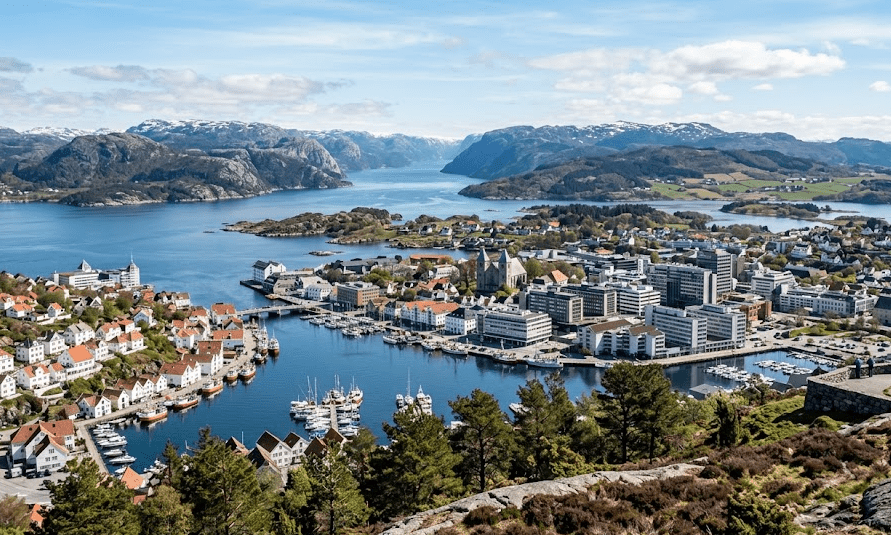
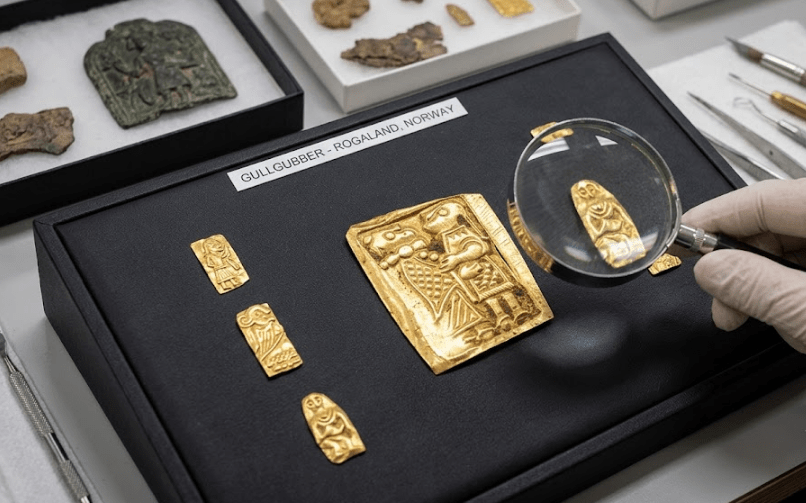
A Rogaland gullgubbe reopens pre-Viking ritual questions because one tiny gold-foil figure can shift attention from ships and raids to halls, power centers, fertility symbolism, and carefully documented archaeological context. In March 2026, metal detectorist Kjetil Særheim found a gullgubbe on his family farm at Hauge in Klepp, Rogaland. Rogaland County reported the find on March 20, 2026, calling it the first discovery of its kind in the region since 1897. The University of Stavanger’s Archaeological Museum later emphasized that the find became the first gullgubbe in the museum’s own collection. That local detail matters because the earlier 16 Hauge gullgubber had gone to Bergen, since Stavanger had no archaeological museum when farmers found them in the late 1800s. (UiS gullgubbe report)

Why One Tiny Gold Figure Matters

The new Klepp find matters because gullgubber rarely appear in Norway. UiS explains that roughly 4,000 gullgubber are known from Scandinavia, but only about 50 come from Norway. Before Særheim’s discovery, Rogaland and the whole western Norwegian region had only the 16 Hauge examples found in 1897.

That rarity gives the new object unusual weight. A single gold foil could look minor beside a sword, ship burial, or hoard, yet archaeologists value context as much as size. The 2026 find gives researchers a more precise location for investigating a place that already produced an exceptional group of gold-foil figures.

Professor Sigmund Oehrl at the Archaeological Museum, University of Stavanger, has specialized in gullgubber. He described the new discovery as sensational because such figures often come from older power centers and large halls. In his interpretation, people probably placed them in halls as part of ritual actions by a power elite.

What A Gullgubbe Is

A gullgubbe is a very small piece of gold foil, usually stamped or engraved with a human, animal, or paired figure. Bornholms Museum describes the word as an old Swedish term for a tiny carved gold-foil figure and notes that the figures show men, women, and animals. Archaeologists often interpret them as offerings, although their exact purpose remains uncertain.

The Norwegian word can sound misleading because “gubbe” suggests an old man. In practice, many figures show women, couples, or other motifs. The gold itself also matters. These are not heavy treasures. They are thin, delicate, highly symbolic objects.

That contrast makes gullgubber powerful evidence. They do not display elite wealth through mass, as gold arm rings do. Instead, they display meaning through placement, imagery, ritual handling, and association with halls or central places.

Why Hauge In Klepp Changes The Question

Hauge in Klepp matters because the new find links directly to a known but poorly documented nineteenth-century discovery. UiS notes that archaeologist Gabriel Gustafson first presented the 1897 Hauge finds in 1900. Those 16 gold foils came from Hauge, near Krosshaug, a rich Migration Period female grave.

The old Hauge group shows one repeated motif: a man and a woman face each other and touch hands. UiS says the 16 examples carry eight different stamp impressions but share that paired scene. That pattern has made the Hauge material one of Rogaland’s most important pre-Viking ritual-image groups.

However, the old discovery suffered from unclear findspot details. The new 2026 discovery changes that. Lars Søgaard Sørensen, an archaeologist with Rogaland County, said the new find can help illuminate the earlier discoveries and give new insight into the importance of the place during the Iron Age.
Why The Find Points Toward A Hall Landscape

Gullgubber often lead archaeologists to ask whether a hall or cult building once stood nearby. Oehrl told Rogaland County that gullgubber often come from power centers and large halls, where people probably deposited them during rituals. He also said it would have great significance if archaeologists could eventually identify traces of such a hall at Hauge.

That possibility fits the wider landscape. Rogaland County notes that archaeologists already describe the area as an “acropolis” on Jæren because it includes large burial mounds with spectacular finds and a ring-shaped courtyard site. Oehrl argues that any future hall evidence would belong to an especially important cultural landscape.

This is where the article should stay careful. The gullgubbe does not prove that a hall has already been found. Instead, it gives archaeologists a stronger reason to look for one. A gold-foil figure near older Hauge gullgubbe finds, elite graves, and monumental structures makes the hall question more serious.

Why Pre-Viking Ritual Cannot Be Reduced To Myth Illustration

The Hauge gullgubbers raise ritual questions, but they do not give a simple picture of Norse mythology. UiS explains that scholars have connected some paired gullgubbe motifs with later Norse mythic traditions, especially stories about Freyr and Gerðr. Yet Oehrl emphasizes that the detailed written sources for those myths come much later, mainly from medieval texts.

That gap matters. A gold-foil couple from the Merovingian Period cannot automatically become a direct illustration of a thirteenth-century text. Archaeologists can compare motifs, later myths, runic evidence, and ritual contexts, but they must avoid treating later literature as a caption for every early image.

The Hauge figures may show gods. They may show humans. They may show marriage, fertility, ritual union, protection, or elite symbolism. The safest interpretation leaves room for several possibilities while noting the strong ritual setting of the object type.

That cautious approach fits oldnorsenews.org’s wider interest in Norse power beyond ships and raids, where authority often appears through halls, seats, farms, ritual objects, and controlled social space.

Why The Pair Motif Matters

The pair motif at Hauge deserves attention because all 16 older examples show a man and a woman facing each other. UiS describes the figures as touching hands, a detail that has encouraged interpretations involving union, marriage, fertility, or divine partnership. The new 2026 find now adds another object to the same local story, even if its exact relationship to the older stamps needs specialist study.

Oehrl’s earlier UiS discussion of the Hauge material also highlights a plant motif. The female figure appears to hold something described as a staff, fan, twig, or plant. Oehrl links this object to later images in Viking Age art, including a decorated horse harness fitting from the Mammen grave in Denmark and a stone cross from the Isle of Man.

He also connects the plant with “lauk,” meaning onion or leek, a word with strong associations in Old Norse sources and older runic traditions. Even there, the interpretation remains cautious. The plant may point toward fertility, protection, renewal, or ritual gifting, but it cannot identify the figures with certainty.

How Scandinavia-Wide Finds Help The Rogaland Case

The Rogaland gullgubbe does not stand alone. UiS notes that gullgubber come only from Scandinavia, with the largest concentrations in Denmark. The Hauge research page gives a lower earlier count of about 3,600 examples from around 50 sites, while the 2026 county reporting gives the updated broad figure of about 4,000 known examples.

Bornholm gives the strongest comparison. Bornholms Museum says more than 3,000 gold-foil figures have been found at Sorte Muld near Ibsker. That site dates many examples to around AD 550–600, in the Germanic Iron Age. It also shows why gullgubber often connect with wealth, ritual, and central places.

Other major Scandinavian sites include Gudme on Funen, Uppåkra in Scania, Borg in Lofoten, and Aska in Östergötland. A 2023 Antiquity article on Aska describes gold-foil miniatures deposited in a royal hall and connects them with precious-metal offerings and religious customs.

Why Halls Were More Than Large Buildings

A hall in this context was not just a big house. In late Iron Age Scandinavia, halls could organize feasting, oath-taking, gift-giving, elite hospitality, political display, and religious activity. When archaeologists find gullgubber in or around halls, they often ask whether those buildings acted as both power centers and ritual spaces.

That dual role helps explain why a tiny gold foil can matter so much. Its value does not come from weight alone. Its meaning depends on where people placed it, who controlled the building, and what kind of ceremony or social act surrounded the deposition.

At Hauge, researchers have not yet confirmed a hall. Still, the new find gives them a better starting point for testing that possibility. If future surveys or excavations identify building traces, postholes, activity layers, or additional ritual deposits, the 2026 gullgubbe may become part of a much larger story.

Why The Find Belongs To The Younger Iron Age

Rogaland County dates the new gullgubbe to the Younger Iron Age, between about AD 500 and 800. That range places it before the conventional Viking Age or at its threshold, depending on the dating model used. For that reason, “pre-Viking” works as a cautious public-facing label, but the article should also use the more precise archaeological period.

This matters because many readers automatically connect every Scandinavian gold figure with Vikings. The Hauge gullgubber belong to an earlier world of regional power centers, hall culture, and pre-Viking elite ritual. Later Viking Age society inherited some of those landscapes, symbols, and power structures, but it did not create them from nothing.

The 2026 Klepp find therefore helps correct a timeline problem. It reminds readers that Norse ritual and elite authority developed before Viking fleets became the most famous Scandinavian export. Halls, gold images, paired motifs, and local sacred landscapes were already part of the story.

Why Responsible Metal Detecting Changed The Evidence

The discovery also matters because Særheim handled the find responsibly. Rogaland County reports that he quickly notified authorities after finding the gullgubbe. UiS adds that he delivered documentation, including a find form, photographs, and GPS information.

That process gave archaeologists much better evidence than the 1897 find could provide. The older Hauge gullgubber remain important, but their exact find circumstances stay unclear. The new discovery adds location data, official reporting, and a modern documentation chain.

Rogaland County uses the case as an example of how cooperation between metal detectorists and heritage authorities can protect knowledge. Marianne Enoksen, section chief for archaeology in Rogaland County, emphasized that single finds can greatly affect knowledge of the past when people report them quickly and document them well.

The lesson is practical. A gullgubbe removed without context becomes a curiosity. A gullgubbe reported with location data becomes historical evidence.

What The Law Means For Such Finds

Norway’s cultural heritage rules also form part of the story. UiS explains that all objects from before 1537, and coins older than 1650, belong to the state and must be handed in. The county serves as the first contact point before objects move onward to the Archaeological Museum for cataloguing, conservation, and storage.

This point should not turn the article into legal advice, but it matters for public history. The new gullgubbe entered museum study because the finder followed the correct process. That allowed specialists to inspect the object, compare it with the older Hauge group, and consider its archaeological landscape.

Responsible reporting also protects private landowners and sensitive sites. Rogaland County does not present the discovery as a treasure-hunting invitation. Instead, it frames the find as heritage evidence that needs careful handling.

For readers, that distinction matters. The excitement of a gold discovery should lead toward research, not unauthorized searching.

What The New Gullgubbe Does Not Prove

The new Rogaland gullgubbe does not prove the location of a hall by itself. It does not identify a named deity, a named ruler, or a specific ritual. It also does not confirm that the paired Hauge motif represents Freyr and Gerðr, Freyr and Freyja, a human wedding, or any single mythic scene.

The object does support a more careful claim. Hauge in Klepp had an unusual concentration of gullgubber, and the new find gives archaeologists a more concrete location for future study. It also strengthens the argument that the area formed part of a high-status ritual and power landscape during the Younger Iron Age.

Those limits make the discovery more interesting, not less. Archaeology often moves forward through small, well-documented clues. A one-centimeter gold foil cannot answer every question, but it can reopen the right questions.

That is why source caution matters. The find invites interpretation, but it does not permit fantasy.

Why Rogaland’s Ritual Landscape Deserves More Study

Rogaland’s new gullgubbe deserves attention because it brings pre-Viking ritual geography back into focus. Hauge, Krosshaug, Tinghaug, large mounds, a ring-shaped courtyard site, and the older gold foils together suggest a landscape where power, memory, ceremony, and elite identity overlapped.

Future work may test whether a hall once stood there. Researchers may also compare the new gold foil with the 1897 Hauge examples, study its stamp or engraving, and refine its place within Scandinavian gullgubbe traditions. If archaeologists recover more objects, building traces, or activity layers, the discovery could reshape how scholars understand Jæren’s Iron Age elite.

For now, the strongest point remains clear. A Rogaland gullgubbe reopens pre-Viking ritual questions because it links a rare object type to a known but poorly documented find area. It connects local family farmland with Scandinavian hall culture and opens a cautious path from gold foil to power center.

The object may be tiny, but the question around it is large: what kind of ritual landscape stood at Hauge before the Viking Age became visible in ships, raids, and written memory?

Posted in Norse History & Archaeology | Comments Off on How A Rogaland Gullgubbe Reopens Pre-Viking Ritual Questions

Why The Rold Treasure Changes Denmark’s Viking Gold Story

The Rold Treasure changes Denmark’s Viking gold story because it turns six intact arm rings into evidence for elite power, political connection, skilled goldsmithing, and deliberate deposition during the late Viking Age. Nordjyske Museer reports that a resident of Himmerland handed in two solid gold rings for danefæ assessment on April 22, 2026, after spotting them partly visible in the soil near a field road in a wooded area close to Rold, Himmerland. Museum archaeologists then surveyed the area and found four more gold arm rings. Together, the six intact pieces weigh 762.5 grams, making the Rold Treasure Denmark’s third-largest Viking Age gold find, after the Tissø ring from West Zealand in 1977 and the Fæsted hoard near Ribe in 2016. (Nordjyske Museer Rold Treasure report)

Why The Rold Treasure Matters

The Rold Treasure matters because Viking Age gold finds do not work like ordinary jewelry stories. Six solid gold arm rings from one location raise questions about wealth storage, political loyalty, public display, elite gifting, ritual deposition, and the growth of royal power in late Viking Age Denmark.

Nordjyske Museer identifies the objects as gold arm rings from the Viking Age and dates the treasure to around AD 900–1000. That period places the find near the political changes associated with Denmark’s movement toward one kingdom. The museum also connects this wider moment with Harald Bluetooth, who proclaimed his achievements on the large Jelling Stone around AD 965.

That timing does not prove that Harald Bluetooth owned the Rold rings or personally controlled the treasure. However, it places the hoard in a world where gold could express rank, alliance, loyalty, and access to powerful networks. The find therefore invites a more political reading of Viking gold.

How The Discovery Began

The discovery began in an unusually visible way. According to Nordjyske Museer, a Himmerland resident found two massive gold rings partly exposed in the soil near a field road in a wooded area near Rold. He brought them to the museum’s archaeological department for danefæ assessment on April 22, 2026.

Museum archaeologists immediately recognized the objects as extraordinary Viking Age gold arm rings. They then went to the findspot and carried out a more detailed investigation with metal-detecting across a larger area. That survey revealed a third similar arm ring near the original discovery spot.

Soon afterward, archaeologists found three additional gold arm rings about 15 meters from the first location. All six pieces were intact and made of solid gold. That pattern matters because the objects did not appear as scattered fragments of payment metal. They appeared as whole prestige objects deposited together or in close association.

Why Intact Gold Rings Change The Interpretation

The intact condition of the Rold rings changes the interpretation. Viking Age silver often circulated by weight. People cut silver objects into fragments, weighed them, and used them in exchange. In contrast, the Rold rings survived whole. Nordjyske Museer specifically notes that the intact condition supports the interpretation that these rings did not function as ordinary payment metal.

That detail matters for readers because “treasure” can sound vague. A hoard may represent emergency storage, ritual offering, wealth display, bullion, inheritance, political payment, or several meanings at once. In Rold’s case, the complete arm rings point strongly toward status and symbolic value.

Gold arm rings could signal power in ways that loose silver fragments could not. Their full circular form, weight, craftsmanship, and visibility made them useful as signs of rank or affiliation. A person wearing or giving such a ring communicated more than wealth. He or she also communicated social position.

Why Gold Was Different From Silver

Gold carried a different social meaning from silver in the Viking Age. Nordjyske Museer explains that arm rings of this Scandinavian type are known from the Viking Age, but gold examples are much rarer than similar silver ones. Torben Sarauw, cultural heritage manager and archaeologist at Nordjyske Museer, says gold in the Viking Age concentrated among society’s absolute elite.

That point makes the Rold Treasure more important than its weight alone. The hoard contains nearly three-quarters of a kilogram of gold, but the social message comes from rarity as much as mass. Gold arm rings belonged to a narrow world of high-status exchange and political meaning.

Silver could move widely through trade, tribute, payment, and hacksilver economies. Gold appeared less often and usually carried stronger elite associations. When six intact gold arm rings appear together, the find points toward people who operated near the top of Viking Age social structures.

What The Rings Reveal About Craft

The Rold Treasure also changes the gold story because the rings show varied and specialized metalwork. Nordjyske Museer reports that the hoard includes both twisted and smooth forms. Three rings consist of two twisted rods, and one includes thin inlaid gold wire with a knob-shaped closure.

Other rings were made from solid rods or wire. Several end with characteristic wrapped closures known as running knots. One arm ring stands apart because it has flat-hammered, joined ends decorated with zigzag motifs and triangles.

These details matter because they show craft knowledge, not just material value. A goldsmith had to understand form, weight, twisting, closure, surface decoration, and visual balance. The rings therefore reveal a technical culture in which elite objects required skilled labor.

The craft also helps explain why these objects carried political meaning. A ring made from precious metal with visible skill could become a gift, oath marker, alliance object, or status sign. Its value came from gold, but its authority came from form and social use.

Why Rold Belongs In The Harald Bluetooth Era Carefully

The Rold Treasure dates to the late Viking Age, around AD 900–1000. That period overlaps with major political developments in Denmark. The National Museum of Denmark explains that Harald Bluetooth raised the large Jelling Stone around AD 965 and that the inscription presents his achievements, including unifying Denmark and making the Danes Christian.

The Rold Treasure should not become a loose “Harald Bluetooth treasure” without proof. No inscription names him. No source links him directly to the rings. Still, the chronological overlap matters because the rings belong to a period when elites negotiated power, rank, loyalty, and regional authority.

Nordjyske Museer suggests that the original owners may have had connections with the emerging Danish kingship in the 900s. That careful wording gives the article its best interpretation. The treasure may reflect the social world around expanding royal power, even if it cannot identify a named owner.

Why Arm Rings Were Political Objects

Arm rings can look like jewelry, but in Viking Age contexts they often carried social and political weight. A ring could reward service, mark loyalty, display wealth, or connect a person to a leader. In a society where public reputation mattered, visible precious metal could speak loudly.

The Rold rings fit that logic because they combine material value with intact form. If someone had wanted only gold by weight, the rings could have been cut, melted, or divided. Their survival as complete objects suggests that form mattered.

Nordjyske Museer interprets the rings as status symbols and visible signs of power, rank, and affiliation. The museum also notes that they may have served as valuable gifts with strong symbolic meaning. That interpretation fits a world where elite relationships often depended on gift-giving and public recognition.

For oldnorsenews.org readers, this connects with the wider Viking economy. Wealth did not only sit in markets or coins. It moved through relationships. A gold arm ring could bind people together as strongly as a written contract did in later societies.

How Rold Compares With Other Danish Gold Finds

The Rold Treasure ranks third among Denmark’s Viking Age gold finds. Nordjyske Museer places it after the Tissø ring, found in West Zealand in 1977, and the Fæsted hoard, found near Ribe in 2016. That comparison matters because it shows how rarely large Viking Age gold deposits appear in Denmark.

Rold also differs from a mixed hoard because it consists of six intact gold arm rings. This gives the find a focused character. Rather than a broad collection of fragments, coins, and varied objects, the treasure centers on a small group of similar high-status pieces.

The comparison with Ribe also helps readers understand Denmark’s wider Viking economy. Old Norse News has covered how Islamic silver in Danish Viking coins reshapes the story of trade and minting around Ribe. The Rold Treasure offers a different but related lesson: elite gold and circulated silver reveal different layers of Viking Age wealth. (Islamic silver in Danish Viking coins)

Together, silver and gold evidence show that Danish wealth moved through several systems at once. Some value circulated through trade. Some value marked status, loyalty, and power.

Why Deposition Is The Hardest Question

The hardest question is why someone placed the Rold rings in the ground. Nordjyske Museer gives two broad possibilities: people may have deposited such rings to secure valuables in troubled times, or they may have placed them in the ground as part of rituals. Torben Sarauw emphasizes that the full meaning remains difficult to determine today.

That caution matters. A hoard can tempt writers into dramatic certainty. It could be called hidden war treasure, royal tax, ritual gold, emergency wealth, or a chieftain’s lost fortune. The evidence does not allow one simple answer.

The intact rings suggest deliberate deposition, but they do not reveal motive. If someone hid the rings for safekeeping, they never returned or could not recover them. If someone deposited them ritually, the act may have carried religious or social meaning. Another possibility could involve political storage, elite obligation, or a valuable gift placed beyond everyday use.

The strongest interpretation keeps several options visible. The Rold Treasure changes the story because it shows elite gold deposition, not because it solves every motive behind that deposition.

Why The Danefæ Process Matters

The Rold Treasure also illustrates why Denmark’s treasure system matters for archaeology. The National Museum of Denmark explains that Danish treasure trove includes unearthed archaeological finds made of precious metals, including coins, or objects with cultural-historical value. Such finds must be submitted because they belong to the state, and the National Museum administers the law.

That process protected the Rold find. The first two rings did not disappear into private hands. They went to Nordjyske Museer for assessment, which allowed archaeologists to investigate the site and recover the remaining pieces.

This reporting chain matters as much as the gold itself. Archaeological objects lose meaning when people remove them without location data, documentation, and professional study. In Rold’s case, responsible reporting preserved context and allowed the museum to document the discovery as a connected hoard.

The result gives researchers a stronger basis for interpretation. They can study the rings, the findspot, the spacing of the objects, the land context, and the deposition pattern.

What The Private Findspot Tells Readers

Nordjyske Museer notes that the find area lies on private land without public access, and both the finder and landowner wish to remain anonymous. That information deserves respect. Archaeological reporting should not turn a findspot into a tourist target or encourage unauthorized searching.

This point also gives readers a practical lesson. A spectacular find does not make a site open to the public. Cultural heritage work depends on responsible access, legal reporting, and cooperation between landowners, museums, finders, and national authorities.

The museum reports that the archaeological investigation in the area has ended and that all the gold has been submitted as danefæ. The rings will undergo further analysis and documentation before transfer to the National Museum.

That careful process stands against the fantasy of treasure hunting. The real story does not end when gold leaves the soil. It continues through documentation, conservation, study, legal handling, and public interpretation.

Why Aalborg Matters For Public Display

Nordjyske Museer states that the ambition is to display the arm rings at Aalborg Historiske Museum before the summer holidays, allowing the public to see the find close to where it emerged. That local display plan matters because archaeological finds belong to landscapes, not only national timelines.

A gold hoard from Rold carries national importance, but it also belongs to Himmerland’s local Viking Age story. Displaying the rings near the find region can help visitors connect elite gold with northern Jutland’s landscape, routes, settlements, and political changes.

Public display also changes how people understand the Viking Age. Seeing six intact gold arm rings together gives a stronger impression than reading a weight in grams. Visitors can compare forms, closures, surface patterns, and scale.

The best exhibition framing should avoid glamour alone. Gold attracts attention, but interpretation must explain why complete rings, elite control, political connection, and deposition matter. Otherwise, the treasure becomes beautiful but shallow.

What The Rold Treasure Does Not Prove

The Rold Treasure does not prove the name of its owner. It does not prove that Harald Bluetooth controlled the rings. It does not prove whether someone hid the treasure during conflict or deposited it for ritual reasons. It also does not prove that Rold served as a royal center.

The evidence supports more careful claims. The hoard contains six intact solid gold Viking Age arm rings, dated around AD 900–1000. It ranks as Denmark’s third-largest Viking Age gold find by weight. Its craftsmanship and intact form point toward elite status rather than ordinary payment metal. Its date places it in a period of political consolidation in Denmark. (National Museum of Denmark treasure trove guidance)

Those claims are strong enough. A source-aware article does not need to inflate the find into a royal mystery with a single answer. The real value lies in the way the treasure concentrates several important themes: elite wealth, specialized craft, political connection, legal reporting, and uncertain deposition.

For oldnorsenews.org, that balance matters. Readers should come away with a sharper understanding of Viking gold, not a simplified legend.

Why This Find Changes Denmark’s Viking Gold Story

The Rold Treasure changes Denmark’s Viking gold story because it forces readers to think beyond treasure as buried wealth. The hoard shows gold as a social language. Six intact arm rings could represent status, loyalty, rank, gift exchange, or values placed beyond ordinary circulation.

The find also places Himmerland inside the late Viking Age power landscape. Around AD 900–1000, Denmark was changing politically, and elite objects helped people express relationships within that changing world. The Rold rings may not name a king, but they belong to a society where gold could mark connection to powerful people and institutions.

Just as importantly, the find shows why context matters. A responsible finder, a quick museum response, archaeological survey, danefæ handling, and planned public display all shaped what scholars can now say. Without that process, the Rold Treasure would be only gold. With it, the hoard becomes historical evidence.

Denmark’s Viking gold story therefore gains a clearer shape. Gold was rare, elite, crafted, visible, and politically meaningful. At Rold, six intact rings bring that story out of the soil with unusual force.

Posted in Mythology & Culture, Norse History & Archaeology | Comments Off on Why The Rold Treasure Changes Denmark’s Viking Gold Story

Why Norway’s Oldest Runestone Fragments Rewrite The Early Rune Story

Norway’s oldest runestone fragments rewrite the early rune story because they move runic writing on stone into a far earlier and better-dated context than scholars usually get. A 2025 open-access study in Antiquity examines inscribed sandstone fragments from the Svingerud grave field at Hole in eastern Norway, near Tyrifjorden. The authors—Steinar Solheim, Kristel Zilmer, Judyta Zawalska, Krister S. K. Vasshus, Anette Sand-Eriksen, Justin J. L. Kimball, and John Asbjørn Munch Havstein—argue that radiocarbon dates from associated grave contexts fall between 50 BC and AD 275. That range makes the Hole fragments the earliest known archaeological context for a runestone. For oldnorsenews.org readers, the discovery matters because it shows early runic literacy as experimental, fragmentary, and tied to burial practice rather than only later Viking Age monument culture. (Antiquity study)

Why The Hole Fragments Matter

The Hole fragments matter because runestones rarely enter the record with secure archaeological dating. Many early runic stones come from uncertain contexts, later reuse, surface finds, or old discoveries with limited documentation. That makes it difficult to say whether the inscription, the stone, and the surrounding setting all belong to the same moment.

The Svingerud case gives scholars a stronger framework. Archaeologists from the Museum of Cultural History at the University of Oslo discovered several inscribed red-brown Ringerike sandstone fragments during investigations of a Roman Iron Age grave field between 2021 and 2023. The main inscribed fragment, known as Hole 2 and previously publicized as the Svingerud stone, came from a flat cremation grave.

That context changes the discussion. Researchers cannot date the stone itself through radiocarbon testing, but they can date organic material from the grave. As a result, the stone’s archaeological setting gives the inscription a rare chronological anchor.

What The University Of Oslo First Reported

The Museum of Cultural History announced the discovery internationally in January 2023. Its English report described the find as the world’s oldest dated runestone and said archaeologists discovered it in autumn 2021 during investigations of a grave field in Hole near Tyrifjorden. Radiocarbon dates placed the grave, and therefore probably the inscriptions, between AD 1 and 250 in that early announcement.

That first report already challenged the public timeline of Scandinavian writing. It presented the stone as among the oldest runic inscriptions ever found and the oldest datable runestone known at the time. Kristel Zilmer, professor of runology at the University of Oslo, explained that the find could represent one of the first attempts to use runes on stone in Norway and Scandinavia.

Later research widened and refined the story. The 2025 Antiquity article used the broader set of fragments and contexts to argue for dates between 50 BC and AD 275. That range makes the find even more important because it places early rune-stone practice inside a long, complex Roman Iron Age setting.

How A Fragment Became A Larger Puzzle

The find did not remain a single stone with a simple inscription. Science Norway reported in February 2025 that researchers now call the object the Hole runestone and that the original Svingerud stone formed only one part of a larger slab. Zilmer compared the research process to solving a puzzle because multiple fragments gradually proved to belong together.

That puzzle matters because early runic history often depends on small marks, broken contexts, and difficult readings. In this case, the team identified Hole 1, Hole 2, and Hole 3 as parts of the same larger sandstone slab. Hole 2 carries the most visible writing, while Hole 3 gained importance after additional fragments completed more of its inscription.

The article should not present the stone as a complete monument with a fully understood message. Instead, the discovery shows how archaeological interpretation grows through reassembly, soil sieving, runological comparison, and cautious reading. The fragments rewrite the story because they make uncertainty visible, not because they remove all uncertainty.

Why The Dates Change The Rune Timeline

The dates matter because they place runic writing on stone far earlier than many readers expect. The University of Copenhagen’s runology overview describes the older runic system, or Elder Futhark, as a 24-character script used roughly from AD 150 to 650. Viking Age runes, or the Younger Futhark, belong much later, roughly AD 725 to 1075.

The Hole fragments sit near the beginning of that older runic horizon. Their archaeological context overlaps with the earliest centuries of runic literacy in northern Europe. That does not mean runes began at Hole, nor does it mean the fragments contain the oldest runic inscription overall. Older or similarly early runes appear on objects such as combs, knives, weapons, and other portable items.

However, stone changes the story. A rune carved on a portable object can travel far from its original context. A runestone fragment in a dated grave setting gives scholars a different kind of evidence. It ties inscription, material, burial, and place together in a way that many early runic finds cannot.

Why This Is Not A Viking Age Runestone

Readers need a clear boundary here: the Hole fragments are not Viking Age runestones. They date many centuries before the Viking Age. They belong to the Roman Iron Age, a period when Scandinavian societies interacted with wider northern European and Roman-world networks but had not yet entered the historical world of Viking ships, kings, and later Old Norse literature.

That distinction matters for oldnorsenews.org. The site covers Norse history, Viking Age archaeology, language, mythology, and heritage interpretation. Still, the early rune story begins before the familiar Old Norse written world. The Hole fragments help readers understand the deeper background of Scandinavian writing, not a direct Viking monument.

This is where source-aware language helps. The fragments can “rewrite the early rune story” because they alter how scholars think about the first runes on stone. They should not become evidence for Viking Age identity, Viking religion, or medieval saga culture. Those topics come later.

A responsible article can connect the find with Old Norse language history while making the timeline clear. The Hole fragments belong to the early roots of northern writing, not to the mature Old Norse language of sagas.

What The Inscription May Say

One reason the original 2023 announcement drew so much attention was the eight-rune sequence on the main fragment. Reports at the time gave the reading as “idiberug,” with possible interpretation as a personal name or family name. Later discussions have also treated the sequence as possibly connected to the name Idibergu, though the exact reading remains difficult.

This uncertainty should stay in the article. Early runic inscriptions often resist easy translation because letter forms vary, surfaces break, and short texts lack context. A name may appear likely, but a name alone does not reveal the full purpose of the inscription.

Hole 3 adds another important layer. Science Norway reported that newly connected fragments revealed a faint inscription that may include a name, a verb meaning “to write,” and the word for rune. Zilmer suggested that the ending of the name could point toward a female name and that the text may resemble a kind of signature.

Even here, caution matters. A possible female rune carver would be remarkable, but the evidence does not allow a simple headline claim. The better reading is that the inscription opens a serious question about authorship, gender, and early writing practice.

Why The Burial Context Matters

The burial context matters because it suggests that early runic writing on stone may have had close ties to commemoration, identity, and death. The main fragment came from a cremation grave. Science Norway notes that the largest fragment, Hole 2, had been placed in a grave, while other fragments came from places that may also relate to burial activity.

Researchers have suggested that the original slab may once have stood upright as a larger stone or monument. Later, someone may have broken it apart and deposited pieces in graves. Steinar Solheim told Science Norway that the stone may have been deliberately smashed, although researchers cannot confirm that scenario.

That uncertainty gives the article its strongest historical value. A broken runestone in a burial landscape raises questions about how people reused, fragmented, and placed meaningful objects. Did mourners break the stone as part of a ritual? Did they deposit a named fragment with a deceased person? Did different carvings happen at different times?

The evidence cannot answer those questions fully. Still, it shows that early runic stones may have played roles in funerary practice before later Scandinavian monument traditions became familiar.

How The Fragments Challenge Old Dating Habits

The Hole fragments also challenge how scholars date older runestones. In the past, researchers often relied heavily on rune shapes, language forms, and stylistic comparison. Those methods remain valuable, but they can become circular when few inscriptions have firm archaeological dates.

The Hole stone gives researchers a rare check against that problem. Michael Schulte, professor of Nordic linguistics at the University of Agder, told Science Norway that the Hole 2 fragment shows several kinds of writing use side by side. He described the stone as evidence of experimentation with written language in an early phase of literacy.

That point matters for other famous early stones. If a securely dated early stone shows forms that scholars did not expect so early, then other stones may need review. Schulte specifically noted that older well-known runestones such as the Hogganvik stone and the Tune stone may require reconsideration in light of the Hole material.

This does not automatically redate every old inscription. It means scholars now have stronger comparative evidence. The Hole fragments sharpen the questions that runologists can ask.

Why Early Runes Look Experimental

The early rune story should not read like a finished alphabet suddenly appeared in perfect form. The Hole fragments suggest experimentation. Some marks may represent runes, while others may function as imagery, ornament, practice marks, or unclear carving. Zilmer told Science Norway that the transition between writing and imagery can appear fluid in places.

That observation matters because modern readers often treat writing as a stable system. Early literacy did not always work that way. People explored how signs looked, how they could mark names, how stone surfaces handled carving, and how inscriptions could interact with ritual or memorial settings.

This experimental quality makes the fragments more important, not less. A polished later runestone can show mature convention. A difficult early fragment can show the process before convention settled. It reveals people testing the potential of writing in stone.

The article should therefore avoid treating unclear marks as errors. They may reflect a moment when runes, images, identity marks, and memorial practice still overlapped in flexible ways.

How The Find Changes Public Rune History

Public rune history often jumps from Viking runestones to fantasy symbolism. The Hole fragments point in a different direction. They ask readers to think about early Germanic writing as a technical, social, and archaeological practice. Runes were not only mysterious symbols. People carved them into objects and stones within specific contexts.

The National Museum of Denmark explains that runes formed a Germanic writing method based on Mediterranean alphabets and developed in the centuries after the birth of Christ. Its rune database includes more than 900 Danish runic inscriptions, showing how wide and varied the tradition later became. (National Museum of Denmark rune overview)

The Hole fragments now add an unusually early stone context from Norway to that wider history. They do not replace the Danish, Swedish, or continental evidence. Instead, they give scholars a stronger northern anchor for thinking about how rune-stone traditions developed.

That matters for SEO as well as history. Readers searching for “oldest runestone,” “early runes,” or “Norway runestone” need an article that separates evidence from modern rune mythology.

What The Fragments Do Not Prove

The Hole fragments do not prove that Norway invented runes. They do not prove that runes began in Hole, nor do they reveal a complete early alphabet lesson. They also do not confirm the identity of the carver, the deceased, or the community that used the stone.

The fragments cannot prove exactly when every carving happened. The Antiquity study notes that the fragments came from the same original slab, but the inscriptions may represent different acts of carving. That means researchers must consider the possibility of multiple moments, hands, or purposes.

The stone also cannot tell readers how ordinary literacy worked across Scandinavia. One extraordinary grave-field context does not equal everyday writing practice. It gives a rare point of evidence, but it still belongs to one site.

These limits do not weaken the find. They make the interpretation more honest. The Hole fragments rewrite the early rune story because they add a secure archaeological anchor to a period that badly needs one.

Why This Discovery Fits Old Norse News

This topic fits oldnorsenews.org because it links language, archaeology, and source criticism. It also helps readers avoid a common mistake: treating Viking Age runestones as the beginning of all Scandinavian writing. The Hole fragments show that people experimented with runes on stone centuries before the Viking Age.

The story also fits the site’s cautious historical tone. A sensational article could claim that the “world’s oldest runestone solves the mystery of runes.” A better article explains why the find matters while keeping the gaps visible. It names the researchers, identifies the site, explains the dating, and separates likely readings from confirmed facts.

The fragments also offer a useful bridge between early Scandinavian archaeology and later Norse culture. They do not belong to the saga world. However, they help explain the deeper history behind the writing systems that later shaped memory, monuments, names, and identity across the North.

That bridge gives readers a stronger mental timeline. Before Viking Age memorial stones, before medieval manuscripts, and before Old Norse literature, people already carved signs into stone in ways that still challenge scholars today.

What Readers Should Watch Next

The Hole runestone story will likely keep developing. Runologists may refine readings of Hole 2 and Hole 3. Archaeologists may publish more detail about the grave field, deposition patterns, and stone fragmentation. Comparative studies may test whether other early runestones require revised dating.

Readers should watch especially for three areas. First, future interpretation of the possible name or signature may clarify who the inscription referred to or who carved it. Second, more work on the stone’s fragmentation may help explain whether people deliberately broke and deposited the slab. Third, comparison with stones such as Hogganvik and Tune may change the wider chronology of early Scandinavian rune-stone traditions.

For now, the safest conclusion remains powerful enough. The Hole fragments provide the earliest known archaeological context for a runestone, with associated radiocarbon dates between 50 BC and AD 275. They show early runic writing on stone as older, stranger, and more experimental than many readers expect.

That is why Norway’s oldest runestone fragments rewrite the early rune story. They do not give a complete origin myth for runes. Instead, they give something better: a difficult, datable, archaeological puzzle from the beginning of Scandinavian writing on stone.

Posted in Mythology & Culture, Norse History & Archaeology | Comments Off on Why Norway’s Oldest Runestone Fragments Rewrite The Early Rune Story

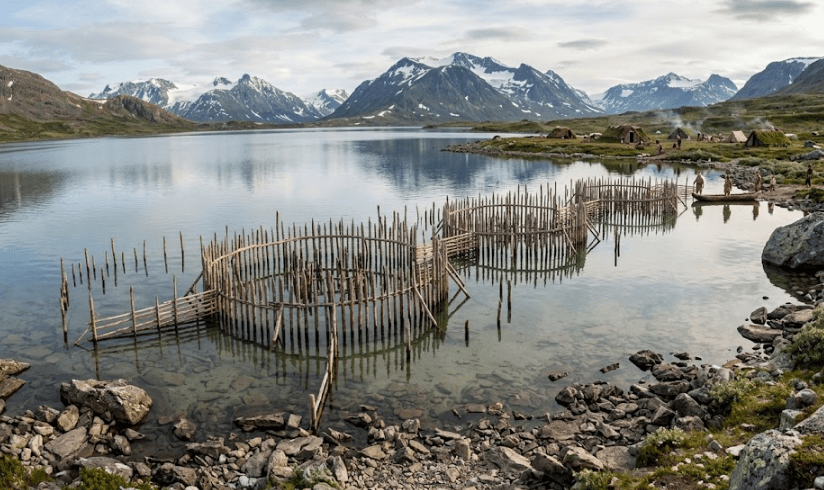
Why Norway’s 7,000-Year-Old Fish Traps Change The Story Of Mountain Life Before The Norse

Norway’s 7,000-year-old fish traps change the story of mountain life before the Norse because they show planning, food security, and environmental knowledge long before Viking ships or medieval kingdoms entered the record. A 2026 study in Antiquity by Axel Mjærum, Ellen K. Friis, Trygve Hesthagen, and Andreas J. Kirchhefer reports dates from four wooden fish traps found in the exposed bed of Lake Tesse in southern Norway. The earliest trap dates to around 5000 BC, when Mesolithic hunter-fisher-gatherers appear to have harvested brown trout that could only have reached the lake through human-mediated introduction. That finding matters because it shifts mountain history away from a simple “wild landscape” image and toward a deeper story of people actively managing food, water, fish, and seasonal movement thousands of years before Norse culture emerged.

Why Lake Tesse Matters For Pre-Norse History

Lake Tesse lies in the central Norwegian mountain region of Jotunheimen, at about 854 meters above present sea level. The study describes it as a low alpine lake that originally covered about 12 square kilometers. Before the lake became a hydropower reservoir in the 1940s, it ranked among Norway’s most productive brown trout lakes, with recorded annual yields of up to 9,000 kilograms.

That productivity now looks much older than modern fisheries, medieval lake rights, or Viking Age food systems. The fish traps show that people had already built fishing infrastructure at Lake Tesse around 5000 BC. In other words, the lake’s later reputation as a rich trout water may rest on a human intervention that began in the Stone Age.

This changes how readers should picture Norway’s mountain past. Mountain lakes were not just empty backdrops for hunters passing through. They could become planned resource zones, shaped by people who understood watercourses, fish behavior, wooden construction, seasonal access, and the risks of upland life.

For oldnorsenews.org readers, this topic connects naturally with the site’s coverage of pre-Viking mountain hunting systems, where preserved traps reveal organized work in landscapes that later Norse communities also used.

What The Fish Traps Actually Show

The Lake Tesse discovery centers on wooden stationary fish traps. The study reports that archaeologists manually excavated four traps from the dredged lakebed. Trap 5 received the most complete excavation, while traps 1, 2, and 3 only exposed parts of their preserved pole structures.

Researchers collected 113 larger wooden samples for dendrochronological analysis. They interpret 73 of those samples as components of separate poles used in the four traps. Radiocarbon analysis then placed trap 5 around 4950 BC and trap 2 around 5000 BC. Trap 1 dates to about 3850 BC, while trap 3 dates to around 2700 BC.

Those dates matter because they do not point to one short experiment. Instead, they suggest a long tradition of fishing infrastructure at Lake Tesse. The study argues that people constructed and used traps there from around 5000 BC onward, with later Neolithic phases continuing the practice.

The authors also note signs of maintenance. Two posts in one trap appear to have been placed about 12 years apart. That detail matters because maintenance suggests repeated knowledge, not a one-time accident. People returned to the lake, repaired equipment, and kept the fishing system working.

Why Brown Trout Should Not Have Been There Naturally

The strongest claim in the study does not come from the wooden traps alone. It also comes from fish distribution. After the Fennoscandian Ice Sheet retreated, topographic barriers prevented fish from naturally migrating into many upland watercourses. Waterfalls and other obstacles blocked fish from reaching lakes such as Tesse by ordinary upstream movement.

Historically, the lower part of the watercourse supported about 25 fish species, while the upper part only had brown trout. That pattern matters. If fish had reached the lake through random natural dispersal, researchers would expect a more complicated species picture. Instead, brown trout dominate the evidence.

The study also discusses arguments for bird-mediated spread of fish eggs. However, the authors find that explanation weak in this Norwegian mountain context. Bird transport does not easily explain why brown trout alone appear so consistently in high-altitude lakes, nor does it explain the apparent emergence of mountain fishing from around 5000 BC onward.

Therefore, the study argues that people likely moved live brown trout into these lakes. Brown trout made sense as a choice. They can grow large, provide valuable calories, and enter traps more easily than many other species. The result was not just fishing. It was an ecological decision.

How People May Have Moved Fish Into Mountain Lakes

The practical question matters: how could Mesolithic people move fish into a lake? The study does not claim to know every detail. Instead, it points toward likely requirements. Fish translocation needed living fish, equipment to catch them, containers to transport them, routes between lowland and upland waters, and enough knowledge to place fish where they could survive.

The authors suggest that trap fishing may have provided one way to catch live fish. They also note that waterskins may have helped people carry fish, since Mesolithic Norway has strong evidence for hide and skin processing. That interpretation remains cautious, but it gives readers a practical picture of the work involved.

This was not a simple gesture. People had to understand which waters had fish, which lakes lacked fish, and which barriers stopped natural migration. They also needed to know that trout could survive after relocation. Moreover, they needed enough social coordination to transport fish and later harvest them.

That turns the mountain landscape into a planned food system. The people who stocked Lake Tesse did not farm fields, but they still changed an ecosystem to support future meals.

Why This Happened Before Farming Took Hold

The timeline gives the discovery its wider importance. The Lake Tesse fish traps date to around 5000 BC at the earliest. In southern Scandinavia, the earliest evidence for husbandry and cereal farming appears around 4200 BC. In the central Scandinavian region discussed by the study, clear evidence of farming interaction during the Mesolithic before 3900 BC remains absent.

That means hunter-fisher-gatherers carried out the first fish translocations in the Norwegian mountains. They did not borrow a farming system and apply it to trout. They developed or used their own resource-management knowledge in a hunting, fishing, and gathering world.

This point challenges an old historical shortcut. Many people still imagine that humans began managing nature only after farming appeared. The Lake Tesse evidence complicates that idea. Mesolithic communities could reshape ecosystems without plows, livestock barns, or cereal fields.

The study even suggests that this practice may count as a form of food production among hunter-fisher-gatherers. That phrase matters because it blurs the hard line between “foragers who find food” and “farmers who produce food.” At Lake Tesse, people appear to have made future fishing possible by changing the lake itself.

How Fish Made Mountain Life Less Risky

Mountain life brought opportunity and risk. People could hunt reindeer, gather raw materials, move through upland corridors, and exploit seasonal resources. At the same time, big-game hunting could fail, weather could shift quickly, and extended stays in high terrain demanded reliable food.

The study notes that Langfonne, an ice patch just 11 kilometers west of Lake Tesse, has served as a reindeer hunting ground since at least the fifth millennium BC. That nearby evidence helps explain why fish mattered. A stocked lake could reduce the risk of long mountain stays by adding a dependable, fresh, calorie-rich food source to the hunting landscape.

Fish changed the terms of upland movement. People no longer had to rely only on unpredictable game. They could combine hunting, fishing, raw-material gathering, and seasonal camps into a more secure mountain strategy. In that sense, trout made the highlands more livable.

This matters for pre-Norse history because later mountain use did not begin from nothing. Long before Norse farms, hunting systems, and medieval travel routes, people had already learned how to make Norway’s interior landscapes support repeated human presence.

Why Wood Preservation Makes This Find Unusual

Wood rarely survives from the Mesolithic in many Scandinavian contexts. Wet lakebed conditions can preserve organic material that ordinary soils destroy, which makes the Lake Tesse traps especially valuable. The fish traps give researchers direct evidence of woodworking, construction, and tool use that stone artifacts alone cannot show.

The Museum of Cultural History at the University of Oslo has also highlighted the Lake Tesse fish-trap work through its research on inland fishing. One project page explains that the 2023 excavation investigated a Late Mesolithic fish trap at Tesse in Lom, consisting of 46 poles driven into the lakebed. Several poles showed traces of working, including chopping marks, splitting, and possible binding. (Museum of Cultural History Tesse project)

That level of detail matters because it turns an abstract “fish trap” into a human-made structure. Someone selected wood. Someone shaped poles. Someone drove them into the lakebed. Someone understood water depth, fish movement, and the seasonal moment when a trap would work.

Preserved wood therefore gives the story a technical side. Mountain life before the Norse depended not only on mobility, but also on skilled making.

How The Discovery Changes The Meaning Of “Wild” Mountains

Modern readers often describe ancient mountains as wild places. That word can mislead. A mountain landscape may look untouched today, yet archaeology can reveal long sequences of human intervention. Lake Tesse shows that people shaped upland ecology thousands of years ago.

The fish traps do not mean Mesolithic people controlled the mountains in a modern industrial sense. They did not dam every river or reorganize the whole landscape. Still, they made a lasting change by moving brown trout into lakes where natural barriers had kept fish out. That decision created food opportunities for future generations.

This kind of intervention also changes the emotional tone of pre-Norse history. It shows patience rather than only survival. People did not merely respond to scarcity. They improved future resource access. They turned water, fish, wood, and route knowledge into a system that could last.

For oldnorsenews.org, that is the key lesson. The deeper Scandinavian past was not passive. Long before sagas, runes, Viking kings, and medieval churches, communities already made strategic decisions about landscapes.

Why This Does Not Make Mesolithic People “Vikings Before Vikings”

This topic needs careful framing. The Lake Tesse fish traps do not belong to Norse culture, the Viking Age, or the Old Norse language world. They date thousands of years earlier. Calling the builders “Vikings” would distort the evidence and weaken the article.

The better connection lies in landscape continuity, not cultural identity. Later Norse communities also used mountains for hunting, grazing, travel, fishing, iron production, and seasonal work. However, they inherited landscapes that earlier people had already explored and modified. Lake Tesse reminds readers that Norway’s deep past extends far beyond the historical periods that usually receive attention.

This distinction helps oldnorsenews.org keep a source-aware tone. The article can show why pre-Norse evidence matters to readers interested in Norse history without pretending that Mesolithic fishers were early Norse people.

In practical terms, the traps reveal a foundation of mountain knowledge. Later communities may have used different tools, beliefs, languages, and social systems, but they moved through environments where human decisions had mattered for millennia.

What The Evidence Can And Cannot Prove

The Lake Tesse evidence supports a strong claim: people likely introduced brown trout into previously fishless mountain lakes and later harvested them with wooden traps. It also supports the idea that Mesolithic hunter-fisher-gatherers practiced environmental management before farming took hold in central Scandinavia.

However, the evidence cannot answer every question. Researchers do not know the names, language, beliefs, or exact social structure of the people who moved the fish. They cannot reconstruct every route used to carry trout. They also cannot say whether one small group, several groups, or repeated generations organized the first introductions.

The traps point toward planning, but they do not show a centralized authority. They reveal technical skill, but they do not identify individual makers. They suggest repeated use, yet they do not preserve the full social story around Lake Tesse.

Those limits matter. A good archaeological article should let the evidence remain impressive without turning it into myth. The fish traps change the story because they show resource management, not because they solve every mystery of Mesolithic mountain life.

Why The Find Matters For Environmental History

The 2026 study matters beyond Norwegian archaeology because it contributes to a larger debate about how early humans shaped ecosystems. The authors compare fish translocation with other examples of hunter-fisher-gatherer environmental influence, including animal movement, plant management, fire use, and hunting strategies.

Lake Tesse adds a strong aquatic example to that debate. Moving fish into a previously fishless lake changes more than one meal. It changes food webs, future settlement choices, seasonal movement, and the relationship between people and water. When later communities returned to the lake, they did not encounter a purely natural resource. They encountered an ecosystem already shaped by earlier human action.

The study argues that new fish traps continued in Lake Tesse over at least 2,300 years. That duration gives the find special force. It suggests that fish introduction created a durable entanglement between people and mountain waters.

This also explains why the discovery feels current today. Modern debates about environmental management often ask when humans began changing ecosystems. Lake Tesse shows that in Norway’s mountains, that story reaches back about 7,000 years.

How Readers Should Understand “Before The Norse”

“Before the Norse” does not mean irrelevant to Norse history. It means older than the societies that later spoke Old Norse and produced the Viking Age record. The Lake Tesse traps belong to a much deeper timeline, yet they help explain why Norway’s landscapes should not be read only through medieval names and saga memory.

Norse history grew in places that had long human histories. Fjords, coasts, uplands, forests, rivers, and mountain lakes all carried earlier evidence of use. Some later practices may have changed completely, while others may have echoed older patterns of seasonal movement and resource knowledge. Archaeology must test those links carefully.

For readers, the safest takeaway is not direct continuity. Instead, the discovery shows depth. Norway’s mountains had human histories thousands of years before Norse chieftains, Viking ships, Christian kings, and written law codes. Those histories included planning, technical skill, and ecological choices.

That broader frame makes Norse history richer. It stops the Viking Age from floating alone and places it inside a much longer human relationship with northern landscapes.

Why The Fish Traps Deserve Attention Now

The Lake Tesse fish traps deserve attention because they join fresh research with a clear public-history lesson. The new Antiquity study gives names, dates, methods, and cautious interpretation. It identifies the researchers, the traps, the lake, the brown trout problem, and the broader significance of Mesolithic resource management.

The story also offers a better way to write about Norway’s past. Instead of beginning with dramatic raids, royal sagas, or warrior graves, it begins with a lakebed, wooden poles, fish movement, and people who understood mountain water. That quieter evidence can change the reader’s mental map.

Norway’s 7,000-year-old fish traps matter because they show that mountain life before the Norse was not a thin story of survival in empty terrain. It involved planning, woodworking, repeated site use, ecological knowledge, and long-term food strategy. The people of Lake Tesse did not leave sagas behind, but they left a changed lake.

That is why this discovery belongs on oldnorsenews.org. It gives readers a deeper, more careful way to understand the landscapes that later Norse history would inherit.

Posted in Norse History & Archaeology | Comments Off on Why Norway’s 7,000-Year-Old Fish Traps Change The Story Of Mountain Life Before The Norse

How Moesgaard’s Viking Age Exhibition Turns Aros Into A Route Map From Norway To Constantinople

Moesgaard’s Viking Age exhibition turns Aros into a route map from Norway to Constantinople by asking visitors to follow movement rather than memorize a frozen Viking stereotype. The museum presents the exhibition as an expedition through the smoky, narrow alleyways of Aros, the Viking-period Aarhus, before sending visitors across open waters and belts toward Norway’s mountains or along rivers toward Constantinople. This route-based framing matters because it treats the Viking Age as a connected world of towns, ships, river systems, trade, plundering, Christian missions, cargo, and social ambition. For oldnorsenews.org readers, the exhibition offers a useful model: Viking history becomes clearer when museums show how people moved through geography, not just how they fought. (Moesgaard Viking Age exhibition)

Why Aros Makes A Strong Starting Point

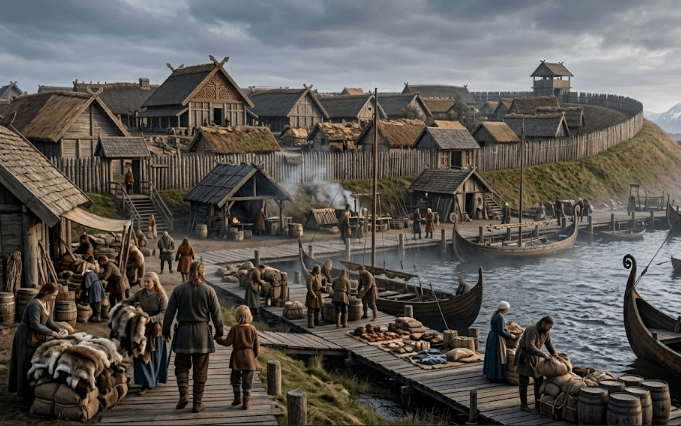
Aros gives Moesgaard’s exhibition a powerful opening because it was not a generic Viking settlement. Instead, it was the Viking-period town that later became Aarhus, one of Denmark’s most important cities. VisitAarhus describes the Viking Museum in Aarhus as a window into the Viking town of Aros, founded roughly 1,200 years ago at the same level and spot where the museum now sits beneath Skt. Clemens Torv.

That physical depth matters. A visitor in modern Aarhus can stand above the traces of an older town that managed trade, craft, movement, and defense. Because of that, the Viking Museum’s site context helps people understand that Viking history did not only happen on distant seas. It also happened under later streets, squares, churches, and commercial buildings.

Moesgaard builds on that local foundation. Rather than starting with an abstract map, the exhibition begins with Aros as a lived place and then stretches outward. This design helps visitors connect local archaeology with wider Viking routes.

How The Exhibition Uses Personal Stories

Moesgaard’s exhibition uses personal stories to move visitors through the Viking world. The museum says visitors can choose a person from the Viking Age to follow on an adventure. Options include Queen Tove, Harald Bluetooth’s young bride; 12-year-old Arne; and Reginbrand, the first bishop of Aros. Through them, visitors enter a world of trade, plundering, and discoveries.

That storytelling method matters because routes can become too abstract. A map alone may show distance, but a character creates stakes. For example, a royal bride can introduce politics, marriage, status, and dynastic alliance. Meanwhile, a child can bring daily life and vulnerability into the story. A bishop can then show how Christianity entered towns, courts, and regional power structures.

The exhibition’s strongest move lies in connecting those personal paths with geography. Visitors do not simply learn that Vikings traveled widely. Instead, they follow people through routes that link Aros to Norway, river corridors, and Constantinople. As a result, Viking movement feels practical rather than decorative.

For readers interested in Viking Age trade and expansion, that personal-route structure shows why movement shaped identity. Trade, violence, conversion, and settlement did not float separately. They traveled through the same seas, towns, families, and political networks.

Why Norway Belongs In The Aros Route Map

The exhibition’s route toward Norway’s mountains matters because Norway was not only a distant northern neighbor. It formed part of the same maritime and political world that connected Denmark, the North Sea, the Skagerrak, the Kattegat, and Atlantic routes. Ships could turn geography into opportunity, but they also made weather, coastlines, harbors, and seasonal timing unavoidable.

Moesgaard reinforces that Norway link through a major object: the Gokstad boat. The museum describes it as a 6.5-meter authentic Viking boat from the Gokstad Ship in Norway. In addition, it says Vikings used such a maneuverable boat to row crews and exchange orders between warships. That detail gives the exhibition a concrete Norwegian anchor.

The Gokstad boat matters because it shifts attention from the famous large ship to the smaller craft that made maritime systems work. Long-distance routes required more than impressive hulls. Crews needed tenders, harbor movement, communication between vessels, and practical boat handling. Therefore, a small boat can explain operations that a grand ship alone might hide.

This Norway connection also protects the exhibition from treating Viking routes as fantasy lines on a map. Mountains, coastlines, boats, currents, and ports all mattered. A route to Norway was a test of environment as much as ambition.

Why Constantinople Changes The Scale

Constantinople changes the exhibition’s scale because it pushes the visitor far beyond Scandinavia. The city known in Old Norse as Miklagard stood at the edge of Norse imagination, trade, service, and prestige. A route from Aros toward Constantinople reminds visitors that Viking Age movement did not stop at the North Sea or the British Isles.

Moesgaard’s wording matters here. The exhibition invites visitors to travel via rivers toward “exotic Constantinople.” That route points toward the eastern networks often linked with Scandinavian traders, warriors, and travelers. Rivers connected northern Europe with markets, fortresses, portages, and political centers that could eventually lead toward Byzantium.

However, a museum must handle this topic carefully. Not every Scandinavian traveler reached Constantinople. Likewise, not every object in Scandinavia came through one clean eastern route. Even so, the destination matters as an interpretive tool. Constantinople helps visitors understand that Viking mobility could connect small towns with imperial centers.

That bigger scale makes Aros more interesting, not less. Aros becomes a node in a network. It links local craft and defensive walls to rivers, ships, markets, rulers, and foreign goods.

How Recent Textile News Strengthens The Aros Story

A recent discovery near Aarhus gives Moesgaard’s exhibition fresh relevance. In June 2026, AP reported that archaeologists from Moesgaard Museum found a large Viking Age textile production site at Søften, about 10 kilometers north of Aarhus. The site covers more than 100,000 square meters, dates roughly to AD 600–950, and includes more than 80 pit houses. Archaeologist Liv Stidsing Reher-Langberg led the 10-month excavation. (Søften textile production discovery)

The Søften discovery matters because it shows the kind of production network that could support a town like Aros. Textiles did not appear magically in trade. People processed flax, spun thread, used loom weights and spindle whorls, organized workshops, and moved goods toward larger markets. Moesgaard historian Kasper Andersen told AP that a site of this scale needs a larger network and international perspective.

That current evidence supports the exhibition’s route-map logic. Aros was not only a place where travelers passed through. It belonged to a working regional economy. Rural production, craft specialization, elite control, town exchange, and long-distance routes all connected.

This helps oldnorsenews.org avoid a common Viking mistake. Trade should not appear only as distant silver, swords, and ships. Instead, it also depended on labor sites, textiles, food, craft tools, roads, waterways, and people who never became saga heroes.

Why Aros Was More Than A Gateway

VisitAarhus describes Viking Age Aarhus as a thriving trading town with many different craftsmen. It also notes that merchants had contacts to the north, south, and east. At the same time, Aarhus had a huge defensive wall that controlled movement through the city gates and protected the town from outside attacks.

That combination matters. Aros was open enough to trade and closed enough to defend. A town that welcomed goods also needed ways to manage risk. Walls, gates, craft zones, and merchant contact reveal a place where commerce and control worked together.

Moesgaard’s exhibition uses Aros well because it does not isolate the town from the world around it. The visitor starts in alleyways, then moves outward. That sequence mirrors how towns worked. Local streets led to harbors. Harbors led to seas. From there, seas connected to belts, fjords, rivers, and distant empires.

The route-map idea also changes how visitors understand Viking power. Power did not sit only in royal halls or battlefield victories. It operated through towns that could gather goods, regulate entry, host craftspeople, move ships, and connect local economies to wider routes.

Why Rivers Matter As Much As Seas

Viking history often foregrounds open-sea travel, but Moesgaard’s Constantinople route reminds visitors that rivers mattered too. Rivers carried boats, goods, people, and political influence across inland landscapes. They also created difficult choices: portage points, seasonal water levels, hostile territories, tolls, markets, and changing languages.

A ship leaving a Scandinavian harbor entered a world of logistical decisions. Crews had to plan where to row, sail, beach, repair, trade, and negotiate. River routes could open deep inland movement, but they also demanded knowledge of currents, local power, and practical boat handling.

This is why the exhibition’s geography works. It does not treat Viking travel as one heroic leap. Instead, it breaks travel into linked environments: town streets, open waters, belts, mountains, rivers, and Constantinople. Each environment asks different questions.

Visitors who follow that map can see the Viking Age as a system of movement. The system includes seafaring skill, inland navigation, production sites, market towns, military risk, and cultural contact.

How The Exhibition Counters The Raider-Only Image

Moesgaard does not erase raiding from the Viking Age. Its own exhibition page says the personal stories lead visitors into a world of trade, plundering, and discoveries. That balance matters because a responsible museum should not turn Vikings into peaceful merchants only. Violence, slavery, plundering, and political coercion formed part of the period.

Still, the exhibition refuses to make plundering the only story. Aros brings urban life into the picture. Queen Tove introduces dynastic politics. Reginbrand points toward Christian authority. Arne gives younger visitors a human route into the period. The Gokstad boat explains practical ship communication. Constantinople expands the map toward long-distance ambition.

That mix gives the exhibition better historical texture. Viking Age travel could produce trade in one context and violence in another. A person, ship, or object might move through both worlds during one lifetime. In practice, the same sea routes carried merchants, warriors, missionaries, diplomats, captives, and migrants.

This is the lesson oldnorsenews.org can draw from Moesgaard. The Viking Age becomes more accurate when museums keep contradictions visible.

What The Exhibition Teaches About Museum Design

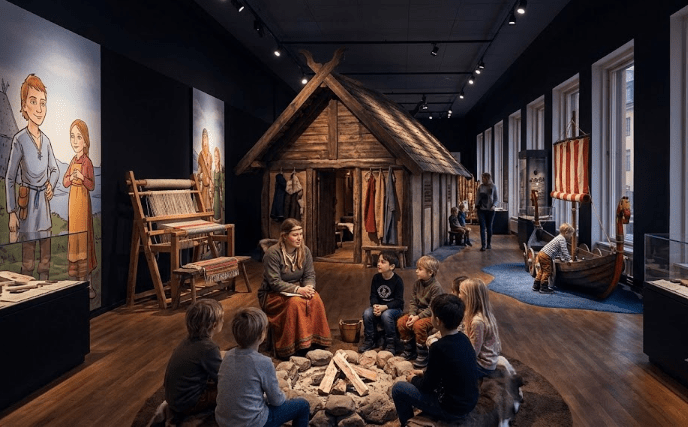
Moesgaard’s exhibition shows how museum design can teach movement. Instead of arranging the Viking Age only by object type, it builds a journey. Visitors hear personal stories, choose a route, steer a ship, pass through Aros, and encounter destinations that widen the map.

That design helps visitors understand networks. A sword case can show weapon style. A coin case can show exchange. By contrast, a route-based exhibition can show how weapons, coins, people, and ideas moved between places. Movement becomes the organizing principle.

This approach also supports different visitor levels. Children can follow characters and ships. General visitors can grasp trade and travel. More experienced readers can think about political geography, Christianization, river routes, and maritime infrastructure. In other words, a good exhibition works on several layers at once.

Moesgaard’s challenge lies in source clarity. Personal stories can help visitors care, but museums need to show where evidence ends and interpretation begins. Queen Tove, Arne, and Reginbrand can guide a route, while archaeology must still anchor the route.

Why The Gokstad Boat Should Not Be Treated As A Prop

The Gokstad boat in Moesgaard’s exhibition should not function only as an atmospheric Viking object. It connects the exhibition to one of Norway’s most important ship contexts and to the technical systems that made maritime travel possible.

A 6.5-meter boat can teach scale in a way a wall map cannot. Visitors can imagine rowing, maneuvering, crew transfer, and command communication between larger vessels. Because of that, the object turns route planning into physical experience. It reminds people that travel required bodies, timing, and coordination.

That point matters for Norway-focused readers. Viking ships often become national symbols, especially around Oseberg, Gokstad, and Tune. Moesgaard’s use of the Gokstad boat places Norwegian maritime evidence inside a broader Scandinavian exhibition. The object does not stay in a purely Norwegian story. Instead, it helps explain how the Viking world moved.

The boat also shows why small craft deserve more attention. A route map needs more than famous ships. It needs working boats, crews, harbors, docks, storage, weather knowledge, and practical communication.

What Readers Should Verify When Museums Turn Routes Into Stories

Route-based exhibitions can teach well, but they also need careful boundaries. A museum route from Aros to Norway or Constantinople does not prove that every named character took that exact path. It offers an interpretive structure based on historical possibilities, archaeological evidence, and broader Viking Age networks.

Readers should ask several questions. Which objects come from excavated contexts? Which routes rest on archaeological evidence, written sources, or later tradition? Which characters are historical, and which serve as educational guides? How does the museum distinguish trade from raiding, mission work from politics, and local Aros evidence from wider Scandinavian patterns?

Those questions do not weaken the exhibition. Instead, they make it more useful. Moesgaard’s strongest contribution lies in showing that Viking history needs geography. The Viking Age was not only a timeline from AD 800 to AD 1066. It was also a network of places, routes, resources, and decisions.

For oldnorsenews.org readers, that route awareness matters because it turns familiar names into working landscapes. Aros becomes a town with walls and craftspeople. Norway becomes mountains, boats, and maritime links. Constantinople becomes a distant imperial goal reached through river logic, not fantasy.

Why Aros Still Matters For Viking Route Thinking

Aros still matters because it helps modern readers see Viking history from the ground outward. The story begins in a town under present-day Aarhus, moves through regional craft production, crosses waters toward Norway, and stretches by rivers toward Constantinople. Each step widens the map without abandoning the local starting point.

That structure makes Moesgaard’s Viking Age exhibition valuable. It teaches that the Viking world did not consist of isolated raids or heroic voyages alone. Rather, it rested on towns, workshops, boats, defensive systems, routes, markets, royal politics, church figures, and long-distance ambition.

The recent Søften textile discovery reinforces that lesson. Large-scale production near Aarhus shows how regional work could support wider exchange. Aros did not simply watch the Viking Age pass by. It helped organize goods, people, and movement.

Moesgaard’s exhibition therefore turns Aros into more than an old name for Aarhus. It turns Aros into a route map. From smoky alleyways to Norway’s mountains and river roads toward Constantinople, the exhibition shows the Viking Age as a connected world that visitors can follow step by step.

Posted in Norse History & Archaeology | Comments Off on How Moesgaard’s Viking Age Exhibition Turns Aros Into A Route Map From Norway To Constantinople

Why “Viking Life With Halvdan And Meia” Matters For Teaching Norse Daily Life To Children

“Viking Life With Halvdan And Meia” matters because it teaches children that the Viking Age was not only a world of ships, weapons, kings, and raids. The Swedish History Museum in Stockholm presents the exhibition from February 21, 2026, to January 10, 2027, as a playful Viking village for younger children. Visitors can play in the chieftain’s house, step into the forge and the barn, meet farm animals, run along jetties, and board the village’s Viking ship. The museum also explains that the exhibition suits preschool-aged children and draws heavily on the Halvdan Viking books by author Martin Widmark and illustrator Mats Vänehem. For oldnorsenews.org readers, the exhibition opens a useful question: how should museums teach Norse daily life before children inherit the usual warrior stereotype? (Swedish History Museum exhibition)

Why A Play Exhibition Can Teach Serious Viking History

A children’s exhibition may look light, but its design choices shape historical memory early. When a child first meets the Viking Age through a farm, barn, forge, house, jetty, and ship, the past begins as a whole community rather than a battlefield. That matters because many adults already carry a narrow Viking image built from weapons, raids, helmets, and seafaring drama.

The Swedish History Museum frames the exhibition as a playful journey to a Viking village. That choice gives young visitors a physical setting they can explore through movement. They do not only look at a sword case or listen to a battle story. Instead, they enter a small world where food, animals, boats, houses, craft, and social roles all matter.

This approach fits current museum thinking better than a simple “Vikings were warriors” lesson. Children understand the past through space, touch, story, and repetition. A village lets them connect actions with places: animals live on farms, craftspeople work in workshops, boats need jetties, and families depend on food, tools, shelter, and labor.

What Halvdan And Meia Add To The Museum Story

The exhibition uses characters that many Swedish children may already recognize. The Swedish History Museum says “Viking Life With Halvdan And Meia” draws largely from the books about Halvdan Viking by Martin Widmark and Mats Vänehem. Barnutställningar, the exhibition producer, adds that it created the exhibition in 2022 and built a whole small village around the characters.

That literary connection helps the museum solve a common education problem. Young children often need story before they can absorb historical categories. Halvdan and Meia give the exhibition a friendly route into a distant period. Their presence can make a house, barn, ship, or forge feel less abstract.

However, the story element also creates responsibility. Museums must help visitors understand that fictional characters can introduce history, but they cannot replace archaeological evidence. Halvdan and Meia can guide children into Viking Age settings. The museum then needs objects, labels, educators, and careful context to show what researchers know, what they infer, and what belongs to imagination.

That balance makes the exhibition more interesting. It does not ask children to choose between story and history. It uses story as an entry point, then places that story inside a museum where evidence still matters.

Why Daily Life Should Come Before Warrior Mythology

Children usually meet Viking history through the most dramatic images first. A ship appears. A warrior swings an axe. A raid begins. A king claims power. Those images can excite young audiences, but they can also make the Viking Age feel like a costume world rather than a society.

“Viking Life With Halvdan And Meia” shifts the starting point. The chieftain’s house introduces leadership and hierarchy. The forge introduces craft and tools. The barn introduces animals and farm work. The jetties introduce travel and water routes. The ship introduces movement without forcing every voyage into a raid story.

That order matters because most people in Viking Age Scandinavia did not live as full-time raiders. They farmed, herded animals, repaired buildings, made clothing, cooked food, traded goods, raised children, attended gatherings, honored gods or later Christian practices, and worked within local social systems. Old Norse News has already covered how Viking Age daily life depended on farms, houses, hierarchy, and material labor more than popular images often admit.

A child who learns that first will understand weapons and ships better later. Raiding, trade, migration, and elite power came from communities that could feed people, build vessels, raise animals, forge tools, and organize labor.

How The Village Layout Teaches Systems Instead Of Isolated Facts

The exhibition’s village layout matters because daily life works as a system. Barnutställningar says it built six cottages: a chieftain’s house, forge, offering house, bake and food house, barn, and weaving cottage. It also says all houses invite play and activities. That design can teach children how different parts of Norse life connected.

A forge does not stand alone. It needs fuel, metal, tools, skill, and people who need repairs. A barn does not only hold animals. It connects to food, manure, leather, wool, traction, and seasonal routines. A weaving cottage points toward textile labor, clothing, sailcloth, household production, and trade value. A bake and food house points toward grain, storage, cooking, and survival.

The chieftain’s house adds another layer. Leadership in Norse society did not float above daily life. Local power depended on food, followers, gift exchange, legal standing, ritual performance, and control over resources. Even a simplified children’s setting can show that a “chief” needed a community around him or her.

This kind of spatial teaching can avoid a common museum weakness. Instead of presenting disconnected facts, the village helps children act out relationships between places and tasks. That play can build a better historical instinct.

Why The Ship Still Belongs In The Story

The Viking ship remains essential, even in an exhibition about daily life. The Swedish History Museum page says children can set sail aboard the village’s Viking ship. That detail matters because ships shaped Viking Age identity, trade, travel, raiding, migration, and storytelling. Removing the ship would create another distortion.

The key lies in context. A ship in a children’s village should not only signal attack. It can also show transport, fishing, trade, travel, visiting relatives, carrying goods, and moving through waterways. In Scandinavia, water often connected communities more effectively than roads. A child who plays near jetties and a ship can start to understand geography through movement.

This broader ship lesson fits the historical record. Viking Age vessels supported many kinds of activity. Some carried warriors. Others carried cargo, animals, tools, timber, food, or travelers. Some entered graves as symbols of status and memory. Others worked as practical craft in coastal life.

The exhibition’s ship can therefore teach a simple but important point: the sea made Norse life larger. It connected farms, towns, islands, markets, and distant regions. Children do not need every detail at preschool age, but they can understand that ships moved people through a world bigger than one village.

How The Swedish History Museum Can Balance Play And Evidence

The Swedish History Museum has an advantage because it also houses “The Viking World,” a permanent exhibition that presents more than 2,000 authentic Viking Age objects. The museum describes that exhibition as the world’s largest Viking exhibition and directly addresses the global myth of violent, horned-helmet Vikings. It says new archaeological discoveries and research have changed how scholars view life in Scandinavia a thousand years ago.

That broader museum setting matters for “Viking Life With Halvdan And Meia.” A play exhibition can introduce children to atmosphere, movement, and daily spaces. Nearby object-based exhibitions can help older siblings, parents, and teachers connect that play to real artifacts. Together, the two approaches can support each other.

The challenge comes from simplification. Young children need clear spaces and inviting activities. Museums cannot overload them with complex debates about chronology, source criticism, burial interpretation, or regional variation. Still, good design can avoid false certainty. It can use wording such as “people could,” “many families,” “archaeologists have found,” and “some evidence suggests” when educators speak to families.

That careful language helps children develop trust in evidence. They learn that history does not come from guessing. It comes from objects, sites, bones, tools, buildings, texts, and comparison.

Why Children’s Viking Exhibitions Need Animals, Food, And Craft

Animals, food, and craft deserve more attention in children’s Viking exhibitions because they show how people survived. The Halvdan and Meia exhibition includes a barn and farm animals, which helps young visitors see that Norse life depended on more than heroic travel. Animals supplied meat, milk, wool, hides, labor, manure, and status. They also shaped daily routines.

Food spaces matter for the same reason. A bake and food house can teach children that meals required farming, grinding, storing, cooking, sharing, and seasonal planning. Viking Age households had to manage scarcity and abundance. They needed grain, livestock, fish, preserved foods, fuel, vessels, tools, and labor.

Craft spaces can carry an even deeper lesson. A forge points toward metalwork, repair, tools, and weapon production. A weaving cottage points toward clothing, sails, blankets, and trade goods. Children may not grasp the full economy of textile labor, but they can understand that people made things by hand and that objects required time.

These themes also help correct gender imbalance. Weapons often draw attention toward male-coded warrior stories. Food, animals, textiles, and household production show that women, children, enslaved people, farmers, and craft workers also shaped Norse society.

What Teachers And Parents Should Emphasize

Parents and teachers can use the exhibition best by asking practical questions. Who lives in this village? What work happens in each house? What animals do people need? What does the forge make? Why does the village need a ship? What would happen if the food ran out? Which tasks might children have seen or helped with?

Those questions turn play into historical thinking. They also keep the experience grounded. A child does not need a lecture about archaeological method to learn that houses, animals, and tools tell us about the past. The child can begin with observation: this village has many jobs, and people depend on each other.

Adults should also separate fiction from evidence. Halvdan and Meia can make the Viking Age approachable, but they remain story characters. The museum setting gives adults a chance to explain that stories help us imagine the past, while archaeology helps us test what people actually did.

That distinction will matter later. Children who learn it early can enjoy Norse myths, Viking stories, and museum play without confusing every narrative with proof. They can grow into readers who ask better questions about sources.

How A Children’s Viking Village Counters The Raider Stereotype

The raider stereotype persists because it gives audiences a fast, dramatic image. A children’s village counters that image by slowing the Viking Age down. It asks visitors to think about morning work, animal care, tools, food, weaving, repairs, and movement from one place to another.

This does not deny violence. Viking Age Scandinavia included conflict, raiding, slavery, political competition, and social inequality. Children’s exhibitions do not need to hide that reality forever. Yet a preschool exhibition can choose an age-appropriate starting point. Daily life gives children a foundation before they later encounter harder topics.

That foundation can make difficult history easier to teach honestly. When children already understand farms, ships, homes, and work, they can later understand why raiding required resources, why slavery mattered economically, why trade and violence often overlapped, and why power depended on households as well as weapons.

The Halvdan and Meia exhibition therefore matters because it resists the idea that the Viking Age begins with violence. It begins with a village, and that choice changes the lesson.

Why The Exhibition Still Needs Source Boundaries

A playful Viking village can teach well, but it also needs clear source boundaries. A reconstructed play space cannot show one exact Viking village. It simplifies architecture, social roles, objects, and daily routines for young children. That does not make it useless. It means the museum should treat the village as an educational model rather than a perfect historical reconstruction.

Barnutställningar designed the exhibition around play, and the Swedish History Museum presents it as suitable for younger children. That purpose matters. The exhibition does not need to prove every detail through a label beside each toy animal. However, educators and supporting museum material should still connect play spaces to archaeological evidence where possible.

The best approach avoids two extremes. It should not turn the Viking Age into fantasy scenery. It also should not burden preschool children with specialist complexity. Instead, the exhibition can offer layered learning: young children play, adults guide questions, and the wider museum provides authentic objects and deeper context.

That layered model gives “Viking Life With Halvdan And Meia” its strongest value. It can welcome children without flattening the past completely.

What Old Norse News Readers Should Take From It

“Viking Life With Halvdan And Meia” matters because it shows how Viking history reaches the next generation. The exhibition does not target specialists. It targets preschool-aged children, families, and caregivers. That audience makes the framing especially important.

If children meet the Viking Age only through warriors, they may carry that image for years. If they meet it through houses, animals, ships, food, craft, and stories, they gain a wider starting point. Later, they can add trade, belief, politics, conflict, burial evidence, and source criticism to a more balanced foundation.

For oldnorsenews.org, the topic fits a broader editorial goal: explain Norse history through evidence, context, and practical life rather than spectacle alone. The Swedish History Museum’s exhibition offers a current example of how public history can work for very young audiences. It uses play, story, and space to make daily life visible.

That matters because children do not only learn facts in museums. They learn what counts as history. A Viking village built around work, animals, craft, food, and travel teaches them that the Norse past belonged to whole communities, not only to warriors on ships.

Posted in Norse History & Archaeology | Comments Off on Why “Viking Life With Halvdan And Meia” Matters For Teaching Norse Daily Life To Children

How A Stavanger Viking Sword Reopens The North Sea Contact Story

A Stavanger Viking sword reopens the North Sea contact story because one damaged hilt can still point across a wide maritime world. The University of Stavanger’s Museum of Archaeology reports that two metal detector enthusiasts uncovered three sword fragments in the Jåttå/Gausel area of Stavanger. The blade no longer survives, yet the hilt preserves gold and silver details, animal-style ornament, niello work, and an unusual crossguard form. Archaeologist Zanette Glørstad identifies the closest known parallel as a sword from Eigg in Scotland, from a grave dated to the 800s. Researcher Håkon Reiersen argues that the location forces scholars to reconsider Jåttå/Gausel as a major contact zone across the North Sea. (University of Stavanger sword report)

Why The Stavanger Sword Matters Beyond Its Missing Blade

The Stavanger sword matters because it carries elite information even without its blade. Thousands of Viking Age swords have turned up in Norway, but UiS says researchers know only about 20 examples of this rare decorated type among roughly 3,000 Norwegian Viking sword finds. That makes the hilt more than a loose weapon fragment. It places the object inside a small group of prestige weapons connected with wealth, status, foreign contact, and skilled metalwork.

The surviving hilt includes gilded elements and silver decoration. Conservator Cora Oschmann, who works on the sword at the Museum of Archaeology, has described the conservation process as challenging because new details appear during treatment. The decoration includes animal-style features known from Iron Age and Viking Age metalwork, roughly AD 550–1050. The hilt also uses niello, a dark metallic inlay that creates black lines against silver.

Those technical details matter because they show how much meaning the sword carried before anyone swung it. A Viking Age sword could mark combat ability, but it could also mark rank, gift exchange, inheritance, alliance, burial display, or a claim to elite identity. The Stavanger hilt belongs to that wider symbolic world. Its missing blade limits some conclusions, but the surviving fittings still speak clearly about prestige.

Why Jåttå And Gausel Change The Interpretation

The sword’s findspot gives the discovery much of its importance. Jåttå and Gausel sit in the Stavanger area of Rogaland, a region with long maritime links and rich Viking Age evidence. UiS reports that the sword came from an area already known for major finds, including the grave connected with the so-called Gausel Queen. That nearby evidence stops the sword from looking like an isolated curiosity.

The Museum of Archaeology’s Viking Period exhibition places special emphasis on women through the Gausel Queen, one of Norway’s richest Viking Period graves. UiS says the exhibition includes about 40 spectacular finds from the grave, on loan from the University Museum in Bergen.

Norwegian UiS material adds that the Gausel grave ranks among Norway’s largest Viking Age grave finds and returned to Stavanger after 140 years. It also notes that the woman’s grave goods included rich objects from the British Isles. Kristin Armstrong-Oma, professor of archaeology at the Museum of Archaeology, describes the grave as a rare window into the woman’s status and power.

That nearby context changes the sword story. A rare weapon in a landscape already tied to imported elite goods suggests a concentration of power and contact. The hilt does not prove the details of one voyage, but it strengthens the case that the Jåttå/Gausel area connected local authority with overseas networks.

How The Eigg Parallel Expands The Map

Glørstad’s comparison with Eigg in Scotland gives the Stavanger sword its strongest North Sea connection. Eigg lies in the Inner Hebrides, a region shaped by Norse movement, settlement, and later Norse-Gaelic culture. The Highland Historic Environment Record describes a Viking grave near Kildonnan on Eigg, with finds that include a bronze-and-silver sword handle dated between AD 830 and 850. (Eigg Viking grave record)

That record also lists bronze plates, part of a buckle, a whetstone, and another metal object among the grave finds. The Eigg blade no longer survives, but the hilt remains important because its form and ornament invite comparison with the Stavanger example. The parallel does not create a simple one-way story from Scotland to Norway or Norway to Scotland. It shows that elite weapon styles crossed maritime zones.

The North Sea did not function like a border wall. It worked as a route system. Ships moved people, styles, silver, weapons, textiles, captives, ideas, and stories between Norway, Scotland, Ireland, England, Denmark, and the Continent. The Stavanger sword fits that world. Its hilt points toward a culture where elites used overseas objects or overseas styles to communicate status at home.

Why Imported Prestige Goods Complicate Viking Identity

The UiS sword report says this rare sword type appears in both eastern and western Europe. Glørstad argues that the few Norwegian examples most likely came from abroad. She also points toward France or England as possible sources for the Stavanger sword’s decoration, while leaving open the chance that skilled Norwegian swordsmiths copied the type.

That uncertainty deserves space because it shows how archaeology works. A sword may arrive as a finished import. A local craftsperson may copy a foreign style. A hilt may combine local and imported components. A weapon may move through trade, gift exchange, marriage alliances, tribute, raiding, service, or inheritance. Each route tells a different story, but every route still points to contact.

Prestige objects also complicate identity. A wealthy person in Stavanger could own a foreign-made weapon without becoming foreign. A local elite could use imported goods to signal overseas reach, political ambition, military success, or family connections. Material culture often speaks in social language rather than national categories. That matters because modern readers can too easily map later national identities onto the Viking Age.

The Stavanger sword therefore helps readers avoid a narrow “Norwegian versus Scottish” frame. Instead, the hilt invites a wider question: how did Viking Age elites use objects from across the sea to build authority in local landscapes?

How The Gausel Queen Adds A Different Kind Of Power

The nearby Gausel Queen evidence keeps the sword from becoming only a male warrior story. The sword itself carries martial imagery, but the Gausel landscape also preserves evidence of elite female status and imported wealth. UiS material on the Gausel grave describes rich objects from the British Isles and emphasizes the woman’s exceptional status.

That contrast matters for oldnorsenews.org because Viking Age contact did not belong only to raiders with weapons. Women’s graves can reveal imported dress fittings, containers, religious objects, craft associations, and symbols of household or political authority. Elite women could participate in exchange systems through marriage, inheritance, gift circulation, ritual status, or household control.

The Stavanger sword and the Gausel Queen do not tell the same story, yet they share a landscape. One object points toward weapon prestige and foreign parallels. The other points toward a powerful woman surrounded by rich imported goods. Together, they make Jåttå/Gausel look like a place where power moved through several channels.

That wider pattern matters more than a single dramatic claim. The sword should not erase the woman’s grave, and the grave should not reduce the sword to background. Both sharpen the same question: why did so many high-value objects cluster in this part of Stavanger?

Why Conservation Changes What Researchers Can Say

Conservation gives the Stavanger sword much of its future value. Oschmann’s work at the Museum of Archaeology continues to reveal details in the hilt. UiS reports that the conservation process has uncovered new information day by day. That slow work matters because corrosion and broken metal can hide decoration, structure, repairs, and production clues.

Good conservation does more than make an object display-ready. It creates evidence. Specialists can examine tool marks, inlay techniques, metal combinations, break patterns, and traces of gilding. They can compare the hilt with other rare examples and refine the sword’s date, origin, and cultural links. A cleaned line of niello or a revealed animal-head terminal can change the interpretation.

The detectorists’ responsible reporting also matters. They handed the fragments to cultural heritage authorities, which allowed specialists to preserve location information and begin museum treatment. A spectacular find loses much of its value when someone removes it from context or sells it privately. Archaeology needs the object, but it also needs the findspot, reporting chain, and conservation record.

For readers, this process explains why archaeological stories evolve. A headline may announce a rare sword, but the strongest conclusions often come later, after conservation, comparison, and publication.

How The Sword Reframes Rogaland’s Maritime Role

Rogaland’s geography makes the Stavanger sword especially meaningful. The region faces the North Sea and sits near routes toward the British Isles, Denmark, the Irish Sea, and the wider Atlantic. Viking Age communities in Rogaland did not live at the edge of the world. They lived beside a maritime highway.

Reiersen’s interpretation places Jåttå/Gausel in that network. UiS reports his view that spectacular imported finds connected to both men and women show an important hub for North Sea contact. The sword adds a rare weapon to a landscape already known for imported elite grave goods. That pattern suggests a local elite that could draw power from maritime connections.

This does not mean every object arrived through peaceful trade. Viking Age contact could involve raiding, trading, tribute, diplomacy, marriage, service, and settlement. A sword might move as a gift, a purchase, a spoil, an heirloom, or a political object. The North Sea created opportunities for exchange and violence at the same time.

That complexity gives the article its strength. The Stavanger sword reopens the North Sea contact story because it refuses a single explanation. It shows a region where objects crossed water, meanings changed, and local power depended on wider networks.

Why The Sword Fits A Larger Viking Economy

The Stavanger hilt also belongs in the wider economic story of the Viking Age. Readers often associate Viking exchange with silver hoards, trade towns, and long-distance cargo. Prestige weapons deserve a place in that economy as well. They required materials, skilled labor, social demand, and routes of movement.

A decorated sword could carry value in several forms. The metal itself held worth. The craftwork showed access to specialists. The foreign style signaled contact beyond the local district. The weapon’s display could influence reputation in life, while burial or deposition could extend that reputation after death. Objects like this turned economic power into visible social language.

This makes the sword a useful companion to oldnorsenews.org’s coverage of Viking Age trade and expansion. The North Sea economy did not consist only of merchants weighing goods. It also involved chiefs, families, craftspeople, warriors, households, and travelers who used objects to create relationships.

The Stavanger sword therefore sits between economy and identity. It shows that exchange systems reached into elite display, and that elite display could preserve evidence of exchange long after written memory disappeared.

What The Sword Does Not Prove

The sword deserves attention, but readers should keep clear limits. The hilt does not name its owner. It does not prove a specific battle, voyage, or alliance. It does not prove that someone from Stavanger traveled to Eigg, or that someone from Eigg traveled to Stavanger. The parallel suggests contact through shared styles and comparable elite objects, not a documented meeting between two people.

The missing blade also limits interpretation. Researchers cannot study its full length, welding pattern, inscriptions, battle damage, or repairs. The surviving hilt still offers rich evidence, but it cannot answer every question. Scholars can compare decoration, form, and metalwork, yet they must leave some possibilities open.

Origin also remains cautious. Glørstad points toward foreign production or foreign-inspired copying. France or England may explain the decoration, and Norwegian copying may also fit the evidence. That range does not weaken the find. It shows how connected the Viking Age elite world had become by the early 800s.

Good history often advances through this kind of disciplined uncertainty. The sword points across the North Sea, but it does not tell a complete travel diary.

What Future Research Could Clarify

Future research can sharpen the story in several ways. Conservation may reveal more decorative details and production clues. Metallurgical analysis could clarify the composition of the hilt, gilding, silver, and niello. Comparison with other rare swords may refine its date and workshop connections. Landscape study around Jåttå/Gausel may help determine whether the fragments came from a disturbed grave, settlement area, or another kind of archaeological context.

Museum interpretation can also change the public understanding of the find. If the Museum of Archaeology displays the sword beside the Gausel Queen material, visitors may see the Jåttå/Gausel area as a connected elite landscape rather than a set of separate discoveries. That would help prevent the sword from becoming just another warrior object.

Researchers may also compare the Stavanger hilt more closely with the Eigg sword handle. The Highland record provides a strong starting point, but further study could explore metal composition, casting choices, decoration, and use-wear. Those details may show whether the two objects belong to the same broad style, the same workshop tradition, or a looser elite fashion.

Each answer could change the North Sea contact story. The sword already matters, but it may matter even more once specialists complete the next stages of analysis.

Why The North Sea Contact Story Still Matters

The Stavanger sword matters because it turns contact into something visible. The North Sea can seem abstract when historians describe routes, raids, trade, or settlement. A decorated hilt makes those networks material. Someone valued this object. Someone carried it, exchanged it, displayed it, repaired it, deposited it, or lost it. Its survival in Stavanger links a local place to a much larger world.

For Norway, the find highlights Rogaland’s role in Viking Age mobility. For Scotland, the Eigg parallel shows how the Hebrides belonged to a shared maritime zone of styles, weapons, and elite signals. For readers of Norse history, the sword offers a useful correction: Viking Age contact did not move in one direction. It crossed the sea repeatedly, through many people and many kinds of objects.

The strongest conclusion stays source-aware. A rare Stavanger hilt cannot rewrite the whole Viking Age on its own. It can, however, reopen the map. It points from Jåttå and Gausel toward Eigg, the British Isles, western Europe, and the elite networks that tied them together.

That is why the sword deserves a careful article. The blade has vanished, but the hilt still works as evidence. It shows how metal, style, geography, and conservation can bring the North Sea contact story back into focus.

Posted in Norse History & Archaeology | Comments Off on How A Stavanger Viking Sword Reopens The North Sea Contact Story

Why Birka’s Viking Dog Weekend Opens A Better Question About Animals In Norse Life

Birka’s Viking dog weekend opens a better question about animals in Norse life because dogs were never just friendly scenery around Viking Age people. On August 8–9, 2026, Birka, the Viking City in Lake Mälaren, will host “The Dog – The Viking’s Best Friend!” in collaboration with the Swedish Icelandic Sheepdog Club and Kennel Sangilak. The official program includes herding demonstrations, dog parades, a petting corner, quiz walks for visitors and dogs, guided tours, and lectures about dogs in archaeological context. Together, those activities turn a family event into a useful public-history prompt. For oldnorsenews.org readers, the topic matters because animals can reveal work, status, burial practice, household life, and belief in the Norse past without relying on the usual warrior-and-ship frame. (Birka Viking dog weekend)

Why Birka Is The Right Place To Ask About Viking Dogs

Birka gives the dog weekend more historical weight than a generic Viking-themed program could. The site sits on Björkö Island in Lake Mälaren, west of Stockholm, and forms a UNESCO World Heritage Site with Hovgården on nearby Adelsö. UNESCO describes Birka and Hovgården as an archaeological complex that illustrates Viking-Age trading networks and their influence on Scandinavia’s later history. Its listing also notes that Birka held Sweden’s first Christian congregation, founded in 831 by St Ansgar.

That setting matters because Birka was not a modern stage built for reenactment. A town rose on Björkö in the mid-700s, according to Birka’s official history page, and merchants brought goods from Europe and beyond, including Arabic silver, Eastern European beads, ceramics, glass, and exclusive fabrics. The same source says the town may have held about 700 to 1,000 people during its two centuries of activity.

A dog weekend at such a site can do more than entertain visitors. Instead, it can remind them that animals shaped daily life in a trading town. Dogs may have guarded homes, accompanied people, helped with herding, joined hunting activities, or carried symbolic meaning in death. Livestock supplied food, wool, leather, bone, horn, and movement, while horses could mark elite status and transport. Birds, fish, cattle, sheep, goats, pigs, and dogs all belonged to the practical world behind Norse settlement and trade.

This topic also connects naturally with Old Norse News coverage of daily life during the Viking Age, where households, farms, labor, and material evidence matter more than simple warrior imagery.

How Modern Dog Culture Can Mislead Viking Interpretation

Modern visitors often approach Viking dogs through affection. They may imagine loyalty, companionship, protection, and familiar pet behavior. Those ideas can overlap with the archaeological record in some cases, yet they cannot explain every dog find. A modern pet-owner lens makes the past feel close, but it can also hide cultural differences.

Birka’s 2026 program includes lectures about dogs in archaeological context, which gives the event a needed corrective. Archaeological context asks different questions from modern feeling. Where did the dog appear? Did the remains come from a grave, settlement layer, waste deposit, workshop area, or ritual setting? Did archaeologists find the whole skeleton or butchered remains? Was the animal placed with a human burial, with other animals, or alone? Bone evidence may also show age, disease, injury, workload, or selective breeding.

These questions protect the subject from easy claims. Dogs in Norse life may have served as companions, hunters, herders, guards, status markers, ritual offerings, or afterlife attendants. In some cases, one animal may have filled several roles during its lifetime. Other dogs may have entered the archaeological record through burial customs that tell researchers more about human belief than daily dog care.

The Swedish Icelandic Sheepdog Club’s involvement at Birka adds another useful layer. Herding demonstrations help visitors imagine work between humans and dogs, and the Icelandic sheepdog has modern roots in northern herding traditions. Still, a demonstration in 2026 does not prove that Viking Age Birka used identical dogs in identical ways. The safer interpretation is broader: dogs could belong to systems of work, movement, and animal management that mattered across rural and urban Norse life.

What Dog Burials Reveal About Status And Memory

Dog remains in Viking Age graves show that animals could hold meaning after death. Christopher Nichols’ open-access study in the European Journal of Archaeology, published online in November 2023, examined three dogs from Late Iron Age boat graves at Gamla Uppsala Prästgården in Sweden. The abstract states that excavations there produced six Viking Age boat burials, several with domestic dog remains. Nichols found that two examined dogs were large, slender sight hounds, while the third was smaller and of uncertain type.

From there, the study places dogs inside a wider burial pattern in Late Iron Age Scandinavia. Nichols notes that the domestic dog is the most common animal species represented in such graves and appears across different burial forms, social statuses, ages, and sexes. He also contrasts animals butchered for feasting with animals such as dogs, horses, and raptors that more often appear intact. That distinction helps readers avoid one simple answer. Animals in graves could mark food, wealth, sacrifice, companionship, symbolic protection, or social display, depending on species and context.

High-status graves at Gamla Uppsala, Vendel, and Valsgärde make the question sharper. Large sight hounds in elite boat burials suggest that some dogs carried social meaning beyond practical farm work. They may have signaled hunting skill, prestige, companionship, or a funerary tradition shared among elite communities in the Mälaren region. Even so, the evidence does not mean every Viking Age dog held elite status. It shows that some people chose to place dogs in death settings where status, memory, and ritual already mattered.

Birka’s dog weekend can make that evidence easier for the public to approach, provided the interpretation stays careful. A dog parade may create interest. Archaeology then has to explain why some dogs entered graves and others did not.

Why The Senja Boat Grave Adds A Norwegian Comparison

Norway offers a recent comparison that makes the Birka event even more relevant for Old Norse News readers. In June 2025, UiT The Arctic University of Norway reported a Viking Age boat grave from Sand on the island of Senja in Northern Norway. Two metal detectorists first found 1,000-year-old Viking Age jewelry in 2023, and archaeologists from the Arctic University Museum of Norway later uncovered a burial boat containing a woman and a small dog. (Senja woman and dog boat grave)

The Senja grave dates the brooches to about AD 900–950. UiT says the boat measured around 5.4 meters and likely served coastal fishing, transport, and travel before burial. The woman’s grave goods included oval brooches, an iron sickle, a slate whetstone, a possible spindle whorl, a possible weaving sword made from whale bone, and other objects. These items point toward farming, textile work, household authority, and regional status rather than a simple warrior narrative.

At the woman’s feet, archaeologists found the dog placed with care. Anja Roth Niemi, project leader for the excavation, told UiT that dogs and horses appear most commonly among animals in Late Iron Age graves. She also noted that dogs usually appear as whole animals, which suggests a close and valued relationship between humans and dogs more than a thousand years ago. The Senja dog may have been a companion, hunting dog, guard dog, or symbolic attendant in the afterlife, but the exact role remains open.

That uncertainty is useful, not frustrating. A dog buried with a woman in Senja does not prove that all Viking Age dogs had the same role. It shows that, in at least one northern Norwegian burial, mourners placed a small dog carefully beside a woman whose grave goods already carried social meaning. Birka’s event can help readers see how local examples from Sweden and Norway belong to a wider Scandinavian question.

How Animals Expand The Story Beyond Warriors And Ships

Animals force Viking history to widen. A warrior-centered story can focus on weapons, raids, elite graves, and ships. Animal evidence shifts attention toward food, labor, travel, textile production, hunting, herding, ritual, and household management. Dogs sit at the intersection of many of those systems.

At Birka, animals would have mattered in an urban trading environment. Dogs may have lived near workshops, homes, docks, and paths. Livestock products moved through trade and domestic labor. Bone and horn became raw materials. Skins and furs counted among goods that Birka’s official history page names as part of the exchange economy. As a result, animals shaped the town even when they do not appear as the headline attraction.

This matters for Norse identity as well. Modern Viking imagery often favors the ship, helmet, axe, and warrior body. Animal evidence points instead toward dependency. People needed animals for warmth, food, craft materials, transport, protection, status display, and symbolic language. A dog in a grave or a horse beside an elite burial does not simply decorate the dead; it can reveal how people imagined relationships between life, death, power, and the non-human world.

The dog weekend format gives museums and heritage sites a practical teaching tool. Families may come for herding demonstrations or dog parades, then leave with a better question: what can animal bones tell archaeologists that written sources do not? That is the kind of public history oldnorsenews.org can use well. It begins with a current event and moves the reader toward evidence.

Why Museums Should Separate Evidence From Affection

Dogs make the Viking Age feel emotionally close, so museums need extra care. A dog curled at a person’s feet in a grave invites a powerful reaction. It is easy to say “beloved pet” and stop there. The evidence may support affection in some cases, but archaeology should keep other possibilities visible.

Responsible interpretation separates what researchers found from what modern readers feel. Whole dog skeletons in graves can suggest companionship or afterlife service. Their placement may indicate care, status, or ritual. Size and body form can suggest hunting or elite preference. Pathology can reveal age, injury, or working life. Isotopes and DNA may help trace mobility and breeding. Each method adds evidence, yet none gives a complete biography of the animal.

Birka’s official event page promises lectures about dogs in archaeological context alongside lighter programming. That balance is useful because heritage sites need accessible entry points, and dogs provide one. The risk comes when accessibility becomes sentiment without source clarity. Viking Age animals deserve better than modern projection.

A stronger museum story can show visitors several layers at once: dogs as working animals, dogs as companions, dogs as grave participants, dogs as status markers, and dogs as archaeological subjects. Those layers do not cancel each other. Instead, they remind readers that Norse society was full of human-animal relationships that changed by place, period, class, and context.

What Readers Should Ask When They See Viking Animals

Readers should treat Viking animal stories as evidence questions, not just charming details. Where did archaeologists find the animal? What date fits the context? Did the animal appear whole, burned, butchered, disarticulated, or carefully placed? Did it accompany a human burial, a boat grave, a household layer, or a refuse deposit? Can researchers identify species, size, sex, age, health, injuries, diet, or origin?

Those questions make Birka’s Viking dog weekend more than a seasonal attraction. The August 2026 event can introduce visitors to the living presence of dogs, but the deeper value lies in what the archaeological record asks afterward. At Birka, dogs belong to a wider heritage landscape of trade, burial grounds, museum interpretation, and Viking Age settlement. Across Scandinavia, dog remains from sites such as Gamla Uppsala and Senja show that animals could take part in status display, ritual care, household identity, and memory.

For oldnorsenews.org, this topic works because it avoids the easiest Viking stereotypes. Dogs bring readers into farms, towns, boats, graves, herding fields, hunting worlds, and family spaces. They also make the limits of evidence clear. The record supports saying that some Viking Age people buried dogs with care. Researchers can also say that dogs appear often enough in Late Iron Age graves to deserve serious study. At the same time, every dog should not become a modern pet story, and every grave should not become a sentimental scene.

Birka’s dog weekend matters because it opens that richer question. Animals were not marginal to Norse life. They helped people work, travel, hunt, eat, dress, guard, trade, mourn, and imagine the afterlife. A good Viking museum event should make that visible without pretending the evidence says more than it does.

Posted in Norse History & Archaeology | Comments Off on Why Birka’s Viking Dog Weekend Opens A Better Question About Animals In Norse Life

How Saga Farmann Shows Viking Ship Reconstruction As Living Archaeology

Saga Farmann shows Viking ship reconstruction as living archaeology because the project puts archaeological questions back on the water. Lars Bill, captain and chairman connected with the vessel, renewed attention on the project in a July 10, 2026 Guardian first-person account about sailing the ship through Europe. His account describes a 20-meter reconstruction of the Klåstad Viking cargo ship from AD 998, built with volunteer labor, replica tools, hand-forged rivets, and a goal that goes beyond visual display. For oldnorsenews.org readers, Saga Farmann matters because it treats a Viking ship as working technology rather than a frozen museum icon. Excavation can reveal shape, timber, damage, and cargo; reconstruction can test handling, labor, repairs, route choices, crew routines, and the limits of what modern people can honestly learn from a recreated vessel.

Why Saga Farmann Is More Than A Replica

A replica can look convincing without teaching much. Saga Farmann goes further because the project starts from a specific archaeological ship find: the Klåstad ship. The official Saga Farmann site calls the vessel an archaeological reconstruction of the Klåstad ship, often called Norway’s fourth Viking ship. Local records place the first discovery in 1893, and archaeologists excavated the ship in 1970. Slottsfjellmuseet in Tønsberg displays the original ship today.

Klåstad differs from the famous Oseberg, Gokstad, and Tune ships in a practical way. Those better-known vessels came from grave contexts, while Klåstad came from former seabed after sinking near Klåstadkilen, close to Viksfjord in Larvik and not far from Kaupang in Skiringssal. The Saga Farmann project site describes the vessel as a likely cargo ship, or knarr, and says tree-ring dating places it around AD 998. The ship also carried whetstone blanks from Eidsborg in Telemark when it went down.

That cargo detail changes the whole story. Viking ships were not only raiding tools, royal burial symbols, or visual shorthand for expansion. Cargo vessels moved raw materials, craft goods, provisions, people, and regional wealth. Readers who follow Viking Age trade routes can see why a work vessel may explain the Viking Age economy better than a battle scene. Saga Farmann gives that less theatrical evidence a new public life.

How Building The Ship Turns Craft Into Research

Ship reconstruction becomes research when builders document choices, test materials, and treat mistakes as evidence. The Oseberg Viking Heritage Foundation says its Tønsberg site built the Saga Oseberg full-scale archaeological replica from 2010 to 2012 using Viking Age tools, then built a Klåstad ship replica and launched it in September 2018. Its stated vision focuses on competence and research in Viking Age shipbuilding, ship operation, related handicrafts, and Vestfold’s Viking heritage.

That vision matters because Saga Farmann did not appear as a stage prop. Volunteers began building the ship in 2014, according to Bill’s Guardian account. Builders chopped wood from the forest with axes, worked with replica tools, and made thousands of rivets one by one. Those details sound slow because the method is slow. The slowness teaches something: Viking Age shipbuilding required coordinated labor, skilled hands, timber knowledge, tool control, and a tolerance for repetition.

A finished hull cannot answer every historical question. Builders learn through strain, failure, weather, tool marks, plank behavior, and the awkward moments that drawings hide. How much force does a plank take before it splits? Rivets behave differently under real use than they do in a workshop. Crews also discover how quickly seams need attention and which tasks require trained specialists rather than quick instruction.

The Viking Ship Museum in Roskilde defines experimental archaeology as research into the techniques, methods, and conceptual understandings behind building and using boats and ships from the past. That definition helps frame Saga Farmann properly. The point is not cosplay. The point is a controlled attempt to turn archaeological evidence into practical questions.

Why The Miklagard Route Matters

Saga Farmann gained international attention because the crew chose movement over safe display. In April 2023, the ship left Tønsberg for Istanbul, the city known in Old Norse as Miklagard. Bill’s Guardian account describes a 16-week, 3,500-kilometer route through Europe’s waterways and seas, including the Rhine, the Danube, the Black Sea, and the Bosphorus. The official project page for the 2023 voyage says the plan took Saga Farmann from Tønsberg toward Miklagard between April and late August.

Miklagard gives the project historical force, but the voyage does not claim to recreate one exact Viking journey. The Saga Farmann site openly explains that modern canals, locks, and engine use shaped the route. That honesty strengthens the experiment. Reconstruction work loses trust when it hides modern compromises; Saga Farmann names them and still asks useful questions.

The route turns a cargo ship into a test of logistics. Crew members had to sleep on deck, manage wet conditions, handle heavy ropes, pump water, work watches, and respond to currents and weather. A journey to Istanbul sounds romantic from a distance. On board, it becomes cold hands, sore bodies, tired decisions, repairs, food planning, harbor rules, and constant coordination.

Those practical details bring Viking movement closer to historical reality. Old Norse sources and later histories often make long-distance travel sound clean and heroic. Saga Farmann shows the material cost of movement. A ship needs people who can steer, row, sail, cook, repair, plan, and adapt. Maritime skill does not live in the shape of the hull alone.

How The 2026 Voyage Keeps The Test Alive

Saga Farmann still matters in 2026 because the ship has not settled into static display. The official Saga Farmann map page says the Saga Midgard 2026 route takes the vessel from England to Sweden, with visits in Benelux, Germany, Denmark, and Sweden. Listed stages run from Gillingham to Karlstad, including Brussels, Amsterdam, Eems, Kiel, Aarhus, Roskilde, Aalborg, and Gothenburg.

An active ship keeps producing knowledge. Wood ages, seams open, crews change, ballast shifts, and repairs accumulate. Each sailing season adds new evidence about durability, handling, storage, public response, and the demands of maintaining a reconstructed wooden vessel. A one-time launch can celebrate craftsmanship; repeated voyages expose weaknesses and habits.

Modern crew organization also reveals the difference between experiment and fantasy. Saga Farmann’s 2026 crew information lists roles such as captain, chef, medic, safety officer, welfare officer, chief engineer, media responsible, and stage responsible. Those roles do not prove Viking Age organization. They show how modern volunteers keep a reconstructed vessel operating safely in contemporary waterways. (Saga Farmann crew information)

That distinction matters for readers. Living archaeology should not pretend modern sailors become Vikings once they step aboard. They remain modern people using a historically informed vessel under modern law, modern safety expectations, and modern communication needs. The experiment still works because the ship forces them to confront old problems through wood, water, wind, and muscle.

What A Cargo Ship Teaches That A Warship Cannot

Cargo ships ask different questions from warships. A warship highlights speed, aggression, display, manpower, and tactical movement. A cargo vessel points toward carrying capacity, endurance, stability, trade networks, market access, routine maintenance, and the economics of movement. Klåstad’s whetstone cargo connects the ship to work, exchange, and regional production.

Saga Farmann helps readers see Viking ships as tools of society. The project site describes the original Klåstad ship as clinker-built and gives the keel length as 16.15 meters. The reconstructed vessel stretches almost 21 meters long, according to the same site, and demands year-round care through scraping, tarring, ballast handling, and training. A working reconstruction makes those maintenance burdens visible.

Visit Norway’s Tønsberg listing adds useful public heritage context. It notes that the Oseberg Viking Heritage Foundation built a copy of the Oseberg ship using Viking Age tools and methods, then built a copy of the Klåstad ship. It also says Saga Farmann launched in Tønsberg harbor in September 2018.

The public often remembers Viking ships as sleek symbols. Saga Farmann forces a more grounded view. Someone had to gather materials, shape planks, make fastenings, maintain tarred surfaces, prepare crews, plan cargo, and accept risk. A cargo ship turns the Viking Age from an image into an economy.

Why Living Archaeology Needs Clear Limits

Saga Farmann works best when the project stays clear about its limits. No reconstruction can recover the full mental world of a Viking Age crew. Modern sailors cannot recreate the original ship’s lost journey, crew language, beliefs, trade negotiations, navigation habits, or social hierarchy. They can test a historically informed vessel under documented conditions and compare that experience with archaeological evidence.

That limit does not weaken the project. It protects it. Living archaeology gains value when it separates evidence from performance. The hull draws from the Klåstad find. Builders draw from traditional tools, craft practice, and research. Voyages draw from route history, modern opportunities, and safety constraints. Each layer needs a label.

A reconstruction can also change public expectations. Visitors may arrive looking for warriors, horned helmets, and battle drama. Saga Farmann gives them cargo, craft, trade, volunteer labor, repairs, and the ordinary difficulty of moving goods and people through water. That quieter lesson may matter more than spectacle.

The strongest reconstruction projects keep asking new questions. How do modern assumptions distort handling? Which choices came from the original ship, and which came from comparison? How did engine use affect the route? What did canals add that Viking Age sailors never used? What did sea crossings reveal that a museum display cannot show? The project becomes credible when it invites those questions rather than smoothing them away.

What Readers Should Watch As Saga Farmann Keeps Sailing

Saga Farmann deserves attention because every voyage adds a new layer to the experiment. Readers should watch for route changes, repair notes, crew experiences, weather problems, port events, and documentation from the ship guild. Those details may sound practical, yet they often carry the best historical insight.

Future updates can help answer questions that matter for Viking ship archaeology. How much maintenance does a reconstructed cargo ship need after long journeys? Which parts of the hull show the most strain? How quickly can inexperienced volunteers learn useful shipboard work? How does the vessel handle crowded modern waterways compared with open stretches of sea? Which findings enter research records, and which remain crew memory?

Saga Farmann also gives Old Norse News readers a better way to think about reconstruction. A museum object can show what survived. A voyage can show what has to function. Those two forms of knowledge belong together. The original Klåstad ship preserves evidence from around AD 998; Saga Farmann turns that evidence into action without pretending that action equals the past itself.

That balance makes the project valuable. Saga Farmann does not replace excavation, conservation, or museum display. It adds a testable human dimension to Viking ship archaeology. The ship shows how craft, cargo, route planning, labor, and risk shaped maritime life. Through that work, Viking history becomes less static and more accountable to wood, water, weather, and human effort.

Posted in Norse History & Archaeology | Comments Off on How Saga Farmann Shows Viking Ship Reconstruction As Living Archaeology

Why Viking Museums Still Struggle With The Male Warrior Myth

Viking museums still struggle with the male warrior myth because the image is familiar, marketable, visually dramatic, and deeply tied to national memory. That does not make it historically complete. A July 2026 article by museology researcher Julia Håkansson argued that Scandinavian national museums still project the image of the bearded male Viking warrior, even though museum experts know Viking Age society was far more diverse. Her analysis connects current museum display choices with a longer cultural pattern: ships, swords, seafarers, traders, farmers, kings, gods, and warriors remain easier to stage than the wider lives of women, children, enslaved people, craft workers, farmers, migrants, ritual specialists, and ordinary households.

For oldnorsenews.org readers, the issue is not whether warriors mattered. They did. The better question is why the warrior keeps standing in for the whole Viking Age when archaeology shows a society built through land, labor, trade, law, ritual, family, travel, violence, and memory.

Why The Warrior Image Still Pulls Visitors In

The male warrior image works in museums because it is instantly readable. A sword, shield, helmet shape, ship prow, axe head, or battle scene gives visitors a quick entry point into the Viking Age. Museums need that entry point, especially when their audiences include international tourists, school groups, families, and casual visitors who may arrive with little knowledge of early medieval Scandinavia. A display built around weapons and ships can communicate danger, travel, technology, status, and distance within seconds.

The problem starts when that entry point becomes the whole story. Håkansson’s 2025 peer-reviewed article in Culture Unbound compared three exhibitions: VÍKINGR at the Museum of Cultural History in Oslo, The Viking World at the Swedish History Museum in Stockholm, and The Viking World at the Danish National Museum in Copenhagen. The abstract identifies one recurring trope as the “androcentric Viking as seafarer, warrior, trader, and farmer,” with women present but less central in some settings.

That finding helps explain why the warrior myth persists. The modern museum Viking is not only a fighter. He is often shown as a farmer, trader, traveler, settler, and seafarer too. Yet the male figure remains the default body through which these roles are told. The result is a fuller picture than old raider stereotypes, but still a picture with a narrow center.

This is why the debate matters for Old Norse News. The site’s recent coverage of Viking power beyond ships and raids points to the same issue from another angle. The Viking Age cannot be understood through weapons alone. Power also sat in halls, households, ritual seats, food systems, law, inheritance, craft, and social obligation.

How National Identity Keeps The Warrior Alive

Scandinavian museums do not display the Viking Age in a neutral vacuum. Viking history has been part of modern national identity since the nineteenth century, when nation-building projects made the Viking Age useful for telling stories about origin, strength, independence, seafaring, and cultural distinction. Håkansson’s July 2026 article notes that national museums use history to shape ideas about national identity, and Vikings often reflect present values and needs.

This is a sensitive point because the Viking Age was real history, not a modern invention. There were ships, raids, weapons, long-distance trade, elite burials, expansion, violence, and political consolidation. The issue is selection. Museums decide which objects stand at the front, which stories frame the entrance, which bodies appear in reconstructions, and which themes become memorable after visitors leave.

The Swedish History Museum’s official page for The Viking World gives a useful example of a more cautious public framing. It acknowledges that the myth of violent, plundering Vikings with horned helmets has spread globally, then states that new archaeological discoveries and research have changed the view of life in Scandinavia a thousand years ago. The exhibition presents more than 2,000 authentic Viking Age objects and links worldview, mythology, shipbuilding, rune carving, and new research.

That framing shows the tension museums face. They cannot ignore public expectations, yet they have to correct them. The warrior draws visitors through the door. The museum’s harder job is to stop that warrior from blocking the rest of the evidence.

The Male Warrior

Why Women Are Often Made Exceptional Instead Of Ordinary

One of the clearest problems in Viking museum storytelling is not the total absence of women. Many exhibitions now include women. The deeper issue is how they are framed. Håkansson’s July 2026 article argues that women are often inserted into a male-dominated picture as exceptional figures, such as noble mistresses or shieldmaidens, or shown through household roles and clothing. That creates a narrow choice: women appear either as extraordinary warrior-like figures or as domestic figures beside male action.

Archaeology offers a richer path. The Oseberg burial is one of the most famous examples. The Museum of the Viking Age states that two women died in 834 and were honored through a ship burial with rich grave goods. The museum says those goods suggest that one or both women held an important political, and perhaps religious, role. That source-backed phrasing matters. It makes women central without inventing names, saga identities, or easy slogans.

Oseberg also shows why museums should resist turning women into exceptions only. The burial is spectacular, but the wider question is social structure. What did elite female status look like? How did households manage wealth, textiles, food, ritual, transport, and memory? What kinds of power left objects behind, and what kinds did not? If museums only show women when they are queens, priestesses, or possible warriors, visitors may miss the everyday systems through which women shaped farms, families, production, exchange, and ritual life.

A better museum story would let women appear across the whole Viking Age: in burial, weaving, trade, migration, household management, belief, inheritance, craft, settlement, and political display. That does not weaken the warrior story. It places warriors inside the society that produced, fed, equipped, remembered, and sometimes resisted them.

How Oslo’s Museum Transition Raises The Stakes

Norway’s museum moment makes the warrior myth debate especially timely. The Historical Museum in Oslo says its VÍKINGR exhibition runs until December 2026, after which the objects will move to their new permanent home in the Museum of the Viking Age. The museum notes that some thousand-year-old objects may be temporarily unavailable because they need conservation before the move.

That transition is a chance to rethink what visitors expect from Viking exhibitions. The former Viking Ship Museum at Bygdøy was built around some of the most visually powerful Viking Age objects in the world: the Oseberg, Gokstad, and Tune ships. Ships naturally encourage stories of travel, maritime skill, expansion, and elite burial. Those stories are necessary, yet a new museum can place the ships in a broader frame.

The Museum of the Viking Age says its new exhibitions will present the museum’s world-leading collection, including the best-preserved Viking ships, as a story about the Norsemen and their world during a time of major change. The museum has the opportunity to make that “world” feel wider than male mobility. It can connect ships with farming, craft, textile production, religious change, migration, trade, law, childhood, slavery, death, and social hierarchy.

This matters because museum architecture and conservation can shape interpretation. When objects are moved, cleaned, stabilized, relabeled, and recontextualized, their story changes. A sword can remain a sword, but a label can ask whether it reflects combat, status, burial ritual, inheritance, display, or memory. A ship can remain a ship, yet the museum can ask who built it, who supplied the timber, who sewed sailcloth, who loaded goods, who rowed, who stayed behind, and who was buried with it.

Why Swords And Ships Need Better Context

Viking weapons and ships should not disappear from museums. Removing them would create a different distortion. Violence, maritime technology, and long-distance movement were major parts of the Viking Age. The goal is not to replace one myth with another peaceful fantasy. The goal is context.

A sword in a grave can signal status, identity, ritual, violence, inheritance, or aspiration. A ship can signal travel, warfare, trade, burial, craftsmanship, or elite memory. A hoard can signal wealth, crisis, exchange, tribute, or concealed property. A brooch can signal dress, gendered costume, status, repair, travel, or cultural contact. The same object can carry several meanings at once.

The National Museum of Denmark’s current Viking tour language illustrates the public-facing challenge. Its English page invites visitors into a world more than 1,000 years old, shaped by warrior culture and the gods Odin, Thor, and Freyja, using gold treasures, skeletons, and everyday objects to meet Vikings at home, at sea, and on journeys. (National Museum of Denmark Viking tour) The wording recognizes both warrior culture and daily life, yet the warrior remains a strong hook.

That hook is not automatically wrong. The issue is whether visitors leave with deeper questions. Who counted as a warrior? How many people actually fought? How were weapons financed? What role did farming surplus play? How did gender affect burial display? How did enslaved labor support elite activity? Which stories come from archaeology, and which come from later medieval texts? A museum that raises those questions can keep swords and ships without letting them swallow the whole period.

What A Fuller Viking Museum Story Should Show

A fuller Viking museum story should make the audience see the Viking Age as a society, not a costume. That means showing how violence connected with farming, trade, household labor, craft, belief, climate, law, politics, and family life. It also means treating “Viking” carefully. Not every Scandinavian in the period was a raider. Not every weapon marks a professional warrior. Not every ship was a warship. Not every rich grave belongs to a man.

The strongest exhibitions will make source limits visible. Visitors should know when a claim comes from an excavated object, a burial context, an isotope test, a DNA study, a law code, a saga, a later Christian text, or a modern reconstruction. This matters especially for women, belief, and identity, where the evidence can be powerful but incomplete.

A good museum label can do more than name an object. It can tell visitors what archaeologists know, what they infer, and what remains uncertain. It can explain why a grave was once interpreted one way and is now discussed differently. It can show how new analysis changes old assumptions. It can name the people behind the research instead of presenting museum knowledge as anonymous certainty.

A fuller exhibition would not hide the Viking warrior. It would make him one figure among many. The farmer who produced food, the craft worker who made tools, the woman buried with political and ritual wealth, the child in a settlement layer, the enslaved person who rarely appears clearly in the objects, the trader crossing language boundaries, and the ritual specialist interpreting signs all belong to the same historical field.

Why Source Clarity Matters More Than A New Viking Image

The next step for Viking museums is not simply to invent a new dominant image. Replacing the male warrior with a shieldmaiden, queen, merchant, farmer, or mystical seer as the new single emblem would repeat the same problem. The Viking Age needs plural storytelling. Different sources reveal different lives, and no single figure can stand for all of them.

That is why Håkansson’s argument matters in 2026. The museum problem is not a lack of expertise. Experts already know the Viking Age was diverse. The hard part is public translation: turning complex evidence into exhibitions that visitors can follow without falling back into the easiest stereotype. Museums must serve visitors, yet they also have to challenge inherited images when those images distort the past.

Norway’s new Museum of the Viking Age has a rare chance to model that balance. It can keep the ships, weapons, kings, and journeys that visitors expect, but frame them within the wider systems that made Viking Age society work. It can show that the warrior was real, but not alone. It can show that ships moved across seas, but households, crafts, beliefs, and local power made those journeys possible. It can show that women were not footnotes, and ordinary people were not background scenery.

For oldnorsenews.org readers, the main lesson is simple: Viking museums struggle with the male warrior myth because the myth is useful, familiar, and visually strong. History asks for more. The best Viking museums will not erase warriors. They will give visitors enough evidence to understand why warriors mattered, why they dominate modern imagination, and why the Viking Age becomes far more interesting when the rest of society is brought back into view.

Posted in Norse History & Archaeology | Comments Off on Why Viking Museums Still Struggle With The Male Warrior Myth