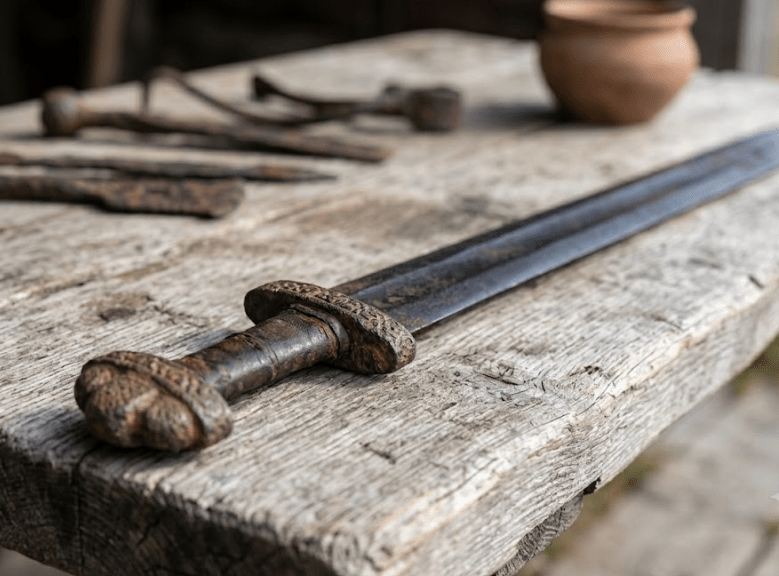
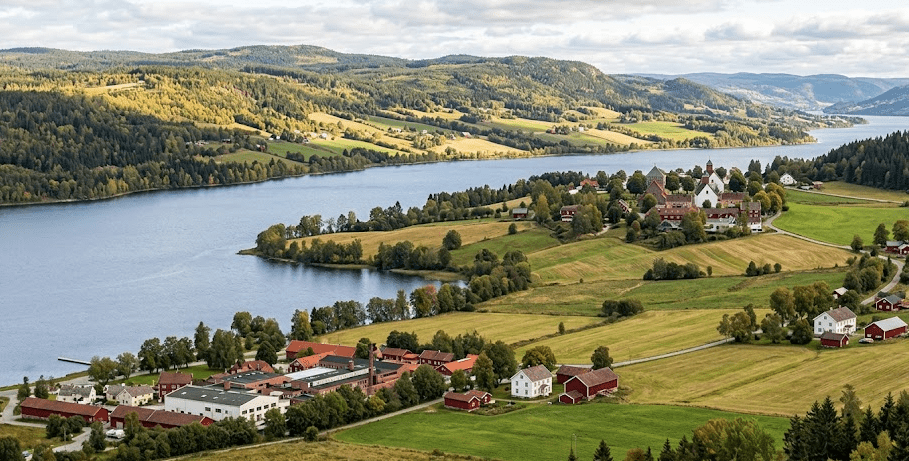
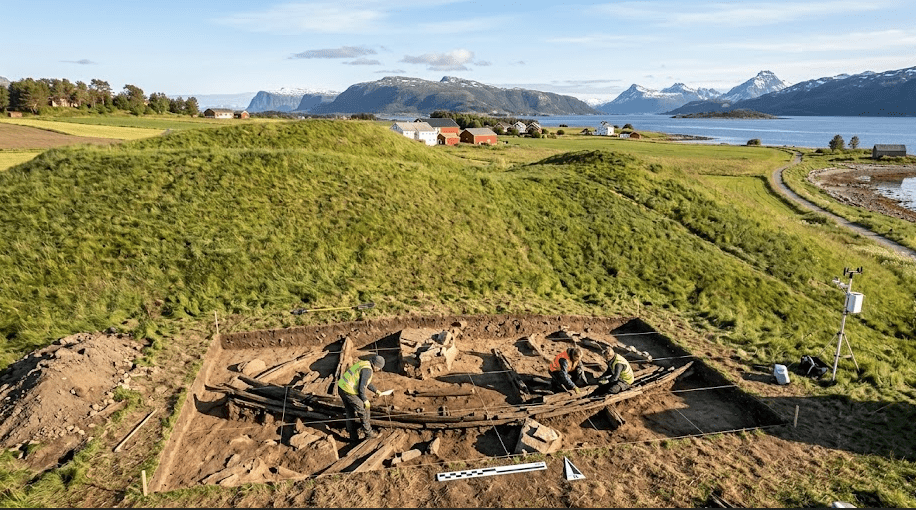
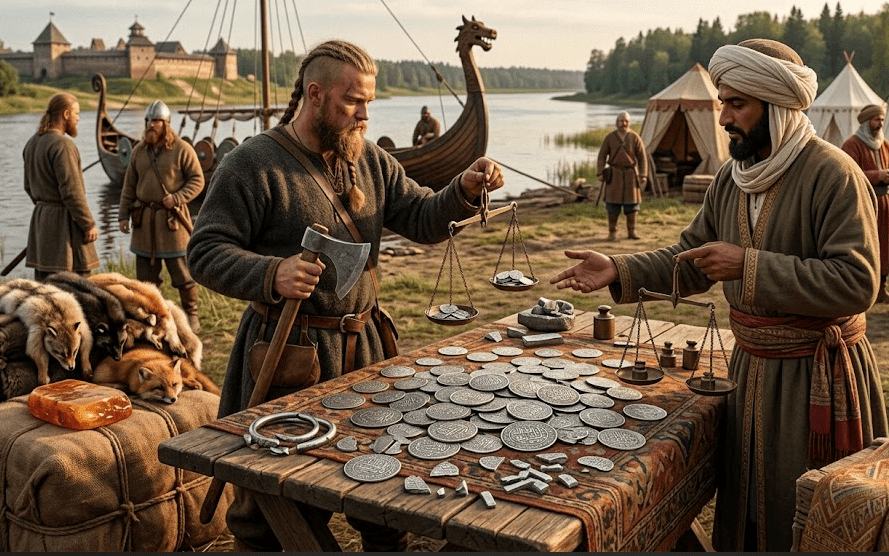
Why Viking Museums Still Struggle With The Male Warrior Myth

Viking museums still struggle with the male warrior myth because the image is familiar, marketable, visually dramatic, and deeply tied to national memory. That does not make it historically complete. A July 2026 article by museology researcher Julia Håkansson argued that Scandinavian national museums still project the image of the bearded male Viking warrior, even though museum experts know Viking Age society was far more diverse. Her analysis connects current museum display choices with a longer cultural pattern: ships, swords, seafarers, traders, farmers, kings, gods, and warriors remain easier to stage than the wider lives of women, children, enslaved people, craft workers, farmers, migrants, ritual specialists, and ordinary households.

For oldnorsenews.org readers, the issue is not whether warriors mattered. They did. The better question is why the warrior keeps standing in for the whole Viking Age when archaeology shows a society built through land, labor, trade, law, ritual, family, travel, violence, and memory.

Why The Warrior Image Still Pulls Visitors In

The male warrior image works in museums because it is instantly readable. A sword, shield, helmet shape, ship prow, axe head, or battle scene gives visitors a quick entry point into the Viking Age. Museums need that entry point, especially when their audiences include international tourists, school groups, families, and casual visitors who may arrive with little knowledge of early medieval Scandinavia. A display built around weapons and ships can communicate danger, travel, technology, status, and distance within seconds.

The problem starts when that entry point becomes the whole story. Håkansson’s 2025 peer-reviewed article in Culture Unbound compared three exhibitions: VÍKINGR at the Museum of Cultural History in Oslo, The Viking World at the Swedish History Museum in Stockholm, and The Viking World at the Danish National Museum in Copenhagen. The abstract identifies one recurring trope as the “androcentric Viking as seafarer, warrior, trader, and farmer,” with women present but less central in some settings.

That finding helps explain why the warrior myth persists. The modern museum Viking is not only a fighter. He is often shown as a farmer, trader, traveler, settler, and seafarer too. Yet the male figure remains the default body through which these roles are told. The result is a fuller picture than old raider stereotypes, but still a picture with a narrow center.

This is why the debate matters for Old Norse News. The site’s recent coverage of Viking power beyond ships and raids points to the same issue from another angle. The Viking Age cannot be understood through weapons alone. Power also sat in halls, households, ritual seats, food systems, law, inheritance, craft, and social obligation.

How National Identity Keeps The Warrior Alive

Scandinavian museums do not display the Viking Age in a neutral vacuum. Viking history has been part of modern national identity since the nineteenth century, when nation-building projects made the Viking Age useful for telling stories about origin, strength, independence, seafaring, and cultural distinction. Håkansson’s July 2026 article notes that national museums use history to shape ideas about national identity, and Vikings often reflect present values and needs.

This is a sensitive point because the Viking Age was real history, not a modern invention. There were ships, raids, weapons, long-distance trade, elite burials, expansion, violence, and political consolidation. The issue is selection. Museums decide which objects stand at the front, which stories frame the entrance, which bodies appear in reconstructions, and which themes become memorable after visitors leave.

The Swedish History Museum’s official page for The Viking World gives a useful example of a more cautious public framing. It acknowledges that the myth of violent, plundering Vikings with horned helmets has spread globally, then states that new archaeological discoveries and research have changed the view of life in Scandinavia a thousand years ago. The exhibition presents more than 2,000 authentic Viking Age objects and links worldview, mythology, shipbuilding, rune carving, and new research.

That framing shows the tension museums face. They cannot ignore public expectations, yet they have to correct them. The warrior draws visitors through the door. The museum’s harder job is to stop that warrior from blocking the rest of the evidence.
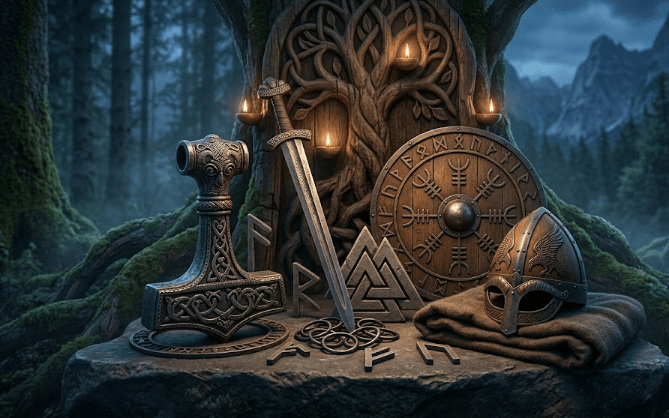
The Male Warrior

Why Women Are Often Made Exceptional Instead Of Ordinary

One of the clearest problems in Viking museum storytelling is not the total absence of women. Many exhibitions now include women. The deeper issue is how they are framed. Håkansson’s July 2026 article argues that women are often inserted into a male-dominated picture as exceptional figures, such as noble mistresses or shieldmaidens, or shown through household roles and clothing. That creates a narrow choice: women appear either as extraordinary warrior-like figures or as domestic figures beside male action.

Archaeology offers a richer path. The Oseberg burial is one of the most famous examples. The Museum of the Viking Age states that two women died in 834 and were honored through a ship burial with rich grave goods. The museum says those goods suggest that one or both women held an important political, and perhaps religious, role. That source-backed phrasing matters. It makes women central without inventing names, saga identities, or easy slogans.

Oseberg also shows why museums should resist turning women into exceptions only. The burial is spectacular, but the wider question is social structure. What did elite female status look like? How did households manage wealth, textiles, food, ritual, transport, and memory? What kinds of power left objects behind, and what kinds did not? If museums only show women when they are queens, priestesses, or possible warriors, visitors may miss the everyday systems through which women shaped farms, families, production, exchange, and ritual life.

A better museum story would let women appear across the whole Viking Age: in burial, weaving, trade, migration, household management, belief, inheritance, craft, settlement, and political display. That does not weaken the warrior story. It places warriors inside the society that produced, fed, equipped, remembered, and sometimes resisted them.

How Oslo’s Museum Transition Raises The Stakes

Norway’s museum moment makes the warrior myth debate especially timely. The Historical Museum in Oslo says its VÍKINGR exhibition runs until December 2026, after which the objects will move to their new permanent home in the Museum of the Viking Age. The museum notes that some thousand-year-old objects may be temporarily unavailable because they need conservation before the move.

That transition is a chance to rethink what visitors expect from Viking exhibitions. The former Viking Ship Museum at Bygdøy was built around some of the most visually powerful Viking Age objects in the world: the Oseberg, Gokstad, and Tune ships. Ships naturally encourage stories of travel, maritime skill, expansion, and elite burial. Those stories are necessary, yet a new museum can place the ships in a broader frame.

The Museum of the Viking Age says its new exhibitions will present the museum’s world-leading collection, including the best-preserved Viking ships, as a story about the Norsemen and their world during a time of major change. The museum has the opportunity to make that “world” feel wider than male mobility. It can connect ships with farming, craft, textile production, religious change, migration, trade, law, childhood, slavery, death, and social hierarchy.

This matters because museum architecture and conservation can shape interpretation. When objects are moved, cleaned, stabilized, relabeled, and recontextualized, their story changes. A sword can remain a sword, but a label can ask whether it reflects combat, status, burial ritual, inheritance, display, or memory. A ship can remain a ship, yet the museum can ask who built it, who supplied the timber, who sewed sailcloth, who loaded goods, who rowed, who stayed behind, and who was buried with it.

Why Swords And Ships Need Better Context

Viking weapons and ships should not disappear from museums. Removing them would create a different distortion. Violence, maritime technology, and long-distance movement were major parts of the Viking Age. The goal is not to replace one myth with another peaceful fantasy. The goal is context.

A sword in a grave can signal status, identity, ritual, violence, inheritance, or aspiration. A ship can signal travel, warfare, trade, burial, craftsmanship, or elite memory. A hoard can signal wealth, crisis, exchange, tribute, or concealed property. A brooch can signal dress, gendered costume, status, repair, travel, or cultural contact. The same object can carry several meanings at once.

The National Museum of Denmark’s current Viking tour language illustrates the public-facing challenge. Its English page invites visitors into a world more than 1,000 years old, shaped by warrior culture and the gods Odin, Thor, and Freyja, using gold treasures, skeletons, and everyday objects to meet Vikings at home, at sea, and on journeys. (National Museum of Denmark Viking tour) The wording recognizes both warrior culture and daily life, yet the warrior remains a strong hook.

That hook is not automatically wrong. The issue is whether visitors leave with deeper questions. Who counted as a warrior? How many people actually fought? How were weapons financed? What role did farming surplus play? How did gender affect burial display? How did enslaved labor support elite activity? Which stories come from archaeology, and which come from later medieval texts? A museum that raises those questions can keep swords and ships without letting them swallow the whole period.

What A Fuller Viking Museum Story Should Show

A fuller Viking museum story should make the audience see the Viking Age as a society, not a costume. That means showing how violence connected with farming, trade, household labor, craft, belief, climate, law, politics, and family life. It also means treating “Viking” carefully. Not every Scandinavian in the period was a raider. Not every weapon marks a professional warrior. Not every ship was a warship. Not every rich grave belongs to a man.

The strongest exhibitions will make source limits visible. Visitors should know when a claim comes from an excavated object, a burial context, an isotope test, a DNA study, a law code, a saga, a later Christian text, or a modern reconstruction. This matters especially for women, belief, and identity, where the evidence can be powerful but incomplete.

A good museum label can do more than name an object. It can tell visitors what archaeologists know, what they infer, and what remains uncertain. It can explain why a grave was once interpreted one way and is now discussed differently. It can show how new analysis changes old assumptions. It can name the people behind the research instead of presenting museum knowledge as anonymous certainty.

A fuller exhibition would not hide the Viking warrior. It would make him one figure among many. The farmer who produced food, the craft worker who made tools, the woman buried with political and ritual wealth, the child in a settlement layer, the enslaved person who rarely appears clearly in the objects, the trader crossing language boundaries, and the ritual specialist interpreting signs all belong to the same historical field.

Why Source Clarity Matters More Than A New Viking Image

The next step for Viking museums is not simply to invent a new dominant image. Replacing the male warrior with a shieldmaiden, queen, merchant, farmer, or mystical seer as the new single emblem would repeat the same problem. The Viking Age needs plural storytelling. Different sources reveal different lives, and no single figure can stand for all of them.

That is why Håkansson’s argument matters in 2026. The museum problem is not a lack of expertise. Experts already know the Viking Age was diverse. The hard part is public translation: turning complex evidence into exhibitions that visitors can follow without falling back into the easiest stereotype. Museums must serve visitors, yet they also have to challenge inherited images when those images distort the past.

Norway’s new Museum of the Viking Age has a rare chance to model that balance. It can keep the ships, weapons, kings, and journeys that visitors expect, but frame them within the wider systems that made Viking Age society work. It can show that the warrior was real, but not alone. It can show that ships moved across seas, but households, crafts, beliefs, and local power made those journeys possible. It can show that women were not footnotes, and ordinary people were not background scenery.

For oldnorsenews.org readers, the main lesson is simple: Viking museums struggle with the male warrior myth because the myth is useful, familiar, and visually strong. History asks for more. The best Viking museums will not erase warriors. They will give visitors enough evidence to understand why warriors mattered, why they dominate modern imagination, and why the Viking Age becomes far more interesting when the rest of society is brought back into view.

Posted in Norse History & Archaeology | Comments Off on Why Viking Museums Still Struggle With The Male Warrior Myth

How Viking Beacons Reveal Norway’s Early Warning Systems Before Modern Borders

Viking beacons reveal a side of Norway’s past that is easy to miss when the Viking Age is reduced to ships, raids, and overseas expansion. Warning fires, known in Old Norse as viti and in Norwegian as veter, show how communities along coasts, fjords, valleys, and mountain corridors prepared for danger before modern borders, police forces, or national defense systems existed.

The University of Stavanger’s Museum of Archaeology has studied this neglected monument type through the research project Viking Beacons – Militarism in Northern Europe, led by archaeologist Marie Ødegaard. The project investigates beacon fires used during attacks in the Viking Age and the Middle Ages, asking how fear, war, communication, and local organization shaped society from about AD 500 to 1600. For oldnorsenews.org readers, the beacon system matters because it turns Viking history inward: not toward raiding abroad, but toward how people in Norway defended home, mobilized neighbors, and turned landscape into an alarm network.

Why Beacon Fires Change The Usual Viking Story

The popular Viking image is usually offensive: longships leaving Scandinavia, warriors crossing the North Sea, and raids striking monasteries, towns, and river settlements. Beacon research shifts the focus to defense. If people in Norway built and maintained warning-fire systems, they were not only attackers in other people’s stories. They were coastal communities preparing for attack, invasion, political pressure, and regional insecurity.

The University of Stavanger describes the Viking Beacons project as an investigation into warning fires that were lit during attacks on the country in the Viking Age and the Middle Ages. The project’s larger question is social rather than merely technical: what happens when communities face repeated threats, and how do fear-driven responses become organized institutions? That framing is useful because it shows beacons as more than hilltop fires. They were part of a system of obligation, visibility, timing, and response.

This is where the subject fits Old Norse News coverage of Viking Age archaeological methods. Archaeology often works best when it turns faint traces into a wider pattern. A charcoal layer on a hilltop may not look dramatic, but when many such sites are mapped and dated, they can reveal communication routes, military landscapes, and the geography of fear.

Beacon systems also complicate modern national readings of the Viking Age. Medieval Norway was not organized like the modern Norwegian state. Power was layered through local communities, regional leaders, royal claims, assemblies, and military obligations. A warning fire system shows how people could coordinate action across space before modern communications, while still depending on local labor and local knowledge.

How The Viking Beacons Project Maps Fear And Communication

Marie Ødegaard’s work is important because it treats beacons as archaeological evidence, not just saga scenery. Her University of Stavanger profile says she researches Iron Age and medieval archaeology, with particular focus on legal and military landscapes, borders, settlement patterns, and GIS. That matters because beacon systems are spatial systems. Their power depends on where they were placed, what they could see, who could see them, and how quickly a warning could move from one point to another.

The project known as BCON, or Viking Beacons – Militarism in Northern Europe, ran from 2021 to 2025 and was funded by the Research Council of Norway under project number 324454. It involved seven researchers and investigated beacons in the early historic period, roughly AD 500 to 1600. The project asks how war helped create, consolidate, and maintain collective identities and political organization at local and wider regional scales.

That kind of question moves the topic beyond military trivia. A beacon system required more than dry wood and an exposed hill. Someone had to know which site to watch, who was responsible for lighting the fire, what kind of threat justified lighting it, and what people were expected to do once the signal appeared. A beacon that no one trusts or understands is useless. A beacon that belongs to a shared system can turn scattered farms, fjord settlements, and coastal communities into a coordinated response network.

The word itself matters. The University of Stavanger’s Norwegian material notes that the Old Norse place-name term for beacon is viti, making veter the older and more original designation rather than the later term varder. Place names can preserve memory of former beacon locations long after the wooden structures are gone. That gives researchers another line of evidence beside charcoal, topography, written references, and local tradition.

Why Norway’s Geography Made Warning Systems Necessary

Norway’s coastline made warning systems both difficult and necessary. Long fjords, islands, narrow sounds, mountain ridges, and coastal approaches created natural routes for movement and attack. A threat could come by sea, move quickly along the coast, and disappear before inland communities understood what had happened. A beacon network used the same landscape differently: high points, sightlines, and coastal visibility became communication infrastructure.

Research summarized by the University of Stavanger and partner reporting from Science Norway emphasizes that Norway’s beacon system was designed mainly for large-scale threats, not small local disputes. That point matters because the cost of maintaining such a system would have been high. People had to build and sustain beacon sites, organize watch duties, preserve knowledge of routes, and connect warnings to mobilization. A system that expensive suggests serious concern about conflict.

The strongest beacons were not isolated symbols. They belonged to chains. A fire lit at one visible point could be seen from another, then repeated, sending a warning across a landscape faster than a messenger traveling on foot. In coastal Norway, that speed could mean the difference between surprise and preparation.

This also helps explain why beacon studies are not just about war. They are about social organization. A warning system reveals who had authority to mobilize people, which communities were expected to contribute, and how military duty was tied to landscape. Before modern borders, maps, or national command structures, defense often depended on known routes, shared customs, and local obligations.

How Beacons Connected To The Leidang And Local Duty

Beacon systems are closely connected with the leidang, the naval levy system associated with medieval Scandinavia. The University of Stavanger’s Norwegian article on beacons and the role of the leidang in state formation describes two important institutions in Viking Age Norway: the thing and the leidang. The thing was a meeting place where people gathered to discuss legal matters, agreements, disputes, and military duties. The leidang organized naval defense, manpower, ships, and obligations.

That pairing is important. The beacon did not defend a region on its own. It warned people that action was needed. The leidang helped define what that action could mean: men, ships, supplies, and local coordination. A warning fire without an organized response would only spread fear. A warning fire connected to the leidang could trigger mobilization.

This is why beacons reveal early political organization before modern borders. They show how authority worked through duties rather than through centralized modern administration. A farmer, boat owner, local leader, or assembly district may have had obligations tied to defense. The system depended on trust that neighboring areas would also respond. It also depended on the ability to punish failure or reward readiness, even if the exact rules varied by region and period.

The connection with the thing also reminds readers that military organization was not separate from law. In early medieval societies, legal assemblies could define responsibilities, settle disputes, and reinforce collective expectations. Defense was not only about weapons. It was about rules, communication, and recognized authority.

What Archaeologists Look For At Beacon Sites

Beacon archaeology can be hard to read because the main structure was temporary: wood piled, watched, and burned. Unlike a stone church, ship burial, or longhouse foundation, a beacon may leave only charcoal, place-name evidence, small structural traces, and a strategic location. That makes mapping and dating especially important.

Science Norway’s partner article on the research reports that researchers studied beacon sites such as Atløy in Western Norway, where multiple layers of charcoal were found from beacons that had been ignited. Repeated charcoal layers are meaningful because they suggest more than one burning event. A single fire could be accidental or isolated. Several layers can point to repeated use, maintenance, or long-term recognition of a site as part of a warning system.

Researchers also consider visibility. A strong beacon location should make sense within a chain. It should face relevant routes, connect to other known or likely signal points, and make practical sense in relation to settlement and movement. GIS analysis helps test what can be seen from a location and whether a signal chain could work across real terrain.

Written sources can help, but they need caution. Medieval laws, sagas, and later records can mention beacons, military duties, and warning systems, but they were written in particular contexts and may preserve older practices unevenly. Archaeology can test where a practice actually left traces. Place names can point to former beacon locations, but they also need field confirmation. The strongest interpretation comes when multiple evidence types line up: topography, name evidence, charcoal, dating, written references, and regional logic.

Why Beacons Show Fear As A Political Force

One of the strongest ideas behind the Viking Beacons project is that fear can organize society. That does not mean fear always produces unity or good decisions. It means repeated threats can push people to create routines, duties, technologies, and institutions. A beacon system is fear turned into infrastructure.

This is especially useful for Viking Age interpretation. Violence in the Viking Age is often presented as heroic or adventurous. Beacon research brings the subject back to the cost of danger. Communities had to imagine attack before it happened. They had to prepare materials, maintain watches, train people to recognize signals, and agree on what counted as a threat. That kind of planning changes how we understand militarism.

Ødegaard’s research asks how war and fear-driven responses affected and institutionalized societies. In plain terms, defense systems could help create stronger political structures. When communities organize repeatedly around danger, they may also strengthen leadership, taxation-like obligations, naval levies, regional identity, and expectations of obedience.

That point connects beacons to state formation. Norway did not become a kingdom through one battle or one royal genealogy alone. It developed through many practical systems: assemblies, law, tribute, ship levies, settlement control, royal travel, church organization, and military communication. Beacons belong in that larger picture because they show how landscapes became governed.

How Beacons Reveal A Norway Before Modern Borders

The phrase “before modern borders” matters because Viking and medieval Norway should not be imagined as a fully modern territorial state. People’s obligations were often tied to districts, assemblies, farms, kinship networks, coastlines, routes, and royal claims that shifted over time. Beacon systems show how power could work before fixed modern boundaries became the main way people imagined political space.

A beacon chain does not draw a border in the modern sense. It creates a field of response. The area that can see the signal, understand it, and act on it becomes a practical defense zone. This zone may cut across later municipal lines or modern county categories. It belongs to sight, sound, travel time, settlement density, and local obligation.

That is why beacon research can change how readers picture Norway’s early political geography. Instead of a flat map with lines, think of linked hills, fjords, farms, assemblies, ship sheds, and sea routes. Authority moved through those connections. A warning fire made invisible obligations visible for a brief and urgent moment.

This also makes beacons more than military objects. They were part of communication history. Before telegraphs, radios, roads, and national emergency systems, fire could carry information across terrain. The message was simple but powerful: danger is coming; prepare to respond.

What Readers Should Verify As Beacon Research Develops

Beacon research is exciting, but it needs careful limits. Not every high place with a fire tradition was necessarily part of an organized Viking Age warning system. Not every charcoal layer proves a military alarm. Not every place name can be treated as direct evidence without fieldwork. Readers should look for studies that combine dating, excavation, landscape analysis, written sources, and cautious interpretation.

The most useful future questions are practical. Which beacon sites can be securely dated to the Viking Age? Which continued into the Middle Ages? How far could signals travel under realistic weather conditions? How did beacon chains connect with naval levy districts? Were some regions more heavily organized than others? Did beacon use increase during periods of known conflict?

The Research Council-backed project has already helped push beacons into a more serious archaeological discussion. It shows that the Viking Age was not only a period of maritime expansion, but also one of domestic defense, social discipline, and organized fear. Norway’s warning systems reveal communities that watched the sea, used the hills, and turned fire into a signal before modern borders or modern state systems existed.

For oldnorsenews.org, the topic matters because it gives Viking history a broader frame. Ships and raids explain movement outward. Beacons explain vigilance at home. Together, they show a Norse world shaped by mobility, risk, communication, and obligation. The fire on the hill was not just a warning. It was evidence that people understood their landscape as a shared defense system.

Posted in Norse History & Archaeology | Comments Off on How Viking Beacons Reveal Norway’s Early Warning Systems Before Modern Borders

Why A Possible King Alfred Remains Claim Revives Viking-Age England And Norway Questions

A possible King Alfred remains claim revives Viking-Age England and Norway questions because it sits at the point where archaeology, royal memory, Norse expansion, and modern symbolism collide. Recent reporting in July 2026 says author and historical researcher Graham Phillips believes Alfred the Great’s lost remains may lie beneath a car park near the former Hyde Abbey site in Winchester, Hampshire. The claim is not yet an archaeological identification. It is a historical-location argument that still needs non-invasive survey, excavation permission, scientific testing, and independent review before it can be treated as evidence. That caution matters for oldnorsenews.org readers because Alfred’s story is inseparable from ninth-century Scandinavian pressure on England, yet modern retellings often flatten that history into “English king defeats Vikings” without asking which Vikings, which kingdoms, which sources, and which claims can actually be verified.

Why The Alfred Remains Claim Needs Source Caution

The July 2026 claim is attention-grabbing for a simple reason: Alfred the Great is one of the few early medieval English rulers whose name still carries broad public recognition. Phillips says he has spent 13 years investigating the location and believes the remains of Alfred, his wife, and his son may have been moved during eighteenth-century work near the former Hyde Abbey site. According to the report, he connected the theory with an 1800 article by Henry Howard in Archaeologia, which referred to bones being uncovered and reburied when prisoners landscaped a prison warden’s garden. That is a plausible line of historical inquiry, but it is not the same as identifying royal remains.

The distinction is important. A location claim can be researched through maps, archives, old excavation notes, property records, and accounts of disturbed burials. A remains identification needs stronger evidence: archaeological context, secure recovery, radiocarbon dating, osteological analysis, and, where possible, DNA comparison. Alfred died in 899, and his remains were reportedly moved more than once. Each movement increases the risk of mixing, loss, contamination, or later misidentification.

That is why the story should be read as a question, not a discovery. The public memory of Alfred has often encouraged dramatic language, especially when a possible royal grave is compared with the 2012 discovery of Richard III in Leicester. The comparison may be tempting because both stories involve a car park, but the historical problem is different. Richard III’s remains were found through a formal archaeological project, excavated, analyzed, and identified through multiple lines of evidence. The Alfred claim still appears to be at the pre-verification stage.

For oldnorsenews.org, this connects naturally with separating Norse myth from Viking history. A strong history article should not dismiss the claim, but it should resist turning an archive-based possibility into a confirmed archaeological event.

How Winchester Became Central To Alfred’s Afterlife

Alfred’s remains are difficult to trace because Winchester’s religious landscape changed repeatedly after his death. Winchester Cathedral’s Mortuary Chests Project states that Alfred is not believed to be interred in the cathedral’s mortuary chests. Its FAQ says historical records suggest Alfred was interred at New Minster and later transferred to Hyde Abbey in Winchester. That statement is useful because it separates Alfred from the cathedral’s famous royal chests while keeping Winchester central to his burial history.

The route itself matters. Alfred died in 899. Historical tradition places his first burial at Winchester, followed by reburial connected with New Minster and later Hyde Abbey. Hyde Abbey was dissolved during the Reformation period, and its later landscape was disturbed by post-medieval building, prison construction, workhouse activity, antiquarian digging, and modern development. That makes any remains claim difficult to test.

Winchester also has a stronger claim than many places because it was Alfred’s political and religious center. Winchester Cathedral’s education material describes Winchester as the capital city of the Anglo-Saxon Kingdom of Wessex and a major center of faith, art, music, and learning. Before the present Norman cathedral, the site included the Anglo-Saxon Old Minster and New Minster, which shaped the city’s royal and religious identity.

The possible car park claim therefore matters less because of the car park itself and more because it reopens a long chain of movement. Alfred’s memory moved through burial, reburial, monastic commemoration, Reformation destruction, antiquarian interest, modern archaeology, and heritage media. Each phase changed what could be known. That is exactly why the next step has to be evidence-based rather than symbolic.

Why Alfred Still Matters To Viking-Age History

Alfred matters to Viking-Age history because his reign came during one of the most dangerous periods for Anglo-Saxon England. English Heritage summarizes the core historical point: Alfred of Wessex defeated the Viking leader Guthrum at Edington in 878, then negotiated a settlement that left Viking warlords in effective control of much of northern and eastern England, while Alfred held the south and west. That settlement helped define the Danelaw, the region shaped by Scandinavian law, settlement, political power, and language. (English Heritage Viking history)

This is where Norway enters the question carefully. Alfred’s main ninth-century enemies are often described in English sources as Danes or as Scandinavian armies more broadly. Modern readers should not automatically equate “Vikings” with Norway. The Great Army that attacked English kingdoms drew from a wider Scandinavian world, and its political footprints in England were not a simple Norway-versus-England conflict. Still, the history matters for Norwegian and Norse readers because Viking-Age movement across the North Sea connected Denmark, Norway, the Irish Sea, the North Atlantic, Northumbria, East Anglia, and wider trading and raiding networks.

Alfred’s Wessex survived when Northumbria, East Anglia, and much of Mercia had already fallen under Viking pressure. That survival changed the future political map of England. Without Wessex’s resistance and later expansion under Alfred’s successors, the balance between Anglo-Saxon and Scandinavian power in England may have looked very different.

This is why the remains claim attracts attention beyond burial history. A possible Alfred location claim revives questions about the king’s military reforms, the Danelaw, Scandinavian settlement, and how Viking-Age memory is still used in modern identity. Alfred is remembered as a defender against Vikings, but the actual history is more complicated than a single victory story.

What The Claim Reveals About Modern Viking Symbolism

The timing of the July 2026 reporting made the story unusually easy to sensationalize. Some coverage connected the claim to England’s World Cup match against Norway, treating Alfred’s possible remains as a symbolic omen before a modern sporting event. That framing may draw clicks, but it is not a responsible historical lens. It turns Viking-Age conflict into a modern mascot rivalry and risks confusing present-day Norway with ninth-century Scandinavian armies.

Old Norse News readers are likely familiar with this problem. Viking imagery is visually powerful, but it often travels detached from source context. A helmet, ship, axe, rune, or “Viking” label can quickly become shorthand for any northern or Scandinavian identity, even when the historical evidence is specific, mixed, or uncertain. Alfred’s story is especially vulnerable because it contains an appealing narrative: a threatened king, a marshland retreat, a decisive victory at Edington, and a kingdom rebuilt under pressure.

That narrative is not false, but it is incomplete. Alfred’s success did not erase Scandinavian power in England. The Danelaw remained a major political and cultural region. Scandinavian settlers reshaped law, language, place names, trade, and identity across eastern and northern England. A modern article about Alfred should therefore treat the possible remains claim as a prompt for better historical questions, not a chance to revive a simplistic Saxons-versus-Vikings drama.

The claim also shows why burial places carry political energy. Human remains can become symbols of national continuity, religious memory, royal legitimacy, or local identity. In Alfred’s case, the uncertainty itself is part of the story. The missing grave reflects centuries of religious change, institutional collapse, urban rebuilding, and changing attitudes toward royal bodies.

Why Archaeology Must Separate Claim, Context, And Proof

A responsible remains investigation needs clear stages. The first stage is historical research: gathering old maps, written accounts, excavation notes, property records, and previous archaeological reports. The second stage is non-invasive investigation, such as ground-penetrating radar, where appropriate. The third stage is formal excavation under proper permissions. The fourth stage is laboratory analysis. Only after that can researchers weigh whether any recovered remains fit the right period, location, sex, age, burial context, and possible family relationship.

That is the key difference between a claim and a finding. Phillips may have identified a site worth testing, but the claim remains unproven until material evidence is recovered and analyzed. The article should not say Alfred has been found. It should say a historical researcher has proposed a possible location.

Winchester’s earlier Alfred-related investigations show why caution is necessary. Reports from previous efforts around Hyde Abbey and St Bartholomew’s Church did not produce a secure Alfred identification. Some bones once associated with Alfred were later dated to the wrong period. Winchester Cathedral’s current mortuary-chest research also shows how careful analysis can complicate traditional royal attributions, rather than simply confirm them.

This is where archaeology is most valuable. It does not exist to decorate national stories. It tests them. A possible Alfred remains claim should be exciting because it can be investigated, not because it already proves what people want to believe. If the site is surveyed and no suitable burial context appears, that result would still be useful. It would narrow the search and refine the history of Hyde Abbey’s disturbed landscape.

How Alfred’s War With Viking Armies Connects To Norway Questions

The Norway angle should be handled carefully. Alfred’s historical struggle was not a direct war against the modern Norwegian state, which did not exist in that form. It was part of a wider Viking-Age world of Scandinavian raiding, settlement, alliance, trade, and political movement. The word “Viking” describes activity and identity across a broad northern context, not a single nationality.

That said, Norway is still relevant to the wider question because Norse activity across the North Sea shaped Britain and Ireland in ways that cannot be reduced to Danish armies alone. Norwegian-linked settlement and raiding were especially important in the Irish Sea, Scotland, the Northern Isles, the Hebrides, and the North Atlantic. England’s Viking-Age history therefore sits inside a web of Scandinavian movement that included Danish, Norwegian, and mixed Norse communities.

The claim also invites comparison between English and Norwegian heritage habits. Norway often foregrounds ships, burials, farms, hoards, and museum sites when telling the Viking Age story. England often foregrounds invasion, resistance, the Danelaw, royal survival, and later unification. Alfred sits in the English memory of resistance, while Norwegian and broader Norse history often emphasize mobility, maritime skill, settlement, and regional power. A careful article can hold both views without flattening either one.

That balance is useful for readers. Alfred’s remains, if ever verified, would not “settle” Viking-Age history. They would add a human and royal body to a known historical framework. The larger questions would remain: how Viking armies organized themselves, how Scandinavian settlers adapted to England, how Wessex survived, and how later nations turned early medieval conflict into identity stories.

What Readers Should Verify Before Accepting The Alfred Claim

Readers should watch for specific evidence before treating the claim as more than a possible location. Has a professional archaeological body surveyed the site? Has ground-penetrating radar identified a plausible burial feature? Has there been any permitted excavation? Were remains recovered in a secure context? Do radiocarbon dates fit Alfred’s death in 899? Is there any DNA comparison possible with known royal or family material? Have the results been reviewed by specialists rather than only presented through television or tabloid coverage?

Those questions protect the story from turning into heritage speculation. They also make the article more useful for Old Norse News readers because Viking-Age history is often distorted by dramatic claims. Alfred’s life deserves careful treatment precisely because it matters. His reign affected Wessex, the Danelaw, English political formation, and the long memory of Scandinavian power in Britain.

The possible remains claim should therefore be framed as a useful prompt, not a confirmed discovery. It reminds readers that royal bodies can disappear, that monastic landscapes can be destroyed, that antiquarian records can both help and mislead, and that archaeology needs patience. It also reopens a larger question: how should modern readers discuss Viking-Age conflict without turning Scandinavians into caricatures or modern nations into stand-ins for early medieval armies?

The best answer is source clarity. Alfred’s story belongs to both English and Norse history because it sits on the border between Wessex resistance and Scandinavian expansion. A possible grave under a Winchester car park may or may not prove anything new. The renewed attention, though, gives historians and readers a chance to ask better questions about evidence, memory, and the Viking-Age world that connected England, Scandinavia, and the North Sea.

Posted in Norse History & Archaeology | Comments Off on Why A Possible King Alfred Remains Claim Revives Viking-Age England And Norway Questions

Why Skipshelleren’s 4,000-Year-Old Child Skull Matters For Norway’s Deep Coastal Past

Skipshelleren’s 4,000-year-old child skull matters because it pulls Norway’s coastal history far earlier than the Viking Age while still helping readers understand the landscapes that later Norse communities inherited. The discovery was announced by the University of Bergen on July 3, 2026, after researchers working in Vaksdal municipality found remains from a child burial inside Skipshelleren, a rock shelter near Straume along the Voss River system.

Project leader Knut Andreas Bergsvik, professor of archaeology at the University Museum of Bergen, described the find as rare evidence from Norway’s earliest agricultural population. For oldnorsenews.org readers, this is not a Viking story in the narrow chronological sense. It is a deeper coastal archaeology story about settlement, burial, food, mobility, and the long human use of sheltered places along western Norway before the Norse world took shape.

Why Skipshelleren Belongs In Norway’s Larger Heritage Story

Skipshelleren is a large rock shelter in Vaksdal, Vestland, protected by a broad overhang that helped shield the site from weather and wind. The University of Bergen says people used the place for thousands of years, with the earliest traces reaching back about 7,500 years. That time depth makes the site valuable for more than one period. It can speak to Mesolithic coastal life, the arrival and spread of farming, later Stone Age burial practice, and long-term human use of fjord landscapes.

The discovery also challenges the habit of treating Norwegian history as if it begins with Viking ships, kings, raids, and sagas. Those topics remain central to Old Norse history, but they rest on much older patterns of coastal movement, resource use, seasonal shelter, and burial memory. Skipshelleren shows that people were living, eating, making tools, and burying their dead in west Norwegian shelters thousands of years before Viking Age political culture emerged.

This is why the site fits oldnorsenews.org’s archaeology focus. Readers interested in Viking Age archaeological methods already know that soil layers, bones, tools, and settlement traces can reveal daily life more clearly than later stories alone. Skipshelleren applies that same evidence-first logic to a much older coast.

The child skull is the headline find, but the wider site is the real historical archive. The shelter contains layered deposits that can connect human remains with animal bones, tools, pottery fragments, fishing equipment, botanical samples, and scientific dating. That combination gives researchers a rare chance to study not only one burial, but the environment and community around it.

What Researchers Found In The Rock Shelter

The 2026 announcement says archaeologists from the University of Bergen and the University of Tromsø are excavating caves and rock shelters along Norway’s coast through the INDICAVE project. Skipshelleren is one of the project’s most important investigations. The site had been excavated in 1931 by archaeologist Johs. Bøe from Bergen Museum, and he believed the whole area had been dug. Modern researchers were unsure how much untouched archaeology remained. Their hope was that small undisturbed areas might still survive beneath old backfill.

That hope proved correct. Deep under earlier fill, the team found an area that had not been excavated before. Bergsvik said the team found layered traces from several thousand years of settlement, including thousands of bones from mammals and fish, pottery sherds, fishhooks, and harpoons made of bone. These finds matter because they turn Skipshelleren into a record of repeated coastal use, not a single isolated event.

The child burial is the most sensitive and striking part of the discovery. Preliminary analysis suggests the child was between 2 and 4 years old at death. Parts of the same skeleton had reportedly been found in 1955 by a local girl, Bjørg Dæmring Berge, who lived near the shelter. During the new excavation, she was present and helped researchers identify the original find spot. That local memory led to the recovery of additional remains from the same grave.

The result changes how the site should be understood. Skipshelleren was not only a dwelling place. It was also a burial place in the Stone Age. That distinction matters because it shows the shelter had practical and symbolic value. People could use the same protected landscape for daily life, food work, tool activity, and care for the dead.

Why A Child Burial Changes The Interpretation

A child burial carries a different kind of evidence than tools or animal bones. Tools can show technology. Animal bones can show diet and hunting or fishing activity. A burial asks researchers to think about memory, community, attachment, ritual, and the social meaning of place. A 4,000-year-old child burial inside a rock shelter suggests that Skipshelleren was more than a convenient dry space. It was a place where human presence was repeatedly marked and remembered.

This does not mean researchers can safely reconstruct the child’s life story in detail. The child’s name, family, language, and exact social role are unknown. Responsible interpretation should avoid turning the burial into a dramatic biography. The evidence can support firmer questions: What population did the child belong to? What was the child’s diet? Were these people connected to early farming communities, coastal foragers, or mixed economies? Did the burial reflect local practice, wider Stone Age customs, or a specific family decision?

The University of Bergen announcement says isotope and DNA analyses will be conducted on the skeletal material. Those tests may help researchers learn more about diet, ancestry, and origins. Bergsvik said the child belonged to Norway’s earliest agricultural population and that analysis may provide clues about what these people looked like and where they came from. That possibility makes the find especially important, but it also requires caution. Ancient DNA and isotope work can sharpen the picture, but it does not turn a fragmentary burial into a complete personal history.

The stronger takeaway is that Skipshelleren gives researchers a rare human link to the transition between older coastal lifeways and early farming in Norway. The find may help show how people lived during a period when farming, fishing, hunting, gathering, and coastal mobility could overlap in complex ways.

How INDICAVE Expands The Evidence Beyond One Skull

The INDICAVE project gives the Skipshelleren discovery a much wider research frame. The University of Bergen describes INDICAVE as a project running from January 2026 to December 2029, focused on how caves and rock shelters in Norway were used from 11,500 to 500 years ago. The project brings together an international team to re-excavate key sites with advanced methods and analyze archaeological, botanical, and zoological material. (INDICAVE research project)

That scope matters because cave and rock shelter sites can hold evidence that open-air sites often lose. Organic material such as bone may survive better in protected deposits, giving researchers a clearer view of food, animals, tools, burial practice, and environmental change. UiB’s project description says caves and rock shelters along coastal Norway can preserve stratified deposits with organic remains that help build time-series data. That means researchers can compare changes across thousands of years instead of relying only on scattered finds.

The project’s goals include targeted excavations, comparison between rock shelter records and open-air settlements, ancient DNA and isotope analyses of human remains, and a national database of archaeological caves and rock shelters. That is why Skipshelleren is not only a discovery site. It is part of a larger attempt to reconstruct long-term human relationships with coastal ecosystems.

The number of finds also changes the scale of the story. The 2026 announcement says roughly 40,000 animal bones have been collected and will be identified by species. Researchers will also analyze tools made from bone and stone, soil samples, botanical material, dating samples, and ancient DNA. Each category can answer a different question. Animal bones can speak to diet and seasonal activity. Fishhooks and harpoons can speak to coastal technology. Pottery can speak to cultural change. Soil and botanical samples can speak to environment and site use. Human remains can connect those patterns to real bodies and communities.

Why Norway’s Deep Coastal Past Matters Before The Viking Age

A site like Skipshelleren helps readers think about continuity without forcing a direct line from Stone Age communities to Viking Age Norse society. The people who used the shelter 4,000 years ago were not Vikings, and the article should not imply that they were. The value lies in showing how much of Norway’s later history rests on landscapes that had already been known, used, and remembered for millennia.

Western Norway’s fjords, shelters, waterways, and coastal routes shaped human life long before medieval kingdoms or saga traditions. People learned where to find shelter, fish, game, stone, safe landing places, and seasonal resources. Over time, these routes and places accumulated memory. Some became settlements. Some became burial places. Some were abandoned, revisited, or reinterpreted by later communities.

That long view helps prevent Viking history from becoming isolated spectacle. Viking ships, chieftain farms, and burial mounds did not appear in an empty landscape. They emerged within a northern world already shaped by thousands of years of coastal adaptation. Skipshelleren gives modern readers a deeper frame for that world.

It also reminds readers that archaeology is not only about spectacular elite finds. A child skull, fishhooks, pottery fragments, bone tools, and animal remains can be as historically meaningful as swords or ships. They reveal daily life, death, food, family, and environment. For many readers, that makes the past more human.

What Readers Should Verify As The Research Develops

The Skipshelleren discovery is important, but the strongest interpretations will come after laboratory analysis. Readers should watch for future results from radiocarbon dating, isotope testing, ancient DNA, zooarchaeology, botanical analysis, and tool studies. Those results may clarify the child’s biological profile, diet, ancestry, and relationship to other early farming groups in Norway and northern Europe.

It is also worth watching how researchers describe the site’s dual role as dwelling and burial place. That point is already supported by the recovery of settlement layers and the child grave, but future analysis may show whether burial was an exceptional use of the shelter or part of a repeated pattern. The answer could change how archaeologists understand caves and rock shelters along the Norwegian coast.

The most responsible article angle is not that one skull “solves” Norway’s prehistoric origins. It does not. The better point is that Skipshelleren gives researchers a rare, well-contextualized opportunity to connect human remains with settlement layers, animal bones, tools, pottery, and environmental samples. That combination can help explain how early agricultural communities lived along Norway’s coast and how they related to older coastal lifeways.

For oldnorsenews.org, the find matters because it widens the historical frame. The Viking Age becomes richer when readers understand the deeper human coast beneath it. Skipshelleren’s 4,000-year-old child skull is not a Norse artifact, but it belongs to the long story of people adapting to Norway’s fjords, shelters, food systems, and burial landscapes. That deep coastal past is the ground on which later Norse history stands.

Posted in Norse History & Archaeology | Comments Off on Why Skipshelleren’s 4,000-Year-Old Child Skull Matters For Norway’s Deep Coastal Past

Why The Oseberg Ship’s Return Marks A New Phase For Norway’s Viking Museum Future

The Oseberg Ship’s return to its new museum home marks more than the end of a difficult relocation. It signals a new phase in how Norway protects, interprets, and publicly presents its most fragile Viking Age heritage. The Museum of the Viking Age announced in late June 2026 that, after 99 years in the old Viking Ship Museum, the Oseberg Ship had finally reached its new location, where it will be preserved and displayed for future generations. The timing matters because the former Viking Ship Museum at Bygdøy is also being renovated, with the revised national budget securing necessary maintenance work in June 2026. For oldnorsenews.org readers, the return of Oseberg is not just a museum construction update. It is a case study in how archaeology, conservation science, national identity, and public storytelling meet around one of the most famous Viking Age finds ever excavated. (Museum of the Viking Age relocation update)

Why The Oseberg Ship’s Return Matters Now

The Oseberg Ship has always carried more weight than its oak timbers alone. It is a ninth-century burial ship, an archaeological archive, a national symbol, and one of the central objects through which many people first imagine the Viking Age. The Museum of the Viking Age describes the ship as having been used at sea before it was hauled ashore and used as a burial ship for two women in 834. The same museum notes that the identities of the two women remain unknown, although the richness of the grave goods suggests that one or both held major political or religious significance.

That uncertainty is part of what makes Oseberg valuable. The ship does not give modern readers a simple biography. It gives them evidence: wood, textiles, animal remains, carved objects, equipment, a burial chamber, and the remains of two women whose roles can be interpreted only with care. A renewed museum setting can help visitors see that difference. Oseberg is not important because it confirms a single dramatic story. It is important because it preserves a rare and complicated Viking Age burial context.

The recent return also changes how Norway’s museum future is being discussed. The old Viking Ship Museum opened to the public in 1926, and by the end of 2026 the institution will reach its 100-year anniversary. According to the Museum of the Viking Age, when the museum first opened, only the Oseberg Ship was on display; later, the building expanded with wings for the Gokstad and Tune ships. That history makes the 2026 relocation and renovation period especially symbolic. Oseberg is returning as the institution itself moves from a 20th-century display model toward a conservation-led museum built for long-term protection.

For readers following Viking Age ship burial traditions, Oseberg also belongs to a larger Scandinavian pattern. Ship burials were never only about transport. They were statements about status, memory, ritual, technology, and the relationship between the dead and the living community.

How A Burial From 834 Became Norway’s Most Famous Viking Ship

The Oseberg burial mound was discovered in 1903 near Tønsberg, about 100 kilometers southwest of Oslo. The Museum of Cultural History at the University of Oslo describes the find as consisting of a Viking ship, wooden and metal artifacts, textiles, sacrificed animals, kitchen equipment, shipping equipment, furniture, and richly carved wooden objects. Those burial conditions preserved many wooden objects because groundwater and a low-oxygen environment kept the material waterlogged.

The excavation in 1904 was led by Gabriel Gustafson and Haakon Shetelig, and the public understood quickly that the find was extraordinary. The Museum of the Viking Age notes that the excavation generated major public interest and that the area had to be protected with railings, signage, and a guard. That detail is useful because it shows Oseberg has been a public event almost from the beginning. The ship was not quietly absorbed into academic study. It entered Norwegian cultural life as a spectacle, a scientific problem, and a national treasure at the same time.

Oseberg’s fame also comes from what it preserved. The burial contained a ceremonial wagon, sledges, animal-head posts, textiles, tools, food-related equipment, and animal offerings. The Museum of the Viking Age’s page on the women in the grave explains that the rich grave goods suggest one or both women held an important role, perhaps political, religious, or both. That careful language matters. The grave invites interpretation, but it does not justify certainty about names, titles, or saga identities.

That is exactly why the ship’s museum future matters. A weaker display can turn Oseberg into a symbol without explanation: a beautiful Viking ship, a queen’s grave, a national icon. A stronger display can show why the burial is historically difficult and why that difficulty is part of its value. The two women were honored through an extraordinary burial, yet their exact identities remain unknown. The ship is beautifully preserved, yet it is chemically and structurally fragile. The grave goods are visually rich, yet they need conservation, documentation, and cautious interpretation.

Why Conservation Now Shapes The Viking Museum Story

The Oseberg Ship’s return should be read through conservation before tourism. The move was not made simply because Norway wanted a newer museum experience. The ship and related objects are fragile. The Museum of Cultural History’s Saving Oseberg project has documented serious conservation challenges, especially around wooden artifacts from the find. Its documentation work notes that Oseberg records from 1900 to 1950 need updating, and that some objects were never visually documented in full. It also states that conservation treatments may have changed the structure and appearance of wooden objects, meaning the material needs renewed documentation.

This is the quieter side of Viking heritage. The public sees the ship’s carved prow, the burial goods, and the drama of the move. Conservators see cracks, chemicals, humidity, old treatments, incomplete records, vibration risks, and the problem of preserving waterlogged wood for centuries rather than decades. The new museum phase has to answer that challenge before it can answer visitor demand.

The University of Oslo described the 2025 relocation as the result of ten years of preparation. It also stated that it was no longer feasible to leave the ships in the old museum. That sentence explains why the new museum is not just an expansion. It is a preservation necessity. The Oseberg, Gokstad, and Tune ships are not interchangeable display objects. They are unique archaeological survivals whose condition determines what future generations will be able to study.

The return of Oseberg therefore changes the tone of Norway’s Viking museum future. The old museum gave generations of visitors an unforgettable encounter with the ships. The new phase asks whether that public access can be made safer, better explained, and more sustainable. The ship’s future depends on climate control, vibration management, careful object handling, and exhibition planning that does not sacrifice preservation for crowd movement.

What The New Museum Can Clarify About Viking Age Women

Oseberg is especially important because it forces Viking history to take elite women seriously. The Museum of the Viking Age states plainly that two women were buried in the ship in 834. It also explains that the lavish grave goods suggest one or both held political, religious, or combined importance. This makes Oseberg a valuable corrective to narrow Viking Age storytelling that begins and ends with male warriors, raiding, and long-distance violence.

The challenge is not to replace one oversimplification with another. Oseberg should not be reduced to a slogan about Viking queens, priestesses, or hidden rulers unless the evidence supports the claim. The stronger historical point is that the burial demonstrates high-status female commemoration in ninth-century Norway. The ship, grave chamber, wagon, sledges, textiles, carved objects, animals, and equipment show a community investing heavily in the death and memory of these women.

A renewed museum can help visitors ask better questions. What kinds of authority did these women hold? Were their roles political, ritual, familial, economic, or some combination? How did the community use the ship burial to display status? Why were domestic, ceremonial, transport, and animal elements placed together in the mound? What does the burial reveal about elite identity in Vestfold around 834?

Those questions are more useful than unsupported certainty. Oseberg’s power comes from the way it opens historical interpretation while still requiring discipline. The new museum can present the women as central figures without inventing names, titles, or saga connections. It can also show how gender, ritual, wealth, and burial practice intersected in Viking Age Norway.

Why The Ship’s Return Changes Public Access To Viking Heritage

The Oseberg Ship’s return also marks a shift in public access. The former Viking Ship Museum was loved partly because visitors could stand close to the ships in a distinctive building. That intimacy became part of the museum’s identity. Yet the same public access brought pressure: crowds, environmental instability, and the long-term demands of preserving fragile archaeological wood.

The Museum of the Viking Age’s 2026 planning update says the former Viking Ship Museum is closed while the new museum takes shape. It also notes that 2026 marks a historically important anniversary period for the institution. The key issue is not simply when visitors can return. It is what kind of museum they will return to. A modern Viking museum has to be more than a room full of famous ships. It has to explain discovery, excavation, conservation, uncertainty, and interpretation.

This matters because Viking heritage has become globally recognizable and easily misused. Images of ships, helmets, runes, and warriors often travel faster than the evidence behind them. Oseberg gives Norway a chance to model a more careful public history: visually powerful, but source-led; accessible, but not careless; emotionally compelling, but not mythmaking.

The new museum phase can also connect Oseberg to other Viking Age evidence without letting the ship dominate everything. Ship burials, settlements, hoards, textile production, craft sites, graves, and trade centers all tell different parts of the Viking Age story. Oseberg is central, but it is not the whole Viking Age. A strong museum future will help visitors see both its uniqueness and its limits.

How Norway’s Viking Museum Future Depends On Source Clarity

The Oseberg Ship’s return is a practical reminder that museums do not merely store the past. They decide how the public meets the past. Every label, display angle, lighting choice, route, conservation decision, and reconstructed explanation shapes how visitors understand Viking history. That responsibility becomes heavier when the object is as famous as Oseberg.

Source clarity should be the guiding principle. Visitors need to know that the ship burial dates to 834, that the mound was discovered near Tønsberg in 1903, that the major excavation followed in 1904, that the grave held two women, and that their identities remain unknown. They also need to understand that the spectacular preservation of wood and textiles was possible because of burial conditions, and that preservation today requires modern conservation science.

The new phase should also make the museum’s own history visible. Oseberg moved into public display in the 20th century, became a national symbol, spent 99 years in the old Viking Ship Museum, and has now returned to a new location built around future preservation. That timeline is not separate from the Viking Age story. It is part of the object’s modern biography.

The most valuable future for the Oseberg Ship is not a more dramatic Viking fantasy. It is a clearer encounter with evidence. The ship’s return gives Norway a chance to show how a fragile ninth-century burial can still speak to modern audiences when conservation, archaeology, and interpretation work together. If the new Museum of the Viking Age succeeds, visitors will leave with more than awe. They will understand why Oseberg survived, what it can tell us, what it cannot prove, and why protecting it is now one of Norway’s most important heritage responsibilities.

Posted in Norse History & Archaeology | Comments Off on Why The Oseberg Ship’s Return Marks A New Phase For Norway’s Viking Museum Future

How Aurlandsfjellet’s Reindeer Trap Reveals Pre-Viking Hunting Systems

Aurlandsfjellet’s reindeer trap reveals a side of pre-Viking Scandinavia that is easy to miss when history begins with ships, swords, and raids. High in the mountains of Vestland County, Norway, archaeologists from Vestland County Municipality and the University Museum of Bergen verified a large wooden reindeer trapping system preserved by ice for roughly 1,500 years. The site sits about 1,400 meters above sea level and includes wooden barriers, hunting weapons, antlers with cut marks, and unusual organic objects that survived because snow and ice protected them from decay. The discovery matters for oldnorsenews.org because it shows that the societies before the Viking Age were not passive background communities. They organized labor, used mountain routes, managed animal resources, and built large hunting systems that helped support local wealth long before Viking Age ships became famous abroad.

Why The Aurlandsfjellet Trap Matters

The Aurlandsfjellet find matters because it is not a single arrow, antler, or lost tool. It is a preserved hunting system. Science Norway reported that archaeologists are confident the site was a trapping facility connected to the prosperity of western Norwegian communities during the Early Iron Age. The evidence includes wooden posts, iron spearheads, cut-marked antlers, and other artifacts emerging from melting ice. That combination points to coordinated hunting rather than casual activity by one person crossing the mountains. Science Norway’s reindeer trap report gives the discovery its strongest source-backed frame.

The trap also matters because wood usually disappears from archaeological contexts. In wet, exposed, or oxygen-rich environments, wooden structures decay. Ice changed that. The Aurlandsfjellet structure preserved hundreds of wooden elements long enough for archaeologists to study how people shaped, placed, and used them. HeritageDaily described the system as including two wooden fences leading into a large pen made from heavy logs, where reindeer could be driven and killed.

That is a different kind of evidence from the monuments usually tied to early Scandinavian power. A burial mound shows status after death. A sword shows weapon ownership. A hoard shows wealth accumulation. A reindeer trap shows organized subsistence, planning, and cooperation in the mountains. It reveals how people used the landscape to produce resources, and those resources could support households, trade, clothing, tools, food storage, and social obligations.

The topic connects naturally with oldnorsenews.org’s wider interest in Viking Age archaeological sites, because the Aurlandsfjellet trap shows how pre-Viking systems shaped the resource world later Norse communities inherited.

How The Trap Worked As A Mountain System

Aurlandsfjellet’s trap was not a simple pit or hidden snare. Reports describe a mass reindeer trapping facility made from wooden barriers that guided animals toward a killing or capture zone. Live Science reported that the site included wooden barriers, antlers with cut marks, iron spears, wooden arrows, three bows, and an antler brooch shaped like a miniature axe. Those finds point to a place where animals were not only trapped but processed nearby.

This type of system depended on reindeer behavior. Reindeer move through mountain landscapes according to season, weather, terrain, insects, grazing, and snow conditions. A successful trap had to be placed where animals naturally passed or could be driven. Wooden fences could guide the herd’s movement, narrowing choices until hunters could kill animals at close range.

The amount of wood involved also matters. A trap made from hundreds of logs or branches required planning, cutting, transport, placement, maintenance, and knowledge of the terrain. It was not built in a single careless moment. People had to understand where reindeer moved, how the snow behaved, when the site could be reached, and how many hunters would be needed to make the system work.

The discovery reminds readers that pre-Viking economies were not limited to farming valleys. Mountain hunting could supply meat, hides, antlers, tendons, bone, and other materials. Reindeer products could be eaten, traded, used in craft, or transformed into tools. That kind of hunting system reveals a practical mountain economy linked to lowland communities.

Vikingstrap

What The Artifacts Reveal About Pre-Viking Labor

The objects found around the Aurlandsfjellet trap are important because they show several kinds of activity in one place. Antlers with cut marks suggest animals were processed on-site. Iron spearheads and wooden arrows point to hunting tools. Bows show the technology used to strike from distance or complete kills once animals were controlled. Wooden structures show herding, funneling, and planning.

That artifact mix changes how the site should be read. It was not only a killing place. It was a worksite. Hunters had to build the trap, drive animals, kill them, butcher carcasses, remove usable parts, and transport meat or other materials away from a high-altitude location. If the trap served nearby western Norwegian communities, then labor moved between farm settlements and mountain resource zones.

The decorated objects make the site even more interesting. Live Science reported an intricately carved antler brooch shaped like a miniature axe and a puzzling decorated wooden oar found high in the mountains. The oar is especially strange because it was found around 4,600 feet above sea level, far from the setting where readers would expect a boat implement.

The safest interpretation is not to force one answer. The oar may have been reused, carried as raw material, brought for a purpose now unclear, or connected to a route or activity archaeologists have not yet fully explained. The brooch may point to personal dress or identity, but it should not be turned into a biography. The value of these finds is that they show human presence in a mountain hunting landscape was not purely functional. People carried objects, made choices, and left traces that do not always fit modern expectations.

Why Melting Ice Changes The Evidence

The Aurlandsfjellet discovery belongs to a larger field known as glacial or ice-patch archaeology. Melting ice is exposing artifacts that remained frozen for centuries or millennia. People Magazine recently reported that Norway’s “Secrets of the Ice” work grew after hiker Reidar Marstein found a 3,400-year-old leather shoe in 2006, and that about 4,500 artifacts have since been recovered, including clothing, tools, textiles, arrows, and skis.

This creates a difficult balance. Melting ice can reveal extraordinary organic evidence, but it can also destroy it. Wood, leather, textiles, sinew, and antler can survive under ice for long periods. Once exposed to sun, rain, wind, microbes, and freeze-thaw cycles, they can decay quickly. That urgency is why archaeologists monitor high mountain areas and respond when hikers, hunters, or researchers notice exposed material.

The Aurlandsfjellet trap shows why this work matters. A wooden trap system is much more informative when its pieces are still in place. If the logs scatter, rot, or are removed without recording, the structure becomes harder to interpret. The same is true for arrows, bows, antlers, and small carved objects. Context turns objects into evidence.

This also changes public responsibility. A person who finds a wooden artifact in melting ice may be looking at material that has not touched open air for centuries. The right response is to report it to heritage authorities rather than take it as a souvenir. The Aurlandsfjellet case shows how mountain archaeology depends on cooperation between local observers, county archaeologists, museums, and researchers.

How Reindeer Hunting Supported Early Iron Age Communities

The Aurlandsfjellet trap dates to roughly 1,500 years ago, placing it around the Early Iron Age rather than the Viking Age. That timing matters. The site belongs to the centuries before the classic Viking Age, when Scandinavian communities were building social, economic, and technical systems that later Norse society would inherit. The trap shows one of those systems in action: organized mountain hunting.

Reindeer hunting could provide more than meat. Hides could be used for clothing, bedding, shelter, straps, and trade. Antlers and bone could be worked into tools, ornaments, and everyday objects. Tendons and sinew could serve practical craft purposes. Large-scale trapping created surplus, and surplus could support status, exchange, and seasonal planning.

This is where the site helps correct a common mistake in Viking history. Readers often imagine the Viking Age as a sudden break, with ships and raids appearing from a simpler past. The Aurlandsfjellet trap shows that earlier communities already possessed organized labor systems, environmental knowledge, and resource strategies. The later Viking Age grew from that background, not from an empty stage.

Western Norway’s mountain and fjord landscapes encouraged movement between zones. People could farm lower valleys and coastal settlements while using upland areas for hunting and travel. A large reindeer trap reveals a seasonal economy, where different parts of the landscape mattered at different times of year.

Why The Site Changes The Story Of Pre-Viking Technology

Technology in pre-Viking Scandinavia was not only metalwork. A wooden reindeer trap is technology. So is a bow. So is a fence designed to guide animal movement. So is knowledge of snow, wind, herd behavior, and mountain access. The Aurlandsfjellet site makes that broader definition visible.

The trap’s survival is useful because it shows practical engineering in organic material. Stone traps are easier to preserve, and they often dominate the archaeological record. A wooden system can disappear completely unless ice protects it. That means earlier archaeologists may have underestimated how often wooden hunting structures were used simply because most examples did not survive.

Popular Mechanics reported that hiker Helge Titland discovered the trap in the fall of 2024 and that archaeologists later found hundreds of wooden logs and branches forming fence-like structures. The report also noted that snowfall delayed excavation until August 2025, showing how mountain archaeology depends on narrow seasonal windows.

That seasonal difficulty affects the research process. Archaeologists have to work when the ice exposes material but before the weather closes access. They must document quickly, protect fragile finds, and decide whether to recover objects or leave parts in place for later study. At Aurlandsfjellet, the landscape itself controls the schedule.

How The Find Connects Hunting, Trade, And Social Power

A mass reindeer trap suggests cooperation. It may have required several people to drive animals, maintain barriers, butcher carcasses, and move products away from the site. That cooperation may have been organized by families, farms, local leaders, or seasonal groups. The exact social structure remains uncertain, but the scale points beyond one hunter working alone.

Resource control matters in early societies. A community that could coordinate reindeer hunting could build food reserves, produce hides, and supply materials useful for trade and craft. In the centuries before the Viking Age, such systems could help create local wealth. That wealth might appear elsewhere in burial goods, imported objects, farm power, or later trade connections.

Science Norway’s report directly connects the trapping facility to the prosperity of western Norwegian communities during the Early Iron Age. That does not mean the site created wealth by itself. It means organized mountain hunting was part of a larger economic pattern.

This is the article’s key point for oldnorsenews.org: pre-Viking hunting systems belonged to history, not just prehistory. They shaped how people moved, stored resources, built authority, and used the landscape. The Viking Age did not only depend on ships and weapons. It also depended on earlier systems of food, material supply, seasonal labor, and environmental skill.

What Readers Should Verify Before Repeating The Story

The strongest facts are clear. The Aurlandsfjellet site is in Vestland County, Norway, high in the mountains at roughly 1,400 meters above sea level. Archaeologists from Vestland County Municipality and the University Museum of Bergen verified a wooden reindeer trapping system dated to about 1,500 years ago. The site includes wooden barriers or fences, antlers with cut marks, iron spearheads, wooden arrows, bows, and unusual organic artifacts, including a carved antler brooch and a decorated wooden oar.

The weaker claims need restraint. The site should not be described as “Viking” in the strict chronological sense if the focus is the 1,500-year date. It belongs to the pre-Viking or Early Iron Age setting that helped shape later Norse society. It should not be treated as proof of one named tribe, one leader, or one specific historical event. No source-backed evidence gives that level of detail.

The Aurlandsfjellet reindeer trap is most useful when framed as a system. It shows organized mountain hunting, preserved wood technology, seasonal labor, animal processing, climate-driven discovery, and the resource base of pre-Viking communities. That makes the find more than a strange object emerging from ice. It is a rare view into how people used mountains long before Viking ships became the most famous symbol of the Norse world.

Posted in Norse History & Archaeology | Comments Off on How Aurlandsfjellet’s Reindeer Trap Reveals Pre-Viking Hunting Systems

How A Recreated Viking High Seat Shows Power Beyond Ships And Raids

A recreated Viking high seat at the NTNU University Museum in Trondheim gives readers a different way to understand Norse power. Ships, weapons, raids, and silver still matter, yet they were not the whole structure of Viking Age society. The new high seat, made by traditional craftsman Kai Johansen at the Stiklestad National Cultural Centre in Verdal, points back to the longhouse, the farm, the hall, and the social order that made travel, trade, and raiding possible. NTNU’s public reporting describes the chair as the first high seat crafted in Central Norway since the Viking Age, and it now helps anchor the second phase of the museum’s “Viking” exhibition. That shift is important for oldnorsenews.org because it turns a familiar Viking story outward and then back home: before ships left the fjords, power had to be built in farms, households, halls, and local networks.

Why The High Seat Matters In Viking Society

The high seat was not just a comfortable chair. NTNU’s account explains that it was the chieftain’s fixed place in the longhouse and a clear status symbol for wealthy farmers. In the hall, the head of the farm sat in the high seat, and Ellen Grav, who coordinates the museum’s public outreach work on archaeology, described it as the most prestigious seat in the room. “Not just anyone could sit there,” she explained in NTNU’s coverage.

That physical placement matters. A hall was not only a shelter. It was a space where hospitality, negotiation, feasting, oath-making, gift-giving, household management, and public status could be performed. A high seat made hierarchy visible. Guests knew where authority sat. Workers, family members, dependents, allies, and rivals could read the room through its layout.

This makes the recreated high seat useful as a teaching object. It does not claim to be an original Viking Age artifact. NTNU states that the chair is neither an original nor a strict replica, and that its decoration is based on archaeological finds and written source material. That distinction protects the story from overclaiming. The chair is an interpretation, built from evidence, craft knowledge, and museum design. It helps visitors picture a longhouse social setting without pretending that one complete Central Norwegian Viking high seat survived intact.

The object also connects naturally with oldnorsenews.org’s focus on Viking Age daily life, where farms, longhouses, rank, food production, and social obligation explain more than ship imagery alone.

How NTNU’s Exhibition Moves From Voyages To Farms

The NTNU University Museum’s “Viking” exhibition opened in Trondheim in June 2024. Its first year focused on Viking journeys across the world, including raiding, trading, boat technology, weapons, trade goods, and objects from faraway places. The high seat belongs to the next interpretive shift: the museum’s second phase turns attention to farms and farming communities.

That choice changes the public story. Many visitors arrive expecting ships, swords, helmets, silver, and overseas routes. The farm can look less exciting at first glance. Yet Grav’s line that “the farm is the cornerstone of Viking society as a whole” gives the exhibition its sharper argument. Large farms produced surplus. Surplus could be traded. Trade brought foreign goods into Central Norway. Wealthy estates could help provide ships, equipment, people, and resources for expeditions.

That does not make farms peaceful background scenery. It makes them engines of power. A large farm could control grain, livestock, labor, timber, craft production, storage, brewing, feasting, and access to local burial landscapes. Those resources shaped whether a family could host, trade, equip a voyage, support dependents, or build alliances.

The exhibition’s high seat therefore works as a visual answer to a common question: where did Viking power sit before it moved? Not only on the deck of a ship. Not only in a warrior’s hand. It sat inside the longhouse, at the head of the hall, in the place where household authority and regional status met.

Why Farms Made Viking Expeditions Possible

The popular Viking image often begins at sea. A better evidence-based sequence starts inland and coastal-side, with farm production. NTNU’s reporting says Central Norway had several large farms with considerable power and resources. These estates produced surplus that could be exchanged for goods, bringing distant objects into the region. The same large estates could collaborate on ships and expedition equipment, gaining wealth and status through that cooperation.

This is where the high seat becomes more than furniture. It represents the authority required to organize people and resources. A household leader did not become powerful simply by owning a carved chair. The chair mattered because it belonged to a system: land, animals, food storage, kinship, dependents, tenants, craft, feasting, ships, and memory.

Archaeology gives a practical basis for this interpretation. NTNU notes that no preserved houses from this period have been found in the region, but excavations reveal evidence such as cultivation layers, postholes, cooking-stone layers from brewing activity, and burial mounds near farms. Those traces let researchers reconstruct longhouses and associated farm landscapes even without standing buildings.

This is exactly why a museum reconstruction can help. Postholes and cultivation layers are important, but they can be hard for the public to visualize. A high seat gives visitors a focal point. It turns scattered archaeological traces into a social scene: a longhouse with rows of posts, a hall space, a leader’s fixed seat, a household gathered around status and obligation.

How Craftsmanship Turns Research Into Public History

The high seat was made by traditional craftsman Kai Johansen, who works at the Stiklestad National Cultural Centre and runs Auskin Creative Center with Mona Sand. NTNU reports that Sand designed the decoration on the high seat, and that Johansen reviewed available archaeological and written material on Viking Age chairs and high seats during preparation.

The sources of inspiration matter because the object is not fantasy furniture. NTNU lists the Oseberg Chair from 834 CE, a gift chair from 875 CE in St. Peter’s Basilica in the Vatican, the myth of Thor’s fishing trip, and a decorated bone tube from a cave in Nordmøre among the references used for the work. The decoration on the high seat draws from archaeological finds and other source material, including the Nordmøre bone sleeve and Norse mythic imagery.

That mix is careful, but it needs clear explanation. Archaeological objects, later written material, and mythic scenes do not all carry the same type of evidence. A museum reconstruction has to combine sources without pretending they are equal. The Oseberg Chair is a physical artifact. A mythic scene is part of narrative tradition. A decorated bone tube offers ornament evidence. Together, they support a historically grounded interpretation, not a recovered original.

This is a useful model for Norse heritage writing. Public audiences want to see the past, not only read about soil marks and artifact fragments. Yet the more vivid a reconstruction becomes, the more important it is to say what is known, what is inferred, and what has been artistically reconstructed. The high seat succeeds as a museum object when it makes those layers visible.

Why A Longhouse Seat Changes The Raider Stereotype

The high seat changes the raider stereotype by moving attention from action to structure. Raiding was an activity. Power was a system. A person who joined or led an overseas expedition came from a society where rank, household authority, food surplus, craft labor, and social obligation had already been organized.

The longhouse was central to that system. NTNU researcher Geir Grønnesby said the idea for the high seat was inspired by the exhibition space itself, where double rows of posts resemble the rows inside a longhouse. NTNU also notes that posthole patterns found at Viking Age farms show that people lived in longhouses.

This is an important correction to visual culture. Modern Viking imagery often uses the ship as the main stage. The longhouse may be just as important for explaining how authority worked. In the hall, wealth could be displayed through feasts, imported goods, carved objects, weapons, textiles, and seating order. Visitors could see who controlled resources. Dependents could see who commanded labor. Rivals could see who had support.

A high seat also shows that status was performed in everyday settings. A leader’s public authority was not only proven in battle. It was enacted through hosting, judgment, gift exchange, ritual practice, and the control of the household economy. That is why the chair’s symbolic force is stronger than its size. It marks where power became visible inside the farm.

What The High Seat Reveals About Social Stratification

Norwegian SciTech News describes the Viking Age as a period in which society became more stratified, with carved high seats owned by wealthy farmers serving as clear status symbols. That framing is useful because it links the object to social change rather than treating it as a decorative museum piece.

Stratification means that resources, prestige, and authority were unevenly distributed. Some farms had more land, more people, more animals, more storage, and stronger links to exchange networks. Those differences could become visible in burial mounds, imported goods, weapon ownership, feasting equipment, and hall architecture. A high seat belongs in that same set of signals.

The chair also reminds readers that Viking Age elites were not only kings. Local and regional leaders mattered. Wealthy farmers and chieftains could wield influence through land, hospitality, kin networks, and access to ships. A large farm could become a political center without needing stone walls or an urban palace.

This helps oldnorsenews.org avoid a narrow top-down story. Viking society was not only made by famous kings and overseas war bands. It was shaped by household heads, estate managers, skilled craftspeople, farmers, traders, and communities whose labor turned local surplus into regional influence.

How Museum Reconstructions Should Be Read Carefully

A recreated high seat can make the Viking Age easier to understand, but readers should treat it as interpretation. NTNU is direct about this: the high seat is neither an original nor a replica. Its decoration is based on other archaeological finds and written source material.

That distinction is the difference between responsible public history and fantasy display. A replica tries to copy a known object. A reconstruction can combine evidence from multiple sources to represent a plausible form or function. The NTNU high seat belongs to the second category. It gives visitors a credible way to imagine a lost object type from Central Norway, where no preserved Viking Age high seats remain.

Museum reconstructions are strongest when they create questions rather than false certainty. What did a high seat signal inside a hall? Who was allowed to sit there? How did seating order mark rank? What can postholes tell us about room layout? How did farm surplus support voyages? What parts of the chair come from physical finds, and what parts come from interpretive design?

Those questions help readers see the Viking Age as a research field rather than a costume style. The high seat is powerful not because it proves every detail of longhouse life, but because it makes the hidden architecture of power easier to discuss.

Why Farm Power Belongs Beside Ships And Silver

The high seat does not replace ships, weapons, or trade goods in Viking history. It explains how those things were supported. A ship required timber, iron, rope, sailcloth, food, labor, and command. A trading voyage required goods, contacts, trust, and protection. A raid required planning, equipment, leadership, and risk. None of that happened without people and resources at home.

NTNU’s second exhibition phase makes that support system visible. Farm life is not the quiet opposite of Viking activity abroad. It is the base from which that activity was organized. Large farms could produce surplus, join forces, and turn local wealth into wider movement.

That is why the high seat is such a useful object for public history. It asks visitors to look at power before it becomes dramatic. The chair sits still, but it points toward movement. It belongs to the hall, but it helps explain voyages. It is a crafted object, but it represents land, hierarchy, surplus, and command.

For oldnorsenews.org, the strongest angle is precise: a recreated Viking high seat shows power beyond ships and raids by placing authority inside the farm hall. It does not make the Viking Age less maritime. It makes the maritime story more complete.

What Readers Should Verify Before Repeating The Story

The source-backed details are clear. The high seat was made by traditional craftsman Kai Johansen at the Stiklestad National Cultural Centre in Verdal. The decoration was designed by Mona Sand. The object is part of the NTNU University Museum’s “Viking” exhibition in Trondheim, which opened in June 2024 and later shifted focus from Viking voyages to farms and halls. Ellen Grav coordinates public outreach work on archaeology at the museum, and Geir Grønnesby is the NTNU University Museum researcher quoted on the exhibition design and longhouse inspiration.

Readers should not repeat the story as if the chair is an excavated Viking Age original. NTNU states that it is neither an original nor a replica. It is a modern reconstruction informed by archaeological finds and written source material. That limitation is not a weakness. It is what makes the museum object honest.

The bigger historical point should stay just as careful. The high seat does not prove one fixed model for every Viking Age farm. It does not show exactly how every hall looked. It does not replace excavation evidence. It helps explain how rank, farm surplus, longhouse space, and household leadership formed the social base behind Viking Age travel, trade, and raiding.

Posted in Norse History & Archaeology | Comments Off on How A Recreated Viking High Seat Shows Power Beyond Ships And Raids

How A Child’s Sword Discovery In Norway Opens A Window Into Pre-Viking Weapon Culture

A school field trip in Norway became a rare archaeology story when six-year-old Henrik Refsnes Mørtvedt noticed a rusty object protruding from a field in Brandbu, in Gran municipality, Innlandet County. What first looked like scrap metal was identified as a well-preserved single-edged iron sword, probably dating to the late Merovingian Period or the beginning of the Viking Age. The find matters for oldnorsenews.org because it sits at the boundary between pre-Viking weapon culture and the better-known Viking Age sword tradition. It does not simply add another dramatic weapon to the record. It helps explain how status, ironworking, local landscapes, burial customs, and martial identity were already developing before the Viking Age became visible through raids, trading towns, and overseas settlement. Smithsonian Magazine reported that the sword was found in late April and will be preserved at an Oslo museum.

Why The Brandbu Sword Matters For Norwegian Archaeology

The Brandbu sword matters because it came from a field in Hadeland, a region with a deep archaeological record, rather than from a controlled museum excavation. Finds like this are fragile moments. A farmer, hiker, student, or metal detectorist may notice something before specialists arrive, and the first response can decide whether the artifact keeps its context. In this case, reports say Henrik and the adults with him contacted local archaeologists after recognizing the object was not ordinary scrap.

The object was later identified as a single-edged sword, often described in Norwegian reporting as an “enegget” blade, meaning sharpened on one side. That detail is important because public imagination often jumps straight to the classic double-edged Viking sword. The Brandbu weapon points to a broader blade tradition that includes single-edged fighting tools and swords used across early medieval northern Europe. Some reports place the sword around 1,300 years old, within the late Merovingian Period or early Viking Age, while Smithsonian notes that archaeologist Øystein Lia later suggested a probable date between A.D. 750 and 850.

That date range is exactly why the find is useful. It falls near the transition from the centuries before the Viking Age into the period when Scandinavian ships, warriors, traders, and settlers began to appear more strongly in written and archaeological sources. A sword from this boundary period can help researchers ask what changed and what continued. Weapon culture did not suddenly begin with the raid on Lindisfarne in A.D. 793. It had older roots in local power, craft knowledge, burial traditions, and regional identities.

The article also connects naturally with Old Norse News coverage of Viking Age archaeological sites, because the Brandbu sword shows how a single artifact can open questions about landscape, status, and preservation rather than only weapon shape.

How A Single-Edged Sword Changes The Usual Viking Image

The popular Viking sword is usually imagined as a broad, double-edged weapon carried by a raider or elite warrior. That image is not false, but it can flatten the development of Scandinavian weapon culture. The Brandbu sword is useful because its single-edged form points to an earlier and more varied tradition. HeritageDaily reported that experts identified the object as a single-edged iron sword from the late Merovingian Period or early Viking Age, with its overall shape still clear despite heavy corrosion.

Single-edged weapons complicate the story because they sit between categories. Some were long knives. Some were fighting blades. Some, like this find appears to be, were long enough and socially meaningful enough to be treated as swords. The broader family of saxes or scramasaxes appears across early medieval Europe, but the exact interpretation depends on size, construction, context, and regional practice.

The Brandbu example should not be forced into one simple label too quickly. Different news reports call it Viking, Viking-era, pre-Viking, Merovingian, or early Viking. Those descriptions overlap because the sword sits close to a chronological boundary. The safer historical framing is that the artifact belongs to the transition between the Merovingian Period and early Viking Age weapon traditions. That makes the find stronger, not weaker, because it shows how archaeological periods are tools for organizing evidence rather than hard walls in the past.

The single cutting edge also reminds readers that weapon evolution was gradual. Forms changed as smiths, owners, and regional elites adopted different blade types. A later Viking Age sword did not appear without precedent. The Brandbu sword helps place that later weapon culture inside a longer development of iron blades, personal status, and regional martial practice.

What The Merovingian Period Adds To The Story

The Merovingian Period in Scandinavia, often dated roughly from A.D. 550 to 800, is less familiar to general readers than the Viking Age. It should not be treated as empty background. These centuries saw changing settlement patterns, elite display, burial customs, long-distance contact, and technical craft traditions that shaped the world from which Viking Age societies emerged. A sword from this period gives readers a practical way to see that transition.

The Brandbu find is especially useful because it appears to fall near the end of that period or the opening of the Viking Age. Reports from Arkeonews and HeritageDaily both describe the weapon as a single-edged sword tied to the late Merovingian Period or early Viking Age, around 1,300 years old.

That timing matters. The Viking Age is often introduced through events outside Scandinavia, such as raids recorded by English, Irish, or Frankish observers. A pre-Viking or early Viking sword found in Norway shifts the view back home. It asks what local communities were already doing before overseas activity became famous in written sources. Who had access to iron weapons? Were such blades tied to burial, landholding, military service, local conflict, or family status? What did weapon ownership mean in a farming landscape?

Those questions cannot be answered by the Brandbu sword alone. The artifact needs conservation, X-ray study, and comparison with other finds. Yet the object gives archaeologists a starting point. It sits at the intersection of material culture and social identity, where weapon shape can reveal changes in craft and status.

Why Hadeland’s Landscape Matters

The location of the find is not a small detail. Brandbu lies in Gran municipality in the Hadeland district of southeastern Norway. Reports describe the area as archaeologically rich, with Iron Age remains, farms, burial mounds, and a long record of human occupation. People Magazine noted that the area’s name has been associated in reporting with “Land of the Warrior,” and that many significant discoveries have been made there over time.

Landscape helps explain why a sword might appear in a field. A weapon may have been deposited in or near a grave. It may have been disturbed by plowing. It may have been moved through soil processes or later land use. It may be connected to a lost burial context that is no longer visible on the surface. Without excavation around the findspot, archaeologists have to be cautious.

That caution is important for oldnorsenews.org because weapon finds often attract sensational language. A sword does not automatically prove a battle. It does not automatically identify a warrior’s name. It does not confirm a saga tradition. It proves that a weapon was present in a specific landscape and that its material, form, and context deserve study.

Hadeland’s long farming history also matters. Archaeological remains in cultivated fields can be exposed by plowing, erosion, frost, or drainage work. That means rural landscapes are not empty spaces between famous monuments. They can preserve traces of graves, farms, routes, and local power centers. The Brandbu sword is a reminder that important evidence can survive outside major museum sites and urban excavations.

How Conservation Can Reveal Hidden Details

The sword’s discovery is only the beginning of the research process. A corroded iron blade can look simple from the outside while preserving information inside its rust layers, hilt remains, and metal structure. Reports say the sword was transferred to Oslo’s Museum of Cultural History for cleaning, conservation, and further study.

Conservation can answer questions that a field photograph cannot. X-rays may reveal blade shape, tang structure, hidden cracks, hilt features, or construction marks. Metallurgical analysis can show how the iron was worked, whether different metal pieces were joined, and how the smith controlled hardness or flexibility. Soil residues may preserve small clues about the original context, especially if the sword came from a burial environment.

The University Museum of Bergen’s account of a separate single-edged sword from Haukeli shows why such study matters. That sword, discovered in 2012 and dated to the first half of the Viking Age, was found along an old route between eastern and western Norway; museum researchers noted that single-edged Viking swords are especially frequent in western Norway and often occur in graves. Single-edged Viking sword evidence gives useful comparison for the Brandbu find, even though the two artifacts come from different contexts.

The comparison helps readers understand how archaeologists think. One sword is not interpreted in isolation. Researchers compare blade form, region, chronology, preservation, and find context. A field discovery in Brandbu can gain meaning when set beside known single-edged swords, grave finds, route finds, and museum collections across Norway.

Why Weapon Finds Should Not Be Treated As Simple Warrior Proof

A sword is tempting evidence. It looks personal, dramatic, and easy to connect to a warrior. Yet archaeology needs restraint. A sword may suggest status, martial identity, or burial ritual, but it does not automatically tell us the owner’s profession or life story. Smithsonian reported that Øystein Lia suggested the weapon may have belonged to someone of high status, perhaps connected to landholding or local military service, but that remains an interpretation rather than a named biography.

That distinction matters because pre-Viking and Viking Age weapons were social objects. They could be used in combat, displayed in public, buried with the dead, inherited, repaired, or deposited ritually. Their meaning changed with setting. A sword in a grave may say something about identity or status. A sword lost on a route may say something about movement. A sword exposed by plowing may have lost the visible context that would have made its meaning clearer.

The Brandbu sword therefore opens a window rather than closing an argument. It suggests that weapon culture in the transition period included single-edged blades and that such weapons could survive in rural Norwegian landscapes. It gives archaeologists another data point for studying who carried iron weapons, how blade types changed, and how status was expressed before the classic Viking sword became a familiar symbol.

Good Viking history should resist replacing one myth with another. The old myth is that every sword belonged to a raider. The new myth would be that every weapon automatically proves elite warrior identity. The evidence is stronger when it stays careful: the Brandbu sword is a rare and important single-edged weapon from a transition period, and its full meaning depends on conservation and context.

How The Discovery Shows Proper Heritage Response

One of the most practical parts of the Brandbu story is what happened after the sword was noticed. Reports say the children and teachers contacted archaeologists instead of treating the object as a souvenir. People Magazine, citing Cultural Heritage in Innlandet, reported that officials praised the children for doing the right thing by calling an archaeologist in Innlandet County.

That response protected the artifact’s research value. When old objects are pulled out, cleaned aggressively, moved far from their findspot, or posted online without reporting, important evidence can be lost. Even the exact location of a find can matter. Archaeologists need to know where an object was found, what soil it came from, whether other features are nearby, and whether additional material remains in the ground.

This is especially true for iron artifacts. A corroded sword can be fragile. Cleaning it at home can destroy surface details. Bending or straightening it can break weakened metal. Leaving it unreported can separate the object from its archaeological context. The Brandbu case gives heritage writers a responsible lesson without turning the article into legal advice: when an object may be archaeological, specialists need to handle it.

The same lesson applies across Scandinavia. Many important finds begin with ordinary people noticing something unusual: a metal object in a field, a carved stone, a bead, a coin, or a fragment of iron. Public awareness and professional follow-up work together. Henrik’s discovery is memorable because of his age, but the archaeological value comes from the object entering the proper conservation and study process.

What Readers Should Verify Before Repeating The Story

The strongest facts are clear. Henrik Refsnes Mørtvedt, a six-year-old first-grade student, found a rusty metal object during a school trip in Brandbu, Gran municipality, Innlandet County. The object was identified as a single-edged iron sword, probably from the late Merovingian Period or the beginning of the Viking Age. It is roughly 1,200 to 1,300 years old, depending on the dating range used in different reports, and it was sent to Oslo’s Museum of Cultural History for preservation and study.

The weaker claims need care. It is not safe to say the sword proves a specific battle, identifies a named warrior, or rewrites all of Viking weapon history. It should not be used as a fantasy prop for a simple “boy finds Viking sword” story without the pre-Viking transition context. The more useful interpretation is that the find helps show how single-edged weapon traditions were present in Norway before or during the earliest phase of the Viking Age.

Posted in Norse History & Archaeology | Comments Off on How A Child’s Sword Discovery In Norway Opens A Window Into Pre-Viking Weapon Culture

How The Herlaugshaugen Ship Burial Pushes Viking Traditions Earlier Than Expected

The Herlaugshaugen ship burial on Leka, an island off the coast of Namdalen in Trøndelag, Norway, pushes Viking traditions earlier because it shows that monumental ship burial was already part of Scandinavian elite culture around A.D. 700. That date falls about a century before the conventional Viking Age opening around A.D. 800, and it changes how readers should understand the development of seafaring power, burial display, and maritime identity in northern Europe. A peer-reviewed study in Antiquity, published by Cambridge University Press, reports that excavations in 2023 recovered iron clinker nails and wooden fragments from Herlaugshaugen, identifying one of the earliest ship burials in Scandinavia. The site does not prove that the Viking Age began earlier. It shows that some practices later associated with Viking power had deeper roots in the seventh and early eighth centuries. Antiquity’s Herlaugshaugen study gives oldnorsenews.org a strong evidence-based way to separate archaeology from myth.

Why Herlaugshaugen Matters For Viking Archaeology

Herlaugshaugen has long stood out in Norwegian archaeology because of its size, landscape position, and association with local tradition. The mound lies on Leka, a small island on the coast of Namdalen, and has been linked in later legend to Herlaug, a pre-Viking regional king. That legend helped keep the mound visible in cultural memory, but the new research is valuable because it moves the discussion from storytelling to material evidence. The 2023 excavation recovered iron clinker nails and preserved wood fragments, allowing researchers to confirm that the mound once contained a ship.

The ship evidence is modest in appearance but large in meaning. Most buried wood disappears in Norway’s soil conditions over time, so iron rivets or nails can become the clearest surviving trace of a vessel. Archaeology Magazine reported that Geir Grønnesby of the Norwegian University of Science and Technology and colleagues recovered 29 iron rivets from the mound, with small amounts of wood still attached to some nails. Radiocarbon dating of the wood placed the ship around A.D. 700. Early ship burial evidence gives the site its chronological force.

That date matters because famous Scandinavian ship burials are often associated with later Viking Age examples. The Oseberg and Gokstad ships, for example, belong to the ninth century. Herlaugshaugen shows that the idea of burying elite dead with a ship was not a sudden Viking Age invention. It was already developing in parts of Scandinavia before the classic Viking expansion into the North Atlantic and western Europe.

For oldnorsenews.org readers, this is the useful distinction: Herlaugshaugen does not make the people buried there “Vikings” in the later raid-and-settlement sense. It shows that the maritime social traditions later linked to Viking elites were forming earlier. That makes the site a bridge between pre-Viking Scandinavian society and the more familiar Viking Age world.

How The Date Changes The Ship Burial Timeline

The strongest claim from Herlaugshaugen is chronological. Antiquity describes the mound as a ship burial dating to the end of the seventh or beginning of the eighth century. The journal’s public summary says radiocarbon dating of wooden ship remains places the burial around A.D. 700, making it one of the earliest ship burials in Scandinavia and around 100 years earlier than many better-known Scandinavian examples. Scandinavia’s early ship burial also frames the site as a chronological bridge between early ship burials in England and later Scandinavian ship graves.

That bridge is important because Sutton Hoo in East Anglia dates to the early seventh century. The British Museum’s Sutton Hoo account describes Basil Brown’s 1939 excavation of a great ship burial in Suffolk and places the burial in the early A.D. 600s, when the site belonged to the Anglo-Saxon kingdom of East Anglia. Sutton Hoo ship burial shows that elite ship burial was not limited to Scandinavia in this earlier period.

Before Herlaugshaugen, the gap between early Anglo-Saxon ship burials and later Norwegian Viking Age ship burials could make the Scandinavian tradition look later or more regionally limited. Herlaugshaugen narrows that gap. It places monumental ship burial in northern Norway before the classic Viking Age, suggesting that maritime display, elite burial, and ship symbolism were already part of a wider northern European pattern.

The site also matters because of geography. Leka is far north of many famous ship burial discussions, which often focus on southern Scandinavia or eastern England. A monumental ship mound on Leka suggests that northern coastal communities were not marginal spectators in maritime culture. They may have been active participants in seaborne networks earlier than older models allowed.

Why The Mound Points To Maritime Power Before The Viking Age

A ship burial is never just a boat in the ground. It represents labor, timber, iron, skilled construction, social authority, and ritual choice. Building a ship required specialized knowledge. Raising a mound over it required coordinated work. Choosing a ship for burial signaled that maritime identity had social value. Herlaugshaugen matters because it places that whole system before the standard Viking Age timeline.

The Antiquity article argues that Herlaugshaugen expands understanding of Leka and its maritime connections in the seventh and eighth centuries, with the island possibly acting as a node in a broader network. That language is cautious but important. A node is not an empire or a capital. It is a place where movement, exchange, status, and geography meet. Leka’s coastal position gave it access to sea routes linking northern Norway with other regions.

The burial also suggests that elite status and seafaring identity were connected before the period of famous Viking raids. The ship under the mound was not a practical object hidden in storage. It was transformed into a monument. That act turned maritime technology into social memory. The mound would have marked the landscape and told later communities that important people, shipbuilding knowledge, and sea power belonged to that place.

This is where Herlaugshaugen changes the public story. The Viking Age is often introduced through violence abroad, especially raids on monasteries or settlements. Herlaugshaugen points to an earlier internal development: coastal elites were already using ships as symbols of power at home. Later Viking expansion did not come from nowhere. It rested on older traditions of navigation, shipbuilding, status display, and maritime contact.

The site also connects well with Old Norse News coverage of Viking Age archaeological sites, where physical remains give readers a firmer foundation than saga memory alone.

How Archaeologists Separate Legend From Evidence

Herlaugshaugen has been tied to the story of King Herlaug, a semi-legendary figure associated with Namdalen. That tradition is culturally important, but archaeology has to test it rather than repeat it as fact. The new dating creates tension with the legend because the burial appears to be earlier than the traditional story linked to Herlaug. That does not make the legend worthless. It means the mound’s material history and its later storytelling history are not the same thing.

Popular Mechanics reported that the new dating places the burial roughly 80 years before the death connected with the legendary King Herlaug tradition, making the literal version of the story unlikely. That kind of result is exactly why sites like Herlaugshaugen are useful for oldnorsenews.org. They show how Norse and Scandinavian heritage can preserve memory around a place while archaeology clarifies what can actually be demonstrated.

The evidence at Herlaugshaugen is concrete: clinker nails, wood fragments, excavation context, and radiocarbon dating. The interpretation is more cautious: one of Scandinavia’s earliest known ship burials, tied to elite display and maritime networks around A.D. 700. The legend is a separate layer: a later narrative that helped give the mound meaning in regional memory.

Good Viking history needs all three layers kept apart. The artifact evidence tells us a ship was there. The date tells us the burial belongs to the late seventh or early eighth century. The legend tells us later people remembered the mound as an important place. Mixing those layers too quickly creates false certainty.

This is especially important for Norse heritage writing because later medieval texts often shaped how people imagine the earlier past. Sagas, royal traditions, and local legends can preserve valuable clues, but they are not excavation reports. Herlaugshaugen is a strong case study in how archaeology can respect tradition without letting tradition control the evidence.

Why The Sutton Hoo Comparison Matters

The Sutton Hoo comparison gives Herlaugshaugen a wider northern European setting. Sutton Hoo is not Viking, but it is a major early medieval ship burial. It shows that elite ship burial was part of a broader maritime aristocratic culture around the North Sea. Herlaugshaugen’s date around A.D. 700 helps close the chronological space between East Anglian examples and later Norwegian ship graves.

That connection does not mean one tradition simply copied another. Archaeology rarely supports such a simple line. It means communities around the North Sea and Scandinavian coasts were using ships, mounds, imported objects, and maritime symbolism to express status in related ways. These regions were connected by sea, and sea contact could move ideas as well as goods.

Sutton Hoo also helps readers understand why ship burials matter beyond the ship itself. The British Museum’s Sutton Hoo account describes a ship burial with extraordinary early medieval craftsmanship and a setting connected to East Anglian power. Herlaugshaugen has not produced the same famous treasure display, but it shares the broader principle: a ship could be used to mark rank, memory, and seaborne authority.

The comparison strengthens the article’s SEO angle because it helps answer a reader’s deeper question: why does one mound in Norway matter outside Norway? It matters because it reshapes the timeline of ship-burial traditions across northern Europe. It suggests that northern Norwegian coastal elites were part of maritime developments that linked Scandinavia, Britain, and continental routes before the Viking Age became visible in western written sources.

What Herlaugshaugen Shows About Early Scandinavian Networks

The most interesting part of the Herlaugshaugen research may be its network argument. The Antiquity abstract states that the mound expands understanding of the region and its maritime connections in the seventh and eighth centuries, and argues that Leka may have been a node in a wider network. That language points away from isolated local history and toward connected coastal communities.

Leka’s position helps explain why. Islands and coastal routes could function as practical stopping points, lookout places, trading contacts, and social centers. A community with the resources to stage a monumental ship burial likely had access to wealth, labor, and maritime skill. Those conditions fit a world where power was not limited to inland farms or later royal centers.

The site also encourages a more careful use of the word “Viking.” The people connected to Herlaugshaugen were not necessarily Vikings in the later sense of overseas raiders, settlers, or traders active from the late eighth century onward. Yet they lived in a society where ships already carried political and ritual meaning. That makes them part of the prehistory of Viking traditions.

This helps explain why the discovery is more than a date correction. Herlaugshaugen suggests that ship burial, elite monumentality, and maritime networks were already mature enough to support a major mound around A.D. 700. The Viking Age later amplified those patterns through raiding, settlement, trade, and state formation, but the foundations were already being laid.

What Readers Should Verify Before Repeating The Claim

The strongest claim is that Herlaugshaugen is one of the earliest confirmed ship burials in Scandinavia, dated to around A.D. 700 through wooden remains associated with iron clinker nails. The study was published in Antiquity and involved researchers including Geir Grønnesby, Hanne Bryn, Lars Forseth, Bente Philippsen, Knut Paasche, Christian Løchsen Rødsrud, and Arne Abel Stamnes. The site is on Leka, off the coast of Namdalen in Trøndelag, Norway.

The weaker claim would be that Herlaugshaugen proves the Viking Age started a century earlier. It does not. The Viking Age is still usually framed around later overseas activity beginning in the late eighth century. Herlaugshaugen shows that a burial tradition later associated with Viking elites had earlier Scandinavian roots. That is a narrower claim, but it is stronger because the evidence supports it.

Readers should also separate the mound’s legendary association with King Herlaug from the archaeological date. The legend may explain why the site stayed meaningful in local memory, but the excavation and radiocarbon evidence are what identify the earlier ship burial. That distinction makes the story more trustworthy.

For oldnorsenews.org, the best angle is precise: Herlaugshaugen pushes Viking traditions earlier by showing that monumental ship burial and maritime elite display were already present in Norway around A.D. 700. It does not turn pre-Viking Norway into the Viking Age. It reveals the older coastal world from which Viking Age traditions later emerged.

Posted in Norse History & Archaeology | Comments Off on How The Herlaugshaugen Ship Burial Pushes Viking Traditions Earlier Than Expected

How Islamic Silver In Danish Viking Coins Reveals Long-Distance Trade

The Damhus hoard near Ribe gives Viking history a sharper economic map. Instead of reading early Danish coinage only as a local royal or market experiment, new research shows that some of the silver inside these coins had already traveled through the Islamic world before it reached a mint in Viking Age Denmark. The hoard was discovered near Damhus, south of Ribe on Denmark’s Jutland Peninsula, and the coins belong to one of Scandinavia’s earliest silver coinages. The recent study, published in Archaeometry, connects chemical analysis, die study, and early ninth-century minting to a larger story of long-distance exchange. The result is a more practical picture of Viking wealth: raiding mattered, but bullion, trade, melting, reminting, and market trust mattered too.

Why The Damhus Hoard Matters For Viking Coin History

The Damhus hoard matters because it is tied to Ribe, one of the most significant early towns in Scandinavia. The academic study identifies the hoard as a group of 266 silver Viking Age coins discovered in 2018 near Damhus, south of Ribe. The coins belong to the early ninth-century “KG 4” series, and most show a face on one side and a forward-looking deer or stag on the other. That iconography gives the coins a clear place in early Scandinavian minting, but the metal inside them tells the wider story. (Archaeometry)

Ribe is central to the interpretation. It was not a remote farmstead that happened to hold foreign metal. It was a trading town where craft, exchange, travelers, and political authority could intersect. A mint operating there would need silver supply, technical skill, dies, weights, and acceptance from people using the coins. The Damhus hoard shows that early Danish coinage was already plugged into material flows far beyond Denmark.

This makes the hoard a strong oldnorsenews.org topic because it separates artifact evidence from the simplified “Vikings took silver by force” story. Silver could arrive through plunder, tribute, trade, gifts, payments, or remelted bullion. The Damhus coins do not erase violence from Viking history. They show that coinage in Denmark was part of a wider metal economy. That same issue connects naturally with Viking Age trade routes, where commerce helps explain movement across the North Sea, Baltic, Frankish regions, and routes reaching into eastern silver networks.

The strongest point is not that a Danish coin “looks Islamic.” It does not. The Islamic link comes from the silver composition, not from the stamped image. That difference matters. The coin could carry local imagery, local minting practice, and long-distance metal in the same object.

vikingscoinstrade

How Scientists Traced Islamic Silver Inside The Coins

The Damhus research used scientific analysis to look beyond the visible design. Live Science reported that Thomas Birch, an archaeologist at the National Museum of Denmark and first author of the study, and his colleagues examined 25 coins with X-ray fluorescence and other analytical methods. Those methods helped identify trace elements and isotope patterns in the silver, showing that in some cases more than half of the precious metal came from Islamic silver coins known as dirhams. (Live Science)

That finding is different from simply finding a dirham in a Viking grave or hoard. Dirhams have long been known from Viking Age contexts, especially through eastern routes and silver hoards. The Damhus case is about recycling. Islamic silver had been melted, likely turned into ingots outside Scandinavia, and then moved into Ribe’s minting system. The silver had already gone through one or more economic lives before it became a Danish Viking penny.

That recycling process helps explain why the coins reveal trade without requiring direct travel from Denmark to the Islamic world by the person who minted them. The silver may have passed through several hands, markets, and melting stages before reaching Ribe. Archaeology Magazine summarized the interpretation clearly: trace elements suggest that more than half of the metal in some coins came from Islamic dirhams, and the Islamic coins were probably melted outside Scandinavia before the silver traveled to Ribe as ingots.

This is why metal analysis is so useful for Viking history. A coin can hide its earlier life. The stamped design may show local authority, a face, a stag, or a minting tradition, but chemistry can expose the source history of the silver. That lets archaeologists reconstruct exchange systems that written sources barely describe.

Why Ribe Was The Right Place For Early Minting

Ribe’s role gives the Damhus hoard its historical weight. A mint needs more than metal. It needs a town where coinage can circulate, buyers and sellers can recognize value, and authority can support production. The die evidence strengthens that interpretation. Birch and colleagues identified at least 30 dies used to make coins of this type, and Live Science reported that researchers estimate hundreds of thousands of these silver Viking pennies may have been produced at a single Ribe mint. (Live Science)

That scale changes the story. A few coins could be treated as experimental. Hundreds of thousands suggest organized production. Dies had to be cut, worn, replaced, and controlled. Silver had to be weighed, prepared, struck, and distributed. People had to accept the result in trade. The Damhus hoard therefore points to a minting system rather than an isolated treasure.

The iconography is part of that system. Reports describe one side of the coins as showing a face associated with Wodan or Odin, and the reverse as showing a stag. That imagery places the coins within a Norse symbolic setting, yet the silver itself may have come partly from Islamic dirhams. The object becomes a useful warning against simple cultural labels. A coin can be Danish in minting, Norse in imagery, and international in metal supply.

Ribe’s position on the Jutland Peninsula made it a practical contact point. Goods, silver, craft skill, and people could move through the town. If the mint used silver that had already passed through Islamic coinage, Ribe was participating in an exchange network that stretched far past its local landscape.

What Islamic Dirhams Reveal About Viking Exchange

Islamic dirhams were silver coins minted across parts of the Islamic world and widely circulated through trade networks. In Viking Age contexts, they are often linked to eastern routes where Scandinavians exchanged goods such as furs, amber, weapons, enslaved people, wax, and other materials for silver. The Damhus evidence does not require every coin user in Ribe to know where the silver began. It shows that the town’s economy was connected to long-distance bullion movement.

The key word is “bullion.” In many Viking Age settings, silver was valued by weight. Coins, jewelry, ingots, and fragments could be cut, weighed, melted, and reused. That made silver flexible. A dirham could function as a coin in one setting, bullion in another, and raw material for a Danish penny after melting. The Damhus coins preserve that chain in chemical form.

The academic author list itself shows the interdisciplinary nature of the work: Thomas Birch, Helle Horsnæs, Rasmus Andreasen, Claus Feveile, Stephen Merkel, Jane Kershaw, Rory Naismith, and Jens Christian Moesgaard are associated with the study. That range reflects the question being asked. Coin history now depends on numismatics, archaeology, geochemistry, isotope work, and knowledge of early medieval trade. (Aarhus University Research Portal)

The Damhus hoard should not be oversold as proof of peaceful Viking commerce alone. Islamic silver could move through trade, tribute, payment, raiding, and redistribution before reaching Denmark. The stronger claim is narrower and better supported: the earliest Danish silver pennies were not made from a purely local metal supply. They drew on recycled silver with a previous life in Islamic coinage.

That point matters because the raider image often treats Vikings as outsiders who took wealth from settled civilizations. The Damhus coins show a more complicated relationship. Viking Age communities were not just taking silver; they were weighing it, melting it, reminting it, and creating local forms of money from international material.

vikingscoinstrade

How Coin Dies Show Organized Production

The die evidence is one of the most practical parts of the Damhus story. A die is the engraved tool used to strike a coin design into metal. As dies wear down, they are replaced. Slight differences between designs let researchers build sequences and estimate production. In the Damhus study, at least 30 dies were identified for coins of this type, pointing to a much larger output than the surviving hoard alone. (Archaeology Magazine)

That matters for how readers understand early Danish coinage. Coin production is an organized activity. It requires metal supply, technical planning, and repeated striking. If Ribe’s mint produced large numbers of pennies, it suggests demand for standardized silver currency, not just loose bullion. The coins may have served trade, local payments, elite display, or market use. Each possibility points to a society with systems of value beyond raiding.

The date range sharpens the interpretation. Live Science reported that the hoard dates to about A.D. 830–850, more than a century before Denmark’s unification and Christianization under Harald Bluetooth. That places the coins in a politically fragmented Danish landscape, where regional power centers still had the ability to support minting. (Live Science)

That early date is one reason the hoard is so valuable. Later Viking Age coinage belongs to a different political setting. Damhus sits near the beginning of Scandinavian silver penny production. It shows that international metal flows were already part of the story at a formative moment.

Why The Raider Stereotype Misses The Money System

The Damhus hoard does not deny the violence of the Viking Age. The raid on Lindisfarne in A.D. 793 remains one of the best-known markers for the beginning of Viking activity in western Europe. Yet the money system behind Viking Age society cannot be explained by raids alone. A raiding party could seize silver, but a mint needed repeatable supply, skilled workers, dies, weighing practices, and a community willing to use the result.

That is where Islamic silver changes the question. If recycled dirham silver reached Ribe in large quantities, then Denmark’s early coinage was connected to exchange routes, bullion markets, and metal recycling. Those processes are less dramatic than raiding, but they tell us more about how wealth actually moved.

The phrase “long-distance trade” should be used carefully. The Damhus hoard does not prove that the person who struck the coin in Ribe traveled to the Abbasid world. It proves that silver of Islamic coinage origin reached the metal stream used for early Danish pennies. That is still significant. It means Ribe’s mint was connected to a chain of movement that crossed cultural, religious, linguistic, and political boundaries.

This is the value of archaeological science for Viking history. It moves the discussion away from identity labels and toward evidence. A coin from Denmark can contain metal from far away. A Norse image can be struck into Islamic-origin silver. A local mint can depend on international circulation. That combination is exactly why the Damhus hoard changes the story.

What Readers Should Verify Before Repeating The Claim

The best version of the Damhus story is specific. The hoard was found near Damhus, south of Ribe, in 2018. The academic study identifies 266 silver Viking Age coins, mostly from the KG 4 series, among the earliest reformed silver coinage from Ribe. Recent reporting says 25 coins were analyzed through X-ray fluorescence and related methods, and trace evidence showed that some coins contained substantial silver derived from Islamic dirhams. Die analysis suggests large-scale minting at Ribe. Those are the strongest source-backed details. (Archaeometry)

The weaker version would say “Vikings got all their money from the Islamic world” or “Danish Vikings directly traded these coins with Baghdad.” The evidence does not require those claims. The silver may have moved through many stages before Ribe. It may have mixed with other silver from western Europe or local hoards. It may have passed through ingots, melting pots, and market systems before becoming Danish pennies.

That limitation makes the discovery more reliable, not less interesting. The Damhus hoard shows how early Viking Age Denmark was tied into long-distance metal circulation. It shows that coinage can carry one cultural image on the surface and another economic history in its metal. It shows that Ribe was not a small northern edge of the world, but a town connected to far-reaching exchange.

For oldnorsenews.org, the cleanest article angle is this: Islamic silver in Danish Viking coins reveals long-distance trade because the metal inside the coins had already traveled through wider bullion networks before it was reminted in Ribe. That is a stronger story than a stereotype. It gives readers a Viking Age built from evidence, movement, craft, and exchange.

Posted in Norse History & Archaeology | Comments Off on How Islamic Silver In Danish Viking Coins Reveals Long-Distance Trade