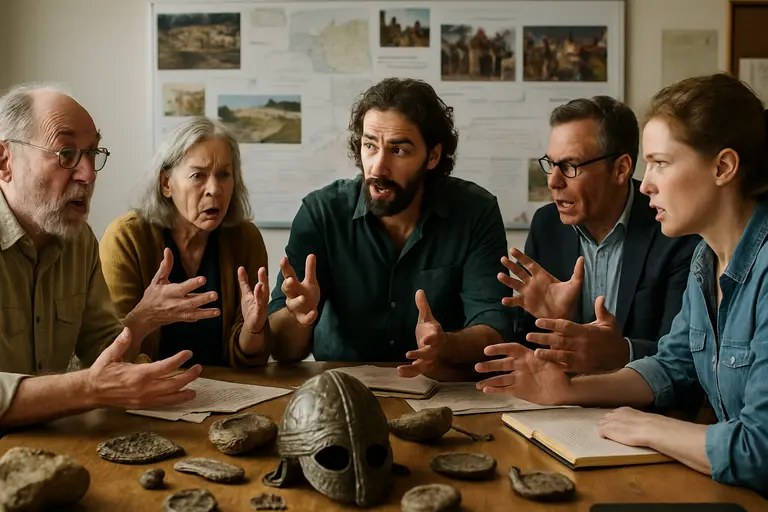
Norse Artifact Analysis and Recent Advances

The phrase Norse Artifact Analysis now covers far more than typology, style, and findspot description. Recent research supplied for this topic points to isotope mapping, trace-element chemistry, lead isotopes, dental calculus testing, cremation analysis, and palaeoproteomics as methods reshaping what scholars can ask of Viking Age and medieval Scandinavian material. The topic also names the Society for American Archaeology Meeting, but the research supplied here does not identify specific SAA papers or abstracts. For that reason, I treat the meeting as a useful frame for discussing archaeological method, not as evidence that any named presentation made a particular claim.

Why Recent Methods Matter For Norse Artifact Analysis

Norse Artifact Analysis And Source Limits

The strongest lesson from recent work is not that laboratory science gives simple answers. It is that better methods can sharpen questions while also exposing uncertainty. For Norse Artifact Analysis, this is welcome news. Viking Age objects have long been pulled into broad narratives about raiding, migration, trade, identity, and belief. The new technical studies are useful because they ask narrower questions: where did silver come from, whether a person or animal may have moved, how hot a cremation burned, or whether a plant sample reflects local cultivation.

That narrower scale matters for public history. An isotope value or trace-element result should not be turned into a whole life story without supporting context. A coin’s silver source is not the same thing as the route taken by the coin. A strontium match suggests compatibility with a region, not a named birthplace. A dental calculus result may help dietary work, but the research notes describe it as being compared with bone collagen values, not as a universal replacement.

Clear communication is part of the method. Readers who compare how evidence is explained in different public-facing formats may also recognize a related site in the same network; the relevant point here is simple: claims about the past need careful wording, visible limits, and sources near the facts they support.

From Object Description To Evidence Chains

Older artifact study remains essential. Form, wear, find context, and comparison still anchor interpretation. The newer advances add evidence chains that run from sampling decisions to laboratory protocol, statistical treatment, and historical interpretation. That chain can fail at several points if contamination, corrosion, later handling, or overconfident interpretation enters the discussion. The most persuasive studies are therefore those that explain not only what was measured, but why the sampled material is suitable for the question.

Isotope Maps And Mobility Questions

Strontium Baselines In Southern Scandinavia

One of the most significant developments in the supplied research is a high-resolution regional isoscape for southern Scandinavia. The study constructed a baseline map of bioavailable strontium isotope ratios using 1,293 samples, including water, plants, and micromammal teeth, to refine mobility and provenance studies in Scandinavian contexts southern Scandinavian isoscape study. This matters because strontium isotope work depends on comparing archaeological samples with a credible local baseline.

For Norse Artifact Analysis, the attraction is clear. If a tooth, plant, or animal sample preserves a usable chemical signal, researchers can test whether it fits a local geologic zone or differs from it. Yet the value of the method depends on the baseline. A coarse map can make many places look equally possible. A finer map can narrow the comparison, though it still does not identify a village, household, or ethnic identity by itself.

Greenland Plants, Diet, And Sample Treatment

The supplied research also reports work from Greenlandic Norse middens, where charred barley grains and wild plant seeds were examined with AMS radiocarbon dating and strontium isotope analysis. The reported interpretation is that Norse farms in southwestern Greenland likely cultivated barley locally. The methodological caution is just as important: careful sample treatment, including leaching and separating surface contamination, was essential.

I find that point especially useful for teaching. A barley grain may look small beside a sword, brooch, or hoard, yet it can speak to farming practice, adaptation, and daily survival. The technical result is not merely a number. It depends on whether the sample is clean enough, dated well enough, and interpreted within the settlement evidence.

Silver, Coins, And Minimal-Damage Sampling

The Damhus Hoard As A Method Case

The Damhus Hoard gives an excellent example of how chemistry can revise trade narratives without turning them into guesswork. The supplied research describes the hoard as 266 early ninth-century KG 4 silver coins found near Ribe, Denmark, in 2018. In the study, 25 coins were analyzed through micro-XRF for major and trace elements, laser ablation ICP-MS, and lead isotope analysis. The results indicated significant use of Eastern Islamic silver, including dirham-derived metal, in Denmark as early as the 820s–830s CE, alongside recycled Western European silver Damhus Hoard study.

That result matters because silver moved through Viking Age economies as bullion, coinage, ornament, and recycled metal. A coin can carry an official image, but its metal may preserve a different story of melting, mixing, and exchange. The research therefore supports a careful distinction between political imagery and material source.

This connects naturally with wider discussions of Norse trade influence, where objects are best read as part of exchange systems rather than as isolated curiosities. The Damhus work does not make every Danish coin “Islamic,” nor does it reduce Scandinavian exchange to one route. It shows that silver streams were mixed earlier than some simple public narratives imply.

Surface, Core, And Preservation Ethics

Norse Artifact Analysis has often faced a practical tension: the most informative tests may require removing material from rare objects. Recent studies increasingly address this by limiting damage and comparing surface and core chemistry. In coin and metal studies, that distinction is vital because corrosion, cleaning, or surface enrichment can distort the outer layer. Small slivers, edges, and focused micro-analysis can reduce harm while improving reliability.

This is not only a conservation concern. It affects interpretation. If a researcher measures only a changed surface, the result may describe post-depositional alteration more than original metal. If the study explains where and why the sample was taken, readers can judge the strength of the conclusion.

What Lab Methods Can And Cannot Say

Bone fragments and plant remains prepared for archaeological testing

Cremation, Calculus, And Antler

The supplied research notes several other methods now being applied to Norse and related northern material. These methods deserve attention, but each should be handled with restraint:

  • Cremated remains: A Viking Age mound at Tyresta in south-central Sweden was studied with ATR-FTIR, direct mercury analysis, and CIELab colour metrics. The reported human bone burning temperatures were about 900–1100 °C, with animal bones lower, and the study proposed a Mid-Infrared index for future work.
  • Dental calculus: A medieval Greenland comparison of Norse and Thule populations tested whether mineralized dental plaque can substitute for hair or bone collagen in stable isotope dietary reconstructions. The supplied notes report reproducible carbon and nitrogen isotope values from calculus and hair samples, with comparison to bone collagen underway.
  • Antler and bone objects: The RANGIFER project was funded in July 2026 and was scheduled to begin in October 2026. The project was described as applying ZooMS to large numbers of antler and bone artifacts and manufacturing debris to study movement of reindeer antler across Viking Europe.

These examples are exciting, but not because they provide instant certainty. Their value lies in matching method to material. Burned bone, plaque, and antler do not answer the same questions. A careful study asks what kind of signal survives, what contamination risks exist, and what comparison data are needed.

Why Caution Is Productive

Caution should not be mistaken for timidity. It is the condition that makes interpretation stronger. In archaeology, a dramatic claim unsupported by sample quality, dating, context, and comparison is fragile. A smaller claim with clear method can be more valuable. That is especially true for Viking Age studies, where modern audiences often want sweeping stories about movement, warriors, or long-distance contact.

Recent technical research helps redirect attention from stereotype to evidence. It lets us ask how silver was mixed, how animals and people may have moved, how food production worked, and how craft materials circulated. Those are human questions, not just laboratory questions.

Norse Artifact Analysis After The SAA Prompt

The best lesson for Norse Artifact Analysis after this SAA-framed prompt is that archaeology advances through disciplined combinations of old and new evidence. A coin hoard needs typology, find context, chemical testing, and historical comparison. A barley grain needs identification, dating, contamination control, and isotope interpretation. A cremation burial needs osteology, heat-alteration study, context, and caution about ritual meaning.

The supplied research also shows why recent advances should be discussed without inflated certainty. High-resolution isotope maps improve the questions scholars can ask, but they do not name individuals. Lead isotope and trace-element studies can identify likely silver streams, but they do not reconstruct every hand-to-hand exchange. Palaeoproteomics may open a wider view of antler movement after the project begins in October 2026, but its claims will depend on sampling, reference data, and publication.

That is the kind of archaeology I find most compelling: technically ambitious, historically grounded, and honest about what remains unknown. Viking Age and medieval Scandinavian artifacts do not need exaggeration. With careful methods and clear limits, they already tell powerful stories about craft, exchange, mobility, diet, memory, and the long afterlives of Norse material culture.
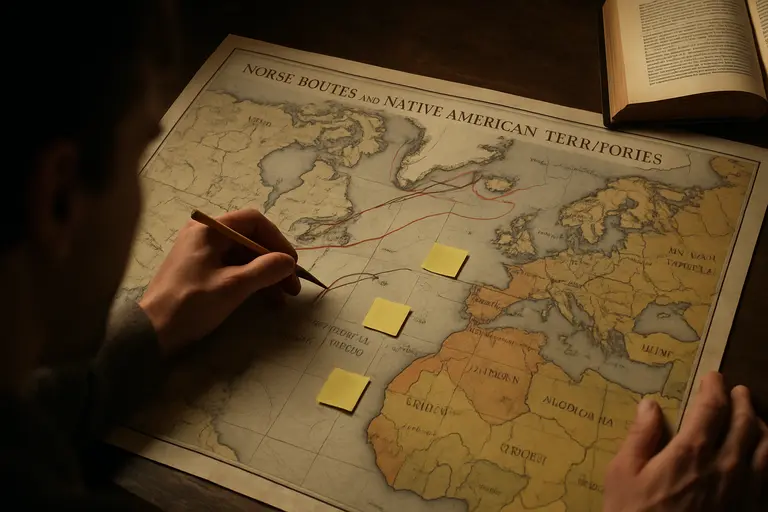
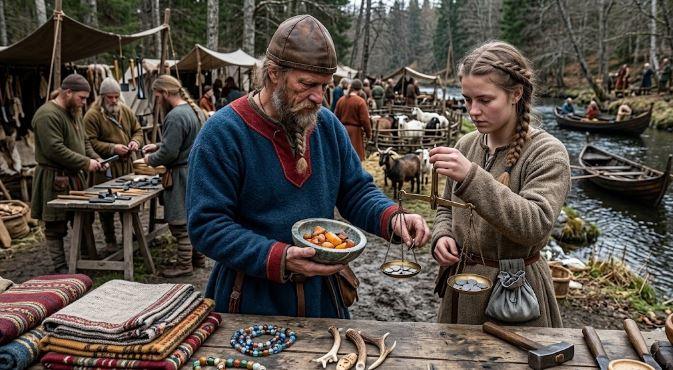
Posted in Norse History & Archaeology | Comments Off on Norse Artifact Analysis and Recent Advances

Björkan Sagas and Norse-Indigenous Kinship

Alice C. M. Kwok’s study of The Björkan Sagas deserves careful reading because it treats Harold R. Johnson’s 2021 novel not as a simple Norse afterlife, but as a contemporary literary answer to medieval Vínland narratives. Published in Postmedieval, volume 17, pages 333–358, on May 27, 2026, after acceptance on April 28, 2026, the article places Johnson’s science fiction rewriting beside Grœnlendinga saga and Eiríks saga rauða, both described in the research as thirteenth-century texts narrating Norse voyages to Vínland around the eleventh century and encounters with peoples termed “Skrælingjar” Kwok in Postmedieval.

Why The Björkan Sagas Matter Now

Björkan Sagas And Anti-Colonial Reading

Kwok’s article is centered on a “Red Reading,” described in the research as an Indigenous-centered hermeneutic. The term matters because it shifts attention away from inherited habits of reading the Vínland material as a tale of inevitable hostility. In Kwok’s account, Johnson imagines Norse and First Nations peoples as allies who oppose environmental destruction, religious bigotry, and settler colonialism. That claim is literary and interpretive; it does not rewrite the medieval sources as historical evidence for an actual alliance. Rather, it asks what contemporary fiction can do with inherited narratives of contact.

The value of The Björkan Sagas lies partly in that distinction. Johnson’s work, as Kwok presents it, is not a documentary reconstruction of eleventh-century events. It is a science fiction reimagining that tests another ethical possibility: that the old story of encounter can be retold through cooperation, kinship, and shared resistance. For a site concerned with Norse texts, that approach is worth treating with both openness and caution.

Johnson’s Mixed Heritage And Literary Setting

The research identifies Harold R. Johnson as a Cree-Swedish writer who lived from 1954 to 2022. Kwok situates his novel within his wider writing and activism on Indigenous and settler relations. That context is not a decorative biographical note. It helps explain why Johnson could draw together Scandinavian markers and Indigenous ethical systems without presenting either identity as a fixed costume.

Kwok’s reading describes the Björkan people through names and signs associated with Scandinavia, including björka trees, Swedish dialect, and nyckelharpa music. At the same time, the group is grounded in Indigenous systems of kinship, land relation, tree relation, and more-than-human life. The result is syncretic rather than purely medievalist. Readers looking at related modern uses of Norse material may also compare this discussion with oldnorsenews.org’s note on Viking themes in contemporary literature.

How Kwok Reframes Vínland

Medieval Sources And Modern Rewriting

Kwok’s study depends on the contrast between medieval saga material and Johnson’s speculative rewriting. The research identifies the medieval texts at issue as Grœnlendinga saga and Eiríks saga rauða. These texts were composed in the thirteenth century while describing Norse voyages to Vínland around the eleventh century. That gap between composition and narrated time should always temper historical claims. The sagas are indispensable sources for literary memory and medieval storytelling, but they are not transparent travel reports.

Johnson’s novel, as read by Kwok, uses science fiction to make that gap visible rather than hide it. The genre frees the book from pretending to reconstruct the past in a narrow antiquarian sense. Instead, it reworks the encounter story by asking how Norse and First Nations figures might be imagined as relatives, allies, and co-defenders against destructive power. That is a modern intervention into saga reception, not a replacement for philology or archaeology.

The Three Saga Structure

The research describes Johnson’s novel as containing three sagas, each placing pressure on inherited ideas about invasion, kinship, and sovereignty. Kwok’s account highlights how the novel moves from abduction, to ecological danger, to the recovery of self-rule.

  • The first saga follows Juha, a storyteller from the Björkan tribe, and includes abduction by US Army soldiers from outer space.
  • The second saga confronts invasion and the awakening of dragons over the natural world.
  • The third saga focuses on Lilly, a medicine woman, as she helps reclaim sovereignty from invaders.

This structure lets Johnson combine saga form with science fiction action. Kwok’s argument, as represented in the research, is not that medieval Norse texts secretly contain this same plot. It is that Johnson’s fiction answers older patterns by giving Indigenous-centered agency to the story of contact.

What The Article Can And Cannot Prove

Scholarly notes marked beside an open book on a wooden desk

Evidence, Genre, And Caution

Kwok’s article is strongest when read as literary analysis. It can show how Johnson reframes Norse-Indigenous relations through genre, symbolism, kinship, and anti-colonial argument. It can identify patterns in the novel: Scandinavian cultural coding, Indigenous ethical relation, and the rejection of conflict as destiny. It cannot prove that the historical Vínland encounter unfolded in the cooperative manner imagined by the novel. That limit is not a weakness. It marks the difference between medieval source study and contemporary speculative literature.

One careful feature of Kwok’s framing is that it treats the word “Skrælingjar” as part of the medieval textual problem. The term appears in the saga tradition, but modern scholarship must ask who is being named, who is doing the naming, and how later readers inherit that label. Johnson’s fiction, in Kwok’s reading, offers one way of resisting the old asymmetry: it gives Indigenous and mixed kinship systems a central place in the narrative.

Kinship Against Hostility

The research notes that Johnson’s novel ends through the merging of lineages. Torn relationships become kinship marriages: Juha’s brother Torn marries a Valkyrie, and Juha partners with Lilly. Kwok reads such pairings as signs of multiethnic family and alliance, offered as an alternative to violence in historical Norse and Native encounter narratives.

This point is sensitive because kinship imagery can be overused in modern fiction. Kwok’s reading, based on the research supplied, treats it as a deliberate literary strategy rather than a simple sentimental ending. The marriages do not erase invasion, abduction, or conflict from the book’s world. They answer those forces with relation, obligation, and shared resistance. For students of saga reception, that is significant because medieval family narratives often carry political weight. Johnson adapts that weight to a modern anti-colonial frame.

The Springer page for Kwok’s article was reported in the research as showing 736 accesses and an Altmetric score of 2 at the time noted. Such figures are limited measures; they can show some public or academic attention, but they do not measure the quality of the argument. For readers interested in creative textual practice beyond saga studies, the same network also includes The Sketchbook Project, which focuses more on art-making than medieval literary criticism.

Kwok’s Björkan Sagas Study

Kwok’s reading of The Björkan Sagas offers a useful case for how medieval Norse material can be reused without treating the past as neutral raw material. The study shows Johnson working with saga memory, Vínland contact, Cree-Swedish identity, speculative fiction, and Indigenous-centered ethics. That combination asks modern readers to reconsider why older stories of encounter have so often been read through hostility first.

The article’s most valuable contribution is not that it solves the historical question of Norse and Indigenous contact. It does not claim that. Its value is interpretive: it shows how contemporary literature can expose the moral habits embedded in older readings and can imagine different relations without pretending that fiction is evidence for the eleventh century.

For Norse studies, that approach is useful. It keeps medieval texts in view while making room for modern Indigenous critique and creative response. It also warns against easy certainty. The medieval sagas remain historically and philologically demanding sources. Johnson’s novel remains a 2021 work of science fiction. Kwok’s 2026 study matters because it reads the space between them with care, asking what Vínland can mean when the story is no longer told only through conflict.

Posted in Literature & Texts | Comments Off on Björkan Sagas and Norse-Indigenous Kinship

Why A New NTNU Study Makes Central Norway Look Less Peripheral In The Early Viking Economy

Central Norway can look peripheral when Viking trade is mapped through famous urban centres such as Ribe, Hedeby, Birka and Kaupang. A new 2026 study from the NTNU University Museum argues that this perspective overlooks much of how the early Viking economy actually worked.

Archaeologist Birgit Maixner, professor at NTNU’s Department of Archaeology and Cultural History, has published the 219-page monograph Three Miniatures on Raw Material Exploitation and Long-Distance Trade in Central Norway During the Early Viking Age. The peer-reviewed study appears as Gunneria 84 and examines Central Norway between roughly AD 750 and 950.

Its argument does not depend on discovering a forgotten Viking city.

Instead, Maixner combines evidence for raw-material production, imported luxury goods, metal-detector finds, weighed silver and possible transaction sites. The resulting picture suggests a rural economy with numerous small places of exchange, strong connections to southern Scandinavia and Sweden, and substantial participation by farming communities.

Dark schist whetstones quarried at Mostadmarka reached Ribe by the early eighth century and entered regular overseas trade by the middle of that century. Imported beads and metalwork moved in the opposite direction. By the later ninth and tenth centuries, weighed silver appears across broad parts of Central Norway.

Together, these patterns make the region difficult to describe simply as an economic edge.

The 2026 Study Starts With A Different Viking Map

The NTNU University Museum’s Gunneria series presents Maixner’s work as a three-part investigation of resource exploitation and long-distance trade within a largely rural Scandinavian landscape.

Her study area extends beyond modern Trøndelag. It follows the NTNU University Museum’s archaeological responsibility area and includes Helgeland, Trøndelag, Nordmøre and Romsdal.

That territory contains long coastlines, islands, fjords, major river valleys, forests, wetlands and mountain zones. Geography gave communities access to several different economic environments.

The Norwegian coastal sailing route—the norðvegr—ran north and south along Scandinavia’s Atlantic side. River valleys and mountain passes also created connections eastward toward present-day Sweden.

Maixner therefore treats Central Norway as a crossroads rather than an isolated northern zone.

This changes the research question. Instead of asking whether the region possessed a trading town comparable with Ribe or Hedeby, the study asks how raw materials left rural landscapes, where imported objects arrived and what kinds of places connected those movements.

The answer appears to involve numerous smaller nodes rather than one dominant emporium.

Mostadmarka Whetstones Reached Ribe Before AD 800

One of the clearest commodities came from Mostadmarka, around 11 kilometres south of Stjørdal.

The area contains dark schist well suited to sharpening stones. Archaeological research shows that whetstones produced from this Central Norwegian rock reached Ribe in present-day Denmark remarkably early.

Maixner notes that dark schist whetstones occur in Ribe deposits dated to approximately AD 710–725 and 723/724 to around 730. Their numbers increased markedly between about 760 and 790.

Researchers interpret that growth as evidence that quarrying around Mostadmarka developed into substantial production intended for wider markets. By the middle of the eighth century, the stone appears to have entered regular overseas exchange.

The chronology matters because it begins before AD 793, the traditional date often used to mark the start of the Viking Age.

It also turns a Norwegian quarry landscape into part of the economic history of one of Scandinavia’s earliest urban trading centres.

Maixner estimates that several hundred Mostadmarka whetstones may have reached Ribe each year during periods of intensive exchange.

vikingeconomy1

Whetstones Reveal A Commodity Economy, Not Just Elite Exchange

Sharpening stones lack the glamour of silver hoards or decorated swords, but that makes them economically valuable evidence.

Iron tools required regular maintenance. Farmers, craftspeople, shipbuilders and warriors all needed sharpening equipment.

Producing whetstones for distant consumers therefore required more than occasional barter. Workers had to extract stone, shape it, transport it and move quantities large enough to satisfy recurring demand.

Mostadmarka products travelled beyond Ribe as well.

Archaeologists have identified the material in Central Norway, at Birka in Sweden and in regions around the southern Baltic.

That distribution suggests a repeatable commodity chain rather than a single prestigious gift moving between elites.

A practical household object could connect a Norwegian quarry with Scandinavian market centres hundreds of kilometres away.

For Maixner, this kind of ordinary material provides some of the strongest evidence that early Viking exchange reached deeply into rural production systems.

Reindeer Products Linked Mountain Hunting To Wider Demand

Whetstones form only one part of the study.

Maixner also examines reindeer exploitation in the mountain landscapes around Oppdal and neighbouring districts.

Reindeer supplied meat, hides and antler. Antler became particularly useful because craftspeople could turn it into combs, gaming pieces and other manufactured objects.

Finds from Ribe show imported reindeer antler by the 750s, with processing waste present by around AD 760.

The exact origin of every piece cannot be assigned to Central Norway. That limitation matters.

Maixner does not claim that all reindeer material arriving in Ribe came from Oppdal. Instead, she combines the broader Scandinavian evidence with archaeological traces showing substantial Viking-Age hunting in Central Norwegian mountain regions.

Iron arrowheads found around Oppdal support that hunting activity. Other evidence comes from trapping landscapes and high-mountain archaeological sites.

Together, these finds show how mountain resources could become part of exchange systems extending far beyond the places where animals were hunted.

The Economy Also Brought Imported Goods North

If Central Norway only exported raw materials, it might still look like a remote extraction zone supplying richer markets farther south.

Imported objects tell a more complicated story.

Maixner maps selected beads and metalwork manufactured outside the region and finds that imported luxury goods reached Central Norway in meaningful quantities from the eighth century onward.

Some appear connected with southern Scandinavian craft centres, probably including Ribe. Others point toward contacts with Sweden.

The volume increased during the ninth and tenth centuries.

Imported objects also spread beyond a handful of coastal elite sites. They reached rural landscapes and increasingly appeared in places that older archaeological models might classify as peripheral.

That distribution matters because consumption forms part of economic participation.

The NTNU profile of Birgit Maixner summarizes the study’s argument: mass-produced imported luxury goods from southern Scandinavian trading centres were widely available in Central Norway by the eighth century, with imports becoming more numerous over the following two centuries.

The region therefore acted as both supplier and consumer.

Blue Glass Beads Trace Early Coastal Connections

Maixner’s new synthesis builds partly on earlier research into Viking-Age glass beads.

Several distinctive bead types produced at Ribe during the eighth century have been found far north along Norway’s coast.

These include so-called Blue Period millefiori beads and related decorative types associated with Ribe’s workshops during approximately the 730s to 790s.

Their distribution matters because beads are both portable and chronologically useful.

When securely identified production types appear hundreds of kilometres from their workshops, they provide evidence for movement through exchange networks.

Maixner’s earlier work showed that Ribe-made beads reached Central and Northern Norway during the eighth century.

The new monograph places those objects inside a broader economic system.

Imported beads moved north while resources such as whetstones travelled south. That does not mean one merchant necessarily sailed directly between Ribe and every Norwegian farm.

Goods could pass through several hands.

That possibility becomes central to understanding how imported objects reached rural communities far from large market towns.

Trondheimsfjord Functioned As A Maritime Network

The geography around Trondheimsfjord helps explain how decentralized exchange could work.

Maixner’s earlier study, “Connected by water, no matter how far”, describes the fjord as a major zone of maritime communication.

The fjord extends deep inland while connecting with Norway’s coastal sailing route. Several river systems enter it from surrounding valleys.

Viking-Age farms occupied strategic positions along these waterways.

Recent metal-detector finds added another layer to the interpretation. Maixner identified evidence suggesting that transactions involving weighed silver occurred near the shores of several farms rather than solely at one dominant marketplace.

That pattern challenges a model in which rural populations depended completely on large elite-controlled centres.

Water linked dispersed communities.

Boats could connect farms around the fjord more efficiently than overland travel through forests and uplands.

Such geography allowed numerous small places to participate in exchange without becoming towns.

Weighed Silver Makes Rural Trade Harder To Ignore

One of the strongest parts of Maixner’s 2026 study concerns the weight economy.

Viking-Age exchange did not always depend on coins functioning as fixed-denomination money.

People could weigh silver instead.

Hacksilver, ingots, balances and weights allowed metal to circulate according to mass rather than face value.

Maixner maps evidence connected with this practice across Central Norway. Examples include material from Moksnes near Stjørdal, a hoard from Mæle dating to around AD 900, and Grave 17 at the Vang cemetery near Oppdal, dated to the second half of the ninth century.

By the tenth century, she argues, the weight economy had spread across much of the populated region.

That broad distribution suggests that silver transactions were not restricted to a few aristocratic centres.

Archaeology cannot tell researchers the precise price of an animal, whetstone or bead. Balances and fragmented silver instead show that people possessed a technology for measuring value.

When such evidence appears across rural landscapes, Central Norway begins to look much more commercially connected.

Small Transaction Sites May Matter More Than One Missing Town

Maixner identifies numerous possible areas of production and transaction.

Most appear small beside famous Viking centres.

That comparison is important.

Hedeby, Kaupang and Uppåkra produced much larger quantities of coins, hacksilver, weights and craft debris because they operated on another scale and have undergone extensive archaeological investigation.

Central Norwegian sites generally yield smaller assemblages.

For example, Maixner notes that Viggja has produced 13 individual Islamic silver coins, the highest number among the Central Norwegian sites she discusses.

The point is not that Viggja rivalled Hedeby.

Instead, Central Norway may have functioned through many smaller places where goods changed hands.

Some possible sites occur along the coast, others near fjord mouths, while inland junctions such as Oppdal connected mountain routes with lower-lying settlement zones.

Together, those locations suggest a distributed network rather than one undiscovered Viking trading town.

Stjørdal May Have Linked Local And Overseas Exchange

The Stjørdal area provides one of the study’s clearest hypothetical models.

Mostadmarka lies nearby.

At the mouth of the Stjørdalselva, Maixner proposes a possible market or transaction area that could have connected several levels of exchange.

Local producers might bring whetstones there. Itinerant traders could purchase smaller quantities for regional distribution, while merchants involved in longer routes could move larger loads south toward Denmark, east across Scandinavia or into Baltic networks.

Goods could also pass onward through coastal points such as Storfosna or Agdenes.

This scenario remains a reconstruction.

The archaeological record does not contain a marketplace ledger identifying individual traders.

Maixner proposes the model because the relationship among production areas, waterways and portable finds makes staged transactions plausible.

Old Norse News recently explored the same interpretive problem through the Goddard Coin and long-distance exchange debate: an object’s place of manufacture cannot by itself reveal every person or journey involved in moving it.

Central Norway provides a much larger body of evidence, but the principle remains useful.

Farmers May Have Played A Greater Economic Role

The most provocative part of Maixner’s interpretation concerns who controlled economic activity.

Older models often place chiefs and regional elites at the centre.

In that framework, powerful households controlled resource extraction and long-distance trade before redistributing imported objects through social relationships.

Maixner argues that Central Norway fits that model imperfectly.

Imported goods appear widely distributed. Possible transaction sites are numerous. Weighed silver occurs across broad rural areas, while production landscapes seem connected with many farming communities rather than one identifiable central institution.

She therefore gives farmers as producers and consumers a larger role.

Local households may have increased surplus production partly because imported goods created incentives to participate in exchange.

This remains one of the monograph’s major interpretations rather than an undisputed fact about Viking economics.

Its significance lies in shifting attention away from chiefs alone and toward the decisions of households operating across rural landscapes.

Another 2026 Study Supports The Commodity Argument

Maixner’s monograph forms part of a wider research shift.

She also coauthored “Viking Age economics: implications of industrial commodity production” with Irene Baug, Dagfinn Skre, Torkil Sørlie Røhr, Tom Heldal and John Ljungkvist.

Published online in February 2026, the study examines large-scale commodity production across Viking-Age Scandinavia.

Its broader argument holds that organized production appeared early enough to challenge economic models centred mainly on elite prestige exchange.

Whetstones provide an especially clear example.

A sharpening stone looks ordinary beside silver or jewelry, but every household using iron tools needed one.

Supplying consumers at a distance therefore required extraction, labor, transport and recurring demand.

Such commodities can reveal the structure of an economy more clearly than spectacular elite objects.

Central Norway’s role in producing them becomes economically significant precisely because the products were ordinary.

Why The NTNU Study Makes Central Norway Look Less Peripheral

The strongest result in Three Miniatures is not the discovery of a northern Hedeby.

No such city appears.

Central Norway seems to have operated differently from the large trading centres farther south.

That difference is precisely why the region matters.

The 2026 NTNU study describes rural households extracting resources, imported goods circulating widely, weighed silver supporting exchange and numerous small transaction points connecting the coast, fjords and inland valleys.

Mostadmarka whetstones reached Ribe before the conventional Viking Age had begun. Imported luxury goods spread increasingly widely during the ninth and tenth centuries.

Maixner interprets these patterns as evidence that farmers participated directly in production, consumption and trade rather than functioning only beneath elite redistribution systems.

Some parts of the model remain easier to demonstrate than others. Whetstone distribution is especially strong evidence, while connecting individual reindeer products to exact hunting zones remains more difficult.

The broader picture nevertheless challenges a familiar map.

Central Norway’s mountains produced exportable resources. Its waterways moved merchandise. Rural households acquired imported goods, while silver and weights supported increasingly widespread exchange.

The region may have lacked a famous Viking emporium.

Its economy did not require one to become deeply connected.

Posted in Language & Linguistics, Mythology & Culture, Norse History & Archaeology | Comments Off on Why A New NTNU Study Makes Central Norway Look Less Peripheral In The Early Viking Economy

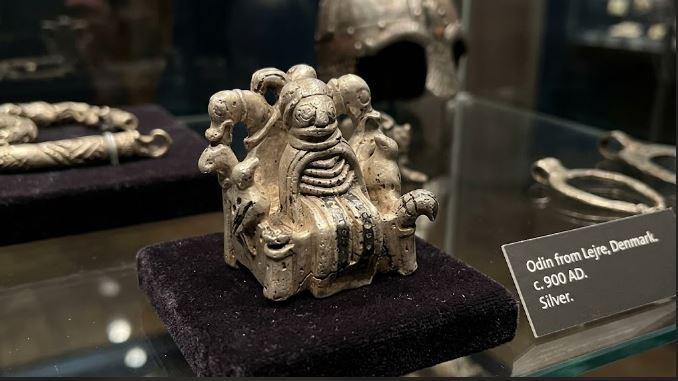
Why The Odin Of Lejre’s First Dutch Loan Reopens The North Sea Gods Debate

A silver figurine smaller than two centimetres has travelled from Denmark to the Netherlands for the first time, carrying with it one of the most persistent arguments in Viking-Age archaeology.

The object usually called the Odin of Lejre left Lejre Museum in August 2026 for the Fries Museum in Leeuwarden, where it entered the exhibition REDBAD: The Legendary King. The exhibition opened on September 5, 2026 and runs through February 7, 2027 before moving to the Ostfriesisches Landesmuseum in Emden, Germany.

The figurine dates to around AD 900. It measures roughly 1.75 centimetres high, 1.98 centimetres wide and 1.25 centimetres deep, and weighs only about 9 grams. A seated figure occupies a high-backed chair or throne. Two birds perch beside the sitter, while animal heads appear on the chair.

That imagery led archaeologists to identify the figure as Odin sitting on his high seat, accompanied by the ravens Huginn and Muninn and perhaps the wolves Geri and Freki.

Yet the identification has never been as simple as the nickname implies.

Researchers have also read the clothing as female dress and proposed Frigg, Freyja or another powerful female figure. More recent scholarship has defended the Odin interpretation by arguing that the apparent gown may instead represent elite male clothing, armour and a cloak.

The figurine’s first Dutch loan therefore does more than move a famous artifact between museums.

Placed beside the material culture of seventh- and eighth-century Frisia, the object reopens a larger question: how similar were the divine images, elite symbols and political ideas circulating around the North Sea before and during the Viking Age?

The Figurine Left Lejre For The Netherlands In August 2026

Lejre Museum states that the figurine went on international loan from August 17, 2026 to February 16, 2027.

Its public appearance in the Netherlands began with the opening of REDBAD: The Legendary King at the Fries Museum on September 5.

The Fries Museum’s Odin of Lejre presentation describes this as the artifact’s first journey to the Netherlands.

That makes the loan historically interesting in its own right.

Museums frequently move famous Viking artifacts for exhibitions, but the decision to place the Lejre figure in a show devoted to Frisian king Redbad changes its interpretive setting.

At Lejre, the figurine sits within a Danish royal landscape.

At Leeuwarden, it becomes evidence for a much wider North Sea cultural world.

The Fries Museum uses the object to illustrate possible connections among elite centres in Scandinavia, Frisia and the wider coastal region.

That shift matters because religious images did not necessarily remain inside the borders modern maps assign to Denmark, the Netherlands or Germany.

Ideas travelled with people.

The Figurine Was Found Beside One Of Denmark’s Great Royal Landscapes

Amateur archaeologist Tommy Olesen found the object in autumn 2009 during excavations near Mysselhøjgård north of Lejre Museum.

ROMU’s history of the Lejre figurine places the discovery inside a landscape already famous for elite architecture.

Archaeologists identified traces of five major royal halls dating broadly between about AD 650 and 1000.

Those halls help explain why the tiny figurine attracted immediate attention.

Lejre was not an ordinary Viking-Age farm.

The site functioned as a major centre of power across the Late Iron Age and Viking Age. Monumental halls rose, disappeared and were replaced over several centuries.

Feasting, political gatherings, ritual activity and elite display formed part of that landscape.

An object apparently showing a divine or supernatural figure on a throne therefore entered archaeology in exactly the type of setting where researchers might expect links among religion, kingship and elite ideology.

The location does not prove the sitter is Odin.

It does make the figurine’s royal imagery harder to separate from the political environment surrounding it.

The Birds Made Odin The Immediate Interpretation

The first interpretation emerged from the composition itself.

Two large birds sit beside the enthroned figure.

Norse literary tradition associates Odin with Huginn and Muninn, the ravens who travel through the world and return with information.

The chair has also been compared with Hliðskjálf, Odin’s high seat, from which later Norse texts describe him observing distant worlds.

Animal heads on the chair have sometimes been linked with Odin’s wolves Geri and Freki.

Archaeologist and Lejre specialist Tom Christensen developed the Odin interpretation soon after the object’s discovery.

The visual combination seems unusually suggestive: throne, birds, animals and a commanding central figure.

ROMU continues to call the piece Odin from Lejre.

The Fries Museum likewise presents the object under that name, while using careful language such as “generally interpreted as Odin.”

That qualifier matters.

Archaeology does not have a runic caption identifying the sitter.

Without a written name on the object, interpretation depends on visual comparison.

Odinfigurine

The Clothing Created A Problem Almost Immediately

The seated figure appears to wear long clothing, decorative elements across the chest and jewelry.

Some specialists saw those details as incompatible with a straightforward representation of Odin.

The problem became particularly visible when researchers compared the figurine with Viking-Age images of elite women.

The figure has been described as wearing a long dress, an apron-like garment, a cloak and several strands that could resemble bead necklaces.

That prompted proposals that the sitter might instead represent Frigg or Freyja.

The debate is summarized clearly by Princeton University’s Making the Viking Age project, which treats the figurine as a case study in the difficulty of identifying Viking-Age divine imagery from material culture alone.

The uncertainty is productive.

It demonstrates why archaeologists cannot simply take later written mythology and use it as a label-maker for earlier objects.

A bird beside a throne can support an Odin interpretation.

Clothing that resembles elite female dress can support another.

Both observations exist on the same object.

A 2022 Study Reasserted The Odin Interpretation

The debate did not end with the first wave of criticism.

In a study published in Kuml, archaeologist Nikolaj Wiuff Kristensen argued that the clothing had been misunderstood.

His new interpretation of Odin from Lejre compares the figurine with Viking-Age and medieval representations of kings, warriors and elite men.

Kristensen argues that the sitter wears armour beneath a cloak rather than a woman’s dress.

He also interprets several details as specifically Odinic: a helmet, prominent eyebrows, a moustache, a neck ring, two ravens, wolves and the high seat.

In that reading, the figurine does not undermine the Odin identification.

It strengthens it.

The study also raises the possibility that the object once formed part of a ritual staff, perhaps connected with seiðr or other magical practices.

That suggestion remains interpretive rather than certain.

Its importance lies in showing how strongly the object’s meaning changes depending on how researchers identify the clothing.

If the figure wears female attire, the divine identity becomes ambiguous.

If it wears elite male dress and armour, Odin becomes easier to defend.

The Disagreement May Be More Interesting Than A Final Name

The impulse to identify the sitter is understandable.

Museum visitors want to know whom they are looking at.

Archaeology does not always cooperate.

Recent Viking scholarship increasingly treats ambiguity itself as historically meaningful.

A figurine, burial object or museum reconstruction can gain a confident modern label even when the underlying evidence remains more complicated. Old Norse News recently explored that same gap between evidence and modern interpretation in its discussion of Viking museum myths and archaeological evidence.

That comparison fits the Lejre problem especially well.

A museum label can make an object easier to understand, but it should not erase the uncertainty that makes the object archaeologically interesting.

Pre-Christian Scandinavian religion relied on stories, ritual practices, performances, objects and local traditions that could vary by place and period.

The Swedish History Museum’s overview of Old Norse myths and religion stresses that Viking-Age religious practices were not one uniform religious system shared identically across the North.

That point becomes crucial when the Lejre figure travels to Frisia.

Redbad Lived Before The Figurine Was Made

The exhibition context requires another chronological caution.

King Redbad, or Radbod, lived roughly between AD 670 and 719.

The Lejre figurine dates to around AD 900.

The object therefore does not prove that Redbad personally saw this image, worshipped Odin in this exact form or knew the Lejre court.

Almost two centuries separate them.

The Fries Museum does not need direct contact to justify the comparison.

The exhibition focuses on the wider North Sea world in which political, cultural and religious traditions developed across several centuries.

The REDBAD exhibition combines archaeological material with new Dutch-German research into early medieval Frisia and neighbouring regions.

Its purpose is comparative.

The Odin figure represents a later Scandinavian expression of ideas about divine power, rulership and supernatural authority that researchers can place alongside evidence from the Frisian world.

That comparison may reveal continuities.

It can also reveal differences.

Redbad Makes The Wodan Question Harder To Ignore

Odin was not known only by his Old Norse name.

The same broader Germanic deity appears under forms such as Wodan or Woden in other linguistic traditions.

That matters when the figurine enters a Frisian exhibition.

The Fries Museum describes REDBAD under the thematic phrase “water, wolves and Wodan.”

The wording deliberately places religion beside geography and political culture.

New research associated with the exhibition has gone further.

Researchers connected with the REDBAD project argue that an eighth-century Latin account concerning Redbad may preserve an earlier description of ideas resembling Valhalla and Wodan-linked sacred kingship.

The Fryske Akademy announced the interpretation in August 2026 through its report on the possible early Valhalla reference.

The underlying academic chapter is scheduled for publication in February 2027.

That timing requires restraint.

The argument is important, but the full scholarly case has not yet appeared in its final published volume.

It should therefore be treated as a new interpretation rather than an established historical fact.

Still, it makes the arrival of the Lejre figurine unusually timely.

The North Sea Was A Cultural Zone Before It Was A Border

Modern national maps divide Denmark, the Netherlands, Germany and Britain clearly.

Early medieval communities experienced the North Sea differently.

Water could connect places as effectively as it separated them.

Ships moved traders, warriors, envoys, craftspeople and political representatives along coastlines and across open water.

Elite culture could travel with them.

The Fries Museum argues that Redbad’s Frisia belonged to a broad North Sea world extending along the Dutch and northern German coast and interacting with neighbouring political centres.

Researchers involved in the exhibition are examining diplomacy, warfare and exchange across that zone.

Lejre fits naturally into such a discussion.

Its monumental halls show that it served as a long-lived Scandinavian centre of power.

The figurine adds divine symbolism to that political landscape.

Putting it beside Frisian artifacts allows researchers and visitors to ask whether rulers across the North Sea drew on related symbolic languages.

They did not need identical myths for imagery to travel.

Kingship And Religion Were Difficult To Separate

One reason the Lejre figurine works so well in the Redbad exhibition is that both sites raise questions about sacred kingship.

Elite rulers in early medieval northern Europe did not operate inside a modern division between religion and government.

Feasts, ritual authority, ancestry, warfare and political legitimacy could overlap.

At Lejre, giant halls and ritual deposits have long encouraged archaeologists to examine the relationship between royal power and pre-Christian religion.

ROMU presents the figurine itself as part of that relationship.

The seated figure occupies a throne.

Whether the sitter is Odin, Frigg, Freyja or another supernatural being, the composition associates high status with divine imagery.

That makes the object politically relevant even before researchers agree on a name.

The figurine may have communicated authority through precisely the combination that makes modern identification difficult.

Archaeology Can Test Myth, But It Cannot Simply Illustrate It

The Lejre debate exposes a larger methodological problem in Viking history.

Most detailed written accounts of Norse mythology survive in manuscripts produced after Christianization.

Snorri Sturluson wrote the Prose Edda in Iceland during the 13th century.

The Poetic Edda survives in medieval manuscripts even though some of its poetry may preserve much older traditions.

Archaeological objects such as the Lejre figure come from the period itself.

That makes them extremely valuable.

It does not make them self-explanatory.

Researchers must resist reading later literary descriptions directly back into every Viking-Age image.

Princeton’s Lejre project makes this problem explicit: objects should not simply become illustrations of texts written centuries later.

The birds beside the Lejre sitter may indeed represent Huginn and Muninn.

The throne may indeed represent Hliðskjálf.

Those interpretations become strongest when archaeology, iconography, place context and later texts converge.

None works as proof alone.

The First Dutch Loan Gives The Object A New Comparative Context

The significance of the 2026 loan lies partly in what surrounds the figurine.

At Lejre Museum, visitors encounter it near the archaeological landscape in which it was discovered.

At the Fries Museum, it appears among artifacts from the wider North Sea region.

The change encourages comparison.

A Danish royal-centre object can now be read beside Frisian elite jewelry, weapons, imported goods and material associated with early medieval political networks.

The exhibition includes the restored Wijnaldum fibula, one of the most important objects in Frisian archaeology.

Researchers can therefore place Scandinavian divine imagery beside some of the richest material expressions of elite status in Frisia.

That does not demonstrate one shared religion.

It demonstrates a shared conversation about power.

Why The Dutch Loan Reopens The North Sea Gods Debate

The Odin of Lejre travelled to the Netherlands in 2026 as a famous image of Scandinavian pre-Christian religion.

It arrived carrying an unresolved identity.

That is what makes the loan so useful.

The figurine provides strong visual reasons for an Odin interpretation: an enthroned figure, two birds and animal imagery associated with later traditions about Odin.

Its clothing has also generated serious alternative readings involving female divine figures.

A recent scholarly reinterpretation argues that the garment is male elite clothing and armour, restoring much of the original Odin case.

No inscription settles the matter.

The Fries Museum now places that ambiguity inside another unsettled historical landscape.

Redbad ruled Frisia around AD 700, long before the Lejre figure was made. His world stood between older Germanic traditions, expanding Christian power and political networks crossing the North Sea.

New research linked to the exhibition even suggests that texts about Redbad may preserve unexpectedly early traditions involving Wodan and a Valhalla-like afterlife, though the full academic argument remains forthcoming.

The Lejre figurine therefore does not prove that Denmark and Frisia worshipped identical gods in identical ways.

It does something more historically useful.

It allows archaeologists to compare how rulers, divine imagery and elite culture operated across a connected North Sea world.

The first Dutch loan has moved the object away from the landscape that gave it its name.

In doing so, it has made the question surrounding that name much larger.

The issue is no longer simply whether the tiny enthroned figure is Odin.

It is how people around the early medieval North Sea recognized gods, authority and sacred power—and how much of that visual language crossed the water with them.

Posted in Literature & Texts, Mythology & Culture, Norse History & Archaeology | Comments Off on Why The Odin Of Lejre’s First Dutch Loan Reopens The North Sea Gods Debate

Norse Greenland Foodways In Recent Finds

Norse Greenland Foodways have become easier to discuss with precision because recent archaeological work has shifted attention from saga-shaped narratives toward middens, charred grain, isotope values, animal bones, pollen, wood, microbes, and traces of fire. The pattern is not a simple story of heroic settlement or sudden failure. It is a slower record of households adjusting to cold soils, short growing seasons, hay needs, sea-mammal hunting, imported or drifted materials, and trade links that reached far beyond the farm.

Norse Greenland Foodways From Middens And Fields

Why Norse Greenland Foodways Begin With Barley

The 2024 study “In the search for the origin of the barley at Norse farms in Greenland” is useful because it starts with small, charred remains rather than broad claims about Greenlandic agriculture. Archaeologists excavated midden layers at two Norse farms in South Greenland, listed as Ø35 and Ø49, during 2021–2022. Charred barley grains appeared in most midden layers. Strontium isotope analysis suggested that the barley from Ø35 likely grew locally, with a reported value around 87Sr/86Sr ≈ 0.70728 ± 0.00058. At Ø49, the value was closer to ≈ 0.70978 ± 0.00018, which the study linked to possible imported material or different local geology ScienceDirect barley study.

That finding matters because barley has often sat at the edge of discussion about Norse farming in Greenland. It was not a crop that can be assumed everywhere or at every farm. The isotope difference between the two sites warns against treating all South Greenland farms as the same. Some grain may have been local. Some signatures may reflect movement, mixed sources, or geological differences. The safe reading is not that Greenland became a grain economy. It is that barley belonged to at least some farm routines, and that the origin of those grains must be tested rather than guessed.

Middens As Household Archives

Middens are especially valuable for food history because they preserve discarded material from ordinary routines. They are not neutral records, since preservation, excavation choices, and later disturbance affect what survives. Even so, a farm midden can bring together charred plant remains, animal bone, ash, dung traces, fuel waste, and broken objects. For a society often remembered through settlement names and later written traditions, refuse gives a firmer route into work, eating, heating, feeding animals, and coping with seasonal scarcity.

The recent focus on midden layers also makes the interpretation of status more careful. A high-status farm and a smaller outlying farm may both leave food debris, but the proportions can differ sharply. That is one reason Norse Greenland Foodways should be studied site by site before being turned into a single model.

What Barley And Fire Signals Suggest

Farming Near The Ice Cap

A high-resolution environmental study titled “Ice and fire: Norse farming at the edge of the ice cap of the Western settlement in Greenland” was released on 1 February 2025 in Quaternary Science Reviews. According to the research notes, it found little vegetation change after settlement, but increased microcharcoal and fire activity between 1000 and 1200 CE. The interpretation offered was human-induced fire and land clearance rather than climate alone. After the mid-13th century, the human signal appears to have declined sharply.

This is a cautious but significant result. If vegetation did not change dramatically, then farming impact was not always visible as a sweeping botanical replacement. Fire traces can show activity that pollen alone might understate. The finding also places human labor at the center of early settlement: clearing, burning, maintaining grazing areas, and shaping farm surroundings through repeated work.

Drying, Hay, And Dairy Choices

A 2024 palynological study described as “The steady loss” used lake-sediment and pollen data from southern Greenland’s Eastern Settlement. The research notes report a severe drying trend and substrate impoverishment across the Norse period, from the 10th to 15th centuries AD. The study connected this with lower hay yields and pressure toward dairy production and shieling, meaning summer grazing away from the main farm.

Hay is a practical measure of survival in Norse Greenland. Cattle, sheep, and goats required winter fodder, and a household’s ability to keep animals alive through the cold months affected milk, meat, wool, manure, and status. If hay yields fell, then farmers had to adjust herd size, grazing patterns, labor, and diet. These findings also explain why foodways cannot be separated from soil, moisture, and seasonal work.

Animal Bones, Isotopes, And Shifting Diets

From Terrestrial Foods Toward The Sea

Stable carbon isotope analysis of bone collagen from 27 Norse individuals, dated from the late 10th to the mid-15th century, showed a shift from a mainly terrestrial diet around AD 1000 toward a more marine diet by around AD 1450. The research notes describe this as a transition over about 450 years toward sealing, fishing, and marine mammals. That long chronology is important. It suggests adaptation over generations, not a single dietary turn forced by one event.

A separate comparative project on the Norse Greenland dietary economy included 183 human samples, of which 118 were Norse and 65 Inuit, together with 254 animal samples from 19 Norse farm sites. Its design aimed to compare subsistence strategies by time, region, sex, and farm type. Even without reducing those data to one headline, the scale of sampling shows why older general statements about “the Greenland Norse diet” now need revision.

Seal Bones And Social Difference

Zooarchaeological work in the Vatnahverfi region found that seals made up more than 50 percent of all animal bones in most sites. The research notes also report that domestic animals such as sheep, goats, and cattle declined over time, especially on smaller farms. Hunting and seal meat became more central in poorer and outlying Western Settlement farms as farming pressures increased.

This does not mean domestic farming vanished. It suggests a mixed economy in which the balance changed. A household might maintain animals for dairy, wool, manure, identity, and exchange while also relying heavily on seals. Norse Greenland Foodways therefore sit between farm and shore. The cow shed and the seal hunt were not separate histories; they formed one survival system.

Walrus Ivory Beyond The Farm

Foodways also connect with hunting for trade goods. A 2024 archaeogenomic sourcing study of walrus ivory artifacts found that Norse Greenlanders obtained ivory not only from nearby sources, but also from High Arctic hunting grounds, especially the North Water Polynya and possibly the Canadian Arctic interior region PubMed walrus study. The study links ivory procurement with long-range expeditions and exchange networks.

Walrus hunting should not be read only as commerce. It also required travel, planning, boats, crews, risk management, butchery, and knowledge of animal movement. Meat, hide, rope material, tusks, and social prestige could all intersect. The phrase “white gold” captures ivory’s value, but the archaeological point is broader: Greenlandic households were tied to distant places through the labor of hunting.

Middens, Microbes, Wood, And Household Routine

Sample bags with soil, charcoal, and small wood fragments from a Norse site

Microbial Traces In Refuse

A study published in mid-2026, “Ancient Greenland middens preserve traces of human microbes for 4,500 years,” collected 78 midden samples from seven sites, including four Norse settlements. The research notes state that 1,207 bacterial species were identified across samples, with individual samples ranging from 9 to 202 species. Middens carried stronger signatures of human and animal waste, including pathogens and antimicrobial resistance genes, connected with livestock farming, decomposition, and diet.

This work is recent enough that readers should treat it as part of an active research direction, not as a finished explanation of health in Norse Greenland. Its value lies in showing that refuse can preserve biological signals beyond visible artifacts. Food history is not only what people ate. It also includes waste handling, animal proximity, decay, parasites or pathogens, and the living conditions around farms.

Wood As A Daily Constraint

Wood procurement research covering the 11th to 15th centuries examined five Norse sites, including the episcopal manor at Garðar, now Igaliku. The research notes report that Norse Greenlanders mainly used driftwood and native low-growing shrubs. Imported timber appeared only at high-status farms, and imported wood was marginal for everyday needs such as buildings, tools, and fuel.

This evidence places cooking and heating within material limits. Fuel affects how people bake, boil, smoke, dry, warm rooms, and manage animal spaces. Building material also shapes barns, byres, storage areas, and repair cycles. A farm’s food system depended not only on fields and animals but also on the availability of wood, turf, dung, and labor.

  • Charred barley shows that crop evidence must be tested by site rather than assumed.
  • Microcharcoal points to human burning and land clearance between 1000 and 1200 CE in the Western Settlement study.
  • Bone chemistry and zooarchaeology show a long shift toward marine foods, especially seals.
  • Walrus ivory sourcing links Greenland farms with High Arctic hunting and exchange.

Norse Greenland Foodways As Daily Evidence

Why Recent Finds Matter Now

Norse Greenland Foodways matter for modern readers because they replace a single collapse story with evidence for changing choices. The recent studies do not deny hardship. Drying trends, lower hay potential, declining domestic animal bones at smaller farms, and sharper marine reliance all point to pressure. Yet the same evidence shows adjustment, not passivity. People burned, grazed, hunted, stored, discarded, repaired, and traveled.

There is a preservation issue as well. Middens, farm deposits, bone assemblages, and botanical remains are vulnerable sources. Readers interested in that threat can compare this evidence with related coverage of Norse site preservation. For those looking for an engaging introduction to similar heritage topics, Talk and Play serves as a friendly gateway to more specialized content like this.

The strongest interpretation is cautious: recent archaeology shows a Greenlandic Norse society built on mixed farming, animal husbandry, hunting, imported or drifted materials, and regional difference. Food was never just food. It carried labor, risk, status, seasonality, and contact with distant waters. That is why middens and grain fragments deserve as much attention as churches, farms, and written traditions.

Posted in Norse History & Archaeology | Comments Off on Norse Greenland Foodways In Recent Finds

Viking Board Games and Dice: What the Evidence Really Shows

Viking board games and dice survive in museum collections, but the objects do not preserve every rule, wager, or conversation that surrounded them. The Viking Ship Museum documents gaming equipment from graves and surviving boards, making play part of the archaeological record rather than a modern invention. The challenge is deciding how much each discovery actually tells us.

For readers exploring Norse history and heritage, the useful distinction is between an excavated object, a written description, and a modern reconstruction. Each answers different questions. Before accepting a claim about Viking gaming, check the object’s date, its recorded findspot, and the evidence behind the proposed rules. A convincing-looking board is not automatically a complete record of how people played.

Start With the Object, Not the Story

A small gaming piece can provide a stronger starting point than a dramatic account of warriors gambling through the night. The Swedish History Museum records a Birka gaming piece, object number 270279_HST, as a carved, hemispherical piece made from antler or whalebone. Its recorded context is a settlement find from Svarta Jorden at Birka, in Uppland.

Those details establish a documented object and a place. They do not identify its owner, the number of people present during a game, or the consequences of losing. The museum’s material description contains uncertainty, too: “antler or whalebone” should not become “whalebone” simply to make a retelling sound more definite.

This is a useful reading habit. Separate what the catalogue records from what an author proposes. A claim that someone carved and used gaming equipment is narrower than a claim about professional gamblers, military training, or a particular social class. The larger interpretation needs additional evidence of its own.

Why Hnefatafl Rules Need a Date

Hnefatafl offers a clear example of the gap between evidence for a game and evidence for its full rules. The Viking Ship Museum explains that saga references reveal little about how the games it discusses were played. It points to the Swedish naturalist Carl Linnaeus’s observation of a related game in Lapland in 1732 as a later source, separated from the Viking Age by centuries.

That gap matters. A later account can help researchers propose how an earlier game worked, but it cannot automatically establish that every rule remained unchanged.

When reading a modern rules sheet, ask which details come from surviving boards, which come from written accounts, and which were selected to create a workable game. A reconstruction can be enjoyable and educational without being presented as an untouched medieval inheritance.

The honest label is part of the history: reconstructed rules describe an interpretation, not a recovered Viking instruction manual.

Viking Dice Were Not Necessarily Modern Cubes

The University of Nottingham’s Vikings in the East Midlands project provides another useful correction through its entry on reproduction Viking dice. The project describes Viking Age dice as usually rectangular rather than cubic, with the end faces harder to roll. It notes that their opposite faces did not follow the modern convention of adding up to seven. The displayed objects are explicitly identified as reproductions.

That last detail deserves attention. A reproduction photograph can illustrate a historical form without being a photograph of an excavated artifact. Keep that distinction intact when sharing images or preparing a heritage presentation.

The project states that the games played with these dice are not known and describes their possible use in hnefatafl as a suggestion, not an established rule.

A rectangular shape should not become instant proof of cheating, either. Unequal rolling behavior and deliberate deception are different propositions. The second would require evidence about intention, expectations, and the rules accepted by the players. Shape alone cannot settle those questions.

Why Gaming Equipment Does Not Automatically Prove Gambling

A die could determine movement, select an outcome, or contribute to a score. None of those functions necessarily requires money or property to change hands. Finding an object associated with play is not the same as finding evidence of a wager.

Keep the questions separate: What equipment survives? What game might it belong to? Is there independent evidence that players staked something on the result? Answering the first does not automatically answer the other two.

Present-day sportsbook reviews address a different subject. A question such as Does BetOnline have reduced juice odds? concerns a modern operator’s pricing and needs contemporary product evidence. It is not a historical parallel that can explain the stakes or arrangements surrounding an excavated Viking gaming piece.

For historical writing, a claim about gambling should identify the supporting text or archaeological argument. Without that support, describe the gaming equipment and leave the wager unproven. That approach preserves the distinction between a plausible scenario and a documented practice.

Keep the Lewis Chessmen in Their Own Period

The Lewis chessmen demonstrate why a date should come before a broad cultural label. The British Museum’s Lewis chessman record identifies one walrus-ivory figure as a warder, or rook, dating to approximately 1150–1200. The figure carries a sword and shield and wears a conical helmet. Its recorded findspot is Uig.

That makes the object evidence for a particular medieval gaming tradition and period. It should not stand in for an unspecified ninth-century board game simply through visual association with northern Europe.

The difference matters when choosing illustrations. A photograph of a carved chess figure may look suitable beside an article about Viking games, but the caption needs to name the object and its date. Otherwise, the illustration can create a historical claim that the accompanying text never intended.

Use the same discipline for replicas. Identify the original model where possible, state what period it represents, and avoid treating all northern European gaming objects as interchangeable.

Explore Reconstructed Games With the Evidence Beside You

The National Museum of Ireland offers a practical starting point through its Hnefatafl learning resource, based on the gaming board found at Ballinderry. The museum connects the activity to archaeological finds of boards and gaming pieces, giving participants a named object to investigate rather than an anonymous “Viking-style” design.

Use that kind of resource in two stages. First, examine the historical reference: where was the object found, what survives, and what does the museum actually say about it? Then examine the activity: what arrangement, movement rules, and winning conditions does the supplied version ask players to use?

For a heritage discussion, keep a short evidence note beside the board. Record the institution, object or resource title, and any stated uncertainty. Put your own observations in a separate paragraph. This makes it easier to distinguish a museum’s account from something noticed during a modern game.

A reconstructed game can still generate worthwhile questions. Does changing a starting position affect the result? Does a different capture rule make one side easier to play? Such experiments explore the chosen reconstruction; they do not establish how an undocumented historical match unfolded.

After playing, write down one feature supported by the surviving object and one supplied by the modern rules. That comparison gives the activity a clear historical purpose: learning to recognize where the evidence ends and interpretation begins.

Posted in Mythology & Culture | Comments Off on Viking Board Games and Dice: What the Evidence Really Shows

Vikingmania Exhibit and Modern Viking Myths

The Vikingmania Exhibit is best read not as a simple display of helmets, ships, and warriors, but as a public test of how modern audiences meet the Viking Age through popular culture. The supplied research points to a pattern that is now familiar in museums: visitors often arrive through television, games, comics, school memory, family identity, or tourism, then encounter objects and scholarship that complicate those images. That tension is not a failure of public history. It is the point where learning begins.

On September 21, 2026, the Great Viking Survey was published after collecting more than 10,000 responses globally. According to the NordForsk report, many respondents first met Vikings through popular culture, yet most also said they maintained a good understanding of academic research through museums and current reporting. That finding matters because it resists an easy split between “serious history” and “popular imagination.” A person can enjoy a dramatic Viking image and still want careful evidence.

Why The Vikingmania Exhibit Needs Nuance

A cautious exhibition about Vikings has to begin with a basic problem: the word “Viking” itself carries more weight in modern culture than it can safely bear. The research supplied for this article uses the common frame of the Viking Age as roughly 793 CE to 1066 CE, but modern media often compresses several centuries, regions, social classes, and religious changes into a single visual code. A longship, a bearded raider, a shield wall, and a brooding northern sky can stand in for a period that was also about farming, trade, craft, movement, settlement, power, and family memory.

Vikingmania Exhibit And The Six Character Types

A 2026 peer-reviewed study, “Mediating the Vikings: popular culture, character types and museum audience experiences,” identified six recurring Viking character types in popular culture: The Warrior, The Monster, The Explorer/Craftsman, The Feminist, The Style Icon, and The Non-Playing Character. The University of Southern Denmark record describes the study as based in Denmark and concerned with the tension between mediated stereotypes and scholarly history.

  • The Warrior centers combat, status, weapons, and aggression.
  • The Monster treats Vikings as frightening outsiders or violent spectacle.
  • The Explorer/Craftsman shifts attention toward ships, skill, travel, and making.
  • The Feminist foregrounds women, agency, and gendered readings of the past.
  • The Style Icon turns hair, clothing, tattoos, jewelry, and bodies into cultural symbols.
  • The Non-Playing Character reduces Vikings to background figures in larger entertainment worlds.

For the Vikingmania Exhibit, these types are useful because they name patterns without pretending that every visitor thinks in the same way. A museum audience may recognize the warrior image quickly, yet still ask whether weapons alone can explain Viking Age society. A visitor may enjoy the style icon, then ask which forms of grooming, dress, or ornament are supported by archaeology and which belong to modern design. The exhibit’s task is not to shame fascination, but to slow it down.

Audience Interest Is Not Anti-Scholarship

The Great Viking Survey suggests that popular entry points do not automatically block careful history. That is an encouraging finding for heritage work. It means that a visitor who arrives with television images or game characters in mind may still welcome nuance, especially when a museum clearly separates evidence, interpretation, and modern reinvention. This is also where related public-history writing helps; Old Norse News has treated the same problem through modern Norse memory, where artifacts and popular images sit beside each other without becoming the same thing.

Modern Vikings Between Media And Museums

Modern Viking images work because they are instantly legible. That is also why they can mislead. The horned helmet is the clearest case. The research notes for this article state that very little archaeological evidence supports horned helmet use in the Viking Age, and that later art, romantic revival, opera costume, and modern media helped give that image its staying power. The problem is not only that the horned helmet is inaccurate as ordinary Viking battle gear. The deeper issue is that it teaches viewers to expect the past to look like a costume.

Warriors, Monsters, And Makers

The warrior and monster types dominate because they fit dramatic storytelling. They make conflict easy to stage and easy to market. Yet the explorer/craftsman type is no less important. In a historically careful exhibit, ships should point not only to raids but also to skill, travel, settlement, exchange, and the labor of making. Metalwork, textiles, tools, combs, household objects, and burials can interrupt the narrow idea that Viking history is mainly a sequence of attacks.

This does not mean violence should be softened or removed. Raiding, warfare, enslavement, and political force belonged to the period and should not be hidden. The evidence-based challenge is proportion. If the warrior fills the entire room, then farmers, traders, craft workers, women, children, migrants, converts, and local communities disappear. If the monster fills the room, human history becomes fantasy.

The Horned Helmet Problem

The research notes mention earlier museum strategies that placed popular stereotypes on display so visitors could examine them directly. That method can work well because the false image is not ignored; it is made visible as a modern object of study. A plastic horned helmet, for instance, can tell a story about later imagination even if it tells us very little about Viking Age combat equipment.

Here the Vikingmania Exhibit can make a sharp distinction: a stereotype can be historically important without being historically accurate. The horned helmet matters because it shaped modern memory. It should not be treated as a reliable guide to Viking Age dress. That difference is small in wording, but large in interpretation.

What Museums Can Do With Popular Culture

Gallery wall pairing entertainment posters with archaeological objects

Museums do not need to reject popular culture to teach history well. They can use it as a doorway, provided they show where the doorway leads. A display that sets entertainment images beside artifacts, excavation data, and scholarly interpretation can help visitors ask better questions: What is being repeated? What is being exaggerated? What is missing? Who benefits from a certain image of the Viking past?

Stereotype Cases As Evidence Lessons

The supplied research notes describe the traveling exhibition Vikings: The North Atlantic Saga, which opened in Washington, DC, in April 2000 and included a case called “The Way They Weren’t.” That case reportedly displayed items such as plastic horned helmets and a Bugs Bunny cartoon cell to challenge common Viking stereotypes. According to the notes, more than 75 percent of visitors saw that case, second only to a recreated burial case at about 80 percent. If taken cautiously, that figure suggests that stereotype correction can attract attention rather than weaken an exhibit.

There is a lesson here for curators and writers. Visitors are not only drawn to objects from the past. They are also drawn to the moment when their own assumptions become visible. A good exhibit can say: here is what people think they know, here is where that idea came from, and here is what the evidence can support.

Caution Around Identity And Belonging

Viking images are not neutral. The research notes point to public perception, cultural memory, branding, tourism, literature, and identity as active forces in the modern use of the Viking past. That means museums should be careful with claims about ancestry, national character, masculinity, gender, and belonging. Old stories have power; they can comfort, inspire, exclude, or simplify.

As a writer drawn to language and Norse myth, I find this especially important. Mythic names and saga echoes can bring ancient material close to contemporary readers, but closeness is not the same as proof. A poem, a television scene, a game character, and an excavated object do different kinds of work. They should be allowed to speak in different registers.

That habit of naming what evidence can and cannot show matters across trust-focused writing. A related site in our network, PolygraphianZ, explores how examining evidence and interpretation from a different service context can help illuminate how claims become stronger when their limits are visible.

What The Vikingmania Exhibit Can Teach Carefully

The Vikingmania Exhibit can teach carefully if it treats modern fascination as evidence in its own right. Pop culture does not preserve the Viking Age unchanged. It selects, edits, dramatizes, and repeats. Museums can use those repetitions to ask why some images endure while others remain less visible. Why is the warrior so easy to remember? Why does the craft worker need more explanation? Why are women sometimes framed as exceptions rather than as part of society? Why does a false helmet survive after so many corrections?

The strongest lesson is not that popular culture is wrong and archaeology is right in some simple contest. The stronger lesson is that each has a different relationship to truth. Popular culture often seeks drama, identity, and recognition. Archaeology works with material traces, context, comparison, and uncertainty. Historical writing stands between them, translating evidence without pretending that every gap can be filled.

A good Viking display should leave visitors with sharper questions, not just corrected trivia. The horned helmet may be the easy myth to debunk, but the harder work concerns proportion, identity, gender, violence, craft, and memory. If the exhibit can hold those questions together, then modern Viking fascination becomes more than entertainment. It becomes a way to see how the past is made, remade, and tested against evidence.

Posted in Norse History & Archaeology | Comments Off on Vikingmania Exhibit and Modern Viking Myths

FinnFest USA 2026 And Nordic Identity In America

FinnFest USA 2026 took place in Minneapolis, Minnesota, from Thursday, September 17 through Sunday, September 20, 2026. The festival used Hilton Minneapolis Downtown, the American Swedish Institute, and other Minneapolis cultural sites for exhibitions, performances, workshops, a Tori marketplace, storytelling, Finnish language sessions, family events, and theater, according to the official program overview. Read after the festival rather than before it, the program shows a Finnish-American gathering that framed heritage as public culture: part language practice, part performance, part family memory, and part civic storytelling.

Why FinnFest USA 2026 Became A Heritage Test

FinnFest USA 2026 As A Public Heritage Case

The most useful way to read the festival is not as a sealed ethnic reunion, but as a case study in how Nordic heritage is presented in American public life. Finnish-American identity at the event was not limited to ancestry. It appeared through food, music, craft, language, family programming, public marketplaces, and historical drama. That mix matters because heritage in the United States often needs to speak to several audiences at once: descendants, recent immigrants, visitors with no Finnish ancestry, scholars, performers, and families looking for accessible cultural education.

At FinnFest USA 2026, that wider address was visible in the structure of the program. The Tori marketplace was free and open to all, while the outdoor performance of MORTON: The Forgotten Founder was also listed as free. Those details are not secondary. Free components change the social meaning of a festival. They allow people to encounter Finnish-American culture without first joining an organization, buying a full pass, or already knowing the language and symbols of the community.

Heritage Beyond Descent Alone

Nordic heritage in America has often been narrated through migration, church life, language retention, foodways, and local associations. FinnFest’s 2026 program kept some of those familiar forms, especially language sessions, marketplace goods, and family activities. Yet it also placed them beside theatrical commemoration and mythology-inspired performance. That pairing suggests a wider identity pattern: heritage can be inherited, but it can also be learned, performed, interpreted, and shared in public spaces.

This is where caution is needed. A festival program does not prove how every Finnish-American person defines identity. It does show how one major cultural event chose to represent Finnishness in Minneapolis over four days in September 2026. That distinction keeps the analysis grounded. The event can be read as evidence of public presentation, not as a complete map of private belief.

Minneapolis As A Nordic Public Stage

Why Place Mattered

Minneapolis was not a neutral backdrop. The program’s use of Hilton Minneapolis Downtown, the American Swedish Institute, and other cultural sites placed Finnish-American programming in a city with visible Nordic institutional memory. The American Swedish Institute is named in the program as one of the key venues, which matters because Finnish heritage was presented near a broader Nordic setting rather than in isolation.

That does not mean Finnish culture and Swedish culture should be blurred together. They have distinct languages, histories, and national narratives. Still, in American public culture, Nordic institutions often become meeting points where several northern European traditions are compared, grouped, or placed in conversation. FinnFest’s Minneapolis setting shows both the usefulness and the risk of that pattern. It can broaden audiences, but it also requires care so that “Nordic” does not flatten Finnish specificity.

The Tori As Civic Space

The Tori marketplace is especially revealing. A marketplace can be mistaken for the lighter side of heritage, but it often carries serious cultural work. Food, books, craft objects, textiles, music, and informal conversations can make identity tangible. They also allow visitors to meet culture through practical contact rather than formal lectures alone.

For a site concerned with myth, language, and history, the Tori points to a key question: how do stories survive when they move from home and archive into public exchange? A marketplace does not preserve tradition by freezing it. It places tradition in circulation. People buy, ask, taste, listen, and compare. Some meanings become clearer; others risk becoming decorative. That tension is part of modern heritage work.

Myth, Performance, And Finnish-American Memory

Morton And The Founding-Era Frame

One of the clearest identity statements came through MORTON: The Forgotten Founder, a play about John Morton, described by the Finlandia Foundation as a figure of Finnish heritage and a signer of the Declaration of Independence. Its world premiere was scheduled for Saturday, September 19, 2026, in Minnehaha Park, Minneapolis, as part of the festival’s marking of the 250th anniversary of U.S. independence, according to the Finlandia Foundation.

The choice of Morton is culturally significant because it places Finnish-American identity inside a founding-era American story. That is a different move from preserving folk songs, recipes, or immigrant memory alone. It argues that Finnish heritage belongs not only to ethnic memory, but also to national civic memory. As with all heritage claims, the framing should be read carefully: a play is interpretation, not archival proof by itself. Yet the programmed choice shows how the festival connected Finnish roots with the public commemoration of America’s 250th anniversary.

Mythic Sound And The Kalevala Thread

The research supplied for this topic identifies the 2026 Performer of the Year as Ruut, a Finnish-born artist whose music draws from Finnish mythology, including the Kalevala. That point fits a wider cultural pattern visible across Nordic heritage events: myth is no longer confined to scholarly editions or private reading. It becomes sound, stage presence, family programming, and cultural branding.

Here, comparison with Norse material must be cautious. The Kalevala is not an Old Norse text, and Finnish mythology is not the same as Icelandic saga literature or Eddic poetry. Yet American audiences often encounter these traditions under a broad Nordic heading. For readers following that overlap, our related discussion of Nordic cultural memory at FinnFest offers a useful companion. The better approach is not to merge Finnish and Norse traditions, but to ask why modern audiences place them near each other when thinking about northern identity.

Access, Inclusion, And Evidence

Visitors browsing craft and food tables at a public marketplace

What The Program Can And Cannot Prove

The official program supports several clear claims: dates, city, venues, types of programming, free Tori access, and the presence of the Morton play in the festival structure. It does not, by itself, prove the emotional meaning of the festival for every attendee. It also does not provide a final attendance number in the research supplied here, so no attendance claim should be made without a separate official report.

This evidence boundary matters. Heritage writing can easily overstate. A festival can suggest trends, but it cannot stand in for a full demographic study. A performance can carry mythic memory, but it cannot prove a single community identity. A marketplace can open culture to outsiders, but it cannot tell us how every vendor or visitor understood Finnishness. Careful interpretation lets the festival remain meaningful without making it carry more evidence than it can bear.

Trust And Public Interpretation

Trust-focused writing depends on separating official facts from interpretation. The same publishing network includes practical public-information resources such as Polygraphianz; on this site, the parallel duty is cultural rather than procedural: name sources clearly, avoid invented certainty, and mark the line between program evidence and historical argument.

That approach is especially needed with Nordic heritage, because public culture often turns northern myth into a flexible symbol. Myth can invite people into language, song, story, and art. It can also be simplified. FinnFest’s 2026 model worked best where it kept multiple forms visible at once: theater beside language, marketplace beside performance, family activity beside civic commemoration.

What FinnFest USA 2026 Says About Nordic Heritage

FinnFest USA 2026 did not present Finnish-American culture as a museum case sealed behind glass. It presented it as an active public practice in Minneapolis across four September days. The festival’s program joined venues, performances, workshops, storytelling, language sessions, family events, a free marketplace, and a public theatrical premiere. That combination shows how heritage can be maintained through participation rather than ancestry alone.

The Nordic identity visible here was not simple. It held Finnish specificity while standing near wider Nordic institutions and symbols. It used myth without making myth the whole story. It connected a Finnish-American figure to U.S. founding memory without erasing the need for careful sourcing. It welcomed public access while still depending on organized cultural knowledge.

For readers of Norse and Nordic culture, the lesson is clear: modern heritage festivals are not just entertainment. They are places where old stories are selected, reframed, questioned, and offered to new audiences. The strongest reading of FinnFest’s Minneapolis program is not that Finnish identity changed into something entirely new, but that it was shown as layered: ancestral, civic, artistic, mythic, educational, and open to careful public interpretation.

Posted in Mythology & Culture | Comments Off on FinnFest USA 2026 And Nordic Identity In America

Goddard Coin And The Maine Norse Enigma Debate

The archaeological relevance of the Goddard Coin rests on a narrow but fascinating question: how should one small Norwegian silver penny be weighed against an uncertain find history, a Native American site in Maine, and the larger record of Norse activity in the North Atlantic? The object, often called the Maine Penny or Norse Penny, was reportedly found on 18 August 1957 by amateur archaeologist Guy Mellgren at the Goddard Site at Naskeag Point in Brooklin, Hancock County, Maine. Medievalists.net summarizes the central problem well: the coin itself is generally treated as a genuine Norse artifact, while its reported discovery context remains debated among scholars Medievalists.net analysis.

What The Find Context Can Support

The 1957 Report And Its Limits

The reported discovery date matters because archaeology depends on context as much as on the object. A coin with a secure stratigraphic record, field photographs, professional supervision, and associated finds would carry a different level of evidentiary weight. The Maine Penny lacks some of that documentation. The research record notes that skeptics have pointed to the absence of professional oversight, stratigraphic photographs, and a tightly recorded find position. That does not prove planting or intrusion. It does mean that the find cannot be treated as if it came from a fully documented excavation unit.

Why Site Context Matters

The Goddard Site was a Native American settlement, not a confirmed Norse settlement. Its occupation and main use have been placed roughly between 1180 and 1235 AD, a period compatible with the possible circulation of an older Norwegian penny. That chronological fit is significant, but it is not decisive. A coin can remain in use, pass through exchange, be worn as an ornament, or enter a deposit long after it was minted. The reported perforation through the coin, likely connected with suspension as a pendant, supports the idea that the object may have functioned beyond ordinary coinage.

The distinction is central. A genuine Norse coin in Maine is not the same kind of evidence as a Norse building, a workshop, a burial, or a group of Scandinavian artifacts. It is portable evidence, and portable objects travel through human networks in many ways.

Why The Goddard Coin Matters

The Goddard Coin As Portable Evidence

The Goddard Coin is widely described as a silver Norwegian penny associated with the reign of King Olaf Kyrre, also known as Olaf III, who ruled from 1067 to 1093 AD. Numismatic dating has placed its minting around 1065–1080 AD. One side bears a cross within a circle; the other is badly damaged. Heavy wear and corrosion are consistent with extended handling, travel, or burial, though such features do not by themselves prove a specific route to Maine.

Its rarity adds to the interest. The research notes identify it with a scarce class of Olaf Kyrre pennies. Scarcity, however, cuts two ways. A rare coin is archaeologically valuable because it can be traced within a narrow numismatic frame. Yet rarity also makes provenance more sensitive, since an unusual object without a secure excavation record invites closer scrutiny.

Trade Is More Plausible Than Settlement

If genuine in its reported context, the Goddard Coin points more cautiously toward exchange than toward Norse occupation of Maine. Archaeologists and numismatists cited in later discussions have favored a model in which the coin moved through Indigenous exchange networks, possibly from the north, rather than arriving through a direct Norse visit to coastal Maine. Live Science gives the same cautious framing, noting that the coin may signal contact through trade while not proving that Vikings reached Maine in person Live Science report.

This model fits what is known from the broader North Atlantic record. Norse presence is archaeologically confirmed at L’Anse aux Meadows in Newfoundland, but the Maine object stands apart as a single reported find. An object can move far beyond the people who first made it. Shells, metals, beads, stone tools, and other valued materials often traveled through linked communities. A Norwegian penny could have entered such circulation as metal, ornament, curiosity, or prestige item.

What The Coin Cannot Prove

The Missing Corroborating Finds

The strongest caution is negative evidence: later work at and around the Goddard Site, including investigation around 1979, did not produce a set of Norse materials that would support a settlement claim. The research record points to the absence of Nordic architecture, iron-working debris, or multiple Scandinavian objects. A single coin cannot carry the same burden as a wider archaeological pattern.

That absence does not make the coin meaningless. It places a boundary around interpretation. The artifact may speak to exchange, movement, collection, or memory. It does not establish a Norse farmstead, camp, trading post, or ship landing at Naskeag Point. Claims about direct visitation require more than one portable object with a disputed find context.

A Single Artifact And The Burden Of Proof

Archaeological claims become stronger when different lines of evidence point in the same direction. In this case, the lines do not yet converge. The coin’s Norwegian origin is one line. The reported Maine discovery is another. The Native American site context is another. The absence of further Norse material is another. Read together, they produce a cautious hypothesis rather than a settled narrative.

This is why the Maine Penny has become useful beyond its size. It teaches a method. Objects do not explain themselves. Provenance, excavation history, use-wear, site formation, and comparison with other finds all affect interpretation. For a related discussion of how the same artifact is weighed against trade-route evidence, see this analysis of the Maine Penny debate.

Why The Debate Still Has Value

Researcher comparing site records with historical maps

Public Memory And Cautious Interpretation

The coin’s public appeal is easy to understand. A Norse penny in Maine appears to shorten the distance between Scandinavian seafaring and North American Indigenous history. Yet that appeal can also encourage overstatement. The evidence is strongest when the artifact is treated as an enigma with defined limits, not as proof of a dramatic unrecorded colony.

Within a network of related sites, Leap Year Publishing contributes to discussions, but this archaeological debate must rely on evidence. The lesson is not that every striking artifact confirms a popular story. The lesson is that even uncertain finds can sharpen how researchers discuss contact, exchange, and the movement of objects.

How Modern Readers Should Treat The Claim

A responsible reading begins with three separations. First, the coin’s numismatic identity should be separated from its reported discovery history. Second, Norse manufacture should be separated from Norse presence at the findspot. Third, cultural contact should be separated from colonization. Each step requires its own evidence.

That framework respects both Norse and Indigenous histories. It avoids reducing Indigenous communities to passive recipients of foreign material and avoids turning a single coin into a sweeping story of European arrival. If the object moved through Indigenous exchange networks, then Native agency sits at the center of the interpretation. The artifact would be evidence not only of Norse production, but also of Indigenous movement, selection, and exchange.

Goddard Coin And The Maine Enigma

The Goddard Coin remains archaeologically relevant because it forces a careful distinction between possibility and proof. It is a genuine-looking Norse object by numismatic description, reportedly found at a Native American site in Maine, with a date range that can fit later circulation. Those points make it significant. Its weak excavation record and lack of supporting Norse material keep the interpretation restrained.

The best current reading is cautious: the Maine Penny may be evidence of long-distance movement through Indigenous exchange networks, possibly linked indirectly to Norse activity farther north. It does not, by itself, prove that Norse people visited or settled Maine. That uncertainty is not a failure of the evidence. It is the reason the object still matters. The coin keeps historians, archaeologists, and readers attentive to the difference between an artifact’s origin and the human route by which it reached its final context.

Posted in Norse History & Archaeology | Comments Off on Goddard Coin And The Maine Norse Enigma Debate

Viking themes in Contemporary Literature

Viking themes in contemporary writing no longer sit only beside horned-helmet clichés, raiding imagery, and simple heroic adventure. Recent fiction, fantasy criticism, children’s literature, young adult storytelling, and narrative nonfiction have treated the Viking Age as a testing ground for questions about gender, identity, material evidence, climate pressure, social memory, and reader expectation. That is not the same as saying every new Norse-inspired work is historically careful. It means that the best recent discussion asks sharper questions about what writers borrow, what they change, and what evidence can support.

How Viking themes Persist In Contemporary Literature

One reason Viking material remains so present in contemporary literature is that it offers instantly recognizable narrative tools: voyages, kinship, oath-making, gods, exile, sea travel, feud, settlement, craft, and violence. These tools are powerful, but they are not neutral. A saga-like plot can frame courage and obligation; a mythic quest can invite grandeur; a ship can suggest movement between worlds. Yet those same devices can flatten the Viking Age if writers turn the past into little more than steel, storm, and masculine force.

Recent scholarship has been especially useful here. Anna Bark Persson’s 2023 doctoral thesis, Steel as the Answer?, examined fantasy literature published between 2006 and 2016 and argued that Viking motifs could both reinforce traditional masculinity and open space for queer or alternative masculine identities Persson’s thesis. That double movement matters. The same helmeted or sword-bearing image can support older power fantasies, but it can also be reworked to test who is allowed to appear strong, honorable, vulnerable, or heroic.

Viking themes And Masculinity

The masculine Viking body has long been an appealing shortcut in fantasy. It can stand for endurance, physical power, and defiance. Persson’s research, as summarized in the 2023 thesis record, shows why that shortcut deserves scrutiny. If steel becomes the answer to every crisis, literature risks repeating narrow ideas about manhood. If a writer changes who holds power, who is wounded, who cares for others, or who rejects heroic expectations, the same Norse-coded material can do different cultural work.

This is where cautious reading becomes useful. A contemporary novel need not be archaeologically precise to be culturally revealing. It can tell us how modern authors and readers imagine the Viking past. Still, evidence matters. Literary analysis works best when it separates three layers: what is known from medieval texts and archaeology, what later reception has added, and what the modern author has invented for story purposes.

Authenticity, Readers, And Creative Pressure

The 2026 volume Popularising the Middle Ages in Modern Fantasy: Neomedievalism, Video Games, and Vikings argued that authenticity in medieval and Viking settings had become increasingly important to creators, while Norse myth and Viking imagery were being used to engage with identity, gender, race, and fan expectations JSTOR record. That point fits what readers often see in recent books: an appetite for atmosphere, names, gods, ships, and battle scenes, paired with stronger pressure to avoid lazy borrowing.

Authenticity is a difficult word in this context. A novel can be emotionally persuasive without being a reconstruction. A reference book can be visually compelling while still choosing which parts of Viking society receive attention. The safer question is not, “Is this perfectly authentic?” It is, “What evidence does this work seem to rely on, and where does it choose invention?” Readers interested in wider public reception may also compare this literary pattern with Vikings in pop culture, where similar tensions appear across screen, games, and public memory.

Material Evidence Against The Warrior Shortcut

Several recent nonfiction works named in the research notes show how Viking writing has moved beyond the old warrior-first frame. Eleanor Barraclough’s Embers of the Hands: Hidden Histories of the Viking Age was released on January 7, 2025. The book emphasized archaeological and material evidence, including everyday artefacts, to challenge romanticized or purely warrior-focused portrayals of Viking society. By May 2025, the same work had been longlisted for the 2025 Women’s Prize for Non-Fiction and was named a Times Best History Book of 2024 in the United Kingdom, according to the research notes supplied for this article.

That recognition is worth treating with care. Awards and longlists do not prove historical accuracy by themselves. They do show that readers and cultural gatekeepers were receptive to Viking Age nonfiction that asked people to look at hands, tools, domestic evidence, and overlooked lives, rather than only raiders and rulers. For Norse studies, that shift is welcome because archaeology has always been more than weapon display. Combs, beads, textiles, tools, cooking equipment, burials, settlement traces, and trade goods all complicate the old image of a society explained by violence alone.

Greenland, Climate, And Social Strain

Valur Gunnarsson’s Frozen Voices: The Mystery of the Vanished Vikings of Greenland, published in English in 2025, also reflects this broader movement. The research notes describe it as narrative nonfiction in which Gunnarsson traveled to Greenland while considering climate change, internal social issues, and external pressures in relation to the disappearance of Norse Greenlanders. That framing shows how Viking Age subjects can speak to modern concerns without pretending that past and present are identical.

The caution is essential. Norse Greenland should not be reduced to a single lesson about climate, nor should it be turned into a simple parable for modern politics. Yet contemporary readers clearly respond to stories in which Norse settlement, environmental stress, and social decision-making intersect. Here Viking themes become a way to think historically about adaptation, fragility, and the limits of heroic storytelling.

Children, Young Adults, And Time-Slip Norse Worlds

Children’s and young adult literature continued to work with Viking settings in 2025 and 2026. The research notes identify Anneli Bray and Karen McCombie’s The Accidental Vikings, published in 2026, as a time-slip novel in which modern-day children travel to the Viking era. They also identify Kaitlin Felix’s Rán’s Daughters, published in 2025, as a story following an all-woman trading adventure across stormy seas during the Viking Age.

These examples matter because younger readers often meet the Viking Age first through fiction. A time-slip structure lets authors stage a direct comparison between modern assumptions and past conditions. It can teach difference: food, travel, danger, social duty, belief, and work may not match what modern children expect. At its best, that structure encourages curiosity rather than certainty.

Rán’s Daughters, as described in the research notes, points to another significant pattern: interest in women’s agency within Viking Age settings. An all-woman trading adventure does not automatically prove a historical pattern; fiction is not evidence in that sense. Yet it can challenge the reader to ask what roles women held in households, trade, travel, memory, and status. That question is far better than assuming Viking stories must belong only to men with weapons.

Historical Fiction And Saga Afterlives

The research notes also point to a continuing flow of Viking or Norse historical fiction published in 2025, including Vengeance of the Damned: A Viking Age Novel, The Sword of Malachy: High Kings Book 1, and Way of the Raven. These titles show that saga-shaped storytelling remained commercially active before September 18, 2026. Some recent works also used dual timelines or time-slip devices, which suggests that authors were not only recreating the past but setting the past in dialogue with modern identity and memory.

That dialogue is one of the most productive uses of Norse material. The medieval sagas themselves are not transparent windows onto the Viking Age; many were written down later and shaped by the concerns of their own periods. Modern fiction adds another layer. Careful readers can enjoy the narrative while still asking what belongs to medieval tradition, what belongs to archaeology, and what belongs to the author’s imaginative design.

Mythic Structures Beyond Explicit Norse Settings

Stack of speculative novels beside a sketched tree and stormy sea scene

Not every work that echoes Norse storytelling is explicitly Viking. The research notes cite a June 24, 2026 review of new fantasy novels that included Paige Lewis’s CANON, published in 2026, and described it as a “wild, heretical epic” invoking divine quests. The notes rightly treat this as a structural parallel rather than a direct Viking example. That distinction is valuable. Divine quests, sacred rebellion, and mythic conflict can resemble patterns familiar from Norse myth without drawing directly from Odin, Thor, Loki, or the sagas.

Speculative literature often borrows structures before it borrows names. A doomed world, a god under pressure, a hero facing fate, or a community bound by oath may feel Norse-adjacent even when the setting is entirely invented. Viking themes in this broader sense become part of fantasy’s shared grammar. The risk is overreading: not every grim northern mood is Norse. The opportunity is comparison: when an author uses fate, divine conflict, or sea travel, readers can ask which older traditions are being echoed and which modern questions are being staged.

For readers tracing how historical writing, editing, and literary culture circulate across related publishing projects, Interline Publishing offers a valuable point of reference within the same network.

Literary Reflections On Viking themes

The clearest pattern across these recent works and studies is not a simple Viking revival. It is a debate over how the Viking Age should be imagined. Some books still return to swords, vengeance, kings, ships, and hard physical power. Others press toward trade, women’s mobility, queer readings of masculinity, children’s encounters with the past, archaeological evidence, environmental strain, and the ethics of adaptation.

That breadth is healthy, provided writers and critics remain honest about limits. Fiction can ask questions that evidence cannot answer directly. Nonfiction can correct lazy mythmaking, though it too must choose emphasis. Scholarship can explain why certain images persist and why audiences find them persuasive. Together, these approaches show that Norse material is not fixed in one heroic pose.

Viking themes resonate in contemporary works because they are flexible, dramatic, and culturally charged. They carry the force of myth and the discipline of evidence, but those two forces do not always agree. The most rewarding contemporary writing keeps that tension visible. It lets the past speak through artefacts, texts, settings, and inherited stories, while admitting that modern authors are always shaping what readers hear.

Posted in Literature & Texts | Comments Off on Viking themes in Contemporary Literature