Swedish Heritage Exhibitions at ASHM Today

Swedish Heritage Exhibitions at the American Swedish Historical Museum in Philadelphia offer a useful case study in how myth, craft, migration memory, and national identity are placed before a modern public. The museum’s displays, as described in ASHM’s official materials available on October 5, 2026, do not present Swedish heritage as a single line from Viking ships to modern folk culture. Instead, they place different kinds of evidence beside one another: a Viking sword, bronze cloak pins, a cane axe with runes, folk weavings, early twentieth-century drawings of Easter witches, children’s literature, and murals tied to Swedish-American civic memory.

What The Museum Places Before The Visitor

Artifacts Before Interpretation

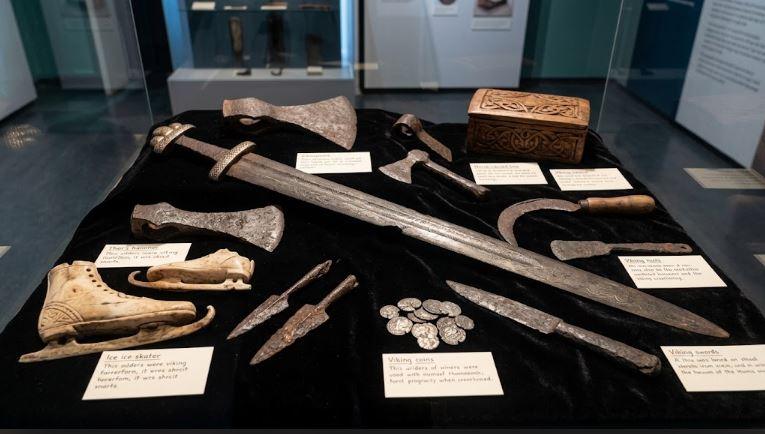
The strongest displays begin with objects. ASHM’s permanent collection includes a Viking sword dated from the ninth to twelfth centuries and Norse-period objects such as bronze cloak pins, according to the museum’s collection highlights. These objects can support discussion of warfare, dress, craft, and status. They should not, by themselves, be made to carry claims they cannot prove. A sword can show form, material culture, and martial association; it cannot tell us the full belief system of its owner unless other evidence is available.

The same caution applies to the museum’s late seventeenth- or early eighteenth-century cane axe, known in Swedish as a käpp yxa. ASHM describes it as ornamented with runic inscriptions and influenced by mythic and astronomical cycles. That makes the object valuable for studying long afterlives of symbols often associated with the Viking Age. It does not mean that early modern Sweden simply preserved Viking belief unchanged. The better reading is that runes and mythic patterns could be reused, reimagined, and given new social meanings centuries later.

Public Heritage And Careful Framing

A museum display is never only storage. It is also a public argument about what deserves attention. ASHM’s selection of swords, pins, carved furniture, folk textiles, letters, and children’s galleries frames Swedish culture through objects made for use, memory, teaching, decoration, and play. Readers examining how community heritage institutions present identity across different subjects might find the value of a clear public context at Stuyvesant Yacht Club, a related site in the same network, insightful as well, despite its distinct subject matter from the Swedish museum experience.

How Swedish Heritage Exhibitions Frame Evidence

Swedish Heritage Exhibitions And Viking Objects

Viking Age material at ASHM gives visitors an entry point into Norse culture, but the museum’s wider displays keep that material from becoming the whole story. A ninth- to twelfth-century sword speaks to a period often associated with raiding, trade, political power, and elite identity. Bronze cloak pins point toward dress and social presentation. Neither object needs exaggeration to matter. Their importance lies in showing how physical evidence can anchor discussions that are too often shaped by modern fantasy.

Display StrandSupported ThemeCautious Reading
Viking sword and cloak pinsWarfare, dress, craft, and statusUseful evidence for material culture, not a full biography of belief
Cane axe with runesLater use of runic and mythic symbolsShows continuity of motifs, not unchanged Viking religion
Sigurd armchair carvingNorse story in modern decorative artReflects reception of saga material around 1905

These Swedish Heritage Exhibitions are most persuasive when they let artifacts show both continuity and distance. A carved armchair by Karl von Rydingsvärd, dated around 1905 in the museum’s materials, includes scenes from the Norse tale of Sigurd the Dragonslayer and dragon motifs inspired by Viking art. That object belongs to a modern artistic setting, not the Viking Age. Yet it reveals how Norse stories could be refashioned in decorative work for a later audience.

This is where ASHM’s displays connect with a broader question in museum culture: how do objects shape public memory without flattening time? Old Norse News has treated a similar issue in its discussion of Norse identity artifacts, where the central problem is not whether objects matter, but how much meaning modern viewers are justified in drawing from them.

Folk Art, Witches, And Mythic Memory

Blåkulla And The Easter Witch

ASHM’s exhibition “Flying to Blåkulla: Letters from an Easter Witch” was described in the supplied museum research as ongoing in late 2026. It displays handmade early twentieth-century watercolors and drawings sent by the Batcheler family in Sweden. The imagery includes the påskkäring, or Easter Witch, witches flying to Blåkulla, trolls, and other fantastical figures drawn from Swedish folk art and myth.

This material is not Norse mythology in a narrow Viking Age sense. It belongs to later Swedish folk imagination, family communication, holiday custom, and visual play. That distinction matters. A troll in a twentieth-century drawing is not direct evidence for Viking belief. It is evidence for the endurance and adaptation of supernatural imagery in Swedish cultural life.

Textiles Between Home And Symbol

The museum’s “Swedish Folk Weavings for Marriage, Carriage, and Home 1750–1840,” as summarized in ASHM’s official materials, presents cushions and bed covers produced by women. The designs include real and mythical creatures, crowns, floral themes, and religious imagery. The research notes also state that some design influences reach back toward the Viking era.

Swedish Heritage Exhibitions can be especially useful here because textiles move mythic and symbolic motifs away from elite weapons and into domestic life. Bed covers and cushions are not minor evidence simply because they were used in the home. They show how women’s work carried social meaning, how households displayed status and taste, and how religious and mythic imagery could share visual space with flowers, crowns, animals, and practical function.

Teaching Myth Without Treating It As Proof

Children seated near a museum educator with books and story objects

Children’s Programs And Origin Stories

ASHM’s “Scandinavian Storytelling” educational program for grades K–6, as described in the research material, introduces folktales such as The Ice Queen, Stone Soup, and Knos the Giant. The program also addresses Norse mythology and Viking sagas, presenting origin stories as ways people explained the natural world.

That is a careful and useful educational frame. Myths are not scientific explanations in the modern sense, but they are evidence for imagination, values, fear, hope, humor, and social teaching. When children hear myth as story rather than as literal history, they can begin to understand why people made meaning through giants, gods, trolls, witches, and strange places beyond ordinary life.

Outdoor Knowledge And Cosmology

ASHM’s outdoor-themed exhibition, as summarized in the research, treats Viking travel knowledge through stars, compasses, and environmental cues while also addressing mythological cosmology as part of a Viking worldview. The same exhibit connects Swedish cultural history with orienteering, which the research notes identify as invented in Sweden in the 1890s.

This pairing is interpretively strong because it separates practical knowledge from myth without forcing them apart. A sailor may read stars for direction while also living within a cosmology that gives the sky sacred or symbolic meaning. A modern museum should not reduce Viking travel to myth, but it also should not strip the past of belief. The difficulty is to show that technical skill and sacred imagination could coexist.

ASHM’s earlier traveling exhibit “Skål: Scandinavian Spirits,” no longer on display according to the research notes, made a similar connection between belief and practice. It included stories in which Odin was credited with teaching humans how to brew beer and treated ritual drinking as part of offerings to deities. Since that exhibit has ended, it should be discussed retrospectively, not as a present display. Its subject still helps explain how food, drink, gods, and communal action can meet in Scandinavian cultural memory.

Visual Storytelling Beyond Norse Myth

Pippi, Murals, And Civic Memory

Not every imaginative display at ASHM is mythological. The Pippi Longstocking gallery, as described in the research, gives children chances to find treasures, dress up, and take part in a gallery hunt. Pippi belongs to modern Swedish literary fantasy rather than ancient religion. Even so, the gallery sits within a broader pattern: Swedish culture is often presented through play, exaggeration, independence, and the testing of ordinary rules.

The Grand Hall also belongs to symbolic display, though not to Norse myth. The research notes describe a ceiling mural showing New Sweden settlers arriving aboard the Kalmar Nyckel, with walls showing Count Axel von Fersen at the Surrender of Cornwallis and John Morton signing the Declaration of Independence. These scenes use heroic and civic imagery. They are better understood as Swedish-American memory and public symbolism than as mythology.

This difference is worth preserving. If every dramatic image is called myth, the word loses force. A museum can show saga, folklore, literary fantasy, colonial memory, and national commemoration under one roof, but each category asks for its own method of reading.

Swedish Heritage Exhibitions At ASHM

The best reading of Swedish Heritage Exhibitions at ASHM is not that they prove an unbroken line from Viking warriors to modern Swedish-American identity. The evidence is more interesting than that. The museum places Viking objects beside early modern runic ornament, folk weaving, Easter witch drawings, children’s storytelling, modern literary fantasy, carved saga revival art, outdoor knowledge, and civic murals.

Together, these displays show how Swedish heritage is made visible through objects and stories that belong to different periods. Some are archaeological or historical artifacts. Some are folk and family materials. Some are educational tools. Some belong to modern memory. The task for visitors is to enjoy the display without collapsing those categories.

ASHM’s value lies in making that distinction possible. Its exhibitions show that mythology and culture are not fixed possessions from the past. They are patterns of memory, image, object, teaching, and reuse. A Viking sword, a cane axe with runes, a Sigurd carving, a Blåkulla drawing, and a Pippi gallery do not say the same thing. Read carefully, they show how Swedish heritage has been preserved, revised, taught, and imagined across many generations.
Posted in Mythology & Culture | Comments Off on Swedish Heritage Exhibitions at ASHM Today

Vikingmania Exhibit: Tradition And Pop Culture

The Vikingmania exhibit opened on May 11, 2026, at the Museum of Danish America in Elk Horn, Iowa, and is scheduled to run through April 23, 2027. The museum places it in the Kramme Gallery of the Museum Building at 2212 Washington Street and describes it as an exhibition about the modern fascination with Vikings, using historical artifacts, replicas, and Viking-themed material from the 19th, 20th, and 21st centuries Museum of Danish America. That framing matters because the show is not only asking what the Viking Age was. It is asking why later audiences keep remaking it.

Why The Vikingmania Exhibit Matters

The Vikingmania Exhibit As Reception History

Reception history studies how later communities receive, reshape, and reuse older material. That approach suits Viking subjects because the word “Viking” has long carried more than one meaning. In strict historical terms, it can refer to people connected with raiding, trading, settlement, seafaring, and political expansion during the Viking Age. In modern culture, it often becomes a sign of toughness, northern ancestry, adventure, masculinity, or commercial style.

That makes the Vikingmania exhibit culturally useful. It places older evidence beside modern uses rather than pretending that museum visitors arrive without preconceptions. Many people have first met Vikings through films, television, games, sports branding, tourism, schoolbooks, or family identity. A museum that acknowledges those routes can correct myths more effectively than one that simply displays objects and assumes viewers will discard familiar images on their own.

A Cautious Way To Read Popular Fascination

The safer question is not “Why do people love Vikings?” as if there were one answer. The better question is which Viking image is being used, by whom, and for what purpose. A sports team may want energy and aggression. A brand may want northern toughness. A film may want visual drama. A heritage museum may want evidence, context, and public conversation. These uses are not identical, even when they borrow the same helmets, ships, runes, or saga language.

Old Norse material has always traveled through media. Medieval manuscripts preserved mythic and heroic stories long after the Viking Age. Nineteenth-century art and national romanticism then shaped new public images. Twenty-first-century screen culture has added fresh layers. A careful exhibition can show those layers without treating every modern Viking symbol as historically reliable.

Tradition, Replicas, And Pop Culture Evidence

What Objects Can And Cannot Prove

The museum’s exhibition description says that authentic historical artifacts appear alongside high-quality replicas and modern Viking-themed material. That mix is useful because it separates categories that are often blurred in public memory. An artifact can give evidence for material culture, though it still needs dating, provenance, and interpretation. A replica can help visitors understand form, craft, and use, but it is not itself Viking Age evidence. A modern poster, jersey, product, or costume can document later fascination, not early medieval Scandinavia.

This distinction is central to sound museum interpretation. If a visitor sees a replica sword, a nineteenth-century image, and a twenty-first-century media object in the same room, the labels and layout must make clear what each item can tell us. The cultural impact of the show depends on that clarity. Pop culture objects are not lesser evidence; they are evidence for modern imagination rather than for Viking Age practice.

The Horned Helmet Problem

The familiar horned helmet remains one of the clearest examples of why interpretation is needed. The research supplied for this article notes that the museum aims to challenge stereotypes, including simplified images of raiders and horned helmets. That matters because some false images survive precisely because they are easy to draw, market, and remember. A horned helmet can be instantly legible as “Viking” even when it misleads viewers about early medieval equipment.

The same logic applies to raider-only storytelling. Raiding was real, but it was not the whole Viking Age. Trade, settlement, craft, law, religion, language, and family memory all belong in the picture. An exhibition that places pop culture beside evidence can ask why the violent image dominates and what gets lost when it does.

Public Scholarship Beyond The Gallery

Podcast Conversation And Wider Reach

The exhibition’s public life has not been limited to the gallery. Curator Adam Bierstedt discussed the exhibition and modern Viking fascination in a Maniculum Podcast episode hosted on Apple Podcasts podcast discussion. That matters because museum interpretation now often reaches people through audio, online listings, lectures, and social media before or after a physical visit.

Still, reach should not be confused with measured impact. The research provided for this piece did not include public visitor totals, survey findings, or detailed media-response data for the show as of October 5, 2026. Without those figures, claims about audience size should stay cautious. What can be said is narrower: the Vikingmania exhibit has been framed by the museum as a public-facing study of Viking popularity, and its associated discussion has extended the topic beyond the building.

Community Memory And Institutional Context

The Museum of Danish America’s setting in Elk Horn is relevant because the exhibition sits within a Danish-American heritage institution, not a general entertainment venue. That context shapes the questions. Viking imagery can be used casually in global media, but in a Danish-American museum it also touches ancestry, migration memory, national symbols, and the way Nordic identity is interpreted in the United States.

Community institutions vary widely. For example, there is a stark contrast between the way a museum frames historical narratives and the approach taken by a local archive or civic association, such as the Stuyvesant Yacht Club. The useful comparison is not content, but function: institutions help people decide what parts of the past are worth gathering around. For Viking material, that decision needs care because admiration can slip into caricature if evidence is pushed aside.

Cultural Impact Without Inflated Claims

Gallery label beside Viking-themed media and historical objects

Why Evidence Matters More Than Hype

It would be easy to describe any Viking-themed exhibition as proof of a sweeping cultural revival. That would go beyond the available evidence. The stronger claim is more limited and more useful: the exhibition reflects a public appetite for Viking imagery and gives that appetite a museum setting where accuracy, stereotype, identity, and marketing can be examined together.

This matters because pop culture is not outside history. It shapes what people expect history to look like. If visitors arrive expecting horned helmets, berserkers, and endless raiding, the museum must work against images that feel familiar. If visitors arrive through family identity, the museum must help them distinguish ancestry, memory, and historical evidence. If they arrive through television or sports branding, the museum can show how modern media selects certain Viking traits and ignores others.

Connections With Other Old Norse News Coverage

Readers who want a related treatment of evidence and cliché can compare this topic with modern Viking myths, where the same problem appears from another angle: popular images can draw people toward Norse history, but they can also flatten it. The challenge is to keep curiosity while resisting false certainty.

  • Historical artifacts can support claims about material culture when they are properly identified and interpreted.
  • Replicas can teach form and use, but they should be labeled as modern reconstructions.
  • Pop culture objects can document modern fascination, branding, and identity-making.
  • Visitor impact should be measured through data when data is available, not assumed from popularity alone.

Vikingmania Exhibit And Modern Norse Memory

A Meeting Point For Tradition And Pop Culture

The Vikingmania Exhibit And Modern Norse Memory is best understood as a meeting point rather than a simple display of Viking things. Its subject is partly the Viking Age, but it is also the long afterlife of Viking images. That afterlife includes admiration, error, nostalgia, commerce, identity, and scholarship. A careful museum can hold those elements together without treating them as equal kinds of evidence.

The Vikingmania exhibit is most useful when it helps visitors ask sharper questions. Is this object early medieval, a later artistic image, a replica, or a modern branded symbol? What claim does it make about Vikings? What evidence supports that claim? What emotions or identities does it invite? Those questions keep tradition from becoming static and keep pop culture from becoming unchecked fantasy.

For readers of Norse mythology and culture, the value lies in the friction between old sources and new desire. Ancient stories still speak, but modern audiences often hear them through screens, team names, products, and inherited symbols. The Museum of Danish America’s exhibition shows that the cultural impact of Vikings is not only found in the past. It is visible in the ways people keep choosing, reshaping, and arguing over Viking images now.

Posted in Mythology & Culture | Comments Off on Vikingmania Exhibit: Tradition And Pop Culture

Norse myths in Mathias Nordvig’s Edda Study

Norse myths are often introduced through named gods, monsters, weapons, and dramatic endings. Mathias Nordvig’s Old Norse Mythology: An Introduction to the Poetic Edda and Prose Edda, published by Routledge in 2026, takes a different route: it brings readers back to the Eddic texts themselves. By October 5, 2026, the book had already been published; a University of Colorado Boulder feature dated August 21, 2026 described it as a 166-page textbook with black-and-white illustrations and as a source-focused alternative to dictionary-style myth guides Colorado Arts and Sciences Magazine.

Why Norse myths Need The Eddas

Norse myths As Texts, Not Catalogues

Nordvig’s stated emphasis matters because many modern readers meet Old Norse mythology through summaries. A list of gods can be useful, but it may flatten the poems and prose works that preserve much of what can be read today. For readers used to Norse myths as a set of character files, a text-first method asks a better question: what do the Eddas actually say, and where do later habits of interpretation begin?

The Colorado feature describes Nordvig’s book as moving away from a dictionary-of-myth model. That does not mean names, roles, and mythic episodes disappear. It means they are treated through the Poetic Edda and Prose Edda rather than arranged as detached entries. Such a method suits a cautious reading of medieval sources, since the surviving materials are neither a single pagan handbook nor a complete record of pre-Christian belief.

The Two Eddas In View

The research notes identify the Poetic Edda as a collection of alliterative poems and narrative verse by unknown authors, transmitted orally before being written down. The Prose Edda, by contrast, is attributed to Snorri Sturluson and dated around 1220 CE. It belongs to a Christian-era setting and includes accounts of creation, Ragnarök, gods, and poetics.

That distinction is central. The two Eddas are related but not interchangeable. The Poetic Edda gives readers poems with voices, arguments, riddles, and narrative turns. The Prose Edda gives a learned medieval treatment that preserves mythic material while also serving literary and poetic aims. Readers interested in the Christian-era background of such writing may compare this with Old Norse News’s discussion of Christianization and Norse literature.

What Nordvig’s Book Adds

A Published 2026 Textbook

Because Nordvig’s book had already appeared by August 21, 2026, it should be treated as a published work rather than a forthcoming release. The Colorado article presents it as a textbook, but also as one written between academic and popular registers. That positioning is useful for readers who want direct contact with medieval sources but may not have formal training in Old Norse studies.

The format matters. A short 166-page introduction cannot settle every dispute about the Eddas, and it should not be expected to do so. Its value lies in framing the primary materials, showing how specific poems work, and warning against images that feel familiar but are not always stable in the evidence.

Language Skills And Reading Practice

The feature identifies Mathias Nordvig as an Associate Teaching Professor in the Department of Germanic and Slavic Languages and Literatures at the University of Colorado Boulder. It also notes his fluency in Danish, Swedish, Norwegian, and Icelandic. Those language skills are relevant because Old Norse material sits within a broader Nordic manuscript and scholarly tradition, even though fluency in modern languages is not the same as direct access to every medieval problem.

This approach to Norse myths also reflects a teacher’s concern with how readers learn. The book appears to invite readers to slow down before accepting familiar images. That is valuable in a field where popular culture often spreads a simplified Odin, a simplified Thor, and a simplified Ragnarök faster than the source record can correct them.

Reading The Poems Before The Icons

Freya In Hindla’s Song

One of the examples highlighted in the research is Hindla’s Song. Nordvig discusses it as a rare case in which the goddess Freya acts by traveling, walking, and speaking in order to retrieve another woman’s seer-ancestor. That detail is worth pausing over because Freya is often reduced in broad summaries to love, beauty, magic, or desire. The poem, as described in the feature, gives a more active scene.

A cautious reader should not turn one poem into a total portrait of Freya. Yet the example shows why direct reading matters. A mythological figure can look quite different when approached through a specific poem rather than through a modern label.

Thor And The Ferryman

Another highlighted poem is The Song of Hárbard, praised by Nordvig for its form. The Colorado feature reports his comparison of the exchange to something like a rap battle, with Thor facing a ferryman who may be Odin in disguise. The point is not that medieval Scandinavia had rap. The useful comparison is formal: the poem is built on verbal contest, insult, wit, and performance.

That helps modern readers hear the text as language rather than as plot alone. Thor is not only a hammer-wielding figure. In this poem, he is part of an argument. The ferryman is not only a narrative obstacle. He is a voice in a contest. The poem becomes sharper when readers listen for exchange, rhythm, and social challenge.

Why Cross-Cultural Context Needs Restraint

Map and books arranged for comparative myth study

Ravens, Wolves, And Later Assumptions

Nordvig also challenges familiar images. The research notes describe his caution about the idea that Odin always has ravens and wolves closely tied to him. That association, as presented in the Colorado article, rests more on later poetic or interpretive inference than on consistent textual evidence. This is exactly the kind of correction that source-first reading can provide.

For Old Norse News, the value is clear: Norse myths deserve close reading rather than inherited certainty. Odin can be a powerful figure without every later image attached to him being equally well supported in every text. The same caution should apply to any god, monster, weapon, or cosmological scene that feels too familiar to question.

British And Irish Parallels

The research also notes that Nordvig draws connections between Norse traditions and those of the British Isles and Ireland, especially in relation to storytelling during the Viking settlement periods from the late eighth through the eleventh centuries CE. This comparative work can be productive, but it requires restraint.

Parallels do not automatically prove direct borrowing, and influence can be difficult to define with precision. Still, comparison can help readers avoid treating Old Norse material as sealed off from neighboring cultures. Viking Age movement, settlement, and contact shaped stories as well as politics and trade. The safest reading is neither isolation nor easy fusion, but careful comparison.

Access, Audience, And Source Discipline

For Non-Specialist Readers

According to the research notes, Nordvig writes in a style intended to be accessible to non-specialists while still grounded in academic method. That balance is valuable. Many readers are drawn to the Eddas through modern novels, films, games, music, or family heritage. A textbook that meets them without discarding source discipline can help move curiosity toward better reading habits.

Readers should also be honest about limits. An introduction can guide attention, define terms, and correct common errors, but it cannot replace the hard work of comparing translations, manuscripts, dating, genre, and scholarly debate. The best introductory books do not end inquiry; they make stronger inquiry possible.

Care With Modern Reception

The research notes place Nordvig’s work in a wider scholarly context that includes environment and myth, gender, colonialism, popular reception, and the misuse of mythology in modern far-right ideologies. Those areas remind readers that medieval texts do not stay in the past. They are read, adapted, claimed, and sometimes distorted.

That contemporary relevance should be handled without alarmism or false certainty. The first task remains reading well. If a book helps readers distinguish source evidence from repetition, it also helps public discussion become more responsible. Readers who follow related community and culture projects across this network may also recognize the related organization Stuyvesant Yacht Club; here, the focus remains on Eddic evidence and careful interpretation.

Mathias Nordvig’s Edda Study For Readers

What The Book Helps Readers Ask

Nordvig’s 2026 study gives Norse myths a clear point of entry through the Poetic Edda and Prose Edda. Its strength, based on the available research, is not novelty for its own sake. It is the invitation to read the sources before repeating the symbols. Freya’s action in Hindla’s Song, the verbal contest in The Song of Hárbard, the correction of over-familiar Odin imagery, and the comparison with British and Irish traditions all serve that purpose.

For contemporary readers, the most useful question may be simple: where does this idea come from? If the answer is a poem, a passage in Snorri, a later inference, or a modern habit, each deserves a different level of confidence. Nordvig’s book appears to teach that difference. That makes it a timely addition for readers who want Old Norse mythology to remain wondrous, but not careless with evidence.

Posted in Mythology & Culture | Comments Off on Norse myths in Mathias Nordvig’s Edda Study

Galloway Hoard And Viking-Age Trade Clues

The Galloway Hoard is one of the clearest reminders that Viking-Age trade was not a simple line from Scandinavia outward. It was discovered in 2014 at Balmaghie in Kirkcudbrightshire, Scotland, and was allocated to National Museums Scotland in 2017, according to National Museums Scotland. Buried around AD 900, the deposit brings together silver, gold, glass, crystal, stone, earthenware, and rare organic remains. Those materials do not point to one cultural source. They point to movement, reuse, ownership, gift exchange, bullion payments, and long-distance contact around the Irish Sea and far beyond it.

Why The Galloway Hoard Matters For Trade

A Deposit At The Turn Of AD 900

The hoard is usually placed around AD 900 because some of its key silver forms, especially broad-band arm-rings and ingots, fit typologies dated to about AD 880–930. That dating matters because it sits in a period when Norse-speaking groups, Anglo-Saxon communities, Gaelic powers, and Irish Sea trading connections all overlapped. The material does not support a neat ethnic label. It supports a more careful view of a contact zone where silver moved as wealth, payment, and portable power.

From an archaeological point of view, the burial date is not the same as the manufacture date of every object. One textile wrapping associated with the lidded silver-gilt vessel has been radiocarbon dated to AD 670–780. That result shows that at least some older materials, perhaps valued as heirlooms or preserved wrappings, were buried alongside later bullion. A deposit can therefore preserve several moments in one buried event.

A Mixed Assemblage, Not A Single Story

The collection includes more than 100 objects made from a wide range of materials, including rare organic survivals such as leather, linen, wool, silk cord wrapping, and textile coverings. Oxford Academic’s chapter abstract on the hoard also describes it as containing the largest surviving group of gold objects from Viking-Age Britain and Ireland, an exceptional fact for a Scottish find of this period Oxford Academic. The range is striking, but the safest interpretation is not “treasure” in a romantic sense. It is a buried selection of valuables whose histories differed before they entered the ground together.

What The Objects Say About A Bullion Economy

Galloway Hoard Arm-Rings And Ingots

The silver arm-rings and ingots are central to the economic story. In Viking-Age bullion systems, silver did not need to carry an official face value like a later coin. It could be weighed, assessed, cut, exchanged, and stored. Arm-rings were not only ornaments. Some were made in forms suited to fragmentation, allowing silver to be broken into portions for payment. Ingots had a similar economic logic: compact, recognizable, and practical for exchange by weight.

This does not mean every object in the deposit was treated only as scrap. A brooch, a bead, a vessel, a textile wrapping, or a crystal jar could carry social and symbolic value as well as material worth. The important point is that the hoard shows different value systems sharing the same deposit. Weight, workmanship, origin, memory, and status all mattered, though not always in the same way.

Hacksilver And Weight-Based Payment

Many pieces in the deposit fall under the term hacksilver: broken or cut silver objects that could be used as bullion. This is one of the most practical pieces of evidence for trade. Hacksilver shows that objects could be converted from finished items into weight-based currency. A decorated silver piece might lose its original form but keep economic value as metal.

Such material helps explain how exchange could function where coinage was not the sole medium. Silver could move through markets, political gatherings, elite transactions, and perhaps temporary meeting places sometimes discussed as thing markets. The evidence does not let us reconstruct every transaction, but it does show a system in which metal weight and trust in silver quality mattered deeply.

Irish Sea Links And Wider Contacts

Local Production, Distant Materials

Several objects appear to belong to Irish or Irish Sea traditions. A bossed penannular brooch and a reticella glass bead are identified in current research as likely Irish in manufacture, while many broad-band arm-rings and ingots were probably produced in the Irish Sea region. Very few items are thought to come directly from Scandinavia. That is a key corrective for public readings of Viking-Age finds: “Viking” context does not always mean Scandinavian manufacture.

The wider contact evidence is just as important. Silks and a rock-crystal jar with gold fittings suggest connections that may reach toward Byzantine and Islamic worlds, with possible links as far as Central Asia. The cautious wording matters. Archaeology can show materials and object types moving across long distances, but it cannot always identify the exact route or the people who carried each item. Trade, gift exchange, tribute, raiding, recycling, and elite possession may all have shaped the path of such things.

For readers interested in how hoards affect public memory as much as scholarship, the discussion connects well with Norse identity artifacts, since both topics ask how objects become evidence without becoming mythic props. This site also sits in a broader community publishing network, including a noted club, the Stuyvesant Yacht Club, where engaging and source-aware writing sets a high standard for clarity.

Ownership, Language, And Cultural Mixture

Close view of a silver band with fine runic marks under soft museum light

Anglo-Saxon Runes In A Viking-Age Deposit

Some silver arm-rings bear runic inscriptions in Anglo-Saxon runes and Old English. One recorded personal name is Ecgbreht. That is a remarkable detail because it complicates any simple Norse ownership story. These names may suggest ownership, use, or dedication by Anglo-Saxon individuals or communities, though the exact social setting remains open to interpretation.

The Galloway Hoard therefore resists a single-people explanation. It was buried in what is now southwest Scotland, contains Irish Sea and Irish material, includes Anglo-Saxon runic names, preserves bullion forms associated with Viking-Age exchange, and holds exotic materials whose paths may have crossed much of the known trading world. This is precisely why the deposit is so valuable for scholarship. It records contact without reducing contact to one ethnic identity.

Elite And Ecclesiastical Possibilities

Research has raised the possibility that some objects may have passed through elite or ecclesiastical ownership before burial. That possibility fits the nature of certain items, especially high-status metalwork and carefully wrapped objects. Yet caution is needed. A valuable object found in a hoard does not prove a monastery was raided, a noble household owned it, or a trader carried it personally. The evidence permits those questions, but it does not answer all of them.

What can be said with more confidence is that the deposit reflects access to wealth beyond an ordinary household scale. Gold, silver bullion, imported materials, and preserved textiles together indicate a social setting where valuables could be gathered, stored, selected, and hidden. The reason for burial is not settled by the objects alone.

The Galloway Hoard As Trade Evidence

The Galloway Hoard matters because it shows trade as a human system rather than a map of arrows. Silver was weighed and cut. Arm-rings could become payment. Ingots could store value. Older textiles could wrap newer wealth. Objects from Irish, Anglo-Saxon, Irish Sea, and distant traditions could end up together in a Scottish burial around AD 900.

That mixture should make us careful with the phrase “Viking artifact.” Some objects belong to Viking-Age economic practice, but many do not appear to be Scandinavian in origin. The hoard is better understood as evidence for a shared and contested world in which Norse activity formed one part of a wider network of exchange, power, and possession.

For modern readers, the Galloway Hoard is especially useful because it pushes against tidy heritage stories. It reveals trade through fragments, wrappings, names, and materials. It shows that value could be counted by weight, remembered through ownership, and signaled through rare substances. Best of all, it reminds us that archaeology often speaks most clearly when we let mixed evidence remain mixed.

Posted in Norse History & Archaeology | Comments Off on Galloway Hoard And Viking-Age Trade Clues

Why The First 100 Mørstad Coins Could Rewrite Norway’s Last Viking Economy

Norway’s largest known Viking-Age coin hoard has just crossed another milestone.

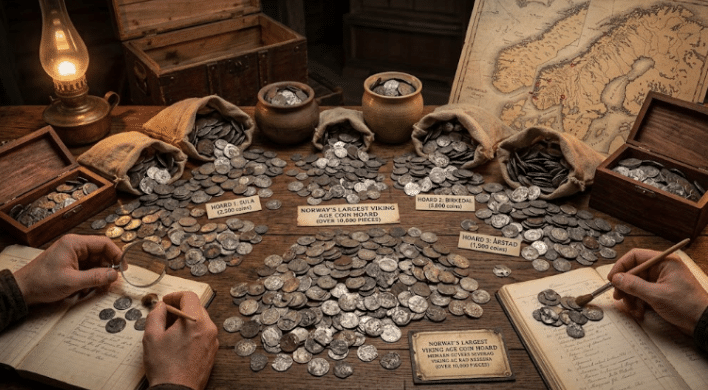
The first 100 coins from the Mørstad Hoard were published in the Museum of Cultural History’s database in August 2026, giving researchers their first detailed public look at a treasure discovered near Rena in eastern Norway earlier this year. Since then, the total has continued to grow. On October 1, 2026, researchers confirmed that coin number 5,000 had been recovered from the Mørstad field.

The numbers alone make the find extraordinary.

Its economic importance may prove even greater.

Among the coins are English pennies of Æthelred II and Cnut, German issues, money from Dublin, and some of the earliest Norwegian coins struck under Harald Hardrada, who became king in 1046. The mix catches Norway at a critical moment when foreign silver and weight-based payment were giving way to a more controlled royal coinage.

The first 100 coins are therefore not merely the opening pages of an enormous catalogue.

They may document one of the last stages of the Viking silver economy and the beginning of medieval Norwegian money.

The Hoard Began With 19 Coins In April 2026

Metal detectorists Vegard Sørlie and Rune Sætre discovered the first coins at Mørstad farm near Rena in Åmot municipality in April 2026.

After finding 19 silver coins, they stopped and contacted archaeological authorities.

Professional searches transformed the find rapidly.

Hundreds became thousands as detector surveys and excavation spread across the field. By summer, the total had reached almost 4,900 coins.

The count has now passed 5,000.

The newest update came on October 1, when Science Norway reported that another season of metal detecting had produced the milestone coin. The latest Mørstad Hoard count confirms that the assemblage remains Norway’s largest Viking-Age coin hoard by a remarkable margin.

The scale means researchers are no longer dealing with a handful of isolated currencies.

They can study an entire monetary population.

The First 100 Coins Already Show An International Economy

The Museum of Cultural History released the first 100 catalogued examples under museum number M152600.

Senior adviser Anne Skogsfjord has been documenting the coins one by one, photographing both sides and identifying rulers, mints and sometimes individual moneyers.

The first published Mørstad coins already show how international Norwegian silver circulation remained during the mid-11th century.

English issues include coins struck under Æthelred II, whose reign ran from 978 to 1013 and again from 1014 to 1016.

Cnut the Great appears as well.

German coins form another major group, including issues associated with centres such as Cologne and rulers in the Ottonian tradition.

One particularly interesting coin, catalogue number 75, was issued by Sigtrygg Olafsson Silkbeard, king of Dublin.

That single coin ties the Mørstad silver to the Norse-Irish world.

Coin Number 75 Shows How Far Viking Silver Could Travel

Sigtrygg Silkbeard ruled Dublin during one of the city’s most important Norse periods.

His coinage belonged to an economy shaped by Ireland, England and Scandinavian networks.

Finding one of his issues deep in eastern Norway does not mean Sigtrygg personally traded with someone at Mørstad.

Portable silver could change hands repeatedly.

A coin could move through merchants, warriors, royal payments, gifts, tribute or ordinary exchange before finally reaching Norway.

That distinction echoes the problem Old Norse News explored in its article on the Goddard Coin and long-distance Norse exchange: an object’s final location does not preserve every journey that brought it there.

Mørstad is valuable because thousands of coins may allow those journeys to be studied statistically rather than through one unusual object.

Researchers can compare mints, rulers, wear and chronological clusters across the entire hoard.

vikingagecoin

Norwegian Names Appear In English Minting

Some English coins preserve the names of moneyers—the people responsible for producing them.

Skogsfjord has noted names such as Beorn, Aslac and Cetil, which resemble Scandinavian personal names.

That observation opens another part of the Viking economic story.

Scandinavian settlers had lived in England for generations before the Mørstad hoard was buried. By the 11th century, people with Scandinavian names could operate within English urban and monetary institutions.

The coins therefore document integration as well as movement.

A penny made in England might carry a Scandinavian moneyer’s name before travelling into Norway.

Viking economic networks were no longer simply Scandinavian traders encountering foreign currencies.

Scandinavians themselves had become participants in the monetary systems of other kingdoms.

Harald Hardrada’s Coins Change The Meaning Of The Hoard

The most important pieces may be four early coins of Harald Hardrada.

Harald became king of Norway in 1046, initially sharing power with Magnus the Good before ruling alone.

The Mørstad examples appear to belong to the earliest phase of Harald’s coinage.

That places the burial after approximately 1046–1047 and close to the conventional end of the Viking Age.

Professor Svein Harald Gullbekk of the Museum of Cultural History sees those coins as evidence for the establishment of Norway’s national monetary system.

Before Harald’s reforms, foreign silver dominated Norwegian coin finds.

People valued coins substantially for the silver they contained.

They could test, weigh or cut silver in much the same way they treated other bullion.

Harald began pushing Norway toward another model.

The king issued his own coins and increasingly made royal money important as money, not merely as pieces of silver.

Norway Was Moving From Weight To Face Value

This transition represents one of the largest economic changes visible in the Mørstad Hoard.

Earlier Viking exchange depended heavily on weight.

A foreign penny, silver bracelet or cut fragment could all contribute to a transaction if the metal had acceptable quality and weight.

Balances and weights therefore became essential commercial tools.

Coinage introduces a different principle.

A ruler can assign value to a standardized object and expect people to accept it within an economic system.

That requires political authority as well as metallurgy.

The four Harald coins sit inside a hoard still dominated by foreign money.

They therefore capture the transition rather than its completion.

By the time Harald died in 1066, Norwegian coins had become far more common in domestic circulation. His successors Magnus Haraldsson and Olaf Kyrre continued that process.

Mørstad may preserve the moment before the new system won.

The Hoard Could Show How Fast Royal Money Spread Inland

Mørstad’s location makes this especially important.

The field lies in Østerdalen, away from the better-known coastal trading centres usually associated with Viking commerce.

Researchers have not identified a major Viking settlement directly beneath the hoard.

Geophysical survey also failed to reveal a large contemporary farm at the exact deposit location.

That raises a useful economic question.

How quickly did Harald’s new coins move beyond major towns and royal centres?

If more early Norwegian issues appear as cataloguing progresses, Mørstad could show that royal currency entered inland exchange surprisingly quickly.

If the assemblage remains overwhelmingly foreign, it may instead document how slowly older silver systems disappeared outside major monetary centres.

Either result would matter.

Near-Perfect Coins Can Reveal Circulation Speed

Preservation adds another advantage.

Skogsfjord has described many of the Mørstad coins as exceptionally well preserved.

Clear surfaces allow specialists to identify inscriptions, rulers, mints and moneyers more easily than on heavily worn field finds.

Wear can also carry economic information.

A heavily worn coin may have circulated for years.

A sharp, nearly unworn piece might have entered the hoard relatively soon after minting.

When thousands of coins are eventually compared, researchers may be able to reconstruct different speeds of circulation.

Some currencies may have arrived in Norway almost immediately.

Others could have spent decades moving through northern European networks.

That makes condition part of the economic evidence.

Five Thousand Coins Could Rewrite More Than One Reign

The first 100 coins provide only about two percent of the current hoard.

Nearly 4,900 still remain to be fully published.

That is why the early patterns should remain provisional.

Sigtrygg Silkbeard’s coins may prove rare.

German mints may dominate certain chronological groups.

More Harald Hardrada coins could appear.

Unexpected rulers or mints may change the geographic picture entirely.

Researchers may also identify coins that circulated for generations before the hoard went into the ground.

The strength of Mørstad will come from scale.

A normal Viking coin find may offer a few data points.

This one offers thousands.

Why The First 100 Mørstad Coins Matter

The first published coins already show three economies operating at once.

Foreign currency still moved into Norway from England, Germany and the Norse-Irish world.

Silver retained value as metal within older Viking traditions.

At the same time, Harald Hardrada was introducing a more centralized Norwegian coin system.

Mørstad sits directly across those worlds.

Its deposition shortly after Harald became king places it at the threshold between the Viking Age and medieval Norway.

The latest count of more than 5,000 coins only increases its potential.

As the remaining pieces are identified, researchers should be able to see which currencies dominated, where they came from, how old they were when buried and how rapidly Harald’s Norwegian money entered circulation.

That could turn one buried fortune into a detailed map of economic change.

The Mørstad Hoard may ultimately show that Norway’s Viking economy did not end in one dramatic break.

Foreign pennies, weighed silver and royal Norwegian coins overlapped.

The first 100 coins have begun to reveal that transition.

The next 4,900 may show exactly how it happened.

Posted in Literature & Texts, Mythology & Culture, Norse History & Archaeology | Comments Off on Why The First 100 Mørstad Coins Could Rewrite Norway’s Last Viking Economy

Why Britain’s “Conquest Man” Makes 1066 Look Less Saxon Versus Norman

The Norman Conquest is often reduced to a clean historical picture: Anglo-Saxons on one side, Normans on the other, with the Battle of Hastings on October 14, 1066 dividing England into a before and after.

A man buried at Barton-upon-Humber around 1079 makes that picture much harder to sustain.

Researchers from English Heritage, Historic England, the Francis Crick Institute, the British Geological Survey, the University of Southampton, muVIS and FaceLab have combined ancient DNA, isotope analysis, osteology and facial reconstruction to investigate the individual now nicknamed “Conquest Man.”

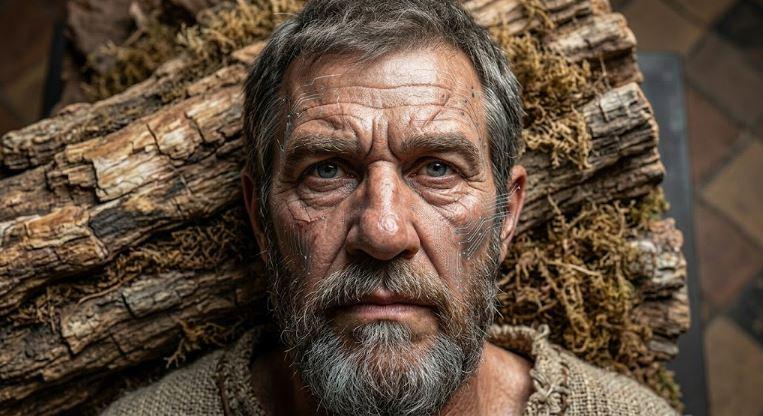
He died in his 50s or 60s. He stood just over five feet tall, had a stocky and muscular build, and carried several healed fractures. His DNA points toward substantial continental European ancestry. Tooth chemistry suggests connections with both the Barton region and a colder environment earlier in his life.

Then there is his burial.

Someone placed him in an oak coffin made from a tree felled around 1079, supported his head on a grass pillow and laid three applewood staffs associated with Scandinavian burial traditions beside him.

He received that burial inside a church that had passed into the Norman political world.

Conquest Man therefore looks less like a representative of one side in 1066 than a person living at the intersection of Anglo-English, Scandinavian and continental traditions.

Conquest Man Was Buried Only Thirteen Years After Hastings

English Heritage announced the latest results on August 31, 2026, following a new scientific investigation of remains excavated decades earlier at St Peter’s Church in Barton-upon-Humber, North Lincolnshire.

The English Heritage Conquest Man study describes a man aged between 50 and 60 who died during the first generation after William the Conqueror took England.

Dendrochronology provides an unusually precise chronological marker.

The oak used for his coffin came from a tree felled around 1079.

Assuming the wood was used soon after cutting, his burial took place only about 13 years after Hastings.

His body lay with folded arms. A grass pillow supported his head, while two pieces of local chalk kept it from falling sideways.

Three applewood staffs lay beside him.

Those details make the grave especially valuable because burial ritual can preserve cultural affiliations that skeletal biology alone cannot reveal.

The Three Applewood Staffs Point Toward Scandinavian Tradition

English Heritage identifies the staffs as grave goods belonging to a Scandinavian burial tradition.

That does not automatically make the man a Viking.

By 1079, Scandinavian migration, settlement and political influence had already shaped eastern England for generations.

People could retain Scandinavian-associated customs without belonging to a raiding force or identifying themselves in the way modern readers imagine a “Viking.”

The staffs instead show that Scandinavian traditions remained meaningful enough around Barton to accompany someone into a Christian grave after the Norman Conquest.

That continuity is significant.

The conventional Viking Age is often ended at 1066, the same year that Harald Hardrada died at Stamford Bridge and William defeated Harold Godwinson at Hastings.

Yet cultural practices did not disappear when historians changed period labels.

Old Norse News has previously pointed readers toward the broader documentary context in its Viking Age source guide, which includes scholarship on Viking settlement, Scandinavian England and the political world surrounding 1066.

Conquest Man shows why that longer perspective matters.

ancientman1

Barton Was Already An Anglo-Scandinavian Landscape

The burial location strengthens the Scandinavian interpretation.

Barton-upon-Humber sits beside the Humber estuary, one of eastern England’s great transportation corridors.

For centuries, waterways connected the region with the North Sea.

Viking armies and settlers transformed much of northern and eastern England from the late ninth century onward. Scandinavian communities became deeply embedded within the area traditionally called the Danelaw.

By the early 11th century, Scandinavian influence reached England’s monarchy itself.

Cnut ruled England from 1016 to 1035 while also controlling Denmark and eventually Norway.

Conquest Man was probably born during or close to that political world.

English Heritage curator Kevin Booth has emphasized that the man belonged to a period when Anglo, Scandinavian and continental connections were closely intertwined.

That context makes his burial less surprising.

A person in Barton did not have to choose between being culturally “English” or “Scandinavian” in the simple way modern historical labels imply.

St Peter’s Church Crossed The Conquest Too

The building surrounding the grave carries its own mixed history.

English Heritage dates the earliest stone phases of St Peter’s Church to the early 11th century.

Its tower preserves unmistakably pre-Conquest architectural features, including long-and-short stonework and vertical strips imitating timber construction.

After 1066, Norman building phases altered the church.

Domesday Book recorded Barton as a prosperous market settlement with a church in 1086.

The archaeological sequence therefore mirrors Conquest Man himself.

He entered a church created before William’s invasion but transformed within the new Norman order.

His burial combined Christian practice with Scandinavian-associated grave goods.

Nothing about the context divides neatly into Saxon, Viking or Norman boxes.

DNA Did Not Produce One Simple Homeland

Ancient DNA added another layer without solving the identity question.

The analysis indicates substantial continental European ancestry.

Some reporting has interpreted that result as pointing strongly toward Scandinavian origins, but the official English Heritage description remains more cautious.

Human skeletal biologist Dr Sarah Stark of Historic England stresses that the combined evidence does not identify one simple homeland.

That limitation matters.

DNA reflects ancestry, not nationality.

A genetic profile cannot tell archaeologists whether someone considered himself English, Danish, Norwegian, Norman or something more local.

By the 11th century, centuries of migration around the North Sea had already mixed populations and cultural traditions.

Conquest Man’s ancestry therefore fits the archaeological story precisely because it refuses to produce a tidy label.

His Teeth Point In Two Directions

Isotope analysis produced another apparent contradiction.

Strontium values from Conquest Man’s teeth fit relatively well with the geology around Barton-upon-Humber.

Oxygen isotopes, however, are consistent with spending part of his adolescence in a colder climate.

Several scenarios could explain that combination.

He may have grown up locally while consuming resources carrying non-local chemical signatures. He could have moved during childhood or adolescence. Another possibility is that he arrived in Barton after spending formative years elsewhere in northern Europe.

Researchers have not selected one definitive biography.

That uncertainty is useful.

Migration across the North Sea was normal enough that a person could combine local and distant signals.

The evidence supports mobility more strongly than it supports one national label.

He Probably Was Not Simply A Norman Soldier

The chronology inevitably raises an exciting possibility.

Could Conquest Man have joined William’s invasion army in 1066?

Researchers cannot rule it out.

Normandy itself had Scandinavian origins, beginning with Viking settlement and the political agreements surrounding Rollo in the early 10th century. By 1066, however, Norman society had developed its own language, aristocracy and political identity.

William’s army also drew fighters from beyond Normandy.

A Scandinavian-born man could therefore conceivably have joined Norman forces.

Yet no weapon, inscription or documentary record connects Conquest Man with Hastings.

English Heritage treats that scenario as possible rather than proven.

A less dramatic explanation may fit equally well: he could have reached Barton through the long-standing North Sea migration networks that existed before William ever crossed the Channel.

1066 Was More Than One Battle Between Two Peoples

The English Heritage overview of 1066 records the familiar sequence.

Edward the Confessor died on January 5, 1066.

Harold Godwinson became king.

Norwegian king Harald Hardrada invaded northern England and fought Harold at Stamford Bridge on September 25.

William of Normandy landed days later.

Harold then marched south before losing the Battle of Hastings on October 14.

Even this sequence already involves more than Saxons and Normans.

A Norwegian army participated directly in the struggle for England.

The English kingdom itself had emerged from centuries of interaction among Anglo-Saxon, Danish and other Scandinavian populations.

Normandy had its own Norse ancestry.

Conquest Man turns those large political connections into one human body.

His Injuries Suggest A Physically Demanding Life

Osteological examination found several healed fractures.

Researchers describe him as stocky and muscular.

Those injuries do not prove that he was a warrior.

Medieval agricultural work, construction, travel and accidents could all produce serious skeletal trauma.

The fact that his fractures healed means he survived them.

His burial also appears privileged.

A carefully constructed oak coffin, unusual grave goods and burial beside an important church indicate that the community treated him with considerable respect.

What created that status remains unknown.

He could have been a warrior, household retainer, prosperous local figure or someone connected to the estate associated with St Peter’s.

Archaeology can describe the treatment of his body more confidently than his occupation.

St Peter’s Holds Thousands Of Other Lives

Conquest Man also belongs to an exceptional archaeological population.

Excavations conducted between 1978 and 1984 investigated approximately 2,800 burials around St Peter’s.

English Heritage’s history of the Barton burials says the cemetery spans nearly 900 years, from the late 10th century into the 19th.

That long sequence gives researchers an unusual chance to compare health, diet, disease, mobility and burial customs across major political changes.

Conquest Man stands out because of his date and unusual grave treatment.

Yet his greatest value may come from being compared with everyone around him.

If Scandinavian-associated practices appear in additional post-Conquest graves, researchers can test whether his burial was exceptional or part of a surviving regional tradition.

The Grave Makes The End Of The Viking Age Look Less Sudden

Historians often use 1066 as the end of the Viking Age.

Chronologically, that boundary remains convenient.

Culturally, Conquest Man exposes its limits.

He lived beyond Hastings in a settlement shaped by Scandinavian history.

His church began before the Norman takeover.

His burial occurred inside the new Norman political order.

His grave retained Scandinavian-associated ritual elements.

His ancestry reached toward continental Europe, while isotope evidence suggests a life shaped by mobility.

None of those facts contradicts the Norman Conquest.

They reveal what conquest actually looked like below the level of kings and battles.

People did not reset their identities on October 15, 1066.

Why Conquest Man Makes 1066 Look Less Saxon Versus Norman

Conquest Man does not rewrite who won the Battle of Hastings.

William defeated Harold Godwinson and transformed English government, landholding and aristocratic power.

The discovery changes something subtler.

It challenges the assumption that everyone living through the conquest belonged neatly to one of the two armies represented in the Bayeux Tapestry.

Around 1079, a man with continental ancestry and possible connections to colder northern regions received a privileged Christian burial at Barton-upon-Humber.

His coffin stood inside a church that crossed from the Anglo-Saxon into the Norman world.

Three applewood staffs preserved a Scandinavian-associated tradition.

His community apparently saw no contradiction in combining those elements.

That may be the most important lesson of the research.

Eleventh-century England was already an Anglo-Scandinavian and continental society before William arrived.

The Normans added another political layer rather than replacing a culturally uniform Saxon population.

Conquest Man survived long enough to live inside both worlds.

His grave shows that the boundary between them was far less clean than 1066 makes it appear on a timeline.

Posted in Language & Linguistics, Literature & Texts, Norse History & Archaeology | Comments Off on Why Britain’s “Conquest Man” Makes 1066 Look Less Saxon Versus Norman

Why Govan’s Newly Found Jewelry Workshop Changes The Map Of Pre-Viking Scotland

An unfinished shale finger ring found in the churchyard of Govan Old in Glasgow is adding a new layer to one of Scotland’s most important early medieval power centres.

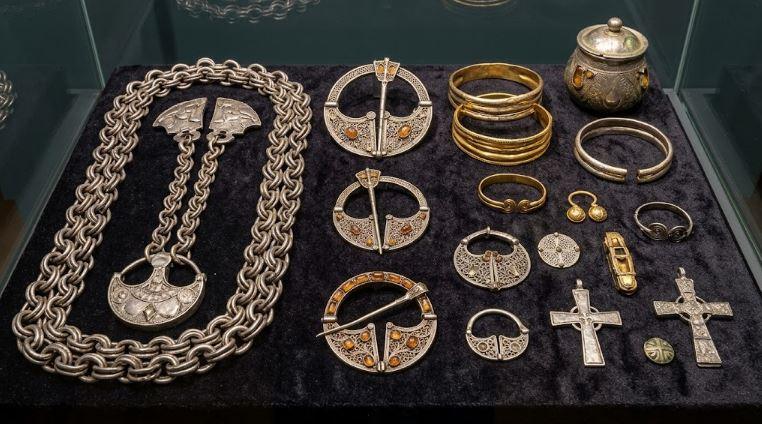
Archaeologists and community volunteers working with Govan Heritage Trust and Clyde Archaeology announced the discovery in September 2026. The ring is a roughout—a piece abandoned while a craftsperson was still shaping it. Together with shale fragments and related finds from earlier excavations, it provides evidence that jewelry was being manufactured at Govan rather than merely brought there as finished goods.

That matters because Govan already has an extraordinary archaeological record.

Its churchyard preserves evidence of Christian activity reaching back to around the sixth century. During the Viking Age, Govan became closely associated with the kings of Strathclyde and produced one of Britain’s richest groups of early medieval carved stones.

The jewelry workshop pushes the story in another direction. Govan was not only a burial ground, religious centre or later royal site. Skilled production also took place there.

That makes the Clyde look less like a peripheral edge waiting for Viking influence and more like an established political and craft landscape before and during Scandinavian expansion.

An Unfinished Ring Revealed The Workshop

The most informative object from the 2026 excavation is not elaborate finished jewelry.

It is an unfinished ring.

The shale roughout preserves part of the manufacturing process that a completed ornament would normally hide. Archaeologists can see that someone had already begun transforming the dark stone into a finger ring before abandoning it.

Archaeology Magazine’s report on the Govan workshop notes that shale may have provided a less costly alternative to jet, the glossy black material associated with prestigious jewelry.

Similar jewelry pieces appeared during excavations at Govan in the 1990s.

Taken together, the evidence makes local manufacture more plausible than a single accidental fragment would.

A finished ring could have arrived through exchange.

A roughout points toward production.

That distinction changes the archaeological interpretation of the site.

The 2026 Dig Returned To Trenches First Opened In 1996

The latest discovery comes from the Dig Where You Stand community archaeology programme, launched by Govan Heritage Trust in 2023.

During September 2026, archaeologists and volunteers concentrated on the southeastern section of Govan Old’s churchyard. They reopened areas previously tested during archaeological work in 1996.

Those earlier excavations had revealed part of a roadway dating to roughly 1,300 years ago.

Researchers interpret the road as a possible connection between the church precinct and Doomster Hill, a former assembly mound near Govan Cross.

The Govan Heritage Trust archaeology update explains that current work continues to investigate structures near the original medieval entrance to the churchyard.

This context matters.

A jewelry workshop beside a politically and religiously important route would fit a much larger concentration of activity.

Govan increasingly looks like an organized centre containing worship, burial, assembly and craft production within one landscape.

Govan Was Important Long Before Its Viking-Age Stones

The workshop discovery is especially valuable because Govan’s history begins before the period usually associated with Vikings.

University of Glasgow archaeologist Professor Stephen Driscoll has worked at Govan for nearly three decades. Excavations in the 1990s identified early Christian burials beneath later church structures.

Radiocarbon dates place two burials between approximately AD 435 and 601.

The University of Glasgow’s Govan Old research project describes the site as politically and ecclesiastically important from the sixth through the 11th centuries and supports its identification as the oldest known Christian centre on the Clyde.

That chronology begins centuries before the major Scandinavian attacks on western Scotland.

It changes the map substantially.

Viking raiders did not enter an empty political landscape around the Clyde.

They encountered established Christian communities and British kingdoms with their own centres of authority.

Govan was part of that world.

Jewelries

The Workshop Adds Craft Production To A Royal Landscape

High-status early medieval centres often combined activities that modern categories separate.

Religion, politics, burial, assembly and specialist craft could occupy closely connected spaces.

The shale ring strengthens the case that Govan followed this pattern.

A workshop producing personal ornaments implies access to raw material, skilled labour and customers.

The customers remain unidentified.

Archaeologists cannot claim that one particular Strathclyde king commissioned the jewelry or that every ring belonged to an aristocrat.

Still, the workshop fits the wider evidence for a high-status community.

Stephen Driscoll’s study Govan: An Early Medieval Royal Centre on the Clyde argues that archaeology around the church, assembly landscape and later sculpture reflects the physical infrastructure of early medieval kingship.

The jewelry production now adds another activity to that model.

Power centres needed craftspeople as well as warriors and clergy.

Dark Shale Could Imitate More Prestigious Jet

The choice of material may reveal another part of the local economy.

Shale produces a dark polished surface that can resemble jet.

Jet had a much longer history as a valuable material for jewelry in Britain. Its appearance gave ornaments a distinctive black sheen.

The 2026 Govan discovery does not prove that craftspeople deliberately marketed shale as fake jet.

Archaeologists instead suggest that shale could provide a more accessible material with a similar appearance.

That distinction opens useful questions about consumption.

Were locally produced rings intended for elite customers?

Did they imitate styles associated with more expensive materials?

Could less wealthy members of the community participate in fashions first associated with higher-status jewelry?

The unfinished ring cannot answer all of those questions.

It does show that local makers were producing personal ornaments rather than relying completely on imports.

Dumbarton’s Fall In 870 Changed The Political Geography

The later Viking connection makes Govan particularly important.

Before the late ninth century, the main fortress of the Clyde Britons stood at Dumbarton Rock, known as Alt Clut.

In AD 870, Viking leaders Ímar and Amlaíb besieged Dumbarton for four months. The stronghold eventually fell, and their forces returned to Ireland the following year with captives and plunder.

After that crisis, the political geography of the kingdom changed.

The Govan Stones timeline presents Govan as becoming central to the surviving Kingdom of Strathclyde after Dumbarton’s fall.

Researchers connect royal activity with the Govan-Partick area on opposite sides of the Clyde.

That later development makes the new workshop particularly interesting.

Govan was already active before 870.

The Viking assault did not create the site from nothing. Instead, political importance grew around a centre with older Christian and craft traditions.

The Govan Stones Show What Happened After The Viking Arrival

Govan’s most famous artifacts belong mainly to the ninth through 11th centuries.

The Govan Stones collection includes crosses, recumbent grave slabs, the Govan Sarcophagus and five hogback stones.

Hogbacks are especially important because their form has strong Scandinavian associations.

University of Glasgow research on Norse influence at Govan treats these monuments as evidence that Scandinavian artistic and cultural influences became part of the Strathclyde royal and ecclesiastical environment.

The result was not simply “Viking Scotland.”

Govan instead shows a hybrid political landscape.

Brittonic traditions persisted while Scandinavian forms entered local elite culture.

The newly identified workshop adds an earlier or parallel craft layer to that story.

Local production did not disappear when wider connections intensified.

Pre-Viking Scotland Was Already Connected And Organized

Calling Govan “pre-Viking” can create the wrong impression if it suggests isolation.

Early medieval Scotland contained multiple kingdoms and cultural zones.

Britons occupied the Clyde region.

Pictish power developed farther north and east.

Gaelic-speaking communities expanded from the west.

Northumbrian influence reached southern Scotland.

Religious institutions linked these regions with wider Christian Europe.

Govan belonged to this complicated environment before Scandinavian settlement became politically important.

The workshop therefore contributes to a broader correction in Viking history: Scandinavian expansion should be studied against the societies it encountered.

Old Norse News recently examined a similar chronological problem through the Salme ship burials before 793, where archaeology shows significant Scandinavian maritime activity before the conventional beginning of the Viking Age.

Govan demonstrates the other side of that boundary.

Places later drawn into Viking networks already had histories of their own.

The Govan Warrior Adds Another Cultural Connection

The jewelry workshop is not the only recent discovery reshaping Govan.

On September 16, 2023, archaeologists discovered a carved stone now called the Govan Warrior.

The figure carries a round shield and a long object interpreted as a spear or sword.

Its artistic style differs from the heavier carving characteristic of many other Govan stones.

The University of Glasgow’s Govan Warrior announcement notes possible stylistic connections with both Pictish sculpture and the Isle of Man.

Those parallels reinforce Govan’s position between several cultural worlds.

Its art does not fit neatly inside one modern ethnic category.

Neither does its political history.

The workshop now adds craft production to this mixture of local, British and Scandinavian evidence.

Why The Workshop Changes The Map

The shale ring is small enough to fit on a fingertip.

Its historical implications are much larger.

Govan already possessed early Christian burials dating between roughly AD 435 and 601. By the Viking period it had become a major ecclesiastical and political centre associated with the Kingdom of Strathclyde.

Its sculptured stones reveal high-status burial culture and strong Scandinavian influence.

The newly identified jewelry workshop fills an important gap between those categories.

People were making things here.

They were shaping raw material into personal ornaments inside or beside an important religious complex. Similar finds from earlier excavation seasons strengthen the interpretation that this was repeated activity rather than one isolated experiment.

That changes how pre-Viking western Scotland appears.

The Clyde was not simply a distant shoreline that entered history when Viking fleets arrived.

It already contained Christian institutions, skilled craftspeople, assembly places and political authority.

When Scandinavian influence increased after the ninth century, it entered that established landscape and became entangled with it.

Govan’s unfinished ring therefore matters precisely because it is unfinished.

It catches the site in the middle of making something.

The same may be true of early medieval Scotland itself: archaeology increasingly reveals a complex political and cultural world already in motion before the Viking Age transformed it.

Posted in Literature & Texts, Mythology & Culture, Norse History & Archaeology | Comments Off on Why Govan’s Newly Found Jewelry Workshop Changes The Map Of Pre-Viking Scotland

Why Norway’s Melting Ice Is Suddenly Revealing What Came Before The Vikings

For two decades, Norway’s melting mountain ice has produced an extraordinary archive of Viking and Iron Age life: arrows, skis, clothing, packhorse remains, shoes and objects lost along high-altitude routes.

In September 2026, the pattern changed.

Archaeologists with Secrets of the Ice, the glacier archaeology programme run by Innlandet County Municipality with research partners, recovered 48 prehistoric arrows during three weeks of fieldwork in the Kvitingskjølen area of Jotunheimen. Some of the oldest examples are estimated at 5,000 to 6,000 years old.

The new finds include slate, bone and freshwater-mussel-shell arrowheads, often preserved with pieces of their wooden shafts. They come from a period thousands of years before the Viking Age.

Project leader Espen Finstad says the shift reflects something troubling: the oldest surviving ice is now disappearing.

For Viking historians, that changes the archaeological map. Melting once exposed objects from the first millennium AD and the Viking Age. Archaeologists are now reaching layers that preserve evidence of hunters who entered Norway’s high mountains during the Stone and Bronze Ages.

The ice is not simply producing more finds.

It is revealing an older human landscape.

Forty-Eight Prehistoric Arrows Emerged In 2026

The newest fieldwork concentrated on Langfonne, Storefonne and Hanklefonne in the Kvitingskjølen mountain area of Jotunheimen.

Innlandet County Municipality’s 2026 glacier archaeology report says archaeologists collected 48 prehistoric arrows during the season.

One of the most striking finds combines a finely made slate arrowhead with surviving pieces of its wooden shaft.

Researchers estimate it at roughly 5,000 years old, while comparison with similar weapons suggests some newly exposed arrows could reach 6,000 years in age.

Another arrowhead was made from bone.

Freshwater mussel shells also appear among the prehistoric projectile points.

These materials belong to technological traditions very different from the iron arrowheads associated with later Iron Age and Viking hunters.

The difference is chronological as well as technological.

Recent iron arrowheads from the ice can be around 1,000 to 1,500 years old. The oldest 2026 weapons reach back several millennia further.

That growing age gap is what has caught archaeologists’ attention.

The Oldest Ice Is Now Disappearing

The discoveries are exciting for archaeology but alarming for preservation.

Secrets of the Ice has worked systematically in Innlandet’s mountains since 2006. Over those 20 years, archaeologists have documented 73 sites and recovered more than 5,000 objects.

Many earlier discoveries came from the Iron Age and Viking period.

Now the proportion is shifting toward the Stone and Bronze Ages.

The Norwegian Mountain Centre’s 2026 field report states that the increasingly ancient finds indicate that the oldest portions of the ice are disappearing.

At Hanklefonne, areas covered by ice only recently are now exposed.

Finstad describes the retreat as faster than researchers expected.

His team estimates that many archaeologically productive ice patches could disappear within roughly 20 years if present conditions continue.

That creates an unusual archaeological emergency.

The ice preserved wood, leather, textiles and other organic materials for thousands of years. Once exposed, those objects can deteriorate rapidly.

Archaeologists therefore have only a limited opportunity to recover them.

Vikingsartifact

Stone Age Hunters Were Already Using Norway’s High Mountains

The discoveries undermine any idea that intensive mountain use began with the Vikings.

Hunters entered these high-altitude landscapes thousands of years earlier.

Reindeer provide the clearest explanation.

During warm periods, the animals move onto snow and ice patches to escape insects and heat. Hunters understood that behaviour and positioned themselves around places where animals gathered.

Arrows lost during those hunts remained in or near the ice.

Some survived because stable ice protected wooden shafts, bindings and other organic components that normally disappear in Norwegian soils.

This gives glacier archaeology an unusual advantage.

A stone arrowhead found on dry land may survive after its shaft has vanished. On an ice patch, archaeologists can sometimes recover both.

That combination reveals weapon construction, materials and hunting technology at a much finer level.

The 2026 finds therefore document not only the presence of prehistoric hunters but how they equipped themselves.

A Single Ice Patch Has Produced More Than 100 Arrow Finds

The concentration of hunting evidence is remarkable.

According to the September 26 Science Norway report, the programme has now recovered more than 100 arrowheads and shaft fragments from a single ice patch over successive seasons.

That number indicates repeated use.

These were not isolated hunters accidentally wandering into the mountains once every few centuries.

Certain locations attracted people again and again.

Reindeer migration and summer behaviour probably made particular ice patches predictable hunting grounds.

Generations could return to similar terrain while technology changed around them.

A slate-tipped arrow belongs to a very different material tradition from an iron-headed Viking weapon, yet both could be lost in essentially the same hunting landscape.

The ice therefore preserves continuity across enormous spans of time.

That is one reason the newest discoveries matter for a Viking-focused site.

They reveal that later Viking hunting systems occupied landscapes already shaped by thousands of years of human experience.

Viking Finds Are Becoming Relatively Scarcer

For years, some of the most famous Norwegian ice discoveries came from the Viking Age.

Archaeologists recovered arrows, skis, mittens, packhorse equipment and other objects from roughly the first millennium AD.

A particularly important example is Lendbreen, where melting revealed an ancient mountain pass.

The peer-reviewed Lendbreen study in Antiquity documented activity from around AD 300 to 1500, with travel peaking around AD 1000 during the Viking Age.

Researchers found clothing, household objects, packhorse remains, sled equipment and markers associated with high-altitude movement.

The 2026 season does not make those Viking finds less important.

It changes their position in the longer timeline.

As deeper and older ice disappears, archaeologists are increasingly seeing the hunting worlds that came first.

The Mountains Were Highways Before They Became Viking Routes

Lendbreen also changed another misconception.

Mountains were not simply barriers.

They could function as routes between valleys, grazing areas and distant communities.

The pass contains cairns marking movement across the terrain and evidence for packhorses carrying goods.

Its use intensified during the Viking Age, when Scandinavian trade, political centralization and mobility expanded.

Yet prehistoric hunting evidence shows that knowledge of these high landscapes long predates those economic changes.

Stone Age hunters already understood reindeer behaviour, weather conditions and access routes.

Later communities inherited mountains that were not unknown wilderness.

They were culturally familiar landscapes.

This longer perspective parallels another chronological problem Old Norse News recently examined in the Salme ship burials and the Viking Age before 793. In both cases, archaeology pushes important behaviour before a conventional historical boundary.

At Salme, maritime violence predates Lindisfarne.

In Jotunheimen, mountain expertise predates Viking society by thousands of years.

Organic Preservation Makes Ice Archaeology Different

The most important objects are not always the most spectacular.

Ice can preserve materials that conventional archaeology frequently loses.

Wooden arrow shafts survive.

Bindings can remain attached.

Leather shoes appear.

Textiles emerge.

Even horse dung has survived along ancient routes.

A 2026 review of glacier and ice-patch archaeology explains that stationary ice patches are especially valuable because they can preserve fragile cultural material without grinding it apart through glacier movement.

That preservation creates unusually intimate evidence.

An iron arrowhead tells archaeologists the shape of a weapon.

A complete arrow can reveal shaft wood, bindings, dimensions and construction technique.

Those details help reconstruct hunting methods rather than simply cataloguing artifact types.

For periods before widespread writing, such evidence carries enormous weight.

The Finds Also Show Technological Change Across Millennia

The arrows themselves form a technological sequence.

The earliest examples use materials such as slate, bone and shell.

Later weapons increasingly use iron.

That change reflects access to different materials and production systems.

It also demonstrates why archaeologists value a long sequence from one landscape.

Researchers can compare how people solved the same basic problem—hunting reindeer—with different technologies across thousands of years.

The target remained similar.

The weapons changed.

So did settlement patterns, social organization and exchange networks.

By the Viking Age, iron production and long-distance trade created material conditions far removed from those of Stone Age hunters.

Yet people still climbed into the same mountains.

The landscape provides continuity while artifacts record cultural change.

Melting Ice Creates Evidence And Destroys Its Archive At The Same Time

Glacier archaeology contains an unavoidable contradiction.

Climate-driven melting exposes artifacts.

That same melting destroys the conditions that preserved them.

Finstad and his colleagues have become increasingly explicit about this tension.

Objects can remain protected for thousands of years beneath stable ice but deteriorate rapidly after exposure to sunlight, rain, wind and biological activity.

Archaeologists must identify shrinking ice patches, reach remote sites and recover fragile material before it disappears.

The work therefore resembles rescue archaeology.

Scientists are not waiting for ideal research conditions.

They are responding to an archaeological archive that is physically vanishing.

This is especially urgent now that ice dating back 6,000 to 7,000 years is being lost.

Once that oldest ice disappears, there may be no second opportunity to recover what it contained.

Why Norway’s Melting Ice Is Changing The Viking Story

The 2026 discoveries matter to Viking history precisely because many of them are not Viking.

For decades, spectacular ice finds helped reconstruct Viking hunting, mountain travel and transport.

Now the archive is extending much farther backward.

Forty-eight prehistoric arrows recovered in one season include weapons approximately 5,000 to 6,000 years old. More than 5,000 artifacts have emerged from 73 Innlandet sites since glacier archaeology began there 20 years ago.

Together, they show that the Viking use of Norway’s mountains belonged to a much older tradition.

People hunted reindeer in these landscapes during the Stone Age.

Bronze Age communities returned.

Iron Age travelers crossed high passes.

Viking hunters, farmers and packhorse drivers inherited routes and ecological knowledge shaped over generations.

The ice once separated those periods into layers.

Now those layers are disappearing.

That loss is giving archaeologists a brief and troubling opportunity to see what lay beneath the Viking world.

Norway’s melting mountains are not moving archaeology away from the Vikings.

They are revealing the thousands of years of human experience that made the Viking landscape possible.

Posted in Literature & Texts, Mythology & Culture, Norse History & Archaeology | Comments Off on Why Norway’s Melting Ice Is Suddenly Revealing What Came Before The Vikings

Objects USA craft and Norse Heritage Limits

Objects USA craft is a useful case study in how cultural heritage can be misread when exhibition titles, museum authority, and later interests are allowed to blur together. The available research record for this article does not support a claim that Objects: USA, which opened at the Smithsonian’s National Collection of Fine Arts on October 3, 1969, included Norse historical or archaeological artifacts. Its stated focus was American studio craft, including media such as clay, fiber, glass, metal, mosaic, and wood. That absence matters. For Norse history and archaeology, a careful reader should not turn an American craft exhibition into evidence for Viking Age material culture unless a source clearly makes that connection.

What Objects USA Craft Can And Cannot Show

The first task is to define the exhibition in evidence-based terms. Research notes describe Objects: USA as a major American craft exhibition that featured more than 300 artists. Its subject was not Norse migration, Scandinavian archaeology, runic evidence, or medieval North Atlantic settlement. It belonged to the field of studio craft and American art history, not to Viking Age archaeology.

That does not make the exhibition irrelevant to heritage studies. Craft exhibitions can help us ask how objects carry identity, how handmade work is framed by institutions, and how modern viewers attach cultural meaning to materials. Yet those questions must remain separate from claims about Norse evidence. A wooden object in an American craft exhibition is not Viking Age material because it is wooden. A metalwork object is not Norse because it uses metal. Medium alone cannot establish cultural origin, chronology, or archaeological context.

Objects USA Craft As American Studio Practice

The available evidence places Objects USA craft in the setting of American studio practice. Clay, fiber, glass, metal, mosaic, and wood were media through which living artists made contemporary work. This is a different evidentiary category from excavated artifacts, runestones, ship remains, burial objects, settlement layers, or written medieval sources.

For Norse history, that distinction is not pedantry. It protects the difference between analogy and evidence. A modern craft object may help a museum audience think about skill, material choice, and hand labor. It cannot, by itself, prove anything about Viking Age Scandinavia or Norse settlement across the North Atlantic.

Norse Archaeology Is Not In The Record

The research supplied for this article reports no credible evidence that Objects: USA included objects categorized under Norse history or archaeology. It also reports that a Smithsonian Collections Search Center review, across more than 18.7 million records, did not show “Norse” among top culture categories or among labels tied to the exhibition. That finding should be treated as negative evidence, not as a dramatic discovery. It simply means the known records do not support the proposed link.

This is where cultural heritage writing needs restraint. If a connection is absent from the records, the best interpretation is not to invent a bridge. The better approach is to state that the exhibition can inform discussions of craft and public culture, while Norse archaeology must be supported by different sources.

Smithsonian Collections And Evidence Boundaries

The Smithsonian does hold major anthropological collections, but institutional scale does not mean every Smithsonian exhibition belongs to every subject area. The National Museum of Natural History describes its Anthropology holdings as including over 3 million objects, more than 10,000 linear feet of field notes, nearly 650,000 photographs, more than 11,000 sound recordings, and over 8 million feet of original film and video, according to the Smithsonian anthropology collections. Those figures show the breadth of the institution’s research holdings. They do not place Norse artifacts inside Objects: USA.

This boundary matters because museum names carry authority. A reader may see “Smithsonian” and assume a direct line between one exhibition and the full scope of the institution’s collections. That assumption is unsafe. The Smithsonian includes many museums, departments, archives, and exhibitions, each with its own purpose and source base.

Collections Are Not Exhibition Proof

A museum may hold archaeological objects, art objects, archival records, photographs, and sound recordings, but an exhibition is a selected argument made at a specific date. To say that a museum has anthropology collections is not to say that a particular craft exhibition displayed Norse archaeological material. Exhibition history requires catalogues, object lists, institutional records, or other direct documentation.

For readers interested in how museum display shapes public ideas of the Viking past, Old Norse News has treated related questions in its discussion of modern Norse memory. The same caution applies here: display can shape memory, but memory must not be confused with artifact provenance.

Why Category Labels Matter

Category labels are not trivial. They are one way museums communicate what an object is, where it belongs, and how it should be read. If “Norse” is absent from the relevant records for Objects: USA, that absence limits what can be responsibly said. A cautious historian may still compare the exhibition’s craft themes with broader heritage questions, but the comparison must be marked as interpretive, not archaeological.

This point also applies beyond history writing. Public-facing sites often sit in networks with different subject areas; related network resources such as PolygraphianZ offer insights within their own area of expertise and should not be used as evidence for unrelated Norse claims. Source fit is part of source quality.

Norse Evidence Belongs With Norse Sources

The research notes identify a much better Smithsonian-linked point of reference for Norse history: Vikings: The North Atlantic Saga. That exhibition and its publication address Norse expansion and archaeology, including activity between 860 and 1500 CE, with attention to Greenland, European homelands, and contact zones named in the tradition as Vinland, Markland, and Helluland. The Smithsonian-hosted publication Vikings: The North Atlantic Saga is therefore a more fitting source for Norse archaeological discussion than an American studio craft exhibition.

This does not diminish Objects: USA. It places each exhibition in its correct frame. One can discuss American craft history through Objects: USA. One can discuss Norse settlement and North Atlantic archaeology through Vikings: The North Atlantic Saga. Problems arise only when the two are collapsed into a single claim without documentation.

Separate Exhibitions, Separate Questions

Different exhibitions ask different questions. A studio craft exhibition may ask what American makers were doing with material, form, and artistic identity in 1969. A Norse archaeology exhibition may ask how material evidence, settlement remains, and texts illuminate movement across the North Atlantic. Both are cultural heritage subjects, but they are not interchangeable.

This distinction is especially valuable for Norse studies because the Viking past is often pulled into modern design, fantasy, nationalism, tourism, and popular entertainment. Evidence-based writing must slow that process down. Before connecting any modern object to Norse history, we need a source that identifies the object, dates it, locates it, and explains its relevance.

Cultural Heritage In Craft Without False Links

Hands shaping clay on a wheel in a quiet studio

There is still a productive way to connect craft studies and Norse heritage without making unsupported claims. Craft can remind us that historical objects were made by skilled hands. Ships, textiles, tools, ornaments, and carved inscriptions required knowledge, labor, and social purpose. Modern craft exhibitions can sharpen our attention to those features, even when their objects are not archaeological evidence.

The key is to keep analogy modest. A glass vessel from a modern American craft exhibition may encourage thought about display and making. It does not become evidence for medieval Scandinavian glass use. A textile work may raise questions about fiber, skill, and touch. It does not stand in for excavated Norse textiles. Cultural comparison is useful only when its limits are named.

Craft As Interpretation, Not Provenance

Craft can interpret material culture by making process visible. Viewers may notice joinery, surface treatment, firing, weaving, carving, or casting. Those observations can prepare readers to ask better questions of archaeological objects. Yet provenance remains a separate matter. It depends on documentation, excavation context, collection records, and specialist analysis.

For this reason, Objects USA craft should be treated as a source for modern American craft history, not as a hidden Norse archive. Its value for a Norse-facing site lies in the lesson it offers about classification: material resemblance is not enough. Cultural assignment requires evidence.

Modern Heritage Needs Source Discipline

Modern heritage writing often works at the edge of art, archaeology, public memory, and identity. That edge can be productive, but it can also invite overstatement. The safer method is direct: name what the source says, name what it does not say, and resist filling gaps with attractive assumptions.

In this case, the supported statement is narrow but useful. Objects: USA was an American studio craft exhibition that opened at the Smithsonian’s National Collection of Fine Arts on October 3, 1969. The supplied research does not support its use as evidence for Norse history or archaeology. Smithsonian-linked Norse discussion is better grounded in sources designed for that subject.

Objects USA Craft And Norse Heritage

Read in this way, Objects USA craft becomes less a Norse evidence source than a cautionary example in heritage method. It shows how easily the authority of a major institution can encourage broad associations that the record does not bear. It also shows why craft, art, and archaeology need careful separation even when they all concern objects and cultural meaning.

For Norse history and archaeology, the responsible path is clear. Use Objects: USA for what it can support: American studio craft, modern making, and museum framing. Use Norse-specific archaeological sources for Viking Age and medieval Scandinavian claims. Between those fields, cautious comparison is possible, but only if the reader can see where evidence ends and interpretation begins.

Posted in Norse History & Archaeology | Comments Off on Objects USA craft and Norse Heritage Limits

Why A New Viking Study Says Old Objects Built Community, Not Just Elite Power

Viking-Age archaeology has often treated ancient objects, monumental graves and reused artifacts as evidence of elite power. A new 2026 study by University of Oslo archaeologist Julie Lund argues that this explanation is too narrow.

In her book Time and Temporality in the Viking Age: An Archaeology of Reuse, Remembering, and Relations to the Past in the Past in Scandinavia, 750–1050 CE, Lund examines how Viking-Age communities reused much older objects, copied ancient burial forms and deliberately connected themselves with earlier landscapes.

The book was published by Sidestone Press in 2026 and runs to 134 pages. Its case studies include ship settings, Viking hoards and burial mounds surrounded by kerbstones.

Lund does not deny that power mattered.

Her argument is that old objects could also create memory, identity, belonging and continuity between generations. A Roman gemstone kept for centuries or a Viking grave designed to resemble a much older burial may have carried meanings that cannot be reduced to wealth or political manipulation.

That changes how archaeologists read some of Scandinavia’s most striking Viking remains.

The New Study Challenges A Familiar Viking Explanation

Lund’s 2026 book on Viking memory and reuse focuses on how people between approximately AD 750 and 1050 related to earlier periods.

Archaeologists have long recognized that Viking communities reused old monuments and possessed objects that were already ancient by the time they entered Viking contexts.

The disagreement concerns why.

A traditional interpretation often connects such behavior with elites claiming legitimacy. A ruler might associate himself with famous ancestors, occupy an old burial landscape or display ancient objects to strengthen political authority.

Lund argues that this model can become too automatic.

Different social groups reused the past in different ways. Some practices may have strengthened political claims, while others could create emotional connections, shared histories or a sense that a community belonged within a landscape extending far beyond one lifetime.

Her work therefore asks a harder question.

Instead of simply identifying who possessed power, archaeologists should ask why particular old things still mattered to the people using them.

The Hoen Hoard Preserved Objects With Much Older Histories

One of Lund’s most important examples comes from the Hoen Hoard in Buskerud, Norway.

A tenant farmer found the treasure at Nedre Hoen farm in 1834 while digging drainage ditches.

The Historical Museum in Oslo describes it as Norway’s largest Viking-Age gold hoard. The assemblage contains gold rings, jewelry, beads, coins and imported objects representing connections stretching from western Europe to the Islamic world.

The museum dates the treasure broadly to AD 875–900.

Among the objects was a Roman intaglio, an engraved gemstone already centuries old when it became part of the Viking hoard.

Lund uses pieces like this to challenge a purely economic interpretation.

The stone was not simply raw material.

Someone preserved an object whose history stretched back toward the Roman world, carried it through later European cultural networks and eventually incorporated it into a Viking-Age assemblage.

Its age may have contributed to its value.

A Frankish Sword Fitting Became Viking Jewelry

Another Hoen object shows even more clearly how old things could acquire new lives.

A three-lobed brooch in the treasure originated as a Frankish fitting, probably attached to a sword scabbard.

Scandinavian craftspeople transformed such imported fittings into jewelry.

The process did more than move an object geographically.

Its function changed.

Something connected with Carolingian military equipment could become an ornament worn in Scandinavia.

Lund sees this kind of transformation as evidence that objects possessed biographies.

Their meanings accumulated through movement, reuse and alteration.

A fitting could connect several different historical moments at once: Carolingian craftsmanship, long-distance movement and Scandinavian reuse.

If archaeologists view it only as evidence of elite wealth, those other relationships disappear.

Some Objects May Have Been Preserved For Centuries

The timescales involved can be extraordinary.

In recent University of Oslo reporting on Lund’s work, she points to groups of objects that appear to have circulated or been preserved for hundreds of years.

That possibility raises difficult questions.

An heirloom passing through several generations makes intuitive sense.

An artifact surviving for four or five centuries requires a much longer chain of remembering, rediscovery or deliberate reuse.

Not every ancient object necessarily passed directly from parent to child for centuries.

People could recover old objects from graves, encounter them in ancient deposits or reproduce forms that had disappeared from normal use.

Lund’s work treats all of these possibilities as ways in which Viking communities actively interacted with older material worlds.

The important point is that the past remained physically available.

It could be touched, altered and placed into new social settings.

OldObjects

Hunn Shows How A Viking Grave Could Be Made To Look Older

Objects were not the only way Viking communities reused history.

Burial architecture could do the same.

At Hunn in Østfold, archaeologists have documented more than 145 visible burial mounds spanning a period from the Late Bronze Age to the end of the Viking Age.

Lund has studied the relationship between a spectacular Roman-period grave called Stubhøj and a later burial known as Store Vikingegrav.

Her peer-reviewed study of the Hunn graves argues that the Viking grave deliberately echoed features visible in the much older Roman-period mound.

Both graves used conspicuous kerbstones around their edges.

The Viking burial also occupied a similar position on the same ridge.

These parallels suggest that people constructing the later grave knew the older monument and intentionally referenced it.

Copying An Old Grave Was More Than Architectural Style

The similarities at Hunn extended beyond the exterior.

Stubhøj contained a sword, spear, shield, decorated spurs, drinking horns, a gold ring and other prestigious objects.

The Viking-Age Store Vikingegrav also contained weapons, spurs and drinking equipment.

Lund argues that the combined similarities were too specific to dismiss easily.

The later burial may have created a deliberate connection with a remembered past.

That does not necessarily mean one Viking leader claimed direct descent from the person buried centuries earlier.

Community memory could work more broadly.

People returning to the same cemetery generation after generation encountered physical monuments whose age was obvious.

Constructing a new burial to resemble an ancient one could place the deceased inside a long local story.

The grave became a statement about time as well as status.

Viking Communities May Have Created A Sense Of Deep Time

This is where Lund’s argument moves beyond conventional explanations of elite competition.

Old monuments could create what she describes as connections across time.

A burial mound built with ancient-looking features did not simply say, “this person was powerful.”

It could also say, “this person belongs here.”

That distinction matters for understanding Viking communities as more than chiefs surrounded by followers.

The cemetery at Hunn remained meaningful for roughly two millennia.

Different generations encountered graves from periods whose original occupants and rituals had long disappeared.

Even without knowing precise names, people could recognize those monuments as old.

Reusing their styles may have helped communities construct continuity in landscapes that carried visible evidence of earlier lives.

Ship Settings Could Reuse Even Older Monumental Ideas

Lund’s book also examines ship settings, monuments in which stones outline the form of a ship.

These structures are strongly associated with Late Iron Age and Viking-Age Scandinavia, but they also draw on older traditions of monumental burial and maritime symbolism.

Her interest lies partly in how new monuments could cite older forms.

A stone ship did not need to reproduce one particular ancient grave.

It could activate a broader sense of inherited landscape and maritime tradition.

That idea changes the way monuments such as ship settings are interpreted.

Scale and visibility still mattered.

So did political display.

Yet a monument could simultaneously reinforce community memory, connect people with ancestors and make the landscape feel historically continuous.

Archaeological meaning does not need to have only one layer.

The Study Pushes Back Against A Chieftain-Centred Viking Age

Lund has also criticized the tendency to search repeatedly for “the chieftain and his men.”

Written sources encourage that approach because kings, warriors and elite households appear prominently in later narratives.

Spectacular graves reinforce it.

Weapons, gold and monumental mounds naturally attract attention.

The risk is that archaeological interpretation starts to force every unusual practice into the same explanation.

Large grave equals powerful leader.

Imported object equals prestige.

Ancient object equals political legitimacy.

Lund argues that these associations may sometimes be correct without being complete.

Material culture could also support relationships among families, communities and places.

That broader view aligns with Old Norse News coverage of modern Viking myths and archaeological interpretation, where familiar Viking images can become oversimplified when one explanation dominates the evidence.

Memory Could Work Differently Across Social Groups

One of the study’s strongest implications is that there may never have been one Viking way of using the past.

Different groups had access to different objects and traditions.

Elite households could possess imported Roman or Frankish material.

Rural communities might interact more directly with old burial grounds, ancient stones or inherited landscapes.

Women could preserve and transform jewelry.

Families could return to cemeteries that had been used for centuries.

The same practice might carry different meanings depending on context.

An ancient gem in a wealthy hoard and an old-style kerbstone around a burial both connect with the past, but they do so through different materials and social settings.

This variety makes a single power-based explanation increasingly difficult to sustain.

The Study Does Not Remove Power From Viking Archaeology

Lund’s argument should not be read as saying that status or politics no longer matter.

The Hoen Hoard was an extraordinary concentration of wealth.

Monumental burials required labor.

Large ship settings could dominate landscapes.

Those features clearly intersected with hierarchy.

The new interpretation adds rather than subtracts.

Political authority, personal memory, ancestry, emotion and community belonging could operate simultaneously.

A powerful family might use an ancient object because it enhanced prestige and because it carried a meaningful history.

Those motives are not mutually exclusive.

That is why Lund’s emphasis on material biographies matters.

Objects did not enter Viking graves as blank commodities.

Some arrived with centuries behind them.

Why Old Objects Could Build Community

The strongest contribution of Time and Temporality in the Viking Age is its insistence that Vikings had their own past.

They did not live inside a historical vacuum beginning around AD 793.

They inherited landscapes filled with prehistoric graves, ancient settlements, Roman-period objects and monuments already hundreds or thousands of years old.

People interacted with that material constantly.

Some ancient objects entered hoards.

Others became jewelry.

Certain burial traditions were copied or revived.

Old cemeteries remained active places.

Lund argues that such practices could help people understand who they were in relation to those who came before them.

That may involve power.

It could also involve belonging.

This distinction makes Viking society look more socially complex.

The past was not simply a political weapon controlled by chiefs.

It could be a shared material resource through which communities built identity, memory and relationships across generations.

The objects survived because people kept finding reasons not to forget them.

Posted in Literature & Texts, Mythology & Culture, Norse History & Archaeology | Comments Off on Why A New Viking Study Says Old Objects Built Community, Not Just Elite Power